FDA Calls on Infant Formula Industry to Better Safeguard Against Contaminants Introduced through their Supply Chain


On July 13, 2026, the U.S. Food and Drug Administration announced on their website that the Agency sent a letter to the infant formula industry and their supply chain partners highlighting multiple recent public health events where risks were introduced through the supply chain and to call for increased vigilance by industry to ensure the safety of ingredients and finished infant formula products.
FDA has investigated two multistate outbreaks of infant botulism associated with two separate brands of powdered infant formula — ByHeart, Inc., and Nara Organics, Inc. — resulting in voluntary recalls and an ongoing FDA investigation into the shared ingredient suppliers. Likewise, a global contamination event occurring in late 2025 through early 2026 resulted in nearly 150 suspected and confirmed cases of cereulide intoxication across 10 countries, traced to contaminated arachidonic acid (ARA) oil used as an ingredient in infant formula. This prompted multiple global downstream recalls, and a supplier of ARA oil being added to multiple import alerts.
Manufacturer Responsibility: Know Your Suppliers
The FDA expects manufacturers to exercise substantive oversight of their suppliers, including understanding where their ingredients come from, how they are produced, what risks they may carry, and whether those risks are effectively controlled. When a contaminated ingredient or supplier concern is identified, whether by FDA or through industry’s own monitoring, manufacturers are expected to act swiftly to assess and address the risk.
The FDA also recommends that infant formula manufacturers and their supply chain partners stay abreast of applicable recall notifications, outbreak investigations and import alerts, which may serve as important safety signals. Experience has shown that ignoring or downplaying these safety signals can lead to increased risks to infants and preventable public health events.
FDA Actions
The FDA acknowledges the challenges in managing the risks related to spore-forming microbes in infant formula ingredents and recognizes there might not be a single approach for addressing them. The Agency is prepared to work with industry to identify best practices and will continue to solicit advice from experts in academia and international scientific bodies, such as the Codex Committee on Food Hygiene and the International Commission on Microbiological Specifications for Foods.
The FDA also is continuing to investigate the root causes of the 2025 and 2026 infant botulism outbreaks associated with powdered infant formula and has completed initial surveillance to better understand the prevalence of Clostridium botulinum in powdered milk, the results of which are available on FDA’s Post-Outbreak Response Activities: Clostridium botulinum Illnesses Associated with Consumption of Powdered Infant Formula webpage.
Related Articles
-

The FDA has provided an update on actions the agency has taken, and those underway, to strengthen the safety and resiliency of the supply of infant formula, including a progress report on recommendations in the FDA’s Evaluation of the Infant Formula…
-
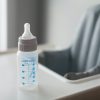
Stratified sampling of powdered products, such as infant formula, can increase the chances of catching Cronobacter contamination, while not requiring excessive sampling.
-

As of November 19, 2025, a total of 31 infants with suspected or confirmed infant botulism and confirmed exposure to ByHeart Whole Nutrition infant formula (various lots) have been reported from 15 states. Laboratory confirmation for some cases is ongoing.…
-

Abbott voluntarily recalled several products manufactured at its Sturgis, Michigan plant following complaints of Cronobacter sakazakii or Salmonella Newport illnesses in infants. One illness may have contributed to an infant death.
-
The updates include instructions for annual environmental sampling of Cronobacter and Salmonella at powdered infant formula facilities and instruction for FDA notification should a sample test positive for Cronobacter or Salmonella, or if a sample is found to have nutrients…
-
The FDA said that it was notified of the death, which occurred in January 2022, through a consumer complaint received on June 10, 2022.
-
As of November 10, 2025, a total of 15 infants with suspected or confirmed infant botulism and confirmed exposure to Byheart Whole Nutrition infant formula. All 15 infants were hospitalized. No deaths have been reported to date. FDA's Commissioner, Dr.…
-

New investigation is the first to trace microplastics and plastic chemicals from plastic packaging into baby food. The testing commissioned by Greenpeace International in 2025 found plastic particles in the baby food products of two global consumer goods companies –…
-
While the department’s food safety leadership likes to repeatedly emphasize that they use a science-based and data-driven approach to policy making, consumer advocates worry that these statements are meaningless if they don’t translate into policy initiatives that aim to prevent…
-

Many food manufacturers treat supplier verification as a filing exercise collect the certificate of analysis, confirm it's in spec, move on. This article argues that approach satisfies neither FSMA's supply-chain program nor the scrutiny of a recall. It explains what…
