
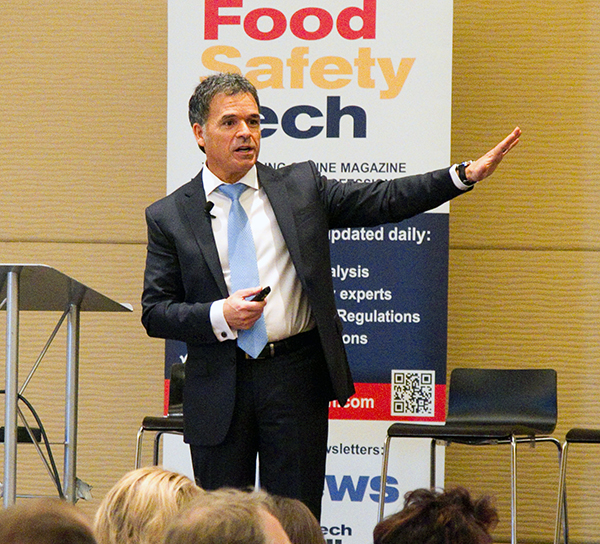
Yiannas joins leading experts Dr. Acheson, Dr. Brashears, and Dr. Wiedmann on Council
Developing a user-friendly risk assessment tool to assess the food safety risks of fresh produce production and landscape use
The latest IFIC Spotlight Survey seeks to identify the most pressing food safety concerns for Americans. Survey takers selected microbial concerns, such as the presence of E. coli, and the presence of heavy metals in food as the primary issues of concern.
The reorganization will enable the FDA to be more efficient, nimble and prepared for the ever-changing and complex industries they regulate, new food and medical product technologies, as well as the impacts of globalization, climate change and other factors that require the agency to quickly adapt.
This yearly initiative highlights exceptional young professionals making significant contributions to food safety and food safety culture worldwide.
Partnership for Food Traceability seeking members to play key roles in decision-making.

Forma Foods not only mimics skeletal muscle tissue, but also fat and connective tissue, using pea protein to simulate muscle tissue, an oriental prebiotic fiber for connective tissue, and coconut oil for fat tissue

Most suppliers are stuck in the past with legacy processes and are unprepared for change despite a willingness and understanding on the benefits for modernizing
Food safety audits are critical for food and beverage operations and are critical in building a strong food safety culture. Whether preparing for a retail food safety audit or striving to meet scheme or standard audit requirements, auditor calibration can provide value to ensure auditors fully understand and abide by program rules. The authors describe how auditors can utilize auditor calibration to establish a stronger food safety culture and meet certification requirements.

FSSC 22000 has completed the GFSI Benchmarking process for Version 6 of the Scheme and achieved recognition against the GFSI Benchmarking Requirements v2020.