The global supply chain is only getting more interconnected and complex, and with that, the need to improve food logistics strategies has never been greater. The role of technology in providing greater accuracy, traceability and transparency continues to be a critical component in food logistics management—and the matter becomes more urgent when dealing with perishable food products. Shipping these products requires stringent cold chain controls to prevent spoilage. In a Q&A with Food Safety Tech, Oren Zaslansky, CEO of Flock Freight, discusses how more thoughtful food logistics strategies can ultimately save companies time and money, as well as get products on store shelves faster.
Learn about how to manage supply chain challenges during Food Safety Tech’s upcoming virtual event on Supply Chain Hazards | May 18, 2021 @ 12 pm ET | Register nowFood Safety Tech: How is technology helping food companies solve the logistical challenges triggered by the pandemic?
Oren Zaslansky: Shipping perishable or fragile goods is no easy task. Shippers must maintain tight controls over every aspect of the shipping process—from timing to handling—to avoid damage or compromised product integrity. When things go wrong, rejected shipments can cost money, and food safety concerns can cost business. A recent survey of shippers across the United States found that 100% of respondents reported that their LTL freight arrived late in 2021, and 100% had to remanufacture and reship goods due to damage.
Luckily, there are food transportation methods that lower the risk of product damage and spoilage due to delays. Right now, food manufacturers typically choose between truckload (TL) and less than truckload (LTL) shipping, but they should instead consider shared truckload (STL) for freight that can’t fill an entire trailer to capacity. Speed to shelves is key for food shippers and traditional LTL has as low as 40–70% on-time service. Meanwhile, STL has a 94% average on-time performance.
STL places shipments (from multiple shippers that are traveling on a similar route) onto the same truck, optimizing the best possible routes so freight never loads or unloads between pickup and delivery. To achieve this, an STL solution can use advanced algorithms to analyze hundreds of thousands of shipments, with the goal of combining freight into terminal-free loads that fill trucks to capacity. This minimizes potential delays and reduces damage to 0.1%. Trucks are filled to capacity, reducing the cost of shipping midsized freight, while maximizing carriers’ earnings, eliminating unnecessary mileage, and contributing to a more sustainable supply chain.
Oren Zaslansky, CEO of Flock Freight, a logistics provider that guarantees shared truckload service.
FST: Are there particular sectors of the food industry that can benefit more from these technologies?
Zaslansky: Any perishable and fragile foods are an obvious answer, but this technology can be deployed for any type of food or beverage, and even for companies that create packaging for foods and beverages. Any sector that has difficulty filling its trucks to capacity, yet has strict product integrity and delivery timeframes, is the right fit for technology that enables shared truckloads at scale.
FST: How can logistics companies work with food manufacturers to ensure the most effective method/solution is implemented when shipping products?
Zaslansky: As COVID cases start to fall, people will start eating out again, putting pressure on restaurants, which will ultimately lead to truck shortages because everyone will need them. The number one way to combat this will be to make sure each truck is filled to capacity and rely on technologies that optimize routes that will get them where they need to go in a timely manner.
For shippers, shared truckload service enables them to only pay for the space they need (versus paying for space they can’t fill), and for carriers, optimizing their truck and driver schedules to make the best use of their fleet will help them stay ahead.
The above technology that enables shared truckloads at scale will help food shippers track perishable shipments and spot inefficiency in their food and beverage supply chains. By working with the right partners and implementing sound food logistics strategies, shippers can better understand weak spots in their supply chains, more quickly implement solutions, and more effectively protect the freshness or integrity of perishable and fragile goods.
Following a surge in consumers reporting illnesses that range from nausea to vomiting to diarrhea after eating Lucky Charms, FDA has initiated an investigation into the product and the claims. Iwaspoisoned.com is a nationwide consumer food safety platform that allows people to report their illnesses immediately. The complaints of food poisoning connected to consuming the popular cereal began trending late last year, with more than 1300 reports of illnesses to date, according to the website.
Patrick Quade, founder of iwaspoisoned.com, called the volume of consumer complaints related to this single product “unprecedented”.
FDA has not released an official statement on the matter.
General Mills spokesperson Andrea Williamson told Consumer Reports the following: “After a thorough internal investigation, we have not found any evidence that these complaints are attributed to our products. We encourage consumers to please share any concerns directly with General Mills to ensure they can be appropriately addressed.”
In an Op-Ed published by Politico today, former FDA Deputy Commissioner for Foods and Veterinary Medicine Michael Taylor is calling on FDA’s Food Program to be separated from the current hierarchy—with the establishment of a new agency that has its own head and reports directly to the HHS secretary.
“Under FDA’s current structure, no one is really in charge and realistically accountable for the food program’s strategic direction, sound resource management and overall success; and this state of play has real consequences for consumers. It puts at risk the public’s health and consumer confidence in the nation’s food supply,” Taylor wrote in “It’s Time to Fix FDA by Breaking It Up”. He emphasizes that food has not been given a high enough priority at the agency, despite the passage and implementation of FSMA, and the past two administrations did not help either. “Neither the Obama nor Trump administration empowered the deputy commissioner for food to oversee the program’s largest organizational unit, which is responsible for food inspection and import activities and manages nearly 70% of all the dollars Congress gives the food program,” he stated. “The success of food safety modernization won’t succeed without the policymaking and inspection units working as an integrated whole. Because they are all managed separately and report directly to commissioners whose attention is elsewhere, this is virtually impossible in today’s FDA.”
Allowing the Food Program to stand on its own, reporting directly to HHS, would create an agency that is empowered not only with more resources but also with having more accountability.
Parsippany, NJ-based Ferrero U.S.A., Inc. has issued a voluntary recall of its Kinder Happy Moments Chocolate Assortment and Kinder Mix Chocolate Treats basket over concerns that the products may be contaminated with Salmonella Typhimurium.
“Ferrero deeply regrets this situation. We take food safety extremely seriously and every step we have taken has been guided by our commitment to consumer care. We will continue to work cooperatively with the Food and Drug Administration to address this matter.” – Ferrero, U.S.A.
Several Kinder products have been recalled outside the United States, including in the United Kingdom, Belgium, Germany, France and Luxembourg, as a result of Salmonella contamination. Thus far there have been reportedly 105 confirmed cases of illnesses and 29 suspected cases—mainly in children under 10 years old.
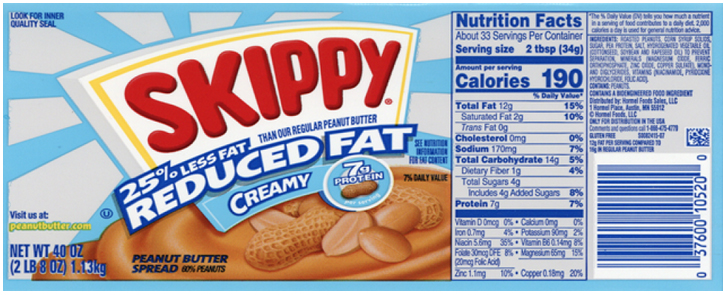
Skippy Foods, LLC issued a voluntary recall of certain peanut butter jars due to concerns of metal fragment contamination, which may have originated from a piece of manufacturing equipment. The recall affects 9,353 cases (161,692 pounds) of product: Skippy Reduced Fat Creamy Peanut Butter (40 oz ), Skippy Reduced Fat Chunky Peanut Butter (16.3 oz), and Skippy Creamy Peanut Butter Blended with Plant Protein (14 oz). The products have various “Best If Used By” Dates ranging from May 4–10, 2023.
The issue was uncovered by the manufacturing facility’s internal detection systems. No other sizes or varieties of Skippy brand peanut butter or spreads are affected by this recall. In addition, no consumer complaints have been associated with this recall thus far.
Undeclared allergens continue to be a big cause of food recalls. For allergen management practices to be effective within food companies, there must be a shared responsibility between food manufacturers, government agencies, regulators and consumers, says Guangtao Zhang, Ph.D., director of the Mars Global Food Safety Center. In a Q&A with Food Safety Tech, Zhang discussed key concerns related to undeclared allergens in food as well as the research that Mars is conducting to improve allergen management.
Food Safety Tech: The presence of undeclared allergens continues to be a hazard in the food safety space. Specific to peanut detection, what challenges is the industry facing?
Guangtao Zhang, Ph.D., director of the Mars Global Food Safety Center. All images courtesy of Mars.
Guangtao Zhang, Ph.D.: As food materials become more varied and complicated, food allergen management becomes increasingly complex. Robust, accurate and sensitive detection methods are essential to ensure consumer safety as well as compliance with regulatory standards for allergens in the food supply chain.
When you look at the regulatory aspects, detection methods go hand in hand. Firstly, there is a need to ensure that current standard detection methods used in regulatory control of consumer goods are validated for a range of complex food matrices to ensure neither over- nor under-estimation of allergen content occurs within a food supply chain. This is important because underestimation of allergen poses a significant food safety hazard to consumers, while overestimation of allergen can result in unnecessary product recalls, driving up product costs and food waste.
Secondly, validation and monitoring of the effectiveness of cleaning and handling practices in areas of potential cross contamination with allergen containing materials depend on reliable and robust quantitative food allergen test methods for their success. The more robust the testing protocols, the more we can improve our understanding of the risks associated with cross contamination of food allergens, potentially reducing the frequency of accidental contamination events.
It is also important to note that whilst the most common cause of undeclared allergen in the global food supply chain is through accidental contamination in raw materials or finished products, this is not the only method by which undeclared allergen may be found in a product.
For example, peanut flour may be used in economically motivated adulteration (EMA) food fraud cases. In 2018 the European Commission estimated that the cost of food fraud for the global food industry is approximately €30 billion every year. Due to its high protein content, peanut flour has been used as a bulking agent to raise the overall protein content of e.g., wheat flour, thus raising the ‘quality’, and therefore price, of lower value goods. The ability to effectively quantify peanut traces within complex products therefore has the potential to enable consumers of food products to further trust the safety of the food they eat.
ELISA (Enzyme linked immunosorbent assay) is the method used most frequently for peanut allergen detection in the food manufacturing industry because of its sensitivity and ease of use. However, it has disadvantages in certain settings. It is not currently validated for complex food matrices, as it is believed that the effects of both food matrices and food processing could result in an underestimation of peanut concentrations in thermally processed foods, leading to false negatives, as well as overestimation in complex food matrices, leading to false positives which are a potential food safety hazard to consumers.
Food Safety Tech: Tell us about the research that the Mars Global Food Safety Center is doing to help the industry with effective methods for peanut quantification.
Zhang: At the Mars Global Food Safety Center (GFSC) we believe that everyone has the right to safe food and that we have a responsibility to generate and share insights to help solve for global food safety challenges. We also know we can’t tackle these alone, which is why we collaborate with external partners. One of our focus areas is advancing understanding and knowledge sharing in peanut allergen detection. As part of that work, we are exploring methods of improving food safety via the development of advanced analytical methods to detect peanut allergen content, in the hopes that it will enable the food industry to expand on current preventative management protocols, including early detection methodologies, for faster response to future food allergen contamination events.
As part of our latest published research, we investigated the accuracy and sensitivity of ELISA-based test methods on raw and cooked wheat flour, wheat flour-salt and wheat flour-salt-oil matrices, which are common ingredients in the food industry. 10 ppm peanut was doped into each matrix during sample preparation. Recovery testing demonstrated that in all matrices the current industry standard ELISA method overestimated results with recoveries ranging from 49.6 to 68.6 ppm.
These findings prompted the development of a new confirmatory method based on liquid chromatography-tandem mass spectrometry (HPLC-MS/MS) for peanut quantification. When subjected to the same validation testing programme the HPLC-MS/MS technique was demonstrably more accurate and sensitive, with a limit of quantification of 0.3 ppm and the detected peanut concentration ranging from 6.8 to 12.8 ppm for samples doped with 10 ppm peanut.
This work is a first step in the development of a new standard method for peanut detection in complex food matrices and could ultimately inform safer manufacturing Quality & Food Safety (Q&FS) processes across global supply chains to help ensure safe food for all.
The Lab Food Integrity Team at the Mars Global Food Safety Center.
Food Safety Tech: What projects are researchers at the Center working on to enhance allergen management as a whole?
Zhang: A successful allergen management program depends on rigorous control of allergenic foods and ingredients from all other products and ingredients at every step of the food production process, from raw material development to the delivery of final products. This means that for allergen management practices to be effective, they must be a shared responsibility between food manufacturers, government agencies, regulators and consumers.
At the Mars GFSC, we take a precompetitive approach to research, knowledge sharing and collaborations—this means we openly share insights and expertise to help ensure safe food for all. This is important in driving forward innovations, helping unlock solutions that may not have previously been possible.
We have shared our latest work both through an open access publication in Food Additives & Contaminants: Part A but also directly with regulatory bodies such as the FDA in the hopes of advancing knowledge in both food safety risk management and allergen management in complex flour-based media within global supply chains. In addition to this, this research contributes to a wider Food Safety Best Practice whitepaper focused on food allergen risk management currently under draft by the Mars GFSC, which will be published in collaboration with Walmart Food Safety Collaboration Center and the Chinese Institute of Food Science and Technology (CIFST) later this year.
We believe that global collaborations such as this are essential to improving food allergen management and mitigating food safety risks. Communication, training and knowledge sharing are core principles of the Mars GFSC and as such form a large part of our ongoing activities in this space. For example, we have hosted Food Allergen Management workshops in collaboration with Danone and Romer Labs focused on helping to raise awareness of current and future food allergen trends. At one such event in 2019, 100 participants from 16 food companies came together to promote food allergen management in the industry and ensure that the next generation of food integrity testing capability is relevant, practical, and directly applicable to the real-world problems experienced by manufacturers and processors throughout the supply chain.
Representatives of the Mars GFSC have also shared our insights externally at a number of international conferences as well as during a Food Enterprise Food Allergen Management Seminar on topics including effective allergen management procedures, our guiding principles for allergen managements at Mars, and shared our approach to encourage and share knowledge with other manufactures in this area.
We continue to support requests for technical insights, for example providing insights during a global consultation session on General Principles for Labeling of Prepackaged Food. This resulted in the addition of characterization requirements for possible allergenic substances, promoting the use of a recognizable naming system in ingredient lists that contain allergen warnings.
Food Safety Tech: Can you comment on additional work your team is doing in the area of food fraud?
Zhang: Food allergen risk management forms only one part of our wider food integrity focus at the Mars GFSC. We are committed to helping ensure food authenticity in an increasingly complex, global food supply chain through collaboration with global partners to develop new and improved tools and analytical methods that help protect the integrity of raw materials and finished products.
We have collaborated with researchers at Michigan State University to develop a Food Fraud Prevention Cycle roadmap (Introducing the Food Fraud Prevention Cycle (FFPC): A dynamic information management and strategic roadmap) which answered questions such as how to detect food fraud, how to start a food fraud prevention program, what to do in terms of testing, how much testing is enough, and how to measure success. Our intention in publishing this research was that the adoption of a holistic and all-encompassing information management cycle will enable a globally harmonized approach and the continued sharing of best practices across industry partners.
More recently, we completed an international collaboration tackling rice adulteration together with Queen’s University Belfast (QUB), Agilent Technologies, International Atomic Energy Agency (IAEA), China National Center for Food Safety Risk Assessment (CFSA), and Zhejiang Yangtze Delta Institute of Tsinghua University (Yangtze Delta). This work successfully developed a two-tier testing program, capable of rapidly screening the geographical origins of rice within the global supply chain (Food Fingerprinting: Using a two-tiered approach to monitor and mitigate food fraud in rice). By developing a tiered system, we could ensure that manufacturers use the right techniques for the right occasion, to maximize the information available in investigating food fraud at the best value. As part of this work, we have helped develop hands-on training in Ghana and inform best practice guidance to help build the foundations of a strong food safety culture in rice authenticity across the global supply chain.
Investment in foodtech made significant leaps forward thanks to increasing consumer demand, digitization and innovation in certain food categories. According to a report recently released from Deloitte & Touche, LLP, the value of deals made in the sector from 2020 to 2021, jumped from $6 billion to $13.1 billion, respectively. Factors driving investment in the sector include continued growth in alternative and plant-based proteins, the establishment of tech-based platforms that improve supply chain logistics and consumer experiences, and technological innovation in general.
According to Heather Gates, audit & assurance private growth leader for Deloitte, the accelerated growth in foodtech innovation is parallel with advances in agtech. “Hydroponic farming, improved fertilizers and pesticides, and robotics AI are all enabling more sustainable, steady production of produce even in urban centers, which can help augment local distribution opportunities for foodtech platforms,” she stated in the report.
The expansion of food tech is also promoting more farm-to-table options to consumers, because it streamlines distribution and delivery. As interest on the part of consumers for healthier and more convenient options continues, companies will see an increased emphasis on innovation in foodtech that incorporates sustainability and waste reduction, nutritional considerations, environmental impact, more competition in making more foods available at an affordable cost, and continued emphasis on last-mile transportation.
Read the full report, “Road to Next”, on Deloitte’s website.
Today the FDA announced its budget request as part of the President’s 2023 fiscal year budget. Within the food sector, the agency is asking for $43 million for food safety modernization (including animal food safety) oversight—which includes efforts in continued implementation of the New Era of Smarter Food Safety initiative. The funding will also go towards improving preventative food safety practices, data sharing, predictive analytics and traceability, which will help the agency respond to outbreaks and recalls faster. “In partnership with states, the FDA will expand efforts to modernize, harmonize and transform the U.S. animal food inspection system to become more comprehensive and prevention oriented,” the FDA stated in an email release.
The FDA also requested $14 million in funding to reduce exposure to harmful chemicals and toxins in food. Last year the agency came under fire following a report released by Congress that stated there was an alarming amount of toxic heavy metals found in baby food. In response, the FDA devised a “Closer to Zero” action plan with a goal of reducing the presence of dangerous metals in foods commonly consumed by babies and young children. “Additional funding and legislative proposals will focus specifically on better protecting mothers, infants and young children through contamination limits in food, product testing requirements, notification of anticipated significant interruptions in the supply of infant formula or essential medical foods, as well as modernization of dietary supplement regulation,” the FDA stated.
Under the FDA’s funding requests that serve its core operations, the agency asked for $68 million for data modernization and enhanced technologies, which includes improving infrastructure aligned to the food programs; and $24 million to optimize inspections, including increasing support for recruiting and training new FDA investigators.
The FY budget covers October 1, 2022 through September 30, 2023.
Today the FDA launched a new online tool to help farmers understand the requirements of the proposed rule, “Standards for the Growing, Harvesting, Packing, and Holding of Produce for Human Consumption Relating to Agricultural Water”. If finalized, the rule would replace the microbial criteria and testing requirements for pre-harvest agricultural water for covered produce other than sprouts.
Under the proposed rule, farms would be required to conduct yearly systems-based agricultural water assessments to assess and guide measures that would reduce risks related to pre-harvest agricultural water. According to the FDA, the assessment would consist of evaluating the water system, agricultural water use practices, crop characteristics, environmental conditions, potential impacts on source water by activities conducted on adjacent and nearby land.
The Agricultural Water Assessment Builder v. 1.0 is an optional tool that asks users to answer questions and complete information specific to their farms. According to the FDA, this information is not shared with the agency, nor is it saved; users can save or print the information to their own computers.
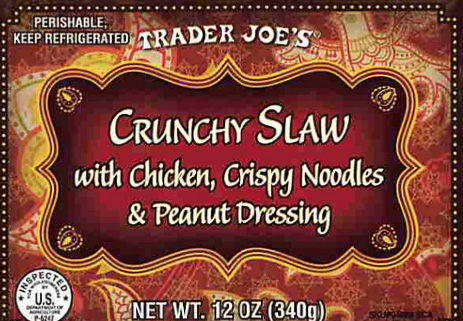
FSIS issued a public health alert about this product due to concerns of contamination with hard plastic. Image available on the USDA website.
USDA’s FSIS issued a public health alert for a Trader’s Joe’s ready-to-eat chicken salad product that could be contaminated with hard plastic. The issue is actually in the salad dressing, which is FDA regulated and was recalled by the producer over the contamination concern. The dressing is used in Trader Joe’s Crunchy Slaw with Chicken, Crispy Noodles & Peanut Dressing, which has a use by date of March 9 through March 12 on the label.The chicken salad is produced by R&G Fine Foods, Inc.
The products included in the alert were shipped to Arizona, California, Nevada, New Mexico and Utah and have the establishment number “P-6247” inside the USDA mark of inspection.
Thus far there have been no confirmed reports of adverse reactions or injury related to consuming this product.
This website uses cookies so that we can provide you with the best user experience possible. Cookie information is stored in your browser and performs functions such as recognising you when you return to our website and helping our team to understand which sections of the website you find most interesting and useful.
Strictly Necessary Cookies
Strictly Necessary Cookies should be enabled at all times so that we can save your preferences for these cookie settings.
We use tracking pixels that set your arrival time at our website, this is used as part of our anti-spam and security measures. Disabling this tracking pixel would disable some of our security measures, and is therefore considered necessary for the safe operation of the website. This tracking pixel is cleared from your system when you delete files in your history.
We also use cookies to store your preferences regarding the setting of 3rd Party Cookies.
If you visit and/or use the FST Training Calendar, cookies are used to store your search terms, and keep track of which records you have seen already. Without these cookies, the Training Calendar would not work.
If you disable this cookie, we will not be able to save your preferences. This means that every time you visit this website you will need to enable or disable cookies again.
Cookie Policy
A browser cookie is a small piece of data that is stored on your device to help websites and mobile apps remember things about you. Other technologies, including Web storage and identifiers associated with your device, may be used for similar purposes. In this policy, we say “cookies” to discuss all of these technologies.
Our Privacy Policy explains how we collect and use information from and about you when you use This website and certain other Innovative Publishing Co LLC services. This policy explains more about how we use cookies and your related choices.
How We Use Cookies
Data generated from cookies and other behavioral tracking technology is not made available to any outside parties, and is only used in the aggregate to make editorial decisions for the websites. Most browsers are initially set up to accept cookies, but you can reset your browser to refuse all cookies or to indicate when a cookie is being sent by visiting this Cookies Policy page. If your cookies are disabled in the browser, neither the tracking cookie nor the preference cookie is set, and you are in effect opted-out.
In other cases, our advertisers request to use third-party tracking to verify our ad delivery, or to remarket their products and/or services to you on other websites. You may opt-out of these tracking pixels by adjusting the Do Not Track settings in your browser, or by visiting the Network Advertising Initiative Opt Out page.
You have control over whether, how, and when cookies and other tracking technologies are installed on your devices. Although each browser is different, most browsers enable their users to access and edit their cookie preferences in their browser settings. The rejection or disabling of some cookies may impact certain features of the site or to cause some of the website’s services not to function properly.
Individuals may opt-out of 3rd Party Cookies used on IPC websites by adjusting your cookie preferences through this Cookie Preferences tool, or by setting web browser settings to refuse cookies and similar tracking mechanisms. Please note that web browsers operate using different identifiers. As such, you must adjust your settings in each web browser and for each computer or device on which you would like to opt-out on. Further, if you simply delete your cookies, you will need to remove cookies from your device after every visit to the websites. You may download a browser plugin that will help you maintain your opt-out choices by visiting www.aboutads.info/pmc. You may block cookies entirely by disabling cookie use in your browser or by setting your browser to ask for your permission before setting a cookie. Blocking cookies entirely may cause some websites to work incorrectly or less effectively.
The use of online tracking mechanisms by third parties is subject to those third parties’ own privacy policies, and not this Policy. If you prefer to prevent third parties from setting and accessing cookies on your computer, you may set your browser to block all cookies. Additionally, you may remove yourself from the targeted advertising of companies within the Network Advertising Initiative by opting out here, or of companies participating in the Digital Advertising Alliance program by opting out here.