FSMA-Based & Technology-Enabled: FDA Advances into New Era of Smarter Food Safety, a special keynote with Frank Yiannas, FDA
Digital Transformation in Food Safety, with Natasa Matyasova and Matt Dofoo, Nestlé
Consumer-focused Food Safety, with Mitzi Baum, STOP Foodborne Illness
TechTalks from Controlant, Veeva and Primority
This year’s event occurs as a Spring program and a Fall program. Haven’t registered? Follow this link to the 2021 Food Safety Consortium Virtual Conference Series, which provides access to all the episodes featuring critical industry insights from leading subject matter experts! Registration includes access to both the Spring and the Fall events. We look forward to your joining us virtually.
In today’s digital-first world, it might be surprising for those outside of the food manufacturing industry to learn that paper and pen are still considered state-of-the-art documentation tools. Answering food safety and quality questions such as: “What was the underlying cause of this customer complaint?” or “What caused the production halt this morning?” still require hours of research across paper documents, emails and spreadsheets. Maybe even the odd phone call or text message.
The good news is that many food safety and quality problems can be solved by leveraging modern-day technology. The challenge is taking that first step. By applying the following best practices, organizations can take small steps that lead to substantial benefits, including optimized food safety and quality programs, happier employees and safer operations.
Digital Transformation Best Practices
What if all the information food safety professionals require could be accessible through one unified interface and could proactively point to actions that should be taken? It can, with the right mindset and the right strategy.
While there is no “flip of a switch” to become digitally empowered, best practices exist for where to start. And, early adopters are injecting innovation into food safety programs with simple, but powerful technology.
Look Inward
Too often, food safety professionals push forward on a path to digital transformation by evaluating software and business applications against features and/or cost. But before taking this approach, it is important to look at existing food safety programs, identify where incremental improvements can be made and determine the potential return on a new technology investment.
Self-awareness is a beneficial leadership skill, but it’s also the key driver in understanding an organization’s business needs for food safety. Food safety professionals need to get real about common pain points, such as inconsistent or insufficient data, non-standardized practices, and delayed reporting. This is not the time to gloss over problems with processes or tools. Only by clearly documenting the challenges upfront will organizations be able to find the best solutions.
As one example, a common pain point is managing different formats and timing of reporting across facilities. See if this sounds familiar: “Well, Dallas sends an Excel spreadsheet every week, but Toledo only sends it on a monthly basis, while Wichita sends it monthly most of the time, but it’s never in the same format.”
Start out by identifying similar problems to help define the business objective, which will help determine how technology can be most effectively applied.
Eat, Sleep, Food Safety, Repeat
Food safety processes should constantly evolve to enable continued improvements in food safety outcomes. With that in mind, it’s helpful to dust off the corporate SOP and review it, especially if an organization is moving to a digital program. A common mistake many food manufacturers make is asking technology providers to configure an application based solely off the corporate protocol, only to discover at go-live that users don’t follow that protocol.
To avoid this situation, consider the following questions:
Why are food safety professionals not completing processes by the book?
Is that similar with every site?
Why has it been that way for so long?
Why did food safety professionals start to stray?
By locking down processes and identifying the desired way forward, leaders can configure a new application with the latest information and updated decisions. At a minimum, this step will help identify current issues that should be addressed, which can become measurable goals for the use of the new technology, ideally emphasizing the most pressing problems.
Less is More
Digital transformation doesn’t always need to become a “fix-all” project. Instead, it may revolve around a single operational initiative or business decision. For example, food safety professionals often maintain a spreadsheet with usernames and passwords for countless applications, some of which overlap in functionality and/or require a separate login for each facility. This is not only a safety concern, it’s an easy entry point when moving to a digital approach.
Consolidation of applications is a natural step from the standpoint of feasibility and fiscal responsibility. So, look for digital transformation opportunities that result in fewer applications and more consolidation.
Don’t Rush It
While digital transformation is inevitable, Rome wasn’t built in a day and neither should be an organization’s digital strategy. Unfortunately, the decision to go digital is often made, and a go-live date chosen, before determining what transformation requires, which is a clear-cut recipe for failure.
Technical vendors should play a key role in developing an effective implementation strategy, including sharing onboarding, planning, configuration and go-live best practices.
While technology is here to help the world become smarter about food safety, it is not here to replace human experience. Food safety leaders should continue to augment processes through supplemental technologies, rather than view technology as a full takeover of current approaches.
Barriers to entry for digital transformation are being lowered, as the ease of adoption of the underlying technologies continues to advance and access via cloud-based applications improves.
What to Do With All This Data? 5 Outcomes Food Manufacturers Can Achieve
Food manufacturers have benefited from digitally transforming environmental monitoring programs (EMPs) using workflow and analytics tools in a variety of ways. In the end, what matters is that the resulting data access and usability enables new insights and accelerates decisions that result in reduced risk and improved quality. Keep in mind these key outcomes that food manufacturers can achieve from digital transformation.
Enhancing an internal audit framework with digital tools will greatly reduce the burden of ensuring compliance for schemes such as BRC, SQF and FSSC food safety standards. Flexible report formats and filtering capabilities empower users with the right information at the right time.
Imagine, no more sifting manually through binders of CoA’s and test records to find a needle in a haystack. Exposing teams to a digital means of performing internal audits will not only boost confidence to handle requests from an auditor but will also help drive continuous improvement by providing easier access to insights about the effectiveness of internal policies. At the same time, digital tools will help ensure that only the required information is shared, reducing confusion and uncertainty as well as audit time and cost.
Outcome #2: Proactive Alerting and Automated Reporting
Threshold-based report alerts are an excellent way to reduce the noise often associated with notification systems. Providing quality and safety managers with automated alerts of scheduled maintenance or pending test counts can help them focus on activities that need attention, without distractions.
The benefit of threshold-based reporting is that it is a “set it and forget it” method. While regular “Monday Reports” are still a necessity, alerts and reports can be generated only when attention is needed for anomalies. A great example of this is being able to set proactive alerts for test counts in a facility that are approaching nonconformance levels. Understanding the corrective action requirements needed to control an environmental issue before it impacts quality, production and unplanned sanitation measures is a critical component of risk management and brand protection. In addition, reports can be automatically generated and delivered on a regular schedule to help meet reporting needs without spending time collecting data.
In other words—imagine a world where data comes and finds users when needed, rather than having to search for it in a binder or spreadsheet. Digital tools can provide email reports showing that a threshold has (or has not) been met and link the user directly to the information needed to take action. This is called “actionable information” and is something to consider when deploying technology within an organization’s food safety program processes.
Outcome #3: Optimize Performance with Tracking, Trending and Drilling
The Pareto Principle specifies that for many outcomes, about 80% of consequences come from 20% of causes. Historical data that is digitized can be used to quickly identify the root cause of top failures in a facility in order to drive process improvements. Knowing where to invest money will help avoid the cost of failure and aid in the prevention of a recall situation.
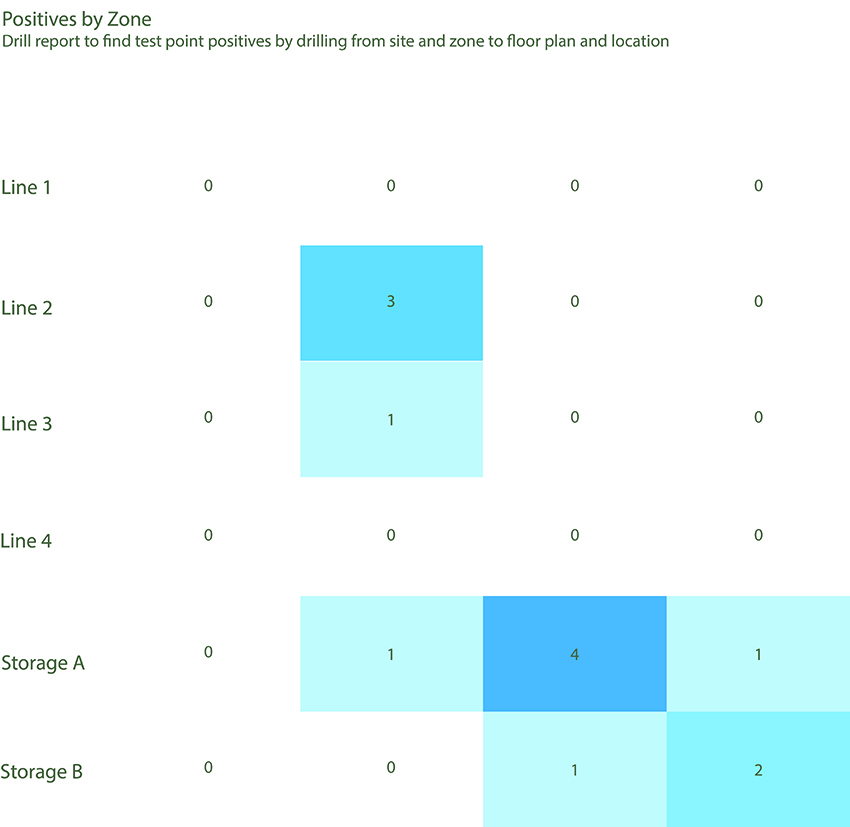
Dashboards are a powerful tool that organizations can use to understand the risk level across facilities to make better, data-driven decisions. Reports can be configured through a thoughtful dashboard setup that enables users to easily identify hot spots and trends, drill down to specific test locations, and enable clear communication to stakeholders. Figure 1 provides an example of a heat map that can be used to speed response and take corrective actions when needed.
Figure 1. Pathogen Positives by Zone and Location Heat
Outcome #4: Simplified Data Governance and Interoperability
Smarter food safety will drive standardization of data formats, which allows information to flow seamlessly between internal and external systems. One of the major benefits of shifting away from paper-based solutions is the ability to be proactive to reduce risk and cost. FSQA managers, within and across facilities, can benefit from a 360-degree operational view that reveals hidden connections between information silos that exist in the plant and across the organization. This includes:
Product tracing through product testing to environment monitoring and sanitation efforts
Tracing back a product quality issue reported from a customer to the sanitation efforts
Understanding why compliance is on track but quality results aren’t correcting
Outcome #5: Reduce the Cost of High Turnover
Successful GMPs, SSOPs and a HACCP program require leaders that continually ensure that employees are properly trained, which can be difficult with high turnover rates. To address this challenge, digital tools can aid in providing easily accessible documentation to empower users and reduce the cost, time and risk associated with having to re-train new employees on the EMP process. While training cannot be replaced with technology, it can be accelerated.
For example, testing locations within facilities can be documented with images and related information enabling new employees to visually see the floorplan and relevant testing protocols with accompanying video and click-through visualization of underlying data. Additionally, corrective action protocols can be enhanced with videos and standardized form inputs to ensure proper data is being collected at all times.
The Path Ahead
As the digital transformation of the food safety industry continues, food manufacturers should seek out and apply proven best practices to make the process as efficient and effective for their organization as possible. By avoiding common pitfalls, companies can achieve transformation objectives and realize substantial benefits from more easily accessible and actionable food safety data.
COVID-19 has been a sharp wake-up call for many food manufacturers in the need for resilient production environments that can readily respond to large and sudden changes, including fluctuations in demand and disruptive external events. This means being able to optimize operations for the following:
Efficiency: Where you can achieve constant output even when given fewer inputs—such as in workforce availability or resources. This was especially important when the pandemic caused widespread supply shortages, as well as staffing shortages due to social distancing measures.
Productivity: When you can ensure that, given the amount of available input (i.e., raw ingredients, manpower, equipment availability), you can maintain a consistent output to meet demand in the marketplace.
Flexibility: Where you can rapidly and intelligently adapt your processes in the face of change, in ways that are in the best interest of your business, the supply chain, and the consumers who purchase and trust in your products.
That trust is paramount, as manufacturers must continue to uphold quality and safety standards—especially during a time when public health is of the upmost importance. But between operational challenges and managing product quality, that’s a lot for manufacturers to wade through during a crisis.
To navigate the current COVID reality and improve response to future events, more organizations are looking to harness the power of data to enable agile decision-making and, in turn, build more resilient production environments.
Harnessing the Power of Data
The key to harnessing data for agile decisions is to aggregate end-to-end process information and make it available in real time. When you can achieve that, it’s possible to run analytics and derive timely insights into every facet of production. Those insights can be used to increase efficiency, productivity and flexibility—as well as ensure product quality and safety—even amidst upheaval.
When looking at solutions to aggregate data from a single site—or better yet, multiple sites—all roads lead to the cloud. Namely, cloud-based quality intelligence solutions can decouple the data from physical locations—such as paper checklists, forms, or supervisory control and data acquisition (SCADA) and human-machine interfaces (HMI) systems—and centralize what’s collected digitally in a unified repository. The data can then be accessed, analyzed, and consumed by those who need actionable insights from anywhere, at any time, and on any device, making cloud an ideal solution for connecting on-site operators and remote employees.
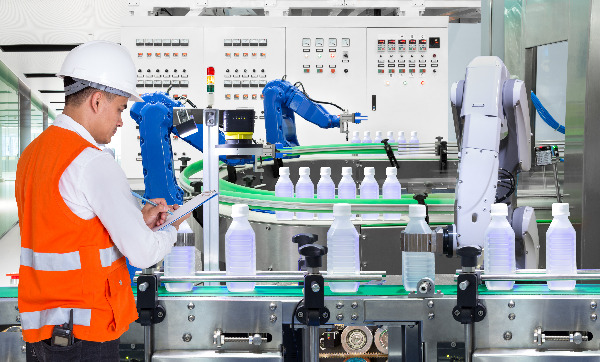
When process and quality data are centralized and standardized on the cloud, they can be leveraged for real-time monitoring and timely response to issues—from anywhere and at any time. (Image courtesy of InfinityQS)
An Opportunity for Broader Transformation
In migrating to the cloud, manufacturers open the opportunity to break away from the legacy, manual processes of yesterday and transition to more nimble, digitally enabled environments of tomorrow. For example, manual processes are often highly dependent on individual operator knowledge, experience and judgement. As the pandemic has shown, such institutional knowledge can be lost when employees become ill, or are unavailable due to self-isolation or travel restrictions, presenting a risk to operational efficiency and productivity. But if that valuable institutional knowledge were captured and codified in a quality intelligence solution as predefined workflows and prescriptive instructions, then a manufacturer could more easily move their resources and personnel around as necessary and find comfort knowing that processes will be executed according to best practices.
For many organizations, this would be a remarkable transformation in the ways of working, where data and digital technologies can augment human capacity and flexibility. Take for instance, in traditional production environments, a lot of human effort is spent on monitoring lines to catch process deviations or events like machine anomalies or quality issues. Using real-time data, next-generation solutions can take on that burden and continuously monitor what’s happening on the plant floor—only alerting relevant teams when an issue arises and they need to intervene. Manufacturers can thereby redeploy people to other tasks, while minimizing the amount of resources necessary to manage product quality and safety during daily production and in the event of disruption.
Ensuring Quality Upstream and Downstream
One company that has succeeded in digital transformation is King & Prince, a manufacturer of breaded, battered and seasoned seafood. When the company digitized its manufacturing processes, it centralized the quality data from all points of origin in a single database. The resulting real-time visibility enables King & Prince to monitor quality on more than 100 processes across three U.S. plants, as well as throughout a widespread network of global suppliers.
With this type of real-time visibility, a company can work with suppliers to correct any quality issues before raw materials are shipped to the United States, which directly translates to a better final product. This insight also helps plant-based procurement managers determine which suppliers to use. Within its own plants, operators receive alerts during production if there are any variations in the data that may indicate inconsistencies. They can thereby stop the process, make necessary adjustments, and use the data again to confirm when everything is back on track.
During finished product inspections, the company can also review the captured data to determine if they need to finetune any processes upstream and respond sooner to prevent issues from making it downstream to the consumer level. Overall, the company is able to better uphold its quality and safety standards, with the number of customer complaints regarding its seafood products dropping to less than one per million pounds sold year over year—and that’s all thanks to the harnessing of data in a digitally enabled production environment.
There’s No Time Like the Present
In truth, technologies like the cloud and quality intelligence solutions, and even the concept of digital transformation, aren’t new. They’ve been on many company agendas for some time, but just haven’t been a high priority. But when the pandemic hit, organizations were suddenly faced with the vulnerabilities of their long-held operational processes and legacy technologies. Now, with the urgency surrounding the need for resilient production environments, these same companies are thinking about how to tactically achieve digital transformation in the span of a few weeks or months rather than years.
Yet while digital transformation may sound like a tremendous initiative with high risks and expenses, it’s more tangible than some may think. For example, cloud-based Software-as-a-Service (SaaS) solutions offer flexible subscription-based models that keep costs low on top of rapid scalability. Digital transformation doesn’t have to be an all-or-nothing endeavor either. In fact, it can be better to progress incrementally, starting first with the manufacturing areas that are most in need or have the most issues. This minimizes unnecessary risk, makes digital transformation more achievable and realistic over short timeframes, and avoids overwhelming already maxed out operational and IT teams.
All things must pass. The pandemic will eventually be over. But in its wake will be a permanent legacy on not just society, but also on the manufacturing sector. In my opinion, digital transformation is a fundamental basis for building resilience into the modern food production environment. Now, more than ever, is the time to address that opportunity head on.
2020 has taken a lot away from us, but it has also taught us the importance of being able to quickly adapt (can you say…“pivot”?) to rapidly changing, dire circumstances. For Food Safety Tech, that meant shifting our in-person annual Food Safety Consortium to a virtual event. I really look forward to the Consortium each year, because we are a virtual company, and this is the one time of year that most of the Food Safety Tech and Innovative Publishing Company team are together. When we made the decision to move the event online, we really wanted to be considerate of our attendees, who more than likely were quickly developing webinar and Zoom fatigue. So we created a series of 14 Episodes that spanned from September until last week. I am not going to single out one episode or speaker/session in particular, because I think that all of our speakers and sponsors brought a tremendous amount of education to the food safety community. Thank you.
With that, the following are my top 10 takeaways from the 2020 Food Safety Consortium Virtual Conference Series—and this simply scratches the surface. Feel free to leave a comment on what you learned from our speakers and the discussions this fall.
COVID-19 has served as the springboard for digital transformation, more of which we have seen in the past nine months than in the last several years or even decade. Tech advances are increasing efficiencies, adding the ability to be more predictive, giving more visibility and traceability in the supply chain and offering increased accessibility. These include: IoT; Advanced analytics; Artificial intelligence (FDA has been piloting AI technology); Graph technology used in supply chain visibility; blockchain; mixed reality; and remote monitoring.
There are new responsibilities that come with being a part of America’s critical infrastructure and protecting essential frontline workers.
Companies must have a strong relationship (or work to build one) with local health departments and authorities
Name a COVID Czarat your company: This is a designated person, located both within a production facility as well as at the corporate location, who manages the bulk of the requirements and precautions that companies should be undertaking to address the pandemic.
Every company should have an emergency risk management plan that centers around good communication.
The COVID-19 pandemic is a reminder to us that the threat for viruses is always lurking beneath the surface. There is still work to be done on the food labs side regarding more rapid assays, leveling the playing field regarding conducting viral testing, and technology that enables labs to get safe, effective and consistent results.
Lessons in sanitation: Investment in sanitation is critical, there are no shortcuts, and empower your sanitation employees, give them the tools they need to effectively do their jobs.
The FDA’s FSMA Proposed Traceability rule is expected to be a “game changer”. It will lay the foundation for meaningful harmonization. FDA Deputy Commissioner for Food Policy and Response Frank Yiannas said the pandemic really put a spotlight on the fact that the U.S. food industry needs better tracking and tracing.
Know your suppliers, know your suppliers, know your suppliers!
Biofilms are ubiquitous, and the process of detecting and eliminating Listeria in your facility is a marathon with no finish line.
Food Safety Culture is a profit center, not an overhead department.
“If I’m not well, I can’t do well.” Making sure your needs are met personally and professionally plays an important role in being a better contributor to your company’s success.
As part of a special offering, we are making four episodes of the 2020 Food Safety Consortium Virtual Conference Series available on demand for free. Head to our Events & Webinars page to register to view the sessions on or after January 2021.
With significant clusters of COVID-19 infection among employees—16,000 cases and 86 deaths documented by the CDC through May 2020 — the food processing and distribution industry faces significant challenges in reopening their facilities and ramping up to full capacity. Technology for health and safety access governance and intelligence, along with guidelines from the CDC and OSHA, can help support food companies in the automation of certain compliance activities and a safe return-to-work strategy.
Designated part of the essential critical infrastructure by the federal government at the onset of the pandemic in the spring of 2020, the food supply chain needs active solutions to protect its workforce. But there’s more to this back-to-work transition. Workers need to feel safe and trust that new security, safety and compliance processes have their best interests in mind—transferring to an overall positive experience with their employer.
In the age of contagion, the food industry requires ways to communicate better with the workforce, identify and isolate areas of contagion and also deal with the lingering presence of potential bioterrorism, insider threat and cyber-attack. It’s a multi-faceted and complex workspace we’re reentering, one that takes coordination of technology, people and processes. Without it, food suppliers risk plant shutdowns and loss of business continuity.
Bioterrorism and insider threat remain an active part of the supply chain landscape. In fact, according to a June 2020 Wall Street Journal Pro Research Survey of cybersecurity executives at nearly 400 companies, 67% were concerned about malicious insiders. Remote workers and lax controls have exacerbated the situation and rising threats include malicious employees, accidental negligence, contractor or vendor misuse and account compromise.
The Landscape of Collaboration
The ongoing coordination between human resources (HR) and security is a collaborative effort that bolsters food defense in a COVID-19 world. Fueled by digital transformation, converged physical security and HR management solutions are wound together tightly in a coordinated and analytical approach to keep food industry employees safe and operations running smoothly.
These departments, once siloed and co-existing without direct interaction, are benefiting from software’s move to the cloud and open operating platforms, which provides increased opportunity for real-time integration of HR, security and facilities technologies. Moving to a converged approach across all departments, including HR, IT/cyber and operational technology (OT)/SCADA—can effectively secure our most critical food production and distribution resources while actively enforcing compliance and company policies, including COVID-19 mandates. In addition, physical security access governance, in a holistic manner, protects food industry workers and processes from compromised identities, systems and insider threats.
HR and physical security now have the ability to share data-insights to prevent, detect and mitigate the spread of contagions. With this convergence, organizations have the information they need to actively defend and protect the workforce, focusing on the human side of security to yield a positive experience.
The ongoing coordination between human resources and security is a collaborative effort that bolsters food defense in a COVID-19 world. Shutterstock image courtesy of AlertEnterprise.
Enabling a Safe and Healthy Return to Work
This time of unprecedented change has triggered a tectonic shift in the way organizations have been dealing with the health, security and safety of their workforce. Sensing a coming tsunami, HR, corporate real estate and physical security leaders are realizing that they must stop operating in silos and embrace a holistic approach. Enterprise response and recovery plans have become a major catalyst for converged security, as it has proven to be the most effective way to manage workspace access, enforce workforce security, safety and privacy.
Reopening with Technology at Your Back
Physical identity access management (PIAM) software, including visitor identity management (VIM) are convergence platforms that deliver identity and access governance, health and safety intelligence and compliance validation across the enterprise. PIAM provides a safer work environment by managing physical, logical and operational technology access for employees and visitors, actively enforcing company policies, compliance and industry regulations with built-in best practices and regulatory controls. Automated policy-driven background checks yield real-time vetting of visitors, contractors and employees while validating and identifying any policy violations. PIAM and VIM keeps facilities and workers safe, making sure the employees and visitors only have access to the areas, data and assets they need, including vital food processing areas where deliberate sabotage needs to be kept at bay.
While prevention of bioterrorism and insider threat is ongoing at food distribution, production and processing facilities there’s been a notable shift during the pandemic that focuses on the health and safety of workers. Security is no longer simply about keeping the bad guys out; it’s about safety and protecting workers from unsafe behavior.
Workforce health and safety access governance software solutions help organizations open safely in a frictionless, controlled and secure way by automating and enforcing COVID-19 related policies and procedures. Automated batch email/text notifications with self-service links send requests to the remote workforce for self-attestation and self-reporting offsite and enable access by the worker to the facility based on health, travel and other company policies.
Here’s how it works: An employee completes the self-reporting health and travel questionnaire through a mobile app, which triggers automated workflows based on those answers. These health questionnaires collect data and document employee activity during lockdown, including infection, symptoms or exposure. The employee’s self-attestation request comes to the manager for action, and based on answers the worker is considered high risk and per policy their access to the facility is revoked for 14 days while they are in quarantine. A similar self-attestation and workflow then applies to reinstatement for the employee. This reporting and workflow can be configured specifically to the facility. Enterprises can further customize their visitor identity management to provide clear communication of current policies during the outbreak, reinforcing WHO best practices.
Focus on Health and Safety
Health and safety access governance and intelligence provides prescreening support of workforce site entry with automated policy enforcements. Pre-registered and onsite visitors/contractors check-in/check-out with prescreening, watch list and other checks prior to access. In the production or distribution facility, health and safety analytics track confirmed or potentially exposed COVID-19 workers, identify exposed areas for lockdown and/or sanitization, social distancing violation, location heat map and other actionable health & safety analytics.
PIAM also allows you to automate your communications and deliver clear expectations and procedures to your workforce, visitors and contractors pre-visit and onsite—adding to a seamless experience.
Security convergence delivers a comprehensive, holistic solution across the entire food value chain, from sourcing to production to retail distribution. Human resources and physical security have teamed up—yielding real-time data that can prevent, detect and mitigate the spread of contagions. With this convergence comes greater situational awareness that defends and protects the workforce, with a strong focus on safety and building trust between worker and employer.
Around the world, countries are beginning to take tentative steps toward a return to normalcy following months of stay-at-home mandates and other restrictions in light of COVID-19. Slowly, we’re starting to see employees return to their offices, retail stores open their doors, and restaurants welcome back patrons. However, many will find themselves in a world dramatically different from the one they left before quarantine.
Namely, on top of social distancing and disinfection measures to control further spread of the virus, entire industries are re-examining their legacy processes and systems—especially ones that presented operational challenges at the pandemic’s outbreak—the food manufacturing industry included.
In truth, food manufacturers have gone to great lengths to maintain productivity and output to meet demand throughout the pandemic. But they have done so in the face of unprecedented circumstances, with many plants operating with limited workforces and key employees like quality professionals and plant managers shifted to remote work. Lacking connectivity between those on the plant floor and at home due to long-held manual processes, a growing number of manufacturers must now take a hard look at their quality and safety programs and embrace digital tools.
A Wake-Up Call for Digital Transformation
Most technological investments in food manufacturing over the past several decades have centered on electro-mechanical automation designed to scale up the physical production process. Fewer investments, however, have been made on the equally important data-driven, decision-making process necessary for ensuring optimal performance, food quality and safety.
Even in the most heavily automated plants, it’s not uncommon to find manufacturers managing quality through manually updated spreadsheets, which are often only reviewed after the fact, when it’s too late for remedial correction. There are unfortunately also those who still rely on paper checklists, making it practically impossible to take proactive action on collected process data—much less get the information in front of remote quality professionals and managers. Meanwhile, others have gone as far as adopting software solutions for quality data management and process control, but these tend to be on-premises systems that employees can’t access outside of the four walls of the plant.
We have also seen many examples where, due to workforce restrictions and availability, employees from other parts of the manufacturing business (e.g., R&D, IT, and back-office teams) have been brought in to perform plant-floor activities like quality and food safety checks. The goal has been to prevent impediments to production output, just when demand has increased substantially. But ensuring that these employees perform the checks on time and in the correct way—with little time for training or coaching—has left many plant leaders in a precarious position.
The challenges seen with these capabilities and enabling geographically dispersed teams to work together through the pandemic have been a wake-up call of sorts for digital transformation. Manufacturers are coming to the realization that they’ll need data accessibility, actionability and adaptability along the road to recovery and in the post-COVID-19 world. And with social distancing and other workplace precautions expected to continue for the foreseeable future, the imperative is all the more urgent.
The Solution Lies in the Cloud
To digitally transform quality and safety programs today, food manufacturers should prioritize investment in the cloud. Notably, cloud-based quality management systems offer a way to standardize and centralize critical process information, as well as tools to empower employees at all levels of the enterprise.
For plant-floor operators struggling to keep up on account of reduced workforce sizes, such solutions can automate routine yet important activities for quality assurance, including data collection, process monitoring and reporting. If a team member needs to cover a different shift or unfamiliar task, role-based dashboards can help them to see required actions, while process workflows can provide guidance to ensure proper steps are taken even with a limited workforce. Further, automated alerts can provide timely notifications of any issues—whether it be a missed data collection or an actual food quality or safety concern present in the data.
Perhaps most importantly during the pandemic and for the post-COVID-19 world, the cloud makes critical quality data instantly and easily accessible from anywhere, at any time. Quality professionals, plant managers, and other decision-makers can continue to monitor and analyze real-time process data, as well as observe performance trends to prevent issues from escalating—all safely from home.
The scalability of cloud-based solutions also streamlines deployment so organizations can rapidly implement and standardize on a single system across multiple lines and sites. In doing so, it becomes possible to run cross-plant analyses to identify opportunities for widescale process improvement and align best practices for optimal quality control at all sites. This ability to understand what’s happening in production—through real-time data—to enact agile, real-world change is a hallmark of successful digital transformation.
An Investment for Whatever the Future Holds
Ultimately, investments in secure cloud-based quality management and the broader digital transformation of manufacturing operations are investments in not only perseverance during the pandemic, but also resilience for the future. Food producers and manufacturers who can readily access and make informed decisions from their data will be the ones best equipped to pivot and adjust operations in times of disruption and uncertainty. And while it’s unclear what the future holds for the world, the food industry, and COVID-19, it’s safe to say we likely won’t see a full return to normalcy but the emergence of a new—and in many ways better—normal, born out of digital solutions and smarter ways of thinking about quality data collection and monitoring.
Modern food supply chains are inherently complex, with products typically passing through multiple suppliers and distributors, as well as countries and continents, before they end up on the supermarket shelf. While global supply chains offer consumers greater choice and convenience, they also make protecting the security of food products more challenging. With additional stakeholders between farm and fork, products are exposed to an elevated risk of biological or chemical contamination, as well as food counterfeiting and adulteration challenges—potentially putting consumer health and brand reputation in jeopardy.
Given the importance of maintaining the safety, quality and provenance of food products, global regulatory bodies are placing the integrity of supply chains under increased scrutiny. In the United States, for example, the adoption of FSMA moved the focus from responding to foodborne illnesses to preventing them by prioritizing comprehensive food testing measures, enforcing inspections and checks, and enabling authorities to react appropriately to safety issues through fines, recalls or permit suspensions.1 Similarly, China’s revised Food Safety Law (known as FSL 2015) is widely considered to be the strictest in the country’s history, and seeks to drive up quality standards by empowering regulators, and enhancing traceability and accountability through robust record-keeping. 2 The European Union continues to closely regulate and monitor food safety through its General Food Law, which is independently overseen by the European Food Safety Authority from a scientific perspective.
Achieving the Highest Standards of Food Security, Integrity and Traceability
For producers, manufacturers and distributors, the heightened regulatory focus on the security and integrity of the food supply chain has placed additional emphasis on accurate record-keeping, transparent accountability and end-to-end traceability. To meet the needs of the modern regulatory landscape, food chain stakeholders require robust systems and tools to manage their quality control (QC), environmental monitoring and chain of custody data. Despite this, many businesses still handle this information using paper-based approaches or localized spreadsheets, which can compromise operational efficiency and regulatory compliance.
The fundamental flaw of these traditional data management approaches is their reliance on manual data entry and transcription steps, leaving information vulnerable to human error. To ensure the accuracy of data, some companies implement resource-intensive verification or review checks. However, these steps inevitably extend workflows and delay decision-making, ultimately holding up the release of products at a high cost to businesses. Moreover, as paper and spreadsheet-based data management systems must be updated by hand, they often serve merely as a record of past events and are unable to provide insight into ongoing activities. The time lag associated with recording and accessing supply chain information means that vital insight is typically unavailable until the end of a process, and data cannot be used to optimize operations in real-time.
Furthermore, using traditional data management approaches, gathering information in the event of an audit or food safety incident can be extremely challenging. Trawling through paperwork or requesting information contained in spreadsheets saved on local computers is time-consuming and resource-intensive. When it comes to establishing accountability for actions, these systems are often unable to provide a complete audit trail of events.
Digital Solutions Transform Food Security and Compliance
Given the limitations of traditional workflows, food supply chain stakeholders are increasingly seeking more robust data management solutions that will allow them to drive efficiency, while meeting the latest regulatory expectations. For many businesses, laboratory information management systems (LIMS) are proving to be a highly effective solution for collecting, storing and sharing their QC, environmental monitoring and chain of custody data.
One of the most significant advantages of managing data using LIMS is the way in which they bring together people, instruments, workflows and data in a single integrated system. When it comes to managing the receipt of raw materials, for example, LIMS can improve overall workflow visibility, and help to make processes faster and more efficient. By using barcodes, radiofrequency identification (RFID) tags or near-field communication, samples can be tracked by the system throughout various laboratory and storage locations. With LIMS tracking samples at every stage, ingredients and other materials can be automatically released into production as soon as the QC results have been authorized, streamlining processes and eliminating costly delays.
By storing the standard operating procedures (SOPs) used for raw material testing or QC centrally in a LIMS, worklists, protocols and instrument methods can be automatically downloaded directly to equipment. In this way, LIMS are able to eliminate time-consuming data entry steps, reducing the potential for human error and improving data integrity. When integrated with laboratory execution systems (LES), these solutions can even guide operators step-by-step through procedures, ensuring SOPs are executed consistently, and in a regulatory compliant manner. Not only can these integrated solutions improve the reliability and consistency of data by making sure tests are performed in a standardized way across multiple sites and testing teams, they can also boost operational efficiency by simplifying set-up procedures and accelerating the delivery of results. What’s more, because LIMS can provide a detailed audit trail of all user interactions within the system, this centralized approach to data management is a robust way of ensuring full traceability and accountability.
This high level of operational efficiency and usability also extends to the way in which data is processed, analyzed and reported. LIMS platforms can support multi-level parameter review and can rapidly perform calculations and check results against specifications for relevant customers. In this way, LIMS can ensure pathogens, pesticides and veterinary drug residues are within specifications for specific markets. With all data stored centrally, certificates of analysis can be automatically delivered to enterprise resource planning (ERP) software or process information management systems (PIMS) to facilitate rapid decision-making and batch release. Furthermore, the sophisticated data analysis tools built into the most advanced LIMS software enable users to monitor the way in which instruments are used and how they are performing, helping businesses to manage their assets more efficiently. Using predictive algorithms to warn users when principal QC instruments are showing early signs of deterioration, the latest LIMS can help companies take preventative action before small issues turn into much bigger problems. As a result, these powerful tools can help to reduce unplanned maintenance, keep supply chains moving, and better maintain the quality and integrity of goods.
While LIMS are very effective at building more resilient supply chains and preventing food security issues, they also make responding to potential threats much faster, easier and more efficient. With real-time access to QC, environmental monitoring and chain of custody data, food contamination or adulteration issues can be detected early, triggering the prompt isolation of affected batches before they are released. And in the event of a recall or audit, batch traceability in modern LIMS enables the rapid retrieval of relevant results and metadata associated with suspect products through all stages of production. This allows the determination of affected batches and swift action to be taken, which can be instrumental in protecting consumer safety as well as brand value.
Using LIMS to Protect Security and Integrity of the Food Supply Chain
Increasingly, LIMS are helping businesses transform food security by bringing people, instruments and workflows into a single integrated system. By simplifying and automating processes, providing end-to-end visibility across the food supply chain, and protecting the integrity of data at every stage, these robust digital solutions are not only helping food supply chain stakeholders to ensure full compliance with the latest regulations; they are enabling businesses to operate more efficiently, too.
This website uses cookies so that we can provide you with the best user experience possible. Cookie information is stored in your browser and performs functions such as recognising you when you return to our website and helping our team to understand which sections of the website you find most interesting and useful.
Strictly Necessary Cookies
Strictly Necessary Cookies should be enabled at all times so that we can save your preferences for these cookie settings.
We use tracking pixels that set your arrival time at our website, this is used as part of our anti-spam and security measures. Disabling this tracking pixel would disable some of our security measures, and is therefore considered necessary for the safe operation of the website. This tracking pixel is cleared from your system when you delete files in your history.
We also use cookies to store your preferences regarding the setting of 3rd Party Cookies.
If you visit and/or use the FST Training Calendar, cookies are used to store your search terms, and keep track of which records you have seen already. Without these cookies, the Training Calendar would not work.
If you disable this cookie, we will not be able to save your preferences. This means that every time you visit this website you will need to enable or disable cookies again.
Cookie Policy
A browser cookie is a small piece of data that is stored on your device to help websites and mobile apps remember things about you. Other technologies, including Web storage and identifiers associated with your device, may be used for similar purposes. In this policy, we say “cookies” to discuss all of these technologies.
Our Privacy Policy explains how we collect and use information from and about you when you use This website and certain other Innovative Publishing Co LLC services. This policy explains more about how we use cookies and your related choices.
How We Use Cookies
Data generated from cookies and other behavioral tracking technology is not made available to any outside parties, and is only used in the aggregate to make editorial decisions for the websites. Most browsers are initially set up to accept cookies, but you can reset your browser to refuse all cookies or to indicate when a cookie is being sent by visiting this Cookies Policy page. If your cookies are disabled in the browser, neither the tracking cookie nor the preference cookie is set, and you are in effect opted-out.
In other cases, our advertisers request to use third-party tracking to verify our ad delivery, or to remarket their products and/or services to you on other websites. You may opt-out of these tracking pixels by adjusting the Do Not Track settings in your browser, or by visiting the Network Advertising Initiative Opt Out page.
You have control over whether, how, and when cookies and other tracking technologies are installed on your devices. Although each browser is different, most browsers enable their users to access and edit their cookie preferences in their browser settings. The rejection or disabling of some cookies may impact certain features of the site or to cause some of the website’s services not to function properly.
Individuals may opt-out of 3rd Party Cookies used on IPC websites by adjusting your cookie preferences through this Cookie Preferences tool, or by setting web browser settings to refuse cookies and similar tracking mechanisms. Please note that web browsers operate using different identifiers. As such, you must adjust your settings in each web browser and for each computer or device on which you would like to opt-out on. Further, if you simply delete your cookies, you will need to remove cookies from your device after every visit to the websites. You may download a browser plugin that will help you maintain your opt-out choices by visiting www.aboutads.info/pmc. You may block cookies entirely by disabling cookie use in your browser or by setting your browser to ask for your permission before setting a cookie. Blocking cookies entirely may cause some websites to work incorrectly or less effectively.
The use of online tracking mechanisms by third parties is subject to those third parties’ own privacy policies, and not this Policy. If you prefer to prevent third parties from setting and accessing cookies on your computer, you may set your browser to block all cookies. Additionally, you may remove yourself from the targeted advertising of companies within the Network Advertising Initiative by opting out here, or of companies participating in the Digital Advertising Alliance program by opting out here.