Tag Archives: FDA

CDC, FDA, USDA logos
Beltway Beat

Update on Outbreak Investigation of Listeria monocytogenes: Ready-to-Eat Foods

By Food Safety Tech Staff
No Comments
CDC, FDA, USDA logos

The FDA and CDC, in collaboration with state and local partners, announced in a press release that they investigated illnesses in a multistate outbreak of Listeria monocytogenes infections linked to recalled Ready-to-Eat (RTE) foods, or products that do not need additional cooking, produced by Fresh & Ready Foods, LLC of San Fernando, CA.

The recalled products were identified by the “Use By” dates from 4/22/2025 to 5/19/2025 and include the following brand names:

  • Fresh & Ready Foods
  • City Point Market Fresh Food to Go
  • Fresh Take Crave Away

These products are no longer available for sale in stores.

CDC announced that the outbreak is over. CDC reports a total of 10 illnesses in two states. There has been a total of 10 hospitalizations and one death attributed to listeriosis.

FDA is working with Fresh & Ready Foods on corrective and preventive actions.

FDA’s outbreak investigation is complete.

To sign up for a free subscription to Food Safety Tech’s weekly Newsletter, click here

FDA Logo
Beltway Beat

FDA Approves Gardenia (Genipin) Blue Color Additive

By Food Safety Tech Staff
No Comments
FDA Logo

The U.S. Food and Drug Administration announced on July 14, 2025 that it had granted Gardenia Blue Interest Group’s (GBIG) color additive petition to use the color gardenia (genipin) blue in various foods, at levels consistent with good manufacturing practice. It is the fourth color derived from natural sources approved by the FDA for use in foods in the last two months.

Gardenia (genipin) blue is derived from the fruit of the gardenia, a flowering evergreen. The FDA has approved the color additive for use in sports drinks, flavored or enhanced non-carbonated water, fruit drinks and ades, ready-to-drink teas, hard candy, and soft candy.

The three colors derived from natural sources approved in May were: galdieria extract blue, a blue colorant derived from the unicellular red algae Galdieria sulphuraria; calcium phosphate, a white powder; and butterfly pea flower extract, a blue color that can be used to achieve a range of shades including bright blues, intense purple, and natural greens.

Under section 721 of the Federal Food, Drug, and Cosmetic Act, color additives must be FDA-approved before they may be used in foods. The FDA determines whether a color additive is safe to use by considering the projected human dietary exposure to the color additive, the additive’s toxicological data, and other relevant information, such as published literature. Once the FDA approves a color additive, any manufacturer can use the coloring in accordance with the conditions of use.

To sign up for a free subscription to Food Safety Tech’s weekly Newsletter, click here

Beltway Beat

FDA Encourages Food Manufacturers to Accelerate Phasing Out the Use of FD&C Red No. 3 in Foods Before 2027 Deadline

By Food Safety Tech Staff
No Comments

On January 15, 2025, the U.S. Food and Drug Administration issued an order revoking the authorization for the use of FD&C Red No. 3 in foods, including dietary supplements (permitted under 21 Code of Federal Regulations (CFR) 74.303), and in ingested drugs (permitted under 21 CFR 74.1303). The final order stated that manufacturers who use FD&C Red No. 3 in foods and ingested drugs would have until January 15, 2027, or January 18, 2028, respectively, to reformulate their products.

The FDA’s action to revoke the authorization for the use of FD&C Red No. 3 was based on the Delaney Clause of the Federal Food, Drug, and Cosmetic Act (FD&C Act). The Delaney Clause, enacted in 1960 as part of the Color Additives Amendment to the FD&C Act, prohibits FDA authorization of a color additive if it has been found to induce cancer in humans or animals. The FDA determined that data presented in a 2022 color additive petition showed that FD&C Red No. 3 causes cancer in male laboratory rats when exposed to high levels.

On April 22, 2025, the U.S. Department of Health and Human Services (HHS) announced a series of new measures to phase out all petroleum-based synthetic dyes, also known as color additives subject to certification, from the nation’s food supply. As part of this phase out, HHS and FDA requested food companies to remove FD&C Red No. 3 sooner than the 2027 deadline required by the final order. To support this goal, the FDA encourages food manufacturers to, as soon as is practicably possible, reformulate to stop using FD&C Red No. 3 in foods, including dietary supplements, with the goal of completing phase out before the January 15, 2027, deadline. The FDA believes that accelerating the phase out of the use of FD&C Red No. 3 in foods will help further the goal of Making America Healthy Again.

The FDA recognizes that substituting FD&C Red No. 3 used in foods, including dietary supplements, with other color additives may require the expanded use of authorized color additives and/or the development of new color additives. The FDA also recognizes the widespread interest in substituting FD&C Red No. 3 with color additives derived from other sources, including plants. Regardless of the source material, each color additive must meet the legal safety standard of a reasonable certainty of no harm under the intended conditions of use. The FDA evaluates data in a petition to ensure that the use of a color additive meets the legally required safety standard and issues a regulation prescribing safe conditions of use.  Information about color additive petitions is available on FDA’s website: Color Additive Petitions | FDA.

To sign up for a free subscription to Food Safety Tech’s weekly Newsletter, click here

Listeria
Ask The Expert

Listeria-related Regulations, FDA & USDA

By Bob Lijana
No Comments
Listeria

To enforce food safety regulations, FDA and USDA have a “zero tolerance” policy for Listeria monocytogenes (Lm) in certain foods. This means Lm must not be found in any 25-gram sample. According to FDA’s Compliance Policy Guide, legal action may be recommended if Lm is found in a ready-to-eat (RTE) food that allows Lm to grow. While the compliance guide is not legally binding, the finding of Lm in your facility could still lead to enforcement by FDA.

Do note that this is a regulatory policy. It does not mean that the typical healthy individual cannot tolerate Lm. Quite the contrary, as recognized by other countries (such as New Zealand, Canada, and the European Union), some foodstuffs are allowed up to 100 CFU/gm of Lm (although the EU tolerance is supposed to change to “not detectable in 25 gm” as of June 1, 2026). For some foods, Japan allows even higher levels. Because of these higher limits, some people believe that allowing some level of Lm in a food is a very practical approach.

That said, the USA does not. Any food company—big or small—can face public health warnings, safety alerts, product withdrawals, or recalls because of Lm. No one is exempt if something goes wrong with how food is handled or processed.

Unfortunately, even with past mistakes and costly recalls, Lm-related recalls still occur. Some recent examples:

  • July 2025: recall of over 350,000 lb of turkey bacon (Kraft Heinz—Oscar Mayer).
  • June 2025: recall of chicken alfredo meals; at least 16 people hospitalized; at least 2 deaths (FreshRealm–Kroger and Walmart).
  • May 2025: recall of nearly 90 vending machine sandwiches and other products; at least 10 people hospitalized (Fresh & Ready Foods).
  • Apr 2025: recall of nearly 2,000 cases of ready to eat celery sticks (Duda Farms).
  • Feb 2025: recall of frozen supplement shakes; 12 deaths (Lyons Magnus–Sysco).
  • Jan 2025: recall of 2,000,000 cases of doughnuts and pastries (FGF Brands–Dunkin).
  • Oct 2024: recall of 12,000,000 lb of pre-cooked meat and poultry (Bruce Pack).
  • Oct 2024: recall of 200 varieties of frozen waffles and pancakes (Treehouse Foods—Food Lion, Harris Teeter, Publix).
  • Aug 2024: recall of 7,200,000 lb of sliced deli meats; 10 deaths (Boars Head).
  • Feb 2024: recall of 50 different cheese products; 2 deaths (Rizo Lopez Foods—Albertson’s, Trader Joe’s).

Even if one disagrees with the scientific basis for a “zero-tolerance” approach, all regulations require an ongoing vigilance to Lm presence in the plant environment (and of course in the food). This includes non-regulatory food safety schemes such as SQF (Safe Quality Foods). The current SQF Code (which is being updated for 2026) includes a requirement for a risk-based environmental monitoring program for pathogen detection, sampling, and eradication. To help in this regard, both FDA (“draft guidance for industry”) and USDA (“compliance guideline”) have excellent technical guidance documents. These publicly-available resources cover the microbiological aspects of Lm, how to identify Lm, and how to assess risks in order to determine appropriate preventive and corrective actions.

Regulators also use DNA testing in their quest to find root sources of Lm. Whole genome sequencing (WGS) is like testing for one’s ancestry. Listeria samples can be categorized based on their genetic (DNA) makeup. With an extensive database (e.g., PulseNet) FDA may be able to link the DNA from a Lm environmental sample in a plant with the DNA from a blood sample from someone who has been hospitalized with listeriosis. If FDA can also determine that the food was purchased in the same state as the plant is located and/or that the hospitalized person said that they ate that specific food, then FDA can link everything together.

Food manufacturers need to be aware of how WGS can affect their operations. A publication on this topic provides useful perspective from FDA’s point of view and the manufacturer’s point of view. These do not always align.

Regulations help protect the public health. Use these regulations as guides to protect the food you make.

See the Related Articles below to read the series.

To sign up for a free subscription to Food Safety Tech’s weekly Newsletter, click here

Prop 65 label
Beltway Beat

Texas to put Warning Labels on Foods with any one of 44 Additives

By Food Safety Tech Staff
No Comments
Prop 65 label

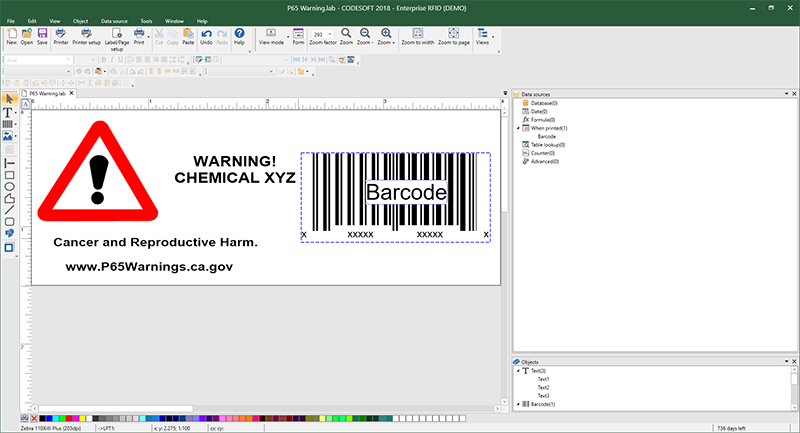
Food Politics by Marion Nestle reported today that Texas Governor Greg Abbott has signed a bill authorizing warning labels on food products containing one or more of a long list of chemical additives. The list includes the color additives that the FDA has targeted, but also bleached and brominated flour, BHA and BHT, DATEM, Olestra, partially hydrogenated oil, and potassium bromate and iodate. The label reads:

WARNING: This product contains an ingredient that is not recommended for human consumption by the appropriate authority in Australia, Canada, the European Union, or the United  Kingdom.

Food Politics added “what’s also stunning is how far this law goes beyond California’s law prohibiting red dye No. 3, and West Virginia’s law restricting seven dyes in schools.”

Obviously, Food companies cannot formulate products for individual states. To sell into Texas, companies with the 44 additives in their products will have to a) publish the warning label on their packaging b) get rid of these chemicals, c) lobby for a less restrictive federal law preempting state laws.

FDA Logo
Beltway Beat

Application for FY2026 Benefits in the VQIP Portal Due September 1

By Food Safety Tech Staff
No Comments
FDA Logo

The application window for the Voluntary Qualified Importer Program (VQIP) portal for fiscal year FY 2026 benefits will close on September1, 2025. Submitting applications early ensures sufficient time for review and user fee processing. VQIP benefits will begin on October 1, 2025, contingent upon approval of the application and receipt of the user fee payment.

VQIP is a fee-based program that offers importers an opportunity to expedite the review and importation process of human and animal foods into the United States by demonstrating and maintaining control over the safety and security of their supply chains.

Prior to applying, it is essential to confirm that all foreign suppliers of the intended food imports under VQIP hold valid facility certifications issued by a certification body (CB) accredited under the FDA’s Accredited Third-Party Certification Program (TPP).

Importers or foreign suppliers seeking eligibility for VQIP should engage with an accredited CB under TPP to arrange for an audit meeting the criteria of a regulatory audit. It’s crucial to note that only the outcomes of a regulatory audit can ascertain eligibility for certification under TPP, as per the definitions outlined in 21 CFR 1.600(c) and 21 CFR 1.651.

Food importers interested in applying for VQIP benefits during FY 2026, visit:

Questions may be submitted to the VQIP Importers’ Help Desk via 1-301-796-8745 or via email to FSMAVQIP@fda.hhs.gov.

Beltway Beat

FDA Updates General Food Labeling Requirements Compliance Program

By Food Safety Tech Staff
No Comments

The U.S. Food and Drug Administration has updated Compliance Program 7321.005, now titled General Food Labeling Requirements and Labeling-Related Sample Analysis – Domestic and Import. This update replaces the previous 2010 version of the program and reflects current labeling regulations, operational guidance, and enforcement priorities.  

FDA’s Compliance Program (CP) outlines the guidelines and procedures for FDA inspectors when conducting inspections of food facilities, both within the United States and in foreign countries. The purpose of the CP is to help ensure that food facilities comply with FDA regulations, and to protect public health by identifying and addressing food safety issues.  

These updates support FDA’s ongoing efforts to help ensure that food labeling is truthful, not misleading, and compliant with federal regulations. The updated program will enhance oversight of domestic and imported foods, guide enforcement activities, and improve data consistency across FDA operations.  

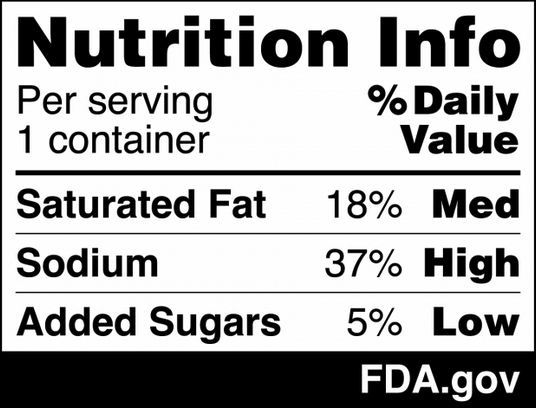
Key changes to the program include the incorporation of sesame as the ninth major food allergen in accordance with the Food Allergy Safety, Treatment, Education, and Research (FASTER) Act of 2021, and includes guidance on gluten-free labeling requirements. The program also aligns with the 2016 updates to the Nutrition Facts label, including formatting and nutrient declaration changes. 

FDA Logo
Beltway Beat

FDA Seeks Input on a New Method for Ranking Chemicals in Food for Post-market Assessments

By Food Safety Tech Staff
No Comments
FDA Logo

The U.S. Food and Drug Administration (FDA) released for public comment its proposed method for ranking chemicals in the food supply. This method provides a transparent, systematic, and science-based approach to determine which chemicals the agency would prioritize for post-market assessments through the agency’s post-market chemical review program. It will allow the FDA to allocate resources more efficiently, ensuring that the agency focuses on food chemicals that may present the greatest potential public health risk, including risk to sensitive populations, and are of high public concern.

Determining if a chemical—either one intentionally added to food or a contaminant that is not intentionally added—needs to be further evaluated based on new information takes a structured and science-based approach to ensure that the FDA’s reviews are most protective of the health of consumers. The method released today uses Multi-Criteria Decision Analysis (MCDA) to determine a score for each chemical based on evaluating the information about a chemical against a pre-determined set of criteria. The method is similar in approach and criteria to one that the U.S. Environmental Protection Agency uses for prioritizing chemicals, but the FDA’s method takes into account factors specific to exposure from food and uses a scoring method similar to the FDA’s Risk Ranking Model for Traceability.

CDC, FDA, USDA logos
Beltway Beat

FDA, USDA FSIS, CDC and States Collaborate on Outbreak Investigation of Listeria from Chicken Fettuccine Alfredo Meals

By Food Safety Tech Staff
No Comments
CDC, FDA, USDA logos

The U.S. Food & Drug Administration (FDA), U.S. Department of Agriculture Food Safety and Inspection Service (USDA FSIS), and Centers for Disease Control and Prevention (CDC), in collaboration with state and local partners, are investigating illnesses in a multistate outbreak of Listeria monocytogenes infections linked to chicken fettuccine alfredo meals. Recalled product assembled at FreshRealm, Inc.’s San Clemente, California; Montezuma, Georgia; and Indianapolis, Indiana, manufacturing locations may be adulterated with the outbreak strain of Listeria monocytogenes.

As of June 18, 2025, a total of 17 cases have been reported from 13 states. Of the 11 people interviewed, 7 reported eating precooked meals, and 4 (57%) specifically reported eating chicken fettuccine alfredo. Of 17 people with information, 16 (94%) were hospitalized and there are 3 deaths attributed to listeriosis. There is one pregnancy associated illness in a mother that resulted in a fetal loss.

FDA has conducted a thorough investigation in response to this outbreak, including traceback of FDA-regulated ingredients within the assembled product. FDA used specific meal information reported by ill people, and collected by state officials and CDC, and firm records to trace FDA-regulated ingredients through the supply chain to the establishments where those were produced.  FSIS identified the outbreak strain in a routine sample of FreshRealm’s chicken fettuccine alfredo collected on March 19, 2025. This lot of product was not distributed into the food supply. FSIS also used purchase documentation to trace chicken fettuccine alfredo products purchased by two ill people to FreshRealm establishments. An additional two ill people verbally described chicken fettuccine alfredo products they purchased. FSIS identified products produced by FreshRealm that matched the descriptions during follow-up at the retail stores where they shopped.

FDA also initiated multiple inspections, including sample collection, at the manufacturers of some ingredients used to make the chicken fettuccine alfredo product.

Testing of the FDA-regulated ingredients collected to date is complete and the outbreak strain of Listeria was not found. FDA and FSIS have not yet determined a source of contamination for this product; however, both agencies are working closely with each other and CDC to continue to collect information to determine what additional steps are needed to protect public health.

On June 17, 2025, in response to this investigation, FreshRealm, Inc., recalled their pre-made chicken fettuccine alfredo products sold at Kroger and Walmart.

Beltway Beat

Senator Tom Cotton Introduces Bill to Unify Food Safety Agencies

Senator Tom Cotton (R-Arkansas) introduced the Study And Framework for Efficiency in Food Oversight and Organizational Design (SAFE FOOD) Act, legislation that would direct the Department of Agriculture to conduct a study on the consolidation of federal agencies that have a primary role in ensuring food safety into a single agency.

The Bill states that not later than 60 days after the date of enactment of this Act, the Secretary of Agriculture shall conduct a study on the consolidation of Federal agencies with a primary role in ensuring food safety in the United States (including the Food Safety and Inspection Service, the Food and Drug Administration, and Centers for Disease Control and Prevention) into a single agency.

Not later than 1 year after the date of enactment of this Act, the Secretary of Agriculture shall submit to the appropriate committees of Congress a report containing the results of the study; and any recommendations of the Secretary of Agriculture with respect to the consolidation.

Full text of the bill may be found here.