Tag Archives: MAHA

Prop 65 label
Beltway Beat

Texas to put Warning Labels on Foods with any one of 44 Additives

By Food Safety Tech Staff
No Comments
Prop 65 label

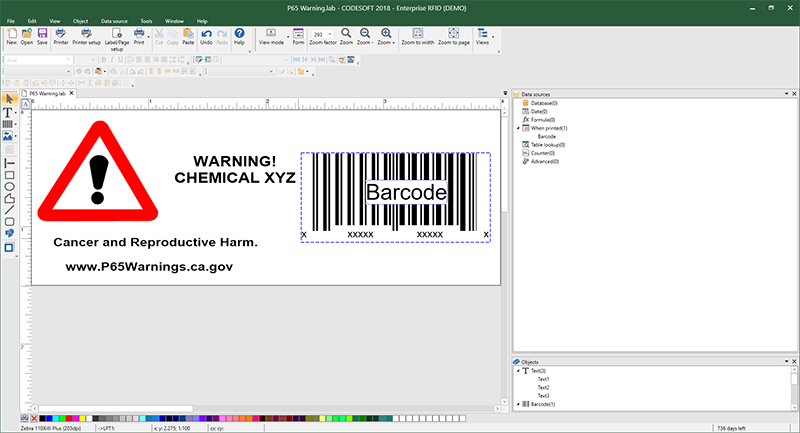
Food Politics by Marion Nestle reported today that Texas Governor Greg Abbott has signed a bill authorizing warning labels on food products containing one or more of a long list of chemical additives. The list includes the color additives that the FDA has targeted, but also bleached and brominated flour, BHA and BHT, DATEM, Olestra, partially hydrogenated oil, and potassium bromate and iodate. The label reads:

WARNING: This product contains an ingredient that is not recommended for human consumption by the appropriate authority in Australia, Canada, the European Union, or the United  Kingdom.

Food Politics added “what’s also stunning is how far this law goes beyond California’s law prohibiting red dye No. 3, and West Virginia’s law restricting seven dyes in schools.”

Obviously, Food companies cannot formulate products for individual states. To sell into Texas, companies with the 44 additives in their products will have to a) publish the warning label on their packaging b) get rid of these chemicals, c) lobby for a less restrictive federal law preempting state laws.

FDA Logo
Beltway Beat

Health Groups Urge FDA: Target Toxins, Preserve Safe Food Ingredients

By Food Safety Tech Staff
No Comments
FDA Logo

The paper was developed in response to HHS Secretary Robert F. Kennedy, Jr.’s March 10 directive to the FDA to explore eliminating the “self-affirmed” Generally Recognized as Safe (GRAS) pathway, which allows companies to determine food ingredient safety without FDA review.

The white paper advocates for an alternative to the total elimination of the ‘Self-GRAS’ pathway, focusing instead on eliminating the most hazardous chemicals while preserving access to safe, beneficial ingredients. The paper and further background materials can be found here.

ANH’s white paper has been endorsed by a range of groups, including the Global Wellness Forum, the Organic Consumers Association, and the National Foundation for Integrative Medicine, with more groups continuing to sign on. It was also sent to RFK, Jr. and various members of relevant FDA and HHS committees, encouraging them to incorporate this common-sense plan into GRAS reform.

“We support Secretary Kennedy’s intention to remove the most toxic substances from our food supply,” said Jonathan Emord, J.D., ANH General Counsel and co-author of the white paper. However, the government should avoid complete elimination of Self-GRAS, which would create a massive regulatory bottleneck, potentially removing thousands of safe ingredients from the market along with those that are unsafe.”

The authors emphasize that their targeted approach is particularly well-suited to the current reality of reduced resources at the Department of Health and Human Services. “By focusing regulatory scrutiny on the small subset of ingredients with demonstrated safety concerns rather than attempting to review all 10,000+ self-affirmed ingredients, this strategy allows the FDA to efficiently protect public health even with limited staff and resources,” the white paper explains.

According to ANH, the GRAS designation was established under the Food Additive Amendment of 1958 to exempt well-established, demonstrably safe food ingredients from the FDA’s rigorous pre-market approval process. Companies have used this pathway to introduce ingredients into the food supply, including colors, preservatives, technological additives, and chemicals, most of which have not been thoroughly reviewed for safety or reassessed after decades of use. While these concerns are valid, the Self-GRAS pathway remains vital for introducing safe, innovative products without unnecessary regulatory burdens.

ANH’s proposed reforms draw important contrasts with the European regulatory approach to food additives, where only about 400 ingredients are currently permitted. The paper argues this may be overly cautious, potentially depriving consumers of healthy options.

“Our white paper defines a strategy for balanced GRAS reform while avoiding the EU model of extensive regulatory overreach in favor of freedom of choice,” said Robert Verkerk, Ph.D., ANH’s Executive & Scientific Director and white paper co-author.

The white paper proposes several key reforms:

  1. Targeted Approach to Unsafe Ingredients: Prioritize the removal of specific unsafe ingredients rather than requiring re-evaluation of all 10,000+ self-affirmed GRAS substances. The paper identifies potassium bromate, propylparaben, butylated hydroxyanisole (BHA), butylated hydroxytoluene (BHT), sodium benzoate, and brominated vegetable oil (BVO) as examples of additives that may be injurious due to their chronic toxicity.
  2. Public Transparency Register: Create a comprehensive online database of all GRAS determinations, enhancing accountability and consumer information. This would complement the FDA’s recently announced Chemical Contaminants Transparency Tool.
  3. Tiered Risk/Benefit Assessment: Implement a four-tier system that calibrates evidence requirements based on an ingredient’s history of use and safety profile. Substances with at least 30 years of safe use would face minimal requirements, while those with evidence of potential toxicity would require more robust safety data.
  4. “Safe Harbor” for Time-Tested Ingredients: Create a pathway for ingredients with a documented history of safe use for over 60 years, predating the 1958 Food Additive Amendment. These would be officially recognized by the FDA as “historically safe.”
  5. Appropriate Warning Requirements: When specific populations may be vulnerable to otherwise safe ingredients, warnings rather than outright bans should be required. The FDA would recognize such warnings as creating a presumption of safety for the ingredient.

Beltway Beat

HHS Announces Transformation to Make America Healthy Again

By Food Safety Tech Staff
No Comments

The U.S. Department of Health and Human Services (HHS) announced a dramatic restructuring in accordance with President Trump’s Executive Order, “Implementing the President’s ‘Department of Government Efficiency’ Workforce Optimization Initiative.”

The restructuring will address this and serve multiple goals without impacting critical services. First, it will save taxpayers $1.8 billion per year through a reduction in workforce of about 10,000 full-time employees who are part of this most recent transformation. When combined with HHS’ other efforts, including early retirement and Fork in the Road, the restructuring results in a total downsizing from 82,000 to 62,000 full-time employees.

Secondly, it will streamline the functions of the Department. Currently, the 28 divisions of the HHS contain many redundant units. The restructuring plan will consolidate them into 15 new divisions, including a new Administration for a Healthy America, or AHA, and will centralize core functions such as Human Resources, Information Technology, Procurement, External Affairs, and Policy. Regional offices will be reduced from 10 to 5.

Third, the overhaul will implement the new HHS priority of ending America’s epidemic of chronic illness by focusing on safe, wholesome food, clean water, and the elimination of environmental toxins. These priorities will be reflected in the reorganization of HHS.

Finally, the restructuring will improve Americans’ experience with HHS by making the agency more responsive and efficient, while ensuring that Medicare, Medicaid, and other essential health services remain intact.

FDA will decrease its workforce by approximately 3,500 full-time employees, with a focus on streamlining operations and centralizing administrative functions. This reduction will not affect drug, medical device, or food reviewers, nor will it impact inspectors.

“We aren’t just reducing bureaucratic sprawl. We are realigning the organization with its core mission and our new priorities in reversing the chronic disease epidemic,” HHS Secretary Robert F. Kennedy, Jr. said. “This Department will do more – a lot more – at a lower cost to the taxpayer.”


Beltway Beat

RFK Jr Moves to Eliminate GRAS and Synthetic Dyes

By Food Safety Tech Staff
No Comments

HHS Secretary Robert F. Kennedy Jr. directed the acting FDA commissioner, to take steps to explore potential rulemaking to revise its Substances Generally Recognized as Safe (GRAS) Final Rule and related guidance to eliminate the self-affirmed GRAS pathway. According the HHS website, this will enhance the FDA’s oversight of ingredients considered to be GRAS.

“For far too long, ingredient manufacturers and sponsors have exploited a loophole that has allowed new ingredients and chemicals, often with unknown safety data, to be introduced into the U.S. food supply without notification to the FDA or the public,” said Secretary Kennedy. “Eliminating this loophole will provide transparency to consumers, help get our nation’s food supply back on track by ensuring that ingredients being introduced into foods are safe, and ultimately Make America Healthy Again.”

Eliminating the self-affirmation process would require companies seeking to introduce new ingredients in foods to publicly notify the FDA of their intended use of such ingredients, along with underlying safety data, before they are introduced in the food supply.

“The FDA is committed to further safeguarding the food supply by ensuring the appropriate review of ingredients and substances that come into contact with food,” said Acting FDA Commissioner Sara Brenner, M.D., M.P.H. “The FDA will continue to follow our authorities and leverage our resources to protect the health of consumers to ensure that food is a vehicle for wellness.”

The statement said, HHS is committed to working with Congress to explore ways legislation can completely close the GRAS loophole.

Synthetic Dyes DOA

On Monday, in his first meeting with top executives from PepsiCo, W.K. Kellogg, General Mills and other large companies, Secretary Kennedy bluntly told them that a top priority would be eliminating artificial dyes from the nation’s food supply according to a NY Times article.

In a letter to it’s members, Melissa Hockstad the Consumer Brands Association’s President wrote “Decision time is imminent” According to the letter, Mr. Kennedy also warned food companies that they should anticipate significant change as a result of his quest for “getting the worst ingredients out” of food. And while Mr. Kennedy said in the meeting that he wanted to work with the industry, he also “made clear his intention to take action unless the industry is willing to be proactive with solutions,” according to the Hockstad letter.

USDA Logo
Beltway Beat

USDA Terminates National Advisory Committee on Microbiological Criteria for Foods (NACMCF) and National Advisory Committee on Meat and Poultry Inspection (NACMPI).

By Food Safety Tech Staff
No Comments
USDA Logo

The USDA’s  National Advisory Committee on Microbiological Criteria for Foods (NACMCF) was established in 1988 by the Secretary of Agriculture, after consulting with the Secretary of the U.S. Department of Health and Human Services (HHS). The committee provides impartial scientific advice and recommendations to federal agencies on microbiological and public health issues relative to the safety of the U.S. food supply.

The National Advisory Committee on Meat and Poultry Inspection (NACMPI) was established in 1971 to advise the Secretary of Agriculture on matters affecting federal and state inspection program activities.

Brian Ronholm, director of food policy at Consumer Reports, issued the following statement today in response to the elimination of the NACMCF and National Advisory Committee on Meat and Poultry Inspection (NACMPI). “The termination of these two important advisory committees is very alarming and should serve as a warning to consumers that food safety will not be a priority at USDA in the foreseeable future. These expert panels provide impartial scientific advice and recommendations to USDA, FDA and the CDC on public health issues related to food safety in the U.S. The failure to recognize and leverage the value of this scientific expertise is dangerous and irresponsible.”

Sandra Eskin, CEO, Stop Foodborne Illness, commented on NACMCF and NACMPI being eliminated. “The two food safety advisory committees, NACMCF and NACMPI, reportedly being eliminated, ensure that federal food safety oversight is science-based and informed by a broad range of stakeholders. Without the input of these committees, we have little confidence that the food safety policies at USDA and FDA will, in fact, Make America Healthy Again.”

Separately, an independent federal board has ordered the U.S. Department of Agriculture (USDA) to temporarily reinstate close to 6,000 employees fired since Feb. 13, finding reasonable grounds to believe the agency acted illegally in terminating them.

The Merit Systems Protection Board (MSPB) issued a stay, ordering the USDA to return the fired workers to their jobs for 45 days while an investigation continues. The MSPB acts as an internal court to consider federal employees’ complaints against the government.