Tag Archives: Supply Chain

Susanne Kuehne, Decernis
Food Fraud Quick Bites

Deter, Identify and Prosecute Food Fraud

By Susanne Kuehne
No Comments
Susanne Kuehne, Decernis
Canada, food fraud
Find records of fraud such as those discussed in this column and more in the Food Fraud Database, owned and operated by Decernis, a Food Safety Tech advertiser. Image credit: Susanne Kuehne

A study from the Canadian Arrell Food Institute lays out the current status of the fight against food fraud and a comprehensive list of interventions for governments, industry, suppliers, consumers, NGOs and academia. The focus is on collaboration along all stages of the food supply chain. Examples are global harmonization of regulations and testing, implementation of traceability systems, raising awareness for food fraud, using science to identify fraud, and much more.

Resource

  1. Hanner, R.H. and Kelly, J. (June 16, 2021). “Food Fraud in Canada – Understanding the Risks and Exploring Opportunities for Leadership”. Arrell Food Institute, Department of Integrative Biology, University of Guelph.


Stephen Dombroski, QAD
FST Soapbox

Recent Recalls Emphasize Need for Quality Management Systems in the Food and Beverage Industry

By Stephen Dombroski
No Comments
Stephen Dombroski, QAD

Last month, federal authorities enacted a recall process for all Real Water brand products from AffinityLifestyles.com Inc., as a result of a fatality and multiple illnesses that might be linked to the product. In addition to the recall, there are a number of court orders being enacted to retrieve records, documentation and other information from the company. The product in question is bottled water that is chemically treated to enhance its “benefits.”

Over the last 20 or so years, as with many other food and beverage categories, the bottled water market has exploded. It began with Natural Spring Waters, then emerged into what was termed “purified waters.” Over time, carbonation and flavors, both natural and imitation, were added to enhance the products’ appeal to different demographics and to capture market share. The trend has continued to illustrate how both SKU proliferation and catering to the changing needs of the consumer has complicated the industry and made it increasingly complex. Complexity, of course, adds risk.

The Real Water situation brings to light potential issues both for the bottled water segment and for the food and beverage manufacturing industry on the whole. Beverage and food products often utilize additives to enhance flavor, add nutritional benefits, etc. In addition to these additives, many food and beverage products are produced with “reactionary” processes that claim to supercharge, enhance, and/or re-engineer something to a so-called better state. Government regulators monitor these processes to ensure that they do not cause health risks. Enhanced and more stringent labeling laws were enacted at the end of the Obama era and just recently, President Biden signed the FASTER Act that requires manufacturers to list sesame on their labels, as it is now a known allergen. In addition to additives, regulatory agencies monitor the new chemical and reactionary processes used in producing products to ensure that the integrity and safety of these products are not put at risk.

Lessons Learned from the Real Water Recall

Where does the industry go from here, and what lessons can manufacturers take away from the Real Water incident and from the increasingly complex state of food and beverage manufacturing? First, we know regulations will continue to increase, especially as incidents become more commonplace. The industry has been on high alert since the outbreak of COVID-19. Governments and industry will continue to try to determine if the virus can in fact be transmitted through food or food packaging. As food manufacturers experiment with plant-based food alternatives, employ new technologies and react to recalls, they should prepare for continued scrutiny and regulations which will impact how businesses are run.

The question that needs to be answered is: What should food and beverage manufacturers do to prepare for future changes to regulations and prevent potential safety issues?

The answer is: They should implement a quality management system and related business processes and systems tailored for the unique challenges of their industry.

F&B Manufacturers Can Improve Quality Systems to Prepare for Future Regulation and Safety Changes

Many manufacturers already have parts of this system and the processes in place, but it is surprising how many have not integrated them with their other systems. If we use the Real Water issue as a case study, there are a number of things that a manufacturer needs to do from a quality perspective in terms of processes, procedures and systems.

Traceability. Accuracy and timing is critical in the face of any recall. Track and traceability functionality built into the central manufacturing and/or quality system is an absolute must. Technology is available to visually track and trace every lot that goes out the door, whether from a company facility or a co-packer, and note where in the market it has been distributed.

Document Control. The government demanded that AffinityLifestyles.com Inc. turn over all documentation related to its products’ ingredients, processes, etc. Manufacturers need to ensure their document management systems include food safety precautions and that all process and product information needs to be in place.

Product and Process Change Management. Integrating inspection processes with control plans ensures that inspection requirements stay connected during change management. This coupled with non-conformance creation based on inspection failures results in reductions in the cost, time and complexity of change management.

Audit Processes. To comply with ever-changing regulations, effective internal audit programs must be implemented to drive compliance and continual improvement. A closed-loop system should address product, process and system audits to help manage any findings of non-conformance prior to external audits and to allow for corrective actions to be implemented before an issue arises.

Supplier Quality Management. Food safety issues can often be due to a material or food ingredient issue. Monitoring all activities with suppliers by requiring and instituting best practices can help ensure supplier conformance.

Ensuring Ongoing Success and Profitability for F&B Manufacturers

All businesses operate to make money. Food and beverage manufacturers are no exception. But, when the products being made are consumables, the top priorities have to be safety, quality and food integrity. The food and beverage market is changing and evolving. Due to increasing customer demand, consumer preferences, sustainability initiatives and government regulations, manufacturers face more pressure to improve quality. These market changes have resulted in faster life cycles, shorter lead times, and the need for manufacturers to deliver more products faster than before, which puts pressure on the entire organization. Manufacturers in the food and beverage industry are under intense scrutiny to consistently produce safe food. Occasionally, issues occur that are out of a manufacturer’s control, but the producers of food and beverage products still have a responsibility to ensure that all precautions are in place to meet the safety needs of the end consumer. Efficient processes and systems to manage food safety not only meet the required compliance requirements but are a huge step in ensuring ongoing success and profitability.

Bryce Romney, RizePoint

Ask the Expert: Identifying the Best Fit in Quality Management Software

Bryce Romney, RizePoint

Q: What leads a company to decide a quality management solution is necessary?

Bryce Romney: For many companies, the catalyst for beginning the procurement process is needing to better integrate with data across the brand. Safety and quality checks have traditionally been managed with clipboards, spreadsheets, and email. While these may have their place in a modern quality model, fully manual processes make it difficult to aggregate, visualize, and use data effectively as a company grows.

Companies may also start looking to a quality management software when:

  • Their supply chain is expanding and it’s no longer possible to track suppliers and vendors manually.
  • Specific certification bodies require digital audit submission and converting from manual to digital has become too time consuming.
  • Corrective actions are not being effectively tracked as a part of the continuous improvement process.
  • Other departments have begun modernizing and integrating data across the company has become difficult.

In essence, many companies look to quality management software when it becomes difficult to track quality with more traditional processes as the company grows.

Q: What common missteps do companies make when selecting a vendor?

Romney: One of the biggest issues I see companies make is believing the right quality management software will give them an effective quality model. No software will fix a broken quality system or create a good system where one doesn’t exist. It’s critical, then, to ensure you go into the procurement process with a good quality and safety model in place. If there are things that aren’t working now, automating them won’t help. Get consensus from your team on what the quality and safety framework should be before streamlining it with quality management software.

Something else I frequently see is having the wrong people involved in procurement, or not ensuring the correct teams have a voice in the process. Narrowing your vendor selection to the final choice involves more than the director of operations or head of supply chain. Ultimately, the stakeholders that should get involved include whichever executive will give final approval, someone from the IT team who will head implementation, the team that will have to manage the software, representatives from any departments who may interface with quality, and someone to represent the needs of any suppliers, factories, or other partners who may have to use it.

Finally, I see that often people try to begin without a clear idea of their goals and desired outcomes in mind when bringing in new software. When you assemble the correct group of stakeholders, it’s critical to work on creating a specific list of goals, and a corresponding list of necessary features and functions. Having specific needs is key to narrowing an initial broad selection to the shortlist to your final selection. It allows you to avoid emotional decision making and focus on which vendor can meet your company’s needs. After all, as the Cheshire Cat in “Alice in Wonderland” says, “If you don’t know where you want to go, then it doesn’t really matter which path you take.”

Q: Quality management systems are increasingly integrated with external partners, vendors, and suppliers. How do you ensure the vendor of choice is able to accommodate all the needs of a local and/or global brand?

Romney: Start with identifying which partners or suppliers will use audits or corrective actions within the software. Are there certifications they use that are already integrated with any of the vendors you’re considering? Do you need to be able to import audits from disparate systems into a single system, and can the new software vendor accommodate that?

When working with a global supply chain, you should also consider the complexities of how the system will be used. Will you be able to get Wi-Fi or data connection in the farms or factories you’re monitoring, and can the software work offline? Do you have vendors with complex business hierarchies that the software will need to work with? Is a trained auditor using the software or will different locations need to have the usability to perform self-assessments?

Once you have a clear idea of what the answers to questions like these are, you can begin to understand which platform will best help you meet those needs. While you may not be able to find a single vendor who can meet all of your business needs, as well as those of your partners, the more you can accommodate in a single system the better. This will reduce the amount of work needed to integrate data between systems and build integrity across the quality team.

Need a step-by-step guide for buying Quality Management Software that’s right for your company? Download this FREE ebook: The Smart Buyer’s Guide to the Best Quality Management Software.

Bryce Romney, RizePointAbout Bryce Romney

Bryce Romney is Director of Product at RizePoint. People, problems and solutions. That’s what keeps Bryce excited about moving the RizePoint platform forward. New customer journeys toward solutions for real problems is where he loves to focus. With the world moving as fast as it does, technology enhancements making leaps every year, Bryce enjoys chasing big visions, while remembering to focus on real people and the problems they still face today in their jobs and lives.

Content sponsored by RizePoint.

Susanne Kuehne, Decernis
Food Fraud Quick Bites

A Shift In Fraudulent Activities

By Susanne Kuehne
No Comments
Susanne Kuehne, Decernis
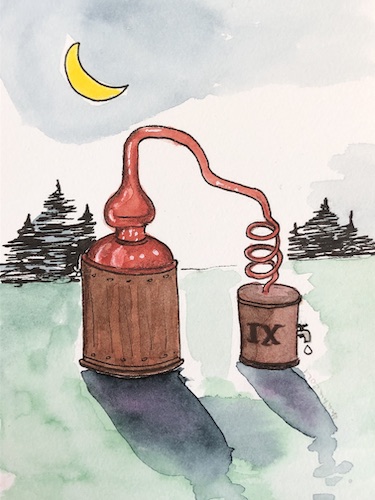
Food fraud, moonshine
Find records of fraud such as those discussed in this column and more in the Food Fraud Database, owned and operated by Decernis, a Food Safety Tech advertiser. Image credit: Susanne Kuehne.

Many things have changed due to the COVID-19 pandemic, and here is some good news: Organized crime activity related to food crime has decreased during the first months of 2020; the crimes shifted to medicines and medical devices instead. Apparently, the pandemic has disrupted the criminal activities and supply chains. During another successful Europol and Interpol operation, OPSON IX, 12,000 tons of products with a value of $40 million were seized. The top of the list of affected products were animal feed, alcoholic beverages and produce. The two million liters of fraudulent and substandard alcoholic beverages seized show that these products continue to be a significant threat to human health.

Resource

  1. Europol. (May 27, 2021). “Operation OPSON IX – Analysis Report”.
Coronavirus

Pandemic Forced Food Companies to Assess Agility, Focus on Data

By Maria Fontanazza
No Comments
Coronavirus

COVID-19 was an eye-opening public health emergency that brought a renewed focus on hygiene and safety across all industries. For McDonald’s Corp., this change prompted a deeper focus on science, including the use of analytical data, and consumer perception, according to the company’s Director of Global Food Safety Gary van Breda. “There are certain things that are important to our supplier base and for us moving forward, [including] harvesting information from different sources— information from audits, social media and being able to know whether we have the right inputs and algorithms in place to generate information to help us make decisions,” said van Breda in a panel discussion during the final episode of the Food Safety Consortium’s Spring Virtual Conference Series in May. These data-driven insights also helped the company take a closer look at attributes such as air quality and how to clean and sanitize high-touch areas in its restaurants.

Many organizations in the food industry were forced to completely change their strategic approach to doing business. “COVID was a once-in-a-generation disruption,” said Jorge Hernandez, vice president, quality assurance at The Wendy’s Company. “Many of the businesses didn’t survive, and many thrived. What’s the difference? In the leadership and approach: To be able to pivot, be flexible, and adapt to the changing circumstances—talk about flying a plane while you were building it.”

One of the key lessons learned from the pandemic was in the ability to remain flexible and make decisions based on the best information available at that time—and using the latest information to continuously improve processes, said Hernandez. For example, many food service and retail establishments took a giant leap forward in providing contactless ordering and delivery to customers—something that became an expectation versus a nice-to-have advantage. From an internal perspective, Wendy’s developed a much stronger connectivity between different job functions (i.e., operations, human resources, management) that helped them strengthen practices, guidance and procedures necessary to thrive during the pandemic.

During the pandemic, food safety fundamentals were brought to the forefront. “Handwashing became so critical. It would be silly not to take advantage of that moving forward,” said Hernandez. “Before the pandemic this was one of the biggest reasons for foodborne illness [outbreaks]. Now it’s up to us: With this pandemic, to use that momentum to move [these practices] forward and make it part of our routine. We have a unique opportunity to make that change to make safer food.”

Food Safety Consortium Virtual Conference Series

2021 FSC Episode 4 Preview: Food Safety Supply Chain Management

By Food Safety Tech Staff
No Comments
Food Safety Consortium Virtual Conference Series

This week’s episode of the 2021 Food Safety Consortium Virtual Conference Series will discuss the challenges that the industry faces in managing the supply chain, including in the realm of audits. The following is the agenda for this Thursday’s session:

  • Food Safety as a Supply Chain Management Problem, with John Spink, Ph.D., Michigan State University
  • Supplier Certification in Today’s Supplier Quality Management Programs: A Discussion with Gary van Breda, McDonald’s; Jorge Hernandez, Wendy’s; and moderated by Kari Hensien, RizePoint; Sponsored by RizePoint
  • What Needs to Change in Food Safety Certification: A GFSI Panel Discussion moderated by Erica Sheward, GFSI
  • Auditing Update in the Age of COVID: FDA Standards and Regulations Alignment Pilot, with Trish Wester, AFSAP

This year’s event occurs as a Spring program and a Fall program. Haven’t registered? Follow this link to the 2021 Food Safety Consortium Virtual Conference Series, which provides access to all the episodes featuring critical industry insights from leading subject matter experts! Registration includes access to both the Spring and the Fall events. We look forward to your joining us virtually.

Susanne Kuehne, Decernis
Food Fraud Quick Bites

Yellow Is Not Always Golden

By Susanne Kuehne
No Comments
Susanne Kuehne, Decernis
Saffron Fraud
Find records of fraud such as those discussed in this column and more in the Food Fraud Database, owned and operated by Decernis, a Food Safety Tech advertiser. Image credit: Susanne Kuehne.

Organized crime in Spain laundered millions of euros by selling saffron adulterated with dyes and herbs, some of these adulterants being unfit for human consumption. Spanish police with the assistance of Europol busted an importer who adulterated imported saffron threads and sold them with the high-end La Mancha region designation. The supply chain for the organized crime scheme was operating across the EU, with 17 arrests made in the sting operation.

Resource
1. Interpol and Europol. (April 12, 2020). “Adulterated saffron scam busted in Spain”. Securing Industry.

Food Safety Consortium

FDA Focusing on Fostering Food Safety Culture, Truly Bending the Curve of Foodborne Illness

By Maria Fontanazza
No Comments
Food Safety Consortium

The past year has tested and stressed the food system, putting tremendous pressure on worker safety and supply chain resilience. Despite the challenges, the industry continued to work day in and day out to meet the needs of Americans. “Consumers could still go then and now to their favorite supermarket or online platform and have access to thousands of food SKUs that are available,” said Frank Yiannas, FDA deputy commissioner for food policy and response. “We have the people in the food and agriculture sector to thank, and that’s you.”

Last week Yiannas gave his third Food Safety Consortium keynote address as deputy commissioner, reflecting on the past year and recognizing the progress and the work ahead. “I appreciate the larger conversation that the Consortium facilitates on food safety.” The Spring program of the Food Safety Consortium Virtual Conference Series takes place every Thursday in May.

Since the Fall of 2020, FDA has made advances in several areas, all of which take steps to advance the agency’s New Era of Smarter Food Safety initiative. The goals set as part of the New Era aim to help the agency more efficiently and efficiently respond to outbreaks and contamination, and other food safety challenges. The intent is to go beyond creating food safety programs into fostering a culture of food safety and truly bending the curve of foodborne illness, said Yiannas. In September the FDA issued the proposed FSMA rule on food traceability with the intent on laying the groundwork for meaningful harmonization. Nearly 6200 comments were submitted to the docket on the Federal Register, and the agency held three public meetings about the proposed rule in the fall, hosting more than 1800 people virtually. Yiannas anticipates the final rule will be published in early 2022.

The pandemic has shown how enhanced traceability might have helped prevent supply chain disruptions during a public health emergency, and the FDA continues its efforts to establish greater transparency and traceability. It is supporting the development of low-cost traceability technology solutions that are accessible to companies of all sizes. The agency also continues to explore the role of predictive analytics via the use of artificial intelligence. It has moved its AI program involving imported seafood from proof of concept into the field. Based on the results, it is expected that AI will help the FDA better manage the ever-increasing amount of imported foods by targeting inspectional resources in a more informed manner.

Efforts to strengthen food safety culture within organizations include collaborating with partners, industry, academia and consumers to define food safety culture in a transparent way. The agency will also be developing and launching internal training modules for FDA inspectional staff to introduce them to important concepts such as behavioral sciences. “We want to make food safety culture part of the dialogue and part of the social norm,” said Yiannas.

The agency will also be proposing new agricultural water requirements, a move as a result of feedback that FDA received in response to the Produce Rule. “Produce safety is one of the last frontiers because of product being grown outside,” said Yiannas.

In addition, FDA continues to review and evaluate feedback from proposed lab accreditation rule. It is expected that the FDA will issue the final rule early next year.

“We just lived through a historic year and historic challenges. These have been the most difficult of times in my profession. We have been able to move forward nonetheless,” said Yiannas. “We’re going to get through this stronger and more resilient than ever.”

Jim Yargrough, BSI
Retail Food Safety Forum

COVID-19’s Impact on Food Industry Reaches Far Beyond Supermarket Shelves

By Jim Yarbrough, Neil Coole
No Comments
Jim Yargrough, BSI

2020 proved to be the most challenging year for the food industry in decades, significantly testing the resilience of food supply chains. Many of the industry’s challenges stemmed from the spread and aftermath of COVID-19, forcing food organizations to adjust in new ways to maintain their supply chain continuity, integrity and overall resilience. Yet, at the same time, the spread of the virus also exacerbated known threats that the industry has grappled with for years, such as food fraud, theft and safety issues.

A recently released report about supply chain risks identifies the trends and associated risks most likely to impact global supply chains in the year ahead, and observed that the pandemic’s longer-term effect on food supply chains is expected to result in increased threats, including fraud, theft and safety issues.1 These threats will continue to have an impact in the future, requiring wider adjustments to continuity and resilience planning.

Stockpiling, Panic Buying and the Global Rise of Food Insecurity

As we all saw in local supermarkets and grocery stores in March 2020, panic buying and stockpiling created significant disruptions to supply chains that ultimately led to empty shelves.

According to the World Bank, last year as many as 96 million additional people were pushed into food insecurity across 54 countries. This number, combined with the “137 million acutely food insecure people at the end of 2019 across these countries, brings the total to 233 million people by the end of 2020.” Coupled with COVID-19-related supply disruptions stemming from challenges around movement restrictions of people and goods as well as illness-related plant closures and availability of workers in the food sector, job losses across all industries reduced household income, which has accelearted the number of people facing increased food insecurity.

Food Fraud on a Global Scale

Unfortunately, the risk of corruption by individuals working in a supply chain correlates with the risk of food fraud. Approximately 85% of countries with a high risk of supply chain corruption also have a high risk of food fraud. This can create scenarios that criminals can exploit, most commonly by producing substandard food for distribution in that country or substituting labeled products with potentially harmful alternatives.

For example, in India, adulterated dairy products, especially domestically produced milk, were often found to be linked with fraud reports, with some reports indicating that approximately 89% of milk products had been adulterated. Countries such as India sometimes have gaps in legislation and enforcement that can reduce the ability to detect and seize fake food, making this issue one that is likely to continue post-pandemic. Our intelligence reveals that gaps in legislation and inadequate enforcement of regulations reduce the ability to detect food fraud and lead to prolonging the threat.1 At the same time, criminals continue to outpace poor regulatory regimes and grow more aware of their opportunities and advance the sophistication of their tactics.

Other forms of food fraud, in particular smuggling and disguising provenance, are common and are bound to continue in countries where the price of food continues to rise to a point where it becomes economically viable for criminals to take advantage of higher prices and smuggle it across borders. It is also possible that criminals will benefit from lower levels of enforcement, allowing other fraudulent methods, such as adulterating labels or expiration dates or using substandard or alternative ingredients, to proliferate fraud schemes around the world.

Food and Alcohol Become Top Targets for Theft and Safety Issues

The spread of COVID-19 also resulted in an increase in targeting and theft of products considered unusual for cargo theft incidents—arguably the most pronounced shift in this area in the last year. Initially, thieves began to target essential goods with a much higher frequency as the limited supplies and spikes in demand drastically increased their black-market value. Thefts of products such as PPE and food and beverages increased in frequency worldwide, overtaking the theft of historically targeted goods more, such as electronics.

The increase of food, beverage, alcohol and tobacco commodities theft can likely be attributed to their increased value as a result of panic-buying, shortages and increases in consumption, along with the ease with which they can be sold on the black market. However, the increasing value of these items has not only created a greater vulnerability for theft, but also means these commodities are at an elevated risk for counterfeiting and food safety violations.

Unfortunately, COVID-19 significantly affected governments’ capacity to enforce food safety regulations, which means that some foods may not have been checked as thoroughly. As the spread of COVID-19 reduces, government resources will likely be freed to increase food safety controls. However, further virus-related complications may reintroduce this risk.

COVID-19’s negative effects on the food industry have been pronounced, but it is worth noting that there have been areas of positive impact, too. As the industry adapted in novel ways, industry leaders developed a more holistic awareness of resilience, embracing the benefits of agile innovation, including remote auditing, and adapting their pre-pandemic ways of working to focus on meeting consumer demand.

Furthermore, organizations within the food industry learned the importance of resilience and the ability to proactively identify critical suppliers to ensure that appropriate continuity measures are in place in the event of further unplanned disruptions.

As the world begins the next phase of reopening, and many food industries remain on fragile footing due to the economic impacts of the pandemic, it will be critical that they remain aware of the changing regulatory landscape, shifting supply chains and potential disruptions to ensure they remain resilient.

Reference

  1. BSI. Supply Chain Risk Insights Report. (2021).

Susanne Kuehne, Decernis
Food Fraud Quick Bites

Everything Is Not Peachy

By Susanne Kuehne
No Comments
Susanne Kuehne, Decernis
Food Fraud, Beverages
Find records of fraud such as those discussed in this column and more in the Food Fraud Database, owned and operated by Decernis, a Food Safety Tech advertiser. Image credit: Susanne Kuehne

In a large case of trademark violations and counterfeiting, Haldiram, the leading snack manufacturer from India, filed a lawsuit against a Georgia-based distributor. The distribution company misused the well-known Haldiram label to import, distribute and sell counterfeit beverages, snacks, beverages and ready-to-eat meals in the United States, which is a large market for Haldiram. The company is seeking significant amounts of money for damages caused by the distributor and an immediate stop to the trademark infringements.

Resource

Taylor, P. (April 19, 2021). “Haldiram sues Georgia company, claiming counterfeiting”. Securing Industry.