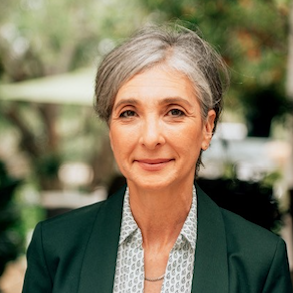


Women in Food Safety (WIFS), a leading community dedicated to empowering and advancing women across the food safety industry, proudly announces its official recognition as a nonprofit organization. This milestone comes at a special moment as WIFS marks its 5th anniversary in 2025.
Founded in 2020, Women in Food Safety has grown into a global network that connects, mentors, and advocates for female professionals at all stages of their careers. Since its inception WIFS has extended its membership to over 1500 professionals worldwide. With the transition to nonprofit status, WIFS strengthens its ability to expand educational programs, develop industry partnerships, and provide new resources that create lasting impact for members and the broader food safety community.
“From day one, our mission has been to build a supportive community where women in food safety can connect, thrive, grow and lead,” said Melody Ge, founder of Women In Food Safety. “Becoming a nonprofit allows us to take this mission to the next level—expanding opportunities, increasing our reach, and continuing to advocate for inclusivity and leadership in the industry.”
Over the past five years, WIFS has hosted dozens of networking events both online and in-person, launched our Roots to Success scholarship, and provided a platform (Community app) for women to share their voices and experiences. The organization’s nonprofit designation will further enable it to:
Expand mentorship and leadership programs for the next generation of food safety professionals.
Offer scholarships and career resources to support women entering and advancing in the industry.
Strengthen partnerships with universities, companies, and industry associations to broaden awareness and engagement.
Drive thought leadership on inclusion, food safety culture, and the future of the food safety and quality.
WIFS invites members, partners, and allies to join us in shaping the next chapter of growth and impact in the world of food safety.
The Food Safety Consortium and Food Safety Tech supports WIFS and for five years has published a dedicated Women In Food Safety column.
Women in Food Safety Networking Breakfast at the 2024 Food Safety Consortium
It’s WIFS’s (Women In Food Safety ) pleasure to meet with Rochelly Serrano, a seasoned professional in food safety and quality (FSQ). During the conversation, Rochelly shares her career journey, insights, and reflections. From unexpected beginnings to becoming a VP, her story is a testament to perseverance, growth, and the importance of staying true to one’s values.
Rochelly’s career in food safety and quality has been marked by growth, resilience, and an unwavering commitment to her values. Her story serves as an inspiration for aspiring professionals, especially women in FSQ. As she continues to navigate her journey, she remains dedicated to her passion for quality and her belief in the power of relationships and integrity.
Starting Out: From Uncertainty to Opportunity
Rochelly’s career began with a pivotal moment shortly before her college graduation. “Dr. Elliott asked me about my plans after graduation, and I had no idea,” she recalls. She considered various paths, including veterinary medicine, sales, and pharmacy, but none resonated with her. As an introvert, she found these options unappealing. However, a fortuitous connection through Dr. Elliotte led to an interview with the VP of HR at Tysons Foods, a major meat manufacturing company. This opportunity set her on an unexpected path.
Despite lacking industry knowledge, Rochelly began as a production supervisor. Reflecting on her early days, she admits, “I wasn’t mentally prepared for managing people. I had to manage 85 people on the beef patties production line.” She humorously likened her experience to a scene from the classic TV show “I Love Lucy,” where she struggled to keep up with the production line. “It was a humbling experience,” she says, recalling the chaos and the valuable lessons she learned about leadership and management.
The Transition to Food Safety
Rochelly’s transition into food safety was driven by her curiosity and desire for efficiency. While working as a production supervisor at a corndog product company, she was approached by the VP of Quality, who suggested she consider a QA position. Trusting her judgment, she accepted, marking the beginning of her career in FSQ. “Creating relationships with people is key,” she emphasizes, highlighting the importance of trust and collaboration.
Passion for Production and Quality
When asked whether she prefers production or quality, Rochelly expresses her love for both. “I am definitely a production person; I love to see products made from the beginning,” she says. As a Latina, she values the cultural importance of connecting with food and strives for perfection in quality. “Our consumers eating good quality products is satisfying to me,” she notes, underscoring her commitment to excellence.
Challenges and Growth: Learning from Mistakes
Rochelly acknowledges that starting her career, she wasn’t fully prepared for the realities of the job. “It doesn’t matter what the job is; honoring your values is key,” she explains. She emphasizes the importance of aligning one’s work with personal values for success. One of the biggest surprises in her career was realizing that things are rarely as easy as they seem. “Don’t take people’s expertise for granted. Trust your team and involve them in decision-making,” she advises.
She also discusses the inherent conflicts between FSQ and other departments. “I’ve had thousands of melting points,” she admits, but she emphasizes the importance of recognizing these as temporary challenges. “Everything in life has a beginning and end. Everything will pass,” she reminds us, encouraging resilience and perspective. Life is a cycle, good or bad things will all pass. Control what you can control, take the lesson given by life and learn from it. Everything in life happens for a reason, these lessons are here to help you grow.
Ethical Challenges and Integrity
Rochelly shares a memorable ethical dilemma from her career. At one point, she was asked to find a way to salvage moldy products. She refused to compromise on safety and quality, even though it led to tension with her superiors. “I learned to ask questions, gain more knowledge, and work with the team,” she reflects. This experience taught her the importance of exploring all options while maintaining integrity. It’s very easy to say no, but no is not always the right answer. Of course, there are times we have to say no to the business, but ultimately, is how we say no. Have we explored all options to the protect business? As a food safety and quality professional, it’s important to influence and engage other departments to align with your decision and direction.
Advice for Aspiring FSQ Professional Leaders
For those looking to enter the FSQ field, Rochelly offers practical advice. “Understand the business; you are the business owner, not just the quality owner,” she says. She encourages professionals to collaborate across departments and understand the broader business implications of their decisions.
Leadership and Gender in the Workplace
As a female executive, Rochelly provides a unique perspective on leadership. She believes that women bring valuable perspectives to the table, particularly in FSQ. “There are no weaknesses as female leaders. The only weakness exists in your mind,” she asserts, emphasizing the importance of authenticity and confidence.
She challenges the notion of a “glass ceiling,” suggesting that it’s often a mental construct. “Do your job so darn well and become so indispensable that there is a greater loss by not having you around,” she advises, stressing the importance of excellence and self-promotion. It’s what’s in your mind, if you think there is a glass ceiling, or negativity; then there is negativity and a glass ceiling.
Maintaining Confidence and Making Decisions
Rochelly credits one of her many mentors, Sharon Woods at HEB, for helping her build confidence. “She saw something in me that I didn’t see in myself,” she says. She also emphasizes the importance of aligning decisions with one’s values and being adaptable. “Every decision made at that point is the right decision,” she believes, underscoring the value of learning from every experience.
Reflections and Wisdom
Looking back, Rochelly has no regrets. She views every challenge and mistake as a learning opportunity. She advises others to avoid focusing on regrets and instead embrace life’s lessons. “If you focus on regrets, you will never win or learn,” she says.
Regarding unconscious bias, Rochelly acknowledges that life isn’t always fair. “Learn to live the life you are given. The way people talk to you has nothing to do with you, but how you react to it is about you,” she advises, encouraging resilience and positivity.
This website uses cookies so that we can provide you with the best user experience possible. Cookie information is stored in your browser and performs functions such as recognising you when you return to our website and helping our team to understand which sections of the website you find most interesting and useful.
Strictly Necessary Cookies
Strictly Necessary Cookies should be enabled at all times so that we can save your preferences for these cookie settings.
We use tracking pixels that set your arrival time at our website, this is used as part of our anti-spam and security measures. Disabling this tracking pixel would disable some of our security measures, and is therefore considered necessary for the safe operation of the website. This tracking pixel is cleared from your system when you delete files in your history.
We also use cookies to store your preferences regarding the setting of 3rd Party Cookies.
If you visit and/or use the FST Training Calendar, cookies are used to store your search terms, and keep track of which records you have seen already. Without these cookies, the Training Calendar would not work.
If you disable this cookie, we will not be able to save your preferences. This means that every time you visit this website you will need to enable or disable cookies again.
Cookie Policy
A browser cookie is a small piece of data that is stored on your device to help websites and mobile apps remember things about you. Other technologies, including Web storage and identifiers associated with your device, may be used for similar purposes. In this policy, we say “cookies” to discuss all of these technologies.
Our Privacy Policy explains how we collect and use information from and about you when you use This website and certain other Innovative Publishing Co LLC services. This policy explains more about how we use cookies and your related choices.
How We Use Cookies
Data generated from cookies and other behavioral tracking technology is not made available to any outside parties, and is only used in the aggregate to make editorial decisions for the websites. Most browsers are initially set up to accept cookies, but you can reset your browser to refuse all cookies or to indicate when a cookie is being sent by visiting this Cookies Policy page. If your cookies are disabled in the browser, neither the tracking cookie nor the preference cookie is set, and you are in effect opted-out.
In other cases, our advertisers request to use third-party tracking to verify our ad delivery, or to remarket their products and/or services to you on other websites. You may opt-out of these tracking pixels by adjusting the Do Not Track settings in your browser, or by visiting the Network Advertising Initiative Opt Out page.
You have control over whether, how, and when cookies and other tracking technologies are installed on your devices. Although each browser is different, most browsers enable their users to access and edit their cookie preferences in their browser settings. The rejection or disabling of some cookies may impact certain features of the site or to cause some of the website’s services not to function properly.
Individuals may opt-out of 3rd Party Cookies used on IPC websites by adjusting your cookie preferences through this Cookie Preferences tool, or by setting web browser settings to refuse cookies and similar tracking mechanisms. Please note that web browsers operate using different identifiers. As such, you must adjust your settings in each web browser and for each computer or device on which you would like to opt-out on. Further, if you simply delete your cookies, you will need to remove cookies from your device after every visit to the websites. You may download a browser plugin that will help you maintain your opt-out choices by visiting www.aboutads.info/pmc. You may block cookies entirely by disabling cookie use in your browser or by setting your browser to ask for your permission before setting a cookie. Blocking cookies entirely may cause some websites to work incorrectly or less effectively.
The use of online tracking mechanisms by third parties is subject to those third parties’ own privacy policies, and not this Policy. If you prefer to prevent third parties from setting and accessing cookies on your computer, you may set your browser to block all cookies. Additionally, you may remove yourself from the targeted advertising of companies within the Network Advertising Initiative by opting out here, or of companies participating in the Digital Advertising Alliance program by opting out here.