
Gregory Siragusa, Eurofins
Food Genomics

Introducing a New Column: Food Genomics

By Gregory Siragusa, Douglas Marshall, Ph.D.
No Comments
Gregory Siragusa, Eurofins

DNA sequencing can be used to determine the names, types, and proportions of microorganisms, the component species in a food sample, and track foodborne disease agents.  Here we introduce a column exploring aspects and applications of these new techniques, known collectively as food genomics. Each month we will provide take-home knowledge in which every food safety scientist should be familiar.

Gregory Siragusa, Eurofins
Gregory Siragusa will be presenting Microbiome Applications in Controlling Food Spoilage and Safety  during the 2016 Food Safety Consortium

We live in an exciting time of great change in all of biological and food sciences. In fact, it is not an overstatement to claim that a large portion of the fields of food science, biology, agriculture and medicine will be reformed in what has been called the post-genomics era or simply the genomics era. Food science and food microbiology are major players in this pack and moving in the fast track of these changes. This game-changing technology is fueled by the convergence of two rapidly evolving fields: DNA sequencing and the analysis of that sequencing data (i.e., bioinformatics).

The common jargon uses the acronym NGS for Next Generation Sequencing. NGS refers to the most updated automated DNA sequencing technology available. In several ways, sequencing can be considered a commodity service; hence its price has dropped and its availability is now widespread. What does this mean? A useful analogy is the following: Think of trying to publish a book you wrote. Would you go out, buy a printing press, paper, ink, binding machinery, and produce thousands of copies of your book, or, would you go to a professional printer and get them to print and manufacture copies?  For most, the simplicity and experience of the professional print master trumps the do-it-yourself route.  Once sequence data is obtained, what is next in the process of using that data? Analysis of sequence data is a specialized field called bioinformatics and has its own  expert practitioners. It is a field of study that is a hybrid combination of mathematics, statistics, computer science, and biology. Bioinformatics analyzes the very large datasets produced by NGS and will be increasingly dependent on the internet cloud for its utility to be fully realized.

How will food genomics impact food safety and quality? How will it help in identifying the sources of outbreaks in a fraction of the time it once took? What will this mean for zero-tolerance, for pathogen control, and for responsibilities and liabilities of food producers and processors?  There is a growing body of examples and literature that begins to apply genomics and microbiomics to the quality of food and sources of its microbial populations.5-7

Over the course of this column, we will be exploring several examples to alert the reader to the myriad of uses of genomics for solving food production issues.

Genomics (NGS and Bioinformatics) are the basis of the US-FDA GenomeTrakr program.1  Genomics offers an alternative means to serotype Salmonella isolates using DNA sequencing.2 There are several examples of using sequencing of solving the epidemiological source of foodborne microbial outbreaks by comparing the entire bacterial genomes of clinical and food isolates.3,4

One powerful application of genomics is to conduct the census of microbial communities to identify the microbial members and their relative proportions, an outcome called a microbiome, all from a single tube! The technique itself is termed microbiomics. Just think, we can now identify all bacteria in a complex mixture without isolating what will grow, as well as the many microorganisms we have not yet learned to culture or require unusual temperatures, nutrients, and atmospheres! Can you feel the excitement? Hopefully with knowledge of the power of food genomics you will begin to see the true utility of this technology and begin to appreciate its awesome power. Most importantly, you will begin to see how food genomics is a useful tool for the food science professional.

The microbiome field is changing as of this writing and moving toward using a technique known as whole shotgun metagenome (WSM) analysis in which all of the DNA in a sample is sequenced and not just bacterial, fungal, or specific genes; i.e., a metagenome approach vs. a targeted approach to determining the microbiome of a sample.8,9  The whole genome shotgun approach is also a powerful tool not only for creating food microbiomes, but can help in the identification of the plant and animal species used as ingredients in foods. WSM requires relatively advanced and sophisticated bioinformatics tools and at the same time sequencing chemistry is advancing, so is bioinformatics. For example, there is an online tool suite known as NEPHELE, which offers publically available online programs, software, and data handling capacity for sequence analysis.10,11

So here we are with some brand new shiny tools in the kit. Now the question is, how can the food safety professional begin to use these tools? More to the point is to understand when food genomic data is called for. The first step is to grasp some of the terminology and basic processes. Table 1 lists a few starter terms to become familiar with as well as some web resources that might be helpful to you in understanding these immensely powerful tools.12,13

Table 1. Starter Terms in Food Genomics
Annotated Whole
Bacterial Genome
High-quality, low-error, gap-free DNA sequence of an entire genome of an organism, in this case, an isolated bacterium, indicating genes and their locations. This can be considered a complete road map of an organism’s genetic makeup as expressed in the nucleotides Adenine, Thymine, Cytosine, and Guanine (ATCG’s). Can be referred to as WGS or Whole Genome Sequencing.
Bioinformatics The science of managing and analyzing biological data using advanced computing techniques. Especially important in analyzing genomic research data.
Metagenomes or Whole Shotgun Sequencing Sequences of Genetic material recovered directly from food, animal, plant, or environmental samples with no foreknowledge of the source of living materials therein. For instance, the metagenome of a yogurt sample will harbor DNA sequences characteristic of starter culture bacteria and bovine DNA (assuming it is bovine milk yogurt).  This is another approach to obtaining a microbiome.6
Microbiome A community of microorganisms that inhabit a particular environment or sample. For example, a plant microbiome includes all the microorganisms that colonize a plant’s surfaces and internal passages. This can be a Targeted (Amplicon Sequencing Based) or a Metagenome (Whole Shotgun Metagenome based) microbiome.6
Microbiomics The process of determining a microbiome.
Microbiota The ecological community of commensal, symbiotic, and pathogenic microorganisms that literally share a space or are within a sample. Formerly the term ‘microflora’ was used, but this term is waning in usage.14
NGS (Next Generation Sequencing) High throughput automated sequencing of nucleic acids DNA or RNA.

Finally, in the reference section we have tried to provide you with some useful online reference sources. The U.S. Department of Energy has perhaps the most intuitive, user-friendly and informative sites we have encountered as of late (“Genome Glossary,” 2016). The same source also published a talking glossary (“Talking Glossary of Genetic Terms,” 2016).  The reader should be advised that genomic terminology and nomenclature is still not fully mature. In fact, the number of vague meanings, cross references, and acronyms can sometimes be frustrating; but fear not, as one reads and discusses the terms, they will become clearer. As a start we recommend downloading a helpful reference that follows.15 There are many other sites you will locate by performing a single web-search. If you would like to share your favorite genomics sites, please drop a line to either author and we will try to compile them into a single electronic document.

We hope this first column will find you coming back for more as we explore this burgeoning field and learn how it is being linked to food safety. Look for future articles on specific food applications, methods, and hot topics in food genomics.  Goodbye for now.

References

  1. Allard, M. W., Strain, E., Melka, D., Bunning, K., Musser, S. M., Brown, E. W., & Timme, R. (2016). Practical Value of Food Pathogen Traceability through Building a Whole-Genome Sequencing Network and Database. Journal of Clinical Microbiology, 54(8), 1975–1983. https://doi.org/10.1128/JCM.00081-16
  2. Zhang, S., Yin, Y., Jones, M. B., Zhang, Z., Deatherage Kaiser, B. L., Dinsmore, B. A., … Deng, X. (2015). Salmonella serotype determination utilizing high-throughput genome sequencing data. Journal of Clinical Microbiology, 53(5), 1685–1692. https://doi.org/10.1128/JCM.00323-15
  3. Burall, L. S., Grim, C. J., Mammel, M. K., & Datta, A. R. (2016). Whole Genome Sequence Analysis Using JSpecies Tool Establishes Clonal Relationships between Listeria monocytogenes Strains from Epidemiologically Unrelated Listeriosis Outbreaks. PloS One, 11(3), e0150797. https://doi.org/10.1371/journal.pone.0150797
  4. Chen, Y., Burall, L. S., Luo, Y., Timme, R., Melka, D., Muruvanda, T., Brown, E. W. (2016). Isolation, enumeration and whole genome sequencing of Listeria monocytogenes in stone fruits linked to a multistate outbreak. Applied and Environmental Microbiology. https://doi.org/10.1128/AEM.01486-16
  5. Bokulich, N. A., Lewis, Z. T., Boundy-Mills, K., & Mills, D. A. (2016). A new perspective on microbial landscapes within food production. Current Opinion in Biotechnology, 37, 182–189. https://doi.org/10.1016/j.copbio.2015.12.008
  6. Bokulich, N. A., & Mills, D. A. (2012). Next-generation approaches to the microbial ecology of food fermentations. BMB Reports, 45(7), 377–389.
  7. Zarraonaindia, I., Owens, S. M., Weisenhorn, P., West, K., Hampton-Marcell, J., Lax, S., … Gilbert, J. A. (2015). The soil microbiome influences grapevine-associated microbiota. mBio, 6(2). https://doi.org/10.1128/mBio.02527-14
  8. Microbial Foods – The Science Of Fermented Foods. (n.d.). Retrieved November 21, 2016, from http://microbialfoods.org/
  9. Ranjan, R., Rani, A., Metwally, A., McGee, H. S., & Perkins, D. L. (2016). Analysis of the microbiome: Advantages of whole genome shotgun versus 16S amplicon sequencing. Biochemical and Biophysical Research Communications, 469(4), 967–977. https://doi.org/10.1016/j.bbrc.2015.12.083
  10. Colosimo, M. E., Peterson, M. W., Mardis, S., & Hirschman, L. (2011). Nephele: genotyping via complete composition vectors and MapReduce. Source Code for Biology and Medicine, 6, 13. https://doi.org/10.1186/1751-0473-6-13
  11. Weber, N. (n.d.). Cloud Computing for Scientific Research The NIH Nephele Project for Microbiome Analysis. Accessed November 21, 2016. Retrieved from https://www.google.com/url?q=http://casc.org/meetings/14sep/CASC-NIH-Microbiome-Cloud-Project-20140917.pdf&sa=U&ved=0ahUKEwj2mvTt1LrQAhXMC8AKHUiCBLsQFggHMAE&client=internal-uds-cse&usg=AFQjCNGt_lx2zw4qLNcHuYwZvSg10ivp5Aabout:blank
  12. Genome Glossary. (n.d.). Accessed November 21, 2016. Retrieved from http://doegenomestolife.org/glossary/index.shtml
  13. Talking Glossary of Genetic Terms. (n.d.). Accessed November 21, 2016. Retrieved from https://www.genome.gov/glossary/
  14. Microbiota. (2016, November 14). In Wikipedia. Retrieved from https://en.wikipedia.org/w/index.php?title=Microbiota&oldid=749454552
  15. Marchesi, J. R., & Ravel, J. (2015). The vocabulary of microbiome research: a proposal. Microbiome, 3, 31. https://doi.org/10.1186/s40168-015-0094-5

Resource

Nutrition, C. for F. S. and A. (n.d.). Whole Genome Sequencing (WGS) Program – GenomeTrakr Network [WebContent]. Accessed November 21, 2016. Retrieved from http://www.fda.gov/Food/FoodScienceResearch/WholeGenomeSequencingProgramWGS/ucm363134.htm


 

Randy Fields, Repositrak
Retail Food Safety Forum

The Fresh Food Supply Chain and Product Safety

By Randy Fields
1 Comment
Randy Fields, Repositrak

Attend the Food Safety Supply Chain Conference, June 5–6, 2017 in Rockville, MD | LEARN MOREFresh foods are critically important to grocery retailers because these categories help create a point of differentiation from competitors. Store operators highlight the fresh sections in ads, promote the categories with in-store signage and now support the departments digitally and through social media. This isn’t to say the center store dry grocery items aren’t marketed, but they don’t get the advertising and promotional love that the produce, meat, dairy, deli, bakery and floral areas receive.

Given this focus, retailers and their suppliers work diligently to ensure the safety of the fresh products offered. They know that one slipup in produce or the deli can wreck the company’s reputation for months or longer. This is particularly true for the many fresh products that don’t have a brand standing behind them to share the impact (or blame).

Ask retail food safety directors where they spend most of their time and the answer 90+ times out of 100 is in the fresh areas. There are simply more things that can potentially go wrong in fresh and less that can go wrong with dry grocery. Sure there is the occasional ingredient issue, but the center store doesn’t have to worry about spoilage or even packaging problems now that nearly everything is tamper proof.

The bioterrorism act mandates that each link in the supply chain knows where their ingredients or product came from and where it was distributed. Recently, much effort has gone into developing traceability technologies and processes with the produce supply chain taking the lead. Growers and their trading partners are piecing together systems that allow practitioners to follow each batch of product through to the retail store, but the operative phrase is “piecing together.” Very few technologies can provide complete farm-to-fork traceability without standard product identification codes used by all participants in the supply chain. When a participant does not use the standard product identifier, visibility to the path of a product ends.

On the regulation front, the seven FSMA rules move the emphasis of the FDA from detection and response to prevention, which impacts both fresh and shelf-stable products. On a practical level, however, compliance with the rules is often more challenging for fresh products because of their limited shelf life. Also, some of the rules apply specifically to produce, meaning retailers and their produce suppliers need to pay special attention to preventing foodborne illness in the department.

At the recent Produce Marketing Association’s Fresh Summit in Orlando, Bob Whitaker, Ph.D., the trade group’s chief science & technology officer, and Jim Gorny, Ph.D., vice president, Food Safety & Technology, both emphasized the importance of communicating each retailer’s and supplier’s compliance with the FSMA regulations to the consumer. The North American Meat Institute, International Dairy-Deli-Bakery Association and other trade groups representing the marketers of fresh products have also been very active in helping both retailers and suppliers comply with the new regulations.

Beyond FSMA, retailers and their fresh foods suppliers need to do more work to not only ensure a safer supply chain, but to let consumers know they are working on food safety every day. Transparency needs to extend throughout the supply chain so suppliers and carriers can report on any potential safety issue from the farm to the checkout stand, because retailers are requiring more support from suppliers and more documentation for each load received. And, audits need to be periodically conducted to ensure accepted industry best practices are being followed.

Technology is helping the food safety process, especially in the fresh area, by organizing documentation for FSMA compliance and by providing supply chain transparency. The systems now available integrate all product and vendor information into a retailer’s ordering systems to ensure every requirement is met before a purchase is completed. They also send out alerts when additional details are required and they confirm that each lot shipped adheres to accepted best practices for food safety.

At the end of the day, all items sold in a supermarket or online must be safe for the consumer. The challenge is somewhat bigger with fresh foods than it is with dry grocery, so retailers and their suppliers must work that much harder to ensure the safety of products sold to their customers. A combination of accurate document management, compliance audits and traceability technology is now the most likely scenario to accomplish this goal.

Phil Coombs, Ph.D., Weber Scientific
In the Food Lab

Rapid Detection of Spoilage Organisms: The Forgotten Bad Guys?

By Phil Coombs, Ph.D.
No Comments
Phil Coombs, Ph.D., Weber Scientific

As rapid microbiology methods have been increasingly adopted by the food industry during the past 30 years, much emphasis has been placed on the detection of foodborne pathogens and  reducing test times as much as possible. Novel methods such as PCR, along with other molecular approaches, have done much to find these organisms more quickly and identify the source of an outbreak. Quite rightly so: We all have to eat, and we all prefer to eat safe food.

What is often forgotten, however, and what has been less fashionable in the development of novel methods, is the impact of spoilage organisms on the economics of food production and the lack of more sophisticated methods to detect them.  While media headlines may scream “Salmonella outbreak affects hundreds!”, the same outlets are less likely to report how much food is thrown away on any given day because of mold growth. “Penicillium spoils bread” is hardly an attention grabber on the 6 o’clock news.

A closely–related issue is that of food wastage, which together with spoilage accounts for billions of dollars of food that is thrown away. Estimates are in the region of $29–35 billion per year, and that doesn’t take into account the billions of dollars of wasted produce because of cosmetic imperfections—the so-called “ugly” fruit and vegetables that are still safe and nutritious to eat. In other estimates, it is suggested that in U.S. landfills, 21% of the contents are comprised of wasted food.

Another source of the problem is the confusion created by date labels–“best by”, “use by”, “sell by”.  What do they really mean? This has become such an issue that Walmart is leading an effort, spearheaded by Walmart’s VP of Food Safety, Frank Yiannas, to rationalize date labels so that consumers are far less likely to throw away perfectly wholesome food. In this aspect, he has worked closely with the Institute of Food Technologists, the Grocery Manufacturers Association and the Food Marketing Institute to address the problem.

The amount of waste and spoilage has reached almost scandalous proportions and the issue must be addressed, as the planet’s human population is estimated to grow to 9–10 billion by the year 2050. Improved agricultural practices and biotechnology will help to improve yields and increase the food supply, but greater efforts must be made to reduce wasting the food that is produced.

Weber Scientific
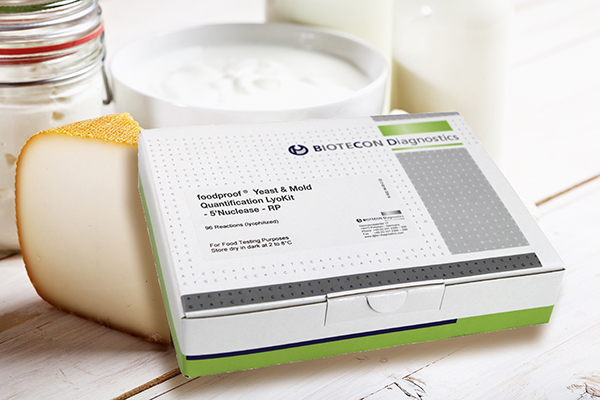
The PCR Yeast and Mold Qualitative test is distributed by Weber Scientific in North America.

In the overall context of facing these challenges, new technologies are being developed. One such technology is a four-hour PCR Yeast and Mold Qualitative test, manufactured by Germany-based Biotecon, for use in dairy products. Genetic methods are typically associated with identifying bacterial and viral pathogens. But the same approach may be taken with groups of microbes responsible for spoilage, if there is a unique gene sequence common to the target organisms.

Typical test times for yeast/molds are historically five days, although more recently incubation times have been reduced to three days with some new “rapid” plating media. Still, this is a relatively long time compared to four hours. And it is worth noting that the PCR Yeast and Mold test is a “true” four-hour test, as it does not require any pre-enrichment.

The protocol follows a standard PCR protocol for DNA extraction and amplification with an important inclusion—a treatment step that allows discrimination between viable and non-viable organisms. Another important aspect is the inclusion of UNG (Uracil-N-Glycosylase), which greatly reduces the chance of cross-contamination between one sample and the next.

The method is remarkably robust. 100% specificity has been demonstrated with more than 300 strains of yeasts and molds representing 260 species covering all the phylogenetic groups. Conversely, 100% exclusivity has been shown against 60 strains of non-targets—comprised of microbes typically found in similar ecological niches; plant DNA; and animal DNA from human, mouse and canine sources. Sensitivity of the method for yeasts/molds is 101 – 102 cfu/g.

The method is also quantitative, and PCR cycle threshold times can be very closely correlated with plate counts on agar media. Thus, once a standard curve is generated, subsequent samples need only be tested by this new PCR method. Equivalent counts are then determined from the standard curve.

The rapid detection of yeast and molds is a much-needed analytical technique for the dairy industry. For producers of yogurt and similar fermented milk product with a typical shelf-life of 60 days, having the ability to release product to market four days earlier will help with operational efficiency. More importantly, knowing early on of any possibility of product spoilage will help deliver superior product to consumers. The method won the Institute for Food Technologists’ Innovation Award, with one of the judges commenting, “a four-test versus five days for spoilage organisms is a major breakthrough.”

In view of the level of wastage and spoilage that currently occurs, this new PCR method is a step along the way to using more sophisticated methods for the detection of the organisms responsible. Guardians of the food supply should see this as an important development.

Katy Jones, Foodlogiq
FST Soapbox

Supplier Management: Grow Strategic Partnerships and Drive Value Across the Supply Chain

By Katy Jones
No Comments
Katy Jones, Foodlogiq

According to a report by Kroll and The Economist Intelligence Unit, 17% of companies experienced some type of vendor, supplier or procurement fraud in 2015. While fraud is one of the more extreme examples of supplier management complications, the manufacturer-supplier relationship is notoriously fickle and can result in serious issues if attention and care is not reciprocal from the beginning.

With great communication and even better processes in place, your suppliers have the potential to become strategic partners for your brand, helping drive your values across the supply chain while also helping you achieve overarching business goals.

Do Your Homework

In order to foster positive supplier relations, it is important to consider all available options and carefully assess them before engaging. In the research phase, it is critical to get as many references as possible to ensure you align with a potential supplier when it comes to safety practices and brand values. Looking at a supplier’s history is an effective way to gauge how your partnership will pan out and catch any red flags before they become a bigger problem for the brand, whether that be poor communication habits, dishonesty about products or inconsistent record keeping.

FSMA deadlines for compliance with the Foreign Supplier Verification Program (FSVP) are right around the corner. With the changing regulatory landscape, thoroughly investigating potential suppliers is crucial, especially if they are outside of the United States, as the stakes are much higher. Under the FSVP, importers are essentially “guilty” until proven “innocent”—a sharp contrast from how foreign suppliers were previously handled by the FDA. The standards for imported food are stricter than ever, as are the consequences for companies that are found working with foreign suppliers without verification. With the FSVP, the FDA can halt all importations completely as long as they have reason to believe the supplier is not compliant with the program.

Communication Is Key

At the cornerstone of any good relationship is communication; the same goes for relationships within the food industry.

Once a supplier has been thoroughly vetted and is officially on the team, the key to maintaining a successful relationship is transparency. Without full transparency with suppliers, you can’t offer consumers reliable information about their food. At the same time, manufacturers need to be straightforward with their needs to ensure suppliers are able to uphold their expectations. By thoroughly communicating plans and expectations, you and your suppliers can effectively work together to achieve future goals.

At the start of a working relationship with a supplier, it is important to comprehensively onboard and train them in your plans and processes to avoid a lack of understanding down the line. By setting up an all-encompassing onboarding system, inclusive of checklists and background documents on procedures and standards, you can help ease growing pains and empower your new food supplier to become a trusted partner. For instance, if you use a specific supply chain technology, your suppliers should know ahead of time so they can receive adequate training on the solution. This will help streamline communication and minimize any bumps in the road.

Regular Check-Ups

While safety and contamination issues are undesirable, they are inevitable. When faced with an outbreak or contaminant in your supply chain, suppliers become your most crucial resource. A poorly handled recall can wreak havoc on a food manufacturer, with the potential to ruin a trusted brand. Having the correct protocols in place with suppliers to ensure proper procedures are followed quickly and efficiently is critical. In order to make sure suppliers are complying with standards, keeping complete records and maintaining proper safety practices, it is essential to perform regular supplier audits.

With the addition of new technologies in the last few years, monitoring supplier performance and implementing corrective actions has never been easier. There are companies that offer supplier management and food safety management software to enable manufacturers 24/7 end-to-end visibility into their food supply chain and suppliers’ practices, while simplifying communication. Supplier management software offers a single platform that allows a brand to safeguard important supplier documentation, submit proper records to regulators when audited, streamline supplier audits and compliance records, and communicate corrective actions.

Overall, supplier management software with end-to-end supply chain visibility is a great way to keep up with suppliers and rest assured that your company’s food safety guidelines are being followed at all times.

Keeping Consumers Safe and Happy

With the current state of food safety, keeping suppliers in check is absolutely crucial for brands. As the FDA is increasing regulations with the adoption of FSMA, manufacturers must be able to trust their suppliers to uphold these new standards. If there are any slip-ups, your brand is held accountable. At the same time, with the increasing number of high-profile recalls and foodborne illness reports, consumers are on high alert, and winning their trust is harder than ever; today’s conscious consumer expects total transparency from their food brands, something only achieved through a strong supplier management program.

Fortunately, given advancements in technology, manufacturers can now foster more proactive relationships, assess supplier performance and achieve mutual goals across the chain smoothly.

While good supplier management requires time and resources, it is worth the investment. Putting in the effort to foster strategic partnerships with suppliers is key to mitigating safety and contamination issues, meeting the FDA’s regulations, as well as keeping consumers safe and happy.

Gina Kramer
Food Safety Think Tank

Technology Enables More Effective Handwashing

By Gina R. Nicholson-Kramer
2 Comments
Gina Kramer

At the 2016 Food Safety Consortium, Gina Kramer will be moderating the Listeria Detection & Control Workshop | December 7–8 | Schaumburg, IL | LEARN MOREOn October 15, Global Handwashing Day was observed by millions of people in more than 100 countries. The point of the day is to heighten awareness around the importance of handwashing, which is a critical part of preventing sickness and spreading germs.

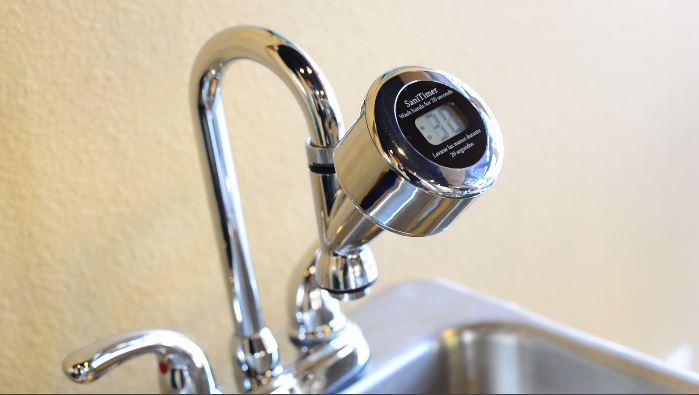
sanitimer
The SaniTimer

As food safety professionals, proper handwashing is a critical part of prevention as well.  Ensuring that employees understand and execute on the practice is essential to preventing product contamination and protecting consumers.

I would like to introduce you to a new handwashing tool for the food industry, the SaniTimer. A chef who is passionate about food safety performance by food employees developed this innovation. I love this new product and its practical application to food safety and public health in assisting in proper food employee behavior.

I encourage you to watch the video, and please share your thoughts about the technology.

Bill Bremer is Principal, Food Safety Compliance at Kestrel Management LLC
FST Soapbox

FSMA Preventive Controls Corrective Action Requirements

By Bill Bremer
No Comments
Bill Bremer is Principal, Food Safety Compliance at Kestrel Management LLC

FSMA Preventive Controls and Food Safety Plans must document specific use and management of corrective actions within Food Safety programs to satisfy the regulations and meet associated compliance dates. This requirement recently took effect under the Preventive Controls Rule on September 19, 2016 for companies with more than 500 corporate employees; food companies with fewer than 500 corporate employees have an additional year.

TEST YOUR FSMA SMARTS! Take the FSMA IQ TESTAs the FSMA Preventive Control rules move to enforcement status, food companies must prepare to best respond to the requirements and, correspondingly, to add the required written corrective action programs and records within Food Safety Plans. This may include providing an additional level of evidence that the company distributes safe food products to and from the United States.

With pending scheduled inspections on the horizon and the expanded authority of the FDA to conduct at-will inspections, it is critical for these programs to be written, verified and maintained at all times.  Important to note, even if this is a previously established program, you must be in compliance with the provisions of Section 117 of FSMA.

Learn more about FSMA Preventive Controls  at the 2016 Food Safety Consortium in Schaumburg, IL | December 7-8, 2016 | REGISTERThe more formalized programs and supporting evidence of compliance must include internal audits by Qualified Auditors, with coordinated oversight by your Qualified Individuals. Inspectors now have the authority to enforce the “letter of the law”. Additionally, organizations under the Preventive Control Rule must have multiple Qualified Auditors, in addition to Food Safety Plan Qualified Individuals, to oversee corrective action audits for evidence assurance.

Self-Diagnostic Assessment Tool

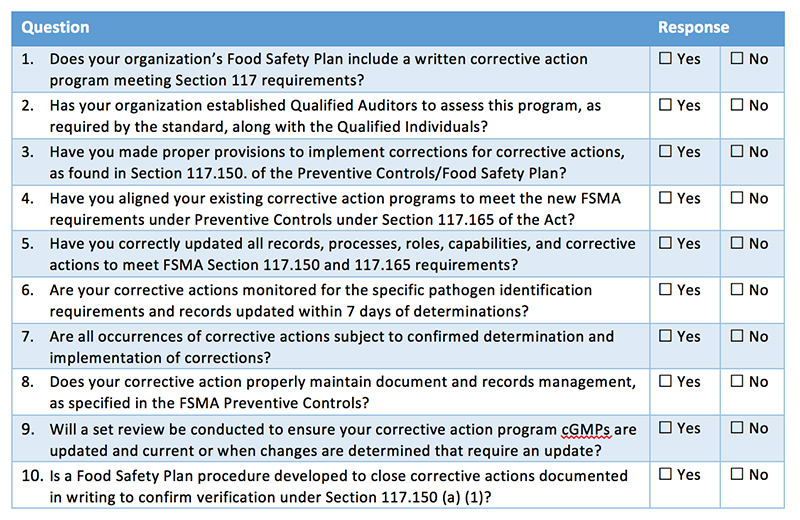
The following self-diagnostic assessment tool can help organizations better determine their current state of planning when it comes to implementing and managing corrective actions under FSMA Preventive Controls. To complete your own assessment, review and compare your programs to the questions below.

FSMA, Corrective Actions checklist
Table I. Kestrel Management’s self-diagnostic tool can help a company assess its level of corrective action programs for FSMA compliance.

Get Compliance-Ready

Companies must have the appropriate programs to comply with FSMA corrective actions or face possible willful non-conformance, which can include fines and criminal penalties under FDA enforcement. The questions in Table I will help companies identify areas to consider regarding their corrective action programs. Kestrel can also help answer questions, provide input on solutions, discuss how to better manage all of your food safety requirements—and change “No” responses into “Yes” responses that promote best practices for FSMA and food safety compliance.

Deirdre Schlunegger, CEO of STOP Foodborne Illness
Food Safety Culture Club

Time to Reflect and Honor Food Safety Heroes

By Deirdre Schlunegger
1 Comment
Deirdre Schlunegger, CEO of STOP Foodborne Illness
Robert Tauxe, CDC
CDC’s Robert Tauxe will be honored by STOP Foodborne Illness at a fundraiser during the 2016 Food Safety Consortium.

STOP Foodborne Illness is honored again this year to be given the opportunity by Food Safety Tech to hold a fundraising event at the Food Safety Consortium on Tuesday, December 6 at 7 p.m. in Schaumburg, Illinois (Chicago area). We are honoring Robert Tauxe, M.D., MPH, deputy director of the CDC’s Division of Foodborne, Waterborne and Environmental Diseases at the National Center for Emerging and Zoonotic Infectious Diseases with the Advancing Science for Food Safety Award; Scott Horsfall, representing The California Leafy Green Marketing Association with the Food Safety Training Award; and Jeff Almer, whose mother died from foodborne illness for the Food Safety Hero award. We will have a silent auction, music and food. This is a time to pause and thank those who have positively influenced our food safety system and we hope you will join us.

STOP Foodborne Illness is a national nonprofit public health organization dedicated to the prevention of illness and death from foodborne pathogens.

  • Advocating for sound public policy
  • Building public awareness
  • Assisting those impacted by foodborne illness
Scott Horsfall Dan Sutton Jeff Almer

Last year’s Food Safety Heroes were Nancy Donley, former spokesperson for Safe Tables Our Priority and STOP Foodborne Illness and Frank Yiannas, vice president of food safety at Walmart.

FDA’s Michael Taylor Joins in Honoring Food Safety Heroes


Katy Jones, Foodlogiq
FST Soapbox

The Clock is Ticking: Technology to Effectively Manage Recalls

By Katy Jones
3 Comments
Katy Jones, Foodlogiq

It seems there isn’t a day that goes by without a food recall being announced. National brands like General Mills, Kellogg’s and Kraft alone have all experienced major recalls over products contaminated with such hazards as E. coli or undeclared allergens in the last few months. Food recalls are incredibly costly to a company, but can be handled effectively and efficiently with good planning, proper execution and the right technology to back it up.

Fortunately, the food industry is moving in the right direction to encourage better recall management by way of regulations under FSMA. Underscored by these federal mandates, the industry as a whole is moving away from a reactive approach to quality and safety issues within the supply chain, instead adopting a preventative plan of action.

The Multiplier Effect: How One Ingredient Can Lead To Multiple Recalls | Learn more at the 2016 Food Safety Consortium | December 7-8 | Schuamburg, ILRecalls are inevitable in the food industry, and in reality every company has, or will, experience one at some point. What sets a company apart essentially boils down to how they prepare for and react to a recall situation. If a company has done its due diligence to prepare for the inevitable (i.e. putting a recall team in place and implementing the right traceability technology), dealing with a quality or contamination issue can be less painful. Additionally, taking the right preventative steps can ensure a recall situation is proactively handled, rather than leading to a brand’s nightmarish public meltdown.

Getting Beyond “One-up and One-Back”

The industry has relied on a more linear approach to supply chain transparency—the “one-up and one-back” method (OUOB). Knowing where a product has come from one step back in the chain and where it is being sent or sold one step forward is no longer enough. To properly prepare for a recall, and manage product quality, it is imperative that a company employ whole chain traceability software, rather than relying solely on the movement of product within its own four walls.

The OUOB traceability approach is especially dangerous when handling high-risk, perishable foods, like produce or meat—which are often the culprit for recalls. According to a recent study in the Journal of Business Logistics titled, “Tracing Bad Products in Supply Chains” by Kaitlin Wowak, assistant professor of management at Notre Dame, “perishable products, like fresh produce and meats, flow through the supply chain very quickly. And while federal regulations mandate that firms have traceability one step up and down the chain, this may not be sufficient for these perishable products. In those situations, there is often a gap in the information received about the product, say a positive Listeria test, and where that product went in the supply chain.”

Root Cause Analysis is Key

When faced with a recall situation, time is of the essence. The time it takes for the recall team to identify the root cause of an issue and remove it from the supply chain could be the difference between sick consumers and serious brand implications. Being fully cognizant of the entire supply chain via a whole-chain traceability solution allows you to visualize a contaminant’s exact location; this information ultimately helps a brand streamline and manage the issue quickly and effectively.

Wowak’s research profiles a series of recall scenarios. One that was studied found that 50% of the food removed from the supply chain during that recall was actually affected—the other half was perfectly fine. Take the example of a batch of tainted tomatoes in your supply chain. Without being able to identify the root cause at the lot level, a company might be forced to remove all of the tomatoes from its supply chain.

Rather, by utilizing end-to-end traceability software, they can identify the specific farm, pack date and lot from which the produce originated. Tracing that information through each step in the supply chain—hether the tomatoes ended up on a pizza, in a can of salsa, or in a farmer’s market—allows the brand to manage the bad products without disrupting their entire chain or wasting perfectly good produce.

Unfortunately, without the visibility of whole-chain traceability, companies do not have the option to cherry pick tainted vs. untainted food from their chain. This is especially relevant as up to 40% of food in the United States goes to waste, according to the NRDC.1

Centralized Recordkeeping

When faced with a safety or quality issue, communicating information to relevant parties is necessary throughout the process. Especially with FSMA coming into play, if a company experiences a quality issue, they must promptly notify regulatory establishments and be sure to submit documentation and data in an immediate manner for investigative purposes. This can be hindered if a brand does not have a good handle on their supply chain data and must spend hours sorting through file cabinets, emails, or Excel sheets for proper documentation, or coordinating with suppliers for records. The longer it takes to comply with federal regulations and submit data around a recall, the more likely consumers, and the brand, are at risk.

The industry’s shift towards a preventative approach to safety is hitting a milestone as FSMA compliance periods have already taken effect. With this change, the FDA will no longer tolerate poor handling of contamination or quality issues. A company cannot get away with blaming a partner’s lack of transparency, or a supplier’s inconsistent records— the brand is now always accountable. In the coming months, we can anticipate added scrutiny from auditors, more mandatory recalls, even the shutting down of facilities due to noncompliance or negligence around safety concerns.

Having a robust supplier management system in place enables a company to be prepared for a recall situation. With all of your product and supplier data in one place, companies can quickly gather and allocate necessary data like audits and assessments to the appropriate officials, complying with the new required recordkeeping rules. By streamlining the availability of key information, and supporting seamless communication, a brand can be empowered to navigate a quality or safety issue.

As testing across the supply chain increases and the demand for fresh food rises, recalls are not going away. Fortunately, the move to a preventative approach to safety comes at a time where traceability technology is more comprehensive than ever. Food companies have the opportunity to invest in themselves with end-to-end traceability, arming the brand for the inevitable occurrence of a safety or quality issue. By enhancing visibility of the supply chain via an all-encompassing whole-chain platform, it is possible to track a product through each stopover to the consumer, from farm to fork. At the same time, housing all data in one efficient platform can ease the pressure of liaising with supply chain partners and regulatory bodies and streamline communications when faced with a safety situation.

While recalls are an inescapable part of the food industry, what sets a brand apart is how well they prepare and arm themselves with the technology to stay ahead. Implementing supplier management and whole-chain traceability software can help a company stay one step ahead of a recall, which makes all the difference when consumer wellness and brand reputation are on the line.

Reference

  1. Gunders, D. (August 2012). “Wasted: How America Is Losing up to 40 Percent of Its Food from Farm to Fork in Landfill”. NRDC Issue Paper. Retrieved from https://www.nrdc.org/sites/default/files/wasted-food-IP.pdf
Bill Bremer is Principal, Food Safety Compliance at Kestrel Management LLC
FST Soapbox

Post-FSMA Food Safety Inspection: Are You Ready?

By Bill Bremer
No Comments
Bill Bremer is Principal, Food Safety Compliance at Kestrel Management LLC

Note: FSMA will include the scheduled compliance inspection as part of the implementation of rules. This will occur in the next several years for many food companies.

With FSMA rules moving to the compliance stage, food companies must prepare appropriately to best respond to the requirements and, correspondingly, to additional inspections. These inspections are in addition to others, including GFSI with its emphasis on unannounced level audits for some schemes. For example, these audits may be required by the code (as with SQF) or as part of customer arrangements per certification contracts.

Learn more about FSMA Inspection Readiness at this year’s Food Safety Consortium in Schaumburg, IL | December 7-8, 2016 | REGISTERWith the growing potential for inspections and audits, a well-planned program and response must be developed, implemented and tested to achieve a most successful outcome. This is an important area to address, especially given the many changes in compliance under FSMA, greater scrutiny under GFSI, and a rapidly changing responsibility for food safety management resources.

For companies experienced with past FDA compliance audits, the new rules and Section 117 cGMPs will require more formalized programs and strong evidence of compliance through internal audits and oversight by Qualified Individuals (QI). The inspectors will look to focus heavily on new requirements and the “letter of the law”. Additionally, organizations under the Preventive Control Rule must have multiple Food Safety Plan QIs, qualified audit resources and competent sanitation management, along with competent plant operators. It is critical to have established roles, planning and testing as part of any inspection readiness program.

Self-Diagnostic Assessment Tool

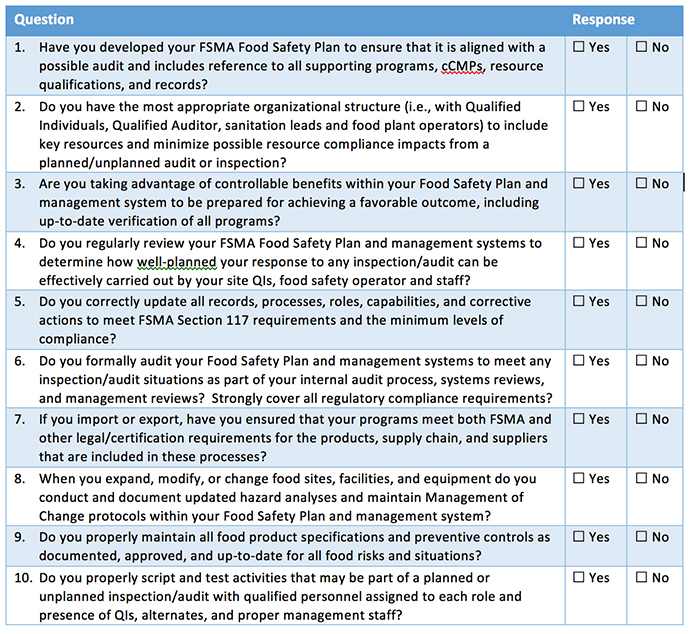
The following self-diagnostic assessment tool can help organizations better determine their current state of planning when it comes to developing inspection readiness. To complete your own planning assessment, review your progress compared to the questions in Table I.

FSMA Inspection checklist
Table I. Kestrel Management’s self-diagnostic tool can help a company assess its level of inspection readiness and preparedness for FSMA compliance.

Get Compliance-Ready

Companies must have the appropriate plans and resources to comply with FSMA and certifications or face possible violations that can include fines and penalties under FDA enforcement. The questions in Table I will help companies identify areas to consider for Inspection readiness. Kestrel can also help answer questions, provide input on solutions, discuss how to better manage all of your food safety requirements—and change “No” responses into “Yes” responses that promote best practices for FSMA and food safety compliance.

Zia Siddiqi, Orkin
Bug Bytes

From HACCP to HARPC, and Integrating Pest Management

By Zia Siddiqi, Ph.D.
3 Comments
Zia Siddiqi, Orkin

September 19, 2016 is a date that many of you probably had circled on your calendars. It marked the first date in which many food processing companies had to be in compliance with the FSMA preventive controls final rule.

It’s okay if you’re still revising your food safety plan. The regulations are so sweeping that some companies are still struggling to figure out if their plans are in compliance. At the heart of this law is a change in the philosophy of how we deal with contamination. Now, the focus is on preventing contamination rather than responding to it after it occurs.

This proactive approach to safety must be kept in mind when discussing how food safety plan requirements have changed. For many food manufacturing facilities, it means a change from HACCP to HARPC.

Hazard Analysis and Critical Control Points, or HACCP, should be more familiar to you. First developed in the late 1950s and early 1960s to provide safe food for astronauts in the U.S. space program, HACCP became the global standard for food safety in the 1980s, as large, multinational companies sought to ensure that their supply chains were safe.

HACCP evolved over the years into an effective, efficient and comprehensive food safety management approach. The system addresses food safety through the analysis and control of biological, chemical and physical hazards from raw material production, procurement and handling, to manufacturing, distribution and consumption of the finished product.

The seven principles of HACCP include:

  1. Conduct a hazard analysis
  2. Identify critical control points
  3. Set critical limits
  4. Establish monitoring actions
  5. Determine corrective actions
  6. Develop verification procedures
  7. Institute a record-keeping system

How are HACCP and HARPC different?

Following the passage of FSMA, the FDA instituted a new set of food safety standards, known as Hazard Analysis and Risk Based Preventive Controls (HARPC).

HARPC shouldn’t be seen as a replacement of HACCP standards. Rather, it’s an evolution of them. The following are some key changes.

You Must Anticipate Potential Hazards. One of the big changes in moving to HARPC standards is that your food safety plan must identify any and all reasonably foreseeable food safety hazards and include risk-based preventive controls for them. This moves beyond HACCP’s critical control points and asks that food processors look at how to minimize risk from the second food enters their facility to the second it ships out.

This includes naturally occurring hazards as well as hazards that can be intentionally or unintentionally introduced to the facility. The potential hazards that have expanded under HARPC include:

  • Biological, chemical, physical and radiological hazards
  • Natural toxins, pesticides, drug residues, decomposition, parasites, allergens and unapproved food and color additives
  • Naturally occurring hazards or unintentionally introduced hazards
  • Intentionally introduced hazards (including acts of terrorism)

You should review the potential hazards—both seen and unseen—that could impact your facility to determine the risks that you should analyze for your plan.

HARPC Applies to Almost All Food Processing Facilities. The HACCP standards generally did not apply to all food processors. HARPC, however, covers many more U.S. processors. There are six major exceptions, however.

  • Food companies under the exclusive jurisdiction of the USDA
  • Companies subject to the FDA’s new Standards for Produce Safety authorities
  • Facilities that are subject to and comply with FDA’s seafood and juice HACCP regulations
  • Low-acid and acidified canned food processors
  • Companies defined as “small” or “very small” businesses
  • Companies with a previous three-year average product value of less than $500,000

Do these changes mean that your existing food safety plan needs to be scrapped? Not at all. An existing HACCP plan can be modified with the help of a Preventive Control Qualified Individual (another new requirement) to comply with HARPC guidelines. This person needs to be intimately familiar with potential hazards and the risk-based preventive controls for them.

This may sound daunting at first, but moving to HARPC from HACCP will be an easier shift than starting from scratch. The key adjustments that you would need to focus on include identifying risk-based preventive controls for the hazards previously mentioned. Just remember, these hazards should be expanded to include both naturally occurring and unintentionally introduced hazards.

How Does Integrated Pest Management Fit into a Food Safety Plan?

Much like HARPC, Integrated Pest Management (IPM) focuses on being proactive. It emphasizes prevention, focusing on facility maintenance and sanitation, before considering chemical options for pest management.

An IPM plan is benchmarked with regular monitoring and analysis of effectiveness. This may seem cumbersome, but one shouldn’t overlook the value of documentation as a management tool. Collecting data and putting it in context with detailed analysis can be an effective way to prioritize your pest control efforts.

Detailed analysis accounts for things such as normal seasonal cycles, deficiencies in maintenance, exclusion, sanitation and harborages, just to name a few. This analysis can also help improve pest control efforts by prioritizing areas needing attention, especially when your staff is limited by time or resources.

Integrating IPM into your HARPC plan should include analyzing the risks of what could encourage pests to enter your facility, such as doors left open or incoming product shipments. Consider your pest control provider an expert source in how to assess all risks associated with pests and how to establish preventive controls for them.

Despite preventative efforts, unexpected pests will be inevitable. More emphasis will be placed on establishing action thresholds for different pests. This can be a problematic topic, because there are not scientific or broadly accepted threshold values for food processing pests.

Every facility, and often zones within facilities, will likely be different. Identify logical zones—ingredients, processing, packaging and warehousing—and sensible threshold values for each key pest in these zones. Furthermore, establish what the appropriate response should be at certain thresholds. The escalating responses to different levels of pest activity often include things such as automatic authority for certain limited types of pesticide application, more intensive monitoring and inspection, and, of course, higher management notifications, which might lead to more extensive measures.

IPM plans should be reviewed on an annual basis to ensure your program remains as effective as possible. Written food safety plans that follow the HARPC approach and comply with the FSMA rule should be reanalyzed whenever there is a significant change at the facility that might increase a known hazard or introduce a new one. Review the plan at least every three years, if no significant changes occur.

Even if your facility’s deadline for compliance with HARPC standards is a year or two away, now is the time to take a look at your plan and make sure you’re in compliance.