

Beltway Beat

Maryland District Court Enters Consent Decree of Permanent Injunction against Totally Cool and CEO

By Food Safety Tech Staff
No Comments

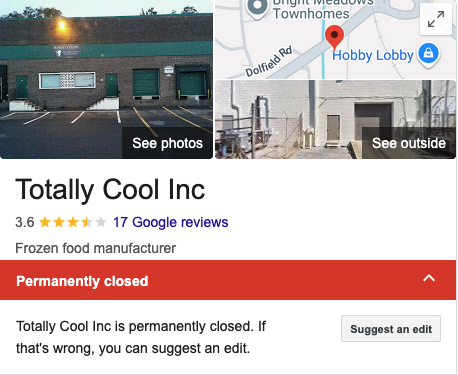
The FDA announced that on Tuesday, March 18, the United States District Court for the District of Maryland entered a consent decree of permanent injunction against Totally Cool, Inc., a Maryland-based manufacturer of ice cream and frozen desserts, and its CEO and owner, Michael J. Uhlfelder. On July 8, 2024, the FDA suspended Totally Cool’s food facility registration after an inspection of the firm revealed Listeria monocytogenes in the facility, as well as numerous failures of the firm to adhere to current good manufacturing practice for food safety, including sanitation requirements for employees and equipment. The consent decree prohibits Totally Cool and Mr. Uhlfelder from directly or indirectly receiving, preparing, processing, packing, holding, and/or distributing any article of food unless and until they meet certain requirements.

In 2024, Totally Cool recalled over 65 ice cream products due to listeria contamination.  The brands involved were Abilyn’s Frozen Bakery, Amafruits, Chipwich, Cumberland Farms, Dolcezza Gelato, Friendly’s, Hershey’s Ice Cream, Jeni’s, LaSalle, Marco, Taharka Brothers, the Frozen Farmer and Yelloh. More than 65 products were recalled, including ice cream cakes and sandwiches, as well as sorbets.

Baby Bottle
Beltway Beat

HHS, FDA Announce Operation Stork Speed

By Food Safety Tech Staff
No Comments
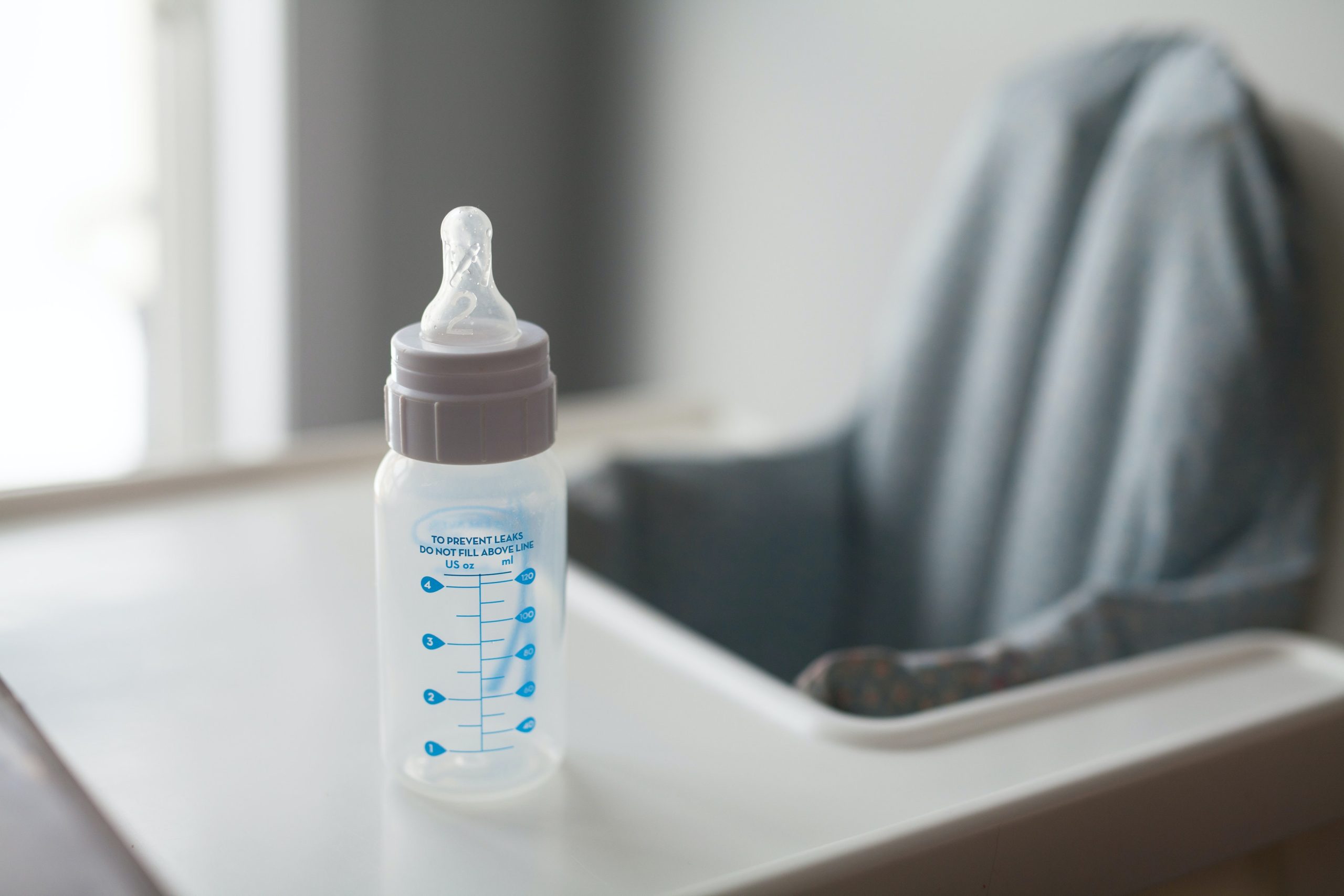
Baby Bottle

The FDA is announced in a Press Release a set of actions and initiatives focused on infant formula, called “Operation Stork Speed” such as beginning the nutrient review process and increasing testing for heavy metals and other contaminants. The agency is also encouraging companies to develop new infant formulas and clarify opportunities to help inform consumers about formula ingredients.

The FDA uses its authorities, both longstanding and newly granted, to uphold the safety, nutritional adequacy and resilience of infant formula and the infant formula supply. With Operation Stork Speed, the FDA is:

  • Starting the nutrient review required by law by issuing a Request for Information in the coming months to start the first comprehensive update and review of infant formula nutrients by the FDA since 1998
  • Increasing testing for heavy metals and other contaminants in infant formula and other foods children consume
  • Extending the personal importation policy
  • Encouraging companies to work with the FDA on any questions regarding increased transparency and clearer labeling
  • Communicating regularly with consumers and industry stakeholders as significant developments occur to ensure transparency, including information regarding nutrients and health outcomes
  • Collaborating with the National Institutes of Health and other scientific bodies to address priority scientific research gaps regarding short- and long-term health outcomes associated with formula feeding in infancy and childhood across the lifespan

“The FDA will use all resources and authorities at its disposal to make sure infant formula products are safe and wholesome for the families and children who rely on them,” said HHS Secretary Robert F. Kennedy, Jr.

Vulto Creamery Cheese
Beltway Beat

FDA Provides Update on the Federal-State Milk Safety System

By Food Safety Tech Staff
No Comments
Vulto Creamery Cheese

The FDA is sharing interim results from its ongoing sampling of 60-day aged raw milk cheese. As of March 10, 2025, 110 samples of the planned 299 have been collected. Of those 110 samples, 96 were negative by PCR (meaning that H5N1 was not detected in the analyzed samples), and 14 are still in progress. Final results are expected later this spring.

In addition, the preview appearing in a published pre-print of the research funded by the FDA and New York State and conducted at Cornell University suggests that aging raw milk cheese for 60 days or longer is not effective at eliminating H5N1. The previewed findings also suggest that either heat treating raw milk to adequate parameters or manufacturing cheese at or below a pH of 5.0 could be effective at inactivating H5N1.

To read more about this research and to see recommendations for industry and consumers from the FDA, visit: Investigation of Avian Influenza A (H5N1) Virus in Dairy Cattle

SGS, food safety

SGS Launches FSMA 204 Food Traceability Solutions

By Food Safety Tech Staff
No Comments
SGS, food safety

SGS, a testing, inspection and certification company, has launched comprehensive, integrated FSMA 204 Food Traceability Solutions to help food manufacturers and producers meet the US Food and Drug Administration’s (FDA) latest Food Safety Modernization Act (FSMA) Section 204 requirements.

FSMA 204 aims to enhance food safety by improving supply chain traceability. It targets high-risk foods on the Food Traceability List and mandates detailed recordkeeping, traceability plans and rapid data sharing.

While the compliance deadline is January 20, 2026, many retailers are already seeking early adoption by suppliers.

Naghmeh Raiyat, Global Head of Food Assurance at SGS, said: “As the compliance deadline for FSMA 204 approaches, businesses face mounting pressure to enhance their traceability systems. Thanks to our extensive knowledge of FSMA requirements, we have developed a solution that will empower businesses with the tools and confidence to not only achieve compliance but also build more resilient and transparent supply chains. Ultimately, this marks another welcome step forward in strengthening consumer trust in food safety.”

Designed to address the increasingly complex compliance needs of stakeholders in the food industry, FSMA 204 Food Traceability Solutions combine FSMA 204 audits, training and the TRAKKEY digital traceability platform:

  • FSMA 204 audits: ensures that organizations meet the FDA’s rigorous traceability requirements. These audits focus on verifying the accuracy, completeness and timeliness of Key Data Elements (KDEs) and Critical Tracking Events (CTEs). By assessing the readiness of traceability systems, the audits support the swift identification and removal of contaminated food products to safeguard public health
  • FSMA 204 training: provides food businesses with the knowledge and skills to implement robust traceability plans. Available online and in person, these courses cover critical aspects of FSMA 204, including traceability rules, KDEs and CTEs, enabling organizations to navigate FDA inspections and meet regulatory demands confidently
  • TRAKKEY digital traceability platform: ensures real-time supply chain-wide visibility. Validated by billions of annual transactions, TRAKKEY integrates effortlessly into existing IT systems and workflows, offering a scalable and powerful tool to:
    • Enhance outbreak investigations: quickly identify contamination sources to enable faster responses
    • Reduce recalls: pinpoint contaminated products to minimize financial losses
    • Improve product information: insights into the origin, processing and distribution of food items
    • Streamline data sharing: efficient communication between trading partners

For more information about the FSMA 204 Food Traceability Solutions, please visithttps://www.sgs.com/en/services/fsma-204-food-traceability-solutions

Beltway Beat

RFK Jr Moves to Eliminate GRAS and Synthetic Dyes

By Food Safety Tech Staff
No Comments

HHS Secretary Robert F. Kennedy Jr. directed the acting FDA commissioner, to take steps to explore potential rulemaking to revise its Substances Generally Recognized as Safe (GRAS) Final Rule and related guidance to eliminate the self-affirmed GRAS pathway. According the HHS website, this will enhance the FDA’s oversight of ingredients considered to be GRAS.

“For far too long, ingredient manufacturers and sponsors have exploited a loophole that has allowed new ingredients and chemicals, often with unknown safety data, to be introduced into the U.S. food supply without notification to the FDA or the public,” said Secretary Kennedy. “Eliminating this loophole will provide transparency to consumers, help get our nation’s food supply back on track by ensuring that ingredients being introduced into foods are safe, and ultimately Make America Healthy Again.”

Eliminating the self-affirmation process would require companies seeking to introduce new ingredients in foods to publicly notify the FDA of their intended use of such ingredients, along with underlying safety data, before they are introduced in the food supply.

“The FDA is committed to further safeguarding the food supply by ensuring the appropriate review of ingredients and substances that come into contact with food,” said Acting FDA Commissioner Sara Brenner, M.D., M.P.H. “The FDA will continue to follow our authorities and leverage our resources to protect the health of consumers to ensure that food is a vehicle for wellness.”

The statement said, HHS is committed to working with Congress to explore ways legislation can completely close the GRAS loophole.

Synthetic Dyes DOA

On Monday, in his first meeting with top executives from PepsiCo, W.K. Kellogg, General Mills and other large companies, Secretary Kennedy bluntly told them that a top priority would be eliminating artificial dyes from the nation’s food supply according to a NY Times article.

In a letter to it’s members, Melissa Hockstad the Consumer Brands Association’s President wrote “Decision time is imminent” According to the letter, Mr. Kennedy also warned food companies that they should anticipate significant change as a result of his quest for “getting the worst ingredients out” of food. And while Mr. Kennedy said in the meeting that he wanted to work with the industry, he also “made clear his intention to take action unless the industry is willing to be proactive with solutions,” according to the Hockstad letter.

USDA Logo
Beltway Beat

USDA’s Announces a Phased Return-to-Duty Plan With Pay for Fired Probationary Employees

By Food Safety Tech Staff
No Comments
USDA Logo

The U.S. Department of Agriculture (USDA) released the following statement on their website today regarding the status of probationary employees:

“On Wednesday, March 5, the Merit Systems Protection Board (MSPB) issued a 45-day stay on the termination of U.S. Department of Agriculture probationary employees. By Wednesday, March 12, the Department will place all terminated probationary employees in pay status and provide each with back pay, from the date of termination. The Department will work quickly to develop a phased plan for return-to-duty, and while those plans materialize, all probationary employees will be paid.”

USDA Logo
Beltway Beat

USDA Terminates National Advisory Committee on Microbiological Criteria for Foods (NACMCF) and National Advisory Committee on Meat and Poultry Inspection (NACMPI).

By Food Safety Tech Staff
No Comments
USDA Logo

The USDA’s  National Advisory Committee on Microbiological Criteria for Foods (NACMCF) was established in 1988 by the Secretary of Agriculture, after consulting with the Secretary of the U.S. Department of Health and Human Services (HHS). The committee provides impartial scientific advice and recommendations to federal agencies on microbiological and public health issues relative to the safety of the U.S. food supply.

The National Advisory Committee on Meat and Poultry Inspection (NACMPI) was established in 1971 to advise the Secretary of Agriculture on matters affecting federal and state inspection program activities.

Brian Ronholm, director of food policy at Consumer Reports, issued the following statement today in response to the elimination of the NACMCF and National Advisory Committee on Meat and Poultry Inspection (NACMPI). “The termination of these two important advisory committees is very alarming and should serve as a warning to consumers that food safety will not be a priority at USDA in the foreseeable future. These expert panels provide impartial scientific advice and recommendations to USDA, FDA and the CDC on public health issues related to food safety in the U.S. The failure to recognize and leverage the value of this scientific expertise is dangerous and irresponsible.”

Sandra Eskin, CEO, Stop Foodborne Illness, commented on NACMCF and NACMPI being eliminated. “The two food safety advisory committees, NACMCF and NACMPI, reportedly being eliminated, ensure that federal food safety oversight is science-based and informed by a broad range of stakeholders. Without the input of these committees, we have little confidence that the food safety policies at USDA and FDA will, in fact, Make America Healthy Again.”

Separately, an independent federal board has ordered the U.S. Department of Agriculture (USDA) to temporarily reinstate close to 6,000 employees fired since Feb. 13, finding reasonable grounds to believe the agency acted illegally in terminating them.

The Merit Systems Protection Board (MSPB) issued a stay, ordering the USDA to return the fired workers to their jobs for 45 days while an investigation continues. The MSPB acts as an internal court to consider federal employees’ complaints against the government.

Beltway Beat

FDA names Kyle Diamantas J.D. as new Acting Deputy Commissioner for Human Foods

By Food Safety Tech Staff
No Comments

U.S. Food and Drug Administration has announced food and beverage attorney Kyle Diamantas is the new acting deputy commissioner for human foods. He replaces Jim Jones, who resigned last week in protest of staffing cuts.

FDA’s leadership webpage was updated this week to include Mr. Diamantas and stated that as the Acting Deputy Commissioner for Human Foods, he leads the agency’s Human Foods Program, overseeing all FDA nutrition and food safety activities. In this role, Mr. Diamantas exercises authority over all Human Food Program entities and operations, including resource allocation, risk-prioritization strategy and decision making, policy initiatives, and major response activities involving human foods. Mr. Diamantas also oversees food resources in the agency’s Office of Inspections and Investigations.

As the FDA’s top food executive, Mr. Diamantas sets the strategic direction and operations for food policy in the U.S., while serving as a critical liaison between the agency, Department of Health and Human Services, and The White House. He also represents the agency on food activities and matters in dealings with foreign governments and international organizations.

Mr. Diamantas has extensive experience working with various federal and state agencies and policy makers, scientific organizations, consumer advocacy groups, and industry stakeholders. Prior to coming to FDA, Diamantas worked at the law firm Jones Day. He has wide-ranging experience on matters spanning regulatory, compliance, investigative, enforcement, rulemaking, and legislation. Mr. Diamantas holds a juris doctor from the University of Florida Levin College of Law and a bachelor’s in pre-law political science from the University of Central Florida.

The announcement appears to conflict HHS Secretary Robert F. Kennedy Jr’s pledge to shut the revolving door between industry and government. According to the website, Lawtally, prior to working at Jones Day, Diamantas was a senior associate at Baker, Donelson, Bearman, Caldwell & Berkowitz. He focused his practice on civil litigation and regulatory compliance, with an emphasis on United States Food and Drug Administration (FDA), United States Federal Trade Commission (FTC), and state equivalent regulatory and compliance issues and disputes.

He assisted in the representation of drug, device, cosmetic, dietary supplement, food, and consumer product manufacturers and supply chain participants on issues involving labeling, advertising, regulatory and quality compliance, and in transactions and litigation involving products and companies subject to FDA and FTC regulation.


Beltway Beat

Revolving Door? FDA moves to rehire food safety staffers fired days earlier

The Associated Press reported barely a week after mass firings at the Food and Drug Administration, some probationary staffers received unexpected news over the weekend: The government wants them back.

Beginning Friday night, FDA employees overseeing food ingredients received calls and emails notifying them that their recent terminations had been “rescinded effective immediately,” according to messages viewed by AP.

In the agency’s food program, at least 10 staffers were offered their jobs back, according to a food staffer who spoke to the AP on condition of anonymity to discuss internal agency matters.

FDA staffers who were reinstated said their immediate supervisors received no explanation or advance notice on the decisions. Instead, staffers received calls or emails from the FDA’s “Office of Talent Solutions,” informing them that their access to FDA computer systems and offices had been restored.

“We are so grateful to still have you working for the FDA and serving the American public!” the emails concluded.

A week earlier, the same employees received emails stating that they were “not fit for continued employment because your ability, knowledge and skills do not fit the agency’s current needs.”

Lyons Magnus Recalls Lyons ReadyCare and Sysco Imperial Frozen Supplemental Shakes Manufactured by Third Party Because of Listeria Contamination

By Food Safety Tech Staff
No Comments

Lyons Magnus LLC announced in a press release on February 22, that it is voluntarily recalling 4 oz. Lyons ReadyCare and Sysco Imperial Frozen Supplemental Shakes due to the potential for the products to be contaminated with Listeria monocytogenes. Lyons Magnus is taking this action in response to a recall of the products by their manufacturer, Prairie Farms Dairy, Inc. (“Prairie Farms”) from the Prairie Farms facility in Fort Wayne, Indiana.

According the the press release, Lyons Magnus handled distribution of the recalled products, which were manufactured and supplied to Lyons Magnus by Prairie Farms. The recalled products were distributed primarily to long-term care facilities and were not available for retail sale. The recall is being conducted in cooperation with Prairie Farms, Sysco, and the U.S. Food and Drug Administration.

On November 25, 2024, FDA reported it was was notified about an outbreak of Listeria monocytogenes in the United States, with many ill people residing in long-term care facilities (LTCF) prior to illness onset. FDA’s traceback investigation identified that each of the LTCF who supplied invoice information for review from 2024 to present received a frozen supplemental shake of either Lyons ReadyCare or Sysco Imperial brand. As part of this investigation, FDA collected environmental samples and found the outbreak strain of Listeria.

According to CDC, this outbreak includes cases dating back to 2018, with 20 cases across 2024 and 2025, and is currently ongoing. Epidemiologic evidence in previous investigations were unable to identify a source of the outbreak. As of February 21, 2025, a total of 38 people infected with the outbreak strain of Listeria monocytogenes have been reported from 21 states. Of the 38 people for whom information is available, 37 people have been hospitalized. Eleven deaths have been reported. Of the 38 people for whom information is available, 34 (89%) reported living in long term care facilities or were hospitalized prior to becoming sick. Records reviewed from facilities indicated nutritional shakes were available to residents.

Lyons Magnus claims, as soon as it learned of the issue, it took immediate action to halt the purchase of all products from the affected Prairie Farms facility, notify customers, and ensure that impacted products were removed from distribution nationally.