

FDA Logo
Beltway Beat

FDA bans red dye No. 3 from food and beverages

By Food Safety Tech Staff
No Comments
FDA Logo

The FDA announced today that it is revoking the authorization for the use of FD&C Red No. 3 as a matter of law, based on the Delaney Clause of the Federal Food, Drug, and Cosmetic Act (FD&C Act). The FDA is amending its color additive regulations to no longer allow for the use of FD&C Red No. 3 in food and ingested drugs in response to a 2022 color additive petition. The petition requested the agency review whether the Delaney Clause applied and cited, among other data and information, two studies that showed cancer in laboratory male rats exposed to high levels of FD&C Red No. 3 due to a rat specific hormonal mechanism. The way that FD&C Red No. 3 causes cancer in male rats does not occur in humans. Relevant exposure levels to FD&C Red No. 3 for humans are typically much lower than those that cause the effects shown in male rats. Studies in other animals and in humans did not show these effects; claims that the use of FD&C Red No. 3 in food and in ingested drugs puts people at risk are not supported by the available scientific information.

The Delaney Clause, enacted in 1960 as part of the Color Additives Amendment to the FD&C Act, prohibits FDA authorization of a food additive or color additive if it has been found to induce cancer in humans or animals. This is not the first time the agency revoked an authorization based on the Delaney Clause. For example, in 2018, the FDA revoked the authorization for certain synthetic flavors based on the Delaney Clause in response to a food additive petition.

Food and beverage manufacturers who use FD&C Red No. 3 in their products will have until January 15, 2027 to reformulate their products. Other countries still currently allow for certain uses of FD&C Red No. 3 (called erythrosine in other countries). However, foods imported to the U.S. must comply with U.S. requirements.

Beltway Beat

FDA Proposes Requiring At-a-Glance Nutrition Information on the Front of Packaged Foods

By Food Safety Tech Staff
No Comments

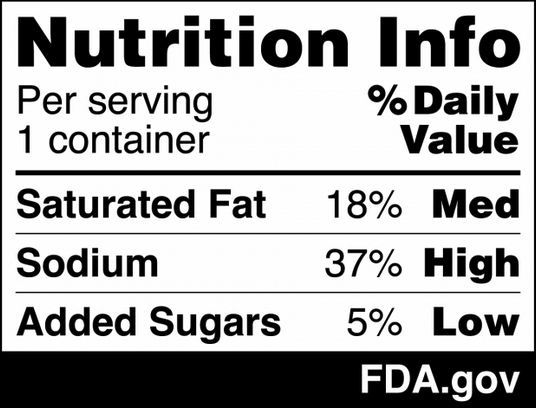
The U.S. Food and Drug Administration is announcing an important step to provide nutrition information to consumers by proposing to require a front-of-package (FOP) nutrition label for most packaged foods. This proposal plays a key role in the agency’s nutrition priorities, which are part of a government-wide effort in combatting the nation’s chronic disease crisis. If finalized, the proposal would give consumers readily visible information about a food’s saturated fat, sodium and added sugars content—three nutrients directly linked with chronic diseases when consumed in excess.

The proposed FOP nutrition label, also referred to as the “Nutrition Info box,” provides information on saturated fat, sodium and added sugars content in a simple format showing whether the food has “Low,” “Med” or “High” levels of these nutrients. It complements the FDA’s iconic Nutrition Facts label, which gives consumers more detailed information about the nutrients in their food.

The proposed rule, if finalized, would require food manufacturers to add a Nutrition Info box to most packaged food products three years after the final rule’s effective date for businesses with $10 million or more in annual food sales and four years after the final rule’s effective date for businesses with less than $10 million in annual food sales.

Comments on the proposed rule can be submitted electronically to http://www.regulations.gov by May 16, 2025.

FDA Logo
Beltway Beat

FDA’s Guidance for Industry: Action Levels for Lead in Processed Food Intended for Babies and Young Children

FDA Logo

The Food and Drug Administration (FDA) announced on its website the availability of a final guidance for industry entitled “Action Levels for Lead in Processed Food Intended for Babies and Young Children.” The guidance establishes action levels for lead in certain processed foods intended for babies and young children less than 2 years old. The guidance is intended to set achievable action levels that will help further reduce lead in the food supply.

In accordance with § 109.6 (21 CFR 109.6), this guidance establishes the following action levels for lead in processed food intended for babies and young children less than 2 years old:

  • 10 parts per billion (ppb) for fruits, vegetables (excluding single-ingredient root vegetables), mixtures (including grain- and meat-based mixtures), yogurts, custards/puddings, and single-ingredient meats
  • 20 ppb for single-ingredient root vegetables; and 20 ppb for dry infant cereals

Consistent with § 109.6(d), these action levels reflect levels of lead at which FDA may regard the food as adulterated within the meaning of section 402(a)(1) of the Federal Food, Drug, and Cosmetic Act (21 U.S.C. 342(a)(1)). FDA said it intends to consider these action levels, in addition to other factors, when considering whether to bring enforcement action in a particular case.

Beltway Beat

First Bird Flu Death in U.S. Reported in Louisiana

By Food Safety Tech Staff
No Comments

The news comes on the heels of a report that the patient had carried mutations that might help the virus infect people more easily.

This article is in follow up to the Dec. 30 article, Genetic Sequences of Highly Pathogenic Avian Influenza A(H5N1) Viruses Identified in a Person in Louisiana

The New York Times reported that a Louisiana patient who had been hospitalized with severe bird flu has died, the first such fatality in the United States, state health officials.

The patient was older than 65 and had underlying medical conditions, the officials said. The individual became infected with the bird flu virus, H5N1, after exposure to a backyard flock and wild birds.

The Centers for Disease Control and Prevention said late last month that the mutations were not present in virus samples taken from the backyard flock, suggesting that they developed in the patient as the illness progressed.

One of the mutations was also present in virus sampled from a 13-year-old Canadian girl who was hospitalized and required respiratory support. She has since recovered.

Both patients carried a version of the virus that is circulating in wild birds, distinct from the one causing the outbreak in dairy cattle.

SmartSense Names Industry Leader Stefanie Miller to Advisory Board

Miller’s appointment brings extensive expertise in strategic planning, R&D, marketing and other core business functions built over her tenure at global food and beverage brands, including The Coca-Cola Company and Kellogg Company.

SmartSense by Digi®, part of Digi International announced the appointment of Stefanie Miller, Managing Director of Category Strategy and Growth at Kellanova Europe, to its Food Service Advisory Board, which focuses on consumer packaged goods (CPG) safety. Miller joins a distinguished group of leaders from Giant Eagle, Inc., Schnuck Markets, Inc., NewRoad Capital Partners, Nutrition Core Solutions, and Clipper Advisory Group.

“I’m honored to join the Food Service Advisory Board and help drive dedication to innovation and excellence,” said Miller. “SmartSense has an unwavering commitment to improving food service and reducing CPG risks through innovative technology, a more important mission than ever with foodborne illnesses and recalls spread throughout the supply chain seemingly more prevalent than ever. By working alongside professionals from across the food service sector, I am eager to contribute to elevating food manufacturing and supply chain safety standards and enriching the quality of service for SmartSense customers.”

Miller’s appointment brings extensive expertise in strategic planning, R&D, marketing and other core business functions built over her tenure at global food and beverage brands, including The Coca-Cola Company and Kellogg Company.

“An incredibly valuable addition to our Food Service Advisory Board, Stefanie brings industry experience that will help foster a more strategic path forward for SmartSense food service solutions,” said Guy Yehiav, President of SmartSense by Digi. “Her pioneering approach to tackling industry challenges across diverse sectors and various leadership roles in food manufacturing will continue to inspire innovative solutions, foster collaboration, and set new standards for risk management.”

Miller joined the SmartSense Food Service Advisory Board on Nov 1, 2024, further advancing the company’s mission to empower food service organizations to safeguard consumer outcomes through advanced IoT technology

Beltway Beat

Genetic Sequences of Highly Pathogenic Avian Influenza A(H5N1) Viruses Identified in a Person in Louisiana

CDC has sequenced the influenza viruses in specimens collected from the patient in Louisiana who was infected with, and became severely ill from HPAI A(H5N1) virus. The genomic sequences were compared to other HPAI A(H5N1) sequences from dairy cows, wild birds and poultry, as well as previous human cases and were identified as the D1.1 genotype. The analysis identified low frequency mutations in the hemagglutinin gene of a sample sequenced from the patient, which were not found in virus sequences from poultry samples collected on the patient’s property, suggesting the changes emerged in the patient after infection.

This technical summary of an analysis of the genomic sequences of the viruses identified in two upper respiratory tract specimens from the patient who was severely ill from an infection with highly pathogenic avian influenza (HPAI) A(H5N1) virus in Louisiana. The patient was infected with A(H5N1) virus of the D1.1 genotype virus that is closely related to other D1.1 viruses recently detected in wild birds and poultry in the United States and in recent human cases in British Columbia, Canada, and Washington State. This avian influenza A(H5N1) virus genotype is different from the B3.13 genotype spreading widely and causing outbreaks in dairy cows, poultry, and other animals, with sporadic human cases in the United States. Deep sequencing of the genetic sequences from two clinical specimens from the patient in Louisiana was performed to look for changes associated with adaptation to mammals. There were some low frequency changes in the hemagglutinin (HA) gene segment of one of the specimens that are rare in people but have been reported in previous cases of A(H5N1) in other countries and most often during severe infections. One of the changes found was also identified in a specimen collected from the human case with severe illness detected in British Columbia, Canada, suggesting they emerged during the clinical course as the virus replicated in the patient. Analysis of the N1 neuraminidase (NA), matrix (M) and polymerase acid (PA) genes from the specimens showed no changes associated with known or suspected markers of reduced susceptibility to antiviral drugs.

Overall, CDC considers the risk to the general public associated with the ongoing U.S. HPAI A(H5N1) outbreak has not changed and remains low. The detection of a severe human case with genetic changes in a clinical specimen underscores the importance of ongoing genomic surveillance in people and animals, containment of avian influenza A(H5) outbreaks in dairy cattle and poultry, and prevention measures among people with exposure to infected animals or environments.

USDA Logo
Beltway Beat

APHIS Announces Updates to Indemnity Program for Highly Pathogenic Avian Influenza on Poultry Farms

By Food Safety Tech Staff
No Comments
USDA Logo

As part of its ongoing efforts to stop the further spread of Highly Pathogenic Avian Influenza (HPAI) and give farmers tools to help combat the disease, the U.S. Department of Agriculture’s Animal and Plant Health Inspection Service (APHIS) announced an interim final rule that updates the conditions for poultry facilities to receive indemnity and compensation after testing positive for HPAI. Based on evidence that strong biosecurity measures remain the most effective strategy to combat HPAI, APHIS will now require that farmers undergo a biosecurity audit before restocking their poultry after an HPAI detection, and before receiving future indemnity payments.

“During the outbreak of HPAI in 2014 and 2015, U.S. poultry owners made great improvements to biosecurity to protect their flocks, which greatly reduced the presence of HPAI among the country’s poultry flock,” said Dr. Rosemary Sifford, USDA Chief Veterinary Officer. “Biosecurity is proven to be our best weapon in fighting this virus, and this update will ensure that poultry producers who received indemnity for HPAI are taking measures to stop future introductions of the disease and avoiding actions that contribute to its spread.”

Under the interim final rule, if a commercial poultry farm affected by HPAI wants to restock their poultry and be eligible for future indemnity on that restock, the premises will be required to pass a biosecurity audit by APHIS before restocking. APHIS will also require a biosecurity audit for commercial poultry premises within the “buffer zone” (minimal 7 km radius around the infected zone) prior to movement of poultry onto the premises if the owner wishes to be eligible for future indemnity for the poultry moved onto the premises. Additionally, APHIS will not pay indemnity for flocks moved onto premises in active infected zones if the flocks become infected with HPAI within 14 days following the dissolution of the control area around an active infected premises. A producer who does not make corrections recommended in APHIS’s biosecurity audit will not be eligible for indemnity payments if the premises experiences future infections within the same outbreak.

Poulty Farmer

Iowa HHS Reports First Human Case of Highly Pathogenic Avian Influenza (HPAI) in Iowa

By Food Safety Tech Staff
No Comments
Poulty Farmer

The Iowa Department of Health and Human Services (Iowa HHS) reported the first human case of avian influenza A(H5) in the state. The individual was exposed to infected poultry while working with a commercial flock in northwest Iowa. The individual reported mild symptoms, has received appropriate treatment and is recovering. The case was identified through testing at the State Hygienic Laboratory and confirmed by the Centers for Disease Control and Prevention (CDC).

“Iowa has monitored the spread of avian influenza closely since it was first detected in poultry in the state in 2022, and our state is prepared with the established knowledge, strong partnerships, and effective tools to mitigate its impact on our community,” said Iowa HHS State Medical Director Dr. Robert Kruse.

As of December 20, 2024, the CDC has reported 64 confirmed human cases of H5 HPAI across nine states. The majority of the exposures are linked to infected poultry or dairy cows.

Voluntary Recall of Northwest Naturals’ Pet Food Due to Highly Pathogenic Avian Influenza (HPAI) Contamination

By Food Safety Tech Staff
No Comments

Northwest Naturals of Portland, Oregon announced that it is voluntarily recalling one batch of Northwest Naturals brand 2lb Feline Turkey Recipe raw frozen pet food after it was tested positive for Highly Pathogenic Avian Influenza (H5N1) virus.

According to the Oregon Department of Agriculture’s website, testing conducted by the U.S. Department of Agriculture’s (USDA) National Veterinary Services Laboratories (NVSL) and the Oregon Veterinary Diagnostic Laboratory (ODVL) at Oregon State University confirmed a house cat in Washington County, Oregon contracted H5N1 and died after consuming the raw frozen pet food. Tests confirmed a genetic match between the virus in the raw and frozen pet food and the infected cat.

“We are confident that this cat contracted H5N1 by eating the Northwest Naturals raw and frozen pet food,” said ODA State Veterinarian Dr. Ryan Scholz. “This cat was strictly an indoor cat; it was not exposed to the virus in its environment, and results from the genome sequencing confirmed that the virus recovered from the raw pet food and infected cat were exact matches to each other.”

The Oregon Health Authority (OHA) and local public health officials are monitoring household members who had contact with the cat for flu symptoms. To date, no human cases of Highly Pathogenic Avian Influenza (HPAI) have been linked to this incident. Although Oregon has reported one confirmed human case of HPAI, there are no confirmed cases of the virus in dairy cows or cow milk. As a precautionary measure, ODA announced on December 11 that it will test milk from every commercial dairy across the state. Neighboring states such as Idaho, Nevada, and California have reported HPAI cases in dairy cattle herds, contributing to over 700 confirmed cases in 16 states nationwide.

I.M. Healthy SoyNut Butter, recall
Beltway Beat

FDA updates nutritional requirements a food must meet to use the claim “healthy” on the package

By Food Safety Tech Staff
No Comments
I.M. Healthy SoyNut Butter, recall

The U.S. Food and Drug Administration (FDA) announced today it has updated the nutritional requirements a food must meet to use the claim “healthy” on the package, which includes criteria a food must meet to use the “healthy” claim on the package. The FDA also is exploring the development of a symbol to represent the claim “healthy” to make it easier to spot foods that can be the foundation of healthy eating patterns.

Updating the “Healthy” Definition on Food Packaging

The last time “healthy” was defined on packaging was in the 1990s. Based on the nutrition science and federal dietary guidelines at that time, the definition was solely focused on individual nutrients; for example, it included limits for saturated fat, total fat, cholesterol, and sodium and required a certain amount of beneficial nutrients like certain vitamins, minerals, fiber, and protein.

With a greater understanding of dietary patterns and their effects on health, and FDA recognizes that foods are made up of a variety of nutrients that work together as part of a healthy dietary pattern.

To be consistent with the latest nutrition science and federal dietary guidelines the updated definition of “healthy” requires that:

  • A food must contain a certain amount of a food group like fruits, vegetables, grains, protein foods, or dairy.
  • A food can’t contain too much saturated fat, sodium, or added sugars.

How the “Healthy” Claim Works

Placing a “healthy” claim on a food package is voluntary. If manufacturers choose to do it, their products must have the nutrient content required by the “healthy” definition. Manufacturers who choose to use the “healthy” claim can use the new criteria starting on February 25, 2025.

Here are some examples of what qualifies to use the “healthy” claim under the updated definition:

  • Nuts and seeds, olive oils, higher-fat fish, like salmon, and eggs would qualify as healthy because of their nutrient profile. They didn’t qualify under the previous definition.
  • Water. While water isn’t part of a food group, it is considered an optimal beverage by the Dietary Guidelines.

Here are some examples of what no longer qualifies to use the “healthy” claim under the updated definition:

  • Fortified white bread, highly sweetened yogurt, highly sweetened cereal.

For more details, see Use of the Term Healthy on Food Labeling.