Hygiena Acquires Nexcor Food Safety Technologies Inc.

The acquisition exemplifies the shared commitment and aligned values of Hygiena and Nexcor, aiming to enhance the safety and operational efficiency of food and beverage facilities through innovative technologies and comprehensive solutions.

Hygiena, announced that is has completed the acquisition of Nexcor Food Safety Technologies, Inc., the creator of KLEANZ and CAMS-PM, two software solutions for managing sanitation and equipment maintenance in food and beverage manufacturing facilities.

“Effective cleaning and monitoring of facilities with food safety diagnostic testing are essential for quality control and risk mitigation across all food processing environments. With our acquisition of Nexcor software solutions, we plan to integrate our SureTrend® analytics platform with KLEANZ’s sanitation software, delivering powerful tools to drive quality improvement, prevent food safety issues and enhance operational efficiencies,” said Steven Nason, CEO of Hygiena. “Hygiena’s extensive global customer base and commercial channels will introduce KLEANZ and CAMS-PM software solutions, along with our integrated SaaS food safety offerings, to a wider audience. This expanded portfolio provides our customers with a streamlined, prevention-focused approach to sanitation and food safety management. With a centralized platform offering comprehensive, real-time solutions, we are empowering businesses to enhance their food safety programs and operational effectiveness worldwide.”

Robert Burgh, President of Nexcor Food Safety Technologies, Inc., commented, “This collaboration with Hygiena allows Nexcor to create greater customer value by streamlining two critical, interconnected functions within food companies worldwide. Together, we accelerate market growth while staying true to our values of innovation, integrity and customer satisfaction. We are excited to merge our expertise, creating enhanced SaaS platforms and comprehensive solutions for sanitation, safety and compliance management. United, we are poised to lead the future of food safety with a shared vision and strong commitment.”

David Grant, General Manager of Software and Instrument Firmware at Hygiena, added, “We are excited to integrate Nexcor’s solutions into our existing suite of software offerings and extend the capabilities of SureTrend. SureTrend currently enables our customers to efficiently plan, schedule, test, capture, store, protect, analyze, audit and report on their critical testing data. Integrating Nexcor’s data will allow us to leverage sophisticated machine learning AI for predictive insights, enhancing risk mitigation and advancing food safety.”

The acquisition exemplifies the shared commitment and aligned values of Hygiena and Nexcor, aiming to enhance the safety and operational efficiency of food and beverage facilities through innovative technologies and comprehensive solutions. Nexcor’s dedicated customer base and strong market presence in the food, beverage and packaging sectors will significantly contribute to the partnership’s success, fostering global expansion, enhanced product offerings, operational efficiencies and cross-selling opportunities.
USDA Logo
Beltway Beat

USDA Food Safety and Inspection Service Announces Leadership Changes

By Food Safety Tech Staff
No Comments
USDA Logo

On November 21, 2024, the U.S. Department of Agriculture’s (USDA) Food Safety and Inspection Service (FSIS) announced changes to the agency’s leadership team.

Dr. Denise Eblen, currently FSIS’ Assistant Administrator for the Office of Public Health Science, has been named agency Administrator. As Assistant Administrator for the Office of Public Health Science since 2018, Dr. Eblen has led the agency’s scientific analysis, including oversight of FSIS laboratories and testing of regulatory samples, risk assessment, and outbreak investigation and response. Drawing from her twenty five years of experience at USDA, she will continue to steer FSIS in its efforts to use science-based decision making to modernize the agency’s inspection strategies, policies, and approaches to improve public health. In addition to her work with FSIS, Dr. Eblen has held roles with USDA’s National Institute of Food and Agriculture and the Agricultural Research Service.

Denise Eblen, Ph.D., FSIS, Administrator, Office of Public Health Service portrait in Washington, DC on May 30, 2018. USDA photo by Ken Hammond.

Dr. Eblen holds a Bachelor of Science Degree in Human Nutrition from the University of Ulster at Coleraine in Northern Ireland, a Master of Science Degree in Food Science from Queen’s University, Belfast, in Northern Ireland, and a Ph.D. in Food Safety Microbiology from the University of Ulster at Jordanstown, Northern Ireland.

Paul Kiecker will take on the role of Assistant Administrator in the Office of Investigation, Enforcement and Audit, where he will apply his deep experience with the agency and his leadership capabilities to head FSIS’s investigation, enforcement, and audit functions. Mr. Kiecker has served FSIS for more than thirty years, beginning as a food inspector in 1988 and most recently serving as Administrator. His previous roles include experience across the Office of Field Operations and as a Compliance Investigator and Supervisory Compliance Investigator with the Office of Investigation, Enforcement and Audit.  Mr. Kiecker has advanced the agency’s workforce recruitment effort and engagement with FSIS’ large team of field employees, among other key priorities.

“Each of these leaders brings a wealth of experience with FSIS, expertise in different aspects of the agency’s mission, and a personal commitment to protecting public health by ensuring a safe food supply,” said Dr. Emilio Esteban, USDA Under Secretary for Food Safety. “I am honored to work alongside them, and I look forward to seeing the path they will chart forward to advance food safety in the days and years to come.”

According to USDA’s website, these leadership changes will take effect Dec. 9, 2024.

FDA Logo
Beltway Beat

FDA Publishes New Guidance Document for Voluntary Qualified Importer Program

By Food Safety Tech Staff
No Comments
FDA Logo

FSMA requires FDA to establish a voluntary, fee-based program for the expedited review and importation of foods from importers who achieve and maintain a high level of control over the safety and security of their supply chains.  This control includes importation of food from facilities[1] that have been certified in accordance with FDA’s Accredited Third-Party Certification Program (also referred to as the Third-Party Program or TPP) (section 808 of the Federal Food, Drug, and Cosmetic Act (FD&C Act) (21 U.S.C. 384d)) and the Accreditation of Third-Party Certification Bodies to Conduct Food Safety Audits and to Issue Certifications regulation (also referred to as the TPP regulation) (see 21 CFR part 1, subpart M), as well as other measures that support a high level of confidence in the safety and security of the food they import.  Expedited entry incentivizes importers to adopt a robust system of supply chain management and further benefits public health by allowing FDA to focus its resources on food entries that pose a higher risk to public health.

The guidance document describes FDA’s policy regarding participation in FDA’s Voluntary Qualified Importer Program (VQIP) by importers of food for humans or animals.  This document provides guidance on:

  • The benefits VQIP importers can expect to receive;
  • The eligibility criteria for VQIP participation;
  • Instructions for completing a VQIP application;
  • Conditions that may result in revocation of participation in VQIP; and
  • Criteria for VQIP reinstatement following revocation.

This guidance document is presented in question and answer format.  This guidance document may be modified (in accordance with FDA’s good guidance practice regulation (21 CFR 10.115)) as VQIP is implemented and evaluated.  FDA’s guidance documents, including this guidance, do not establish legally enforceable responsibilities.  Instead, guidance describes the Agency’s current thinking on a topic and should be viewed only as recommendations, unless specific regulatory or statutory requirements are cited.  The use of the word should in Agency guidance means that something is suggested or recommended, but not required.  This guidance represents FDA’s current thinking regarding what will be considered for participation in VQIP and how VQIP will expedite entry of imports.

The pronouns “I,” “me,” “you,” and “your” are used in this guidance to refer to the importer who may want to participate in VQIP.  “Agency” and the pronouns “we” and “our” are used to refer to FDA.  The term “food” has the meaning given in section 201(f) of the Federal Food, Drug, and Cosmetic Act (FD&C Act) (21 U.S.C. 321(f)), except that, for the purposes of VQIP, food does not include pesticides as defined in 7 U.S.C. 136(u).

Download the Guidance

Español (Spanish)

FDA Logo
Beltway Beat

FDA Reminds Animal and Human Food Facilities to Register or Renew their Food Facility Registration before December 31

By Food Safety Tech Staff
No Comments
FDA Logo

Owners, operators, or agents in charge of a domestic or foreign facility engaged in manufacturing/processing, packing, or holding food for consumption by humans or animals in the U.S., are required to register the facility with the FDA. The registration and renewal period is open between October 1 and December 31, 2024.

The FDA will consider the registration of a food facility to be expired if a facility’s registration is not renewed by December 31, 2024. There is no fee associated with registration or renewal. Owners, operators, or agents in charge of food facilities must submit their renewal information electronically through their FDA Industry Systems (FIS) account, unless they have received a waiver that allows for paper submission.

Food facility registration is critical to helping the FDA identify the location and possible source of a foodborne illness outbreak or potential bioterrorism incident. Food facility registration requirements were initiated with the Public Health Security and Bioterrorism Preparedness and Response Act of 2002 and amended by the FDA Food Safety Modernization Act (FSMA) in 2011. FSMA requires facilities to submit additional information to the FDA and to renew their registrations every other year.

The following resources are available to assist in the registration and renewal process:

FFR Renewal:

FFR Guidance:

FFR User Guides:

FIS User Guides:

Food facilities with questions can contact the Data Management Support Services: by phone 1- 240-247-8804; or by email at FURLS@fda.gov on U.S. Government business days (Monday to Friday, excluding U.S. government holidays) from 9:00 a.m. to 6:00 p.m. Eastern Time (see Federal Holidays (opm.gov) and Current Status (opm.gov).

Frank Yiannas, VP of Food Safety, Walmart

Boar’s Head Appoints Frank Yiannas as Chief Food Safety Advisor and Finalizes Food Safety Advisory Council

Frank Yiannas, VP of Food Safety, Walmart

Boar’s Head Brand announced on October 3 the appointment of Frank Yiannas, MPH, as Chief Food Safety Advisor on an interim basis, effective immediately. In this leadership role, Mr. Yiannas will be responsible for helping to ensure leading standards of food safety and quality across the organization. He will also oversee the nationwide search for a Chief Food Safety Officer to succeed him.

In addition to his responsibilities as Chief Food Safety Advisor, Mr. Yiannas will chair the “Boar’s Head Food Safety Advisory Council,” which is comprised of independent industry-leading food safety experts. The council will provide guidance and support to the company’s adoption and implementation of enhanced quality food safety programs. As previously announced, additional founding council members include Dr. David Acheson, Dr. Mindy Brashears, and Dr. Martin Wiedmann. 

Frank Yiannas will deliver the Closing Keynote at the Food Safety Consortium Conference October 20-22 in Washington DC.


Editors Note: in addition to Mr. Yiannas, Dr. Martin Wiedmann is presenting at the Food Safety Consortium Conference and will address the threat of Listeria monocytogenes, a significant pathogen often associated with food processing environments. He will share his passion and experience, which includes addressing microbial food safety and quality challenges from farm to table and emphasize the importance of disassembly and breakdown in food processing equipment. Martin will also present his research findings on reducing foodborne illnesses, explaining how this dangerous microorganism can persist in food environments, and outline the critical steps required to control and eliminate Listeria contamination.

More Information is at www.FoodSafetyConsortium.org


Allergen Alley

Analytical Science Leaders Honored at AOAC’s 2024 Annual Meeting

By Food Safety Tech Staff
No Comments

Awards recognized scientific excellence across the spectrum of AOAC collaboration, including method development, expert review panels, editorial contributions to the Journal of AOAC INTERNATIONAL, and technical service.

The Harvey W. Wiley Award, presented each year for outstanding contribution to analytical method development in an area of interest to AOAC International, went to Michelle Colgrave, internationally recognized for her work on foodborne proteins that trigger allergy or intolerance or, conversely, those peptides and proteins that can provide health benefits when included in foods. She is a professor of Food and Agricultural Proteomics at Edith Cowan University and chief investigator at the Australian Research Council Center of Excellence for Innovations in Peptide and Protein Science.

The highest volunteer award bestowed by AOAC, the William Horwitz Award, recognizes extraordinary service to the Association. The seldom nominated William Horwitz Award was presented to Erik J.M. Konings, who has extensive experience in development of methods of analysis for vitamins in food and food products.

To view the full list of leaders profiled in these awards, visit the 138th AOAC Annual Meeting and Exposition Awards page.

Online Tool Will Yield Pathogenic E. coli Risk Assessments

By Food Safety Tech Staff
No Comments

Developing a user-friendly risk assessment tool to assess the food safety risks of fresh produce production and landscape use

Center for Produce Safety is funding the development of a user-friendly risk assessment tool to assess the food safety risks of fresh produce production and landscape use.

Although researchers have conducted numerous studies about environmental and geographical influences on potential food safety outbreaks, much of that work is not easily accessible. To that end, Alda Pires, Ph.D., with the University of California, Davis, plans to tap much of that research to power a user-friendly online risk assessment tool for pathogenic E. coli.

Not only does Pires envision it providing customized results based on user-centered information, such as field locations, crops, and farming practices, but the tool will also offer possible mitigation measures. “The goal is for the end-user, the growers, to have something for their own fields or their ranch,” she said. “They want to know what their field risks are under certain conditions.”

Joining her as co-investigators in the CPS-funded project titled, “Developing a user-friendly risk assessment tool to assess the food safety risks of fresh produce production and landscape use,” are Beatriz Martinez-Lopez, Ph.D.; Gabriele Maier, Ph.D.; Erin DiCaprio, Ph.D., all with UC Davis.“This is a very ambitious project, but we expect a practical endpoint for decision-making,” Pires said.

View Project Page

Consumer Confidence In Food Safety On The Decline

By Food Safety Tech Staff
No Comments

The latest IFIC Spotlight Survey seeks to identify the most pressing food safety concerns for Americans. Survey takers selected microbial concerns, such as the presence of E. coli, and the presence of heavy metals in food as the primary issues of concern.

In light of numerous food recalls and a surge in alarming headlines about toxic ingredients in our food, consumer confidence in the safety of the food supply is waning as reported in the 2024 IFIC Food & Health Survey . The Survey reveals that consumer confidence is the lowest it has been in a decade.

Given this stark decline, the latest International Food Information Council (IFIC) Spotlight Survey: American Consumer Perceptions of Food Ingredient Safety further examines how consumers make safety assessments when it comes to purchasing and consuming foods and beverages, specifically regarding ingredients.

“Trust is at the heart of food choices for individuals and their families,” said IFIC President & CEO Wendy Reinhardt Kapsak, MS, RDN. “By exploring how consumers assess food and ingredient safety, we can pinpoint where trust may be faltering and identify opportunities to rebuild it.”

Top Safety Concerns Include Foodborne Illness, Heavy Metals 

The latest IFIC Spotlight Survey seeks to identify the most pressing food safety concerns for Americans. Survey takers selected microbial concerns, such as the presence of E. coli, and the presence of heavy metals in food as the primary issues of concern. Specifically, nearly 1 in 3 Americans (32%) are “extremely concerned” about E. coli in ground beef. Additionally, 29% of Americans are extremely concerned about lead, cadmium, and arsenic in baby food, while 27% voice extreme concern about mercury in seafood.

Less than 1 in 5 are extremely concerned about allergens in packaged foods (16%) and allergens in foods served at restaurants (15%).

Ultraprocessed Foods, Dyes & Sugar Substitutes Ranked As The Most Avoided Foods & Ingredients 

The latest Spotlight Survey uncovers a variety of factors that Americans consider when assessing the safety of food products, including foods and ingredients they avoid, as well as their views on the quantity and/or presence of certain ingredients, and their opinions on the total number of ingredients listed.

When provided a list of eleven ingredients, consumers indicate that dyes/colors are the most avoided, with 35% opting to actively steer clear of them. This was followed closely by sugar substitutes (34%), MSG (29%), bioengineered/GMO ingredients (27%), nanoplastics (26%), and preservatives (25%). Caffeine, flavors, allergens, and gluten were less frequently avoided.

When provided a list of thirteen types of foods and beverages, consumers rank ultraprocessed foods as the foods they avoid the most, at 41%. Plant-based meat alternatives take the second slot (37%), followed by processed meats (29%), and plant-based dairy alternatives (27%). Only 10% avoid dairy, and 8% avoid meat and/or poultry.

Nearly 3 in 10 report they do not avoid any of the eleven listed ingredients (29%), while 25% said they do not avoid any of the thirteen listed foods.

“Interestingly, it’s not always a ‘glass half empty’ mentality. We find that Americans consider the health benefits of what they eat and drink (30%) more often than the health risks (8%),” Senior Director, Food Ingredient Communications, Tony Flood, explained.

Presence Of Ingredient Outweighs Amount When It Comes To Concerns 

When evaluating the potential health risks of packaged foods and beverages, one-third of consumers (31%) consider the mere presence of an ingredient to be the most significant factor. Notably, this concern regarding the presence of an ingredient surpasses considerations related to the quantity of an ingredient (21%) or the total number of ingredients listed (16%).

“While we weren’t surprised that certain ingredients or foods carry a less desirable reputation, we were surprised that 1 in 4 Americans simply do not think about either the health risks or the health benefits of what they eat or drink,” Flood stated.

Examining Consumer Behaviors & Building Trust

“It’s evident that consumers hold strong opinions about the foods and ingredients they consider safe, as well as those they choose to avoid or seek out,” said Reinhardt Kapsak. “While science plays a crucial role in ensuring food safety, the data suggest that consumers prefer factual, practical, and actionable information that enables them to make more informed food choices.”

Methodology 

The International Food Information Council (IFIC) commissioned an online survey among U.S. consumers to measure knowledge, attitudes, and beliefs about the safety of food ingredients. Data was collected from June 6-10, 2024, via an online survey of 1,000 Americans aged 18 years to 80+ years, and responses were weighted to ensure proportional results. The Bayesian confidence level for the survey sample (n=1000) is 3.5, which is roughly equivalent to a margin of error of ±3.1 at the 95% confidence level.

Read the full survey here.

bioMérieux Opens a Molecular and Genomic Innovation Center at the Navy Yard in Philadelphia

By Food Safety Tech Staff
No Comments

bioMérieux selected to open the site at the Navy Yard, which serves the region as an innovation Life Sciences hub focused on research and development, commercialization and manufacturing, and boasts a roster of regional and global companies currently occupying more than one-million square feet of life sciences and advanced manufacturing space.

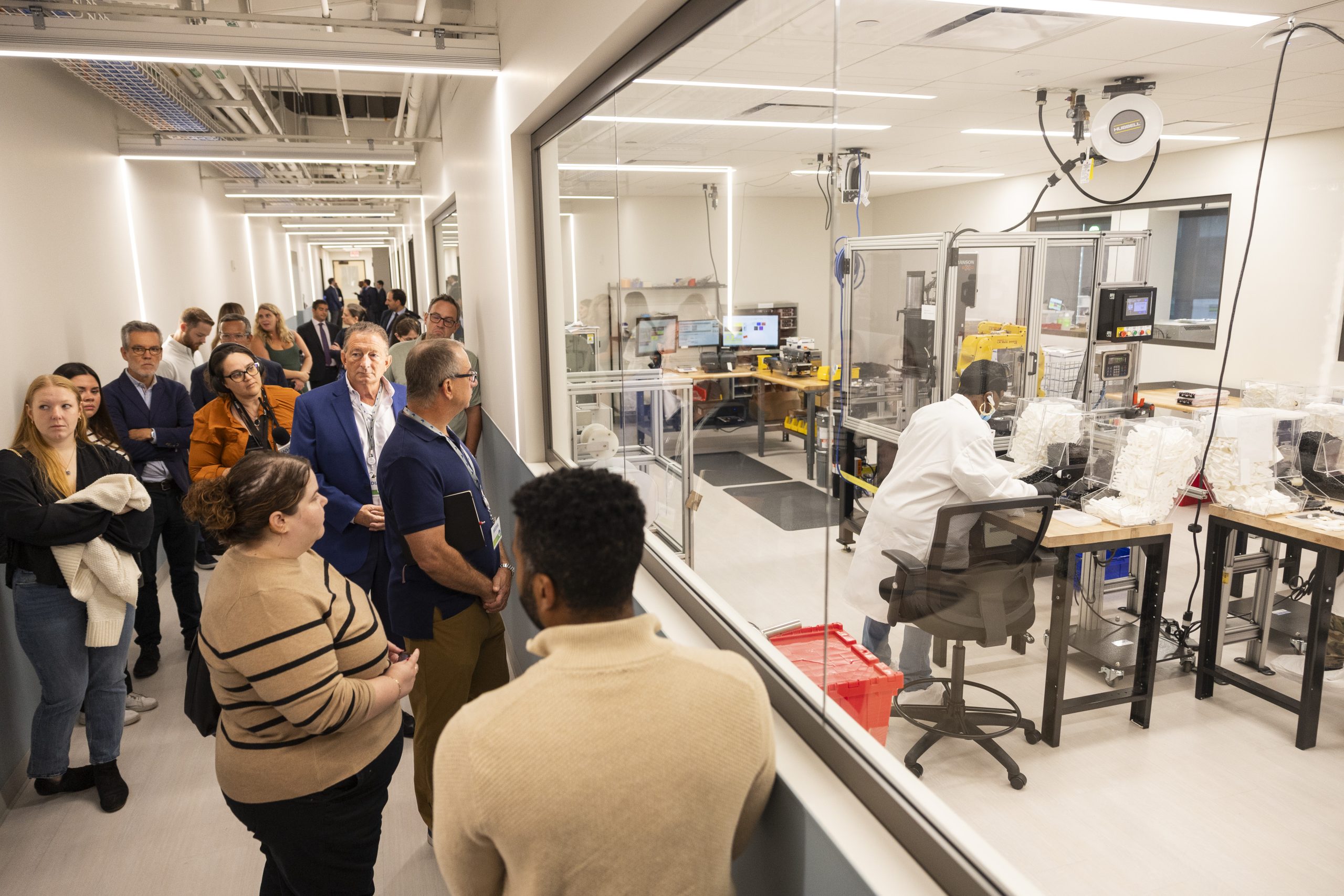
The new 32,000 sq. ft. facility is home to the xPRO™ Program, which has rapidly changed the landscape of food safety diagnostic capabilities by partnering directly with industry leaders to address unmet needs to streamline operational efficiencies and further public health. bioMérieux’s global leadership team was on-site for the ribbon cutting event, as Philadelphia continues to fortify its reputation as a hotbed of innovation in Life Sciences across North America.

Global leadership from bioMérieux and Philadelphia dignitaries commemorate the opening of the company’s Molecular Genomic Innovation Center in Philadelphia, Wednesday, Sept. 18, 2024. (Ryan Collerd/AP Content Services for bioMérieux)

“We couldn’t be more excited to deepen our roots in Philadelphia, which has long supported our organization through its commitment to fostering an entrepreneurial environment that promotes innovation and collaboration,” said Ben Pascal, global head of the xPRO™ Program, “As the innovation leader in the market and with our focus on maintaining a culture of entrepreneurship, the new site bolsters our ability to rapidly respond and develop breakthrough innovations that change the paradigm for global food safety.”

bioMérieux selected to open the site at the Navy Yard, which serves the region as an innovation Life Sciences hub focused on research and development, commercialization and manufacturing, and boasts a roster of regional and global companies currently occupying more than one-million square feet of life sciences and advanced manufacturing space. The opening of bioMérieux at the Navy Yard strengthens the sites reputation as a foremost innovation hub across the US.

“The opening of the Molecular and Genomic Innovation Center at the Navy Yard is an important milestone in bioMérieux’s storied legacy, as we continue to provide game changing diagnostic solutions that solve the food safety industry’s most persistent and urgent challenges,” said Miguel Villa, Sr. Vice President, Industrial Applications, Americas, and xPRO™ sponsor, “This facility – in conjunction with our unique Augmented Diagnostics approach to food safety – allows us to continue redefining the role and capabilities of diagnostic testing to further ensure public health and fortify brand reputations.” 

Food Safety Tech Content Director, Rick Biros tours bioMérieux’s Molecular Genomic Innovation Center in Philadelphia. (Ryan Collerd/AP Content Services for bioMérieux)


FDA logo
Beltway Beat

FDA’s new Human Foods Program (HFP) kick’s off October 1

By Food Safety Tech Staff
No Comments
FDA logo

The U.S. Food and Drug Administration’s reorganization implementation involving the creation of a unified Human Foods Program (HFP), adoption of a new model for its field operations and other significant modernization efforts are scheduled for Oct. 1, 2024, notably enhancing the agency’s ability to oversee and protect the human food supply and other products the FDA regulates.

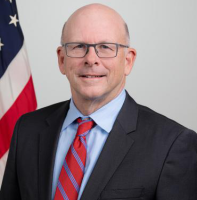
Jim Jones, FDALead by Jim Jones, Deputy Commissioner for Human Foods at FDA, the reorganization establishes the HFP by realigning the functions of the Center for Food Safety and Applied Nutrition, the Office of Food Policy and Response, as well as key functions from the Office of Regulatory Affairs (ORA) under one program.

Additionally, the restructuring of ORA will enable the field operations unit to focus on inspections, investigations and imports as its core mission. The FDA is changing the name of ORA to the Office of Inspections and Investigations (OII) to better convey the organization’s role as the frontline of the FDA, which provides real time insights and science-based evidence necessary to ensure the safety and quality of products Americans depend on.

Jim Jones will Keynote the Food Safety Consortium Conference, October 20-22 in Washington DC. During this session Mr. Jones will delve into the agency’s recent reorganizational changes, key regulatory policy priorities, and commitment to stakeholder transparency. Doug Stearns, Deputy Associate Commissioner of Regulatory Affairs, will discuss how these changes will shape investigations and inspections for both domestic and foreign facilities. Attendees will gain valuable perspectives on regulatory shifts, emerging challenges, and collaborative opportunities shaping the landscape of food safety and compliance. Discover how the new Deputy Commissioner’s strategic vision will drive innovation, enhance public health outcomes, and foster trust within the food industry. Attendees will have the opportunity to gain deep insights into emerging challenges, innovative strategies, and collaborative approaches to advancing food safety.

2024 FSC animated banner