STOP Foodborne Illness

FDA and Stop Foodborne Illness to Co-Host Webinar on Facing Food Safety Challenges

By Food Safety Tech Staff
No Comments
STOP Foodborne Illness

The FDA and Stop Foodborne Illness are hosting the eighth webinar in the ongoing series of webinars exploring food safety culture on September 13, 2023, from 12pm to 1:00pm ET. “Facing Food Safety Challenges through Culture and Persistence” will focus on the importance of a strong food safety culture and how it can help organizations address food safety challenges they may face.

Guest speakers include:

  • Kerry Bridges, Vice President of Food Safety, Chipotle Mexican Grill
  • Al Almanza, Global Head of Food Safety and Quality Assurance, JBS Foods
  • Lone Jespersen, Principal and Founder, Cultivate SA
  • Conrad Choiniere, PhD, Director, Office of Analytics and Outreach, Center for Food Safety and Applied Nutrition, FDA

Those interested in attending the free webinar can register here.

To learn more about the webinar series and listen to recordings of past webinars, visit Collaborating on Culture in the New Era of Smarter Food Safety.


James Jones

Jim Jones to Serve as First FDA Deputy Commissioner for Human Foods

By Food Safety Tech Staff
No Comments
James Jones

James “Jim” Jones will serve as the FDA’s first Deputy Commissioner for Human Foods. Per the FDA’s announcement, Jones, in this new executive position will lead the charge in setting and advancing priorities for a proposed unified Human Foods Program (HFP). Program areas would include food safety, chemical safety and innovative food products, including those from new agricultural technologies, that will bolster the resilience of the U.S. food supply in the face of climate change and globalization, as well as nutrition to help reduce diet-related diseases and improve health equity. Jones is scheduled to begin at the FDA on September 24, 2023.

For more than 30 years, Jones has held various positions in the U.S. Environmental Protection Agency (EPA), stakeholder community and private industry where he has managed teams and provided strategic planning and thought leadership around issues related to chemical safety and sustainability in the environment. His work has focused on lessening the impact that chemicals and pollution have on the U.S. food supply. At the EPA, he was a principal architect of the 2016 overhaul of the Toxic Substances Control Act, the first update of that statute in more than 40 years. He was also responsible for decision-making related to the regulation of pesticides and commercial chemicals. He also led several national sustainability programs, including the EPA’s Environmental Preferable Purchasing Program and the Presidential Green Chemistry Awards Challenge. He is a seasoned leader whose experience managing change initiatives within the federal government will be invaluable as we continue to build a unified HFP.

“I’m delighted to welcome Jim to the FDA. His impressive career, extensive leadership experience, and passionate vision for the future of the Human Foods Program make him an ideal selection for this pivotal position,” said FDA Commissioner Robert M. Califf, M.D. “Our proposed reorganization is the largest undertaking of its kind in recent history for our agency. I’m confident that under Jim’s leadership, we will build a stronger organization that will be integrated with other components of the FDA and focused on keeping the foods we regulate safe and nutritious, while ensuring the agency remains on the cutting edge of the latest advancements in food science and nutrition. I’m looking forward to working with him when he joins us next month.”

Jones was an integral member of the Reagan-Udall Foundation’s Independent Expert Panel for Foods, which submitted a report in December 2022 on the operational evaluation of the FDA’s Human Foods Program. He holds a master’s degree in economics from the University of California at Santa Barbara and a bachelor’s degree in economics from the University of Maryland.

“Jim is among the most public-spirited and able government leaders I know.  I cannot think of a better choice for this crucial role.  In his 20 years in leadership positions at EPA, Jim demonstrated know-how to lead complex, science-based regulatory programs in a visionary and inclusive way. Jim knows food safety and the food system from his leadership of EPA’s pesticide program, and he knows the food safety and nutrition challenges FDA faces through his service on the Reagan-Udall Foundation Expert Panel,” said Mike Taylor, board member emeritus of STOP Foodborne Illness and former FDA Deputy Commissioner for Foods and Veterinary Medicine.

In the role of Deputy Commissioner for Human Foods, Jones will report directly to the FDA Commissioner. He will exercise decision-making authority over all HFP entities when the reorganization is in effect, including related Office of Regulatory Affairs (ORA) activities. He will provide executive leadership over the entire program as well as over resource allocation, risk-prioritization strategy, policy, and major response activities involving human foods. The leadership for Center for Food Safety and Applied Nutrition and Office of Food Policy and Response will report to Jones until the proposed HFP reorganization is implemented.

“I am very excited about the opportunity to serve as the first Deputy Commissioner for Human Foods at the FDA. I had the pleasure of serving on the expert panel that provided operational recommendations for the FDA’s foods-related activities, and I now look forward to helping the agency realize its vision for the proposed Human Foods Program, including carrying out important nutrition initiatives to improve the health of our country,” said Jones. “As a former pesticide regulator, I have a deep understanding of the unique needs of government programs involved in upholding safety of the U.S. food supply, as well as the important role that the agriculture community and state partners play in this paradigm. I am honored to serve the FDA and the country in this new capacity.”




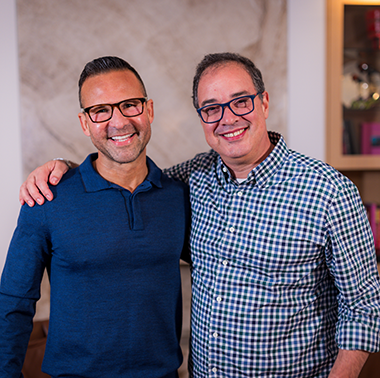
Carlos Abrams-Rivera (left), and Miguel Patricio (right)

Kraft Heinz Announces New CEO

By Food Safety Tech Staff
No Comments
Carlos Abrams-Rivera (left), and Miguel Patricio (right)

The Kraft Heinz Company has appointed Carlos Abrams-Rivera CEO and a member of the Board, effective January 1, 2024. Until then, Abrams-Rivera will continue in his role as President of the North America Zone with the added responsibilities of becoming President of Kraft Heinz, effective immediately. Abrams-Rivera will take over as CEO from Miguel Patricio, who has served as the Company’s CEO since 2019 and Chair of the Board since 2022. Patricio will transition to the role of Non-Executive Chair of the Board on January 1, 2024.

In his role as EVP and President of the North America Zone, Abrams-Rivera has overseen the company’s U.S. and Canadian operations. “Carlos is the best person to lead the next phase of the Company’s transformation,” said Patricio. “His strategic and innovative mindset is ideal to continue to propel Kraft Heinz forward on our path to greatness. Since joining Kraft Heinz in 2020, he has consistently delivered strong results in the North American retail and Away From Home businesses. Carlos’ experience in both developed and emerging markets complements our ambition for growth. I feel privileged to entrust Carlos with the leadership of this great company, and I am confident that Kraft Heinz is poised for more growth in the years to come.”

“I am humbled and honored to be appointed as the new CEO of Kraft Heinz. I would like to thank Miguel for his mentorship, all he has done to rekindle the spirit of Kraft Heinz and our culture, and for his partnership, now and in the future,” said Abrams-Rivera. “I would also like to thank the Board of Directors for placing its trust in me. Finally, to the thousands of colleagues across Kraft Heinz that have welcomed and trusted me, I am excited to go into a bright future together.”

Photo caption: Carlos Abrams-Rivera (left), and Miguel Patricio (right) (Photo: Business Wire)

Baby Bottle

Stratified Sampling Increases Cronobacter Identification in Infant Formula

By Food Safety Tech Staff
No Comments
Baby Bottle

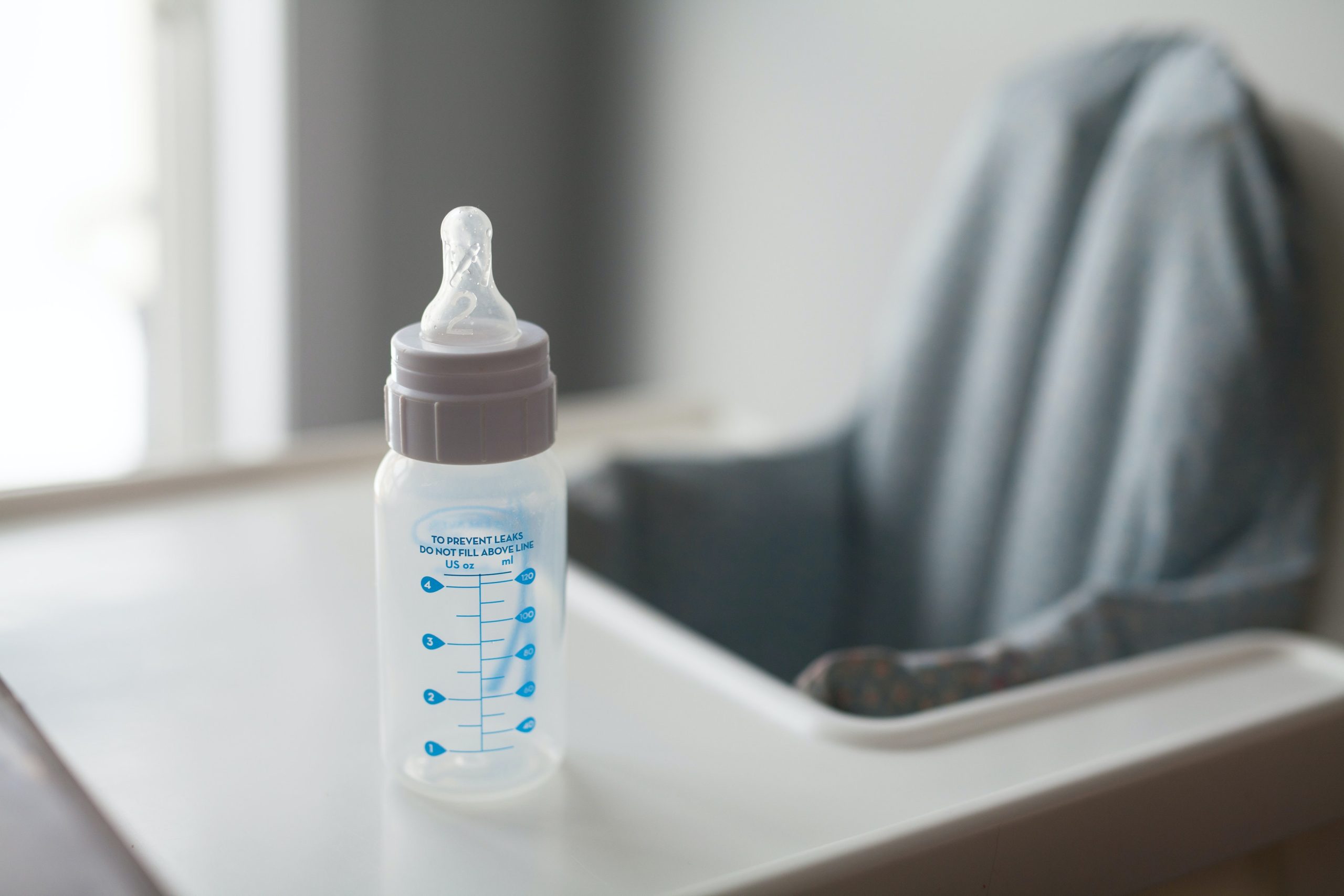
A new study, published in the Journal of Food Protection, found that spacing out samples over time, called “stratified” sampling, is better at catching risky pathogens like Cronobacter in powdered products, such as infant formula, than randomly sampling from the product as it is being produced. In addition, the study found that that while taking more samples of a product generally increases the chance of catching the pathogen, there is a point after which it is unlikely that additional sampling will increase safety.

The new paper “Simulation Evaluation of Power of Sampling Plans to Detect Cronobacter in Powdered Infant Formula Production” used computer models to simulate sampling and testing finished formula, to determine the efficacy of current national and international guidelines for testing programs, and find solutions to improve detection of Cronobacter in these types of products.

All efforts were based on detecting a realistic hazard, here defined by testing samples from Cronobacter-contaminated batches produced in Europe in the 2010s, using the most current data available. The paper found that safety plans with 30 or more grab samples had a very high probability of detecting the hazard. And that there was a point of diminishing returns, such that very high sample numbers—for example, testing every can produced—would not be meaningfully more powerful.

“This shows that existing sampling and testing guidance is powerful, at least for the one hazard profile our team had access to for the study,” said project lead Matthew J. Stasiewicz of the University of Illinois Urbana-Champaign. “This also highlights the need for additional research and data-sharing efforts into patterns of contamination in current infant formula production, so that sampling and testing can be better matched to current needs.”

“In additional to analyzing scenarios we found relevant, we built a web app that allows industry stakeholders to simulate various sampling scenarios and gain deeper understanding of the effectiveness of sampling plans specific to their plants. With this knowledge, producers can proactively address risks and optimize current sampling practices,” added Minho Kim, lead author.


bioMerieux IMV Awards

bioMérieux Recognized with Nine Clinical Laboratory Awards

By Food Safety Tech Staff
No Comments
bioMerieux IMV Awards

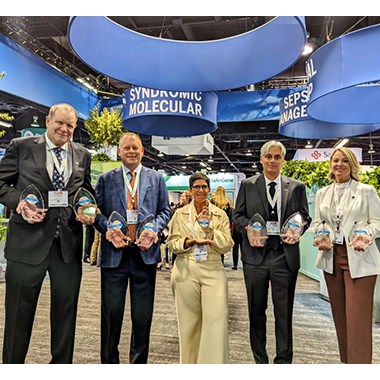
IMV has recognized bioMérieux with nine IMV ServiceTrak Clinical Laboratory Awards in the categories of Immunoassay, ID/AST and Blood Culture excellence. IMV, part of Science and Medicine Group, is a market research and business intelligence provider to the laboratory diagnostic industry. The IMV ServiceTrak Clinical Awards are presented each year to manufacturers with the highest satisfied responses, representing the best in customer satisfaction, performance and service.

bioMérieux was honored as the best in the following categories:

Immunoassay:

  • Best Service
  • Best Customer Satisfaction
  • Best System Performance

ID/AST:

  • Best Service
  • Best Customer Satisfaction
  • Best System Performance

Blood Culture:

  • Best Service
  • Best Customer Satisfaction
  • Best System Performance

“We are thrilled that bioMérieux has received significant recognition and multiple awards from IMV ServiceTrak for the sixth consecutive year,” said Dan Biondo, Vice President, Customer Support Operations, bioMérieux. “Our commitment to deliver innovative diagnostic systems, service and customer satisfaction further supports the successful activation of antimicrobial stewardship efforts, as well as bioMérieux’s essential role in the betterment of public health.”

FDA Logo

Partially Hydrogenated Oils in Foods No Longer GRAS

By Food Safety Tech Staff
No Comments
FDA Logo

On August 8, The FDA issued a direct final rule reflecting its June 2015 final determination that the use of partially hydrogenated oils (PHOs) in foods is no longer Generally Recognized as Safe (GRAS). The FDA had established January 1, 2021, as the final compliance date to remove PHOs from the food supply. This action addressed artificial sources of trans fat, with the understanding that trans fat will not be completely removed from the food supply because it occurs naturally in meat and dairy products and is present at very low levels in other edible oils.

The direct final rule:

  • Revises regulations to no longer include PHOs as an optional ingredient in the standards of identity for peanut butter and canned tuna
  • Revises FDA GRAS affirmation regulations to no longer include partially hydrogenated forms of menhaden and rapeseed oils
  • Revokes the regulation for partially hydrogenated fish oil as an indirect food substance
  • Revokes pre-1958 authorization for using PHOs in margarine, shortening, and bread, rolls and buns.

The direct final rule will be effective on December 22, 2023.

Wiping down table

EPA Draft Guidance on Virus Claims for Antimicrobial Products

By Food Safety Tech Staff
No Comments
Wiping down table

In July, EPA released the draft guidance “Evaluation of Products for Claims against Viruses,” which proposes how registrants of antimicrobial products with sanitizing claims could add claims that these products are effective against viruses. The guidance, once finalized, would expand the availability of antimicrobial products that are effective against viruses such as SARS-CoV-2.

At the IAFP Conference in Toronto, Tajah Blackburn of EPA, Veronica Moore of FDA and Lee-Ann Jaykus of North Carolina State University, looked at the goals of EPA in proposing changes to registration and labeling of sanitizers that make viral claims, noting that the agency’s focus is on viruses transmitted by food. In particular, EPA is concerned with viruses known to be resistant to the most commonly used physical cleansers and disinfectants, and environmentally persistent viruses.

Under federal law, all antimicrobial products that claim to kill pathogens like viruses and bacteria on surfaces must be registered with EPA before they can be sold or distributed in the U.S. EPA primarily classifies antimicrobial products as sanitizers, disinfectants, and/or sterilants based on the product performance, test methods used to demonstrate efficacy, and microorganisms tested. Many products are registered with EPA as both sanitizers and disinfectants because they have undergone testing to support both claims.

The EPA noted in its announcement of the new draft guidance that products registered with only sanitizing claims may contain lower amounts of active ingredients and may have shorter contact times compared to products registered as disinfectants. Certain types of sanitizers can be used in food service and food processing facilities on surfaces such as dishes and utensils. Historically, EPA guidance has addressed the addition of claims against bacteria—but not against viruses—to products registered only with sanitizing claims.

Based on the proposed guidance, if laboratory data indicate that a product registered only with sanitizing claims meets EPA’s criteria for efficacy against viruses, the product could include claims against viruses on its label. New virucidal claims for sanitizers would rely on the same performance and testing standards currently used to assess products efficacy against viruses, such as disinfectants. If the draft guidance is finalized, it could lead to changes in the FDA Food Code to reflect new labeling regulations, said Blackburn.

EPA proposes to pilot this draft guidance over seven years to allow enough time to assess the outcome. Based on the outcomes, the agency will determine whether the guidance should be modified, terminated or made permanent.

The draft guidance is available for public comment (docket EPA-HQ-OPP-2023-0288) at regulations.gov.


FDA Logo

FDA Announces Public Meeting on Modernizing Food Recalls

By Food Safety Tech Staff
No Comments
FDA Logo

The FDA Center for Food Safety and Applied Nutrition (CFSAN) is hosting a free hybrid public meeting entitled “Modernizing Food and Drug Administration Recalls Listening Session” on September 29, 2023, from 9:00am-5:00pm ET.

Join the discussion on “Recalls Trends, Regulation and Lessons Learned,” a Panel Discussion with FDA at the Food Safety Consortium, October 16-18

The listening session will provide an opportunity for stakeholders to share information and feedback about topics related to recall modernization, for FDA-regulated products. The FDA is inviting comments from all interested stakeholders and has identified the following examples of topic categories of the type of information the agency is interested in obtaining:

  • General recall preparations / contingency planning
  • Creating successful recall strategies, including methods to reach underserved communities
  • Initiating a recall
  • Strategies for public warning, including press releases, social media, and other communication tools
  • Increasing efficiency and effectiveness of recall information exchange
  • Ensuring effective recalls
  • Terminating a recall
  • Strategies for reducing recall recurrence for similar situations

The meeting will be held at the FDA White Oak Campus, 10903 New Hampshire Avenue, Bldg. 31, Rm. 1503A (the Great Room), Silver Spring, MD 20993. Virtual registration is also available.

Registration is required to attend in person or virtually.


Rochester Midland

Peak Rock To Acquire Rochester Midland Corporation

By Food Safety Tech Staff
No Comments
Rochester Midland

An affiliate of private investment firm Peak Rock Capital has signed a definitive agreement to acquire Rochester Midland Corporation (RMC), in partnership with RMC’s founding family and management team.

Founded in 1888, RMC is a leading supplier of specialty chemical products and value-added services across water energy, food safety, facility hygiene and other applications. The company works with thousands of businesses worldwide across diverse end markets including food and beverage, healthcare, packaging and facility services. RMC is headquartered in Rochester, New York, with additional facilities in the U.S., Canada and U.K.

“RMC represents an exciting opportunity to invest in a supplier of mission-critical services that enable customers to operate safely and efficiently. We look forward to helping the company accelerate its growth trajectory while pursuing complementary acquisitions to extend RMC’s production capabilities, geographical presence, and service offerings,” said Jordan Campbell, Managing Director of Peak Rock.


USDA Logo

USDA FSIS To Host Virtual Public Meeting on Cyclospora Cayetanensis in Produce

By Food Safety Tech Staff
No Comments
USDA Logo

The USDA Food Safety and Inspection Services (FSIS) and the National Advisory Committee on Microbiological Criteria for Foods (NACMCF) will be holding a virtual public meeting on August 30, 2023, from 11 a.m.-1 p.m. ET to discuss and vote to adopt NACMCF’s recent report on Cyclospora cayetanensis in produce. Written comments must be submitted by August 25, 2023. The committee will also provide an update on the Cronobacter spp. in powdered infant formula charge.

The report was requested by the FDA, as the agency seeks more information on the factors that can contribute to C. cayetanensis contamination of domestically grown and imported produce, as well as recommendations for developing an effective prevention and management strategy.

As the report highlighted, cyclosporiasis previously was associated with travel outside of the U.S. or consumption of contaminated imported foods. However, in recent years, the U.S. has seen an increase in cases and positive samples associated with produce, both as raw agricultural commodities, and fresh-cut produce, grown in the U.S. In the last three years, the number of cyclosporiasis cases has increased approximately 300%, often linked to fresh produce consumption, specifically leafy herbs and ready-to-eat salads.

Attendees must pre-register by Friday, August 25, 2023, to receive details on how to access the meeting. During pre-registration, attendees may also express interest in delivering comments during the meeting. Oral comments will be limited to three minutes per speaker. The agenda will be shared on the FSIS Events & Meetings page prior to the event.