Conor Kearney

FoodChain ID Announces New CEO

Conor Kearney

Conor Kearney has been appointed CEO of FoodChain ID. He succeeds Brad Riemenapp, who led FoodChain ID as CEO for more than five years before his death due to cancer in May. Kearney joined FoodChain ID in 2021 and most recently served as Interim CEO during Riemenapp’s medical leave of absence.

Kearney previously served as the company’s Senior Vice President of Strategy and Operations. Before joining FoodChain ID, he worked for 11 years at Staples, holding multiple leadership roles, and five years at McKinsey & Company. Kearney earned his MBA from Harvard Business School and a bachelor’s degree in Biochemistry and Molecular Biology from Dartmouth College.

“Conor has already had a significant impact on FoodChain ID. His collaborative leadership style and ability to rally the organization to achieve its goals make him the absolute right person to lead FoodChain ID in the next stage of its growth journey,” said Ted Rainaud, Managing Director at Berkshire Partners.

“Brad was a great mentor to me, and I’m committed to continue building on his vision and delivering on FoodChain ID’s mission to make the food supply chain safer and more transparent,” said Kearney.


World Food Safety Day 2023

Celebrating World Food Safety Day

By Food Safety Tech Staff
No Comments
World Food Safety Day 2023

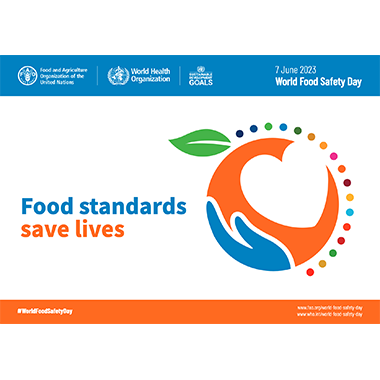
Wednesday, June 7 is World Food Safety Day. The annual event was established in 2018 by the United Nations General Assembly to raise awareness and inspire action to help prevent, detect, and manage foodborne risks.

This year’s theme is “Food Standards Save Lives,” which highlights the role of established food safety practices and standards to ensure food safety and quality.

The Food and Agriculture Organization of the UN (FAO) in collaboration with the World Health Organization (WHO) is calling on countries, companies, and educational institutions to further adoption of safe food practices. Following are this year’s calls to action:

Policy makers

Make safe food an easy choice by shaping public support for programs, such as food aid, school feeding and other publicly owned food outlets.

Focus on establishing a robust national food safety system and ensure it complies with food safety standards.

Encourage and engage in multisectoral collaboration at the local, national, regional, and global levels.

Food businesses

Engage employees, suppliers and other stakeholders to grow and develop a food safety culture.

Comply with national and international food standards.

Educational institutions and workplaces

Promote safe food handling.

Engage with families and involve them in food safety activities.

Support food safety education.


FDA Logo

FDA Launches Webpage on Equivalence and Food Safety

By Food Safety Tech Staff
No Comments
FDA Logo

On June 5, the FDA published a new webpage dedicated to equivalence—the process of determining whether a foreign regulatory counterpart’s food safety controls achieve at least the same level of public health protection as measures required by U.S. law—for food safety.

As the FDA explains, equivalence is a right and an obligation for all members of the World Trade Organization (WTO). All members must accept the sanitary or phytosanitary measures of the other members as equivalent, even if these measures differ from their own or from those used by other members trading in the same product, if the exporting member objectively demonstrates to the importing member that its measures achieve the importing member’s appropriate level of sanitary or phytosanitary protection.

This means that a foreign regulatory authority is not required to develop and implement the same exact procedures and food safety controls that FDA requires, but rather that it must objectively demonstrate how its food safety controls meet at least the same level of public health protection achieved by U.S. measures. Likewise, for food exported from the United States, foods produced in compliance with U.S. regulations may be permitted entry into foreign markets based on a positive equivalence determination.

The webpage explains how equivalence is determined, the current equivalence determinations, and how regulatory authorities can submit a formal request for equivalence for FDA-regulated food products.


FDA Logo

FDA Announces Proposed Framework for Post-Market Review of Chemicals Added to Food

By Food Safety Tech Staff
No Comments
FDA Logo

The FDA is seeking to enhance its approach to post-market review of chemicals added to—as well as those that come in contact with—food products. Robert M. Califf, M.D., Commissioner of Food and Drugs, and Susan Mayne, Ph.D., Director of the Center for Food Safety and Applied Nutrition, at the FDA, released a statement on May 26, outlining the agency’s intent to enhance surveillance and scrutiny and improve processes to identify potentially dangerous chemicals as new information comes to light.

As part of its “more modernized, systematic reassessment of chemicals with a focus on post-market review,” the FDA is focusing on new approaches to mine data and prioritize substances for in-depth review based on risk.

The enhanced approach to post-market regulation of food chemical safety shared by Drs. Califf and Mayne offers a proposed framework to systematically reassess chemicals post-market, which includes:

·      Expanding tools and methods used when conducting safety reviews and assessments of chemicals in food and substances that come into contact with food to keep pace with scientific advances and technological innovations

·      Updating processes to identify, evaluate, prioritize and communicate new and evolving information to determine if reassessment of a chemical by the FDA is warranted

·      Continuing to monitor the food supply to ensure that chemicals in food are present at levels that are not a risk to public health

They are seeking greater funding as well as additional staff to establish the proposed ongoing post-market monitoring framework. “This, combined with additional authorities to require industry to share new data and information, would allow the FDA to prioritize based on risk and better target our resources toward chemicals that we think warrant in-depth post-market review,” the statement reads.

The agency plans to engage stakeholders and provide opportunities for public comment and other stakeholder feedback about the framework through public meetings, webinars, and other engagements, and will share more information in the coming months.


FDA Logo

FDA Releases Small Entity Compliance Guide for the Food Traceability Rule

FDA Logo

The FDA has released a Small Entity Compliance Guide for the FSMA Food Traceability Rule. This guidance document is intended to help small entities, including farms and small businesses, comply with the requirements of the Food Traceability Rule. It offers recommendations—unless specific regulatory or statutory requirements are cited—on how small entities can comply with the new regulations, which were issued in November 2022. The compliance date for recordkeeping requirements is Jan. 20, 2026.

The guidance document covers:

  • Who is subject to the traceability rule
  • Who is exempt
  • What records must be kept, and for how long
  • How to apply for a modification or exemption
  • How to petition the FDA for waivers
  • Consequences of failure to comply

Download the compliance guide here.


FDA Logo

FDA Releases Draft Compliance Policy Guide for Food Allergen Labeling and Cross-Contact

By Food Safety Tech Staff
No Comments
FDA Logo

On May 16, the FDA released a draft Compliance Policy Guide (CPG) to provide guidance for FDA staff on the enforcement policy regarding major food allergen labeling and cross-contact. The guide reflects FDA’s thinking on major food allergen enforcement policy based on the current regulatory framework and latest science. When finalized, it will replace the existing CPG 555.250 for FDA staff.

Among the updates, the draft CPG describes the labeling requirements for major food allergens and proper use of the ingredient list and the “Contains” statement for major food allergen declarations. It also describes requirements for firms to implement controls to prevent or significantly minimize allergen cross-contact. In addition, the draft CPG describes additional allergen labeling violations and directs FDA staff to examine potential product adulteration due to allergen cross-contact as well as potential labeling violations.

The agency stated that it is aware that some manufacturers are intentionally adding sesame to products that previously did not contain sesame and are labeling the products to indicate its presence. While the draft CPG does not specifically address this issue, the FDA said that it recognizes that this practice may make it more difficult for sesame-allergic consumers to find foods that are safe for them to consume—an outcome that the FDA does not support, and that the agency is engaging with stakeholders on this issue. The draft CPG does address the FDA’s enforcement policy for labeling and cross-contact controls for major food allergens, including sesame.

Stakeholders can submit electronic or written comments within 60 days of publication in the Federal Register.

FDA Logo

FDA Warns Industry on Food Safety Risks of Transferring Genes for Proteins that are Food Allergens

FDA Logo

The FDA has issued a letter to developers and manufacturers of new plant varieties who intend to transfer genes for proteins that are food allergens (including allergens from foods identified as major food allergens) into new plant varieties used for food. The purpose of the letter is to remind them of the relevant legal requirements for these products, which may include adding a gene for an allergenic animal protein to a new plant variety to provide a non-animal source of the protein for use as an ingredient in another food.

While the agency noted that it is not aware of any foods currently in the U.S. market derived from these types of new plant varieties, it is aware of research and development in this area.

The FDA is asking developers to consider the food safety risks posed by such allergens and plan early in development to manage those risks, including the potential for recalls due to undeclared allergens.

“We are specifically reminding those developers who are now exploring development of these types of plant varieties of their responsibility for food safety. In particular, we are reminding them to consider the allergenicity issues related to their products, and how they would be stewarded from production to manufacturing to consumption so that they do not inadvertently or unexpectedly enter the food supply,” the FDA stated. “We are also reminding them that they need to be properly labeled when intentionally part of the food supply.”

To reduce risk to consumers as well as the risk of recalls, the FDA is encouraging developers of new plant varieties to consult with the agency through its voluntary premarket consultation program for foods from new plant varieties prior to marketing.


Safety of Cell-based Food Report

UN Releases Report on Safety of Cell-based Food Products

By Food Safety Tech Staff
No Comments
Safety of Cell-based Food Report

As regulatory bodies in the U.S. and around the globe prepare to accept cell-based food products into their markets, a new report, Food Safety Aspects of Cell-Based Food, sheds light on potential hazards posed by this new class of foods.

Published jointly by the Food and Agriculture Organization of the United Nations (FAO) and the World Health Organization (WHO), the 146-page report includes country case studies from Israel, Qatar, Singapore, as well as findings and recommendations from a global technical panel of experts from academia and industry.

The panel identified 53 potential hazards that may be introduced during the Cell Sourcing, Cell Harvesting, Food Production and Food Processing Phases. All of which exist within traditionally produced foods, apart from:

  • The potential for expression of novel toxins, toxic metabolites, or allergens or a change in expression of toxins, toxic metabolites, or allergens as a result of genomic instability, genetic or phenotypic Instability, and / or induced through physical or biochemical stimuli during cell culture.
  • Physiochemical transformation of food components (i.e., altered protein structure, reactive species formation) due to food processing or storage. The panel notes that while this same hazard is present in conventionally produced food, cell-based foods may contain new inputs (e.g., scaffolds and residues) and processing ingredients that must be tested.

“Many hazards are already well-known, and they exist in conventionally produced food,” the reports reads. “For example, microbiological contamination can occur at any stages of any food production process, including those involved in producing cell-based food. The experts concluded, however, that most cases of microbial contamination during the cell growth and production stages would inhibit cell growth. If the cells have grown and reached product expectations for harvest, then occurrence of such contamination would be extremely rare during the production process, but it could occur post-harvest, as is the case with many other food products. Various existing prerequisite programmes such as good manufacturing and hygiene practices, as well as food safety management systems such as Hazard Identification and Critical Control Points (HACCP), are applicable to ensure food safety for cell-based food.”

The reports calls for additional research and funding to determine if cell-based foods could provide healthy, nutritious, and sustainable food for future generations, while reducing environmental impacts by using less land and water, emitting fewer greenhouse gases, reducing agriculture-related pollution, improving farm animal welfare and reducing the risk of zoonotic diseases that can spread from animals to humans.

Additional topics touched upon by the Technical Panel include the challenge of high production costs, the need for uniform terminology, potential regulatory frameworks for cell-based foods, and a need to further investigate consumer perception and acceptance (including taste and affordability).

FDA Logo

FDA Reopens Comment Period for Draft Guidance on Labeling of Plant-Based Milk Alternatives

By Food Safety Tech Staff
No Comments
FDA Logo

On April 20, The FDA announced that it will reopen the comment period for the draft guidance “Labeling of Plant-Based Milk Alternatives and Voluntary Nutrient Statements; Draft Guidance for Industry” in response to requests from stakeholders to allow additional time for interested persons to develop and submit comments.

The draft guidance, originally published in the Federal Register on February 22, 2023, was developed to help ensure appropriate labeling of plant-based products that are marketed and sold as alternatives to milk (aka plant-based milk alternatives, or PBMA). It provides industry with recommendations for clear labeling to help consumers make more informed purchasing decisions. It also clarifies that the common or usual names of some PBMA have been established by common usage, and these names include “soy milk” and “almond milk.”

The FDA recommends that PBMA products that are labeled with the term “milk” in their names, such as “soy milk” or “almond milk,” and that have a nutrient composition that is different than milk, include a voluntary nutrient statement that conveys how the product compares with milk based on USDA’s Food and Nutrition Service (FNS) fluid milk substitutes nutrient criteria. The goal is to help consumers make informed dietary choices when it comes to understanding certain nutritional differences between plant-based products that are labeled with “milk” in their names and milk.

If a PBMA is not labeled with “milk” as part of its name, but instead is labeled with another term like “beverage” or “drink” and does not make a claim comparing the product to milk, then the voluntary nutrient statement recommendations in the draft guidance would not apply.

In 2018, the FDA issued notice soliciting comments from the public to gain insight into how consumers use PBMA products and how they understand the term “milk” when included in the names of products made, for example, from soy, peas and nuts. The agency received more than 13,000 comments.

In its statement announcing the draft guidance, the FDA noted that, after reviewing these comments and conducting focus group studies with consumers, it determined that consumers generally understand that PBMA do not contain milk and choose PBMA because they are not milk. However, many consumers may not be aware of the nutritional differences between milk and PBMA products. For example, almond or oat-based PBMA products may contain some calcium and be consumed as a source of calcium, but their overall nutritional content is not similar to milk.

Comments should be submitted to Regulations.gov and identified with the docket number FDA-2023-D-0451.


Frank Yiannas, FDA, food safety

Yiannas Joins Chipotle Food Safety Advisory Council  

By Food Safety Tech Staff
No Comments
Frank Yiannas, FDA, food safety

Frank Yiannas, former FDA Deputy Commissioner for Food Policy and Response, has been appointed to Chipotle Mexican Grill’s Food Safety Advisory Council, a group of independent experts commissioned to ensure Chipotle’s food safety standards continue to evolve and serve as best practices for the restaurant industry.

Chipotle established the Food Safety Advisory Council in 2016 to complement the company’s internal food safety team in pursuit of continuous improvement and performance excellence. Yiannas joins fellow industry experts David Acheson, M.D., former FDA Associate Commissioner of Foods; Elisabeth Hagen, M.D., former USDA Under Secretary for Food Safety; Hal King, Ph.D., former CDC Research Scientist and Director of Food Safety with Chick-fil-A; and James Marsden, Ph. D., former Head of Food Safety at Chipotle and distinguished professor.

“In order to make sure our food safety culture and programs are as robust as possible, it’s critical to supplement our internal expertise with independent external guidance,” said Kerry Bridges, Vice President of Food Safety at Chipotle. “Frank’s vast experience with the FDA and other large brands will help guarantee Chipotle’s food safety standards continue to be best-in-class.”

Yiannas most recently served under two administrations as the Deputy Commissioner for Food Policy and Response at the FDA, a position he held from 2018 to 2023, after spending 30 years in leadership roles with Walmart and the Walt Disney Company.

Throughout his career, Yiannas has been recognized for his role in strengthening food safety standards in new and innovative ways, as well as building effective food safety management systems based on modern, science-based, and tech-enabled prevention principles.

“I’m delighted to join and collaborate with some of the nation’s foremost food safety authorities and serve on Chipotle’s Food Safety Advisory Council,” said Yiannas. “I look forward to lending my experience to a company committed to ‘cultivating a better world’ that benefits people and the planet.”