
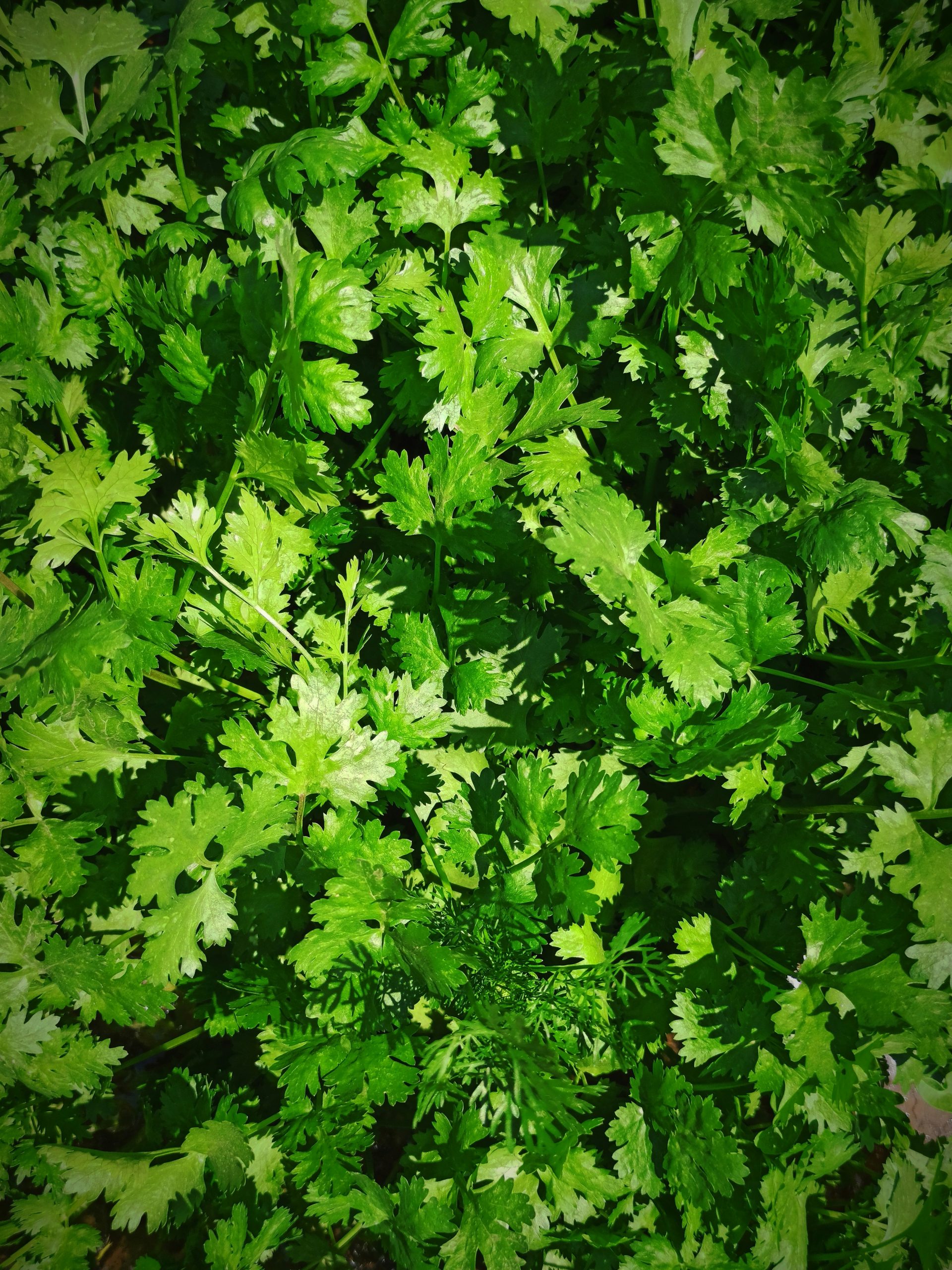

New York City health officials traced a much smaller cyclosporiasis outbreak in April, one of multiple case clusters the city’s epidemiologists have pursued this year, led to cilantro. The C.D.C. says it is continuing to investigate cyclosporiasis cases unrelated to the iceberg lettuce contamination.
The New York Times reported that so far this year, 442 cases of cyclosporiasis have been diagnosed in New York City — far above the average of 216 cases for an entire year during the period 2019 to 2024.
Cyclosporiasis is tricky to trace because it can incubate inside a person for up to 14 days before producing symptoms. “People may not put two and two together that it was something I ate two weeks ago that got me sick,” said HaeNa Waechter, told The New York Times, the team lead for enteric disease in the City Health Department’s Bureau of Communicable Disease.
In the April case, the NYC Health Department determined that everyone in the cyclosporiasis cluster had eaten at the same Brooklyn restaurant. Everyone who fell ill seemed to have had guacamole or salsa, or cilantro.
The guacamole and salsa also turned out to contain cilantro. Genomic sequencing by NYC’s Public Health Laboratory confirmed that all the patients in the cluster had the same strain of cyclospora, the parasite that causes cyclosporiasis, in their systems. The Health Department sent its findings to the C.D.C., along with records from the restaurant like invoices from its food suppliers.
“We recommended that they look into the cilantro, so that’s what they did the ‘traceback’ for,” said Shama Ahuja, assistant commissioner in the City Health Department’s Bureau of Communicable Disease. The C.D.C., Dr. Ahuja said, told the city that the local supplier that had sold the cilantro to the restaurant had bought it from a national supplier that in turn had obtained it from an international supplier. The C.D.C. has not announced any results or any actions it may have taken, the city told The New York Times.
Photo credit: Peaky Frames on Unsplash
Related Articles
-


FDA sent a letter to the infant formula industry and their supply chain partners highlighting multiple recent public health events where risks were introduced through the supply chain and to call for increased vigilance by industry to ensure the safety of…
-

Many food manufacturers treat supplier verification as a filing exercise collect the certificate of analysis, confirm it's in spec, move on. This article argues that approach satisfies neither FSMA's supply-chain program nor the scrutiny of a recall. It explains what…
-

For food brands, processors, and exporters, aflatoxins represent a dual risk: severe public health consequences and strict regulatory enforcement. In 2024 alone, the EU rejected 127 shipments from Africa due to aflatoxin levels exceeding 2 ppb for AFB1. For consultants…
-

New investigation is the first to trace microplastics and plastic chemicals from plastic packaging into baby food. The testing commissioned by Greenpeace International in 2025 found plastic particles in the baby food products of two global consumer goods companies –…