

Tag Archives: FDA

Strawberries in bowl
Retail Food Safety Forum

FDA Update on Hepatitis A Outbreak Linked to Organic Strawberries

By Food Safety Tech Staff
No Comments
Strawberries in bowl

The FDA has released an update on its investigation into a multistate outbreak of hepatitis A infections in the U.S. linked to fresh organic strawberries. The potentially contaminated strawberries were imported from Baja California, Mexico, and branded as FreshKampo and HEB by a common supplier; they were purchased between March 5, 2022, and April 25, 2022.

Consumers, restaurants and retailers should not sell, serve or eat any fresh organic strawberries branded as FreshKampo or HEB if purchased between March 5, 2022, and April 25, 2022. People who purchased the fresh strawberries and then froze those strawberries for later consumption should not eat them. They should be thrown away. Currently, the potentially contaminated product is past its shelf life. If you are unsure of what brand you purchased, when you purchased your strawberries or where you purchased them from prior to freezing them, the strawberries should be thrown away.

If consumers purchased fresh organic strawberries branded as FreshKampo or HEB between March 5, 2022, and April 25, 2022, ate those berries in the last two weeks, and have not been vaccinated against hepatitis A, they should immediately consult with their healthcare professional to determine whether post exposure prophylaxis (PEP) is needed. PEP is recommended for unvaccinated people who have been exposed to hepatitis A virus in the last two weeks because vaccination can prevent a hepatitis A infection if given within 14 days of exposure. Those with evidence of previous hepatitis A vaccination or previous hepatitis A infection do not require PEP.

The Public Health Agency of Canada and Canadian Inspection Agency are also investigating an outbreak of hepatitis A. The investigation in Canada involves two provinces: Alberta and Saskatchewan. Imported fresh organic strawberries have been identified as the likely source of that outbreak.

Currently, these fresh organic strawberries branded as FreshKampo and HEB products are past shelf life and are not available for purchase in stores. These products may have been sold at the following retailers, including, but not limited to:

  • HEB
  • Kroger
  • Safeway
  • Sprouts Farmers Market
  • Trader Joe’s
  • Walmart
  • Weis Markets
  • WinCo Foods

If you are unsure of what brand you purchased, when you purchased your strawberries, or where you purchased them from prior to freezing them, the strawberries should be thrown away.

Contact your healthcare provider if you think you may have symptoms of a hepatitis A infection after eating these fresh organic strawberries, or if you believe that you have eaten these strawberries in the last two weeks.


Red Apple

FDA To Host Industry Webinar on Draft Guidance on Action Levels for Lead in Juice

By Food Safety Tech Staff
No Comments
Red Apple

The U.S. Food & Drug Administration will be hosting a webinar on Tuesday, June 14, 2022, at 1:00 pm (ET) to discuss the recent draft guidance on lead action levels for juice. The draft guidance, titled “Action Levels for Lead in Juice; Draft Guidance for Industry,” issued in April provides action levels for lead in single-strength (ready to drink) apple juice and in other single-strength juices and juice blends.

These draft action levels support the agency’s broader effort to reduce exposure to arsenic, lead, cadmium, and mercury from foods, and advance the FDA’s goals in the Closer to Zero action plan.

During the webinar the FDA will provide an overview of the draft guidance and additional information, as well as answer stakeholder questions.

Featured speakers include Dr. Susan Mayne, director of the Center for Food Safety & Applied Nutrition (CFSAN), Dr. Conrad Choiniere, director of the Office of Analytics and Outreach, CFSAN, and Dr. Paul South, director of Division of Plant Products and Beverages, Office of Food Safety, CFSAN.

To register for the webinar, visit the registration page. The webinar will be recorded and posted to the FDA website.


FDA

FDA to Limit Lead in Juice

By Food Safety Tech Staff
No Comments
FDA

FDA is continuing its efforts to reduce negative health effects as a result of dietary exposure to lead. The agency recently issued draft action levels for lead in single-strength, ready-to-drink apple juice, and other juices and juice blends.

“Exposure of our most vulnerable populations, especially children, to elevated levels of toxic elements from foods is unacceptable,” said FDA Commissioner Robert M. Califf, M.D. in an agency release. “This action to limit lead in juice represents an important step forward in advancing FDA’s Closer to Zero action plan, which we are confident will have a lasting public health impact on current and future generations.”

The draft guidance outlines recommended limits of lead in juice that can be achieved by industry and progressively lowered as appropriate. The draft action levels are part of the agency’s Closer to Zero action plan announced last year. [https://foodsafetytech.com/news_article/fdas-closer-to-zero-action-plan-to-reduce-exposure-to-toxic-elements-in-baby-food/]

“As we outlined in the Closer to Zero action plan, the agency is increasing targeted compliance activities as part of our efforts to monitor levels of these elements in foods through the FDA’s Total Diet Study, Toxic Elements in Food and Foodware program and sampling assignments,” said CFSAN Director Susan Mayne, Ph.D., in an agency release. “In addition, our work in this important area of food safety will progress with advancements in science. For example, action levels may be progressively lowered over time, as appropriate, to make continual improvements in reducing the levels of lead, arsenic, cadmium and mercury in foods eaten by babies and young children.”

CDC, FDA, USDA logos

NARMS Publishes 2019 Report on Antimicrobial Resistance Trends in Pathogens

By Food Safety Tech Staff
No Comments
CDC, FDA, USDA logos

The National Antimicrobial Resistance Monitoring System (NARMS) has published its 2019 Integrated Report Summary, which reviews antimicrobial resistance trends in Salmonella, Campylobacter, generic E. coli, and Enterococcus. The report also discusses genomic information for Salmonella, Campylobacter and E. coli in retail meat and food producing animals.

NARMS is a partnership between FDA, CDC, USDA’s FSIS, the Animal and Plant Health Inspection Service, the Agricultural Research Service, and other state and local public health departments and federal agencies. The national surveillance in the report helps all public health partners identify new types and patterns of resistance and changes over time.

“FSIS and the CDC use NARMS information on a case-by-case basis to investigate foodborne illnesses and outbreaks. FDA routinely uses NARMS data in its regulatory review and approval of new animal antimicrobial drugs, and to develop and update policies on the judicious use of antimicrobial in animals. NARMS findings help public health partners continually assess the nature and magnitude of bacterial antibiotic resistance at different points along the farm-to-fork continuum.” – USDA

The report includes a new way to calculate multidrug resistance (MDR), which means a resistance to three or more antimicrobial drug classes. The method is supposed to provide more consistency to the NARMS year-to-year MDR trend analysis and comparisons.

The Integrated Report Summary is available on FDA’s website.

Alpine Fresh Green Beans

Listeria Alert: Recall of Green Beans Spans 12 States

By Food Safety Tech Staff
No Comments
Alpine Fresh Green Beans
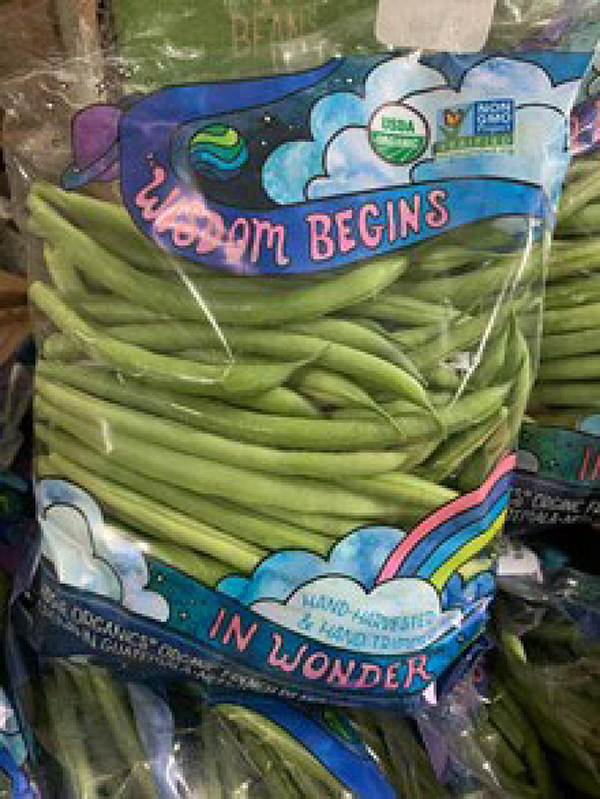
Alpine Fresh’s “Hippie Organics” French Beans

Florida-based Alpine Fresh, Inc. has issued a voluntary recall of its “Hippie Organics” French Beans due to potential contamination with Listeria monocytogenes. The recall affects 1-pound packages from lot# 313-626, and the products were sold across 12 states in Whole Foods, Aldi and LIDL retail stores.

The issue was uncovered during routing company testing and is isolated to the specific recalled lot, according to a company announcement on FDA’s website. Alpine Fresh states that corrective actions have been taken to prevent recurrence.

Thus far no illnesses related to the recall have been reported.

Allergens

FDA Issues Draft Guidance Emphasizing Increased Importance on Food Allergens

By Food Safety Tech Staff
No Comments
Allergens

Today the FDA issued a draft guidance that shines a spotlight on the importance of assessing food allergens that are not one of the nine major food allergens (milk, eggs, fish, crustacean shellfish, tree nuts, peanuts, wheat, sesame and soybeans). “The nine major food allergens don’t currently represent all foods nationwide that people are allergic to or that cause food hypersensitivities,” said CFSAN Director Susan Mayne, Ph.D., in an agency release. “This draft guidance is part of the FDA’s efforts to evaluate emerging evidence about other non-listed food allergens that can cause serious reactions in a consistent and transparent manner, which can inform potential future actions to better help protect the health of consumers.”

The draft, “Evaluating the Public Health Importance of Food Allergens Other Than the Major Food Allergens Listed in the Federal Food, Drug, and Cosmetic Act”, targets immunoglobulin E antibody (IgE)-mediated food allergies, which can cause severe and life-threatening reactions such as anaphylaxis. The document reviews the evidence that establishes a food as a cause of IgE-mediated food allergy and scientific factors, such as prevalence, severity and allergenic potency, that the FDA would consider in evaluations. It also reviews the agency’s recommendations for identifying and evidence to determine the public health importance of a non-listed food allergen.

Comments on the draft guidance can be submitted by August 17, 2022.

FDA

FDA and USDA Investigate Seasonal Factors Contributing to E. Coli Outbreaks Linked to Romaine Lettuce

By Food Safety Tech Staff
No Comments
FDA

CFSAN and the USDA’s Agricultural Research Service are conducting research to better understand the factors, including seasonal effects, that could be contributing to E. Coli O157:H7 outbreaks linked to bagged romaine lettuce. FDA and USDA scientists presented findings in the BMC Environmental Microbiome, which revealed that E. Coli O157:H7 survived “significantly better in cold-stored packaged romaine harvested in the fall than on the same varieties harvested in late spring.” In addition, the researchers showed that the microbiome present on bagged lettuce changes based on the season, level of deterioration of the lettuce and whether survival of the pathogen on the lettuce was high or low. They also found that the pathogen survived better in lettuce that was harvested in the fall versus lettuce harvested in the spring during cold storage. “This is a significant step toward closing the knowledge gaps identified in the FDA’s Leafy Greens STEC Action Plan and helping the agency and its partners to reduce foodborne illness linked to the consumption of leafy greens,” CFSAN stated in an agency update.

The study, “Seasonality, shelf life and storage atmosphere are main drivers of the microbiome and E. coli O157:H7 colonization of post-harvest lettuce cultivated in a major production area in California”, has been published on the Environmental Microbiome’s website.

General Mills

FDA Investigating Consumer Illness Complaints from Lucky Charms

By Food Safety Tech Staff
No Comments
General Mills

Following a surge in consumers reporting illnesses that range from nausea to vomiting to diarrhea after eating Lucky Charms, FDA has initiated an investigation into the product and the claims. Iwaspoisoned.com is a nationwide consumer food safety platform that allows people to report their illnesses immediately. The complaints of food poisoning connected to consuming the popular cereal began trending late last year, with more than 1300 reports of illnesses to date, according to the website.

Patrick Quade, founder of iwaspoisoned.com, called the volume of consumer complaints related to this single product “unprecedented”.

FDA has not released an official statement on the matter.

General Mills spokesperson Andrea Williamson told Consumer Reports the following: “After a thorough internal investigation, we have not found any evidence that these complaints are attributed to our products. We encourage consumers to please share any concerns directly with General Mills to ensure they can be appropriately addressed.”

FDA

Why One Former FDA Food Commish Thinks the Food Program Needs Its Own Agency

By Food Safety Tech Staff
No Comments
FDA

In an Op-Ed published by Politico today, former FDA Deputy Commissioner for Foods and Veterinary Medicine Michael Taylor is calling on FDA’s Food Program to be separated from the current hierarchy—with the establishment of a new agency that has its own head and reports directly to the HHS secretary.

“Under FDA’s current structure, no one is really in charge and realistically accountable for the food program’s strategic direction, sound resource management and overall success; and this state of play has real consequences for consumers. It puts at risk the public’s health and consumer confidence in the nation’s food supply,” Taylor wrote in “It’s Time to Fix FDA by Breaking It Up”. He emphasizes that food has not been given a high enough priority at the agency, despite the passage and implementation of FSMA, and the past two administrations did not help either. “Neither the Obama nor Trump administration empowered the deputy commissioner for food to oversee the program’s largest organizational unit, which is responsible for food inspection and import activities and manages nearly 70% of all the dollars Congress gives the food program,” he stated. “The success of food safety modernization won’t succeed without the policymaking and inspection units working as an integrated whole. Because they are all managed separately and report directly to commissioners whose attention is elsewhere, this is virtually impossible in today’s FDA.”

Allowing the Food Program to stand on its own, reporting directly to HHS, would create an agency that is empowered not only with more resources but also with having more accountability.

FDA

FDA Seeks $57 Million in Investments in Food Safety Modernization and Funding to Reduce Chemicals in Food

By Food Safety Tech Staff
No Comments
FDA

Today the FDA announced its budget request as part of the President’s 2023 fiscal year budget. Within the food sector, the agency is asking for $43 million for food safety modernization (including animal food safety) oversight—which includes efforts in continued implementation of the New Era of Smarter Food Safety initiative. The funding will also go towards improving preventative food safety practices, data sharing, predictive analytics and traceability, which will help the agency respond to outbreaks and recalls faster. “In partnership with states, the FDA will expand efforts to modernize, harmonize and transform the U.S. animal food inspection system to become more comprehensive and prevention oriented,” the FDA stated in an email release.

The FDA also requested $14 million in funding to reduce exposure to harmful chemicals and toxins in food. Last year the agency came under fire following a report released by Congress that stated there was an alarming amount of toxic heavy metals found in baby food. In response, the FDA devised a “Closer to Zero” action plan with a goal of reducing the presence of dangerous metals in foods commonly consumed by babies and young children. “Additional funding and legislative proposals will focus specifically on better protecting mothers, infants and young children through contamination limits in food, product testing requirements, notification of anticipated significant interruptions in the supply of infant formula or essential medical foods, as well as modernization of dietary supplement regulation,” the FDA stated.

Under the FDA’s funding requests that serve its core operations, the agency asked for $68 million for data modernization and enhanced technologies, which includes improving infrastructure aligned to the food programs; and $24 million to optimize inspections, including increasing support for recruiting and training new FDA investigators.

The FY budget covers October 1, 2022 through September 30, 2023.