
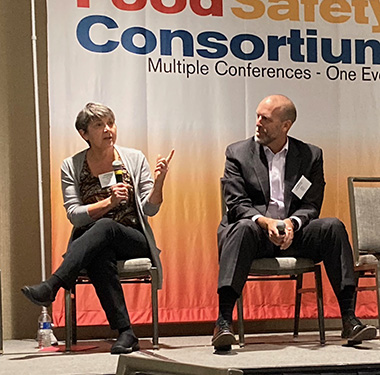
The conference’s mission is to elevate industry standards, and the exploration of key scientific and regulatory developments impacting public health and safety and its implications for food production.

Since the last FDA announcement on March 15, 2026, two (2) additional illnesses have been reported. A total of nine (9) people infected with the outbreak strain of E. coli have been reported from three (3) states. Illnesses started on dates ranging from September 1, 2025, to February 20, 2026. Three (3) people have been hospitalized and one (1) person developed hemolytic uremic syndrome (HUS), a serious condition that can cause kidney failure. No deaths have been reported. Over half of the illnesses are in children under five (5) years old.
The 2024 annual report highlights a few noteworthy outbreaks: a large outbreak of E. coli linked to carrots, a historical outbreak of illnesses associated with cheese, and a novel series of adverse events linked to certain chocolate bars, cones, and gummies.

The white paper, argues that the United States’ fragmented federal food safety system—split across more than 15 agencies (primarily FDA and USDA FSIS), 30+ laws, and numerous interagency agreements—creates inefficiencies, duplication, regulatory gaps, and preventable public health harms. Advocating for a unified federal food protection entity integrating safety, defense, authenticity, and infrastructure protection, the authors propose five core reform directives and four prime outcomes: better public health protection, reduced burdens, enhanced resilience against threats, and a modern, science/risk-based 21st-century system.
The FDA is releasing a risk assessment that was conducted to evaluate and quantify the risk of human illness associated with consumption of produce grown in fields or other growing areas with untreated biological soil amendments of animal origin (BSAAO), including raw manure. Results of the risk assessment will be used to inform policy decisions regarding appropriate standards for the use of raw manure and other untreated BSAAO when growing produce.
This study sought to identify environmental factors that significantly contribute to the introduction, persistence, and spread of foodborne pathogens that could contaminate produce prior to harvest. Increasing FDA’s understanding of the ecology of this growing region as it pertains to foodborne pathogens is to the benefit of consumers, producers, academia, and food safety officials as it allows for continued improvement in best growing practices to enhance food safety.

Dr. Mindy Brashears, Under Secretary for Food Safety, USDA and Dr. Donald A. Prater, Principal Deputy Director for Human Foods, FDA will present at the Food Safety Hazards Conference, April 20-22 in St. Louis MO. The format is a fireside chat with a town hall Q&A, moderated by Brian Ronholm, Director of Food Policy, Consumer Reports.
The FDA issued guidance addressing stakeholder questions regarding implementation of the Food Traceability Rule and a notice exempting certain cottage cheese products from the requirements of the Food Traceability Rule. FDA is also announcing a series of engagements with stakeholders to fulfill a directive from Congress.
FDA announced in a press release the third webinar in FDA and Alliance to Stop Foodborne Illness co-hosted Food Safety Culture Webinar Series. This is the third in the ongoing series of interactive, hour-long webinars throughout the year designed to deepen your knowledge and strengthen your commitment to food safety. Each session will feature industry experts who will share valuable insights, real-world tools and actionable strategies to enhance food safety culture across your organization.
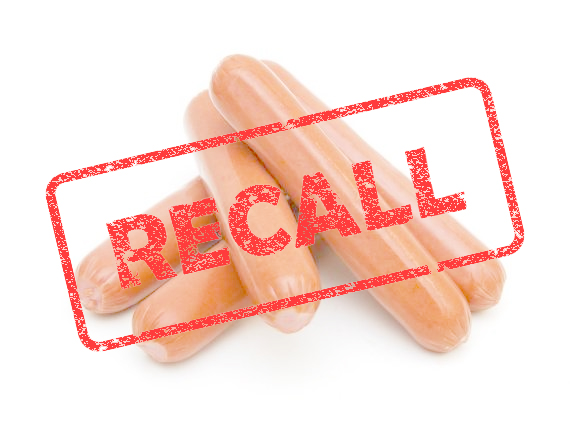
With federal policies and priorities continuing to shift under the current administration, companies need to stay focused on protecting consumers and their businesses. While regulatory agencies have committed to improving the recall process, the industry must still shoulder the responsibility of protecting consumers when something goes wrong. The way recalls are managed impacts consumer trust, public health, business continuity, and brands’ reputations, for better or worse. The negative impact of recalls often grows exponentially when companies and their trading partners are reactive vs. prepared. That’s where resilient supply chains come in.