

Fifteen years after FSMA reoriented food safety around prevention, the technical infrastructure is largely in place. What is becoming visible at this maturity point is the layer beneath it — the business decisions, governance structures, and organizational design that determine whether that infrastructure actually holds under real operational conditions. This five-part series examines food safety through the business realities that leaders already navigate: profitability, risk, growth, brand trust, and organizational function.
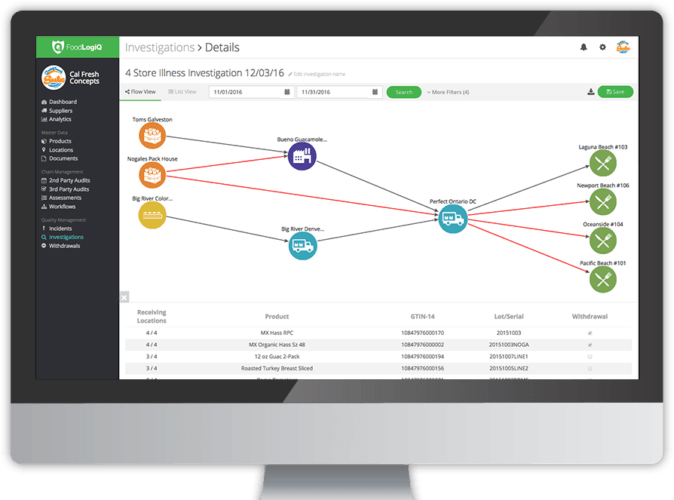
Starfish Network recently conducted an analysis of the benefits of traceability solutions. This study surveyed professionals across various food-related sub-industries, including produce, meat, seafood, dairy, eggs, packaged & manufactured goods. The surveyed companies spanned across production, logistics, retail, and services functions across the industry value chain.

For small and mid sized food manufacturers, the real food safety challenge is often not the absence of programs. It is the difficulty of executing them consistently with limited people, limited time, and limited system support. AI does not replace food safety culture, trained employees, or management accountability. What it can do is reduce documentation drag, connect fragmented records, and give small plants better visibility into the daily factors that affect both compliance and performance.
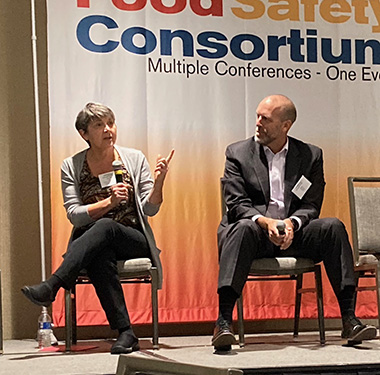
The conference’s mission is to elevate industry standards, and the exploration of key scientific and regulatory developments impacting public health and safety and its implications for food production.

Food safety programs are often evaluated through the strength of their technical controls, yet many organizations still experience instability as systems scale. This article examines the underlying governance conditions that determine whether food safety programs function consistently in real operational environments. Understanding this structural layer can help organizations stabilize food safety systems and support long-term operational resilience.
The 2024 annual report highlights a few noteworthy outbreaks: a large outbreak of E. coli linked to carrots, a historical outbreak of illnesses associated with cheese, and a novel series of adverse events linked to certain chocolate bars, cones, and gummies.

The white paper, argues that the United States’ fragmented federal food safety system—split across more than 15 agencies (primarily FDA and USDA FSIS), 30+ laws, and numerous interagency agreements—creates inefficiencies, duplication, regulatory gaps, and preventable public health harms. Advocating for a unified federal food protection entity integrating safety, defense, authenticity, and infrastructure protection, the authors propose five core reform directives and four prime outcomes: better public health protection, reduced burdens, enhanced resilience against threats, and a modern, science/risk-based 21st-century system.
Food safety laboratories are undergoing a significant shift as the food industry faces increasing pressure for speed, accuracy, and transparency. Traditional microbiological methods remain foundational, but they are often too slow to support today’s accelerated production cycles and complex supply chains. As a result, laboratories are adopting rapid microbiological methods, digital data systems, and artificial intelligence to enhance decision-making and reduce risk.

Dr. Mindy Brashears, Under Secretary for Food Safety, USDA and Dr. Donald A. Prater, Principal Deputy Director for Human Foods, FDA will present at the Food Safety Hazards Conference, April 20-22 in St. Louis MO. The format is a fireside chat with a town hall Q&A, moderated by Brian Ronholm, Director of Food Policy, Consumer Reports.

Food Safety 4.0 represents a new operating philosophy, not simply a new set of tools. I introduce this term intentionally and for the first time, recognizing that language shapes action. What an organization names, it prioritizes; what it prioritizes, it invests in; and what it invests in, it ultimately leads.