Find records of fraud such as those discussed in this column and more in the Food Fraud Database, owned and operated by Decernis, a Food Safety Tech advertiser. Image credit: Susanne Kuehne
Honey continues to be a popular target for fraudulent activity, as this latest case shows. A large number of batches of honey imported into Greece from inside and outside the European Union contained adulterants like added sugars and prohibited caramel colors, which was proven by chemical analysis. Honey produced in Greece was not affected. The adulterated products were immediately withdrawn from the market and the public was advised not to consume them.
Find records of fraud such as those discussed in this column and more in the Food Fraud Database, owned and operated by Decernis, a Food Safety Tech advertiser. Image credit: Susanne Kuehne
In a large case of trademark violations and counterfeiting, Haldiram, the leading snack manufacturer from India, filed a lawsuit against a Georgia-based distributor. The distribution company misused the well-known Haldiram label to import, distribute and sell counterfeit beverages, snacks, beverages and ready-to-eat meals in the United States, which is a large market for Haldiram. The company is seeking significant amounts of money for damages caused by the distributor and an immediate stop to the trademark infringements.
We all know it is important to maintain a healthy work-life balance, regardless of our current career stage. We also know that this can be a challenge. In March 2020 when coronavirus restrictions forced the various aspects of our lives—normally kept separate—to collide in our kitchens and spare rooms, we found ourselves sharing workspace with partners and children. This immediate change really brought our work-life balance into focus.
As part of our Women in Food Safety series, we interviewed three highly successful food safety professionals about how they keep their work-life balance in perspective despite the ever-increasing demands of work, and how they have tackled major life changes or career decisions along the way, while still keeping their career on track.
We were delighted to have the opportunity to talk to Shawna Wagner, food sector and technical manager, North America for DNV and SQF Auditor of the Year, 2019; Cornelie Glerum, director of operations for FSSC 22000 and Laura Gutierrez Becerra, food safety regulatory and operations manager at Amazon. These outstanding professional females work in different sectors of the industry and have different career backgrounds, but they all agreed on the importance of keeping a healthy work-life balance and shared surprisingly similar strategies for tackling it. They also agreed that it is all too easy to let work consume your life, so above all, it is very important to like your job and to do something that you enjoy.
It is clear that achieving highly aspiring career goals requires disciplined time management both at work and at home; and it is also important to build a support network of others that can help you. Similarly, although at the start of a career one might think it a sign of weakness to ask for help, this is not true. If there comes a time when it seems impossible to get everything done, be kind to yourself—some tasks can always wait.
Shawna Wagner is a senior auditor so traveling is a major element of her job. Before COVID -19 hit, she might be on the road 270 nights a year. ” This definitely eats into personal time and takes a toll on family life- it is important to switch off at times” she said.
As the director of operations, Cornelie Glerum is a founder, and leading force behind FSSC 22000. She believes that “Work life balance is very important—and that you should work to live—not live to work”.
Laura Gutierrez Becerra has had an interesting and varied career path, which has covered career moves, an international relocation, a family-focused career break as well as the raising of three children before reaching her current position with Amazon. “Work-life balance is important to keep in check. I think that as women, we can forget about ourselves, particularly as we tend to be fully dedicated to our job or career path, or we have family responsibilities or dependents to care and provide for. We tend to put considerations for ourselves last.
There are elements and approaches to maintaining a work-life balance that all of them agreed upon.
1. Keep a personal schedule as well as a work schedule
It is easy to let work overwhelm or occupy your all your time, so it is important to make personal appointments with yourself or your family.
Shawna Wagner, DNV
Wagner: I certainly try to schedule something every weekend, such as golf, camping, and dinner events. The scheduling is important as if it’s not in my phone calendar, it’s not happening.
Glerum: I have a family, a partner and two young children, and we do have some family commitments that are on a set schedule such as the Friday hockey practice, which is an important part of my week, as I enjoy being the coach. If they are written into the schedule, it is easy to keep the commitment.
Gutierrez: I am fairly good with this now compared to when I started my career. We had to create schedules for everyone in the family to have responsibilities in the home so that the chores got done, but we also factored in extra-curricular activities such as family game night, etc. We also enjoy exercising together, which is important for us all.
2. Taking time off
Wagner: I have come to learn that vacation time is your time to shut work off, and I was extremely poor at this practice. I would take vacation but still work all day on emails, so I didn’t fall behind for when I was back from vacation. My best advice is to know that it will still be there when you get back and to train others to cover for you for when you are not in the office. Also return the favor for others, as we all deserve downtime.
Laura Gutierra Becerra, Amazon
Gutierrez: There was a point in my career when I was juggling job moves raising children with different ages (an infant, a toddler and a teenager) , and I felt burnt out. I took the great piece of advice from my mentors who advised me to do more of the hobbies that I enjoy, and to learn to delegate. Although this was difficult at first, it was helpful to consider delegation as a way of helping others to develop and advance their careers. Looking at it from this [perspective] allowed me to take some time off.
3. Keep your phone in check. While of course it is a life-changing invention, the cell phone is also the never-ending connection to work.
Wagner: I keep things in perspective by always having dedicated time to my family and friends. For example, if I am having dinner with my partner, it’s a hard rule that I will not answer the phone.
Glerum: I am aware that I have big responsibilities in my job, so I do tend to stay in touch and keep my phone on even during holidays and vacations, but I try to keep calls at the minimum.
4. Asking for help
Wagner: It is important to ask for help, and if you can find others who want to learn, then it helps them also. When I was new to the industry, I wouldn’t ask for help, as I wanted to show that I could achieve success by myself or seek the right answer for the solution, and I realized that this might not be the good way. We all need to learn to be comfortable to ask for help.
Cornelie Glerum, FSSC 22000
Glerum: Yes, I can ask for help, and I am fortunate to have my parents close by so I can ask to help with children if I am at work or traveling. I also have good neighbors that can step in, and this works both ways. This is truly a valuable support network, and we all help each other with reciprocal arrangements.
Gutierrez: I was not good at the delegating tasks at the beginning. As I had relocated from Mexico to the United States, I did not have any close family here to call on. Also, as is typical of my Mexican culture, I felt I had to do everything myself for my family at home as well as demonstrating at work that I was on top of my game. This was completely wrong and quite self-defeating. Today, I am better at prioritizing and delegating. Developing new networks has also helped me both on a personal as well as professional level. When I moved from Mexico, I didn’t even know how and where to start. However, I have worked specifically to build supportive circles such my “kindergarten mothers”, my “Mexican coffee chat” and of course, my great “Women In Food Safety” network”.
Other Advice We Want Share
Glerum: It is important to recognize that not all jobs need to be done all of the time, and if you are heavily committed at work, some chores just might not get done. While you might be a high achiever, you do not need to set the bar so high for everything. Maybe you do not get all the cleaning done on time in the house, give yourself a break. If the laundry is becoming an issue, and the children are running out of clean clothes—add to the wardrobe, buy more socks for the children!
Gutierrez: Going through life-changing events and overcoming challenging moments for sure gives you resiliency and provides realization that we women can overcame many things. I have had several major changes in my home life. However, I can fully relate to the expression: “A women is like a tea-bag, you don’t know how strong she is until you put her in hot water” by Eleanor Roosevelt.
Preparing to Start Your Career? Here’s Some Advice
Wagner: Women can do any job and can be developed to achieve their goals. Women also provide an important perspective to the mixture of different people with whom you work. The field of food safety also is open to many career aspirations. I recently did an audit at a facility where a young lady was the maintenance manager. She rocked that shop!
Glerum: As women, we have a range of different skills and strengths in the workplace. We are good with precise details, are conscientious and demonstrate accuracy, which is important in my business as a certification program owner. We should use these different attributes to our own advantage in the workplace without compromise. However, women often do not always have enough confidence in their abilities and are sometimes afraid to speak up, especially in a man’s world.
Women also add an “elegance” for want of a better world, which can add to the comfort and refinement to the workplace. For example, we are more likely to remember birthdays and see the importance of staff appreciation, sharing gifts etc. This makes a nicer workspace for everyone.
Gutierrez: Do not to be afraid of asking questions. I initially lacked confidence to ask questions. Also, ask for feedback. It is very important and always helpful, whether it is positive or negative, learn from it and actively apply this learning. Always be open to new opportunities, be inquisitive about other areas. If you do not see opportunities for learning and development, move on to somewhere else if you can. Constantly, assess your aspirations and determine what is your main drive.
Do what you like and like what you do!
Women are an important element in the workplace and the home. Balancing work, life and the demands of a family can take a heavy toll. However, supporting networks can help. Feel free to reach out to Women in Food Safety so we might offer some support and advice—you are never alone.
Find records of fraud such as those discussed in this column and more in the Food Fraud Database, owned and operated by Decernis, a Food Safety Tech advertiser. Image credit: Susanne Kuehne
Adulterated alcohol continues to pose serious risks to health and even life of consumers. In this latest case from the Dominican Republic, more than two dozen people have died from methanol poisoning due to a low-cost illegally made drink, and from fake brand-named products. Businesses associated with the scams were raided and closed, and arrests were made. Officials keep warning against the consumption of illegally manufactured alcoholic beverages.
Futurist Ross Dawson has said that AI and automation will shape the future of work, and it also promises to transform our lives beyond the office. According to the World Economic Forum, when AI, which provides the ability to “enable devices to learn, reason and process information like humans,” is combined with Internet of Things (IoT) devices and systems, it creates AIoT. This super duo has the potential to power smart homes, smart cities, smart industries and even our smartwatches and fitness trackers, a market estimated by Gartner to be worth $87 billion by 2023. More importantly, this “interconnectedness” will change the way we interact with our devices as well as the way we will live and work in the future.
In the restaurant industry, we’re already seeing glimpses of this interconnectedness take shape, and in the past year, we’ve experienced major technological advancements that have transformed every facet of the way food establishments work. Reflecting on those advancements, I want to take a moment to share three areas of AI impact that are bubbling up in the restaurant sector in 2021.
1: AI-powered Intelligent Kitchens
From ghost kitchens to traditional kitchens, the “back of the house” continues to be a prime target for AI and automation. While great progress has been made, in many ways it seems like we’ve only scratched the surface when it comes to how far AI can take today’s restaurants. But every now and then, we hear examples of AI powering the future of our industry. For example, Nala Robotics, Inc. will be opening what it calls “the world’s first state-of-the-art intelligent restaurant” in Naperville, Illinois this year. The company says the AI-based robotic kitchen “can create dishes from any cuisine around the world, using authentic recipes from celebrated chefs”. A press release from Nala Robotics states that its flagship restaurant is taking “the first step in the food service industry with AI-powered service, addressing many of the issues affecting restaurant owners during COVID-19,” and it will “provide consumers an endless variety of cuisine without potential contamination from human contact.” This is the new frontier in intelligent kitchens, and it couldn’t have come at a better time, with the pandemic forcing restaurants to reimagine the way they do business.
2: AI-Driven Labor Shifts.
You can’t talk about AI in the restaurant industry without also having a conversation about the implications for the modern workforce. With AI in restaurant kitchens and beyond, the impact on the labor force is undeniable. By 2024, Gartner predicts “that these technologies will replace almost 69% of the manager’s workload.” But that’s not entirely a bad thing. Instead of manually filling out forms and updating records, managers can turn to AI to automate these and other tedious tasks. “By using AI…they can spend less time managing transactions and can invest more time on learning, performance management and goal setting,” Gartner adds.Managers can also use the extra time to focus more effort on the customer and employee experience. And indeed they should: In a recent Deloitte report, 60% of guests surveyed indicated that a positive experience would influence them to dine at a restaurant more frequently.
Looking at the impact of AI on labor at all levels, from the CEO to the entry-level wage earner, the shift, at its best, will be a transition to more meaningful—and less mundane—work. The evolution of humanity has taken us to the point we’re now at now, with food production and delivery processes becoming increasingly automated. This has been an evolution generations in the making. In an ideal world, everyone at every level of the organization should benefit from this new wave of technology. For example, automation can and should be used to open the door to new training and new opportunities for low-wage earners to learn new skills that elevate career paths, increase income and improve quality of life.
3: AI and Global Supply Chain Transformation
From the farm all the way to the table, AI is now poised to transform the global supply chain. From my perspective, the biggest impact will be around driving sustainability efforts. Restaurant and grocery brands are already beginning to leverage AI to forecast their food supply needs based on customer demand, leading to less over-ordering and less food waste to support sustainability initiatives. One company in this space, FourKites, is creating what it calls “the digital supply chain of the future.” Using real-time visibility and machine learning, FourKites powers and optimizes global supply chains, making them “automated, interconnected and collaborative—spanning transportation, warehouses, stores, trucks and more.”
In addition to predictive planning, more and more brands will start to use AI to create incident risk management models to identify trends and risks in the supply chain to determine whether bad or recalled products are originating from a specific supplier, distributor, or due to an environmental variable.With all of these changes, the need for comprehensive data standards will multiply as suppliers and distributors around the world work together to bring us produce and packaged food from all corners of the globe. Data standards will be critical to traceability and the exchange of critical tracking events and key data elements, and advances in data standards will power the meta-data needed to provide better insight for food quality and regulatory compliance, crisis management, and recalls—at scale.
Research firm Forrester states that, in the end, the greatest impact resulting from an investment in robotics and other technologies that automate operational tasks is improved customer experience (CX). “Most companies believe that investment in AI, automation, and robotics for engagement will decrease operational costs. While this is true, our research shows that the revenue upside from delivering better CX could deliver a greater impact on the bottom line over time,” Forrester states.
As a business engaged in digitizing and transforming supply chain operations, our team couldn’t agree with Forrester more. But we believe it will take striking the right balance between technology and the human touch to not only drive stronger CX, but to also create a world in which AI is implemented for the greater good—a world in which people, processes, business and technology all win.
Known officially as The California Safe Drinking Water and Toxic Enforcement Act of 1986, California Proposition 65 reaches far beyond state boundaries and has potential regulatory implications for almost any company that manufactures, imports, and / or sells products containing listed chemicals in the state. California Prop 65 prohibits the sale of a product in California that knowingly and intentionally exposes an individual to a California Office of Environmental Health Hazard Assessment (OEHHA) listed chemical without a specific stated warning. For many food and supplement companies, the risk of opportunistic litigation based on California Prop 65 drives the need to monitor updates, new amendments and enforcement of the law.
Prop 65 Background
California Proposition 65, also known by the shortened name Prop 65, is not a ban on products or ingredients. The law is intended to inform consumers in California about exposure to a list of chemicals exceeding a defined level in products for sale, including product packaging. The regulation mandates a warning label for exposure to chemicals at a level that could cause cancer, birth defects or other reproductive harm. Guidance for upper limits (“Safe Harbor Level”) on chemicals is based on expected daily exposure. If no Safe Harbor Level exists for a chemical, the product containing a listed chemical must include a warning, unless the exposure level can be proven to not pose a significant risk of causing harm.
With the size of the California economy and the interconnected U.S. supply chain, the state law effectively reaches other states and U.S. importers. More recently, the Prop 65 requirements impact online and catalog sales, which have increased significantly during the global pandemic.
Know Your Suppliers
All companies need to proactively evaluate and document Prop 65 risks. Enforcement occurs primarily through civil litigation, resulting in specialized legal firms profiting from a company’s ignorance of the law’s extent. Even the threat of publicity from a lawsuit can cause targeted companies to settle a case.
At each point of manufacturing and distribution—supplier, manufacturer, packager, importer or distributor—regulatory teams should ask about Prop 65 compliance. The main point of responsibility is at the manufacturer, but a retailer can also be obligated for introducing a chemical at point-of-sale.
What’s New with Prop 65
The OEHHA issues notices regarding amendments to the California Code of Regulations Title 27, Article 6, covering “Clear and Reasonable Warnings”. Recently the OEHHA requested public comments on proposed amendments that would modify the content and methods for providing “short-form” warnings. The short form was originally intended for products with restricted label space.
The proposed rule would modify the existing short-form warning provisions to:
Only allow use of the short-form warning on products with five square inches or less of label space.
Eliminate use of short-form warnings for products sold via the Internet and catalogs.
Clarify how short-form warnings can be used for food products.
Require the name of at least one chemical be included in the short-form warning.
Bottomline: Know Your Business and Risk
As an advisor with more than 20 years of regulatory compliance experience in food and food ingredients, my guidance for business best practice on Prop 65 is to be proactive, maintain supply chain knowledge, and understand risk. Regulatory or legal staff, or consultant teams specializing in Prop 65, should regularly monitor for additions to the chemical list and rulemaking changes to the far-reaching law.
Find records of fraud such as those discussed in this column and more in the Food Fraud Database, owned and operated by Decernis, a Food Safety Tech advertiser. Image credit: Susanne Kuehne
Lab methods for the analysis of adulterated food can be time-consuming, expensive and impossible to use in the field. A new study shows promising results for hand-held near infrared (NIR) spectroscopy tools. The investigated method proved to be very quick and highly accurate, and could open new possibilities for remote testing. This was shown in a study with oregano samples, a common target for food adulteration.
In an effort to continue supporting female professionals contributing to the food safety industry and better understand their feelings and experiences while going through different stages in their career, we released our first survey in September 2020. The results will help us provide better resources to address the challenges and barriers reported from the survey.
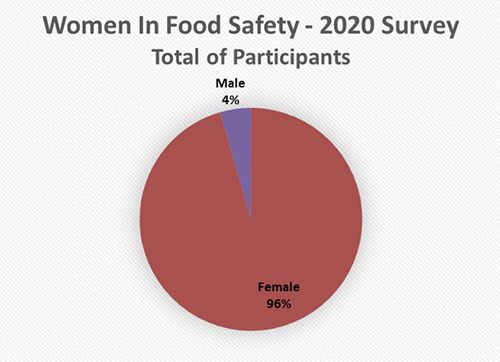
Figure 1. (click to enlarge)
The participation received from the leaders in food safety who completed the survey was significant. We were humbled and excited to notice that within a couple of weeks of launching the survey, 201 responses were received from 19 different countries. Although the survey was intended to assess the situations and experiences women are going through or have gone through, responses from their counterparts, male leaders, were also received. Ninety six percent of the responses are from females. (see Figure 1).
Other (Research, consulting, auditor, trainer, regulatory)
14.9
Table 1. Responses by Position Levels
The survey participants hold positions at all professional levels and years within an organization. 61.7% of the total responses are linked to management levels, but only 14.9% are Senior Executive Level (see Table 1). Years of experience were broken down into five categories (see Table 2); 68.2% of the respondents had more than eight years of experience.
Years of Experience
Percentage (%)
15+
38.8
8–15
29.4
5–8
11.9
2–5
13.4
0–2
6.5
Table 2. Responses by Years of Experience
Well-rounded questions were provided in the survey, including situational inquiries, career advancement and the obstacles presented when entering the job market. In addition, opinion-based questions were formulated to understand how extensive networking is leveraged as a developmental and career advancement tool; it also addressed some of the expectations hiring managers have when hiring talent versus what the expectations professionals had when looking for their first jobs. Last but not least, a set of experience-based questions related to the encountered barriers found throughout the career journey, what is attributed to career success, the importance of diversity, and what are the career pivot points when life and career changes come up, were also presented.
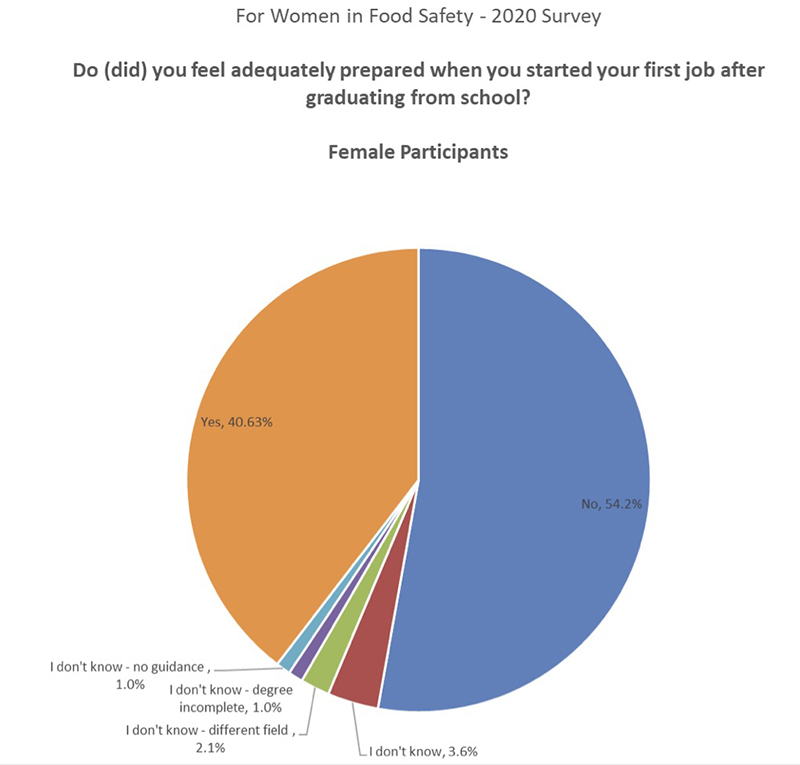
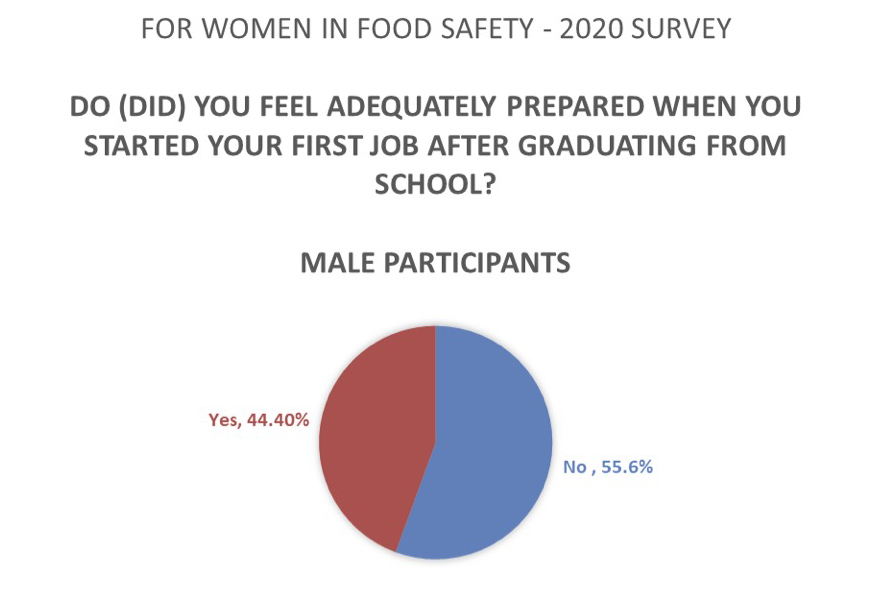
With regards to preparedness after graduating from educational training and starting a first job, similar responses were provided between females and males. Women provided three different responses: 54.2% felt they were/are not adequately prepared; 40.6% feel were/are well-prepared; and 7.7% of women did not know their level of preparation; this can be attributed to no guidance received to better navigate the transition from school to the workforce and not being able to completion an educational degree (see Figure 2). Similar to women, 55.6% of men feel they were not adequately prepared; however, the remainder of male responses (44.4%) did not find any issues with the transition to their first job from school (See Figure 3).
Figure 2 and 3. Respondents weigh in on feeling adequate prepared when starting their first job after graduating from school. (Click to enlarge all images)
Figure 4. Obstacles presented when entering the job market.
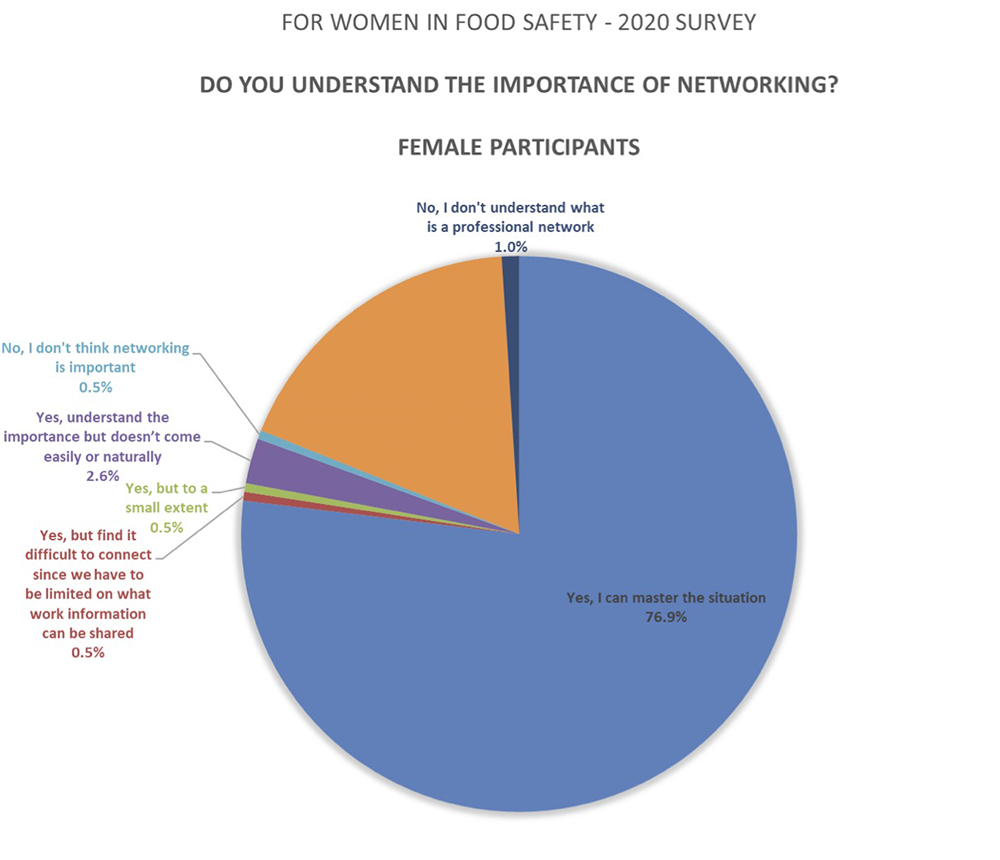
Figure 5. Understanding the Importance of networking (female participants).
The experience all participants shared regarding the obstacles presented when entering the job market revealed that, in general, 52.7% of the participants find a lack of connection with a company-experienced employee is the primary obstacle, 49.3% associate the obstacle to lack of connection to industry while attending school, and nearly 30% of participants indicate that they are lacking credentials to meet the job requirements (i.e., not having enough experience for required certifications). In this question, there two additional responses were reported: 15.4% of women did/do not know where to start and 4.5% did/do not know what qualifications the industry is looking for (See Figure 4).
The highlight between female and male responses for this question is the lack of credentials to meet the job requirements as an obstacle to a successful job initiation. In this case, a higher percentage of men (44%) reported this issue as an obstacle compared to the responses submitted by women (29%).
In terms of understanding the importance of networking, 76% of women confirm that they know how to master the skill of networking, but nearly 18% do not know how to start building their network. Additionally, there were a couple of responses from females confirming their understanding of the importance of networking; however, it is only to some extent and they have difficulty connecting with others due to the skill not coming naturally or having some limitations in terms of information sharing (see Figure 5). Only 1% of female responses reported not understanding exactly what a professional network is; whereas 100% of male respondents indicate no issues with understanding the important of networking.
When it comes to the topic of diversity and its importance within a company, 83.3% of female participants said diversity is important to them. Detailed responses are in Table 3.
Is Diversity within a Company Important to You?
11%
Not important
9%
Do not know
2%
Do not know/Would not weigh diversity higher than finding the right candidate
Table 3. Percentages taken out of 192 female responses.
For females, significant career barriers did not fall under a single-specific category. The responses submitted identify 13 different barriers where work/life demands (41%), feeling of the glass ceiling (41%) and education/degree (5%) are found to have a greater concern among others, including students (see Figure 6.). Other barriers, such as soft skills, lack of support from management and lack of opportunity near family are categories that were mostly reported from women holding management level positions (see Figure 7.)
Figure 6. The most significant career barriers.
Figure 7. The most significant career barrier among all level positions among female participants.
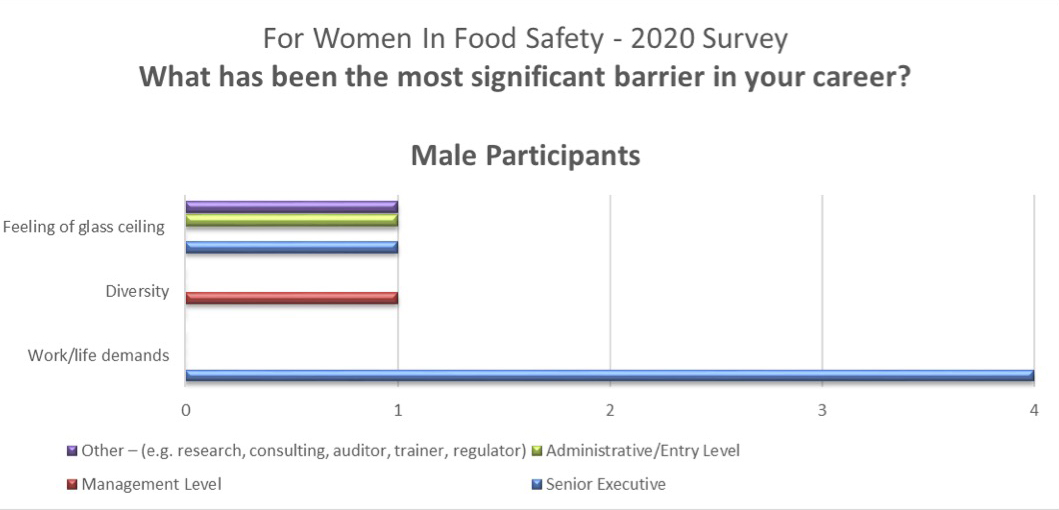
In the case of men, work/life demands are recognized as the career barrier of most concern among senior executives (56%). In addition , only other two reasons are reported as barriers: The feeling of a glass ceiling (reported by senior executive level and administrative/entry level) and diversity (reported by management level position) (see Figure 8).
Figure 8. Most significant career barriers among male participants.
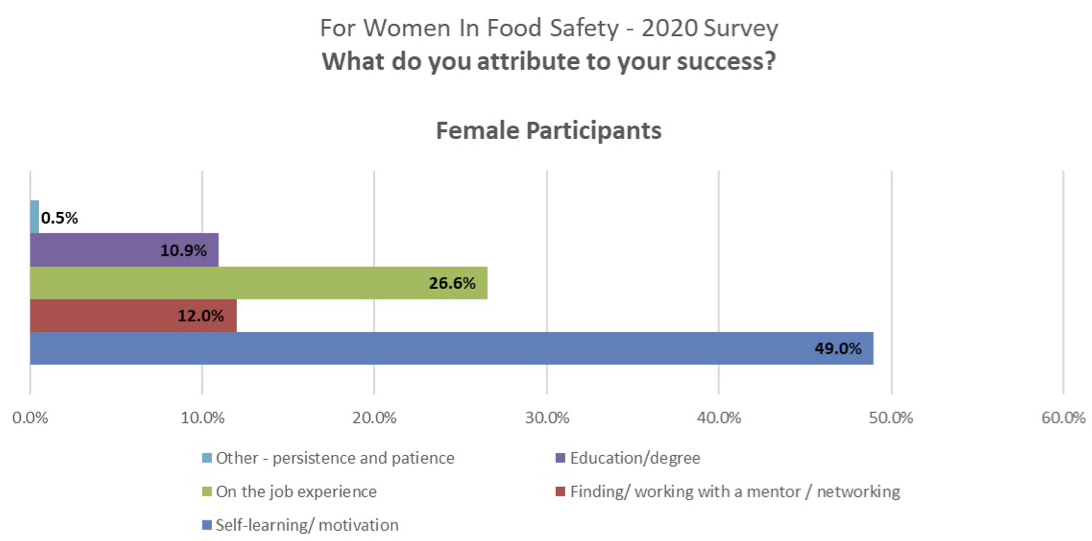
Figure 9. Career success attribution as defined by female participants.
Figure 10. Career success attribution as defined by participants.
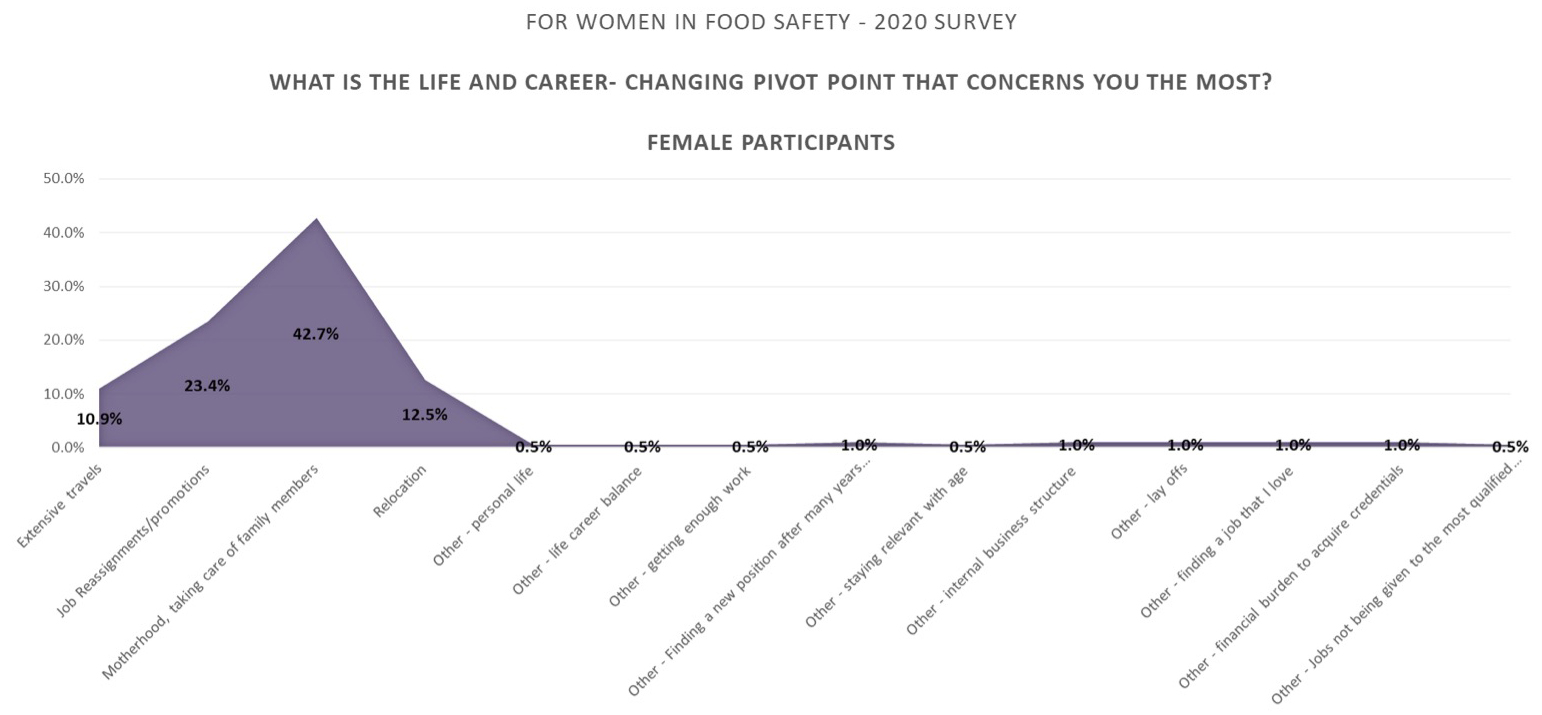
Figure 11. Life and career changing concerns among female participants.
Regarding the contributors to career success, self-learning/motivation is the leading category. This is followed by job experience and working with a mentor (see Figures 9 and 10). The main difference between women and men regarding their career success is educational degree, and being persistent and having patience. In this case, female responses outlined that being persistent and having patience is a success factor.
Life and career changes cause stress and disharmony in a person’s life, requiring a modification in job performance and handling of personal responsibility. The concern between men and women differs considerably. While men are more concerned about job reassignments/promotions, extensive traveling, and relocation; women reported they have 11 additional reasons to be concerned. Motherhood or taking care of dependents are the leading issues. (see Figure 11).
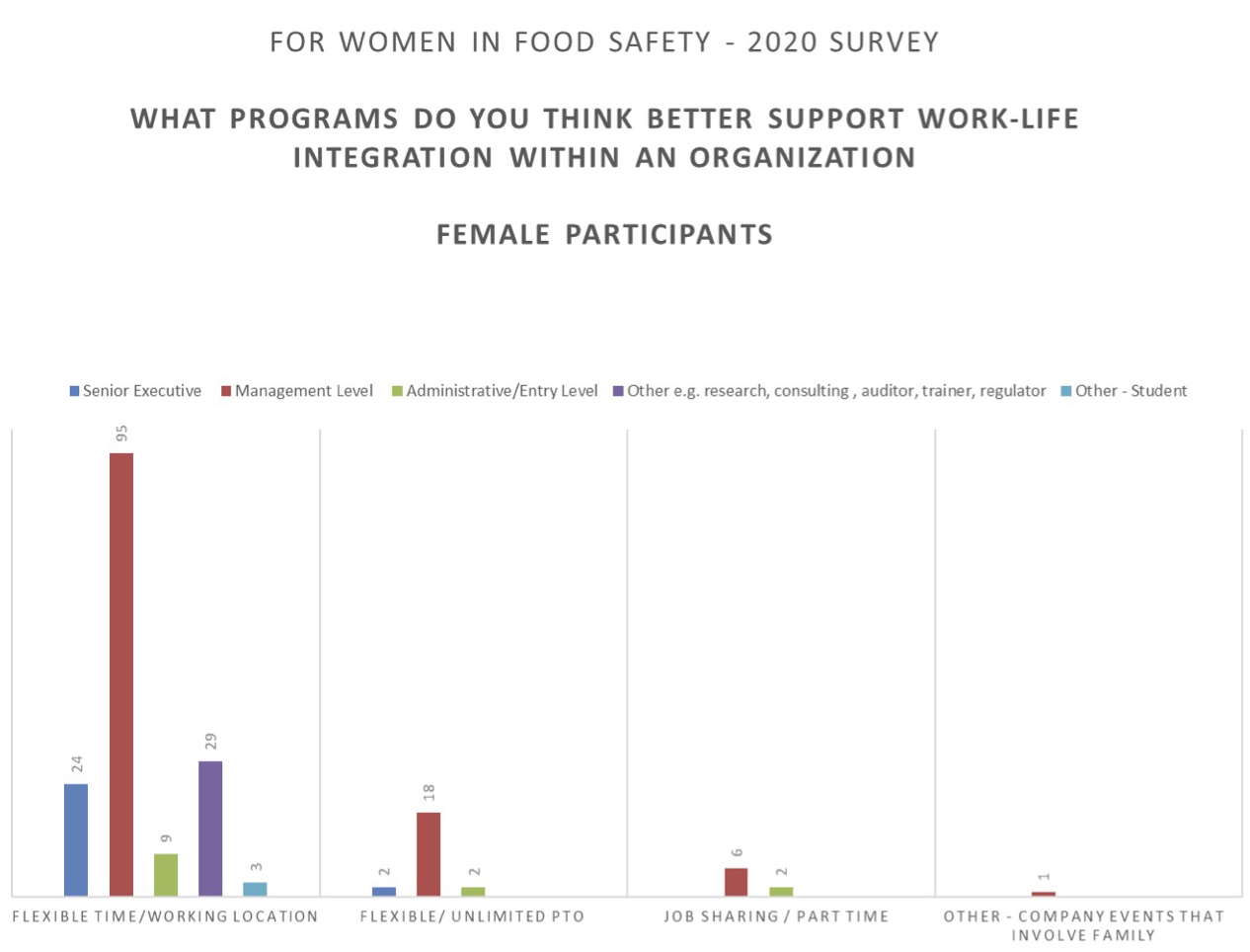
The survey also included inputs on what programs would better support the integration of work and life harmony within an organization. Flexible time/working location is found as the primary need from female responses in all position levels. Then, flexible/unlimited personal time off is the second identified need submitted in their responses. In addition, women in management level positions were the demographic responding to all four provided responses. This was contrary to senior executive women who found flexible time/working location as the only category to better support work integration and life harmony (see Figure 12). In the case of men, only two responses provide insight as to their need for support; 88.9% of them would like to have more flexible time/working location and 11.1% consider being part of the workload allocation process beneficial.
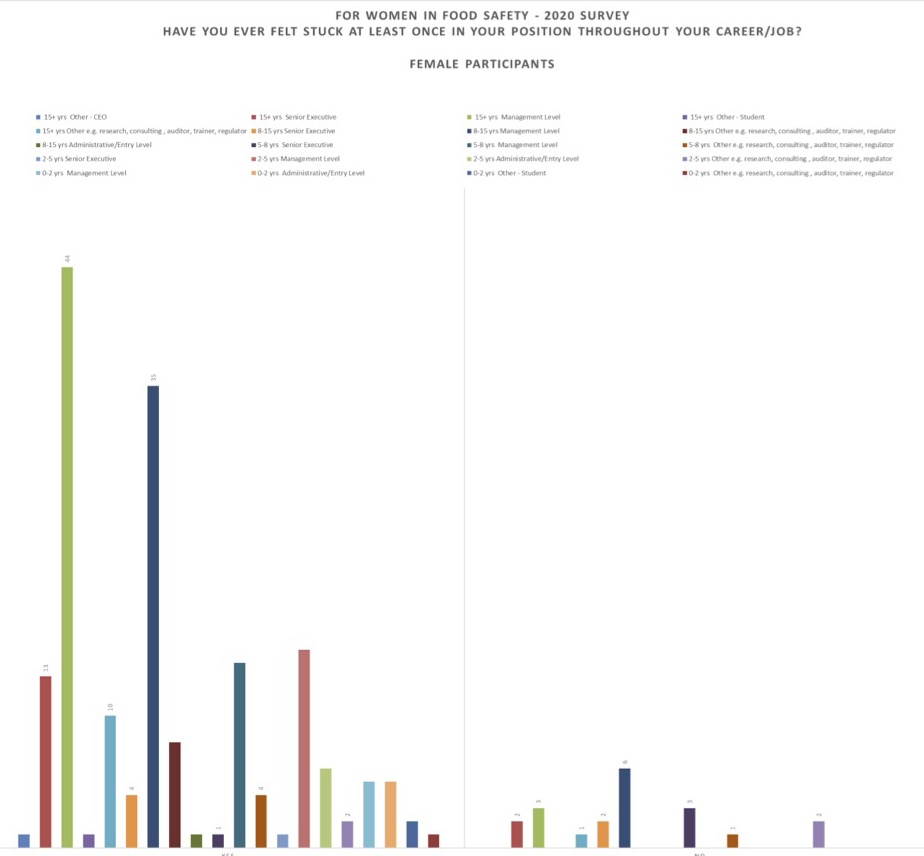
From all responses received, about 90% have felt stuck at least once in their position throughout their career or job. Females in management level positions with working experience of eight years or more lead the number of responses (see Figure 13). There is a higher percentage of males (22%) who have not felt stuck in their career compared to the response submitted by females (10%). Male senior executives with more than 15 years of experience have the higher number of responses (see Figure 14).
Figure 12. Better support for the integration of work and life harmony within an organization (female participants).
Figure 13. Felt stuck at least once in their position throughout their career/job (female participants).
Figure 14. Felt stuck at least once in their position throughout their career/job (male participants).
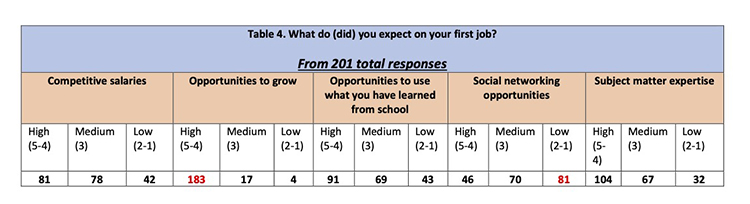
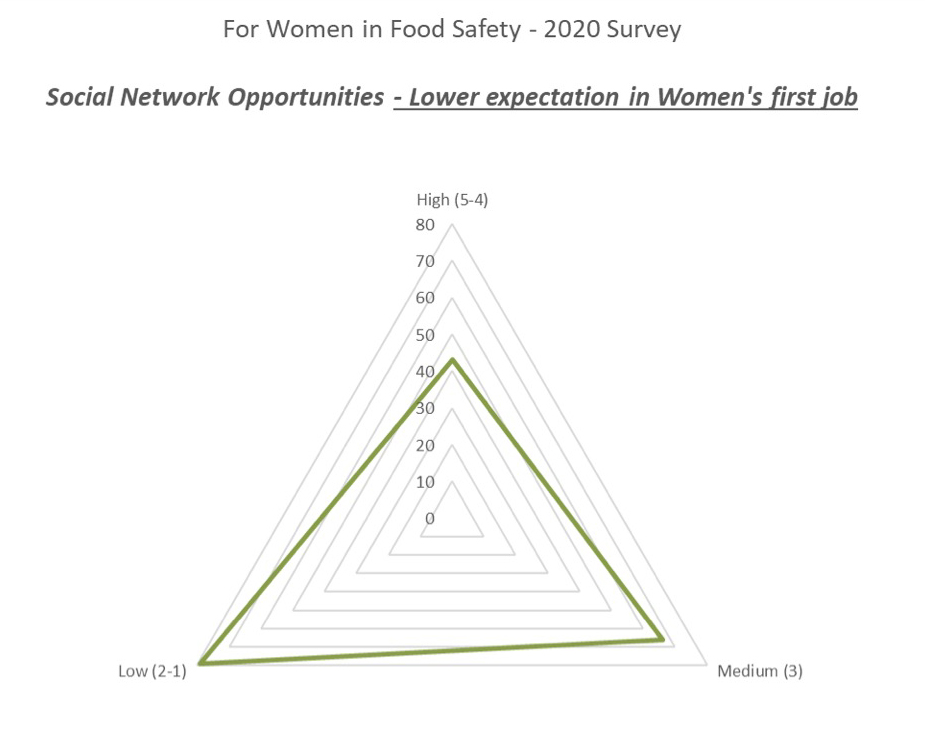
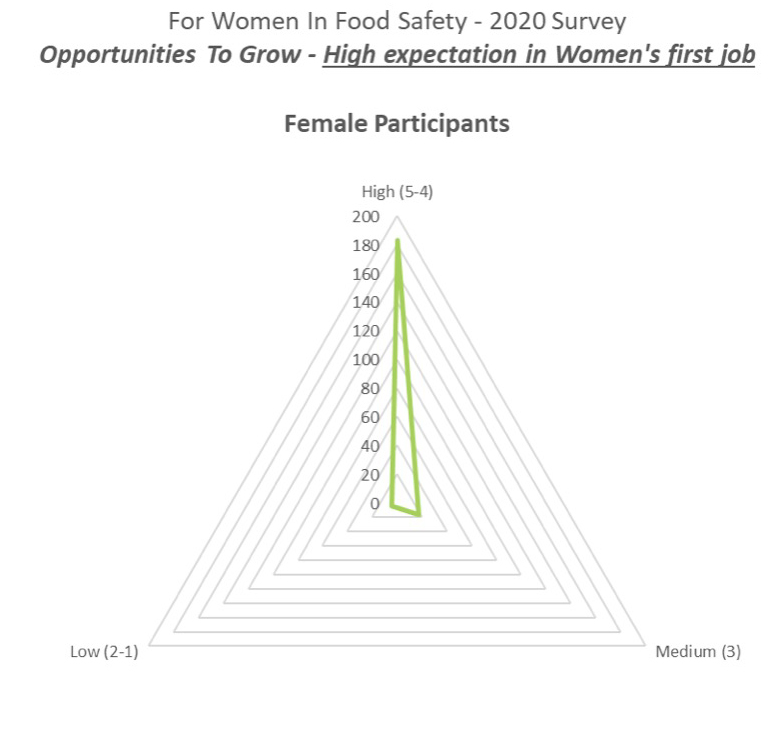
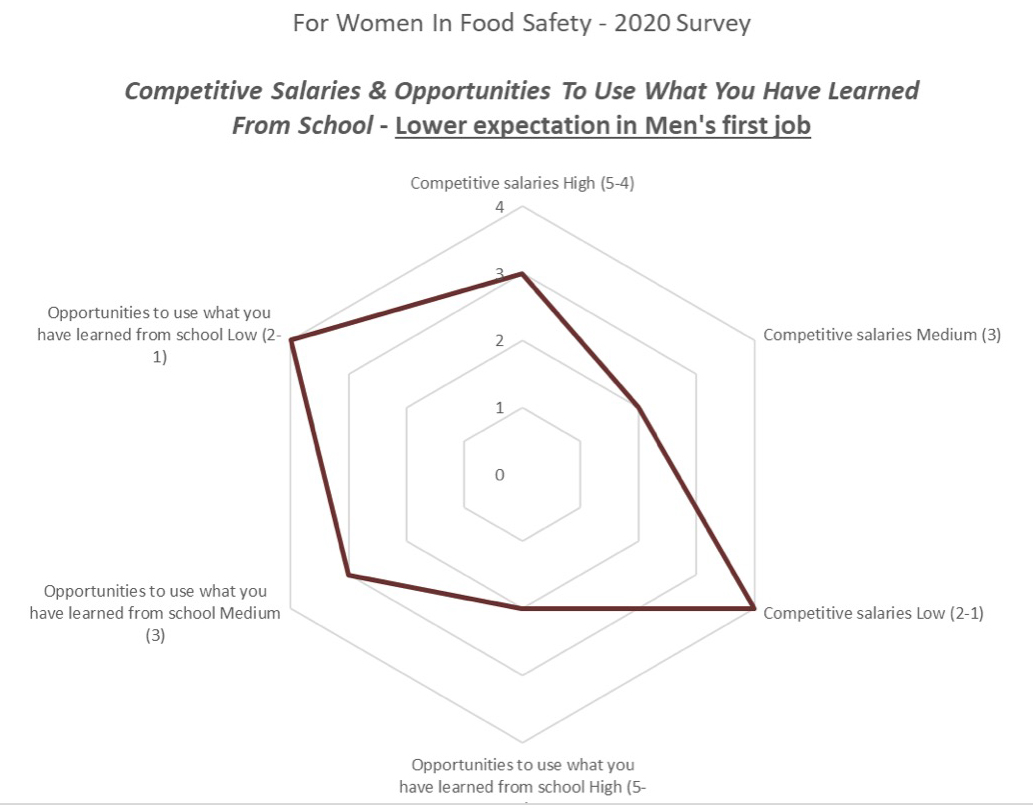
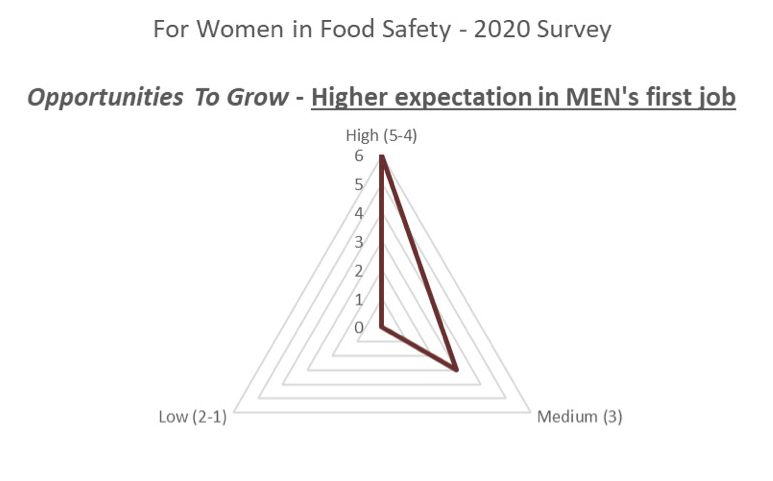
The survey also included ranking questions to understand what the expectations were/are among the participants related to their first job. Table 4 outlines the five expectations the participants chose from when answering this question, highlighting that 183 out of 201 participants place opportunities to grow at the highest level of importance. Social networking rated the lowest (81 out of 201) in importance among the total responses received.In term of gender-specific answers, both women and men identified opportunities to grow as the expectation with highest level of importance. For women, the expectation with lowest level of importance is social networking; for men, competitive salaries, and opportunities to use what you learned from school are the not-so important expectations (see Figures 15, 16, 17 and 18).
Figure 15. Importance of expectation on the first job (female participants).
Figure 16. Opportunities to grow (female participants).
Figure 17 and 18. Male participants
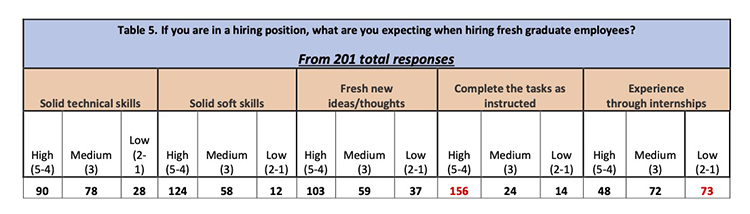
The expectation from participants regarding what is the level of importance when hiring new graduate employees highlights “complete the tasks as instructed” as the highest expectation among the 201 participants and experience through internships as the lowest level of importance (see Table 5).
In addition to the five options for answers, women also included three additional expectations:
Understanding of company culture and when is a good time to look for a new opportunity
Ability to solve problems, analytical thinking and get results independently
Learning mindset
Conclusions
Responses from 19 different countries were received from the survey with 96% being from females. Among all position levels provided their inputs, but the largest participation was from women holding management level positions (62%). With regards to the categories on years of experience, those with more than 15 years of experience had the higher percentage of participation (39%), but only 15% were senior executives.
Some key preliminary outcomes are reported as follows:
Self-learning and motivation are two leading drivers for career success.
Work/life demands and feeling of a glass ceiling are identified as the main career barrier among women and men. Educational degree is a reported concern specific to women and diversity is specific to men.
There are no significant differences between females and males regarding not feeling adequately prepared when starting the first job (52.4% – female; 55.6% – male).
52.7% of all participants find a lack of connection with a company-experienced employee as the main obstacle when entering the job market. Lack of credentials is a significant obstacle for males (44.4%) vs. females (29.2%).
100% of male responses said they mastered the skill of networking vs. 76% from female responses.
There are no significant differences between females and males regarding not having any issues when transitioning to their first job after graduating from school (41% – female; 44% – male). However, 7.7% of women do not know if they were/are prepared.
Flexible time/working location named as the primary need as people believe it would better to support integration of work and life harmony among all position levels.
90% of participants felt stuck at least once in their position throughout their career or job. A higher percentage of men (22%) confirmed not feeling stuck in their career compared with the responses submitted by women (10%).
All responses identified opportunities to grow as the expectation with highest level of importance when first starting a career. For females, the expectation with lowest level of importance is social networking. For men, competitive salaries and opportunities to use what they learned in school are not important expectations.
The expectation among the 201 participants on what is important when hiring newly graduated employee report completing the tasks as instructed as the highest expectation and placed experience through internships as the lowest level of importance.
Find records of fraud such as those discussed in this column and more in the Food Fraud Database, owned and operated by Decernis, an advertiser in Food Safety Tech. Image credit: Susanne Kuehne
Canola oil, sunflower oil or soybean oil, colorants and low-quality olive oil, anyone? Olive oil, especially extra virgin olive oil adulteration is rampant, since the risk of getting caught is low and the profits are huge. A new expert-reviewed Laboratory Guidance Document on olive oil, published by the Botanical Adulterants Prevention Program (BAPP), lists a variety of laboratory methods at different levels of complexity, as well as the most common methods of adulteration. This Laboratory Guidance Document is an indispensable guide for regulatory and research personnel in the food, supplement and cosmetics industries.
Managing the complexities of a management system is challenging for any food and beverage company, particularly for the team tasked with implementing the system throughout the organization. That is because every regulatory agency (e.g., FDA, USDA, OSHA, EPA) and voluntary certification (e.g., GFSI-benchmarked standards, gluten-free, organic, ISO) calls for companies to fulfill compliance requirements—many of which overlap. Supply chain and internal requirements can create further complications and confusion.
In today’s “New Era of Smarter Food Safety,” having a common system to organize, manage and track compliance offers an ideal solution. Dynamic tools are becoming available—systems that can manage employee training, pest control, laboratory testing, supply chain management tools, regulatory compliance and certification requirements, etc.
Unfortunately, these systems are often not set up to “talk” to each other, leaving company representatives to navigate many systems, databases, folders, and documents housed in many different locations.
The Solution: Compliance Management Systems
An integrated compliance management system (CMS) is intended to bring all these tools together to create one system that effectively manages compliance requirements, enables staff to carry out daily tasks and manage operations, and supports operational decision making by tracking and trending data that is collected daily by the team charged with implementation.
A CMS is used to coordinate, organize, control, analyze and visualize information to help organizations remain in compliance and operate efficiently. A successful CMS thinks beyond just access to documents; it manages the processes, knowledge and work that is critical to helping identify and control business risks. That may include the following:
Ensuring only authorized employees can access the right information.
Consolidating documents and records in a centralized location to provide easy access
Setting up formal business practices, processes and procedures
Implementing compliance and certification programs
Monitoring and measuring performance
Supporting continuous improvements
Documenting decisions and how they are made
Capturing institutional knowledge and transferring that into a sustainable system
Using task management and tracking tools to understand how people are doing their work
Enabling data trending and predictive analytics
CMS Case Study: Boston Sword and Tuna
In early 2019, Boston Sword and Tuna (BST) began the process of achieving SQF food safety certification. We initially started working with BST on the development, training and implementation of the program requirements to the SQF code for certification—including developing guidance documents for a new site under construction.
The process of attaining SQF certification included the development of a register of SQF requirements in Microsoft SharePoint, which has since evolved into a more comprehensive approach to overall data and compliance management. “We didn’t plan to build a paperless food safety management system,” explains BST President Larry Dore, “until we implemented our SQF food safety management program and realized that we needed a better way to manage data.”
We worked with BST to structure the company’s SharePoint CMS according to existing BST food safety management processes to support its certification requirements and overall food safety management program. This has included developing a number of modules/tools to support ongoing compliance efforts and providing online/remote training in the management of the site and a paperless data collection module.
The BST CMS has been designed to support daily task activities with reminders and specific workflows that ensure proper records verifications are carried out as required. The system houses tools and forms, standards/regulatory registers, and calendars for tracking action items, including the following:
Ambient Temperature
Corrective and Preventive Action (CAPA)
Chemical Inventory/Safety Data Sheets (SDS)
Compliance Management
Customer Complaints
Document Control
Employee Health Check
Food Safety Meetings Management Program
Forklift Inspections
Good Manufacturing Practices (GMP) Audit
SQF Register
Maintenance (requests/work orders/assets/repairs)
Nightly Cleaning Inspections
Operational/Pre-Operational Inspections
Sanitation Pre-Op Inspections
Scale Calibration
Sharp/Knife Inspections
Shipping/Receiving Logs
Thawing Temperature Log
Thermometer Calibration
Key Considerations for Designing a Successful CMS
An effective CMS requires an understanding of technology, operational needs, regulatory compliance obligations and certification requirements, as well as the bigger picture of the company’s overall strategy. There are several key considerations that can help ensure companies end up with the right CMS and efficiency tools to provide an integrated system that supports the organization for the long term.
Before design can even begin, it is important to first determine where you are starting by conducting an inventory of existing systems. This includes not only identifying how you are currently managing your compliance and certification requirements, but also assessing how well those current systems (or parts of them) are working for the organization.
As with many projects, design should begin with the end in mind. What are the business drivers that are guiding your system? What are the outcomes you want to achieve through your system (e.g., create efficiencies, provide remote access, reduce duplication of effort, produce real-time reports, respond to regulatory requirements, foster teamwork and communication)? Assuming that managing compliance and certification requirements is a fundamental objective of the CMS, having a solid understanding of those requirements is key to building the system. These requirements should be documented so they can be built into the CMS for efficient tracking and management.
While you may not build everything from the start, defining the ultimate desired end state will allow for development to proceed so every module is aligned under the CMS. Understand that building a CMS is a process, and different organizations will be comfortable with different paces and budgets. Establish priorities (i.e., the most important items on your list), schedule and budget. Doing so will allow you to determine whether to tackle the full system at once or develop one module at a time. For many, it makes sense to start with existing processes that work well and transition those first. Priorities should be set based on ease of implementation, compliance risk, business improvement and value to the company.
Finally, the CMS will not work well without getting the right people involved—and that can include many different people at various points in the process (e.g., end user entering data in the plant, management reviewing reports and metrics, system administrator, office staff). The system should be designed to reflect the daily routines of those employees who will be using it. Modules should build off existing routines, tasks, and activities to create familiarity and encourage adoption. A truly user-friendly system will be something that meets the needs of all parties.
Driving Value and Compliance Efficiency
When thoughtfully designed, a CMS can provide significant value by creating compliance efficiencies that improve the company’s ability to create consistent and reliable compliance performance. “Our system is allowing us to actually use data analytics for decision making and continuous opportunity,” said Dore. “Plus, it is making remote activities much more practical and efficient”.
For BST, the CMS also:
Provides central management of inspection schedules, forms, and other requirements.
Increases productivity through reductions in prep time and redundant/manual data entry.
Improves data access/availability for reporting and planning purposes.
Effectively monitors operational activities to ensure compliance and certifications standards are met.
Allows data to be submitted directly and immediately into SharePoint so it can be reviewed, analyzed, etc. in real time.
Creates workflow and process automation, including automated notifications to allow for real-time improvements.
Allows follow-up actions to be assigned and sent to those who need them.
All these things work together to help the company reduce compliance risk, create efficiencies, provide operational flexibility, and generate business improvement and value.
This website uses cookies so that we can provide you with the best user experience possible. Cookie information is stored in your browser and performs functions such as recognising you when you return to our website and helping our team to understand which sections of the website you find most interesting and useful.
Strictly Necessary Cookies
Strictly Necessary Cookies should be enabled at all times so that we can save your preferences for these cookie settings.
We use tracking pixels that set your arrival time at our website, this is used as part of our anti-spam and security measures. Disabling this tracking pixel would disable some of our security measures, and is therefore considered necessary for the safe operation of the website. This tracking pixel is cleared from your system when you delete files in your history.
We also use cookies to store your preferences regarding the setting of 3rd Party Cookies.
If you visit and/or use the FST Training Calendar, cookies are used to store your search terms, and keep track of which records you have seen already. Without these cookies, the Training Calendar would not work.
If you disable this cookie, we will not be able to save your preferences. This means that every time you visit this website you will need to enable or disable cookies again.
Cookie Policy
A browser cookie is a small piece of data that is stored on your device to help websites and mobile apps remember things about you. Other technologies, including Web storage and identifiers associated with your device, may be used for similar purposes. In this policy, we say “cookies” to discuss all of these technologies.
Our Privacy Policy explains how we collect and use information from and about you when you use This website and certain other Innovative Publishing Co LLC services. This policy explains more about how we use cookies and your related choices.
How We Use Cookies
Data generated from cookies and other behavioral tracking technology is not made available to any outside parties, and is only used in the aggregate to make editorial decisions for the websites. Most browsers are initially set up to accept cookies, but you can reset your browser to refuse all cookies or to indicate when a cookie is being sent by visiting this Cookies Policy page. If your cookies are disabled in the browser, neither the tracking cookie nor the preference cookie is set, and you are in effect opted-out.
In other cases, our advertisers request to use third-party tracking to verify our ad delivery, or to remarket their products and/or services to you on other websites. You may opt-out of these tracking pixels by adjusting the Do Not Track settings in your browser, or by visiting the Network Advertising Initiative Opt Out page.
You have control over whether, how, and when cookies and other tracking technologies are installed on your devices. Although each browser is different, most browsers enable their users to access and edit their cookie preferences in their browser settings. The rejection or disabling of some cookies may impact certain features of the site or to cause some of the website’s services not to function properly.
Individuals may opt-out of 3rd Party Cookies used on IPC websites by adjusting your cookie preferences through this Cookie Preferences tool, or by setting web browser settings to refuse cookies and similar tracking mechanisms. Please note that web browsers operate using different identifiers. As such, you must adjust your settings in each web browser and for each computer or device on which you would like to opt-out on. Further, if you simply delete your cookies, you will need to remove cookies from your device after every visit to the websites. You may download a browser plugin that will help you maintain your opt-out choices by visiting www.aboutads.info/pmc. You may block cookies entirely by disabling cookie use in your browser or by setting your browser to ask for your permission before setting a cookie. Blocking cookies entirely may cause some websites to work incorrectly or less effectively.
The use of online tracking mechanisms by third parties is subject to those third parties’ own privacy policies, and not this Policy. If you prefer to prevent third parties from setting and accessing cookies on your computer, you may set your browser to block all cookies. Additionally, you may remove yourself from the targeted advertising of companies within the Network Advertising Initiative by opting out here, or of companies participating in the Digital Advertising Alliance program by opting out here.