
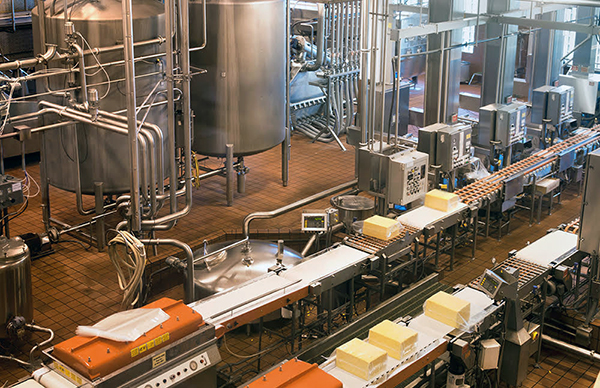
Food manufacturers have a significant responsibility to maintain quality and prevent foodborne illnesses. Eliminating unnecessary waste creation requires precision, compliance adherence and technology to assist the workforce. Some entities are experimenting with ways robotics can enhance conditions for better sanitation and employee well-being. Automated food manufacturing safety may yield numerous advantages and equal drawbacks, so how can stakeholders achieve balance?
The Highlights of Automated Food Manufacturing Safety
Automation technologies can include robots, artificial intelligence (AI), the Internet of Things (IoT) and more. Programming them to run on autopilot with data-driven decision-making could make food cleaner and remove staff from dangerous environments.
Enhanced Traceability for Faster Recalls
Food recalls plaster news headlines, minimizing food accessibility and spreading illness to citizens. Automated food manufacturing safety systems implement greater oversight to discourage these scenarios. AI, sensors and more collect information about every item that goes through processing.
Everything has a digital trail, and technology can catalog its critical metrics, including its grade and presence of harmful bacteria. It directly supports frameworks like the Global Food Safety Initiative, which encourages traceability. Manufacturers can identify problematic food sources and issue recalls in minutes, compared to lengthy manual intervention.
Reduced Human Error and Contamination
Humans have the potential to introduce more contaminants into the workplace than robots. Staff may compromise the product without knowing, whereas computer vision-empowered cameras and automated ultraviolet sanitation lights could process items without the possibility. Even if employees are trained in hygiene and sanitation, accidents occur.
Automation helps employees better adhere to Good Manufacturing Practices (GMP) and Hazard Analysis and Critical Control Points (HACCP) frameworks. Both guidelines stress the importance of preventing biological and chemical hazards, which automation machinery does not introduce as often as humans.
Continuous Monitoring of Critical Control Points
Lowering the risk of contamination is beneficial for multiple reasons, in addition to reinforcing the bottom line. Better food hygiene practices help organizations avoid costly legal repercussions like lawsuits and fines if they endanger the public. Automation bolsters companies by providing constant surveillance over food products, evaluating their quality before they ship to grocers.
Sensors and other tools can check critical parameters like temperature and humidity to ensure food safety in all parts of the process. Automation controls can change environmental conditions based on these ideal metrics, making sure food remains in the best environment for it to stay fresh and clean. This eliminates the need for workers to adjust thermometers constantly, as automation can trigger alerts and institute changes 24/7.
The Reality of Robot-First Workspaces
Several prominent concerns plague the discourse on automation, despite its potential to prevent foodborne illness and enhance staff workflows. The arguments have validity, though they diminish the advantages robots could deliver to food safety. Some include:
- Job displacement: Automation is more effective at replicating tedious, repetitive tasks like inspections and sorting. The U.S. estimates 100 million jobs will be affected by AI and automation.
- High initial investment: Even if safety is a priority, purchasing compliant, high-performing technology and software could exclude small- and medium-sized businesses from having better safety standards compared to megacorporations with more capital.
- Minimal adaptability: Workers can program robots, but they have operational limitations. Humans are more flexible and responsive to changing conditions, whereas reprogramming automation tools could be unnecessarily time-consuming.
While these realities exist, workers could reimagine their roles by learning how to maintain and work alongside robotic systems. Retraining could reinvigorate an employee’s loyalty to their employer while establishing a safety-focused culture. Additionally, it will empower them to work alongside automation because it highlights their strengths.
The Pathway to Balance
Stakeholders can adopt robotics and automation to supplement the workforce, but doing so requires phased implementation to encourage buy-in. Assuring staff that their jobs are not in jeopardy is essential for establishing a culture of productive human-robot collaboration.
Installing them as a complement to their efforts rather than a replacement is vital for inspiring the critical thinking and adaptability that are unique to the workforce. These traits must empower automation tools to work to their fullest potential. Then, it will lead workers to trust automated equipment, enhancing their workflows.
Technicians can delegate them to handle the majority of contamination detection and sorting, leaving teams to review their work and reprogram them as issues arise. The improved accuracy and detection skills — even in high-speed random-batch environments — enable them to upskill and increase digital literacy for more productive collaborations. Automation removes people from unsafe conditions while providing opportunities for more engaging tasks throughout their days.
The Recipe for Blending Human Talent With Automated Precision
Food manufacturers can leverage automation to enhance safety compliance and quality control, although pros and cons exist regarding the use of robots and employees. Striking a balance to promote productive human-robot interactivity is possible while reducing food waste and the chance of recalls and illness. Managers determine the success of these working relationships by deploying machines based on their strengths and depending on the workforce to amplify their skills.
Related Articles
-

Artificial intelligence (AI) and machine learning (ML) amplify these capabilities with real-time monitoring, enhanced traceability, and rapid issue detection throughout the whole supply chain. However, the transition to automated food safety systems presents its own set of unique challenges, such…
-

High pressure processing (HPP) is a nonthermal food preservation technology that extends shelf life while maintaining quality and safety. Automating the HPP process increases efficiency, reduces labor costs and injuries, and provides traceability and reliability. HPP automation is helping companies…
-

What technologies should food industry leaders prioritize when investing in food packaging automation? Here are three worthwhile options.
-
A series of ongoing challenges is making the case for automation in seafood processing a compelling one for companies struggling with high demand and an inconsistent labor supply.