FDA

FDA Awards $600,000 for FSMA Training Center

By Food Safety Tech Staff
1 Comment
FDA

Today FDA announced its strategy for training the food industry as part of the successful implementation of FSMA. This included awarding a $600,000 grant to the International Food Protection Training Institute (IFPTI) to establish a National Coordination Center. This center will serve an important function in the training process for the food industry.

“One size won’t fit all when it comes to training,” according to an FDA release. “The most important goal that the FDA expects of any training program is the outcome—that it advances knowledge among the food industry to meet FSMA requirements.” The agency indicated that there will be different options and delivery formats for the training, but wants all hands on deck—domestic and international stakeholders from government, industry and academia—to work with FDA on developing and delivering the training to food suppliers.

The major components of the FSMA Training Strategy include:

  • Crafting the FSMA alliance curricula
    • The alliances include the Produce Safety Alliance, the Food Safety Preventive Controls Alliance and the Sprout Safety Alliance
  • Alternate training options
  • Cooperative agreements, including a five-year agreement with the National Association of State Departments of Agriculture
  • Establishing the National Coordination and Regional Centers to support training delivery
  • Delivering the training
    • The three above alliances are developing a Train-the-Trainer program to provide training via an established process. A range of partners will be involved, including the Association of Food and Drug Officials, the Association of Public Health Laboratories, and the Association of American Feed Control Officials
  • A FSMA collaborative training forum co-chaired by FDA and USDA
Timothy Ahn, LRQA

Beyond the Fluff: Leadership Must Demonstrate Food Safety Culture Through Actions

By Maria Fontanazza
1 Comment
Timothy Ahn, LRQA

As the popular phrase goes, if you’re going to talk the talk, then you need to walk the walk. This expression really does ring true when discussing an effective food safety culture within an organization. Timothy Ahn, senior technical manager of food safety at LRQA sheds some light on the importance of management commitment as a foundation for success in implementing a food safety culture and how employee training fits into the picture.

Food Safety Tech: In your column on Food Safety Tech, “Tackling the ‘Why’ of Food Safety”, you touch on the point that food safety culture needs to start at the top. What are the issues in management today that prevents a food safety culture from flourishing within organizations?

Timothy Ahn: First, it’s important to define food safety culture. It can mean a lot of different things to people. The culture is the collective behavior from the organization around shared values and beliefs. From that perspective, it’s extremely important the leadership understands its beliefs and values. The collective behaviors of the leaders become really important, because we’re also talking about how the leadership sets management commitment and drives what’s important in the organization. The organization will follow whatever the leaders do and not necessarily what they say. That’s the issue—having the ability to get commitment from leadership that is demonstrated through their actions, which then transfers into rewards, objectives and consequences. What are the issues that are preventing the culture from embedding itself? Actions aren’t aligned with their words. You have a senior leadership group that will say one thing, but then their actions are different.

In addition, when cascading priorities are very different, food safety doesn’t get the right messages. It’s about growth, market share, profits—all of those financial measures are extremely important, because they have consequences and are also rewarded. Meanwhile, depending on the organization, the objectives around food safety culture may or may not be talked about, defined, or even rewarded. It’s really about making sure that the organization has cascading priorities.

FST: When taking a holistic approach to employee training, what are some of the challenges that companies can expect to encounter?

Ahn: I put food safety into three different buckets that build on top of each other.

  1. At the bottom is the foundation. It’s around good manufacturing practices and all the foundational activities that need to be in place for factory operations. How often you clean your equipment? What do you do around allergens? Can you trace your materials from one end to the other? Do you have a pest control program?
  2. Our food safety system: This includes things around HACCP: Do you have a HACCP plan in place? Do you understand what your hazards are? Have you defined your control measures?
  3. The last bucket is around the management system that drives food safety. Have you defined your objectives? Do you have a policy? Do you conduct a management review? Do you have an internal audit?

The issue with training is many operations only focus on the foundation. You need to have people who know how to clean equipment; you have to make sure that the pest control is done; you need to have good allergen management. Those are all pretty well done. Now you’re starting to get more traction in the second bucket, which is around HACCP, because with FSMA, HACCP is no longer an option; you need to be able to do it.

But the missing piece in many organizations is at the top—the management systems. This is important, because when you talk about culture, that’s where it gets embedded within an organization—through implementation of the management system.

If you look at this holistically, you need to train across all of those areas, not just in the foundation. You can differentiate yourself from organizations that have effective food safety management systems (not just food safety systems) because they’re training across all those buckets.

The other part of training is management systems. Who do you train? Besides targeting first line employees and operators, you also need to train senior managers because these managers, along with leadership, need to better define the objectives and policies. What does it mean to conduct an effective management review? What does it mean to do an internal audit? What’s a good corrective action process? The training often falls apart because organizations haven’t embedded that very well.

FST: Do you see differences between implementing these practices in small versus large organizations?

Ahn: There are differences, but it’s not necessarily a function of the size of the company. It’s more around how they’ve approached developing and organizing their management system and in particular, their food safety management system.

FST: In reality, how long does it take a typical company to create an effective food safety culture?

Ahn: There are two parts to that question.

My belief is that if you want to implement a food safety culture, you need to create a food safety management system, otherwise it is just all words and talk. It’s what you do, not what you say. The way to do that is to embed a food safety management system within your organization.

The two questions are: How do you get to initiate it? And, how long does it take to execute once you decide to initiate?

To address the first question: How do you initiate it?

There are a couple of ways that it can happen. There’s nothing like a crisis to get the fire under somebody’s feet, whether it’s a recall or an incident, it will draw attention to the fact that there’s a problem and something needs to happen. But, that’s reactive and detrimental.

The other way to initiate is that if you have enlightened leadership—an owner or group of owners who understand where they want to go, where they need to go, what needs to be avoided and understands the importance of the organization’s culture in getting to the right place, etc.

Secondly, once you start this process, how long does it take to get this type of system running?

Based on my experience in implementing food safety management systems like FSSC 22000, it takes anywhere from 18 months to 2 years to get it established, and then probably another 18 months or so to actually fully implement. So it’s not something that happens in a couple of months. It takes some time to really get it implemented and embedded, because these are foundational elements you  must put into place. There’s a lot of momentum involved, and it has to move throughout the organization.

The term food safety culture has gotten a lot of attention—it’s a buzzword. But what does it really mean and how do you make it come to life? That’s really where people need to start looking. You make it come to life through implementation of structured food safety management systems—ones that are verified, and independently verified. Put substance and real work around your food safety culture instead of using a lot of fluffy words to describe it.

Traceability in food manufacturing, Honeywell

Traceability Not a Trend. It’s a Reality.

By Maria Fontanazza
No Comments
Traceability in food manufacturing, Honeywell

Businesses throughout the food supply chain are using a variety of traceability tools to capture critical information during the path from the field to the consumer. Traceability has always been viewed as an important capability within the supply chain, but FSMA, coupled with retailer and consumer demand, is pushing it to the highest levels yet.

Technology solutions that provide continuous identification and verification include mobile computers, scanners, RFID and mobile printers. While growers, packers, wholesalers, distribution centers and retailers involved in the fresh produce, poultry, meat, and seafood segments are using these technologies, speculation continues about adequate adoption levels.

The larger food providers are embracing track and trace technologies, while smaller business have been much slower to adopt, according to Bruce Stubbs, director of industry marketing at Honeywell Sensing & Productivity Solutions. “It’s going to be difficult to convince the smaller growers to invest in the technology—a lot of them see it as a cost,” he says. “What’s helping is that the retailers are starting to push back and say they are going to require their suppliers to be compliant with [traceability] mandates and if not, they won’t do business with them.”

Out in the field, companies are leveraging scanning and printing technologies, including smart printing technology (essentially a PC with printing capability). The printer hosts data capture and traceability software, providing the tasks and traceability through the software to the scanning devices. It can capture and print the food traceability label, which contains the discreet information, at the point of harvest. At the transportation level, businesses are using mobile computers to scan and capture product information that tracks down to the details from what part of a field, or even which tree in an orchard, a product has been harvested. Traceability technologies are including sensors throughout the cold chain to monitor temperature and humidity as the product is transported from point A to B. All information moves forward into the production facility and the retailer’s distribution center. Once at the retail store level, grocers will be able to pinpoint, within potentially thousands of stores, the specific batches and lots, a key capability in the instance of product issues and recalls.

Traceability is a holistic process, and the potential for its continued growth within the food industry is high. “I see it becoming more prevalent as consumers demand it, and retailers and manufacturers must adapt. I also see them moving away from paper,” says Stubbs. “We’re close; it’s almost like there’s a trickle in the dam right now, but I really believe that over the next couple years, the dam will break and most [companies] will need to adopt [traceability solutions] or they won’t be able to effectively do business with a lot of the food retailers.”

Stubbs also anticipates an increased adoption of 2-D barcodes versus 1-D linear laser barcodes, as 2-D barcodes can contain far more information. “We are at the tip of those technologies—they exist. It’s just the integration of these systems and providing the information in a format at the supplier or food manufacturer level,” he says.

How is your company implementing traceability solutions? What challenges and benefits are occurring as a result?

Mobile FSQA apps

Are Mobile Apps a Game Changer for Food Safety Professionals?

By Maria Fontanazza
No Comments
Mobile FSQA apps

Many food safety and quality assurance (FSQA) professionals are constantly on the go in the workplace. They can be found on the floor of a manufacturing facility, off-site conducting supplier audits, or out in the field performing pre-harvest inspections, just to name a few locations during their busy day. “To benefit from food safety automation, these folks need more than the capability of logging into a system through a desktop,” says Levin. “They need a true mobile app that provides automation support out in the field,” says Barbara Levin, senior vice president of marketing and customer community at SafetyChain.

While other industries have been quick to adopt mobile platforms, the food safety industry has been much slower. Adoption is, however, gaining traction. In a recent conversation with Food Safety Tech, Levin talks about the value of FSQA mobile apps in today’s environment, where access to real-time, actionable data is crucial for the food industry.

Food Safety Tech: What common challenges faced by FSQA teams do mobile apps specifically address?

Barbara Levin: Mobile apps allow collection of FSQA at the point of origin, along with immediate access to the information for analysis, CAPA and reporting:

  1. Getting timely feedback on non-compliances for CAPA. When FSQA data is inspected at the end of the shift on paper, finding non-conformances often means rework. The instances in which this happens are too numerous to count. With mobile apps, you receive timely feedback. Information in the system is immediately analyzed to specs, so you’re catching non-compliances at the earliest point possible.
  2. Consistency in following your FSQA programs. This could be your USDA HACCP plan, FSMA HARPC plan, GFSI program, customer quality attributes and other components of your FSQA programs. Program components change all the time (i.e., Specifications, processes, rules in HACCP, GFSI code, forms, workflow, etc). Are FSQA managers confident that everyone is following the most up-to-date program? Is everyone following the workflow and doing everything in the right order? Are they completing tasks accurately? Using the right forms? Unfortunately companies find out that steps are missed or outdated forms were used during an audit; or when missed steps result in expensive rework or in the worst case, a customer rejection, withdrawal or a recall.

    Mobile apps will always have the most up-to-date forms, processes, specs and more. They act as a coach, leading the FSQA team member through the proper steps. When you enter incorrect or incomplete information on paper, it may not be detected until the end of the day or shift. A mobile app will issue an alert if incorrect information is entered; and it won’t let you submit a form if all fields aren’t complete. Because all of the updates are made in the system and pushed out to the app, if the specification changes while an FSQA team member is on the plant floor, when he or she logs in, the latest spec will always be there. You’re ensured that only the up-to-date program is being followed and that only the most up-to-date forms are being used.

  3. A lack of information for continuous improvement trending. If you have multiple facilities and products (resulting in mountains of FSQA paper), it’s a huge, manual task to make all of the data useful and relevant. With mobile apps, all FSQA data is entered “once and done,” making it accessible and actionable for immediate FSQA result tracking, daily KPI reporting and continuous improvement.
  4. Audit readiness. Mobile apps take audit readiness to a different level. With FSMA and GFSI, the saying is, if it’s not documented, you didn’t do it. By collecting FSQA data at the point of origin, all data is time and data stamped and uploaded to your permanent FSQA record. There’s no redundant data entry, mistakes are avoided, and there’s greater record efficacy that helps companies be audit ready, on demand.
Mobile FSQA apps
Mobile forms capture safety and quality data at the point of origin; data is actionable and then uploaded into a central repository for reporting and audit readiness. Image courtesy of SafetyChain Software. (Click to enlarge)

FST: What is the biggest benefit that FSQA mobile apps offer? 

Levin: The first benefit is real-time feedback. If you think about how things were done in the past, using an example of a pre-harvest inspection, you’re out there with a clipboard, making observations and recording non-compliances. Then you have to go back and enter the information into a spreadsheet, or turn it into a PDF, and send it to the food safety manager, who may or may not be sitting at his or her desk. Waiting to get a response equals time lost. And in the food industry, time equals money.

When you’re entering information into a mobile app, it analyzes that information in real-time and according to specifications. When there are non-compliances, alerts are pushed to the FSQA manager – wherever [he or she is located]. The manager can then generate a CAPA, which can then be completed, documented on the mobile device and electronically signed off by the manager. The process is expedited, and expensive rework is avoided.  

The second benefit involves data efficiencies. When data is collected on a mobile device, it’s entered only once and is then immediately available for multiple uses, such as a customer’s certificate of analysis, attachment to GFSI code for audit, or to be produced upon demand for a regulatory inspector. With a manual system, there’s a tremendous amount of redundant data entry. We hear this all the time from food safety folks— that they feel like they’re managing paper instead of food safety programs. When data is entered into a mobile app, it’s accessible immediately to FSQA, operations, vendor purchasing, management – any stakeholder who has a need.

“The Power of FSQA Automation Via Mobile Applications” Download the whitepaperFST: What approach should be taken to encourage the investment in and implementation of an on-the-go FSQA mobile platform?

Levin: I would love to think that in an ideal world, the creation of operational efficiencies that enable a higher level of confidence that you are sending out safer food is enough. Food companies are businesses, and they have obligations to consumers, which they take very seriously. But they also have obligations to their shareholders. When we talk to folks who really want this, it’s very easy to create a business case to senior management based on ROI. When you can close the gap by hours and days in the food industry, that time equals money. Avoiding rework also saves money.  And there’s ROI in faster sales throughput and increased shelf life by reducing hold and release times. We’ve heard from our customers that the solutions have paid for themselves and started to create ROI within three to six months.

Laura Nelson, Alchemy, Food Safety Tech

From the Top Down, Gaining Management Support

By Maria Fontanazza
No Comments
Laura Nelson, Alchemy, Food Safety Tech

The importance of accountability at the employee level should not be underestimated. Food safety professionals recognize this, and gaining support from management is key. In this video interview from the 2015 IAFP conference, Laura Nelson, vice president of business development at Alchemy, shares her thoughts on how companies should not only train their employees but also track the effectiveness of that training.


This year’s Food Safety Consortium Conference (November 17-20, 2015 in Schaumburg, IL) features sessions on employee engagement and involvement in Food Safety Culture. Register now.

Steward Parnell, PCA, salmonella outbreak

PCA Executives Sentenced: Stewart Parnell Gets Virtually Life in Prison

By Maria Fontanazza
1 Comment
Steward Parnell, PCA, salmonella outbreak

In what is being called a groundbreaking decision, a federal judge sentenced three executives from the Peanut Corporation of America (PCA) to a combined 53 years in jail for their role in the 2008-2009 Salmonella outbreak. Stewart Parnell, former CEO of the no-longer-operating PCA, has been sentenced to 28 years; his brother, Michael Parnell, was handed 20 years; and Mary Wilkerson, quality assurance manager of the plant, was given 5 years. Convicted last year on 71 counts, Stewart Parnell was facing up to 803 years in prison, but at the age of 61, 28 years is essentially a life sentence.

The culprit of the fatal 2008 Salmonella outbreak was tainted peanut butter paste manufactured by PCA. Nine Americans died, and more than 700 people across 47 states were sickened. The outbreak led to the recall of more than 2,100 products. It was one of the largest food recalls in U.S. history, and the case has garnered national attention.

During yesterday’s sentencing, victims and their families asked U.S. District Court Judge W. Louis Sands to deliver a life sentence to Stewart Parnell; his daughter, Grey Adams, addressed the room, “My dad’s heart is genuine…” and said that her father and their family are “profoundly sorry” for the deadly outbreak. As Parnell addressed the victims in the Georgia courtroom, he made mention of the problems at the plant but did not comment on the emails and company records that indicate he had knowingly shipped tainted product or tampered with any lab records.

Earlier this year STOP Foodborne Illness’ Darin Detwiler commented on the significance of the sentencing in a video interview with Food Safety Tech, stating, “His actions resulted in technically more deaths than that of Charles Manson.”

Moving forward, the bar for accountability at the executive level has been set much higher. Victims, their families, and food safety advocates are applauding the sentencing. What do you think about the decision and its impact on the industry?

FDA

FDA Releases Voluntary Retail Program Standards

By Food Safety Tech Staff
No Comments
FDA

After receiving input from federal, state, and local regulatory officials, along with industry and trade associations, academia, and consumers, FDA issued its Voluntary National Retail Food Regulatory Program Standards last week. The standards address “what constitutes a highly effective and responsive retail food regulatory program,” according to the document.

The Retail Program Standards include:

  • Promoting the adoption of science-based guidelines from the FDA Food Code
  • Promoting improvement of training programs to ensure local, state, tribal, and territorial staff have the necessary skills, knowledge and abilities
  • Implementing risk-based inspection programs
  • Developing outbreak and food defense surveillance plans to enable systematic detection and response to foodborne illness or food contamination

The 2015 edition contains new worksheets that are intended to assist regulatory programs in looking at how their programs line up with the 2013 Food Code. This includes helping them assess the consistency and effectiveness of their enforcement activities, and a verification tool to help independent auditors with these self-assessments. Although jurisdictions can use the worksheets and other materials without enrolling in the Retail Program Standards, FDA encourages them to do so, as enrollment allows them to apply for FDA funding. The agency also lists the jurisdictions enrolled in the program here.

Robert Califf, FDA

Robert Califf Nominated as Next FDA Commissioner By President Obama

By Food Safety Tech Staff
No Comments
Robert Califf, FDA

Cardiologist and former medical researcher Robert Califf, M.D. has been nominated as the next commissioner of FDA by President Obama. Coming from Duke University, Califf joined FDA earlier this year as the deputy commissioner for medical products and tobacco. He would replace Stephen Ostroff, M.D., FDA’s acting commissioner since Margaret Hamburg’s departure in March. The Senate must confirm the nomination, but opposition is not anticipated.

Califf clearly has a solid background in the medical field. His nomination comes at a time when FDA is undertaking significant issues right now, as it continues to manage the Affordable Care Act, the recently passed 21st Century Cures Act, concerns in tobacco regulation, and prepares for the implementation of FSMA.  

3M Molecular detection assay for Listeria

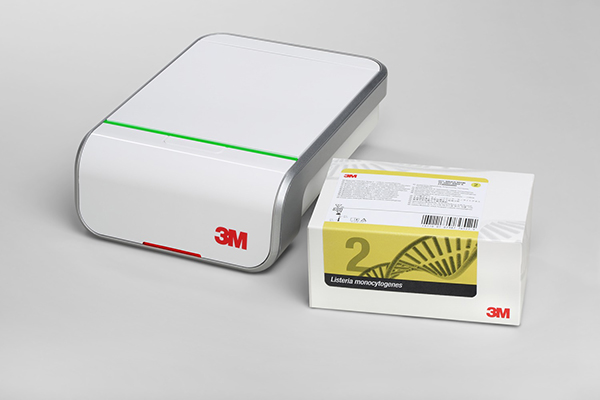
Molecular Detection Assay for Listeria Promises Faster Results

By Food Safety Tech Staff
1 Comment
3M Molecular detection assay for Listeria

A molecular detection assay for Listeria monocytogenes has been approved by the AOAC Performance Test Methods

3M Molecular detection assay for Listeria
The new test was developed in response to customer engagement and a desire to work with food processors to protect the world’s food supply, says 3M Food Safety.

(PTM) program. Developed by 3M Food Safety, the assay is based on isothermal DNA amplification and bioluminescence detection technologies. With a streamlined workflow that is 30% faster than the first generation assay, the new test is designed to provide expedited, simple and more accurate real-time pathogen detection.

Obtaining AOAC PTM status involved a thorough independent lab examination of the test method’s ability to accurately detect Listeria monocytogenes within a variety of foods. During the validation study, analyzed food samples included beef hot dogs, queso fresco cheese, vanilla ice cream, 4 % milk fat cottage cheese, 3% chocolate whole milk, romaine lettuce, bagged raw spinach, cold smoked salmon, deli turkey, raw chicken, cantaloupe, and various environmental surfaces (plastic, stainless steel, concrete). Achieving AOAC PTM approval certifies that the test kit is equivalent or better than standard reference methods, according to 3M Food Safety.

FSMA, Food Safety Tech, FDA

FSMA Rules for Preventive Controls Finalized

By Maria Fontanazza
No Comments
FSMA, Food Safety Tech, FDA

More than a week after being submitted to the Federal Register, the rules for preventive controls for human food and animal feed have been finalized.

The Current Good Manufacturing Practice Hazard Analysis and Risk Based Preventive Controls for Human Food final rule includes the following key requirements:

  • Covered facilities must establish and implement a food safety system with a written food safety plan that includes hazard analysis, preventive controls, and the oversight and management of preventive controls (this encompasses monitoring, corrective actions and verification).
  • The “farm” definition has been clarified to include two types of farm operations, primary production farm and secondary activities farm. Such farms that conduct produce activities will also have to comply with the Produce Safety Rule (to be finalized at the end of October).
  • A more flexible supply chain program, with separate compliance dates.
  • Update and clarification to CGMPs.

This year’s Food Safety Consortium conference will feature first-hand perspectives from FDA and USDA on FSMA implementation and enforcement. REGISTER NOWCompliance dates range between one and three years depending on the size and type of business. Several guidance documents will be created by FDA in an effort to further help companies with compliance, including on hazard analysis and preventive controls, environmental monitoring, food allergen controls, and the validation of process controls.

The Federal Register will publish the 930-page document on September 17. In the meantime, the pre-publication version can be viewed here.

The Current Good Manufacturing Practice and Hazard Analysis and Risk-Based Preventive Controls for Food for Animals final rule includes the below key requirements:

  • CGMPs established for the production of animal food, taking into account the diverse types of animal food facilities.
  • Covered facilities must establish and implement a food safety system with a written food safety plan that includes hazard analysis, preventive controls, the oversight and management of preventive controls (this encompasses monitoring, corrective actions and verification), and a recall plan.
  • A more flexible supply chain program, with separate compliance dates.
  • The “farm” definition has been clarified to include two types of farm operations, primary production farm and secondary activities farm.
  • Feed mills associated with farms (vertically integrated operations) are not covered.

As with the preventive controls for human food, FDA will be creating guidance documents that address CGMP requirements, hazard analysis and preventive controls, human food by-products for use as animal food, and a small-entity compliance guide.

The Federal Register will also publish this 666-page document on September 17. The pre-publication version can be viewed here.

At this year’s Food Safety Consortium Conference, the industry will have the opportunity to hear directly from FDA and USDA on what companies need to know to be FSMA compliant and how the agency will be enforcing the regulation. Michael Taylor, JD, deputy commissioner for foods and veterinary medicine at FDA, will delivery the opening plenary presentation, which will be followed by an “Ask the FDA” Q&A town hall meeting.