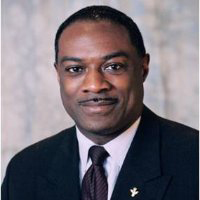
In 2009, FDA officially recognized food fraud as an issue. Driving forces behind the problem include seeking an opportunity to make an illicit profit, a lack of premium raw materials, and a lack of supplier awareness. At the 2015 Food Labs Conference, fruit juice and authenticity expert David Hammond, Ph.D. of Eurofins Scientific offered the basics of protecting against the adulteration of fruit juices.
Unpublished documents available on Federal Register; FDA to weigh in at next week’s Food Safety Consortium.
FDA has released its final FSMA rules on produce safety, foreign supplier verification programs (FSVP) and accredited third-party certification. The documents were filed today and are scheduled to be published on the Federal Register the day after Thanksgiving, Friday, November 27.
An agency alert called the finalization of the rules “groundbreaking”, as FDA takes “major steps to prevent foodborne illness”.
The final FSMA rules (unpublished documents) are available for download:
Having a strong prerequisite program is a key part of maintaining compliance with FSMA and food safety management systems standards. In a recent discussion with Food Safety Tech, Debby Newslow, president of DL Newslow & Associates gave a preview of some of the expertise that she will be sharing during her session at next week’s Food Safety Consortium, “Food Safety/HACCP Prerequisite Programs” (session takes place Thursday, November 19).
Food Safety Tech: What are some of the challenges that companies face in establishing prerequisite programs for HACCP?
Debby Newslow: Understanding the significance of the prerequisite program—a lot of times, employees are [going through the motions] of things like wearing hairnets or not wearing jewelry—but [they need to] understand why it’s important. There’s a weakness in the education of employees. We need to redefine the word “training”, because training should mean education, too and understanding the importance of it. Companies take it for granted—they have defined procedures that they may or may not follow. And the other challenge is commitment and an understanding from management as to why it’s important.
On Wednesday, November 18, Debby Newslow will participate in the Ask the Experts session, “Food Safety Training Challenges”. LEARN MOREFST: What are best practices that companies can implement in this area?
Newslow: They need a program established, along with commitment to and support from a food safety team that has a responsibility to the team to evaluate the effectiveness. They also need support from top management. Every group and department needs to understand their requirements and why they’re important. They need to have the tools and the knowledge to understand what’s needed. Through the food safety team or internal audit team they can have the independence to monitor and look at its effectiveness. A lot of companies hold strong that the auditors need to find everything that’s wrong, and that’s an old school way of thinking.
Educate everyone and encourage them to take ownership for compliance, and use the internal programs and teams to evaluate the effectiveness.
On Thursday, November 19, Debby Newslow will present, Food Safety Management Systems—Understanding the Three Legged Stool” LEARN MOREFST: What do you hope attendees gain from your session on food safety & HACCP PRPs at the Food Safety Consortium?
Newslow: My session is going to be focused on prerequisite programs and how they fit with FSMA and the preventive controls (they really go side-by-side)
I want folks not to be so nervous about FSMA. If they have a strong program now for food safety and HACCP, and have the prerequisite programs identified and managed, they’ll be 95% there for FSMA [compliance]. Companies really need to focus on their internal programs and have a food safety program that is compliant with FSMA, and expand and confirm the effectiveness of these internal programs. Take pest control, for example. Some companies will hire the outside company and will monitor and know the effectiveness on a regular basis. Other companies will hire an outside firm and let them do whatever they want, and not have a clue what’s going on. Then there are smaller companies that have someone come in, spray, and send them a bill, and they won’t even know what the [outside] company is using as an insecticide. So you have different levels, and that’s why we have to understand each program and what is required for effectiveness and compliance.
The role of the prerequisite program and preventive controls is that if you look at recalls in today’s world, 90% of recalls are caused from ineffective or nonexistent prerequisite programs [Newslow estimate]. Very seldom do we see a recall because a CCP fails. We get so hung up on other things and forget why do we take off our jewelry, for example. The odds of something going wrong are thin but when you look at it from the big picture, it can happen and it does happen. I’ll have some significant recent examples in my session.
SafetyChain Software recently announced the successful wrap-up of its online series, “FSQA Enabling Technologies – the Food Safety & Quality Assurance Game Changer.” Kicked off in January of 2015 and ending this past October, the series attracted more than 2,000 participants.
Known for offering a wide variety of complimentary online FSQA thought leadership events to the food industry – including its FSMA Fridays and GFSI in the Age of FSMA series – SafetyChain introduced the Enabling Technologies series to begin an important dialogue on the role of emerging technologies in managing key challenges faced by today’s food and beverage companies.
The complimentary series, which featured Leadership Forums, Tech Talks and eBriefs – many featuring recognized industry thought leaders as well as SafetyChain experts – is now available on-demand.
Series topics included:
Leveraging Technology for Best-in-Class Food Safety & Quality Operations
Tackling FSMA Compliance
Understanding and Managing Cost of Quality
Unleashing the Power of the Cloud on Food Safety & Quality
Conquering HACCP, HARPC and Food Safety Program Management
Tackling Food Safety Audits
The Critical Role of Technology on Today’s Food Safety and Quality Operations
FSQA on the Go – the Power of Food Safety & Quality Automation Mobile Applications
Dr. David Acheson, president of The Acheson Group and former Chief Medical Officer for USDA and Associate Commissioner for Foods at FDA – who kicked off the series with a leadership forum on Food Safety Risk Management and Supply Chain Controls, which also featured Nancy Wilson, Director of Quality Assurance, Risk and Safety for Wawa – commented, “With today’s global, complex food supply chain – and increasing regulatory requirements such as FDA’s FSMA – it is becoming increasingly difficult to manage risk while meeting operational KPIs using manual FSQA management systems.” Acheson continued, “There’s an important role for enabling technologies to increase operational efficiencies while sending safer food into commerce, and this was an important series to bring the food safety community into the discussion.”
Added Jill Bender, Vice President of Marketing Communications for SafetyChain, “SafetyChain is a recognized leader in offering online forums that provide insights, and facilitate discussions, on how the industry addresses challenges in sending safe, quality food into commerce – with more than 20,000 registrants for our events. Deploying enabling automation technologies has become a vital strategy for improving FSQA, creating ROI and protecting brand from risk – and we wanted to promote meaningful dialogue on the impact of technology on key food safety and quality issues. We’re delighted that more than 2,000 safety, quality and operations professionals joined the conversation.”
Unfortunately, quite often we are reminded of the vulnerabilities throughout the food supply chain. The latest E. coli outbreak linked to Chipotle restaurants in Oregon and Washington once again has consumers and the food safety industry on edge about traceability and a company’s ability to quickly identify the source of a serious outbreak. According to the CDC’s most recent update, laboratory testing is ongoing to find the DNA fingerprint of the bacteria. Concerning as this may be, no deaths have been reported thus far, but 42 people have been reported ill and 14 have been hospitalized in Washington and Oregon. In the most recent statement released on Chipotle’s website, the company said it is “aggressively” taking steps to address the problem, including by conducting deep cleaning and sanitization of its restaurants as well as environmental testing in its restaurants, and replacing all food items in the establishments that it closed “out of an abundance of caution”.
What if this were a situation of intentional contamination? Would Chipotle or any other company in this type of scenario really be prepared? These questions were posed by Rod Wheeler, CEO of The Global Food Defense Institute during a recent conversation with Food Safety Tech about food defense, and food tampering and intentional adulteration. Wheeler and Bruce Lesniak, president of Lesniak & Associates, shared their views on the threats that the food industry is facing and why companies need to have a strong plan in place to prepare for an attack on the food supply.
During next week’s Food Safety Consortium conference, Rod Wheeler will moderate the Ask the Experts session, “Engaging Food Tampering Discussion Surrounding Food Defense” on Wednesday, November 18. LEARN MOREFood Safety Tech:What challenges do you see companies facing in the area of food tampering and adulteration?
Rod Wheeler: Our food supply is wide open. It accounts for 13% of the overall U.S. GDP. One thing we know about terrorists is that they want to affect our financial markets. What’s the best way to do that? You attack the 13% GDP – and what infrastructure is that? It’s our wireless systems, airline systems, transportation systems, medical supply, or our food and agricultural supply. Those are the top areas in which we need to focus, and we have to make sure the food & agriculture supply remains safe and secure in the United States.
On 9/11 the world changed, and the challenge for us becomes, within all of our 18 infrastructures, but how have we changed? Do we continue to do business the same way we always have, even prior to 9/11? Over the past few years, we’ve seen a significant increase in terroristic activity around the world—from France to Syria to Yemen to Pakistan. Here in the United States, we have to be mindful of what is happening.
Rod Wheeler, CEO of The Global Food Defense Institute
We’ve always had food safety programs: HACCP, HARPC, GFSI, SQF, etc.—those are good for unintentional contamination. But what happens if someone wants to intentionally place a deadly contaminant into a product?
In this country, on a daily basis we see contaminations occurring. We were recently notified of a massive outbreak of E. coli that has occurred throughout the Chipotle system: 47 Chipotle stores have been closed. What does that mean? Is that just a food safety issue? What if that E. coli could have been intentionally grown in a test tube and placed into the food supply? Going forward, we have a duty and an obligation to look at these things, not just at face value but think about whether they are intentional events.
FST: Where are the biggest holes within food defense plans?
Wheeler: With more than 15 years of visiting food processing facilities, agricultural farms, dairy farms, and dairy processing facilities, the biggest concern that resonates with me is the fact that the culture of security is not there. The culture of security is simply security awareness—not planning. People in food plants are being taught to be mindful not vigilant. The largest of food companies have well thought out and active safety and defense plans, and their employees are educated, trained and empowered. We find that this falls off sharply with the mid-sized and small manufacturers and suppliers. All food providers must have a comprehensive and strategic security plan that is active and measureable.
For example, let’s say a contractor is walking though a food plant. You have worked in that plant for five years but have never seen this person before. Would you question that person about their credentials? Are people thinking about the things they can personally do to reduce or mitigate the risk… are they empowered?
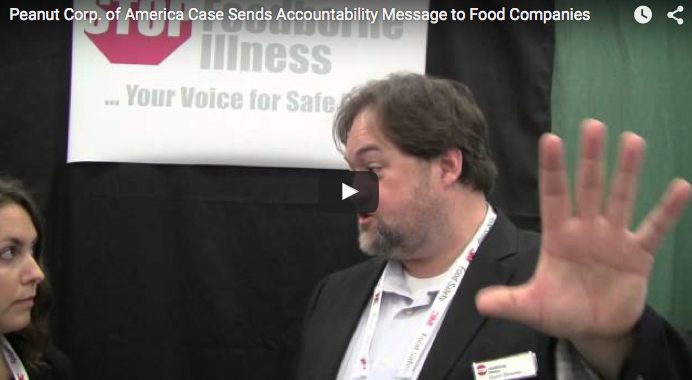
“When Someone Dies, It’s Not Business as Usual”: Darin Detwiler of STOP Foodborne Illness discusses the impact of the PCA sentencing on the food industry. Watch the video
So, the question is “what do you do when/if”: This is one of the topics we will be discussing at the [Food Safety Consortium] conference. It’s interesting that when we present this scenario to the management of a food company, many answer back with a blank stare. We ask, do you shut down your facility? Do you notify your customers? Do you notify the national media? This question goes to the root of the company’s security culture and the strength of its strategic planning. Until we develop the necessary plans, processes and protocols to respond proactively, we will continue to remain vulnerable.
FST: Do you think many food companies assume something catastrophic won’t happen to them?
Wheeler: I always ask why it is that we don’t anticipate these things in advance. People are complacent. “It’s not going to have happen here,” they say. “What terrorist would come to our small town and do this? We’re just a small mom and pop [business].”
Recently, I received a call from a 17-employee company in Tennessee. This particular company processes honey for 100 large box retail stores. I received a call from the CEO who said, “My client wants us to have one of those vulnerability things.” He was referencing the vulnerability assessment. He said, “I don’t know why they’d want us to have one of those. We’re a small company down here in Tennessee, why does my client think some terrorist would come here?” The fact is, attackers will find the weakest link to attack: The small honey company is not the target; they are the vessel by which the attackers get to the primary target, and in this case, the big box retailer. The big box retailer/supplier is the target and the simplest, most effective way to get to them is through the hundreds of small, low to no protection suppliers.
These are the issues we need to enlighten and educate companies about; we need to get them thinking differently, because this way of thinking is completely different. If you ask someone who’s been in this industry for years, they’ll say, we never had to worry about locking our doors, or use biometrics to gain access to certain areas. We never had to think about these things in the Food & Ag supply before.
During our front line training course, we place a significant amount of focus on the food plant blending areas and why it is the number one threat area for intentional/unintentional contamination of our food supply in the United States. The blending area is exposed to a number of vulnerabilities and once attacked, the tainted ingredients are spread among numerous products that once distributed, are not necessarily quickly traced once they are blended into the final product.
Bruce Lesniak: The consequences of such an emergency are multifaceted; they affect the consumer and their product confidence, the manufacturer through recall and the retailer through recall, brand damage and loss of consumer loyalty. Often, this ripple effect begins with the small supplier and works its way upstream to affect the entire process.
We are seeing this scenario unfold in real time with Chipotle—this is huge in the food industry. FDA has not been able to determine exactly where that genetic fingerprint has originated resulting in location closures, shaken consumer confidence and brand damage. –Rod Wheeler
FST: What will it take the industry to wake up to what could become a serious reality?
Wheeler: Unfortunately it’s probably going to take a major incident for people to wake up and smell the coffee. With that said, we firmly believe that it is critical to awaken the sleeping giants before something happens. We must increase the awareness and provide education to heighten the reality of what can potentially happen and promote proactive engagement of risk mitigation.
FST: In the context of FSMA, are companies prepared for the compliance stage?
Wheeler: Over the years, I’ve seen a number of companies begin to ramp up security at their facilities. But a number of them are doing it because they realize they need to comply with the food defense elements of FSMA; the larger companies are driving compliance and are requiring that their suppliers comply. But I think convincing companies about “Why” this is important, is the challenge. Often times companies will say, “we’re doing this training”, or “we’re doing this vulnerability assessment because it’s a requirement of FSMA.”
We feel that if being compliant is your “Why “reason, then you are spending time and money for the entirely wrong reason. You don’t do vulnerability assessment or training in food defense because you want to comply with the law. You do it because you want to protect your company and the consumer from the reality of what can happen and proactively work to avoid a threat.
Lesniak: We see the adoption trend take hold as it has traditionally, in three phases. First are the early adopters—they understand the importance of compliance for the right reasons and the need for food defense, Second are those who feel the urgency to comply due to a compelling issues (an incident or have been instructed to do so by larger suppliers in order to retain contracts), and third are those who will come kicking and screaming.
Wheeler: A lot of the requirements of FSMA were generated as a result of the PCA event in 2009. The prosecution and subsequent conviction of the Parnell brothers isn’t the last prosecution we’re going to see for someone violating a food safety protocol. This is the first, and it’s a wake up call.
Being recall ready goes beyond checking off the boxes for meeting traceability requirements, qualification standards, or meeting auditing requirements for certifications. “It’s really a discussion that needs to happen from a business continuity standpoint within an organization so that should there be an issue, the team has actually talked through different strategies and ways of technically executing a recall within the organization,” says Ryan Gooley, recall consultant at Stericycle ExpertSolutions. During an interactive workshop at next week’s Food Safety Consortium conference, Gooley will lead attendees through recall scenarios and help them create a recall plan to address global needs, communications strategies, resource allocation, and business continuity requirements. Gooley recently sat down with Food Safety Tech to discuss the importance of mock recalls within the food industry.
Food Safety Tech: What are the most common mistakes food companies make in preparing (or not preparing) for a recall?
Ryan Gooley: One of the mistakes companies make is not having the discussion internally about a recall and whether they are ready and able to respond to and support a recall. Although it’s becoming less of an issue, people still don’t want to talk about recalls—they’re afraid if they talk about it, it will happen to them.
They also take their industry partners, whether supply chain partners or existing vendors, for granted.
Ryan Gooley is leading a session, The Multiplier Effect: How One Ingredient Can Lead to Multiple Recalls, at the 2016 Food Safety Consortium conference on Thursday, December 8 | Learn More In addition, companies miss the amount of effort and resources it takes to properly support a recall once a communication goes out. This specifically relates to class I or class II recalls that go down to the consumer level and involve press releases and media exposure.
In any industry, your resources are geared toward producing product and getting it into the market; it’s not the reverse of managing take-backs and returns, and communicating to customers. A lot of it comes down to resource allocation.
FST: What are the most important elements of a recall plan in the food industry?
Gooley: Traceability is huge. Most companies have a pretty good understanding of traceability as it relates to where they receive ingredients, where the ingredients go within their processes, and ultimately where they are distributed. Traceability is important, because you can’t initiate a recall if you cannot identify where the suspect product went.
The other part of the recall plan is testing the plan. Going through your recall plan and testing it pulls together the different departments that are responsible for supporting the recall exercise and effort within the company. Having conversations about who is responsible for what, the information [that should be] pulled, and who needs that information is really important for building the team. [It ensures that] should a company need to initiate a recall, the team members who are engaged and responsible have actually talked through the process and practiced. With more practice comes more efficiency and less chance for error or oversights.
Another important element of a recall plan is understanding your communication plan and communication crisis management plan. A lot of people talk about recalls as just identifying the product and notifying downstream what to stop selling, etc., but a lot of what goes into the recall plan is business strategy—how are you going to manage not only retailer and customer calls, but consumer calls and media calls? Who is responsible for communicating what, when and where? Do you notify just your impacted customer or do you notify your non-impacted customers? What type of communication and messaging do you have? When companies have not done a mock recall exercise, oftentimes they have not had these conversations, and they really struggle on the communications piece, especially because it needs to be drafted, approved, and communicated in a very short period of time.
Evaluation of Q Exactive LC-MS for Pesticide Residues in Fruits and Vegetables – Plenary Lecture: Abstract: The Thermo Scientific™ Q Exactive™ LC-MS has been evaluated for detection, identification and quantitation of pesticide residues included in the European Union Monitoring Program. Pesticides were analyzed in four matrices representing wide range of difficulty (tomato, pepper, orange and green tea). Read more and watch the lecture here.
Plagued by false or inaccurate results during pesticide analysis? To get to the bottom of the issue, it’s important to find any weaknesses in your pesticide residue workflow. In a recent blog on Analyte Guru, Richard Fussell of Thermo Scientific discusses areas in which pesticide testing labs can identify the weak links, including:
Today FDA announced that it submitted the final FSMA rules for produce safety, foreign supplier verification and third-party accreditation rules. As we await final publication by the Federal Register, here’s a look back at some of Food Safety Tech’s recent coverage related to FSMA issues:
Once a company has selected a GFSI scheme, does it need to pursue an additional scheme? The answer may depend on the client’s needs, according to Claudio Bauza. During the 2015 Food Labs Conference, Bauza tells Rick Biros, publisher of Food Safety Tech whether or not there is an advantage to selecting an additional scheme.
This website uses cookies so that we can provide you with the best user experience possible. Cookie information is stored in your browser and performs functions such as recognising you when you return to our website and helping our team to understand which sections of the website you find most interesting and useful.
Strictly Necessary Cookies
Strictly Necessary Cookies should be enabled at all times so that we can save your preferences for these cookie settings.
We use tracking pixels that set your arrival time at our website, this is used as part of our anti-spam and security measures. Disabling this tracking pixel would disable some of our security measures, and is therefore considered necessary for the safe operation of the website. This tracking pixel is cleared from your system when you delete files in your history.
We also use cookies to store your preferences regarding the setting of 3rd Party Cookies.
If you visit and/or use the FST Training Calendar, cookies are used to store your search terms, and keep track of which records you have seen already. Without these cookies, the Training Calendar would not work.
If you disable this cookie, we will not be able to save your preferences. This means that every time you visit this website you will need to enable or disable cookies again.
Cookie Policy
A browser cookie is a small piece of data that is stored on your device to help websites and mobile apps remember things about you. Other technologies, including Web storage and identifiers associated with your device, may be used for similar purposes. In this policy, we say “cookies” to discuss all of these technologies.
Our Privacy Policy explains how we collect and use information from and about you when you use This website and certain other Innovative Publishing Co LLC services. This policy explains more about how we use cookies and your related choices.
How We Use Cookies
Data generated from cookies and other behavioral tracking technology is not made available to any outside parties, and is only used in the aggregate to make editorial decisions for the websites. Most browsers are initially set up to accept cookies, but you can reset your browser to refuse all cookies or to indicate when a cookie is being sent by visiting this Cookies Policy page. If your cookies are disabled in the browser, neither the tracking cookie nor the preference cookie is set, and you are in effect opted-out.
In other cases, our advertisers request to use third-party tracking to verify our ad delivery, or to remarket their products and/or services to you on other websites. You may opt-out of these tracking pixels by adjusting the Do Not Track settings in your browser, or by visiting the Network Advertising Initiative Opt Out page.
You have control over whether, how, and when cookies and other tracking technologies are installed on your devices. Although each browser is different, most browsers enable their users to access and edit their cookie preferences in their browser settings. The rejection or disabling of some cookies may impact certain features of the site or to cause some of the website’s services not to function properly.
Individuals may opt-out of 3rd Party Cookies used on IPC websites by adjusting your cookie preferences through this Cookie Preferences tool, or by setting web browser settings to refuse cookies and similar tracking mechanisms. Please note that web browsers operate using different identifiers. As such, you must adjust your settings in each web browser and for each computer or device on which you would like to opt-out on. Further, if you simply delete your cookies, you will need to remove cookies from your device after every visit to the websites. You may download a browser plugin that will help you maintain your opt-out choices by visiting www.aboutads.info/pmc. You may block cookies entirely by disabling cookie use in your browser or by setting your browser to ask for your permission before setting a cookie. Blocking cookies entirely may cause some websites to work incorrectly or less effectively.
The use of online tracking mechanisms by third parties is subject to those third parties’ own privacy policies, and not this Policy. If you prefer to prevent third parties from setting and accessing cookies on your computer, you may set your browser to block all cookies. Additionally, you may remove yourself from the targeted advertising of companies within the Network Advertising Initiative by opting out here, or of companies participating in the Digital Advertising Alliance program by opting out here.