The idea of controlling pests dates as far back as 2500 B.C. From using soaps to copper sulfate to DDT, industry has evolved in how it controls pests in agricultural crops. In a video shot at Food Safety Tech’s 2015 Food Labs conference earlier this year, Angela Carlson of SGS discusses the regulations involving maximum residue limits (MRLs) as well as how MRLs are set at a global level.
Many small companies are working with limited resources and as a result, employees wear a variety of different hats. As they look to begin the process of selecting a GFSI scheme, the process can be daunting. Where should they start? Which scheme makes the most sense? In an interview with Rick Biros, publisher of Food Safety Tech, Claudio Bauza discusses where small food companies can begin their journey.
At this year’s Food Safety Consortiumconference, don’t miss the “Ask the Experts–You Are GFSI Compliant. Now What?” The session takes place Wednesday, November 18.
Full traceability throughout the entire seafood supply chain is recommended following a study released yesterday by Oceana involving the mislabeling of salmon. The organization found that 43% of samples taken from restaurants and grocery stores were mislabeled, with DNA testing uncovering that 69% of mislabeling involved farmed Atlantic salmon that was labeled and sold as wild-caught salmon. According to Oceana, the report is the largest salmon mislabeling study in the United States yet.
“The federal government should provide consumers with assurances that the seafood they purchase is safe, legally caught and honestly labeled,” said Beth Lowell, senior campaign director at Oceana in a press release. “Traceability needs to be required for all seafood to ensure important information about which species it is, whether it was farmed or wild caught, and how and where it was caught follows all seafood from boat (or farm) to plate.”
At this year’s Food Safety Consortium conference, industry experts will discuss Supply Chain Risk Management, Foreign Supplier Verification, and a range of other food safety issues. REGISTER HERE
Oceana combined a nationwide study of 384 samples with a winter survey of 82 samples to learn whether there was a correlation between time and location. Findings revealed that the majority of the mislabeling in restaurants occurred when the fish was out of season. In addition, high rates of mislabeling were found on the East coast—37% in New York City, 45% in Washington, DC, and 48% in Virginia. It is important to note that the 43% of the samples deemed mislabeled derived from the smaller winter survey.
Samples were considered mislabeled if:
Described as wild, Pacific, or Alaska and DNA testing proved them to be farmed Atlantic salmon
Labeled as a specific type of salmon but testing proved them to be a different species
In the report Oceana takes issue with FDA’s guidance on seafood naming, calling it “neither clear nor consistent”, along with Country of Origin Labeling for seafood. The organization urges the Presidential Task Force on fish and seafood fraud (established last year) to set forth a requirement that all seafood sold domestically have documentation proving it came from a legal source, along with full supply chain traceability. The task force released its final action plan in March, but Oceana is asking that the group expand documentation requirements as a market access condition. Oceana’s full report provides a breakdown of its investigation.
“Over a period of time, things have changed for the corner suite, and many CEOs and presidents of corporations understand that with the media today and the way that FDA has improved its ability to focus on contamination, something needed to happen,” said Robert Garfield, senior vice president at SQFI during the recent “SQF in the Age of FSMA” webinar. “It’s not everything that we wanted…but it’s a rule that brings the regulations up to where they need to be in this century.”
GFSI leaders will be available during the Food Safety Consortium conference. On Wednesday, November 18, don’t miss the session, “The Role of Technology in Ensuring Accessible, Actionable Data to Tackle FSMA Compliance”. LEARN MOREGarfield discussed the role of SQF certification in FSMA compliance during part one of the 2015 GFSI Leadership webcast series. Hot topics included:
Foreign supplier verification program alignment
Building a food safety plan, including HACCP to HARPC migration
Being audit ready and record keeping requirements
Environmental monitoring
“Farm-to-fork” and safety controls
SQF scheme changes to align with FSMA
How SQF fills in the gaps in FSMA requirements
The next webinar takes place Friday, October 30 and covers the alignment of BRC certification with FSMA. John Kukoly, director of BRC Americas, is the featured speaker. Register here for the complimentary webinar.
The USDA has ramped up efforts to provide farmers and local producers with more money with the goal of expanding market opportunities at the local and regional level. Between 2009 and 2014, the department invested more than $800 million in more than 29,000 local and regional food businesses and infrastructure tasks, and last year alone boosted local food growth by nearly $11.7 billion, according to a recently released USDA Fact Sheet.
The investments target helping farmers and ranchers gain access to new and local markets, improving infrastructure to connect producers with new markets, and improving access to local food. Highlights of the USDA’s initiatives between 2009 and 2015 include:
Assisting in the construction of almost 15,000 high tunnels nationwide to extend the growing season, reduce input costs and conserve natural resources
Provide 15,000 microloans to farmers and ranchers (up to $50,000) nationwide
More than 900 investments in local food infrastructure, including food hubs, the number of which has doubled to more than 300; local processing facilities; and distribution networks
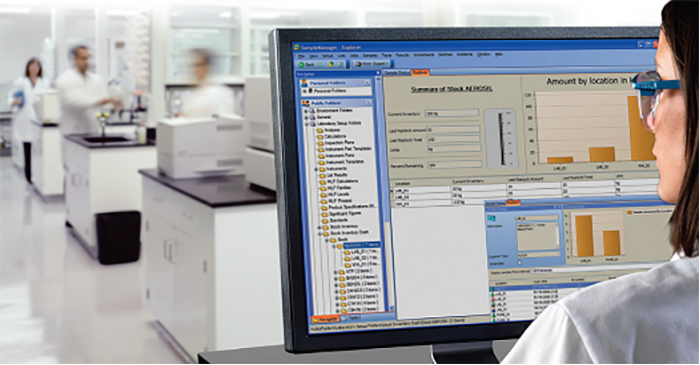
Integrated informatics enable labs to execute and manage all lab processes easily, with the data rigor and intelligence that lab managers require to drive efficiency and profitability, for the lab and for the business. Image courtesy of Thermo Fisher Scientific. (Click to enlarge)
Moving forward, if food manufacturers, suppliers and distributors want to be ahead of the game, they’ll need to have the ability to view their product throughout the supply chain. During a discussion with Food Safety Tech, Trish Meek, director of product strategy at Thermo Fisher Scientific, explains the importance of product traceability in the food chain, from both a consumer and food producer’s perspective.
Food Safety Tech: In your recent article about Integrated Informatics, you cite it as an ideal solution to modernizing a highly distributed food chain. What are the challenges you see companies facing in managing their global supply chain?
Trish Meek: We’ve seen the issues related to intentional adulteration documented throughout the media, and they extend to traceability. For example, what Tesco experienced during the horsemeat scandal wasn’t necessarily intentional adulteration, but rather a matter of not understanding the supply chain. Horsemeat was introduced in France as legitimate meat and then it ended up in the UK. In this case, you have a lack of traceability and thus a lack of understanding of what has happened to your product in its lifecycle.
“With consumer demand for foods that are free of gluten, GMOs and antibiotics, it’s becoming more important to customers that they understand everything that has happened to the animal and the food source.” –Trish Meek
In this complex world of suppliers, distributors and food producers, having the ability to pull in analytical data and manage it regardless of the source (whether it’s from the initial ingredient supplier or the final manufacturer) is a critical piece in understanding the overall lifecycle picture. An integrated informatics solution provides a single source of truth for that information: From the technician operating the lab process to the lab manager who is overseeing to the integration into the enterprise-level system. It provides a complete view on everything that has happened to your data, while also enabling the management of regional specifications.
FST: What are the biggest concerns in the area of food chain security?
Meek: Traceability is key, and the common denominator is food chain security: Ensuring that you’re providing security and with an understanding of everything that happened to your product, which leads to quality assurance and brand security.
FST: What are the concerns related to food chain security?
Meek: There are a few concerns:
Adulteration
Correct label claims. For example, 30% of the populous is trying to avoid gluten. While 1% is truly allergic to it, there’s a lot of gluten intolerance. Take, for example, recent commercials from Cheerios saying they are ensuring traceability and can say with confidence that their product no longer comes into contact with wheat in any part of the process. There’s an understanding that consumers want to believe what’s on the label, from both a health and allergy perspective as well as a concern in the public around unhealthy ingredients added or antibiotics used. As a food producer, you want to make sure you can honestly state what has happened to the food and that what you’ve put on your label is true. People are willing to pay a premium, and so there’s a drive towards the premium of being able to claim no GMOs on a label or an organic product.
From a food producer’s point of view, having traceability from all suppliers is key. They want to ensure that any raw materials have been handled and managed with all the same scrutiny and adherence to regulatory requirements as their own processes. With ingredients coming from all over the world, manufacturers are relying on multi-sourcing ingredients from places they don’t necessarily control, so they need to have the traceability before the ingredients appear in the final product.
Using an Integrated Informatics Platform
Trish Meek: Through an integrated informatics platform, users can manage the entire lab process and integrate it into the enterprise system. Having the ability to incorporate the lab data is critical to ensuring product safety, quality and traceability throughout the entire supply chain. Because the solution encompasses lab processes and required lab functionalities, it enables efficiency both in the laboratory as well as across the entire operation. The solution provides an opportunity not just to the top-tier food producers but also the regionally based middle-tier companies that want to set themselves up for future growth.
The reality of the regulations today is that you must look towards the future. Twenty years ago, we weren’t including information about what nuts were present in the labeling. Now there’s consumer awareness and a change in labeling. And five years from now, there could be a different allergy that needs to be documented in the labeling. Integrated informatics gives you the business agility to take on that next step of analysis and adapt to the marketplace.
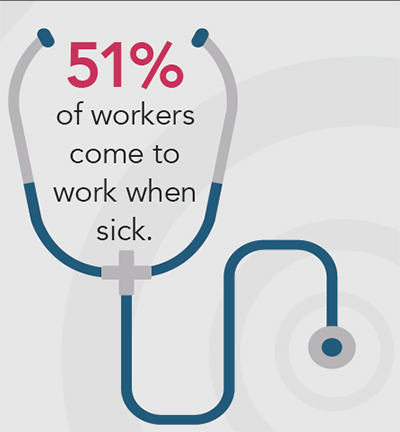
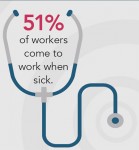
Today the Center for Research and Public Policy (CRPP) released a survey that highlights several key findings related to how frontline food workers operate and approach their jobs. Commissioned by Alchemy Systems, the annual “Mind of the Food Worker” survey revealed enthusiasm on the part of these employees to continue to grow and move up the ranks within their organizations while also underscoring what has become an increasing problem across all U.S. industries—the fact that employees still show up to work when they’re ill.
Food & workplace safety. All graphics courtesy of Alchemy Systems
“Leadership doesn’t believe that people go to work when they’re sick,” Holly Mockus, product manager at Alchemy, told Food Safety Tech. “If people are sick, they should stay home. Not only are we talking about [infecting] people who you’re working with, but we’re also talking about foodborne illnesses that can be transmitted into food.” Employees go into work when they’re sick for a variety of reasons: They don’t want to let their fellow coworkers down (46% provided this response in the survey); they feel peer pressure as a result of staff shortage; or they feel they simply don’t have a choice due to attendance policies and can’t afford to lose pay (more than 45% of respondents gave this answer). “As an industry we have to take a look at the policies and procedures, along with the way that we’re staffing, and see what we can do to alleviate this [issue]”, says Mockus.
Good News on the Frontlines
Worker confidence reflects a paradigm shift in the food industry.
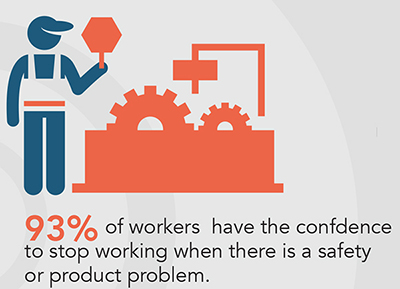
When confronted with a food safety or product issue, 93% of respondents said they had the confidence to stop working. “The industry has made the paradigm shift that we’ve all been striving so hard to achieve over the last several years,” says Mockus. “The fact that [food workers] understand their role, food safety and workplace safety, and are willing to take responsibility to ensure they stop something that is going awry—that was a very positive thing to come out of the survey.”
The other area of optimism on the frontlines concerns the enthusiasm of workers in improving performance—67% of respondents expressed an interest in being involved in the development of training. This response indicates a movement towards more proactive employees who want to be part of the solution and make a difference. The key takeaway here is for corporate leadership to leverage the institutional knowledge that these in-house frontline workers have to further improve the business and how it operates.
“The food industry needs to take a step back and stop thinking about their workers as hourly workers and instead as an asset to the business,” says Tara Guthrie, communications at Alchemy. “Right now they’re not traditionally viewed as human capital in a corporate world, but they could be a big asset and have a big impact on the bottom line.”
How Employees Learn: A Shift in Mindset
Businesses need to change how they collaborate with and train employees.
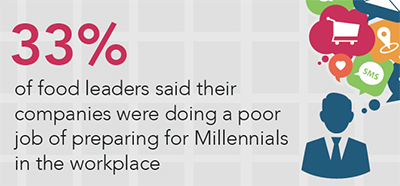
Millennials and the reliance on technology have changed how employees learn and operate in the workplace. Within the leadership survey results, nearly 33% of respondents are making changes to adjust to how millennial employees learn. “Traditional management style doesn’t always work well with millennials,” says Mockus. This particular generation is also more in tune with using technology to communicate—even when they are sitting across from each other. Mockus indicates that leadership needs to clearly communicate to millennials the importance of understanding their role within their organizations, especially from a day-to-day operation level, as well as present information in a manner that captures their attention, allows them to retain the information, and enables them to put it into practice every day. This strategy should also extend to other generations of frontline workers. “I think all of us have become accustomed to having immediate information that is encapsulated and contained within a few words,” says Mockus. “We are so used to scanning information and moving on. We have to keep in mind that the way in which people are learning, retaining information and using it is changing. Companies that work toward accommodating those millennials will also be doing a good service for the rest of the adults in the workforce.”
The survey found some key findings related to communication gaps that impact the workforce.
The survey polled more than 1200 food employees working within production, processing, and distribution—from farms and ranches to slaughterhouses and food processing plants to commercial bakeries, retailers and distributors. It was conducted earlier this summer, and employees were located in the United States and Canada. One of the goals of the survey is to give the industry active takeaways to further drive safety in the food supply. “We are trying to understand the food workers because they’re such an important part of the whole supply chain,” says Mockus. “They are the most important ingredient in every product that is produced.”
Next month’s Food Safety Consortium conference will address issues related to employee training, Food Safety Culture, compliance and much more. Register here. The event takes place November 17-20 in Schaumburg, IL.
How will FDA enforce the new FSMA rules? It’s a question that has been circulating throughout industry over the past few months, and it will be answered at this year’s annual Food Safety Consortium conference next month. Michael Taylor, JD, deputy commissioner for foods and veterinary medicine at FDA will deliver the opening plenary presentation on November 18, which will be followed by an “Ask the FDA” interactive town hall meeting. During the afternoon,
Roberta Wagner, deputy director of regulatory affairs at CFSAN
Roberta Wagner, deputy director of regulatory affairs at CFSAN will discuss FSMA implementation and FDA’s strategies for gaining and maintaining industry compliance with the new rules. The agency will also be participating in several conference sessions dedicated to the FSMA rules that will be finalized by November, including:
Foreign Supplier Verification
Preventive Controls in Human Foods
Preventive Controls in Animal Foods
Produce Safety
Third-Party Auditing
Voluntary Qualified Importer Program
During the event, USDA’s Food Safety and Inspection Service (FSIS) will also be answering questions related to regulatory compliance and food safety issues at a Small Plant Help Desk.
Frank Yiannas, vice president of food safety at Walmart
Beyond FSMA-related topics, the Food Safety Consortium conference will feature several concurrent food safety and quality assurance tracks, workshops and training programs in compliance, food manufacturing and operations, supply chain management, food labs, and foodservice and retail. Food Safety Culture is an especially hot topic right now, and the conference will address the practical ways to actually measure behavior and start taking action. Frank Yiannas, vice president of food safety at Walmart will deliver a keynote presentation, “Food Safety = Behavior” on Wednesday, November 18.
Last week California Governor Jerry Brown signed into law a bill that bans the use of antibiotics in meat production. The legislation, SB-27 Livestock: use of antimicrobial drugs, prohibits the administration of antibiotics in livestock unless ordered by a licensed veterinarian via a prescription or veterinary feed directive. As such, the law bans using drugs to promote weight gain or improve feed efficiency.
Several organizations, including the National Resources Defense Council (NRDC), are applauding the legislation. On the NRDC’s blog, senior attorney with the organization’s health program, Avinash Kar, praised the passage of the final bill. “We’ve fought for many years to get the FDA to take genuine action on this issue, but the FDA has basically given the issue lip service and failed to take meaningful action,” wrote Kar.
The legislation, also the most stringent nationwide, goes into effect January 1, 2018. It requires that the Department of Food and Agriculture, in collaboration with the Veterinary Medical Board, the State Department of Health, and other organizations put together antimicrobial stewardship guidelines and best management practices on how to properly use “medically important antimicrobial drugs. The departments would also be required to collect data on the use and sales of these drugs, along with data related to antibiotic resistant bacteria, and livestock management practice data.
Violation in the bill’s provisions will result in a civil penalty of up to $250 for each day the violation occurs, as well as up to $500 in administrative fines for each day the violation occurs.
The use of antibiotics in meat and poultry has been highly controversial for years, as it has been blamed for an increase in antibiotic-resistant infections. In addition, resistant bacteria can be transmitted to humans through the consumption of food. Antibiotic resistance and food safety has been a high priority by the CDC, which estimates that Salmonella and Campylobacter, cause nearly 410,000 antibiotic-resistant infections in the United States annually.
Today, the idea of engaging in socially responsible practices goes beyond a feel-good concept. When considering food safety, social responsibility can have a big impact on a company’s bottom line, especially with the increased complexity of supply chains, as more ingredients and products are being imported.
According to Anna Key Jesus, senior director of quality systems at Amy’s Kitchen, social responsibility ties into food safety in a few ways:
Increasing market size for large companies equals more imported products as ingredients for processed foods
Differing labor laws from country to country, along with their oversight globally, require vigilance regarding employee rights and safety
A growing and global social media presence has pushed consumers to demand that food companies engage in socially responsible practices
Jesus, who spoke during a recent webinar, “Social Responsibility As a Driver for Food Safety”, discussed how food companies should be implementing socially responsible practices within their organizations and the ethics of providing a safe environment for workers.
“Any company that willfully operates an unsafe working environment for their employees is less likely to provide a safe processing environment for their customers,” said Jesus, adding that unsafe working environments can lead to increased turnover, employee accidents involving loss of attention or oversight, and the presence of blood borne pathogens or other potential safety events. “These conditions directly impact the safety of products.”
She emphasized the use of the SA 8000 standard to drive social responsibility within companies The auditable standard is based on the UN Declaration of Human Rights and is used across industries to protect the basic rights of workers, specifically calling out the prohibition against child labor and forced labor. “Forced or slave laborers do not live in an environment of personal safety,” said Jesus. “Under the conditions that they are held in, it is nearly impossible to promote GMPs or food safety guidelines. We can state with confidence that there are not good manufacturing practices when slave labor is involved.”
SA 8000 components address the following areas, all of which tie back into continuous improvement:
Child labor
Forced or compulsory labor
Health and safety
Freedom of association and right to collective bargaining
Discrimination
Disciplinary practices
Working hours
Jesus urged food companies to carefully look at their own labor practices, as overworked and exhausted employees are the number one cause of accidents in the workplace. This is not only a legal and ethical issue from an employee perspective, but it also affects the execution of sound food safety practices within manufacturing facilities.
This website uses cookies so that we can provide you with the best user experience possible. Cookie information is stored in your browser and performs functions such as recognising you when you return to our website and helping our team to understand which sections of the website you find most interesting and useful.
Strictly Necessary Cookies
Strictly Necessary Cookies should be enabled at all times so that we can save your preferences for these cookie settings.
We use tracking pixels that set your arrival time at our website, this is used as part of our anti-spam and security measures. Disabling this tracking pixel would disable some of our security measures, and is therefore considered necessary for the safe operation of the website. This tracking pixel is cleared from your system when you delete files in your history.
We also use cookies to store your preferences regarding the setting of 3rd Party Cookies.
If you visit and/or use the FST Training Calendar, cookies are used to store your search terms, and keep track of which records you have seen already. Without these cookies, the Training Calendar would not work.
If you disable this cookie, we will not be able to save your preferences. This means that every time you visit this website you will need to enable or disable cookies again.
Cookie Policy
A browser cookie is a small piece of data that is stored on your device to help websites and mobile apps remember things about you. Other technologies, including Web storage and identifiers associated with your device, may be used for similar purposes. In this policy, we say “cookies” to discuss all of these technologies.
Our Privacy Policy explains how we collect and use information from and about you when you use This website and certain other Innovative Publishing Co LLC services. This policy explains more about how we use cookies and your related choices.
How We Use Cookies
Data generated from cookies and other behavioral tracking technology is not made available to any outside parties, and is only used in the aggregate to make editorial decisions for the websites. Most browsers are initially set up to accept cookies, but you can reset your browser to refuse all cookies or to indicate when a cookie is being sent by visiting this Cookies Policy page. If your cookies are disabled in the browser, neither the tracking cookie nor the preference cookie is set, and you are in effect opted-out.
In other cases, our advertisers request to use third-party tracking to verify our ad delivery, or to remarket their products and/or services to you on other websites. You may opt-out of these tracking pixels by adjusting the Do Not Track settings in your browser, or by visiting the Network Advertising Initiative Opt Out page.
You have control over whether, how, and when cookies and other tracking technologies are installed on your devices. Although each browser is different, most browsers enable their users to access and edit their cookie preferences in their browser settings. The rejection or disabling of some cookies may impact certain features of the site or to cause some of the website’s services not to function properly.
Individuals may opt-out of 3rd Party Cookies used on IPC websites by adjusting your cookie preferences through this Cookie Preferences tool, or by setting web browser settings to refuse cookies and similar tracking mechanisms. Please note that web browsers operate using different identifiers. As such, you must adjust your settings in each web browser and for each computer or device on which you would like to opt-out on. Further, if you simply delete your cookies, you will need to remove cookies from your device after every visit to the websites. You may download a browser plugin that will help you maintain your opt-out choices by visiting www.aboutads.info/pmc. You may block cookies entirely by disabling cookie use in your browser or by setting your browser to ask for your permission before setting a cookie. Blocking cookies entirely may cause some websites to work incorrectly or less effectively.
The use of online tracking mechanisms by third parties is subject to those third parties’ own privacy policies, and not this Policy. If you prefer to prevent third parties from setting and accessing cookies on your computer, you may set your browser to block all cookies. Additionally, you may remove yourself from the targeted advertising of companies within the Network Advertising Initiative by opting out here, or of companies participating in the Digital Advertising Alliance program by opting out here.