Chipotle Mexican Grill has announced its first class of the company’s aluminaries project, which provides eight growth-stage ventures with resources to grow and drive positive change. Sponsored by non-profit organizations Chipotle Cultivate Foundation and Uncharted, each venture that is part of the seven-month accelerator program receives mentorship and coaching from industry leaders, and they participate in a five-day boot camp next month. Each member of the class of 2019 also receives free burritos for a year, and Chipotle will cater their office, according to a Chipotle press release.
The following ventures selected to participate in the Chipotle Aluminaries Project focus on a variety of areas in the food industry:
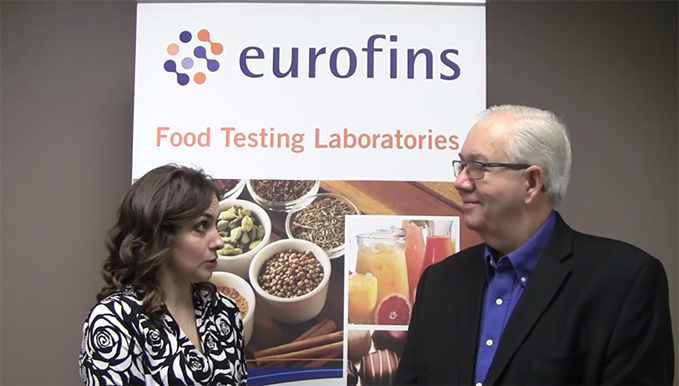
Building a supply chain verification program can be a complicated task. In the following exclusive video with Doug Marshall, Ph.D., chief scientific officer at Eurofins, we learn the top questions that should be asking their suppliers during the process. Marshall also gives his perspective on the integration of data into the supply chain and how it can mitigate risk, along with where he’s sees the future of food safety testing headed.
Whole Foods Market has voluntarily recalled various products containing baby spinach following a recall by its supplier Satur Farms over concern of potential Salmonella contamination. The prepared foods have a Whole Foods Market scale label and were sold in eight states in the Northeast and Florida and include salads, pizza, sandwiches and wraps. No illnesses have been reported.
EDGARTOWN, MA, Jan. 18, 2019 – Innovative Publishing Co., the publisher of Food Safety Tech and organizer of the Food Safety Consortium Conference & Expo, has announced a partnership with the Alliance for Advanced Sanitation. Angela Anandappa, Ph.D., director of the organization, will also be joining the Food Safety Tech and Food Safety Consortium Advisory Board. As part of this role, Anandappa will be a key resource on topics related to sanitation and will serve as chairperson for the Sanitation track at the Food Safety Consortium Conference & Expo, ensuring the presentations are relevant, accurate and balanced.
Angela Anandappa, director, Alliance for Advanced Sanitation
“The collaboration with Angela Anandappa and the Alliance for Advanced Sanitation is a significant enhancement to the Food Safety Consortium Conference & Expo,” said Rick Biros, president of Innovative Publishing Co., Inc. and director of the Food Safety Consortium Conference and Expo. “Angela brings a wealth of experience in food safety and molecular diagnostics, especially in her role developing programs that tackle hygienic design and sanitation issues.”
As a partner organization, members of the Alliance for Advanced Sanitation will also receive a discount to attend the Food Safety Consortium Conference & Expo in October.
“I look forward to working with Rick and his team at Food Safety Tech and the Consortium event to help industry further understand the issues we face in sanitation, the advances necessary for success and how we can share best practices,” said Anandappa, who is also a research assistant professor with the Department of Food Science and Technology at the University of Nebraska-Lincoln.
About Food Safety Tech
Food Safety Tech publishes news, technology, trends, regulations, and expert opinions on food safety, food quality, food business and food sustainability. We also offer educational, career advancement and networking opportunities to the global food industry. This information exchange is facilitated through ePublishing, digital and live events.
About the Food Safety Consortium Conference and Expo
The Food Safety Consortium Conference and Expo is a premier educational and networking event for food safety solutions. Attracting the most influential minds in food safety, the Consortium enables attendees to engage conversations that are critical for advancing careers and organizations alike. Visit with exhibitors to learn about cutting edge solutions, explore diverse educational tracks for learning valuable industry trends, and network with industry executives to find solutions to improve quality, efficiency and cost effectiveness in an ever-changing, global food safety market. This year’s event takes place October 1–3 in Schaumburg, IL.
About the Alliance for Advanced Sanitation
The Alliance for Advance Sanitation’s research, extension and teaching activities engage university of Nebraska–Lincoln faculty and address the needs and interests of the private sector partners. The overall goal of these activities is to develop improved sanitation practices that can be implemented by the food processing and affiliated industries. The Alliance’s mission is to create a safer food supply through advanced sanitation approaches and practices.
It’s that time of year again! As we prepare to put together another informative and insightful Food Safety Consortium, we are requesting abstracts for presentation content. This year’s event takes place October 1–3 in Schaumburg, IL.
Before submitting an abstract, here are some things to keep in mind:
This year’s breakouts will feature
1) Cleaning & Sanitation
2) Food Safety Testing
3) Food Safety Management
The abstract should be about 300 words
Presentations will be judged on educational value
Don’t submit a sales pitch!
Presentation time is about 45 minutes—this includes a 10-15 Q&A session
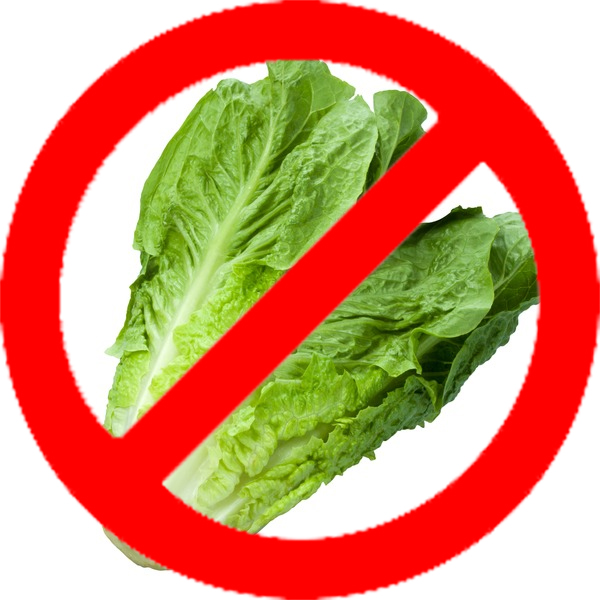
Although FDA is continuing its investigation into the source of the E.coli outbreak involving romaine lettuce grown in California, the CDC has declared the outbreak over. Contaminated romaine that caused illnesses should no longer be available, FDA stated in an outbreak update. Consumers will not need to avoid romaine lettuce, and retailers and restaurants do not need to avoid selling or serving the product, according to the agency. Suppliers and distributors need not avoid shipping or selling any romaine that is on the market either.
FDA has recommended that romaine lettuce is labeled with the harvest location and date, as well as whether it has been grown hydroponically or in a greenhouse. “ In case of future product withdrawals or recalls of romaine lettuce, this will help to limit the amount of product to be removed from the market and it will help consumers, restaurants and retailers determine that the romaine lettuce they are buying is from an unaffected growing region,” stated FDA. In addition, the detailed labeling should be available in stores, the agency states.
The jury is still out on how (and if) blockchain can contribute to a safer food supply. Whether or not there is a clear understanding of the technology, and its potential and pitfalls, is up for debate as well. “What is blockchain? This is the number one question that people have,” said Darin Detwiler, director, regulatory affairs of food and food industry at Northeastern University, who led a panel of experts as they deliberated over this hot topic during the 2018 Food Safety Consortium.
“Blockchain levels the playing field where we can connect people, resources and organizations in ways we’ve never done before to harness new ways of extracting value,” said Nigel Gopie, global marketing leader, IBM Food Trust at IBM.
What Is Blockchain?
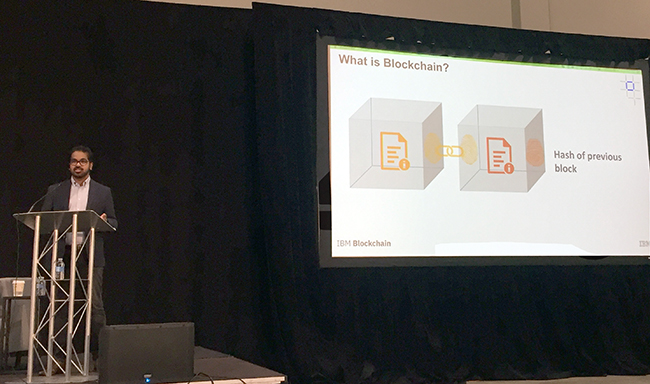
Gopie provided an introductory definition of blockchain: Simply put, it is a series of blocks of information attached together. Each block is a box of information that stores data elements, and this data could be almost anything. Each block has a digital fingerprint associated with it; this fingerprint allows you to know that the block is unique and can attach to other blocks. When new blocks come into the chain, each block has a new fingerprint—one that is unique to that block and of the block before it. This allows the connection to happen, and enables visibility into the origin of each block.
Blockchain enables one book of business and provides three important benefits, said Gopie:
Digital transactions
Distributed ledger with one version of truth throughout the network
Data is immutable
IBM’s Nigel Gopie breaks down the basic meaning of blockchain for attendees at the 2018 Food Safety Consortium.
Although blockchain can help to start the process of solving food issues surrounding safety, freshness, reduced waste and sustainability, the technology is only the foundation. A series of other components are important as well, said Gopie, and the following are some insights that the expert panel shared during their discussion.
Jorge Hernandez, chief food safety officer at Wholesome International: “To me, it’s a fantastic new technology that would allow the food industry to do a much better job of finding, from seed to fork, all of the processes and things that happen to that product. And in the future, [it] allows us to identify problems first and solve [them]. My problem is it being sold to companies…and not able to deliver on the promise… It bothers me that we are looking at a future that may or may not be there.”
Angela Fernandez, vice president, retail grocery & foodservice at GS1 US: “We’ve been working on traceability and transparency for over a decade—you have to be capturing the data needed, [and] we’re still working on getting it right. We’re just not there yet. I think it’s a great place for us to strive to go towards, but we’re still early in the stages of accepting it as a community.”
David Howard, vice president of corporate strategy at Pavocoin: “Blockchain itself is simply a technology. We’re all here because we’re just trying figure out what application we can use in business. Blockchain is a technology that can help all of you improve operational efficiencies for your bottom line.”
Is Blockchain a Barrier or a Fast Lane to Heightened Liability Concerns?
Shawn Stevens, food industry lawyer and founder of Food Industry Counsel, LLC: “I think the starting point is to ask ourselves what makes food unsafe. It’s a lack of transparency…What blockchain can do is illuminate entire segments of the industry…From a reactive standpoint, blockchain can help us identify a problem [and] solve it. From a preventive standpoint, if I have access to all this information regarding attributes and quality of supplier, I can make better decisions that protect my company.”
“We want to know more and be better informed. Once you know more, you better react and do something. If you’re getting this line of sight and you don’t react to it, that’s what exposes you to liability.”
Darin Detwiler, director, regulatory affairs of food and food industry at Northeastern University: “We need to look at the balance between the reactive use of blockchain and the proactive use.”
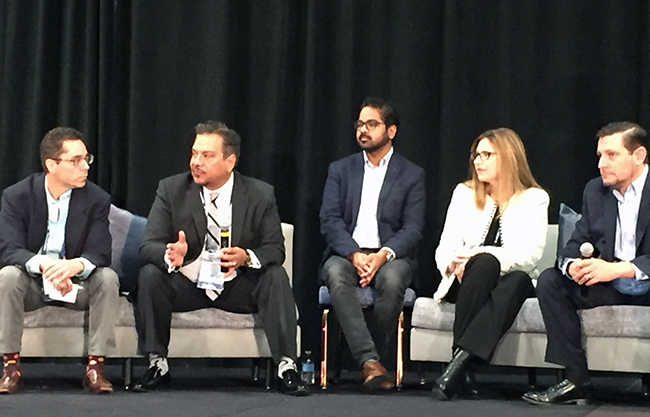
2018 Food Safety Consortium on Blockchain. (left to right) David Howard, Pavocoin; Jorge Hernandez, Wholesome International; Nigel Gopie, IBM; Angela Fernandez GS1 US; and Shawn Stevens, Food Industry Counsel, LLC. Not pictured: Darin Detwiler, Northeastern University.
What Barriers Does Industry Need to Anticipate?
Fernandez: “The barrier of the standards and interoperability piece—that’s a big question our community is asking us. Scalability… standards are vital…I think that opens up a different discussion when talking about private versus public blockchain.”
Hernandez: “What is my ROI? The issue I have with blockchain is not only the investment in my organization, but I have to bring my entire supply chain with me if I want to get any benefit. There’s a good value proposition, but it requires you to get everyone on board. When you’re a large organization, it’s probably not that hard to do. But a small organization like mine where my suppliers are an Amish community that sells us cheese, that’s a huge mountain to climb. They don’t have the background [or] the technology, and even if they wanted to do it, it’s a big change for them. You’re asking me to make a change in my relationship with my suppliers.”
“Take a look at it from the business continuity [perspective]. What are the changes you’re going to have to make? And that changes that have to be made by everyone who works with you? We should not stay static. We should continue to look for things. If this is the technology that is going to move us forward, let’s start getting prepared.”
–UPDATE —January 9, 2019 – Today FDA Commissioner Scott Gottlieb, M.D. gave an update about food inspections in the context of the government shutdown. He chose Twitter to deliver his statement. He said FDA is expanding the scope of food safety surveillance inspections that are occurring during the shutdown to ensure that high-risk food facilities are address (31% of domestic inspections are high risk). He added that the agency continues to conduct all foreign food inspections.
“We assess risk based on an overall, cross-cutting risk profile. The primary factors contributing to a facility’s risk profile include: the type of food, the manufacturing process, and the compliance history of the facility. Commodities deemed high risk include, but aren’t limited to: modified atmosphere packaged products; acidified and low acid canned foods; seafood; custard filled bakery products; dairy products including soft, semi-soft, soft ripened cheese and cheese products, unpasteurized juices; sprouts ready-to-eat; fresh fruits and vegetables and processed fruits and vegetables; spices; shell eggs; sandwiches; prepared salads; infant formula; and medical foods.” – Scott Gottlieb, M.D., FDA
–END UPDATE–
As the third-longest government shutdown in U.S. history continues, businesses across industries are concerned about what resources are available.
At FDA, “All our work is important, but only some of our work is permitted to continue during a lapse in funding,” according to an agency statement. This work includes any activities that are considered “mission critical”:
Maintaining core functions that handle and respond to foodborne illness outbreaks
High-risk food recalls
Screening foods imported into the United States
The pursuit of civil and/or criminal investigations when the agency believes that the public health is at risk
At USDA, FSIS will continue much of its food safety activities Field inspection of meat, poultry and egg products will continue, as well as regulatory enforcement and product testing in labs. The agency will also continue its enforcement and food safety surveillance and investigations, which includes recall initiation, traceback/traceforward investigations.
“The agency must ensure adequate senior level management and coordination of the agency’s public health responsibilities during a shutdown. Excepted activities include responding to intentional and unintentional food safety events. A small number of individuals will support these activities for the duration of the shutdown, while others will be available on call if such an event occurs, including recall staff, scientists; recall communication specialists, significant incident specialists.” – USDA
In addition USDA/FSIS personnel at the agency’s three field labs are considered “excepted” during the shutdown. A full breakdown of FSIS activities that will continue are available on the USDA’s website.
During an exclusive interview at the 2018 Food Safety Consortium, Douglas Marshall, Ph.D., chief scientific officer at Eurofins, talks about the company’s acquisition of Cascade Analytical, its impact on the produce industry and the expanded services the deal will bring to customers. The lab has been providing services for growers and processors, mainly in fresh fruit and vegetable industries. It also provides soil and water testing, and food and waste material testing. This interview is the first of a two-part discussion with Marshall.
As stated by CDC’s John Besser, Ph.D. last month at the Food Safety Consortium, “It’s been quite a year for outbreaks.” Here’s a not-so-fond look back at some of the noteworthy outbreaks and recalls of 2018.
Romaine Lettuce –E.coli O157:H7
2018 was not a good year for romaine lettuce. In the spring, a deadly multistate outbreak of E.coli O157:H7 was linked to romaine lettuce that came from the Yuma, Arizona growing region. “We knew right away that this was going to get bad and that it would get bad quickly,” said Matthew Wise, deputy branch chief for outbreak response at the Outbreak Response and Prevention Branch of the CDC at the 2018 Food Safety Consortium. Although the CDC declared the outbreak over at the end of June, the total number of illnesses had reached 210, with five deaths.
Then in November it was revealed that contaminated lettuce was coming from growing regions in northern and central California. According to the latest update from FDA, there have been 59 reported illnesses, with 23 hospitalizations, across 16 states. No deaths have been reported. Earlier this month Adam Bros Farming, Inc. recalled red leaf lettuce, green leaf lettuce and cauliflower, because it may have come into contact with water from the reservoir where the E. coli outbreak strain was found.
Raw Beef Products – Salmonella
At the beginning of the month, JBS Tolleson, Inc. expanded a recall of its non-intact raw beef products due to concerns of contamination with Salmonella Newport. More than 12 million pounds of product have been recalled. The latest CDC update put the reported case count at 333, with 91 hospitalizations across 28 states.
Shell Eggs – Salmonella
In April, Rose Acre Farms recalled more than 206 million eggs after FDA testing determined that eggs produced from the company’s farm were connected to 22 cases of Salmonella Braenderup infections. A total of 45 cases were reported across 10 states, with 11 hospitalizations, according to the CDC.
Pre-cut Melon – Salmonella
In June Caito Foods recalled its pre-cut melon productsafter a multi-state outbreak of Salmonella Adelaide infections were traced back to the products. A total of 77 cases across nine states, with 36 hospitalizations, were reported.
Vegetable Trays – Cyclospora
In July, Del Monte recalled its vegetable trays that contained broccoli, cauliflower, carrots and dill dip following confirmed cases of cyclosporiasis in people who consumed the products. The CDC declared the outbreak over in September, with a final case count at 250 people across four states.
Salad Mix – Cyclospora
Fresh Express salad mix served at McDonalds was linked to a multistate outbreak of cyclosporiasus. The outbreak was declared over in September, with the final illness count at 511, and 24 hospitalizations.
Raw Turkey – Salmonella
Just before Thanksgiving an outbreak of Salmonella linked to raw turkey products was announced. Jennie-O Turkey Store Sales recalled more than 255,000 pounds of raw ground turkey products, however the CDC has not identified a single, common supplier that can account for this outbreak. As of the agency’s latest update on December 21, 216 cases have been reported across 38 states. The outbreak is responsible for 84 hospitalizations and one death.
Honey Smacks Cereal – Salmonella
The early summer outbreak of Salmonella Mbandaka linked to Kellogg’s Honey Smacks cereal got a lot of press, and it didn’t help that even though the company recalled the product, many retailers continued to keep the cereal on their shelves. The last illness onset was reported at the end of August. A total of 135 people were reported ill, with 34 hospitalizations.
This website uses cookies so that we can provide you with the best user experience possible. Cookie information is stored in your browser and performs functions such as recognising you when you return to our website and helping our team to understand which sections of the website you find most interesting and useful.
Strictly Necessary Cookies
Strictly Necessary Cookies should be enabled at all times so that we can save your preferences for these cookie settings.
We use tracking pixels that set your arrival time at our website, this is used as part of our anti-spam and security measures. Disabling this tracking pixel would disable some of our security measures, and is therefore considered necessary for the safe operation of the website. This tracking pixel is cleared from your system when you delete files in your history.
We also use cookies to store your preferences regarding the setting of 3rd Party Cookies.
If you visit and/or use the FST Training Calendar, cookies are used to store your search terms, and keep track of which records you have seen already. Without these cookies, the Training Calendar would not work.
If you disable this cookie, we will not be able to save your preferences. This means that every time you visit this website you will need to enable or disable cookies again.
Cookie Policy
A browser cookie is a small piece of data that is stored on your device to help websites and mobile apps remember things about you. Other technologies, including Web storage and identifiers associated with your device, may be used for similar purposes. In this policy, we say “cookies” to discuss all of these technologies.
Our Privacy Policy explains how we collect and use information from and about you when you use This website and certain other Innovative Publishing Co LLC services. This policy explains more about how we use cookies and your related choices.
How We Use Cookies
Data generated from cookies and other behavioral tracking technology is not made available to any outside parties, and is only used in the aggregate to make editorial decisions for the websites. Most browsers are initially set up to accept cookies, but you can reset your browser to refuse all cookies or to indicate when a cookie is being sent by visiting this Cookies Policy page. If your cookies are disabled in the browser, neither the tracking cookie nor the preference cookie is set, and you are in effect opted-out.
In other cases, our advertisers request to use third-party tracking to verify our ad delivery, or to remarket their products and/or services to you on other websites. You may opt-out of these tracking pixels by adjusting the Do Not Track settings in your browser, or by visiting the Network Advertising Initiative Opt Out page.
You have control over whether, how, and when cookies and other tracking technologies are installed on your devices. Although each browser is different, most browsers enable their users to access and edit their cookie preferences in their browser settings. The rejection or disabling of some cookies may impact certain features of the site or to cause some of the website’s services not to function properly.
Individuals may opt-out of 3rd Party Cookies used on IPC websites by adjusting your cookie preferences through this Cookie Preferences tool, or by setting web browser settings to refuse cookies and similar tracking mechanisms. Please note that web browsers operate using different identifiers. As such, you must adjust your settings in each web browser and for each computer or device on which you would like to opt-out on. Further, if you simply delete your cookies, you will need to remove cookies from your device after every visit to the websites. You may download a browser plugin that will help you maintain your opt-out choices by visiting www.aboutads.info/pmc. You may block cookies entirely by disabling cookie use in your browser or by setting your browser to ask for your permission before setting a cookie. Blocking cookies entirely may cause some websites to work incorrectly or less effectively.
The use of online tracking mechanisms by third parties is subject to those third parties’ own privacy policies, and not this Policy. If you prefer to prevent third parties from setting and accessing cookies on your computer, you may set your browser to block all cookies. Additionally, you may remove yourself from the targeted advertising of companies within the Network Advertising Initiative by opting out here, or of companies participating in the Digital Advertising Alliance program by opting out here.