Imports

Panama Canal Expansion Helps Boost Produce Imports

By Food Safety Tech Staff
No Comments
Imports

Following the expansion of the Panama Canal, a massive construction project that intended to double the cargo capacity of the canal, U.S. ports on the East Coast are enjoying an import boom. In Philadelphia, the Parker Avenue Marine Terminal in South Philadelphia (ranked the 12th nationwide) experienced a 28% bump in April alone.

Over the past year, the Philadelphia port has brought in additional imports of fresh produce from several companies, including Walmart, according to The Inquirer. Since last summer, Mediterranean Shipping Co. has been shipping grapes, blueberries and other fruits from Chile, Peru and Ecuador to Philadelphia on a weekly basis. The company’s cargo ships are the largest to ever have sailed up the Delaware River. Fyffes, a European fresh produce company, began delivering bananas, plantains and pineapples from Costa Rica, Columbia and Guatemala in January.

Scott Gottlieb, M.D., FDA

Scott Gottlieb Confirmed to Lead FDA

By Food Safety Tech Staff
No Comments
Scott Gottlieb, M.D., FDA

Yesterday Scott Gottlieb, M.D., President Trump’s nominee who has been criticized for his ties to the pharmaceutical industry, was confirmed by the Senate to lead FDA as its next commissioner. The vote was 57 to 42.

Gottlieb has extensive experience in healthcare and has been outspoke about the long approval process, along with the Medicare coverage process. However, he has not been vocal about food safety issues, so his impact on the food industry remains to be seen.

He previously served as deputy commissioner for medical and scientific affairs during the George W. Bush administration and was most recently a fellow at the American Enterprise Institute, a venture fund that invests in life sciences, medical technology and healthcare services.

Food Fraud

Mitigating Food Fraud Is Complex, But Not Impossible

By Maria Fontanazza
No Comments
Food Fraud

Nearly 10% of the food supply is affected by food fraud, yet many food companies are not well equipped to deal with the problem, according to a survey cited by SSAFE at USP’s recent Food Fraud Mitigation Hands-on Workshop. Nearly 40% of companies said it is easy for fraudsters to fake their food products and about one-third named gaps in supply chain transparency as a fraud vulnerability problem. In addition, about one third of respondents were unaware of whether their suppliers have been part of a criminal offense.

How secure is your supply chain? Learn how to mitigate these risks at the Food Safety Supply Chain conference | June 5-6, 2017

Food fraud is defined as the intentional misrepresentation of the true identity or contents of a food ingredient or product for economic gain, said Janet Balson, senior food safety consultant at USP. In many cases, adulteration cannot be detected by visual inspection alone. Companies must look at the susceptibility of certain ingredients and products (common targets include olive oil, honey, milk, chicken, tea, spices and fish), potential economic gain, and vulnerabilities in the supply chain. Since only a small amount of fraud cases are detected, it is important to conduct a thorough vulnerability assessment that examines the supply chain, QA methods, testing frequency, audits, supplier history, and historical, geo-political and economic factors, and from there, a multi-disciplinary team can develop an appropriate control plan based on the level of risk.

Food companies can leverage several tools (they also work in a complementary fashion) to identify and assess potential hazards in ingredients and products, including EMAlert, USP’s Food Fraud Database 2.0 and SSAFE’s Food Fraud Vulnerability Assessment tool. Arcchana Patil, senior manager of food safety & defense, QRC at The Hershey Company and Samantha Cooper, manager of food safety & quality assurance at GMA compared several of these platforms, offering a few tips on their capabilities and how companies can make the best use of the tools.

  • USP Food Fraud Database 2.0: Contains almost 7,000 food fraud records and allows searching of records by ingredient. Helps in the process of evaluating food fraud vulnerability. Its customizable dashboard and search function update users on new records. The platform also provides automated analytics tools. The tool is best used by subject matter experts, a group or by food fraud and food defense teams.
  • EMAlert: A real-time predictive model for economically motivated adulteration that quantitatively analyzes vulnerability for a group of ingredients based on weights given by users. Commodity data for each attribute is continuously updated. It provides a good platform for commodity scanning for sourcing and procurement teams. The tool is best used by subject matter experts, a group or by food fraud and food defense teams.
  • SSAFE Food Fraud Vulnerability Assessment: Available in 10 languages, it provides a good starting point for companies to assess their vulnerability at an ingredient, product, brand, facility, country or company-wide level. It identifies vulnerabilities to enable mitigation, but it does not offer mitigation techniques. The tool can be applied throughout the supply chain, from feed and primary production to manufacturing and catering. It can be used by different segments of the supply chain, along with corporate, but it is best used by cross-functional teams in quality, lab, procurement, legal and manufacturing.
  • World Factbook of Food: With more than 130 foods and 75 country profiles, the Factbook data is curated from a variety of sources to assist in risk assessment. The repository of food and country profile contains product uses, consumption, production and trade information, along with population, economy, climate and governance.
  • Food Adulteration Incidents Registry: Containing more than 550 unique incidents of food fraud and intentional adulteration, the registry provides verified event information to support vulnerability assessments. The platform uses a repository of open data records.

The shortage of food due to climate, environmental and political changes will put further pressure on the availability of certain ingredients and is likely to cause an uptick in food fraud. However, there are more tools than ever before to help companies deal with this problem, but the key is to try to stay one step ahead. As the speakers and attendees at the USP workshop reflected on the issue, they shared their predictions on where they see food fraud headed in the near term:

  • Companies will need to use technology to push further into their supply chains (i.e., tier two or three) where there is a higher risk.
  • The implementation of blockchain technology will make it more difficult for fraudsters to fake data, especially with processed foods.
  • The food industry will be able to learn from other industries that have counterfeiting issues, such as the pharmaceutical industry.
  • Use of smarter complementary tools that fight food fraud will help companies better mitigate risks and intervene more swiftly.
Aunt Jemima frozen French Toast recall

Pinnacle Foods Drops Certain Aunt Jemima Products Amidst Listeria Recall

By Food Safety Tech Staff
No Comments
Aunt Jemima frozen French Toast recall

On May 5, Pinnacle Foods, Inc. announced a voluntary recall of all Aunt Jemima Frozen Pancakes, Frozen Waffles and Frozen French Toast Slices due to concerns over Listeria monocytogenes contamination. The products were distributed across the United States (and one product in Mexico) but no illnesses have been reported. Two additional products—Aunt Jemima French Toast & Sausage and Hungry Man Selects Chicken & Waffles—were recalled in conjunction with the USDA.

In a press release posted today by Pinnacle Foods, the company announced that it will exit certain “low low-margin and non-strategic” Aunt Jemima frozen breakfast products: Frozen waffles, French toast slices and pancakes. “The decision to exit these products now was the appropriate action for Pinnacle,” said company CEO Mark Clouse in the release. “It is consistent with our plans to enhance the on-going margin of the Company and focus our efforts and investments on more profitable growth opportunities longer term.  While the timing of this exit was accelerated by the voluntary recall we initiated last week, these items are low-margin, non-strategic SKUs that we expected to exit at some point in the foreseeable future.” The company will continue to market its mini pancakes, French toast sticks, breakfast entrees and Griddle Poppers.

Perdue, organic chicken sausage, recall

Perdue Recalls 2000+ Pounds of Chicken Sausage

By Food Safety Tech Staff
No Comments
Perdue, organic chicken sausage, recall

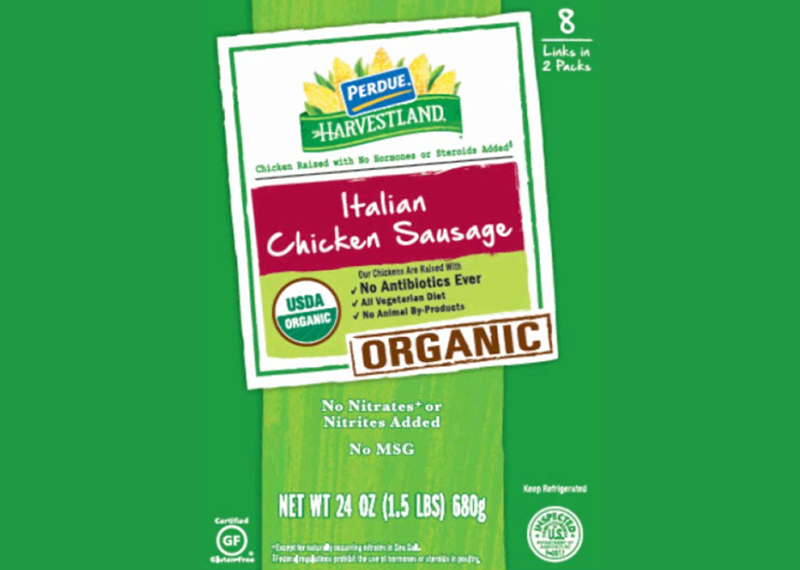
How secure is your supply chain? Learn more at the Food Safety Supply Chain Conference | June 5–6, 2017Over the weekend the USDA announced a Class I Recall initiated by Perdue Foods, LLC due to potential contamination of extraneous materials. FSIS was made aware of the issue on May 5 when Perdue informed them that three consumers had complained they found plastic materials in Italian chicken sausage links. No injuries have been reported.

The Perdue Harvestland Italian Style Organic Chicken Sausages were produced on March 27, 2017 and shipped to a retail distributor in Connecticut and Maryland. Consumers are being advised to throw out the products or return them to the place of purchase.

Food Safety Tech

Recall Consequences: What Consumers Think

By Maria Fontanazza
No Comments
Food Safety Tech

Consumer preferences have clearly shifted to a more personal, hands-on experience that requires food companies to maintain trust by being completely forthright about what is in their products. And when a company is involved in a recall, consumers expect a fast response—within days, according to a recent survey. Half of the survey participants expect a company to address a recall within one to two days. In addition, if a brand or restaurant has a recall or contamination that leads to illness, 23% said they would never use the brand or visit the restaurant again and 35% said they would avoid it for a few months and “maybe” come back.

A company’s supply chain can be the weakest link in its food safety program. Learn how to mitigate these risks at the Food Safety Supply Chain conference | June 5-6, 2017

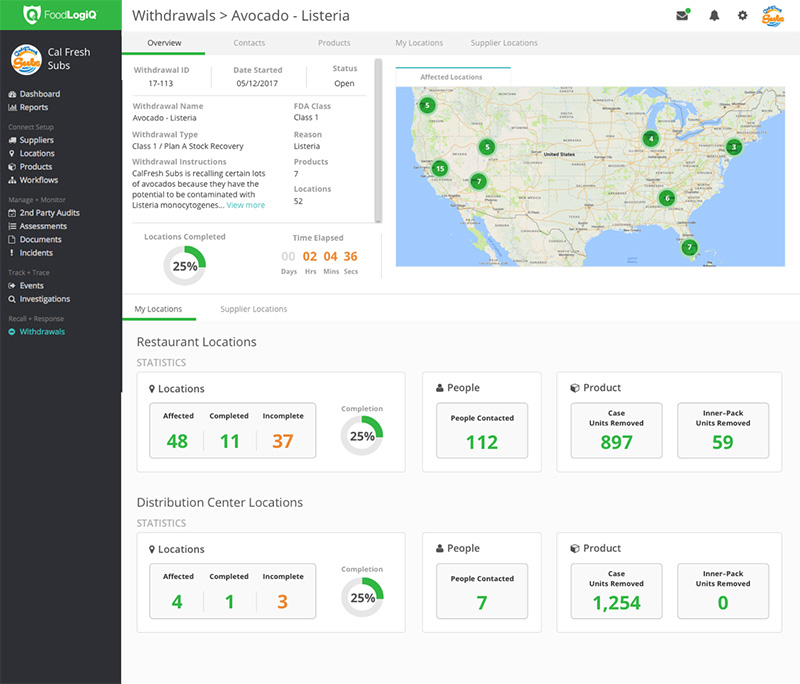
The survey, commissioned by FoodLogiQ and titled, “What Consumers Care About in the Age of Transparency”, polled more than 2000 people. It also found that the same consumers who expect a one- to two-day turnaround in addressing a recall also care a great deal about clarity in food labeling: 57% want to see as much information on a label as possible. This includes country of origin, allergen information and identification of genetically modified ingredients.

With the number of recalls occurring four times as often as they did five years ago, food companies are at an even higher risk of facing a negative financial impact and losing consumer confidence. Maintaining transparency throughout the supply chain is a crucial part of managing consumer expectations and executing effective risk mitigation.

“Open, constant and transparent communication with your suppliers is a must for addressing these issues. After all, you can’t offer consumers the information they crave about your product and processes if you aren’t getting that information from your suppliers and brokers,” state the survey authors. “You cannot expect a supplier to fulfill your requirements around safety and brand promise if you aren’t open about your expectations. It’s a two-way relationship that can make a huge difference in your business.”

The authors offer recommendations on how companies can keep a clear line of communication open with consumers, including:

  • Transparency throughout the supply chain, including from where food is sourced
  • List all product ingredients and include information about allergens and animal products
  • Have open communication concerning mislabeling, and contamination and recalls
3M Molecular Detection Assay 2

3M Receives Edison Award in Diagnostics

3M Molecular Detection Assay 2

3M has announced that its Molecular Detection Assay 2 has won the Gold Edison Award in the diagnostic tools category. The 2017 Edison Awards recognize innovators that have had a positive impact globally. The assay platform is a next-generation of tests, which also previously won an Edison award.

The technology is powered by isothermal DNA amplification and bioluminescience detection to provide a faster molecular detection of pathogens. Its single assay protocol enables batch processing of up to 96 different samples simultaneously and can provide same-day results.

The platform can be used to identify Salmonella, Listeria, Listeria monocytogenes, and E.coli O157 in food or environmental samples, and Cronobacter in powdered infant formula.

Food Safety Tech

Internet of Things to Have Major Impact on Food Safety

By Food Safety Tech Staff
No Comments
Food Safety Tech

The Internet of Things (IoT) is increasingly becoming a buzzword across industries. More recently the connection is being made in the food industry, as the IoT is expected to transform how food companies use and process information. A new complimentary webinar series will examine the impact of this movement from the farm to the point of purchase. In part one of the series, experts from Rentokil Steritech, Rentokil Initial and Google will share insights about the IoT’s impact on the food industry and how companies can collect and process the information in a meaningful way for use in making business decisions.

Register for the event: IoT—What It Is and How It Is Impacting Food Safety

GFSI

GFSI Releases Version 7.1 to Incorporate More Harmonization

By Food Safety Tech Staff
No Comments
GFSI

GFSI has just released a new benchmarking requirements version that was developed for food safety certification schemes. Following stakeholder input, Version 7.1 intends to reflect changes happening in the market. The new version includes the addition of clauses for each scope under Food Safety Management requirements, including purchasing from non-approved suppliers and compliance with food safety legislation.

The previous version, Version 7, was released in February and introduced requirements to combat food fraud, incorporate unannounced audits, and increase transparency in the benchmarking process. It also included a new scope of supply chain food brokers and agents.

SGS, food safety

SGS First Certification Body Approved to Audit Against Gluten-Free Standard

SGS, food safety

Earlier this week SGS became the first certification body approved to audit against the Gluten-Free Certification Organization (GFCO) standards worldwide. GFCO, a program of the Gluten Intolerance Group, is globally recognized, providing independent certification services to gluten-free product producers. The program, which has certified more than 40,000 products from more than 900 companies in 29 countries, requires product reviews, on-site inspections, testing and ongoing compliance activities. The third-party certification verifies that a product meets strict gluten-free standards, ensuring valid gluten-free processes were followed during manufacturing.

SGS will be conducting the GFCO audits as a stand-alone service or in combination with its Food Safety certification audits.