The news broke this morning that David Theno, one of the most well known experts in the food safety realm, was tragically killed while reportedly snorkeling in Hawaii. He was pronounced dead on Monday following attempts to resuscitate him.
Theno was most notable for his role in implementing new standards in food safety in his position as senior vice president and chief food safety officer at Jack in the Box following the 1993 E. coli O157:H7 outbreak that killed four children. He implemented a HACCP plan and other product testing measures long before it was embraced by many in certain segments of the food industry.
Also a former chief of food safety for Subway, he was in the news over the past week for his testimony in the BPI case versus the ABC network. Theno served as a consultant for BPI from roughly 2010 to 2012, and reportedly reviewed BPI’s food safety practices.
Theno was founder and CEO of his own food safety consulting business, Gray Dog Partners, Inc. He received numerous awards for his outstanding work in food safety during his career, most recently the 2017 NSF Food Safety Leadership Lifetime Achievement Award.
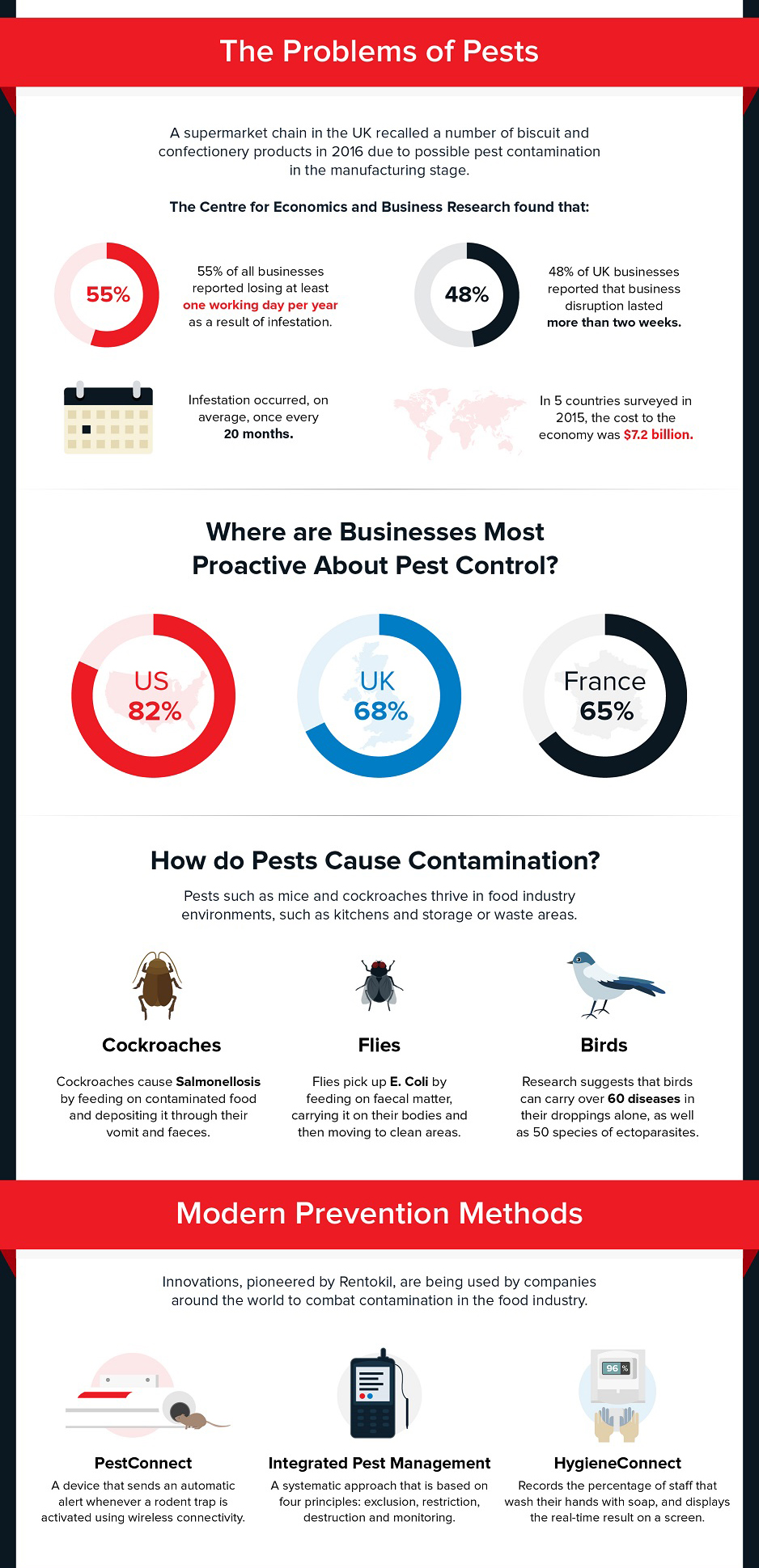
While it may seem obvious to many food companies that a pest infestation can lead to significant product contamination, on a global scale not all regions are on top of this problem. According to a recent research conducted by Rentokil, 82% of U.S. businesses are proactive about pest control, but the percentage falls to 68% in the UK and dips a bit lower to 65% in France. This is significant because pests such as cockroaches, flies and birds can cause serious contamination such as Salmonellosis and E. coli as well as facilitate the spread of diseases through their droppings.
The following infographic from Rentokil outlines the problems that pests can cause and methods food companies can use to fight contamination.
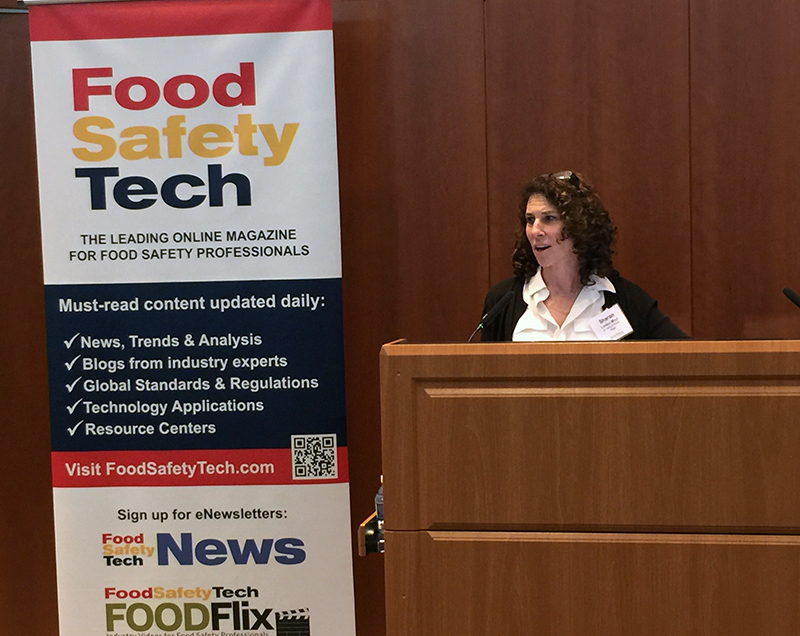
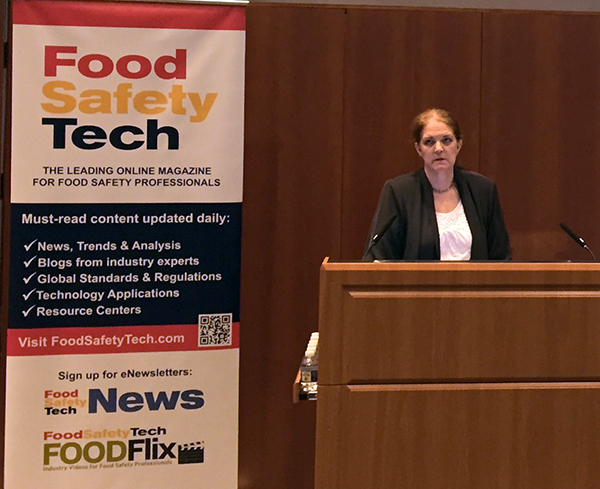
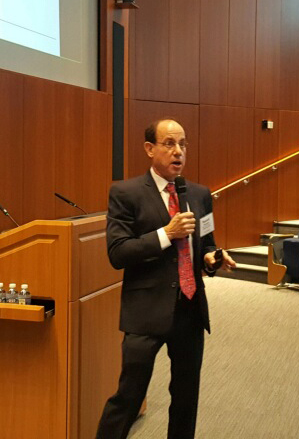
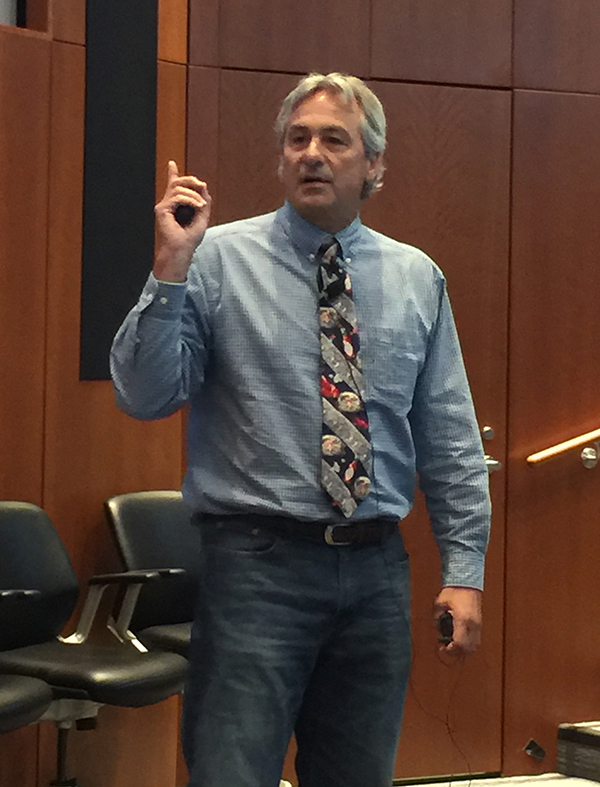
The Food Safety Supply Chain conference brought together industry stakeholders from FDA, CFSAN, GFSI’s certification programs, academia and food companies to discuss strategies and challenges of the supply chain in a more complex global environment. The two-day event was held earlier this month at U.S. Pharmacopeial Convention in Rockville, Maryland. Here’s what some of the speakers had to say.
(Click images to enlarge)
You can’t build safety at the border; you have to build in safety before you get to the border… The Foreign Supplier Verification rule requires importers for first time to share responsibility of products that are coming into country. We have written this rule with a lot of flexibility. – Sharon Mayl, senior advisor for policy to the deputy commissioner for foods and veterinary medicine, FDA, on the FSMA FSVP rule
Transportation of food is a piece that doesn’t get a lot of attention, but it’s a very important part in ensuring the safety of food…[FDA is] in the process of developing a small entities compliance guide. We’re also revising the guidance we did in 2010 to ensure that it’s consistent with the rule. – Jennifer Thomas, director, division of enforcement, office of compliance, CFSAN, on the FSMA Sanitary Transportation of Human Food rule
Food fraud can lead to a public health threat—and should be managed under a food safety management system. – John Spink, Ph.D., director and assistant professor, Michigan State University, on supply chain transparency and food fraud
When you’re looking at the Foreign Supplier Verification Program, you also have to approve your suppliers. There are several aspects to this—you have to check their record with FDA, whether they have any warning letters or on import alert. That doesn’t mean you can’t buy from them, it just means you have to investigate what the problem is. – Russell Statman, executive director, Registrar Corp., on the FSVP rule
FDA doesn’t have jurisdiction over aquaculture farms. So we’re working with countries that do. Any country that has a significant industry has good aquaculture practice programs (GAqP)— every country now has one—so we’re working with them now to make them better. – Brett Koonse, consumer safety officer, FDA, on aquaculture and food safety
[The Sanitary Transportation of Human Food rule is important because of] the role that transportation has played in the past regarding foodborne outbreaks. We have to be proactive. We can’t learn from our mistakes anymore. – Debby Newslow, president, DL Newslow & Associates
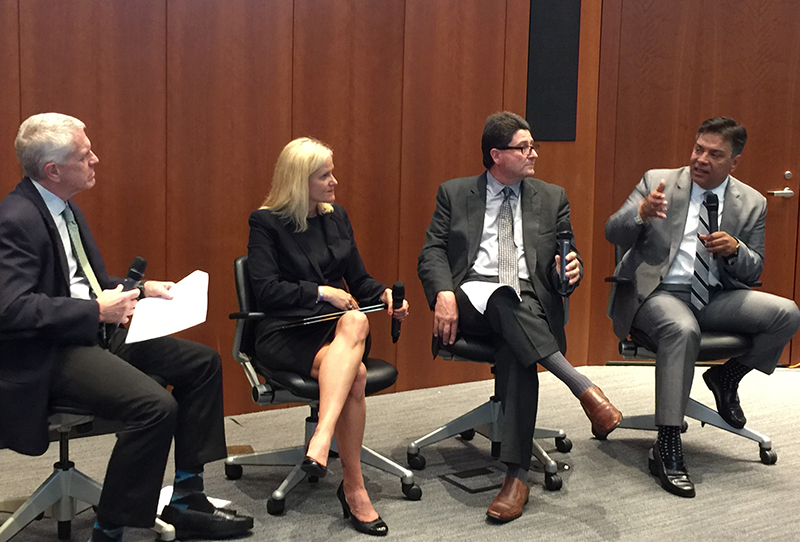
(left to right) John Wadie of 3M Food Safety, Melanie Neumann, Terry Levee and Jorge Hernandez
Food safety should not be about just meeting the regulations. Suppliers must still meet the standards of your business. – Jorge Hernandez, chief food safety officer, Wholesome International
Collaboration and partnership are the only way your going to gain the transparency you need in the supply chain and build your brand for the protection it needs. – Melanie Neumann, president and global food safety attorney, Neumann Risk Services, LLC
One of reasons retailers take [visibility] seriously is that we’re the last line of defense. If you buy something at the grocery store and you get sick, you don’t remember the manufacturer of the product, you remember where you [bought] the product. – Terry Levee, senior director of food safety, Giant Eagle
On Friday the USDA announced a large recall of 325,000 pounds of meat and poultry fat and lard products by Supreme Cuisine. The Class I recall is due to a processing deviation that could cause bacterial pathogens to grow and survive in the products. The duck, beef and pork fat and lard products, which have a one-year shelf life, were produced and packaged from June 1, 2016 through May 8, 2017.
The issue was uncovered after Supreme Cuisine received a consumer complaint of a loose lid. There have been no confirmed reports of adverse reactions due to consumption of the products, and consumers are being urged to discard any of these products.
Last year, nearly 550 food products were recalled in the United States. Nearly half of those recalls were a result of biological contamination, a whopping 65% of which was due to Listeria monocytogenes, according to Rentokil. The company recently released an infographic about the cost of a product recall, pulling out some of the key trends in food product recalls in the United States and the United Kingdom. Next to biological contamination, mislabeling continues to be a large issue.
The Cost of a Product Recall in the Food Industry. Infographic courtesy of Rentokil.
On Tuesday Secretary of Agriculture Sonny Perdue announced the posting of technical documents pertaining to the shipments of U.S. beef to China. Last month the United States and China reached a trade agreement that allowed the export of American beef to China, where the meat has been banned since 2003.
The USDA Agricultural Marketing Service posted the requirements for the Export Verification program for U.S. companies shipping to China. The program will allow packers to apply for approval to export to China. In addition, FSIS updated its online Export Library with China’s requirements for certifying U.S. beef.
According to the USDA, China’s beef imports have increased from $275 million in 2012 to $2.5 billion in 2016. As the world’s largest beef producer, the United States generated more than $5.4 billion in global sales last year.
Last week a panel of industry authorities gathered to share their perspectives on the importance of transparency in the supply chain and the challenges that food companies experience in managing different aspects, from their suppliers to once product reaches retailers.
“Understand that food safety today has changed significantly and will continue to change. It’s a dynamic field and regulations have only accelerated,” said Jorge Hernandez, chief food safety officer at The Wholesome Company. “You need to be more proactive internally and externally.”
Moderated by John Wadie, U.S. marketing operations manager for 3M Food Safety, the other panelists were Melanie Neumann, president of Neuman Risk Services, LLC and Terry Levee, Senior Director, Giant Eagle.
The supply chain of a single product often involves multiple levels. For a company to adequately evaluate its risk and vulnerability, it must have a grasp on the full extent of its supply chain, according to Amy Kircher, Dr. PH, director, Food Protection and Defense Institute. “When we think about the supply chain there are two points to consider: One is just being aware of the depth and breadth of a supply chain to create a food product. It’s much larger than who you buy from and who you sell to,” says Kircher. “Second is moving from a reactive mentality to a proactive mentality. How do we get ahead and close vulnerabilities before they are exposed or monitor threats to the food system such that we can put mitigations in place.” During a discussion with Food Safety Tech, Kircher shares her perspective on how companies can understand and protect their supply chain.
Amy Kircher, Dr. PH, director, Food Protection and Defense Institute
Food Safety Tech: What are the biggest supply chain threats facing food companies?
Amy Kircher: I think one of the biggest challenges is just understanding the entire food supply chain and all the buying, selling and manufacturing that happens along that line. When food comes from a point of origin—whether it’s a farm or a manufactured nutrient—what are all the steps and movements of that product that then results in the final product that the end consumer buys? Typically companies know at least one [step] back and one [step] forward, but they don’t always know the entire breadth of the particular ingredient that they’re buying. Or, if they’re in the middle of the supply chain, [they may not know] where all of their products may be going if it’s sold multiple times (i.e., a spice as an ingredient). There are exceptions—some companies are vertically integrated and know their entire supply chain. But on average, that is a real challenge: Understanding the complexity of the supply chain, where are you in that process, whom you are buying from, and where the food is going afterwards.
FST: How can companies gain a better understanding of their supply chain?
Kircher: Ask questions of whom you’re buying product from—from where are they sourcing the ingredient or commodity? For example, if you’re making a five-component food product, ask your supplier, where does it get its stock from? From where are you sourcing? Have an open dialogue with your vendors and make sure you have the process in place so if you had to quickly identify where an [ingredient] was from, you could.
Secondly, understand the ingredients that you need to procure and be able to monitor where there might be threats for that particular product or commodity. If you need to buy peppers as an ingredient for a spice blend or a can of soup, [you should] be able to monitor what’s happening in that particular commodity: Has there been an intentional adulteration recently? Any recalls? Have there been weather issues in the part of the world where your particular pepper is sourced? If we know there is a natural disaster in a region, how quickly are you notified? Do you have alternate sources as a backup?
A great example is the Ebola [outbreak]: When Ebola happened, there were changes that were happening with cocoa almost daily, because most of the cocoa is sourced out of West Africa, exactly where Ebola was happening. There were price shifts and some transfer concerns where cargo ships weren’t coming into port in some of those countries. It’s important to have an understanding of the ingredients or commodities that you source and be well aware of what’s happening in that landscape.
FST: What steps should companies take to protect their supply chain?
Kircher: You should be doing vulnerability and risk assessments of your supply chain. Know where there are risks of that particular supply: Those risks could be a multitude of things, be it a natural risk or something related to a change in trade policy. Know where you have vulnerabilities within your system: Where could a particular product be exposed to a vulnerability, either natural or intentional? [From there], start assessing what can be done about it. If there’s a specific ingredient that you need to have to make a particular product, where does it come from and do you have alternative sources? What kind of testing mechanisms do you have in place? Some vendors only have one manufacturing site or one receiving site for a product they’re manufacturing. How secure is that processing plant? Is it in a hurricane zone? Have you had criminal activity there? Understanding where there are vulnerabilities in your supply chain allows you to prioritize which ones you should spend money on mitigating.
FST: What technologies do you find to be the most effective in assessing risks and providing visibility throughout the supply chain?
Kircher: I think there are several products that will help. At the Food Defense and Protection Institute, we have a couple. The first is a supply chain documentation and analysis tool (CRISTAL) that allows you to document your supply chain throughout the whole system. Then it applies weights and algorithms to allow you to see what is most critical in your supply chain, and from there you can look at risks from hazards. For a lot of companies, the first step is to map the entire supply chain. Having technology that allows them to do that efficiently versus drawing or creating an Excel spreadsheet allows them to visualize where they might have gaps/challenges, followed by risk and vulnerability assessment.
Second is horizon scanning, or looking at early indications of warnings of events. Our tool is called FIDES (Focused Integration of Date for Early Signals). It looks at predicative analytics—are there conditions or drivers that are occurring that might result in an emerging event or event that might create a problem? We can always scan and monitor where we might have challenges.
We want to move people from a reactive food protection and defense to a preventive posture where you are starting to be ahead of it [threats] and understand where you might have a risk or vulnerability that gets exposed such that you can mitigate it prior to a consumer purchasing [the product].
Food importers have clear objectives: To successfully bring safe food into the country by clearing U.S. Customs and Border Protection, to avoid FDA detention and to conduct business competitively in the United States. Under the FSMA final rule on Foreign Supplier Verification Programs (FSVP), importers must ensure their food is as safe as if it were produced in the United States and that it is not adulterated or misbranded.
Compliance, of course, is of utmost importance when it comes to avoiding issues with the FDA. However, in a more realistic sense, the best way to stay out of trouble with FDA is to avoid two circumstances, advised Russell Statman, executive director at Registrar Corp. (the firm is a U.S. agent for about 15,000 foreign facilities)—being dishonest and not taking the requirements seriously.
“Once you fall into one of those boxes, you’ll never get out,” Statman said. “It’s important when dealing with FDA to remember that. It’s not a building; it’s people. They don’t want to stop your shipments; they want to facilitate trade.” If your company is honestly working toward and making an effort to follow the rules, “FDA will keep working with you until the cows come home,” he said.
Statman discussed practical information surrounding FSVP that importers should consider during the Food Safety Supply Chain Conference earlier this week. Although there is flexibility built into the FSVP rule (as there is with all seven FSMA rules), importers must follow the law. To start, every importer must have DUNS number (provided by Dun & Bradstreet), which is free of charge. However, this can be a challenge for foreign companies, particularly those in China, according to Statman, who also said there may be instances in which Dun & Bradstreet tries to charge a fee. “It’s supposed to be free and quick. If you have problems with Dun & Bradstreet, you want to let FDA know.” He offered key pieces of advice for the FSVP requirements:
Hazard analysis. “You can’t rely on other people. If you’re producing food, do your own hazard analysis. Create a pamphlet that you can give to your customers. Then you don’t have to deal with all these requests—keep updating [the pamphlet], so it’s a living document. If you’re a foreign supplier and have a booklet, you’re steps ahead of your competition.”
Approval and compliance status review of suppliers: Check their record with FDA to find out whether they have any warning letters or on import alert. “That doesn’t mean you can’t buy from them, it just means you have to investigate what the problem is,” said Statman, but added that a lot of U.S. companies will not buy from importers that are flagged with an alert. And in many cases, companies do not know that they’re on import alert, so visit FDA’s website frequently to make sure you’re not on the list. “FDA doesn’t tell you when you’re on import alert. You want to check [because] asking them might not be good enough.”
Supplier verification activities: Verify that importers follow the entire rule.
Corrective actions
Periodic reassessment of FSVP
Importer identification at entry (DUNS number)
Recordkeeping: “In a very real, practical sense, your record stays with you,” said Statman. “If you’re an importer, you don’t want your shipment detained by FDA.” FDA uses a computer system called PREDICT that determines which entries they stop. The system comes up with a score for shipments that are at the highest risk. “Your PREDICT score if very important—some of these factors are secret, [and] some are public. The most important are in your control—your record and the importers record,” he added. “Before you send your first shipment for a new product, make sure everything is correct (i.e., registration, labeling). It’s worth the time.”
Need more help with setting strategic goals and tactics for success in supply chain quality assurance management? This month an upcoming webinar will help attendees do just that, along with delve into the perspectives of two project managers of Fortune 500 companies and how they used a supplier quality management software platform to manage quality assurance.
The complimentary webinar “Achieving Significant Goals in Supply Chain QA Management” (Register) will be held June 22, 2017 at 11 am ET. Speakers include Sandy DeGroot, formerly of Campbell’s Soup organic division, John McGlinn, vice president of sales at EMNS, Inc., and Justin Ramos, partner at Brand Solutions Group.
This website uses cookies so that we can provide you with the best user experience possible. Cookie information is stored in your browser and performs functions such as recognising you when you return to our website and helping our team to understand which sections of the website you find most interesting and useful.
Strictly Necessary Cookies
Strictly Necessary Cookies should be enabled at all times so that we can save your preferences for these cookie settings.
We use tracking pixels that set your arrival time at our website, this is used as part of our anti-spam and security measures. Disabling this tracking pixel would disable some of our security measures, and is therefore considered necessary for the safe operation of the website. This tracking pixel is cleared from your system when you delete files in your history.
We also use cookies to store your preferences regarding the setting of 3rd Party Cookies.
If you visit and/or use the FST Training Calendar, cookies are used to store your search terms, and keep track of which records you have seen already. Without these cookies, the Training Calendar would not work.
If you disable this cookie, we will not be able to save your preferences. This means that every time you visit this website you will need to enable or disable cookies again.
Cookie Policy
A browser cookie is a small piece of data that is stored on your device to help websites and mobile apps remember things about you. Other technologies, including Web storage and identifiers associated with your device, may be used for similar purposes. In this policy, we say “cookies” to discuss all of these technologies.
Our Privacy Policy explains how we collect and use information from and about you when you use This website and certain other Innovative Publishing Co LLC services. This policy explains more about how we use cookies and your related choices.
How We Use Cookies
Data generated from cookies and other behavioral tracking technology is not made available to any outside parties, and is only used in the aggregate to make editorial decisions for the websites. Most browsers are initially set up to accept cookies, but you can reset your browser to refuse all cookies or to indicate when a cookie is being sent by visiting this Cookies Policy page. If your cookies are disabled in the browser, neither the tracking cookie nor the preference cookie is set, and you are in effect opted-out.
In other cases, our advertisers request to use third-party tracking to verify our ad delivery, or to remarket their products and/or services to you on other websites. You may opt-out of these tracking pixels by adjusting the Do Not Track settings in your browser, or by visiting the Network Advertising Initiative Opt Out page.
You have control over whether, how, and when cookies and other tracking technologies are installed on your devices. Although each browser is different, most browsers enable their users to access and edit their cookie preferences in their browser settings. The rejection or disabling of some cookies may impact certain features of the site or to cause some of the website’s services not to function properly.
Individuals may opt-out of 3rd Party Cookies used on IPC websites by adjusting your cookie preferences through this Cookie Preferences tool, or by setting web browser settings to refuse cookies and similar tracking mechanisms. Please note that web browsers operate using different identifiers. As such, you must adjust your settings in each web browser and for each computer or device on which you would like to opt-out on. Further, if you simply delete your cookies, you will need to remove cookies from your device after every visit to the websites. You may download a browser plugin that will help you maintain your opt-out choices by visiting www.aboutads.info/pmc. You may block cookies entirely by disabling cookie use in your browser or by setting your browser to ask for your permission before setting a cookie. Blocking cookies entirely may cause some websites to work incorrectly or less effectively.
The use of online tracking mechanisms by third parties is subject to those third parties’ own privacy policies, and not this Policy. If you prefer to prevent third parties from setting and accessing cookies on your computer, you may set your browser to block all cookies. Additionally, you may remove yourself from the targeted advertising of companies within the Network Advertising Initiative by opting out here, or of companies participating in the Digital Advertising Alliance program by opting out here.