
Tag Archives: Focus Article

Jorge Hernandez, The Wendy's Company
Women in Food Safety

Be Proud, Be Patient: Thoughts from Jorge Hernandez

By Melody Ge
No Comments
Jorge Hernandez, The Wendy's Company

It was a great pleasure for me to speak with Jorge Hernandez, VP of quality assurance at The Wendy’s Company, on behalf of the “Women in Food Safety” group and hear his perspective and tips for young female professionals in the industry. Jorge came to the United States for his college degree (majoring in microbiology), and he stayed ever since. He started his career in the food service industry and found himself passionate about food safety. It was this passion that allowed him to go so far in his career. I totally agree with him: You can do things well when you have passion. “That’s absolutely right. I don’t look at the time I put into it. Food safety is not an easy career, but it has been worth it, and I am very proud of that,” he said. Jorge emphasized how important it is to work hard in every position throughout the career path, as nothing will be wasted. “Every success encourages me, and every non-success taught me a lesson,” he added. One piece of advice Jorge offers to our young female generation: “If you want to build a career, learn from lessons at every stage and in every opportunity. You will use them later to build something very exciting and meaningful to you that you might not realize at the moment. Be patient. [The younger generation] seems to fall in and out of love with their careers very fast. I don’t think long-term careers are built that way. With my own experience, it has built one brick at a time. There’s a win and a lesson from every step throughout the path.”

Jorge encourages all young female professionals to walk through the doors that have been opened for them, work/study hard and push themselves. Study your trade: Maybe the ceiling is not shattered just yet, but you (young female professionals) are the generation that is going to shatter it, so go for it and be proud of yourselves!

Having food safety as a career has not only brought achievements to Jorge’s professional life, but it has also impacted his personal life. He has learned so much from working in the field. One thing has kept him going is that he is never satisfied, and he is always focused on finding better solutions and seeking continuous improvement. Jorge also uses this mindset to guide his kids—and although they sometimes may find it annoying, Jorge laughed and added that it’s true that it’s hard to maintain, but it’s so important.

I asked Jorge if he would choose another path or do anything differently if he could turn the clock back to 10 years ago (e.g., being a doctor was one of his initial plans). The answer is a confident and solid “no”. Jorge found the journey, and truly believed in it. If he could go back to 10 years ago, he would still tell himself: Trust yourself, trust your path, and don’t fret over the challenges. What Jorge would say about himself now is that he is in a wonderful stage where he is able to seperate work and life emotions and brings the joy from work home. “That is something I have learned, and it has enhanced my personal life,” he said.
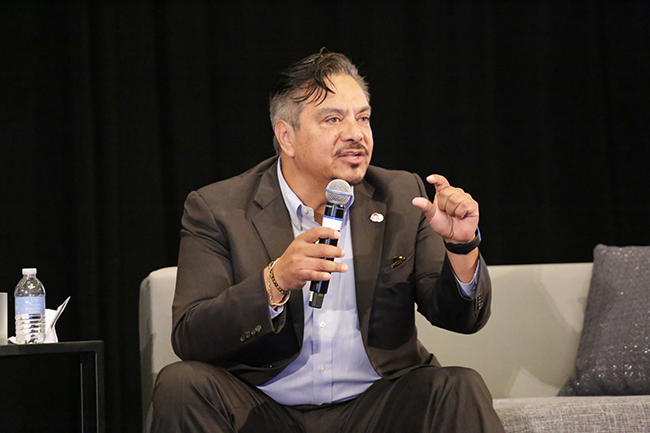
Jorge Hernandez, The Wendy's Company
Jorge Hernandez of The Wendy’s Company during panel discussion at the 2019 Food Safety Consortium.

Melody Ge: Tell us how you started your career and the journey to where you are today.

Jorge Hernandez: My school education and training was in microbiology and in the medical field. My goal was to become a doctor at some point. Finances fell through and I found myself in a situation where I needed to find a job. I found myself in the area of environmental health. We did all kinds of environmental health work: Water, air safety, noise pollution and food safety. The more I worked in food safety, the more I liked it, and it became more interesting to me. Eventually this turned into my career. In a way, it was one of those things that ended up being the best thing that happened to me. I discovered the passion of my life. You always have to keep your mind open to the possibilities.

Ge: Besides the passion, what makes you persevere through the obstacles in food safety industry?

Hernandez: One of the reasons that I fell in love with food safety was the fact that I could connect with people and make changes possible—whether it was in a person, process, or somewhere in the business. I’ve always been able to see the results of my effort. To me, that has been the biggest satisfaction—you can’t put a price on it, and that is what drives me.

Ge: What have you learned from working with women and bringing them through their career journey?

Hernandez: Diversity of thoughts—[whether it’s] women, men, different nationalities—they all bring a different perspective. I know I am generalizing here, but when they become leaders, they tend to be very caring for their projects and their people, and women are very good at problem solving. It makes the team stronger.

Food Safety Professionals: Earn Respect and Be True to Yourself | A panel discussion featuring Jorge Hernandez at the 2019 Food Safety ConsortiumGe: Could you please share an unforgettable story from your professional experience that had a big impact?

Hernandez: I was in a situation where I hired a young woman right out of college. She was smart, and she knew her role was going to be like. In the interview she told me that she wanted to have my job in X number of years. I brought her on board, was able to mentor her and saw her grow within her career. Like many do throughout their careers, she eventually moved on to an elevated position at a different organization. Fast forward to years later… I ran into her at a conference and she said, ‘thank you for what you did’. She is currently at a major organization as a vice president. The sparkle in her eyes and just saying ‘thank you’—it filled and rewarded me. That’s why I love what I am doing. This is a story of success. The point is: Go through the tough times—she worked through it. My job was to keep her motivated, provide guidance, and she got very far based on her skills and passion to always take her career to the next level. Being able to help people and see that growth is amazing, and it will carry with me forever.

Ge: If you could look into a crystal ball, what does the future hold for women in the food safety profession?

Hernandez: I think it’s a great time to be in food safety and quality assurance. I’d like to see more mentors stepping up—those women who have been in the industry and are being looked up to by women who are just entering the workforce. Each level takes their responsibility seriously—take that and show the way for the new folks, because we need them. We need those women and all young food safety and quality assurance professionals to be successful. They are the ones who are going to make foods safer for our families. That’s what I am excited to see. The barriers are not down, but I am very hopeful. And even with the challenges of the new generation, there are a lot of great people who will make a positive different in this industry. Those challenges will only be overcome if all of us, including the women, already in the industry, continue to mentor and grow the careers of young food safety professionals.


Susanne Kuehne, Decernis
Food Fraud Quick Bites

A Little Kiwi Birdie Told Me

By Susanne Kuehne
1 Comment
Susanne Kuehne, Decernis
Food fraud, New Zealand wine
Find records of fraud such as those discussed in this column and more in the Food Fraud Database.
Image credit: Susanne Kuehne

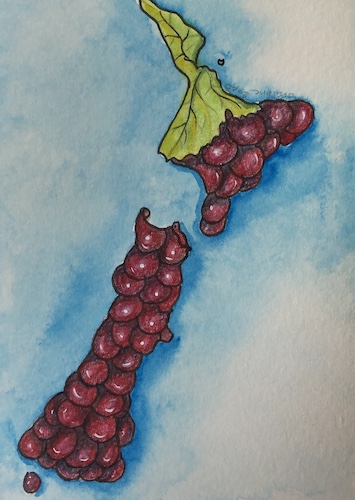
New Zealand is known for its premier, high quality wine industry, enjoying a steady growth for the past several years. Even just one isolated case like the one reported here can hurt the reputation of an entire country’s wine industry. The Ministry of Primary Industries in New Zealand found that a large wine producer in New Zealand is responsible for falsely blending wines, as well as mislabeling the vintage and origin of the wines. The wines do not pose any health risks but due to the damaging nature to the New Zealand wine industry, this fraud is being punished by a hefty fine and other sentences.

Resources

  1. Radio New Zealand (March 13, 2020). “Wine fraud: Southern Boundary Wines fined $1.7m”.
  2. Shermand, E. (August 4, 2017). “New Zealand Winery Accused of Wine Fraud in Landmark Case“. Food & Wine.
Maria Fontanazza, Food Safety Tech
From the Editor’s Desk

COVID-19 in the Food Industry: So Many Questions

By Maria Fontanazza
1 Comment
Maria Fontanazza, Food Safety Tech

Industries across the global are reeling from the COVID-19 crisis. Although we are clearly not in a state of “business as usual”, the food industry is essential. And as this entire industry must continue to move forward in its duty to provide safe, quality food products, so many questions remain. These questions include: Should I test my employees for fever before allowing them into the manufacturing facility? What do we do if an employee tests positive for COVID-19? How can the company continue safe production? Should we sanitize between shifts on the production line? Should employees on the production floor wear face masks and shields? At what temperature can the virus be killed? The list truly goes on. We saw it ourselves during the first Food Safety Tech webinar last week, “COVID-19 in the Food Industry: Protecting Your Employees and Consumers” (you can register and listen to the recording here). Amidst their incredibly busy schedules, we were lucky to be graced with the presence and expertise of Shawn Stevens (food safety lawyer, Food Industry Counsel, LLC), April Bishop (senior director of food safety, TreeHouse Foods, Inc. and Jennifer McEntire, Ph.D. (vice president of food safety, United Fresh Produce Association) for this virtual event.

From a manufacturing point of view, we learned about the important ways companies can protect their employees—via thorough cleaning of high-touch areas, vigilance with CDC-recommended sanitizers, conducting risk assessments related to social distancing and employees in the production environment—along with the “what if’s” related to employees who test positive for COVID-19. Although FDA has made it clear that there is currently no indication of human transmission of the SARS-CoV-2 virus through food or food packaging, some folks are concerned about this issue as well.

“The U.S. food supply remains safe for both people and animals. There is no evidence of human or animal food or food packaging being associated with transmission of the coronavirus that causes COVID-19,” said Frank Yiannas, FDA deputy commissioner for food policy and response in the agency’s blog last week. “Unlike foodborne gastrointestinal viruses like norovirus and hepatitis A that make people ill through contaminated food, SARS-CoV-2, which causes COVID-19, is a virus that causes respiratory illness. This virus is thought to spread mainly from person to person. Foodborne exposure to this virus is not known to be a route of transmission.”

As the industry continues to adjust to this new and uncertain environment, we at Food Safety Tech are working to keep you in touch with experts who can share best practices and answer your questions. I encourage you to join us on Thursday, April 2 for our second webinar in this series that I referenced earlier, COVID-19 in the Food Industry: Enterprise Risk Management and the Supply Chain. We will be joined by Melanie Neumann, executive vice president & general counsel for Matrix Sciences International, Inc. and Martin Wiedmann, Ph.D., Gellert Family Professor in Food Safety at Cornell University, and the event promises to reveal more important information about how we can work through this crisis together.

We hear it often in our industry: “Food safety is not a competitive advantage.” This phrase has never been more true.

Stay safe, stay well, and thank you for all that you do.

Tatiana Bravo, INTURN
FST Soapbox

Looking Ahead: The Digital Supply Chain and Fast-Moving Consumer Goods

By Tatiana Bravo
No Comments
Tatiana Bravo, INTURN

The global supply chain is changing. The fast-moving supply chains that power many of the world’s top businesses are being transformed before our very eyes, as companies all over the globe compete to beat their competitors through digitalization.

What we’re now seeing is the emergence of a digital supply chain, with processes powered by innovative and exciting new ideas turned into software.

As we look ahead to the coming months and years, we can expect to see incredible changes affecting the supply chains of all manner of businesses. In fact, we’d go so far as to say that any business that’s serious about competing on the global stage will have no choice but to embrace these innovations and go digital.

So, what exactly can we expect to see from the digital supply chain in the near future, and how might these changes affect fast-moving consumer goods?

Advanced Analytics

The potential of analytics is incredible, particularly when you look at supply chains.

Recent years have seen data rise to the forefront of many business leaders’ concerns. Increasing numbers of companies have started to pick up on the impact that informative data can have on their strategies, and ultimately their chances of ongoing success in the marketplace.

The supply chain is no exception to this rule. As the power of analytical software improves, businesses will be clamoring to gain access to, and make use of, the huge amount of data that’s now available.

We’re likely to see those managing data put under increasing amounts of pressure to use that data effectively, helping to inform decisions that impact supply chain processes and limit wastage. This data will also be invaluable in determining the real impact of critical supply chain decisions and informing future strategies.

The Emergence of AI
AI is the next big thing in business, and it’s set to transform the way the digital supply chain works. Artificial intelligence is now emerging as a hugely powerful tool, capable of helping businesses to make the right decisions for their supply chains.

As the potential of AI improves, we can expect to see its impact felt more widely throughout global supply chains. Look out for AI being used to inform businesses on changing customer preferences, disruptions in supply chains, increasing costs and other obstacles to product delivery. Artificial intelligence will predict future problems before they occur, giving business owners plenty of time to steer clear of potential pitfalls and keep things moving.

AI will also prove invaluable when it comes to anticipating the purchasing habits of existing customers and establishing the value of new leads and potential purchasers. If used effectively, this information could have a dramatic impact on the success of a wide range of different businesses—particularly those focused on fast-moving consumer goods.

Automation of Supply Chain Tasks

Automation itself isn’t a new idea, but the way it’s being used in digital supply chains is.

In the coming months and years, we’re likely to see automation transform the way supply chains work. The automation of processes will help businesses to cut costs, improve efficiency and eliminate any skills gaps by which they may be affected.

Supply chain tasks are being automated with the help of something called robotic process automation, or RPA. This form of automation is even smarter than traditional automated processes.

Informed by software bots or AI, RPA is a significant step forward in the world of digital supply chains. It’s highly scalable, incredibly effective and, importantly, it’s been proven to be hugely reliable. So, even businesses dedicated to the very highest standards of quality are now beginning to automate processes using RPA.

Climate Change Challenges

Climate change continues to be a hot topic in the news, and supply chains are likely to feel the impact of these concerns.

Consumers’ purchasing habits are increasingly led by environmental considerations. It’s therefore important that companies consider the environmental impact of their supply chain processes and provide visibility on these, for those who have an interest.

It’s expected that issues surrounding sustainability will become ever more critical in the future. Inevitably, supply chains will be impacted. Companies making use of digitalization will be best placed to prepare for the challenges of sustainability, reducing waste and making speedy adjustments to their processes as and when required.

A Shift in Transportation

The digitalization of supply chain processes has given ecommerce companies and online retailers the edge over traditional high street retailers. And this has led to a shift towards online shopping, which shows no sign of waning. As we continue into 2020 and beyond, we can expect to see more and more consumers choosing to shop online, and that’s going to have a knock-on effect on the transportation of goods.

Experts are predicting a transportation crunch, when demand begins to outstrip the availability of transport for online goods. This is likely to lead to a shift in how goods are transported, which could well align with changes to logistics designed to improve sustainability and reduce the carbon footprint of products.

Changes in Trade Agreements

Changes in trade agreements between many of the world’s leading economies are likely to impact supply chains in the future. With Brexit looming and trade issues between the United States and China continuing, it’s important that companies remain aware of how political decisions might affect the way they work.

Digital supply chains provide enhanced flexibility for companies, enabling organizations to quickly adapt to changes that could be outside of their control. So, companies that continue to provide a fast and reliable service despite changing trade agreements could well gain an edge over less efficient competitors as time goes on.

Companies making full use of digitalization will be best placed to make the most of new opportunities, and avoid supply chain disruption as a result of changing trade agreements.

Security Concerns

While businesses are beginning to realize the potential of the data that’s now available to them, consumers too are opening their eyes to the data that they share with the world. And this increased awareness has led to consumers being newly concerned about the data they reveal, and how secure that data is once it’s been shared.

Companies looking to make full use of the digitalization of supply chain processes will be incredibly reliant on data to maximize their efficiency. For this reason, it will be vital that companies establish trust with their existing customers and new prospects.

Security measures should therefore be top of the agenda for forward-thinking businesses. Companies that fall foul of security breaches and data losses are unlikely to be trusted with consumers’ data going forward, and this could have a detrimental impact on the efficiency of their digital supply chains in the future.

Digitalization is sweeping through the supply chains of companies all over the planet, and its potential is mind boggling. The automation of supply chain processes has already transformed the way supply chains are managed, massively increasing the speed and efficiency of a huge number of different companies.

In the future, we’re likely to see further improvements to digital supply chains, as companies begin to make better use of artificial intelligence and robotics. Look out for supply chains managed by AI-powered software and RPA, and get ready for astounding productivity from early adopters of these exciting new technologies.

Derek Rickard, Cimcorp Automation Ltd.
FST Soapbox

Up to Speed: How Automated Order Picking Protects Product Freshness

By Derek Rickard
No Comments
Derek Rickard, Cimcorp Automation Ltd.

Today’s food producers and retailers are in a constant race against time. This race starts within the four walls of the distribution center, where products must move from receiving, through storage and dispatch—with high speed and accuracy. While the goal (or finish line) is to get these products to stores as fast as possible and meet consumer expectations, speed of delivery also plays a vital role in ensuring the quality of foods—particularly easily perishable ones like fruits, vegetables, eggs, meats, certain dairy products and baked goods.

Namely, efficient product flow means companies can meet shorter lead times and thereby deliver fresher, safer food—with longer shelf lives—to market. It’s a seemingly easy concept, yet many organizations continue to stumble as a result of ongoing operational challenges that slow distribution down, especially in facilities that continue to utilize manual order picking.

Major challenges include:

  • Continued reliance on physical labor with fulfillment speed highly dependent on the endurance of individual employees.
  • SKU proliferation due to product diversification, where facilities must now store and manage more products than ever before in a seemingly shrinking amount of space.
  • Seasonal spikes in business that require order picking staff to work harder and often longer hours to keep up with the influx of orders.

For organizations struggling to address these challenges and meet the need for speed in distribution, now is an opportune time to look at automation. There are now robotic order picking systems that can store, retrieve and move products effortlessly through a facility, ensuring rapid handling and very short lead times.

By choosing to automate, food producers and retailers can realize numerous benefits, including the following.

1. Accelerated Order Fulfillment

Naturally a robotic system can assemble orders and prepare them for outbound shipping far faster than humanly possible. Thus, an automated distribution center is often up to six times more efficient than a manual one. Notably, there are systems now that integrate order picking and product handling in a single solution, rather than separate functions (as traditionally done but which is too slow for fresh food distribution).

Such a system can perform both buffer storage and order picking in one simultaneous operation for significant time savings. Facilities can thereby prepare orders closer to the time of a truck’s arrival, instead of hours in advance. Foods then spend less time in transport and can maintain their quality and consistency. This also helps to reduce chances of spoilage, which in turn cuts back on waste and the supply chain’s impact on the environment.

2. Improved Ergonomics and Workplace Safety

In distribution centers that rely solely on manual order picking, employees have to run up and down long stretches of aisles and lift heavy crates or boxes. In addition to being inefficient, such manual operations make order picking a strenuous and injury-prone job. The risks for injury have only helped further the labor shortage problem seen nationwide, as job seekers show declining interest in material handling careers.

But when automated systems take over the majority of order picking processes, there is less human involvement—which can help fill in any gaps left by labor shortages. Order fulfillment speed also becomes less dependent on the physical capabilities of employees. Existing staff can then be elevated into new roles in managing and overseeing automated systems. These are safer and far more enriching positions that can draw a whole new pool of technical talent.

3. Better Space Utilization

As mentioned, there is a growing trend towards product diversification, where companies are now offering more options to consumers, such as additional sizes, flavors and health-conscious choices. As a result, the number of SKUs in most distribution centers is exploding. Some facilities once designed to house a few hundred SKUs are now dealing with thousands, leaving little room to spare.

Those challenged by SKU proliferation can consider an overhead robotic system that uses high-density, floor-based storage, where goods are stacked on the warehouse floor. This eliminates the need for racking or traveling around aisles. Plus, it reduces the number of movements required to pick an order. Facilities can store more products within their existing space, offsetting the costs of possible new construction. An overhead robotic system can also clear all products from the warehouse floor for easy, hygienic cleaning.

4. Flexibility to Keep Up During Seasonal Peaks

In all consumer goods industries, there are times of the year when demand spikes and orders come pouring in. For the food industry, companies tend to see spikes during the holiday season and in the summer months—times when people commonly host get-togethers.

Seasonal peaks can take a heavy toll on manual warehouse operations. Some try to hire temporary employees to get by, but that comes with challenges in providing proper training in a short span of time. But automated systems—particularly those with a modular design—are flexible and scalable, enabling facilities to adjust their number of robots to meet fluctuations in order volume—during seasonal highs and lows.

A notable example of a food company that is successfully leveraging automation is grocery leader Kroger. Namely, Kroger wanted to develop a state-of-the-art, automated plant and distribution center to achieve many of the benefits discussed above, including ensuring product quality and reducing employee risks of injury.

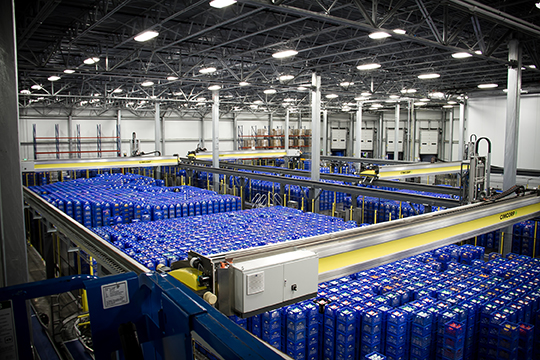
Built in Denver, Colorado, Kroger’s “Mountain View Foods” facility processes fresh conventional and organic milk, and packages aseptically processed milk, creams and juices. Within Mountain View Foods, Kroger has installed an end-to-end automated system that can store up to 36,000 crates and pick 32,000 crates per day. Cases are picked according to specified sequences on one end of the facility and then palletized for truck loading at the other, with significant storage buffering in between.

Cimcorp, Kroger, Automation
Having installed an end-to-end automated system, Kroger benefits from orders picked with 100-percent accuracy, at faster speeds, which results in shorter lead times and optimal product freshness for shoppers. Image courtesy of Cimcorp.

A warehouse control system (WCS) controls all robotic movements and serves as the brains behind the automation. The software also collects data on each processed order, giving Kroger traceable information to meet food safety requirements. Kroger benefits from orders picked with 100-percent accuracy, at faster speeds, which results in shorter lead times and optimal product freshness for shoppers.

Kroger’s story demonstrates the power of automation in enabling more streamlined order fulfillment. Those that choose to automate can overcome the many challenges that inhibit efficient product flow and thereby bolster their supply chain velocity. Simply put, faster fulfillment means fresher products in stores. And, fresher products are safer products for consumers to enjoy.

Selvarani Elahi, Food Authenticity Network
Food Fraud Quick Bites

Food Fraud Information Sharing

By Karen Everstine, Ph.D., Selvarani Elahi
No Comments
Selvarani Elahi, Food Authenticity Network

Coordination among the various agencies and laboratories responsible for food safety is an ongoing challenge. Coordination and standardization of laboratories and methods related to food authenticity testing can be even more challenging. As noted in the Elliott Review into the Integrity and Assurance of Food Supply Networks (conducted following the 2013 horsemeat incident):

“Official controls of food authenticity require a wide range of analytical and molecular biological techniques, many with exacting instrumentation requirements and in-depth scientific interpretation of the datasets generated. No single institution…could field the complete range of such techniques with the required expertise.”

One of the recommendations in Elliott Review was the establishment of an “Authenticity Assurance Network” to facilitate standardized approaches to food authenticity testing. This network would also enable better coordination among government departments related to policies, surveillance and criminal investigation around food fraud. The Food Authenticity Network (FAN) was subsequently established in 2015 by the U.K. government and serves as a repository for news and information on best practices for food authenticity testing methods and food fraud mitigation. At the heart of FAN, there is a network of laboratories that provide authenticity testing, which are designated as Food Authenticity Centers of Expertise (CoE). A contact person is named for every CoE so that stakeholders can communicate with them regarding food authenticity testing. There is a call currently open for UK Food Authenticity Centres of Expertise, so take a look and see if your laboratory fits the requirements.

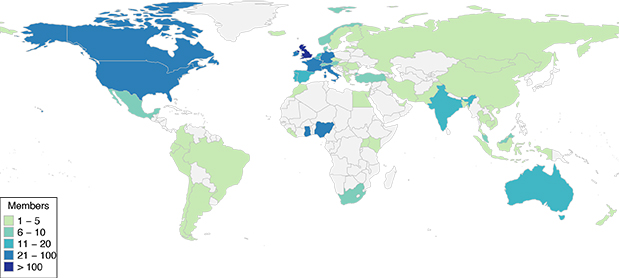
Over the past four years, FAN has grown to more than 1,500 members from 68 countries/territories and in 2019, more than 12,000 unique users accessed information on the network’s website.

Food Authenticity Network
Heatmap of Food Authenticity Network membership. (Graphic courtesy of FAN)

The site currently hosts 101 government reports, 77 standard operating procedures (SOPs), 16 survey reports, and 22 reports on nitrogen factors (which are used for meat and fish content calculations). Importantly, the site also includes a section on food fraud mitigation, which signposts some of the world’s leading services, guidance and reports aimed at preventing fraud from occurring.

FAN posts periodic newsletters with updates on funded projects, research reports, government activity, upcoming conferences, and other news of interest related to assuring the integrity of food. The latest newsletter has just been issued.

In its efforts to create a truly global network, as well as reaching out to the international food community, FAN is collaborating with other governments. In 2019, Selvarani Elahi gave presentations on FAN in Ghana and Vietnam, and discussions are currently taking place with the Ghana Food and Drugs Administration and the International Atomic Energy Agency about creating bespoke country-specific pages. In 2018, FAN was recognized at a Codex Alimentarius Commission meeting as being a “leading example of an integrity network.” Discussions are also in progress with multiple Codex Member countries.

FAN is an open access platform and membership is free (you can sign up here). The benefits of membership include access to closed discussion fora on the site, customizable email alerts, and options to communicate with other network members, as well as a monthly highlights email that rounds up the month’s activities in one convenient location.

The Network was set-up with funding from the Department for Environment, Food and Rural Affairs, the Food Standards Agency, Food Standards Scotland, and is currently supported with public-private partnership funding from the Department for Business, Energy and Industrial Strategy, McCormick and Company, LGC Standards and the Institute of Food Science & Technology.

Roelof Koopmans, Semtech
Retail Food Safety Forum

How Technology Simplifies Food Safety Operations

By Roelof Koopmans
No Comments
Roelof Koopmans, Semtech

To get to the restaurant table, food must travel great lengths to preserve that farm fresh quality and in many cases, IoT-enabled sensors are being used to do this. This is especially important as the World Health Organization estimates that one in 10 people fall ill every year from eating contaminated food.

When we think of our favorite dish, we often associate it with delicious flavors, pleasant scents and even memories of a night out with friends. What we likely don’t consider is technology, something that’s critical in ensuring the meal on our plate is safe to consume. Technology plays an essential role in guaranteeing that restaurants are serving fresh food to customers. From identifying operational deficiencies to protecting the overall brand of an organization, there are certain measures restaurants are taking—whether local or country-wide chains—to ensure food quality remains a top priority.

Restaurants are perhaps held to an even higher standard than your local supermarket when it comes to the quality of food on the table. Therefore, it’s imperative that perishables are cared for properly throughout the entirety of the food supply chain and that starts well before the food ever enters the restaurant’s front door. With long-range, low-power wireless IoT technology, farmers can get insights into a number of variables that may impact the growth of their crops. Armed with that knowledge, they can make real-time decisions to optimize crop growth and ultimately produce a greater yield. For example, farmers today can set up a series of sensors throughout their farm to measure real-time soil conditions, including humidity and pH levels. If they notice an especially high pH, for example, they can immediately remedy the situation and provide the crop with the proper nutrients or conditions it needs to grow.

For food safely to arrive at restaurants, it must be kept in a controlled environment during its journey from the farm or warehouse, and carefully monitored during that time. The temperature of refrigerated shipping units or storage facilities is an incredibly important factor, as bacteria growth can increase even by simply opening the refrigerator door or with a slight temperature shift, and employees are often tasked with managing this. With large facilities comes increased labor for employees, which can lead to inefficient temperature monitoring. To eliminate food waste and contamination, IoT sensors deployed throughout facilities can eliminate human error, and deliver more consistent monitoring, via real-time updates when temperatures enter unsafe territories.

Numerous international food handling and food safety laws have been implemented to reduce the risk of foodborne illness resulting from bacterial growth. A major component of most “farm-to-fork” regulations is the ability to track, report and maintain appropriate temperature conditions inside refrigeration and freezer units throughout the entire cold chain—including when the food finally makes it the restaurant.

This is a universal priority for restaurants around the world, including Hattie B’s Hot Chicken, a southern-style food chain, which started in Nashville and now has locations nationwide. To successfully do this, the restaurant turned to technology. They used a supplier of wireless connectivity solutions with integrated long range, low power technology for temperature monitoring sensors. The sensors, which are capable of penetrating stainless steel doors and concrete walls, can monitor temperatures in refrigerators and freezers. This is essential, as the technology eliminates possible human error in manually checking temps and other food safety procedures. In instances where refrigerator temperatures shift out of range, the technology remotely notifies restaurant managers in real-time, allowing them to act quickly, ensuring their perishables remain fresh and safe for customers at all times.

Food waste in restaurants is closely tied to food safety. In the United States alone, food waste is estimated to be between 30–40% of the food supply, according to the USDA. In the restaurant industry in particular, human error is one of the most notable reasons for food waste. To eliminate the human error when handling food and monitoring storage, an IoT solution provider for the industrial, smart city and smart energy segments, integrated long-range low power technology into smart refrigeration solutions for restaurant applications. This IoT solution is designed for humidity and temperature monitoring, delivering real-time updates to managers to ensure the shelf life of food is maximized and it remains safe to consume, ultimately leading to a decrease in food waste.

From farm to table, technology plays an essential role in ensuring restaurants are delivering the highest quality of fresh, safe food. It allows organizations to identify operational deficiencies and reduce overall food safety risk, which is imperative when maintaining a strong business in a competitive industry.

The Importance Of Cleanrooms in the Food Industry

By Steve Gonzalez
No Comments

The health and well being of millions depends on manufacturers’ and packagers’ ability to maintain a safe and sterile environment during production. This is why professionals in this sector are held to much stricter standards than other industries. With such high expectations from consumers and regulatory bodies, a growing number of food companies are opting the use cleanrooms.

Cleanrooms are sealed off from the rest of a laboratory or production facility. Through stringent ventilation and filtering systems, they protect against contaminants that might be found in an unrestricted environment. Mold, mildew, dust and bacteria are sifted from the air before they can enter the space.

Personnel who work in a cleanroom are required to adhere to rigorous precautions, including clean suits and masks. These rooms also closely monitor temperature and humidity to ensure the optimal climate.

Cleanrooms can be found in numerous applications throughout the food industry. Specifically, they are used in meat and dairy facilities, as well as in the processing of foods that need to be gluten and lactose free. By creating the cleanest possible environment for production, companies can offer their customers peace of mind. Not only can they keep their products free from contamination, but they can extend shelf life and increase efficiency.

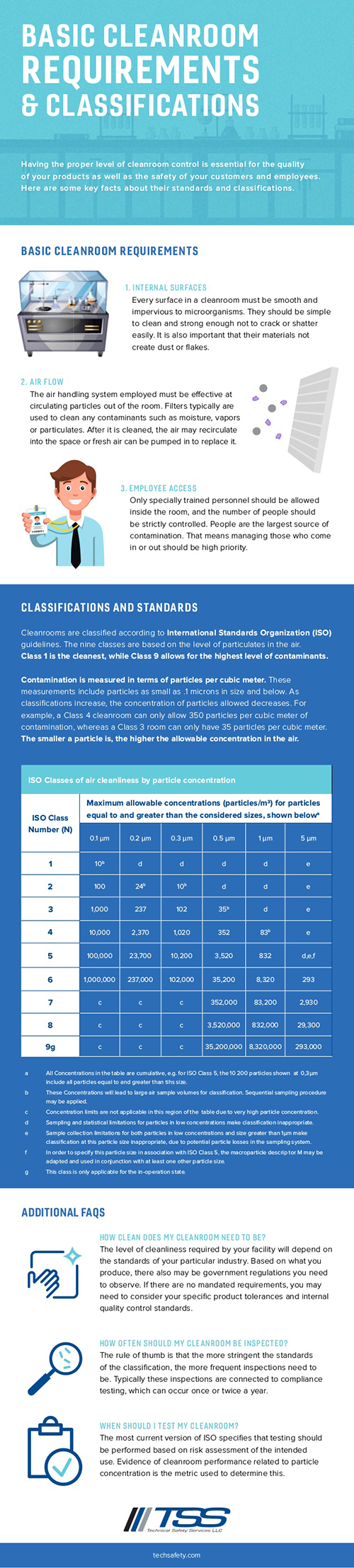
If you want to learn more about cleanrooms and their classifications, take a look at the accompanying infographic. It details the essential requirements and standards for facilities in the food industry and beyond.

Cleanroom requirements, food safety
Infographic courtesy of Technical Safety Services
Crop spraying, Ellutia

From Farm to Fork: The Importance of Nitrosamine Testing in Food Safety

By Andrew James
No Comments
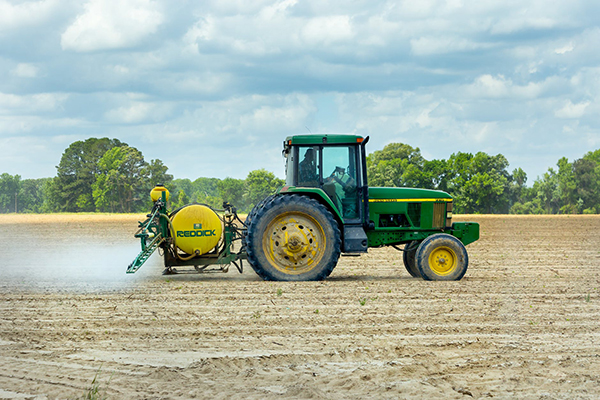
Crop spraying, Ellutia

N-nitroso compounds (NOCs), or nitrosamines, have once again made headline news as their occurrence in some pharmaceuticals has led to high profile product recalls in the United States.1 Nitrosamines can be carcinogenic and genotoxic and, in the food industry, can compromise a food product’s quality and safety. One nitrosamine in particular, N-nitrosodimethylamine (NDMA), is a highly potent carcinogen, traces of which are commonly detected in foods and may be used as an indicator compound for the presence of nitrosamines.2

NOCs can potentially make their way into the food chain in a number of ways, including (but not limited to): Via the crop protection products used to maximize agricultural yields; via the sodium and/or potassium salt added to preserve certain meats from bacterial contamination; as a result of the direct-fire drying process in certain foods; and via consumption of nitrates in the diet (present in many vegetables due to natural mineral deposits in the soil), which react with bacteria and acids in the stomach to form nitrosamines.3

The crop protection and food manufacturing industries are focused on ensuring that levels of nitrosamines present in foods are minimal and safe. Detection technology for quantitating the amount of nitrosamines (ppm levels) in a sample had not advanced in nearly 40 years—until recently. Now, a thermal energy analyzer (TEA) —a sensitive and specific detector—is being relied on to provide fast and sensitive analysis for players throughout the food supply chain.

Regulatory Landscape

Both NDMA and the nitrosamine N-nitrososodiethylamine (NDEA) have been classified by national and international regulatory authorities as ‘probable human carcinogens’.3 NDMA in particular is by far the most commonly encountered member of this group of compounds.7

In the United States there are limits for NDMA or total nitrosamines in bacon, barley malt, ham and malt beverages, yet there are currently no regulatory limits for N-nitroso compounds (NOC) in foods in the EU.7

Developers of crop protection products are required to verify the absence of nitrosamines or quantify the amount at ppm levels to ensure they are within the accepted guidelines.

Crop Protection

The presence of nitrosamines must be traced and risk-managed along the food’s journey from farm to fork. The issue affects testing from the very beginning – particularly at the crop protection stage, which is one of the most highly regulated industries in the world. Without crop protection, food and drink expenditures could increase by up to £70 million per year and 40% of the world’s food would not exist.7

Development of a new crop protection product (herbicide, fungicide, insecticide or seed treatment) involves several steps: Discovery and formulation of the product, trials and field development, toxicology, environmental impacts and final registration. New product registration requires demonstration of safety for all aspects of the environment, the workers, the crops that are being protected and the food that is consumed. This involves comprehensive risk assessments being carried out, based on data from numerous safety studies and an understanding of Good Agricultural Practice (GAP).

One global producer of agrochemicals uses a custom version of the TEA to verify the absence of nitrosamines or quantitate the amount of nitrosamines (ppm levels) in its active ingredients. The LC-TEA enables high selectivity for nitro, nitroso and nitrogen (when operating in nitrogen mode), which allows only the compounds of interest to be seen. Additionally, it provides very high sensitivity (<2pg N/sec Signal to Noise 3:1), meaning it is able to detect compounds of interest at extremely low levels. To gain this high sensitivity and specificity, it relies on a selective thermal cleavage of N-NO bond and detection of the liberated NO radical by the chemiluminescent signal generated by its reaction with ozone.

The customized system also uses a different interface with a furnace, rather than the standard pyrolyser, to allow for the additional energy required and larger diameter tubing for working with a liquid sample rather than gas.

The system allows a company to run five to six times more samples with increased automation. As a direct result, significant productivity gains, reduced maintenance costs and more accurate results can be realized.

Food Analysis

Since nitrite was introduced in food preservation in the 1960s, its safety has been debated. The debate continues today, largely because of the benefits of nitrite in food products, particularly processed meats.6 In pork products, such as bacon and cured ham, nitrite is mostly present in the sodium and/or potassium salt added to preserve the meat from bacterial contamination. Although the meat curing process was designed to support preservation without refrigeration, a number of other benefits, such as enhancing color and taste, have since been recognized.

Analytical methods for the determination of N-nitrosamines in foods can differ between volatile and non-volatile compounds. Following extraction, volatile N-nitrosamines can be readily separated by GC using a capillary column and then detected by a TEA detector. The introduction of the TEA offered a new way to determine nitrosamine levels at a time when GC-MS could do so only with difficulty.

To identify and determine constituent amounts of NOCs in foods formed as a direct result of manufacturing and processing, the Food Standards Agency (FSA) approached Premier Analytical Services (PAS) to develop a screening method to identify and determine constituent amounts of NOCs in foods formed as a direct result of manufacturing and processing.

A rapid and selective apparent total nitrosamine content (ATNC) food screening method has been developed with a TEA. This has also been validated for the known dietary NOCs of concern. This method, however, is reliant on semi-selective chemical denitrosation reactions and can give false positives. The results can only be considered as a potential indicator rather than definitive proof of NOC presence.

In tests, approximately half (36 out of 63) samples returned a positive ATNC result. Further analysis of these samples by GC-MS/MS detected volatile nitrosamine contamination in two of 25 samples.

A key role of the TEA in this study was to validate the alternative analytical method of GC-MS/MS. After validation of the technique by TEA, GC-MS/MS has been proven to be highly sensitive and selective for this type of testing.

The Future of Nitrosamine Testing

Many countries have published data showing that toxicological risk from preformed NOCs was no longer considered an area for concern. Possible risks may come from the unintentional addition or contamination of foods with NOCs precursors such as nitrite and from endogenous formation of NOCs and more research is being done in this area.

Research and innovation are the foundations of a competitive food industry. Research in the plant protection industry is driven by farming and the food chain’s demand for greater efficiency and safer products. Because the amount of nitrosamines in food that results in health effects in humans is still unknown, there is scope for research into the chemical formation and transportation of nitrosamines, their occurrence and their impact on our health. Newer chromatographic techniques are only just being applied in this area and could greatly benefit the quantification of nitrosamines. It is essential that these new approaches to quality and validation are applied throughout the food chain.

References

  1. Christensen, J. (2020). More popular heartburn medications recalled due to impurity. CNN.
  2. Hamlet, C, Liang, L. (2017). An investigation to establish the types and levels of N-nitroso compounds (NOC) in UK consumed foods. Premier Analytical Services, 1-79.
  3. Woodcock, J. (2019). Statement alerting patients and health care professionals of NDMA found in samples of ranitidine. Center for Drug Evaluation and Research.
  4. Scanlan, RA. (1983). Formation and occurrence of nitrosamines in food. Cancer res, 43(5) 2435-2440.
  5.  Dowden, A. (2019). The truth about nitrates in your food. BBC Future.
  6.  Park, E. (2015). Distribution of Seven N-nitrosamines in Food. Toxicological research, 31(3) 279-288, doi: 10.5487/TR.2015.31.3.279.
  7.  Crews, C. (2019). The determination of N-nitrosamines in food. Quality Assurance and Safety of Crops & Foods, 1-11, doi: 10.1111/j.1757-837X.2010.00049.x
  8. (1989) Toxicological profile for n-Nitrosodimethylamine., Agency for Toxic substances and disease registry.
  9. Rickard, S. (2010). The value of crop protection, Crop Protection Association.
Susanne Kuehne, Decernis
Food Fraud Quick Bites

Fraudulent Dinner Is Served

By Susanne Kuehne
No Comments
Susanne Kuehne, Decernis
Olive Oil, Food Fraud
Find records of fraud such as those discussed in this column and more in the Food Fraud Database.
Image credit: Susanne Kuehne

Due to extensive opportunities for fraud, the lack of an adequate monitoring system, cost pressures in the industry, and lack of transparency in the food supply chain, amongst other factors, fraudulent food products still pose a significant risk within the hospitality industry. A recent study discusses the food service food fraud vulnerability assessment (FS-FFCA), showing as an example that one-third of extra virgin olive oil samples at restaurants and catering facilities were adulterated. More tools are urgently needed to protect consumers and legitimate operations from illicit activities.

Resource

  1. van Ruth, S.M., et al. (March 9, 2020): “Feeding fiction: Fraud vulnerability in the food service industry”. Food Research International, Volume 133, July 2020, 109158