
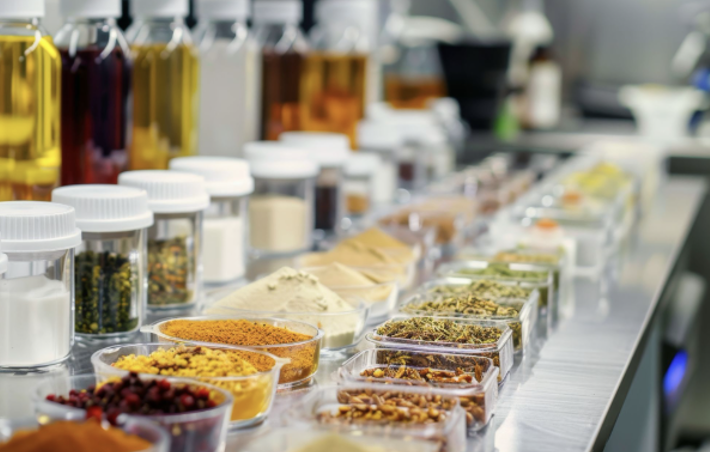
Food fraud isn’t new. What’s changed is our awareness of it. At its core, food fraud is the intentional substitution, addition, tampering, or misrepresentation of a food or ingredient for economic gain. The drivers haven’t changed much: high-value ingredients, complex global supply chains with more intermediaries than most people realize, price volatility from tariffs or natural disasters, and food safety standards that vary from country to country. Put those together and food fraud is going to keep happening. The question is how well food and beverage companies understand where they’re vulnerable and what they’re doing to reduce that risk.

Food fraud, driven primarily by economic gain, can rapidly escalate from quality concerns into serious public health crises when adulteration goes undetected. Modern analytical technologies such as spectroscopy, chromatography, mass spectrometry, and PCR are effective tools to authenticate ingredients and detect adulteration before products reach consumers. This article highlights that food fraud prevention is most effective at the ingredient level and explores practical applications, cost considerations, and implementation strategies for building a safer and more transparent food system.

FOODAKAI’s latest Global Food Fraud Index reveals a significant spike in food fraud incidents across high-consumption categories. In Q1 2025, nuts, dairy products, and cereals experienced some of the sharpest increases in reported fraud, with new risks emerging in garlic and non-alcoholic beverages.

A recent webinar brought together leaders in food defense and protection to share the biggest challenges facing food and agriculture and opportunities for collaboration and risk mitigation.

Conor Kearney, former Senior Vice President of Strategy and Operations, has been appointed CEO of FoodChain ID. He succeeds Brad Riemenapp, who passed away in May.
The draft CPG describes the labeling requirements for major food allergens and proper use of the ingredient list and the “Contains” statement for major food allergen declarations. It also describes requirements for firms to implement controls to prevent or significantly minimize allergen cross-contact. In addition, the draft CPG describes additional allergen labeling violations and directs FDA staff to examine potential product adulteration due to allergen cross-contact as well as potential labeling violations.

GC-MS-IRMS technology could help prevent fraudulent practices in the booming fish oils market by measuring hydrogen and carbon isotope fingerprints in fatty acids.

Data analysis can help identify potential foodborne illness outbreaks more quickly, reduce food fraud and improve internal safety practices.

Guangtao Zhang, Ph.D., director of the Mars Global Food Safety Center, talks about the need to advance understanding and knowledge sharing in allergen management, especially peanut allergen detection, and how Mars is working to improve detection methods.

A blockchain solution is set up to fight counterfeit products.