Why Everyone Should Care About Food Safety

By Matt Shipman
No Comments

Food safety poses a global health problem. According to the World Health Organization, contaminated food can cause more than 200 diseases – and food- and water-borne diseases that cause diarrhea are estimated to kill two million people each year worldwide.

And food safety is not just someone else’s problem.

“Foodborne illnesses are a significant problem in the United States, with massive impacts on public health and the economy,” says Ben Chapman, a food safety expert and researcher at NC State. And the numbers back Chapman up.

According to a 2012 report from researchers at the Emerging Pathogens Institute, Resources For the Future, and the U.S. Department of Agriculture’s Economic Research Service, foodborne illness is estimated to cost the U.S. more than $14 billion annually. (The estimate takes into account factors such as medical costs and productivity losses.)

And a 2011 report from the U.S. Centers for Disease Control and Prevention (CDC) reported an estimated 9.4 million episodes of foodborne illness each year in the U.S. from known pathogens. An additional 38.4 million cases are estimated to come from unspecified or unknown pathogens. In total, foodborne illnesses are thought to contribute to 48 million illnesses annually – resulting in more than 128,000 hospitalizations and 3,000 deaths. It is, in short, a big deal.

So what are these foodborne illnesses? And how much damage does each of them cause? In advance of World Health Day, we wanted to explain a handful of the relevant pathogens implicated in foodborne illness.

Campylobacter fetus bacteria Image credit: CDC.  Obtained via Wikimedia Commons.  Click for more information.
Campylobacter fetus bacteria
Image credit: CDC.
Obtained via Wikimedia Commons.

Campylobacter

Campylobacter is a genus of bacteria, many of which can cause an illness called campylobacteriosis in humans, with symptoms including diarrhea and abdominal pain. People can contract campylobacteriosis from undercooked chicken, from cross-contamination via raw chicken, or from drinking unpasteurized milk.

According to the 2012 paper, campylobacteriosis affects 845,000 people annually in the U.S., costing the nation an estimated $1.747 billion every year and leading to 8,463 hospitalizations.

Listeria monocytogenes

This is a bacterium that causes listeriosis, which is characterized by fever, muscle aches, and sometimes by gastrointestinal problems, such as diarrhea. Listeriosis can be contracted from an incredibly broad range of foods.

According to the 2012 study, listeriosis costs the U.S. $2.577 billion annually, despite the fact that there are only 1,591 illnesses per year. But 1,455 of those illnesses require hospitalization – and 255 result in death.

Norovirus

Noroviruses are the most common cause of foodborne illness in the U.S., affecting an estimated 19-21 million people each year. Symptoms range from vomiting and diarrhea to fever and headache. Transmission comes from ingesting infected feces or vomit particles – for example, by touching a contaminated surface and then touching food or touching your mouth.

According to the 2012 study, noroviruses cost the U.S. $2 billion per year, with more than 14,000 hospitalizations and approximately 150 deaths annually. NC State is a leader in norovirus research, and home to NoroCORE – the Norovirus Collaborative for Outreach, Research, and Education. NoroCORE pulls together norovirus research from 18 institutions, with funding from the U.S. Department of Agriculture.

Salmonella enteritidis Image credit: U.S. Department of Agriculture.  Obtained via Wikimedia Commons.
Salmonella enteritidis
Image credit: U.S. Department of Agriculture.
Obtained via Wikimedia Commons.

Salmonella enterica

This is one species of the pathogen that has myriad of subspecies and types – more than 1,400 of which are known to cause human illness. Infection with Salmonella species causes salmonellosis, with symptoms including diarrhea, fever, and cramping. Salmonellosis can be contracted from a variety of sources, ranging from poultry to peanut butter to mangoes.

According to the 2012 study, the subspecies within S. enterica alone costs the U.S. $3.3 billion each year, causing more than one million hospitalizations and almost 400 deaths annually.

What are researchers doing about this?

The four pathogens listed above are just a few of the rogue’s gallery of bacteria and viruses that can cause foodborne illness. But researchers are constantly learning more about these health risks.

“New technology and new research on pathogens, practices and prevention are improving our ability to identify and address foodborne illness,” Chapman says. “The field is really opening up. It’s an exciting time to be involved in food safety research.”

Between now and April 7, we’re planning to publish a series of posts on various aspects of food safety – what we know, what we don’t know, and what we’re working on. We also hope to offer insights to help folks lower the risk of contracting foodborne illnesses. We hope you’ll learn something new.

Note: This article originally appeared on NC State News, and has been published here with permission. You can find all of NCSU’s posts related to food safety here.

Citations:

  1. Batz, Michael B., Sandra Hoffmann, and J. Glenn Morris, Jr. “Ranking the Disease Burden of 14 Pathogens in Food Sources in the United States Using Attribution Data from Outbreak Investigations and Expert Elicitation” Journal of Food Protection, Vol. 75, No. 7, 2012, Pages 1278–1291. doi:10.4315/0362-028X.JFP-11-418
  2. Scallan, Elaine, et al. “Foodborne Illness Acquired in the United States—Major Pathogens” Emerg Infect Dis, Vol. 17, No. 1, 2011. doi:10.3201/eid1701.P11101


5 Tips for Better Supplier Document Management

By Chelsey Davis
2 Comments

What’s the best way to collect supplier documentation? You might read that sentence and think there is no best way…and you would probably be correct. There really is no best way to gather documentation other than sending a representative out to a supplier’s facility for an audit and document gathering. But we simply don’t have enough personnel to go that route.

Christopher Staub is a corporate raw materials coordinator with Advanced Food Products. Part of his job role is to ensure proper supplier documentation is in place for incoming raw materials. As a current TraceGains user, Staub offers his tips on how to help with supplier document management. 

What’s the best way to collect supplier documentation? You might read that sentence and think there is no best way…and you would probably be correct. There really is no best way to gather documentation other than sending a representative out to a supplier’s facility for an audit and document gathering. But we simply don’t have enough personnel to go that route.

Let me preface this by saying that one year ago, we had almost all of our supplier documentation in order, but it was already outdated, with some documents even as old as 2002. We needed updated information, and so began my journey of document collection…with plenty of pains along the way. For example, one of my least favorite tasks was explaining to a supplier the process of scanning a document to an email and then adding that scanned document as an attachment to an email. The best part? After this time-consuming process, I found out that the supplier could have simply attached the digital copy to begin with. This ultimately gave me quite a few headaches, but, to be honest, I think the actual aching came from me banging my head against the wall. Of course, this was a rare case. On some occasions, suppliers would actually have an efficient two-day turnaround on large quantities of documents. This was the perfect scenario! In the end, we managed to gather roughly 95 percent of all the documents my company requires, but as my example above illustrates, it was no easy feat.

With that being said, I would like to offer these tips to help you with your supplier document management.

1. Ensure Reference Numbers Are Consistent

Nothing is worse than getting responses from suppliers informing you that they cannot provide the documents you requested because they don’t know what materials for which the request was made. This is simply because your reference numbers aren’t matching theirs. To avoid this conundrum, make sure the ingredient name and part numbers that you have in your system match that of your suppliers. This will save you a lot of time and back-and-forth emails in the long run.

2. Approve and Store Documents Quickly

Typically, I try to approve and store new documents within a day of receiving them. If you are collecting a large amount of documents, you don’t want to get behind in the reviewing/approving process, especially when you have automatic emails going out to suppliers. You will not gain any bonus points if the supplier has to send you an email stating that the document in question was sent over a month ago simply because you did not have the document reviewed and stored correctly.

3. Accept Many Different Document Forms in Different Formats

Action Forms and questionnaires are great for collecting and extracting data, but will be rendered useless if a supplier does not/refuses to fill them out. It makes sense when you think about it… If I were a supplier, I wouldn’t want to fill out multiple questionnaires from hundreds of different purchasers–that would be exhausting. To help remedy this situation, I suggest setting up your systems to accept any supplier document in as many file formats as possible, so long as the document satisfies your requirements.

4. Keep Emails Clear and Concise

When you do need to email a supplier, make sure emails are as clear and as short as possible. With suppliers presumably receiving a significant amount of emails daily, it’s imperative that you get to the point as quickly as possible. Don’t make it the supplier’s job to sift through an agonizingly long email. Keep it simple.

5. Make It Personal

When all else fails, give the supplier a call. And while we do live in a digital age, sometimes a simple call will make all the difference and produce results. I’ll admit, I am a Millennial and would rather send a text or an email versus having to call someone. But the fact is, calling works.

Do you have additional tips regarding supplier relationships or document management? Leave a comment below and share. 

What Matters When Considering a Food Safety Audit?

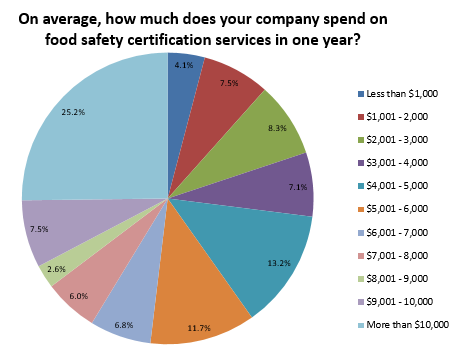
Food companies need to get audited and their personnel need to get trained frequently, and this is a growing trend in the evolving regulatory landscape and a highly competitive and global supply chain. However, what matters the most to food companies when getting audited? How significant is auditor competence as an attribute? How about the time that the audit takes, and the time to get the report? Or for training, what role does technology play?

To understand this, Eurofins conducted a blind survey of industry participants – nearly 600 respondents answered questions related to Certification and food safety Training.

Some of the highlights included:

EurofinsSurveyMarch2015_1EurofinsSurveyMarch2015_2EurofinsSurveyMarch2015_3 Ultimately, the following factors influenced food companies’ decision to go through food safety certification:

  1. Customer Requirements/Requests Relationships;
  2. Industry Standard; and
  3. Value Proposition. 

When it came to training, the top three influencers to go through Food Safety Training were identified as:

  • Developing Competence (Gaining, Improving, Growing)
  • Relevance and Subject of Training Cost and Time

EurofinsSurveyMarch2015_4

Environmental Monitoring Programs and The Cost of Failure

What happens when a food company does not have an effective environmental monitoring program in place? The cost of failure can be significant, warns Prof. Ann Draughon, ranging from placing contaminated food in the markets, to managing product recalls, and businesses getting shut down.

Effective Environmental Monitoring, Sampling and Testing (EMS) Programs are absolutely necessary to protect our consumers, and make safe food, and are also required from a regulatory and food safety point of view, and to verify that our food safety programs are working.

In a recent webinar, Prof. Ann Draughon offered some insights on what happens when such an EMS program is not set in place – the cost of failure is much greater, and the repercussions can be severe, she warns.

What is on the horizon with EMS given the new regulatory landscape under the Food Safety Modernization Act and the proposed rules? Prof. Draughon talked about the Mandatory Preventive Controls described in Section 103 of the Act that lists the following controls that FDA will require:

  • Environmental monitoring programs;
  • Sanitation and cleaning requirements;
  • Allergen control;
  • Mitigation of hazards; and
  • Supplier verification.

How will FSMA affect FDA’s regulatory sampling of food facilities and products? The volume of environmental samples will increase at a much higher rate than sampling for allergens or ingredients, she adds. And in order to meet such a high demand for environmental inspection and sampling, it will be important to have in place effective EMS programs. Prevention will be cost-effective and give companies the ability to detect and destroy the microorganism before they cause any issues. Prof. Draughon provided the following numbers as cost of reinspection: $224 per hour for domestic inspections, $325 per hour for foreign inspections, and cost of FDA reinspection in FY 2012 estimated to be around $21,000.

She described two case studies of companies that suffered bankruptcy, and business losses due to massive food safety related recalls, caused by inadequate or lack of environmental monitoring programs.

3M-Envi-Monitoring_March2015-1

“This company is currently bankrupt due to a massive recall. While they had a great food safety plan, they did not back it up with a strong EMS program,” Prof. Draughon explained.

Speaking about the second company, she explained that the strong and capable leadership had done everything right for the company, but what went wrong? “There was a:

  • 3M-Envi-Monitoring_March2015-2Lack of trend analysis of environmental data;
  • Lack of communication within company about any positives Listeria results;
  • Sporadic Listeria positives occurred – while the problem was fixed, they continue to reoccur and the source was never detected or fixed;
  • The company had a reactive EMS, but not proactive,” she explained.

What are some of the recurring problems due to ineffective EMS programs? Prof. Draughon listed these as:

  • Increased risk of recall;
  • Increase loss of product;
  • Increased liability exposure;
  • Build-up of pathogens and spoilage agents or chemicals in environment;
  • Lack of regulatory compliance; and
  • Reaction to problems, not prevention.

Based on this high cost of compliance, Prof. Draughon strongly recommended establishing an effective EMS program, which has the following attributes:

  • Focus on having the appropriate indicators and hazards;
  • Ensure the best procedures selected and validated;
  • Strong sampling plan, which is well-designed and dynamic;
  • Data analysis and data management; and
  • Education and training.

Learn more by listening to the series of webinars on Environmental Monitoring, presented by 3M Food Safety. Click here for more details.

Color Choices When It Comes to Food

By Chelsey Davis
No Comments

When it comes to getting your product off the shelf and into consumers’ homes, color has a lot to do with first impressions. So when deciding on packaging or even food coloring, what colors should food manufacturers choose?

Color plays a huge role in how we decide what to eat. It’s often the first element noticed in the appearance of a food product and as humans, we begin to associate certain colors with various food types from birth. We then attribute these colors to certain tastes. For example, if something is bright red, we might assume it will taste like cherry or cinnamon. If something is bright green, we might expect that food product to taste like lime or apple. And when it comes to fresh foods, like fruits and vegetables, we rely on the color to determine the ripeness or freshness. So aside from expected taste, what else do colors mean when it comes to food?

Red – Appetizing: According to research, the color red is not only eye-catching, but also triggers appetite and is used on a majority of packaging designs. This is perhaps because the color, when found in natural foods like berries, indicates ripeness or sweetness.

Blue – Appetite Suppressant: Surprisingly, there are no true blue foods found in nature, and no, blueberries are actually a shade of purple! Blue, in relation to foods, is actually an appetite suppressant. This is why some weight loss plans suggest placing your food on a blue plate, or even dying your food blue to avoid overindulgence.

Yellow – Happiness: Yellow is perceived as the happiest color and is used widely in various food products. As such, yellow tends to evoke optimism and general good feelings. There are, however, speculations and disagreements when it comes to the artificial color of yellow in food products.

Green – Natural/Healthy: With sustainability and organic being at the top of mind for a large amount of consumers, green is making its way to becoming one of the more popular colors in the food supply chain (think green juice). The color green is now almost synonymous with health and well-being when it comes to food.

Orange – Satisfying/Energizing: One article states that orange is associated with foods that are hearty and satisfying, like breads, soups and potato products, but can also be seen as a source of energy.

Color choices when it comes to packaging

As mentioned above, color is the first thing we notice when it comes to appearance. In fact, more than 90% of purchase decisions are influenced by visual factors, and 85% of shoppers say that color is the primary reason for buying a product. With that in mind, understanding how color on packages dictates purchasing behavior is important to food manufacturers. While the descriptions of colors above represent how we feel towards food items, the colors on the packaging of those food items elicit completely different feelings. For example, seeing blue eggs on a plate versus purchasing eggs in blue packaging will evoke different emotions. Here’s how a few colors break down in terms of packaging:

Red – Energy: Red is a very bold color and using it in your packaging helps to draw attention to you product. Not only does it spark appetite, but it’s also the color we tend to look at first. This is why red is so popular among food packages.

Blue – Trust: Unlike the food color of blue, using blue in your packaging helps to portray trust and dependability in your product. It should be noted, however, that darker blues are considered more professional and serious, whereas lighter blues help to give the perception of softness and creativity.

Yellow – Optimistic: Yellow in packaging is very similar to yellow in food coloring. It helps to suggest that something is original or innovative, or that the product is cheaper/fun. With the positive energy of this color, we typically see it used to help attract children and young adolescents.

Green – Healthy: As with green in food coloring, green in packaging is also associated with healthy and organic products. With the increase in consumers being more aware of their health and what goes into their bodies, we are seeing green used in more and more product packaging.

Purple – Uniqueness: Using purple in your packaging helps to imply that your product is unique or original, and with purple being attributed to spirituality, it is often used in holistic products. It should also be noted that purple tends to be more attractive to females and the youth market, but is slowly making its way into acceptance within the male audience.

Orange – Affordability: Orange is often times used to portray value and affordability, and for food marketers, using orange on packaging helps to give the item a more affordable feel.

Black – Luxury: Black typically stands out on packaging and tends to appear heavier and more expensive, which transmits a higher perceived value. You can see this color used on items like premium ice creams and chip packages. And depending on what colors you choose to pair it with, black can give off various feelings.

Brown – Earthy: Brown tends to be used in products that want to portray a natural, wholesome or organic feel, as well as comfort and simplicity. We often see brown packaging in products that promote sustainability, proclaiming that the materials used to make the package were recycled.

White – Simple: White is viewed as simple, pure and basic, and is a good choice when attempting to create the impression of cleanliness, purity, efficiency or, of course, simplicity. And depending on the additional colors chosen to pair with white, you can give your packaging, or product, a completely different feel.

When it comes to getting your product off the shelf and into consumers’ homes, color has a lot to do with first impressions. So when deciding on packaging or even food coloring, make sure to pay close attention to the psychology behind color when it comes to purchasing behavior. Do you have additional tips on choosing colors for food items and packaging? Leave a comment below and let us know!

Expanding GMO Labeling Requirements in the U.S.

By James Cook
No Comments

In November 2014, the people of Oregon and Colorado voted for mandatory labeling of foods produced from genetically modified organisms (GMO). These initiatives from Maine, Connecticut, Vermont, and subsequently Oregon and Colorado speak of the public’s desire to know what they are eating, a mistrust of the industry, and a lack of action from the Federal government.

Currently in the U.S.. there is no Federal law that requires the labeling of GMO derived products, providing the product is not significantly different to the non-GMO product, or different in use, nutrition, or includes an unexpected allergen. However, FDA has produced voluntary labeling guidance on GMO and non-GMO. While many companies have option to label their products as non-GMO, there hasn’t been the same desire by the industry to label their products as GMO.

Unwanted events have caused the public to believe that the industry cannot be trusted and that the government is not doing everything it can to protect the public. One case involved a strain of GMO corn (Starlink) that was only approved for animal feed and fuel, because it cause a reaction in people. Unfortunately, this strain of corn did end up in the human food supply chain, causing the U.S. price of corn to plummet on the world market, and dozens of products to be recalled.

Another case involved the development of GMO wheat. T his was a product that foreign markets had no desire for. There, after field trials from 2000 to 2003, the company that created the GMO wheat dropped the project despite FDA completing its food safety consultation on it in 2004.

In 2013, this strain of GMO wheat was found growing in a field in Oregon. After extensive review, the USDA completed an investigation and published its findings on September 26, 2014, concluding that it was the same GMO variety created by the aforementioned company. The report added that the wheat had not come from local field trials, and that they were “unable to determine exactly how the GMO wheat was found growing in Montana. That investigation is still ongoing.

Oregon mandatory labeling

One of the counties of Oregon, Jackson County, has banned GMO crops. Oregon was one of the states involved in the unwanted GMO wheat event, and has voted no to changing its existing law to require the labeling of raw and packaged foods produced entirely, or partially by genetic engineering. This law would have required retailers to properly label raw product as “genetically engineered.”

Manufacturers of pre-packaged foods would have to place labels clearly and conspicuously stating “produced with genetic engineering” or “partially produced with genetic engineering” on the front or back of the package. These phrases did not have to be part of the product name, nor did the manufacturer have to identify which ingredient or ingredients are derived from genetic engineering. No company would have been subject to injunction or fines, if the pre-packaged foods have less than 0.9 percent genetic engineered materials by the total weight of the package or were unknowingly, or unintentionally, contaminated with genetically engineered material. For pre-packaged products, retails would have been only responsible for their own labeled products. This would not apply to animal feed or food served in restaurants.

Colorado Right to Know Act

A law proposed in Colorado but also not passed, dealt with labeling requirements for products derived for genetic modification. Had it been passed, it would have been effective from July 1, 2016. Its main aim was that packaged and raw agriculture products derived from GM would have to have been labelled as “produced with genetic engineering.” The exemptions from the labeling requirements were:

  • Animal food or drink,
  • Chewing gum,
  • Alcoholic beverages,
  • Food containing one or more processing aids,
  • Enzymes produced or derived from genetic engineering,
  • Food in restaurants and food produced for immediate consumption not packaged for resale,
  • Food for animals not derived from genetic engineering but fed feed or injected with a drug derived from genetic engineering, and
  • Medically prescribed food. 

Food would not have been considered misbranded if it had been produced by someone unaware that the seed or food was derived from genetic engineering, or that it was either unknowingly or unintentionally co-mingled with genetically engineering seed or food.

The Grocery Manufacturers’ Association (GMA), a major U.S. industry association that is against the individual state laws regarding GMO labeling, supports the HR 4432 Safe and Accurate Food Labeling Act introduced by the House of Representatives’ Mike Pompeo and G. K. Butterfield. This proposed law would not require products with GMO ingredients to be labelled as such, unless there are safety issues or substantial differences between them and the non-GMO ingredient, but it will set specific requirements for GMO free claims and require FDA to develop requirements for Natural claims. While this law was introduced into Congress in April 2014, it hasn’t progressed to the point that anyone believes that it will signed into law anytime soon. Vermont is still the only state to have passed an unencumbered GMO law. Currently, laws in Maine and Connecticut with there requirements still not met, will not be enacted, at least, at this time. The state of Vermont is being sued with the GMO labeling debate in the U.S. still continuing even though the European Union has required labeling of GMOs since 1997. To date, there are more than 60 countries, as well as the EU, requiring labeling of GMOs.

This article originally appeared in SGS Hot Source Food Newsletter 6. For further information, please visit www.FoodSafety.SGS.com.

Want to learn more about GMO Labeling? Register for this complimentary webinar, on April 16, 2015, which will discuss

  • Next steps for state and federal labeling laws,
  • An update on the status of the non-GMO supply chain and certification programs,
  • Where organic fits in the non-GMO discussion, and
  • What are the marketplace challenges of going non-GMO?

CAPA and Root Cause Analysis for the Food Industry

By Dr. Bob Strong
No Comments

A thorough and effective CAPA can provide many benefits such as providing long-term solutions, preventing recurrences, fostering continuous improvement, improving customer satisfaction, improving profitability, and having the ability to influence FDA and FSMA inspections.

Why do a Root Cause Analysis? Because unless you identify the root cause of a problem, you cannot resolve it. You need to find out what went wrong, how the problem was not detected, or what has changed.

Often times, it may seem that a Correction conceived on the fly solves the nonconformity. However, manufacturing processes—especially in the food industry—can involve a huge number of variables. As a result, problems that arise can involve multiple levels of causal relationships that must be followed in order to locate the true root cause of a nonconformity. This is why performing an RCA is essential; we may think we’re addressing the root cause of a non-conformity with a Correction, but in fact, we are only treating a symptom of a larger (and often more costly) issue.

Without an RCA, it’s anyone’s guess whether a Correction will hold. The nonconformity might be solved, or it might come back—and bring with it other issues related to the root cause.In any case, guessing is not sound strategy for dealing with non-conformities. This is why it is essential for organizations to be disciplined in their approach to investigating non-conformities. Sure, performing an RCA takes time, and nobody wants to waste time on something unnecessary. Nevertheless, organizations should understand that identifying the root cause of a nonconformity early could save a great deal of time and expense in the long run. Of course, you won’t know unless you perform the RCA, so it is always a better practice to invest time into an RCA upfront rather than get exposed to a more serious nonconformity at a later date that could threaten the safety and/or quality of product being produced or handled.

Who should perform the RCA?

Though it may be possible for a single person to perform an RCA, it is always better to have a team of minds working on the problem—people who are familiar with the relevant products, processes, equipment, and challenges of the working environment. A team also brings a greater pool of experience, knowledge, and perspectives, which can be extremely helpful in the investigative process of an RCA. It also makes sense for your RCA team to be comprised of people who canhelp represent the resulting CA or PA plan to other areas of the organization and help facilitate buy-in, consensus, and execution of the plan

CAPA: The process unpacked

A new white paper, published by SAI Global Assurance Services, describes in detail the various steps involved in CAPA. Broadly, these have been described as:

  1. Identify the problem: Before you can solve the problem, you must identify it plainly and clearly.
  2. Evaluate /Review: How big is the problem? What are the implications? What is the severity of the consequences?
  3. Investigate: Make a plan to research the problem.
  4. Analyze: Identify all possible causes using different methodologies such as It is/ It is not analysis, the 5 Why’s Method, and The Fishbone Diagram
  5. The Action Plan: Narrow the list of possible causes.
  6. Implement: Execute the action plan
  7. Review: Verify and assess effectiveness

CAPA benefits

A thorough and effective CAPA provides a lot of benefits such as providing long-term solutions, preventing recurrences, fostering continuous improvement, improving customer satisfaction, improving profitability, and having the ability to influence FDA and FSMA inspections, frequency of which will be based on on the robustness of your food safety programs.

This article is an excerpt from a white paper prepared by SAI Global Assurance Services, and has been published in Food Safety Tech with permission. Click here to download the white paper in its entirety.

Paul Dewsbury, B.Sc.

Honey Laundering: Food Fraud That’s Not So Sweet

By Paul Dewsbury
No Comments
Paul Dewsbury, B.Sc.

ThermoFisherpodcastAs a result of my research, I found two fantastic resources describing the background of food fraud, the first is an excellent 3-minute podcast on our website, titled, Food Fraud by Dr. Jennifer McEntire, who at the time was VP and Chief Science Officer at The Acheson Group and is now the newly appointed VP of Science Operations at the GMA. Dr. McEntire succinctly gets to the crux of the reasons pertaining to food fraud and it is well worth a listen.

The second is a 3-minute slide deck narrated by renowned food safety expert Professor Chris Elliot, Director of the Institute of Global Food Safety at Queens University Belfast. Professor Elliot highlights the impact of various food frauds including melamine adulteration in milk, spices, meat and he specifically expands on the topic of honey laundering.

There are too many honey adulteration frauds to list here and while some have resulted in huge fines and criminal charges, there is one that will not go away is the mislabeling of Manuka honey. This premium product (and premium price) is a rare honey from New Zealand produced by bees that pollinate the manuka bush and has numerous claimed medicinal properties that can be extremely profitable for the fraudsters through substitution with a basic product. As food fraud is an international issue, various organizations likeInterpol and Europol have food fraud units and here in the UK the government has committed to, and is setting up a dedicated Food Crime Unit.

Moving into the science, one of the best literature resources I would like to share is the Food Fraud Resources website which has some highly cited articles including reviews, thought leadership and analytical methods that are available for download. There are various techniques for honey analysis in the journals and I want to briefly focus on one of the most powerful for authentication, the use of isotope analysis. In our Application Note 30177, Detection of Honey Adulteration with FlashEA Elemental Analyzer and DELTA V Isotope Ratio Mass Spectrometer, we describe a fully automated system for the detection of honey adulteration with C4-syrups according to the AOAC 998.12 guidelines and is routinely used in many laboratories.

Is honey analysis or food fraud of interest to your laboratory? If so, share your thoughts and experiences in the comments below. 

Check out Thermo Fisher’s Food Community page for more resources, on-demand webinars, videos, and application notes.


Sangita Viswanathan, Former Editor-in-Chief, FoodSafetyTech

What to do Now to Migrate from HACCP to HARPC

By Sangita Viswanathan
1 Comment
Sangita Viswanathan, Former Editor-in-Chief, FoodSafetyTech

There is much talk about HARPC – Hazard analysis and risk-based preventive controls – and how food companies need to either elevate their existing Hazard Analysis at Critical Control Points (HACCP) program, or formulate a new HARPC-based food safety plan, in order to comply with proposed rules under the U.S. Food Safety Modernization Act in the

In a recent FSMA Fridays discussion, Dr. David Acheson and Melanie Neumann of The Acheson Group elaborated along with SafetyChain Software’s Barbara Levin, how HARPC differs from HACCP and what companies can start doing now to be prepared. We present below some excerpts.

How are HACCP and HARPC different?

The key term is that HARPC is risk –based. While HACCCP is more prescriptive, based on the seven-step process, the risk-based analysis requires moving outside of those seven steps to think of how else can I manage risk. Also, under HARPC, it’s no longer deemed sufficient to have a HACCP plan – you need to have a more exhaustive food safety plan.

How should F&B companies approach migrating HACCP to HARPC plans?

In the proposed FSMA rules, FDA has changed the language of defining how and which products should be monitored from ‘reasonably likely to occur,’ which is HACCP type terminology, to ‘significant.’ FDA is doing this in an attempt to differentiate the required HARPC-based food safety plan from traditional HACCP plans. This requires food companies to look at hazards along the whole supply chain – from when we are receiving food to when we are shipping it out (and not just at control points). For instance, environmental controls in a ready-to-eat foods processing area is covered now, which is beyond the traditional HACCP area. So look at those risks in the processing facility and ask if they are significant risks.

Who is the Qualified Individual and how does this impact the HARPC approach?

This is the million dollar question! FDA hasn’t come out with a clear definition yet – only vaguely referring to this person as ‘qualified by training or experience.’ However, this person has a lot of responsibility on their plate – they are responsible for preparing a robust food safety plan that identifies and controls risks, for putting in place corrective actions and validate these, and for doing a reanalysis of the food safety plan as needed. F&B companies need to ask if they have the right person driving this bus. You do need somebody in your business who is capable and qualified to do this, or FDA allows you to use an outside expert as the Qualified Individual.

What will FDA expect to see with HARPC when they come in to see FSMA being enforced?

Once FSMA is implemented (possibly) by August 2016, FDA inspectors can come into F&B facilities and ask to see food safety plans, and details of the HARPC plans. They would want to understand what the process is, what the hazards are, and how and if you are controlling these, and if you are thinking of these hazards from a risk-based preventive controls strategy.

What are top three things that companies should be doing to comply today?

As described often, HARPC is an evolution of HACCP or HACCP on steroids. The first thing you need to do is understand what you are being asked to do with HARPC. Make sure you get the strategy here. Step two, is to get together a team to do this to figure out where your risks are, if they are significant, and build these into food safety plan. Step 3 is look at your current systems and structure. Do you have these now identified significant risks controlled? Have you determined what the controlling steps are, and put in place these preventive controls? Ask yourself if you are controlling these risks, monitoring them, putting in place corrective actions and validating them?

Final point: we often hear people saying, ‘I am going to wait. We are going sit out and watch how the rules evolve.’ But our advice is Do Not Wait! We have a lot of insight on how the final rules are going to pan out and what the compliance requirements will be. So start working now.

For more on this discussion, click here.

Lessons Learned from the Implementation of Seafood HACCP for FSMA

By Tim Hansen
No Comments

While HACCP has been highly successful and truly promoted seafood safety and consumer confidence in these products, there are several useful lessons that may make your transition to FSMA compliance easier.

One of the tenets of FSMA is the requirement for preventive systems (AKA HACCP) for all food groups regulated by FDA. Up to the time of passage of FSMA, FDA wanted preventive systems only for seafood, fruit and vegetable juices and low-acid canned foods.

Since the requirement for preventive controls is about to be extended to all foods regulated by FDA, it may be instructive for affected food firms to consider some of the common problems experienced by the seafood industry during the implementation of HACCP. This regulation has been highly successful and truly promoted seafood safety and consumer confidence in these products. There are several useful lessons that may make your transition to compliance easier.

1. Unnecessary CCPs. Implementation of the Seafood HACCP regulation came with a great deal of uncertainty for the industry. Their response was to include a hazard as a CCP even when it did not meet the FDA “reasonably likely to occur” standard. This resulted in some cases overly complicated HACCP plans. Firms can avoid this problem through rigorous hazard analysis and following agency guidance for the commodity being processed.

2. Mixing sanitation controls with HACCP controls. The Seafood HACCP Regulation requires that certain aspects of sanitation be properly controlled, monitored and documented through records. While it is feasible to include these controls within the HACCP plan it is much simpler keep sanitation controls separate from HACCP controls. A sanitation SOP is highly recommended that show how sanitation is controlled, monitored and recorded.

3. Monitoring need to be available in their original form in an organized fashion. Inadequate or poorly organized monitoring records were a big problem. Ideally, records should not be rewritten unless absolutely necessary. Rewritten records are a red flag to FDA investigators. If records are missing do not falsify information to fill the gaps. This could be the basis for a severe regulatory action. It is much better to perform a verification review and corrective action that is available to the investigator.

4. If a new product is introduced to your processing operation the HACCP plan should be amended immediately. Do not wait until a convenient time as a regulator could show up at any time. Also, do not assume that the hazard analysis and HACCP plan for a similar product will be the same. Either can result in a finding of failure to have a HACCP plan. You should start at the beginning with a proper hazard analysis and develop the plan for that product in accordance with the hazards you identify.

5. Scientific studies used to establish a critical limit for a CCP should be readily available to the investigator. For example, a study to show the necessary heat penetration time-temperature parameters of a cooked product to achieve sufficient bacterial kill or the proper mix of salt, water and exposure time to achieve a proper level of water phase salts in a cold smoked fish products are important information for the investigator to evaluate whether the critical limit of a CCP is adequate to control the hazard.

6. Generic HACCP plans should not be used. In the past some operations adopted a generic HACCP plan to cover their processing without performing a hazard analysis. This often resulted in hazards being missed and a faulty plan. FDA expects that each firm will conduct a hazard analysis. Not doing so could result in a serious charge.

This article originally appeared in EAS-e-News, March 2015 edition.