
FSSC Releases FSSC 22000 Version 6

By Food Safety Tech Staff
No Comments

On March 31, the Foundation FSSC published Version 6 of its FSSC 22000 scheme. The updated version of the FSSC 22000 scheme:

  • Integrates the requirements of ISO 22003-1:2022
  • Strengthens the requirements to support organizations in their contributions to meeting the UNs’ Sustainable Development Goals (SDGs)
  • Incorporates feedback of the Version 6 development survey, which received nearly 2,000 responses

Version 6 will have a 12-month transition window to allow organizations and Certification Bodies to prepare for implementation and gaining accreditation. The first audits to Version 6 will commence April 1, 2024, and all organizations must complete the V6 upgrade audit before March 31, 2025.

The Foundation has published a Version 6 Upgrade Process document, which details the transition requirements and a version of the scheme highlighting the changes between V5.1 and V6.

One of the key changes in V6 is the addition of requirements on food loss and waste. Organizations must have a documented policy and objectives detailing their strategy to reduce food loss and waste within their organization and the related supply chains. The additional food loss and waste requirements support a silo-breaking approach to help organizations contribute and move towards the UN Sustainable development goals (SDGs).

FSSC schemes support the consumer goods industry in implementing effective management systems, protecting their brands, and achieving food safety targets.

Merieux and Blonk Logos

Mérieux NutriSciences Strengthens Its Food Sustainability Expertise with Blonk Acquisition

By Food Safety Tech Staff
No Comments
Merieux and Blonk Logos

Mérieux NutriSciences has acquired Blonk, an international expert in food system sustainability. Blonk helps organizations better understand their environmental impact in the agri-food value chain by offering Life Cycle Assessment (LCA)-based advice and developing tailored software tools based on the latest scientific developments and data.

Blonk was founded in 1999 and today includes a team of 50 food and sustainability experts, software developers, and data and methodology specialists. The company is based in the Netherlands. Working with various players in the food chain, from ingredient producers to food manufacturers and retailers, Blonk has a proven track record of providing customized, science-based advice and intelligent software solutions to define the environmental footprint of products. They are also at the forefront of sustainability research in the agri-food sector. In particular, Blonk works with international and governmental organizations to define sector-specific standards and build databases allowing for assessment of environmental impact of food products combined with nutritional parameters for optimized diets.

“Bringing together Blonk and Mérieux NutriSciences is an exciting step in strengthening and accelerating our contribution to the sustainability of food systems,” said Nicolas Cartier, CEO of Mérieux NutriSciences. “Sustainability is at the heart of Mérieux NutriSciences’ vision, mission, and business roadmap, which is highlighted by our ESG commitments for Better Food. Better Health. Better World. Our ambition is to become the reference partner for science-based sustainability solutions in the food sector to support the transition to more positive food systems. With its specific experience in standards definition and data collection for the agri-food sector, Blonk strategically consolidates our existing capabilities in the field of environmental footprinting and enriches the sustainability solutions we already offer in packaging, new food alternatives, responsible sourcing and soil health, as well as transparent labeling.”

IFT logo

IFT Launches Commodity-specific Food Traceability Video Series

By Food Safety Tech Staff
No Comments
IFT logo

The Institute of Food Technologists (IFT), a nonprofit scientific organization committed to advancing the science of food and its application across the global food system, has released a series of educational videos designed to help food companies better understand how the FDA’s Food Traceability Rule will impact their operations as well as provide guidance on compliance.

“Supply chains were built to move product, not data, so the new regulations are going to be an enormous challenge for those working in food areas identified as being the most potentially harmful to consumers, such as seafood and fruits and vegetables,” said Sara Bratager, Food Traceability & Food Safety Scientist at IFT.

The commodity-specific videos cover the key sections of the Food Safety Modernization Act (FSMA) Rule 204 for each of the foods listed on the FDA’s Food Traceability List.

The FDA’s traceability rule is meant to help facilitate more efficient recalls during a foodborne illness outbreak by requiring a more standardized approach to capturing and sharing product identification and movement data throughout the food chain. This will allow for quicker and more accurate tracking of potentially harmful products, reducing the impact of foodborne illness outbreaks on consumers. All products covered by the rule must be in compliance by January 20, 2026.

“After the announcement by the FDA in November 2022, many food companies were left wondering how the traceability rule would impact them. Now these companies are officially on the clock and must start preparing to be in compliance in less than three years. IFT has created these commodity-specific video to help them gain a better understanding of the road ahead and provide them with the knowledge and tools to help them on their traceability journey,” said IFT Chief Science and Technology Officer Bryan Hitchcock.

To view IFT’s commodity-specific Food Traceability Rule videos, click here.


Salt

FDA Moves to Permit Salt Substitutes to Reduce Sodium in Standardized Foods

By Food Safety Tech Staff
1 Comment
Salt

On March 24, the FDA announced that it intends to amend the standards of identity (SOIs) to permit the use of salt substitutes in foods for which salt is a required or optional ingredient. The proposed rule would provide manufacturers with flexibility and facilitate industry innovation to reduce sodium in standardized foods.

The proposed rule is part of the Biden-Harris Administration’s National Strategy on Hunger, Nutrition, and Health, which provides a roadmap of actions the federal government will take to end hunger and reduce diet-related diseases by 2030. The upcoming proposed rule also complements the goals of the FDA’s voluntary sodium reduction targets for processed, packaged and prepared foods.

Currently, most FDA SOIs do not permit the use of salt substitutes. The proposed rule would use a “horizontal” approach for SOIs, under which a single rule would apply to multiple SOIs across several categories of standardized foods.

Specifically, the proposed rule would amend the 80 SOIs that specify salt as a required or an optional ingredient. Because these 80 SOIs are referenced in other SOIs, the FDA notes that 140 of the 250 SOIs currently established for a wide variety of foods could be affected.

The proposed rule does not list permitted salt substitutes but defines them as safe and suitable ingredients used to replace some or all of the added sodium chloride and that serve the functions of salt in food. The extent to which salt can be replaced depends on the ability of a salt substitute to replace the functions of salt in food without compromising food safety and the characteristics of the food.

The FDA is requesting comments on potential salt substitutes that may be used as a result of the new flexibility provided in this proposed rule. Comments can be submitted until 120 days after the date of publication in the Federal Register. Electronic comments can be submitted at Regulations.gov.


FAO Graphic

United Nations FAO Sets Food Safety Priorities

By Food Safety Tech Staff
No Comments
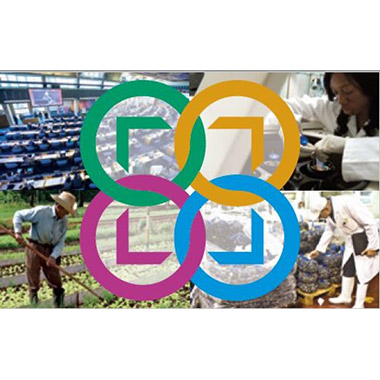
FAO Graphic

The Food and Agriculture Organization of the United Nation (FAO) has published its Strategic Priorities for Food Safety 2022-2031. These priorities were developed collaboratively with FAO Members, international partner organizations (IAEA, WOAH, WTO/STDF, UNIDO, WHO), and FAO technical divisions and centers to “support members in continuing to improve food safety at all levels by providing scientific advice and strengthening their food safety capacities for efficient, inclusive, resilient and sustainable agrifood systems.”

The document, created at the request of the 27th session of the FAO Committee on Agriculture (COAG) and approved by the 171st session of FAO Council, is structured around four interconnected strategic outcomes focusing on governance, scientific advice, strengthening national food control systems and promoting public-private partnerships throughout the food chain.

The FAO noted that its goal is to encourage a more coherent integration of food safety into the development of sustainable and inclusive agrifood systems, food security, and nutrition policies as well as agricultural development strategies. “Our aspiration is that this document helps spur investments and secure adequate human and financial resources for FAO to successfully implement its food safety program,” said Corinna Hawkes, FAO Director of the Food Systems and Food Safety Division.

The four strategic outcomes include:
1. Intergovernmental and intersectoral coordination of food safety governance is reinforced at all levels.

2. Sound scientific advice and evidence are provided as the foundation for food safety decision-making.

3. National food control systems are further strengthened and are continuously improved by:

  • Providing technical support to FAO Members to evaluate their national food control systems, identify needs and design integrated capacity development programs
  • Supporting FAO Members and relevant stakeholders, particularly in developing and transition economy countries, where requested, to participate more actively in Codex Alimentarius work
  • Supporting FAO Members in developing and updating their food safety standards, legal frameworks and government policies, as well as operational level procedures and guidelines
  • Helping FAO Members generate relevant food safety data that reflects their national context/situation
  • Supporting FAO Members and relevant stakeholders to embrace relevant technological developments, including digital technologies, in food control and food safety management

4. Public and private stakeholder collaboration is promoted to ensure food safety management and controls throughout agrifood systems by:

  • Supporting both governments and food chain actors starting from primary production and including associated industries, academia, consumers and other stakeholders, in adopting gender responsive and inclusive programs of preventative food safety control and management
  • Providing the tools and resources for stakeholders to make informed choices and adopt food safety interventions that are specific to their countries’ priorities, safety risks and their constituents’ differentiated needs
  • Ensuring that lessons learned from national- and regional-level food safety control programs and initiatives can inform global level normative work and strengthen dialogues on food safety
  • Supporting initiatives aiming to create training programs and curricula that better reflect the complexity of food safety and the need for collaborations across disciplines

Download the full document here.


Abby Snyder

Superheated “Dry” Steam: A Potential Sanitizer for Produce

By Food Safety Tech Staff
No Comments
Abby Snyder

Superheated Steam (SHS) may offer dry facilities a new, effective option to destroy pathogens on produce harvesting, processing, and packing tools. SHS differs from the visible, wet steam vapor emitted by a tea kettle in that it is invisible and acts like a hot gas at super-high temperatures. Applied to surfaces, SHS has been shown to kill pathogens without leaving moisture or condensation. However, little is known about its performance on a pilot scale.

A new research project from Abby Snyder, Ph.D., of Cornell University hopes to fill this void. As part of her research, titled “Practical application of superheated steam to harvesting, processing, and produce packing tools and equipment,” Dr. Snyder is evaluating how well SHS works and how current tools need to be improved to better support the produce industry.

She also plans to address other considerations, including cost, range of applications, wear and tear on equipment, changes to ambient relative humidity and worker safety.

“It’s a really tough problem to solve,” Dr. Snyder said. “We wanted to bring some practical assessments to our academic research to better understand whether these tools would be useful to the industry.”

Joining her as co-principal investigator is V.M. Balasubramaniam, Ph.D., with Ohio State University, who brings expertise in food and agricultural engineering. “He’s an important collaborator because the project is at the intersection of produce safety and process engineering,” said Dr. Snyder, whose background is microbial food safety. “This is an interdisciplinary approach to developing novel sanitation technology.”

The researchers are using portable pilot-scale roll-along and backpack units fabricated by a collaborating manufacturer. As part of the project, they reviewed Occupational Safety and Health Administration guidelines and developed worker safety and operator compliance training.

Initial trials looked at thermal distribution across stainless steel coupons—or discs—at ambient temperatures using three different coupon thicknesses and three different nozzle distances. Temperatures at the contact point ranged from 170 to 320 degrees C (338 to 608 degrees F), depending on nozzle distance. The researchers plan to conduct similar tests with concrete coupons as well as ones made of materials used in picking bags.

Although SHS doesn’t use large amounts of water, it is unknown whether prolonged use of the technology could change ambient relative humidity in enclosed spaces, depending on size and ventilation. As part of the project, Dr. Snyder said they will look at whether those relative humidity changes could potentially lead to condensation with extended SHS use. They also plan to characterize how rapidly temperature dissipates across surfaces.

One of the project’s objectives is to better understand how much the industry would be willing to pay for SHS technology. To that end, Dr. Snyder is conducting an online survey that proposes different scenarios.

Because SHS doesn’t use large amounts of water, the technology could offer the produce industry potential water savings in addition to more sanitation options.


Lisa Hovey

IAFP Announces New Executive Director

By Food Safety Tech Staff
No Comments
Lisa Hovey

Lisa Hovey has been appointed Executive Director of the International Association for Food Protection (IAFP). She replaces David Tharp, who will officially retire on April 26, 2023, after 30 years with the Association.

Lisa joined IAFP in 1997 as Director of Finance and Administration and was promoted to Assistant Director in 1999. In addition to collaborating with the Tharp to sustain, promote, and grow IAFP’s programs and member services, Hovey helped transition IAFP’s Journal of Food Protection to an open-access publication and currently acts as the association’s liaison for its Diversity, Equity and Inclusion Council.

“Having had the privilege of knowing and working with Lisa for more than 20 years, I have seen firsthand the passion, knowledge, and expertise she brings to IAFP,” said Jeff Farber, Director, Canadian Research Institute for Food Safety; Adjunct Professor, the University of Guelph; and former IAFP President. “Lisa’s great professionalism, attention to detail, financial acumen, infectious personality, and commitment to the mission and vision of IAFP will help to ensure a smooth transition, and I am confident she will excel in her new role as the Executive Director.”

Hovey earned a bachelor’s in Accounting from the University of Northern Iowa. She holds the Certified Association Executive (CAE) credential through the American Society of Association Executives (ASAE).


Queso Fresco

FDA Releases Listeriosis Prevention Strategy for Soft Fresh Queso Fresco Cheese

Queso Fresco

Between 2014-2017, the FDA’s Coordinated Outbreak Response and Evaluation (CORE) network investigated five listeriosis outbreaks linked to the consumption of soft fresh queso fresco type (QFT) cheeses. Most recently, in 2021 CORE investigated an outbreak linked to soft fresh QFT cheeses that sickened 13 people. In response, the FDA has released a summary of a new strategy aimed at reducing foodborne outbreaks and illness associated with the consumption of soft fresh Queso Fresco type cheeses.

The agency noted that, historically QFT cheese-related outbreaks were found to be associated with unpasteurized milk; however, recent investigations have included cheeses made from pasteurized milk with contamination occurring during the cheese making process.

The prevention strategy is based on review of the outbreak findings, historical data, and engagements with industry and other stakeholders, and includes:

  • Prioritizing inspections with environmental sampling at soft fresh QFT manufacturing firms.
  • Engaging with state partners to increase sampling of QFT cheese at retail operations in the U.S.  for the presence of L. monocytogenes.
  • Developing and distributing a publication that outlines the potential causes of recent listeriosis outbreaks in soft cheeses and a fact sheet that describes requirements for Listeria control in cheese manufacturing.
  • Collaborating with states and other food safety partners to disseminate training and education materials to producers and consumers of soft fresh QFT.

By implementing these activities, the FDA hopes to:

  • Ensure that the cheese industry is aware of regulatory requirements applicable to the production of QFT.
  • Enhance compliance with the applicable regulatory requirements by producers of QFT.
  • Verify through inspections and sampling that producers of QFT are adhering to those requirements.

As part of the prevention strategy the FDA has also released a fact sheet to help manufacturers of soft queso fresco-type cheeses better understand food safety risks the can occur during production. The fact sheet also identifies food safety resources available to manufacturers.

FDA Logo

FDA Calls for Enhanced Powdered Infant Formula Safety Measures in Letter to Industry

By Food Safety Tech Staff
No Comments
FDA Logo

On March 8, the FDA sent a letter to manufacturers, packers, distributors, exporters, importers, and retailers involved in the manufacturing and distribution of powdered infant formula to share current safety information and call on the industry to take prompt action to improve processes and programs for the protection of our infants.

The agency notes that since the 2022 infant formula recalls and resulting shortages, it has been working to improve the resiliency of the infant formula supply by issuing multiple guidance documents intended to help facilitate the availability of safe and nutritionally adequate products in the U.S. marketplace through the exercise of enforcement discretion. The FDA has also taken steps to enhance the safety of powdered infant formula through the development of a Cronobacter prevention strategy, enhanced inspectional activities, increased engagement with the infant formula industry, and by pursuing regulatory action when appropriate.

In addition, over the past two months, food safety staff have been meeting regularly with manufacturers to further develop the prevention strategy to help prevent Cronobacter illness associated with consumption of powdered infant formula. The letter sent to manufacturers reflects the information the agency gained through interactions with industry as well as the latest available science on improving the microbiological safety of powdered infant formula.

The FDA called on members of the infant formula industry to use the information in the letter to take prompt action to improve processes and programs for the protection of infants. In addition to this call to action, Congress recently added new requirements for manufacturers aimed at mitigating supply chain disruptions through mandatory shortage notifications and risk management plans.


USDA Logo

USDA Announces $43M Investment in Meat and Poultry Processing Research, Expansion and Innovation

By Food Safety Tech Staff
No Comments
USDA Logo

As part of its ongoing efforts to improve the safety of meat and poultry at every stage along the supply chain, the USDA has made an investment of more than $43 million in meat and poultry processing research, innovation and expansion. This investment is funded through the American Rescue Plan and the Agriculture and Food Research Initiative (AFRI).

As part of this total investment, the University of Arkansas was awarded a $5 million grant from the AFRI Center of Excellence for Meat and Poultry Processing and Food Safety Research and Innovation (MPPFSRI). In addition, $13.9 million in grants from the Meat and Poultry Processing Research and Innovation—Small Business Innovation Research Phase III—program were awarded to 14 small and mid-sized meat and poultry processors. These grants are administered by USDA’s National Institute of Food and Agriculture.

Additionally, one $25 million Meat and Poultry Processing Expansion Program (MPPEP) grant was awarded to Wholestone Farms for a major plant expansion in Fremont, Nebraska. This grant was administered by USDA Rural Development.

The AFRI MPPFSRI program promotes novel approaches to meat and poultry processing by implementing pioneering production system technology that assesses risk management and overall enhanced food safety. The University of Arkansas, Center for Scalable and Intelligent Automation in Poultry Processing, will incorporate basic and applied research in meat and poultry processing and food safety to promote technological innovation and decrease industry barriers to safety and processing.

As part of the MPPFSRI Phase III funding investments, prior Small Business Innovation Research (SBIR) or Small Business Technology Transfer (STTR) awardees with relevant technologies were invited to apply for funding. Selected awardees must provide nonrestrictive access or nonexclusive licenses to any technologies or related enabling technologies developed under this award to help small and mid-size processors implement the technology.

“Farmers rely on technology to become more efficient and profitable,” said Agriculture Secretary Tom Vilsack. “Under the Biden-Harris Administration and through historic funding investments, USDA continues to invest in research processing expansion that will create new and better markets and expand opportunities for small businesses and rural communities. Investments like these will deliver long-term improvements in meat and poultry processing practices to benefit consumers, farmers and the environment.”