FDA Logo

FDA Provides Update on Restructuring of Human Foods Program

By Food Safety Tech Staff
No Comments
FDA Logo

The FDA announced that it has begun a national search for a new Deputy Commissioner for Human Foods and has provided an update on its proposed restructuring of the agency’s Human Foods Program and Office of Regulatory Affairs (ORA).

The Deputy Commissioner for Human Foods will report directly to the FDA Commissioner. As part of its search criteria, the agency notes that it is focused on identifying a candidate that has the expertise to provide leadership over the FDA’s nutrition and food safety programs (including programs aimed at preventing and responding to chemical, microbial, and other hazards).

“The ideal candidate will have executive-level and real-world experience sufficient to lead the newly envisioned Human Foods Program and its vast remit. This individual will also have clear line of authority over the proposed Human Foods Program, which would include the existing components of the Center for Food Safety and Applied Nutrition (CFSAN), the Office of Food Policy and Response (OFPR), and certain human foods-related components of ORA,” said the FDA in its statement released on February 28.

In terms of the proposed restructuring of the Human Foods program, the Deputy Commissioner will be charged with setting strategic direction for food inspections and have authority over program resource allocation. To achieve these goals, the agency has started the process of:

  • Assessing specific functions of ORA, CFSAN and OFPR to be unified into a new Office of Integrated Food Safety Systems Partnerships that will engage with state, local, tribal, and territorial food safety regulatory partners. The assessment will also include how best to enhance connectivity with international food safety partnership programs.
  • Analyzing inspection and compliance functions that sit within both ORA and program offices across the agency to determine opportunities to streamline operations and clarify decision-making authority at each step of the inspection process as well as integrate new automation and information technology (IT) support. The new processes will enable ORA and program personnel to function as a multidisciplinary team, eliminating sequential steps, immediately bringing the best expertise to bear on the problem at hand, and speeding decisions.
  • Determining how best to empower the Deputy Commissioner for Human Foods and leaders of other programs, along with the Associate Commissioner for Regulatory Affairs, to oversee program and field resource allocation, including publicly mapping the budget to functional activities to provide clarity on resource allocation.
  • Ensuring seamless coordination across the FDA and state-operated food laboratory operations by evaluating the foods laboratory programs, including the relationships, roles, and responsibilities among CFSAN, CVM, ORA and state-operated laboratories.
  • Improving the FDA’s ability to conduct risk prioritization to deliver the highest public health benefit by performing an extensive evaluation of how the Human Foods Program accomplishes risk management, particularly risk prioritization, given the multitude of demands and the scarce resources, and how this can be used to guide dynamic work planning and resource allocation.
  • Planning for greater enterprise transformation of certain ORA IT functions, which will be coordinated with the FDA’s Office of Digital Transformation (ODT). This move builds on the existing project to create an enterprise-wide platform for managing inspections and compliance activities. ODT will drive upgrades to FDA-wide IT systems.
  • Evaluating training programs, including for FDA investigators, to see how they can best serve the needs of both the FDA, regulatory partners and regulated industry. This will include assessing whether some training functions or roles should be unified into the Human Foods Program and other product programs.

This vision will include moving cosmetics regulation and color certification functions out of CFSAN and into the Office of the Chief Scientist to better align the expertise of the agency’s cosmetics subject matter experts with the Chief Scientist and to leverage the FDA’s areas of expertise across the agency as it works to implement the Modernization of Cosmetics Regulation Act of 2022.

“Our proposal specifically tackles issues identified in two independent evaluations of our food programs, one conducted by the Reagan-Udall Foundation and an internal evaluation of the agency’s infant formula response. We’ve heard loud and clear that the current resource distribution and operational model between the FDA’s regulatory programs and field operations are siloed and there’s too much duplication. We intend to fix this and strengthen both the regulatory programs and field force,” said FDA Commissioner Robert M. Califf, M.D. “Both subject matter experts in the programs and the expertise of our investigators in the field will see more interaction as part of multidisciplinary teams that have clarity on who is in charge of making decisions.”

The FDA is seeking to finalize its proposal this Fall. It will then undergo a thorough review before advancing to Congress for a 30-day notification period where members may raise any concerns that the FDA may need to address. Afterwards, the FDA will issue a Federal Register Notice, provide notification to and engage, as needed, in negotiations with the Unions for impacted staff, prior to initiation of the new proposal. The FDA emphasized that it will continue to engage with stakeholders throughout this process.


FDA Logo

FDA Releases List of 2023 Priority Guidance Topics for Foods Program

By Food Safety Tech Staff
No Comments
FDA Logo

The FDA Center for Food Safety and Applied Nutrition (CFSAN) and Office of Food Policy and Response (OFPR) has released a list of draft and final guidance topics that are a priority for the FDA Foods Program to complete during the next 12 months.

The guidance documents do not impose legally enforceable requirements, but they can help stakeholders plan for potential changes that may impact their businesses and organizations. The agency anticipates it will publish many of the listed documents by January 2024.

The priority list of draft and final guidance topics include (by category):

Allergens

  • Questions and Answers Regarding Food Allergens, Including the Food Allergen Labeling and Consumer Protection Act of 2004 (Edition 5); Guidance for Industry
  • Compliance Policy Guide Sec. 555.250 Major Food Allergen Labeling and Cross-contact; Draft Guidance for FDA Staff
  • Evaluating the Public Health Importance of Food Allergens Other Than the Major Food Allergens Listed in the Federal Food, Drug, and Cosmetic Act; Guidance for FDA Staff and Stakeholders

Food Additives

  • Preparation of Premarket Submission for Food Contact Substances (Chemistry Recommendations): Draft Guidance for Industry
  • Premarket Consultation on Cultured Animal Cell Foods: Draft Guidance for Industry

Food Safety

  • Foods Derived from Plants Produced Using Genome Editing; Draft Guidance for Industry
  • Inorganic Arsenic in Apple Juice: Action Level; Draft Guidance for Industry
  • Detention Without Physical Examination (DWPE) of Fish and Fishery Products Due to the Appearance of Adulteration by Bacterial Pathogens, Unlawful Animal Drugs, Scombrotoxin (Histamine), or Decomposition – Evidence Recommended for Release of Goods Subject to DWPE and Removal of a Foreign Manufacturer’s Goods from DWPE; Draft Guidance for Industry
  • Compliance Policy Guide Sec. 555.320 Listeria monocytogenes in Human Food; Draft Guidance for FDA Staff

FSMA

  • Hazard Analysis and Risk-Based Preventive Controls for Human Food; Appendix 1: Potential Hazards for Foods and Processes; Draft Guidance for Industry
  • Hazard Analysis and Risk-Based Preventive Controls for Human Food; Chapter 11: Food Allergen Controls; Draft Guidance for Industry
  • Hazard Analysis and Risk-Based Preventive Controls for Human Food; Chapter 16: Validation of Process Controls; Draft Guidance for Industry
  • Hazard Analysis and Risk-Based Preventive Controls for Human Food; Chapter 17: Classifying Food as Ready-To-Eat or Not Ready- to-Eat; Draft Guidance for Industry
  • Hazard Analysis and Risk-Based Preventive Controls for Human Food; Chapter 18: Acidified Foods; Draft Guidance for Industry
  • Compliance with and Recommendations for Implementation of the Standards for the Growing, Harvesting, Packing, and Holding of Produce for Human Consumption for Sprout Operations: Guidance for Industry

Labeling

  • Labeling of Plant-Based Alternatives to Animal-Derived Foods; Draft Guidance for Industry
  • Questions and Answers About Dietary Guidance Statements in Food Labeling; Draft Guidance for Industry
  • Use of Nutrient Content Claims for Added Sugars in the Labeling of Human Food Products: Draft Guidance for Industry

Public comments on the list of guidance topics, including suggestions for alternatives or recommendations on the topics the FDA is considering, can be submitted to www.regulations.gov, using Docket ID: FDA-2021-N-0553.


Trophy

DNV Named Certification Body of the Year

By Food Safety Tech Staff
No Comments
Trophy

On February 1, DNV received the BRCGS Certification Body of the Year award, which was announced during the Food Safety Europe conference in London. The BRCGS Certification Body of the Year award recognizes innovation and excellence in standards development, training and third-party certification for companies in the food and consumer products sectors. Only BRCGS 5-Star Certification Bodies are eligible for this award, which is a performance measure of competence and professionalism in delivery of BRCGS audits.

“We are very proud to receive this award and to be a 5-star certification body for the BRCGS food standards. This achievement is all owed to our technical team and auditors,” said Stefano Crea, Global Market & Industries Director in Business Assurance, DNV. “Standards and independent certification are increasingly essential for companies to ensure consumer safety and business continuity. In DNV we strongly believe it is our obligation to contribute to advance certification to help companies improve and build trust.”

BRCGS is a global brand that helps build confidence in the supply chain. Its global food safety standards, such as BRCGS Food and Packaging, are benchmarked by GFSI.

“I am delighted to announce that DNV as the winner of the Certification Body of the Year at this year’s Food Safety Europe Conference. We have enjoyed a long-standing relationship with DNV and rely on excellent partners to deliver our certification programs throughout the world. DNV is a five-star partner that strives to ensure that customers get the best value from our programs,” said Angela O’Donovan, Head of Standards BRCGS.


Cattle

USDA Report Highlights Multi-Year Trends for Salmonella Antimicrobial Resistance

By Food Safety Tech Staff
No Comments
Cattle

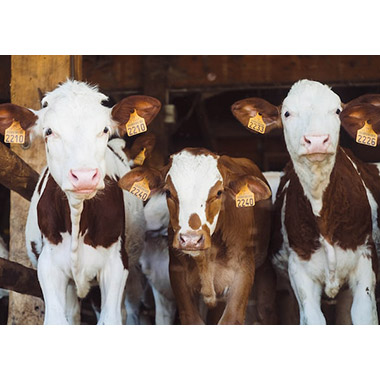
The USDA Food Safety and Inspection Services (FSIS) has released a report highlighting Salmonella antimicrobial resistance (AMR) trends from 2014-2019. The FSIS NARMS Multi-Year Report evaluates trends in Salmonella serotypes and antimicrobial resistance (AMR) in certain food animal species and products sampled from 2014 through 2019 as part of FSIS NARMS sampling.

The National Antimicrobial Resistance Monitoring System (NARMS) is a national public health surveillance system through which FSIS partners with state and local public health departments, the CDC, and the FDA to track changes in antimicrobial susceptibility of select foodborne bacteria found in ill people, retail meats, and food animals.

Hear from Sandra Eskin, Deputy Under Secretary for Food Safety, Food Safety and Inspection Service, USDA, on the Proposed Regulatory Framework to Reduce Salmonella Illness at Food Safety Tech’s Hazards Conference, April 3-5 in Ohio.Samples analyzed included cecal (intestinal content) samples from food-producing animals at slaughter and product samples tested as part of Pathogen Reduction/Hazard Analysis Critical Control Point (PR/HACCP) sampling. Salmonella isolates were analyzed by serotyping and antimicrobial susceptibility testing (AST) to evaluate differences in sample source and slaughter class (chicken, turkey, cattle, and swine).

FSIS’ key findings indicate that:

  • The proportion of pan-susceptible Salmonella differed among slaughter classes and sample sources (cecal/product samples): cattle (83%/71%), swine (65%/64%), chicken (35%/43%), and turkey (34%/32%).
  • The top Salmonella serotypes for each slaughter class were Kentucky (chicken), Reading (turkey), Montevideo (cattle), and Anatum (swine).
  • Salmonella Infantis showed an increasing trend in chicken and emerged as one of the top serotypes in both cecal and product samples.
  • Salmonella Infantis from both cecal and product samples showed increased multidrug-resistance.
  • Salmonella isolates from chicken cecal and product samples show a significant increase in resistance to the critically important antimicrobial drugs: ciprofloxacin, ceftriaxone, and trimethoprim-sulfamethoxazole.
  • Over time, Salmonella isolates from product samples from cattle and swine showed increased resistance to cephalosporin.

FSIS noted that differences and similarities observed in Salmonella serotypes and their AMR between cecal and product samples highlight the importance of monitoring Salmonella from farm-to-slaughter.

Read the full report here.


Boy Drinking Juice

FDA to Hold March 2 Webinar on Action Levels for Lead in Infant Food

By Food Safety Tech Staff
No Comments
Boy Drinking Juice

On Thursday, March 2, 2023, at 1:00 pm (ET) the FDA is holding a webinar to discuss the recent draft guidance on lead action levels for foods intended for children less than two years of age. The draft guidance, titled “Action Levels for Lead in Food Intended for Babies and Young Children: Draft Guidance for Industry,” was issued in January. It covers the proposed action levels for lead in a wide range of commercial foods targeted to this population. These levels support the agency’s broader effort to reduce exposure to arsenic, lead, cadmium, and mercury from foods, and advance the agency’s Closer to Zero action plan goals.

During the webinar the FDA will provide an overview of the draft guidance and answer stakeholder questions. Featured speakers include Dr. Susan Mayne, Director, Center for Food Safety & Applied Nutrition (CFSAN), Dr. Conrad Choiniere, Director, Office of Analytics and Outreach, CFSAN, and Dr. Paul South, Director, Division of Plant Products and Beverages, Office of Food Safety, CFSAN.

Stakeholders can register for the webinar and submit questions or brief comments related to this draft guidance on the registration page. Questions or comments must be submitted by Thursday, February 9, 2023.

The webinar will be recorded and posted to the FDA website.


Chris Downs

IFT’s Chris Downs Named Director of Australian Food and Beverage Accelerator

By Food Safety Tech Staff
No Comments
Chris Downs

Chris Downs, Ph.D., Board President of the Institute of Food Technologists (IFT), is taking on a new role as Director of the Food and Beverage Accelerator (FaBA) Trailblazer program funded by the Australian Government Department of Education and hosted by The University of Queensland.

The FaBA Trailblazer program—part of Australia’s $150 million effort to boost growth and innovation in the food and beverage industry—is expected to help attract more than $1 billion in investment and generate more than 15,000 jobs across the Australian food and beverage sector.

“I am truly honored to be a part of such an important program and look forward to continuing my pursuit of a healthier future for Australia’s foods and beverages in this role,” said Dr. Downs.

Dr. Downs has more than 30 years of experience in the agri-food industry as a scientist, leader and executive. He previously served as general manager for Crop and Food Science at the Queensland Department of Agriculture and Fisheries. He also previously led the Food Program at Australia’s national science agency, Commonwealth Scientific and Industrial Research Organisation (CSIRO).

In addition to his new role, Dr. Downs will continue to serve as IFT Board President, a role that he assumed in September 2022.

“As IFT Board President, Chris Downs has championed IFT’s mission of promoting and advancing the science of food and its application while engaging and supporting food professionals around the world. His passion for creating a safer and more sustainable food supply through science and innovation is second to none, and we wish him all the best in his new role,” said IFT CEO Christie Tarantino-Dean.


Frank Yiannas, Walmart

Frank Yiannas Announces Resignation from FDA

By Food Safety Tech Staff
No Comments
Frank Yiannas, Walmart

Frank Yiannas is stepping down from his position as FDA Deputy Commissioner for the Office of Food Policy and Response effective February 24. In his resignation letter, Yiannas cited concerns about the decentralized structure of the FDA foods program and urged the Commissioner to consider “creation of a more integrated operating structure and a fully empowered and experienced Deputy Commissioner for Foods, with direct oversight of those centers and offices responsible for human and animal foods.”

During his tenure, Yiannis oversaw several efforts to modernize and improve food safety, including issuing the FSMA Final Food Traceability Rule and a new, proposed Agricultural Water Standard.

During his tenure, Yiannis has taken an active role engaging regularly with both industry and consumer groups to advance food safety and the prevention of foodborne illness. We at Food Safety Tech thank him for his service to the FDA and American consumers.


Katerina Mastovska

Mastovska Named AOAC Deputy Executive Director and Chief Science Officer

By Food Safety Tech Staff
No Comments
Katerina Mastovska

Dr. Katerina (Kate) Mastovska is the new Deputy Executive Director and Chief Science Officer of AOAC International. AOAC International is a globally recognized, 501(c)(3), independent, third party, not-for-profit association and developer of voluntary microbiological and chemical consensus standards.

Dr. Mastovska has been an active member of AOAC International since 2004 and received the association’s highest scientific honor, the Harvey W. Wiley Award, in 2021. She has extensive experience in research chemistry, which includes working for the University of Chemistry & Technology in Prague, the U.S. Department of Agriculture, and founding her own independent consulting business, Excellcon International. Dr. Mastovska most recently served as Chief Scientific Officer, Eurofins U.S. Food Division.

“Kate has been an instrumental and involved member of AOAC for almost 20 years, and we’re so thrilled to have her officially join our team,” said Executive Director David B. Schmidt. “She will lead all science programs and projects at AOAC International and has excelled with the three main stakeholder sectors for AOAC: government, industry, and academia.”

“I’m delighted to join the AOAC staff and lead the team of dedicated scientists. AOAC has a critical role in food safety, and I’m inspired to continue to be a part of this important work,” said Dr. Mastovska.

The association has also promoted two current staff members, each with almost 20 years of experience at AOAC:

Dawn L. Frazier has been promoted to Deputy Executive Director, Engagement. Previously she served as Senior Director of Membership, Marketing, and Communications. Her responsibilities include leading and implementing the organization’s engagement strategy, which includes developing and maintaining relationships with key stakeholders and partners, as well as overseeing outreach and communication efforts. The position serves as the membership, communications, publications, and meetings lead to achieve the strategic plan for AOAC. In her time at AOAC, she has provided guidance to the sections, overall membership, meetings, and education, as well as marketing and communications.

Deborah McKenzie has been promoted to the new role of Deputy Assistant Executive Director & Chief Standards Officer. McKenzie was Senior Director, Standards and Official Methods of Analysis. Her responsibilities include overseeing implementation and execution of voluntary consensus standards processes and the Official Methods of Analysis database. She and her team will coordinate and administer associated activities with standards development and method approval programs.


USDA Logo

USDA FSIS Publishes 2023-2026 Strategic Plan

USDA Logo

The USDA Food Safety and Inspection Services (FSIS) has released its 2023-2026 Strategic Plan, the foundation document for both the long range and day-to-day operations of the agency. The agency announced that the updated plan continues to emphasize the importance of science and data to implement advanced and innovative approaches to food safety.

The plan includes three strategic goals:

Goal 1: “Prevent Foodborne Illness and Protect Public Health,” which focuses directly on FSIS’ public health mission and its activities.

Goal 2: “Transform Inspection Strategies, Policies, and Scientific Approaches to Improve Public Health,” which focuses on improving how the agency conducts food safety activities.

Goal 3: “Achieve Operational Excellence,” which focuses on maintaining and improving the strong internal foundation needed to meet goals 1 and 2.

As part of the primary goal, “Prevent Foodborne Illness and Protect Public Health,” the FSIS specifically plans to:

  • Advance a proposed regulatory framework for its new strategy to reduce Salmonella infections attributable to poultry. FSIS is considering: (1) requiring that incoming flocks be tested for Salmonella before entering an establishment; (2) enhanced establishment process control monitoring and FSIS verification; and (3) an enforceable final product standard. This proposed strategy is aimed at moving the Agency closer to achieving the national target of a 25% reduction in Salmonella illnesses set by Healthy People 2030 and is expected to be in place by May 2024.
  • Strengthen compliance with food safety statutes and regulations by:
    • Regularly assessing domestic food safety systems to determine how well they are maintaining process control as well as leveraging data from the Public Health Information System (PHIS) to identify patterns and trends in noncompliance with FSIS regulations among establishments.
    • Conducting outreach, technical assistance, and information sharing with other countries to improve understanding of FSIS’ regulatory requirements and policies. This is to ensure food safety standards for imported products are equivalent to those of domestic products to reduce foodborne infections attributable to FSIS-regulated products, specifically for Salmonella illnesses attributable to poultry.
  • Improve food safety at in-commerce facilities by using a risk-based approach to target FSIS resources—including resources used for surveillance, investigative, and enforcement activities.
  • Enhance response to outbreaks by improving information sharing and collaboration with public health partners during investigations to remove contaminated product more quickly from commerce.
  • Sustain progress in food defense by assuring that establishments adopt and incorporate food defense practices into their day-to-day operations, and that agency personnel and industry are prepared to respond to an act of intentional contamination.
  • Increase public awareness of recalls, public health alerts, foodborne illness outbreaks, and consumer adoption of safe food handling practices, by identifying the best approaches to influence behavior and deploying proactive strategies based on behavioral science research.
FDA Logo

FDA Issues Final Guidance for Foreign Supplier Verification Programs

By Food Safety Tech Staff
No Comments
FDA Logo

The FDA has issued its final guidance for the Foreign Supplier Verification Programs (FSVP) for Importers of Food for Humans and Animals. FSVP, which is part of the FDA Food Safety Modernization Act, makes importers accountable for verifying that foreign suppliers are producing food in a manner that meets U.S. safety standards.

This guidance includes recommendations on the requirements to analyze the hazards in food; evaluate a potential foreign supplier’s performance and the risk posed by the food; and determine and conduct appropriate foreign supplier verification activities.

The guidance also addresses how importers can meet modified FSVP requirements in a variety of categories, such as requirements for importers of dietary supplements or very small importers.

In response to comments received to the 2018 draft guidance, changes were made to the final guidance, including providing additional clarification regarding to what food the FSVP regulation applies; what information must be included in the FSVP; and who must develop and perform FSVP activities.

“Food” covered under FSVP includes:

  • Articles used for food or drink for humans or other animals,
  • Chewing gum, and
  • Articles used for components of any such article.

Training materials, developed in collaboration with the Food Safety Preventive Controls Alliance (FSPCA), are available to help facilitate FSVP compliance by importers.

Download the final guidance here.