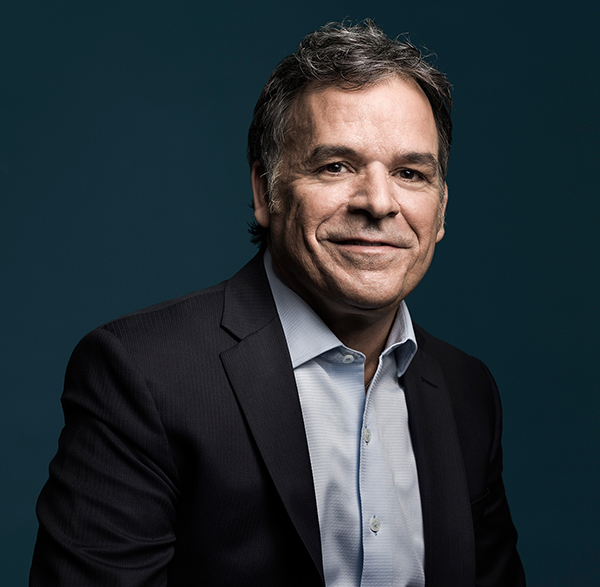
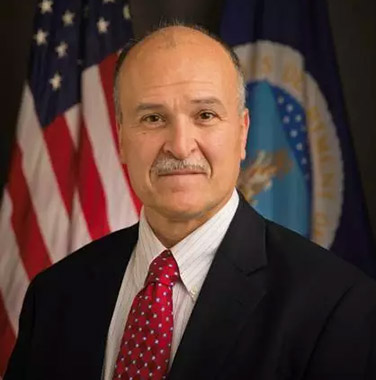
Jose Emilio Esteban, Ph.D.

José Emilio Esteban, Ph.D. Sworn in as USDA Under Secretary for Food Safety

By Food Safety Tech Staff
No Comments
Jose Emilio Esteban, Ph.D.

On January 4, José Emilio Esteban, Ph.D. was sworn in as the new Under Secretary for Food Safety at the U.S. Department of Agriculture (USDA). Dr. Esteban joined the USDA Food Safety and Inspection Service in 2001 and was appointed Chief Scientist of the FSIS in August 2018.

“Dr. Esteban has a long and well-documented commitment to food safety and public health. With over two decades of experience at USDA’s Food Safety and Inspection Service, he has been on the front lines of protecting the public from foodborne illness for much of his career,” said USDA Agriculture Secretary Tom Vilsack. “I am confident that Dr. Esteban’s leadership and experience is the right combination to advance our commitment to maintaining public health and reducing foodborne illness. I look forward to working with him as USDA continues to address foodborne challenges head-on with innovative solutions and proactive measures.”

Prior to joining the USDA, Dr. Esteban worked at the Centers for Disease Control and Prevention and served as chair of the Codex Alimentarius Commission Committee on Food Hygiene.

“Serving as the next Under Secretary of Food Safety is an opportunity to give back to a nation that has given me so much,” said Dr. Esteban.


Merieux Nutrisciences logo

Mérieux NutriSciences Acquires Food Technology Consulting

By Food Safety Tech Staff
No Comments
Merieux Nutrisciences logo

Mérieux NutriSciences has acquired Food Technology Consulting International, a Canadian Food Safety consulting, training, and auditing solutions provider. Mérieux NutriSciences offers analytical and product development solutions to prevent health risks related to the food, beverage, and nutraceutical industry. The company operates more than 100 labs and has a presence in 27 countries.

Food Technology Consulting and its team of consultants, trainers and auditors have been helping companies in the development, implementation, and maintenance of effective food safety programming for more than 20 years.

“We are enthusiastic about having the talented team at Food Technology Consulting join us and welcome them to our network,” said Sébastien Moulard, President of Mérieux NutriSciences, North America. “This acquisition supports our position as a major player in the consulting market and strengthens our presence in Canada.”

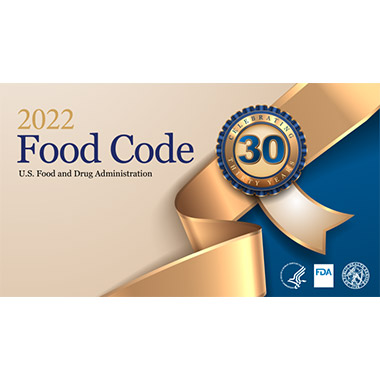
2022 FDA Food Code

FDA Issues 2022 Food Code

2022 FDA Food Code

The FDA has issued the 2022 edition of the FDA Food Code, which contains some significant changes, including:

  • Adding sesame as a major food allergen to reflect that the Food Allergy Safety, Treatment, Education, and Research Act of 2021 established sesame as the 9th major food allergen
  • Informing consumers, in writing, of major food allergens as ingredients in unpackaged food
  • Adding labeling of major food allergens in bulk food that is available for consumer self-dispensing
  • Creating new requirements for the allowance of pet dogs in outdoor dining spaces
  • Revising the definition of intact meat, including enhancements to clarify time/temperature cooking requirements

For the first time, the FDA Food Code specifically addresses food donations, included as part of the Biden-Harris Administration’s National Strategy on Hunger, Nutrition, and Health. The National Strategy, which was rolled out in September at the White House Conference on Hunger, Nutrition, and Health, provides a roadmap of actions the federal government is taking to end hunger and reduce diet-related diseases by 2030.

The FDA noted that the 2022 edition reflects the input of regulatory officials, industry, academia, and consumers that participated in the 2020 biennial meeting of the Conference for Food Protection (CFP).

The Food Code is offered for adoption by local, state, and federal governmental jurisdictions for administration by the various departments, agencies, bureaus, divisions, and other units within each jurisdiction that have been delegated compliance responsibilities for food service, retail food stores, or food vending operations. Alternatives that offer an equivalent level of public health protection to ensure that food at retail and food service is safe are recognized in the Food Code.

View a full list of the Summary of Changes.


Candy factory employee

Challenges and Best Practices in Developing a Strong Food Safety Culture

Candy factory employee

On December 12, The FDA released a systematic review of the scientific literature on food safety culture (FSC), which identified barriers, as well as best practices, for organizations seeking to develop a stronger culture of food safety. The FDA noted that it will use this research to inform its continued efforts in support of food safety culture.

While food safety culture is defined in various ways in the literature, the review identified the most frequently cited definition of FSC as “the aggregation of the prevailing, relatively constant, learned, shared attitudes, values and beliefs contributing to the hygiene behaviors used within a particular food handling environment.” (Griffith, Livesey, and Clayton 2010).

Best practices for promoting FSC include:

  • Promoting FSC as a topmost goal of each member of the organization, not just a goal of a specific group within an organization.
  • Branding your commitment to FSC and promoting it everywhere. This includes displaying food safety messaging in break rooms, hallways, elevators, parking lots, or anywhere employees congregate so employees don’t forget it. In his book Food Safety Culture: Creating a Behavior-Based Food Safety Management System, Frank Yiannas, FDA Deputy Commissioner for Food Policy and Response wrote that, “Messaging should be simple, communicate what the desired behavior is, be placed where the desired behavior should occur, and changed often enough to prevent desensitizing.”
  • Building your food safety messages on the concept of “we,” and clearly defining how employees’ job objectives align with food safety.
  • Promoting FSC not only within your organization, but also within your entire supply chain.

Challenges and barriers to a strong and effective FSC include:

Over-reliance on Food Safety Management Systems (FSMS). Because FSMSs do not address the human impact on food safety, they do not guarantee a good FSC. A combination of a well-elaborated FSMS and a favorable food safety climate is ideal.

Prioritization of Cost-saving and Money-earning. A commitment to food safety must take precedence over other objectives and cultures that compete for priority within an organization, including the culture of saving money.

Frequent Staff Turnover. Continuous turnover can be detrimental to key determinants of FSC, such as risk awareness and accountability.

Optimistic Bias. Reviewed studies found that some organizations or employees have an “illusion of invulnerability,” which may hinder effective implementation of food safety behaviors. Without perceiving a susceptibility to food contamination, people often resist a focus on it unless they can see the value.

Download the Food Safety Culture Systematic Literature Review.


CFP logo

Conference for Food Protection Accepting Issues for Consideration

By Food Safety Tech Staff
No Comments
CFP logo

The 2023 Biennial Conference for Food Protection (CFP) will take place on April 24-28 in Houston, Texas, and the organizers are accepting issues for consideration. Food industry professionals and stakeholders who would like to submit issues for consideration can review the guidelines on the CFP Issue Submission Process Page. The period for online submissions opened on Monday, December 19, 2022, and will close on Monday, January 23, 2023.

The CFP brings together representatives from the food industry, government, academia, and consumer organizations to identify and address emerging problems of food safety and to formulate recommendations for possible inclusion in the FDA Food Code. Though the Conference has no formal regulatory authority, it does influence model laws and regulations among all government agencies and seeks to minimize disparate interpretations and implementation.

The conference’s objectives include:

  • Identifying and addressing problems in the production, processing, packaging, distribution, sale, and service of foods
  • Focusing on and facilitating the food protection programs governing the foodservice, retail food store, and food vending segments of the food industry
  • Adopting sound, uniform procedures which will be accepted by food regulatory agencies and industry
  • Promoting mutual respect and trust by establishing a working liaison among governmental agencies, industry, academic institutions, professional associations, and consumer groups concerned with food safety
  • Promoting uniformity among States, territories, and the District of Columbia
Reagan Udall Foundation Logo

Expert Panel Recommends a New Federal Food Administration Separate from FDA

By Food Safety Tech Staff
No Comments
Reagan Udall Foundation Logo

On December 6, the Independent Expert Panel for Human Foods submitted its Operational Evaluation of FDA’s Human Foods Program report to Dr. Robert Califf, FDA Commissioner for Food and Drugs. The evaluation and report, which addressed culture, structure/leadership, resources, and authorities, were facilitated by the Reagan-Udall Foundation at Dr. Califf’s request.

The panel, chaired by former Commissioner of Food and Drugs Dr. Jane Henney, highlighted several concerning findings in their report, including lack of communication, lack of a clear vision and mission, lack of a clear, overarching leader, and siloed workers within the FDA’s Human Foods program. Its recommendations to improve both food safety and nutrition in the U.S. included creating a new Federal Food Administration under HHS that would operate parallel to, rather than under the auspices of, the FDA.

Notably, the panel found that the FDA Human Foods program was ill defined with multiple agencies, including CFSAN, OFPR and OVA, working independently of each other, often with separate leadership and little sharing of information.

“The current structure of the FDA Human Foods Program reinforces duplicative or competing roles and responsibilities, siloed work, and inadequate internal and external engagement. This reality impedes the Human Foods Program move toward a prevention paradigm. While a change in structure cannot address all the challenges identified through this Human Foods Program review, changing the current organizational configuration will assist the Agency in advancing its mission,” the panel wrote.

In addition to Dr. Henney, the panel included Francisco Diez-Gonzalez, PhD, James Jones, Barbara Kowalcyk, PhD, Shiriki Kumanyika, PhD, MS, MPH, and John Taylor, JD. The team of researchers, former regulators, and process improvement specialists used a three-phase evaluation protocol consisting of information gathering, information synthesis and analysis, and report generation. The panel heard from more than 350 stakeholders through a two-day in-person stakeholder meeting, an online stakeholder public portal, and a series of interviews.

“We were honored to take on this challenge and worked diligently to propose changes to strengthen the operation of FDA’s Human Foods Program,” said Dr. Henney. “The report provides constructive recommendations that will take time to work through and implement, but we are confident the effort will benefit the health and safety of the American public.”

Read the full report here.

Intertek Alchemy Logo

Intertek Alchemy Launches Customizable Food Safety Culture Training Program

By Food Safety Tech Staff
No Comments
Intertek Alchemy Logo

Intertek Alchemy, which offers workforce training solutions, has launched a new online food safety culture training program for food industry leaders to help them build and maintain an informed culture coalition within their organization. The program includes GFSI-based food safety culture instruction, a best practice case study and a food safety culture gauge that provides custom action plans and resources.

The program was developed in partnership with Cultivate SA, a Swiss-based company led by Dr. Lone Jespersen, food safety culture professional and chair of the GFSI Food Safety Culture Working Group.

“Strong food safety cultures are essential to reducing recalls and employee turnover, while maximizing productivity and ensuring compliance,” said Laura Dunn Nelson, Intertek Alchemy vice president of food safety and global alliances. “We are excited to work with Dr. Jespersen and the Cultivate SA team to develop our latest course that will help companies of all sizes efficiently and effectively educate their leadership on creating a collaborative and successful food safety culture, specific to their business.”

The training program is available online via Intertek Alchemy’s Zosi Learning Platform. Individuals or cross-functional teams of any size can take the course, which includes two in-depth learning modules on food safety culture and an industry-specific case study on how it positively impacts a food business.

From there, the program features an interactive food safety culture gauge that assesses the organization’s maturity level in regard to GFSI’s five dimensions of a food safety culture. Based on the organization’s responses, the program provides a customized action plan and set of culture tools leveraging social science principles.


person buying fruit

USDA Announces Food Safety Outreach Program Grants

By Food Safety Tech Staff
No Comments
person buying fruit

The USDA National Institute of Food and Agriculture (NIFA) is accepting grant applications as part of the Food Safety Outreach Program. The program, which will build upon the national infrastructure of the National Food Safety Training, Education, Extension, Outreach, and Technical Assistance Competitive Grants Program, has an estimated total funding of $9,600,000, with grants of $80,000 – $550,000 available to eligible applicants.

Awardees will develop and implement food safety training, education, extension, outreach and technical assistance projects that address the needs of owners and operators of small to mid-sized farms, beginning farmers, socially disadvantaged farmers, small processors, or small fresh fruit and vegetable merchant wholesalers. Grant applications will be solicited directly from those in local communities to include those from community-based organizations, non-governmental organizations, food hubs, farm cooperatives, extension, and other local groups.

Eligibility requirements include: Cooperative Extension Services for a U.S. state or territory; non-government organizations and/or community-based organizations; organizations representing owners and operators of farms, small food processors, or small fruit and vegetable merchant wholesalers that has a commitment to public health and expertise in administering programs that contribute to food safety; federal, state, local, or tribal agencies; an institution of higher education (as defined in Section 101(a) of the Higher Education Act of 1965 (20 U.S.C. 1001(a)) or a foundation maintained by an institution of higher education; a collaboration of two or more eligible entities.

USDA NIFA is hosting a request for applications (RFA) Technical Assistance Webinar on December 19, 2022 from 3:00-4:00pm ET.

For more information on the application process visit:

The closing date for applications is Thursday, February 16, 2023


FDA Logo

FDA Issues Two New Guidances on Food Allergen Labeling Requirements

FDA Logo

The FDA has issued two new guidance documents on food allergen labeling requirements.

Questions and Answers Regarding Food Allergens, Including the Food Allergen Labeling Requirements of the Federal Food, Drug, and Cosmetic Act (Edition 5); Guidance for Industry updates the previous edition (Edition 4) with new and revised questions and answers related to the labeling of food allergens, including requirements in the Food Allergy Safety, Treatment, Education, and Research Act of 2021 (FASTER Act) and the Food Allergen Labeling and Consumer Protection Act of 2004 (FALCPA).

The FALCPA amended the Federal Food, Drug, and Cosmetic Act (FD&C Act) by defining the term “major food allergen” and requiring that foods or ingredients that contain a major food allergen be specifically labeled with the name of the allergen source. This law identified eight foods as major food allergens: milk, eggs, fish, shellfish, tree nuts, peanuts, wheat, and soybeans. The FASTER Act adds sesame to the list of major food allergens effective January 1, 2023.

The draft guidance includes:

  • New questions and answers about food allergen labeling requirements, such as the labeling of sesame, milk, and eggs; the labeling of major food allergens in the labeling of dietary supplement products; and other technical labeling issues.
  • Revised questions and answers to update and clarify information presented in earlier editions of the final guidance, such as the labeling of tree nuts, fish, and crustacean shellfish.
  • Images that show examples of labeling requirements.

The agency also issued a final guidance with the same title to preserve the questions and answers from the previous edition (Edition 4) that were not changed, except for editorial changes such as renumbering the questions and reorganizing the information in the guidance.

Stakeholders can submit comments about the draft guidance within 60 days of the November 30 publication of the notice in the Federal Register. Submit comments electronically on www.regulations.gov or by mail:

Dockets Management Staff
Food and Drug Administration
5630 Fishers Lane, Rm 1061
Rockville, MD 20852

All written comments should be identified with this document’s Docket ID: FDA-2022-D-0099.

Kiwa Group Acquires ASI Food Safety

By Food Safety Tech Staff
No Comments

Global Testing, Inspection and Certification (TIC) company Kiwa has acquired St. Louis-based ASI. ASI has provided farm-to-fork food safety solutions since the 1940s. The company offers a full suite of safety and quality services to the food and beverage, dietary supplements and cannabis industries. The merger will strengthen Kiwa’s U.S. footprint in providing Food, Feed & Farm certifications.

“Kiwa and ASI share similar customer-first business values and follow the same business model when it comes to testing, inspection and certification. By joining the Kiwa family, we’re combining their wide portfolio of accreditations and services (BRC, IFS, FSSC, PrimusGFS, GLOBALG.A.P., Rainforest Alliance, MSC/ASC, Organic/USDA and many others), global business network and expertise with our client network in farm-to-fork food safety to assist our growing client base in North America even better,” said Charray Williams, CEO of ASI.

On January 1, 2023, 29-year-old Tyler Williams, CTO of ASI, will take the reigns as CEO of ASI. He is the youngest CEO in the history of the company. He will succeed current CEO Charray Williams and lead the expansion of Kiwa and ASI in the Food, Feed & Farm sector in North America. Richard Stolk, Kiwa’s global Director for the Food, Feed & Farm sector will serve as President of the Board of ASI and will be directly involved in the further growth of ASI.

“Kiwa already has a strong footprint in the global Food, Feed & Farm sector. With ASI, we significantly expand our reach, expertise and footprint, particularly in the U.S. but certainly with a global perspective. Now that we have welcomed ASI to the Kiwa family, we can better provide our customers with a one-stop shop for food- and feed-related certification services on all continents,” said Stolk.