Recall

Undeclared Allergens Drive Recent Recalls

By Food Safety Tech Staff
No Comments
Recall

Leading up to Halloween, sweets, including cookies, gelato and dipping caramel, were among the foods recalled due to undeclared allergens.

On October 27, Daiso California issued an allergy alert for its Tiramisu Twist Cookies due to undeclared almonds and hazelnuts, and Whole Foods Market recalled Dipping Caramel from five stores in Colorado, Kansas and Nebraska because the product may contain wheat, which is not declared on the product label.

Daiso’s Tiramisu Twist Cookies were sold in Daiso stores in California, Washington, Nevada, Texas, New York and New Jersey. The cookies are packaged in a gold bag with a large image of two cookies on the package and are sold in 3.4oz (96g) packages. According to the FDA alert, there has been one reported case of allergic reaction to this product.

The affected products in the Whole Foods recall was sold at the following Whole Foods Market stores:

  • 10020 Regency Circle, Regency-Omaha, NE
  • 340 Reed Street, Basalt, CO
  • 1250 South Hover Road, Suite 300, Longmont, CO
  • 14615 W. 119th Street, Olathe, KS
  • 9366 S. Colorado Blvd Ste B, Highlands Ranch, CO

The products, “Dipping Caramel by the Pound,” were available in the bakery department with a product code of 34888, sell by dates of October 25 – November 15, 2022, and were available for purchase from October 4 – October 25, 2022. The mislabeling issue was discovered by a store employee.

One day prior, on October 26, Zingerman’s Creamery of Ann Arbor, Michigan, recalled 173 pints of Paw Paw Gelato, 50 quarts of Paw Paw Gelato, 58 pints of Harvest Pumpkin Gelato and 10 quarts of its Harvest Pumpkin Gelato because they may contain undeclared egg allergen.

Per the recall notice, Paw Paw and Harvest Pumpkin Gelato was distributed in Ann Arbor and Chelsea, Michigan through Zingerman’s Creamery, Zingerman’s Deli, zingermans.com, Argus Farm Stop (Packard) and Agricole Farm Stop.

The lots that are recalled are: Paw Paw (220916, 220928, 221005, 221012, 221018) Harvest Pumpkin (220909, 220919, 220928). No illnesses have been reported to date.

Salmonella

National Advisory Committee Announces Public Meeting to Discuss Actions on Cronobacter, Cyclospora and Salmonella

Salmonella

The National Advisory Committee on Microbiological Criteria for Foods (NACMCF) will hold a virtual public meeting on November 15 from 10:00 am to 12:00 pm ET to discuss work being advanced by the FDA on Cronobacter spp. in powdered infant formula. The Committee will also discuss updates under the Cyclospora cayetanensis subcommittee and vote on adopting the report: “Enhancing Salmonella Control in Poultry Products.”

NACMCF is an advisory committee, established by the USDA, that provides impartial, scientific advice and/or peer reviews to federal food safety agencies for use in the development of an integrated national food safety systems approach.

The meeting is intended to help the committee gain scientific insight regarding Cronobacter infections, including recommendations for how public health authorities can better protect public health, as well as recommendations for food safety management practices that the food industry can implement to enhance the safety of powdered infant formula.

The meeting will be held virtually using Zoom. Attendees must pre-register to receive a join link, dial-in number, access code and unique Attendee ID. Attendees who would like to deliver comments during the meeting must register by November 8, 2022. Attendees who do not plan to speak at the public meeting may register at any time up to the day of the meeting. The meeting agenda is available on the FSIS events page.


Koshal Ram and Ranjeet Klair

Acheson Group Expands into India

By Food Safety Tech Staff
No Comments
Koshal Ram and Ranjeet Klair

The Acheson Group (TAG), a global food safety and public health consulting team led by David Acheson, MD, former FDA Associate Commissioner for Foods, has expanded its operations to India.

As part of the expansion, TAG brought on two new team members. Food Safety Specialist Koshal Ram has nearly three decades of experience working in low-acid agri-food manufacturing and has held technical and global leadership roles managing supply chain food safety and product quality with multiple companies. Ram has a diploma in Quality Assurance and ISO from the University of Chennai, India. He speaks four languages (English, Hindi, Tamil and Kannada) and is a Preventive Controls Qualified Individual (PCQI) and an FSVP Qualified Individual. He is trained in Food Safety and Standards Act 2006, ISO 2000 requirements, QAS validation and verification of HACCP Plans and QAS development and implementation of HACCP Plans, Acidified Food Manufacturing School (21CFR section 108.25(f) and 114.10) and FDA Acidified Foods.

Ranjeet Klair will work in conjunction with Ram at TAG India as Director of Food Safety. She brings more than two decades of industry experience working with Canadian, U.S. and global food retailers, production plants and certification bodies in food safety, quality assurance and regulatory compliance. Klair holds a Master of Science degree in Food Sciences, Master of Global Food Law (Jurisprudence) degree and a Bachelor of Applied Science and certification in International Food Laws and Regulations. Along with completing a certification program for International Food Laws and Regulations, she is a BRC, FSSC22000, HACCP, PCQI, FSVP trainer and BRC, SQF, FSSC, ISO 22000, Gluten-free, GMP and Canada GAP lead auditor.

As a key component of service to India, TAG will provide expertise and resources to assist exporters in food safety efforts and domestic and foreign standards and regulatory compliance.

“With TAG’s 10-year anniversary quickly approaching, we are excited to bring on valuable new TAG Team members who can help further expand our business to different areas of the world,” said Dr. Acheson, TAG CEO and President. “Ranjeet’s and Koshal’s expertise and ability to work onsite with clientele throughout India enables us to bring TAG support to India.”

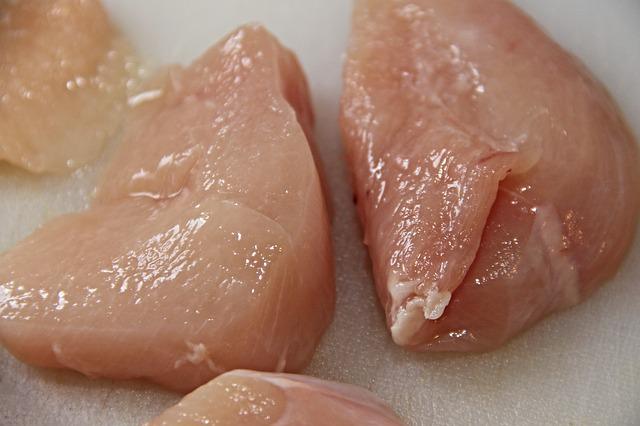
Raw chicken breast

USDA Charts Regulatory Path To Reduce Poultry-Linked Salmonella Infections

By Food Safety Tech Staff
No Comments
Raw chicken breast

The USDA Food Safety and Inspection Service (FSIS) has released a proposed regulatory framework to control Salmonella contamination in poultry products.

In its announcement, the USDA noted that the proposed framework follows months of information-gathering and discussions with a wide range of stakeholders, researchers and scientists. It consists of three key components:

  • Requiring that incoming flocks be tested for Salmonella before entering an establishment
  • Enhancing establishment process control monitoring and FSIS verification
  • Implementing an enforceable final product standard.

“We know that Salmonella in poultry is a complex problem with no single solution,” said USDA Deputy Under Secretary Sandra Eskin. “However, we have identified a series of strategic actions FSIS could take that are likely to drive down Salmonella infections linked to poultry products consumption, and we are presenting those in this proposed framework.”

A copy of the proposed framework, which also addresses cross-cutting issues of testing for Salmonella, the impact on small and very small establishments and data sharing, is available online here.

Representatives from industry, consumer groups and other stakeholders are invited to provide input on the proposed regulatory framework by participating in a virtual public meeting November 3 from 10am to 4pm ET via Zoom. To view the agenda and to register to attend, visit the Meetings and Events page on the FSIS website.

Stakeholders can also submit written comments at www.regulations.gov.

Consumer groups are applauding the proposed framework. “This is a historic first step toward final product standards that are science-based, risk-based, enforceable, and effective at protecting our vulnerable loved ones,” said Amanda Craten, board member of STOP Foodborne Illness. “As a parent of a child who suffered from Salmonella illness and is left with permanent injury, I have advocated and engaged in the process to modernize poultry standards to ensure no child has to experience the devastation of a preventable, virulent Salmonella illness. I’m thankful that USDA is making the prevention of illnesses like my son Noah’s a priority.”

Dr. Craig Hedberg, a professor at University of Minnesota School of Public Health and Co-Director of the Minnesota Integrated Food Safety Center of Excellence, agrees that this framework “is an important step towards moving away from hazard-based regulation toward risk-based regulation. Focusing on levels of Salmonella and highly virulent strains of Salmonella rather than just the presence or absence of Salmonella should reduce the number of illnesses associated with poultry.”

The USDA FSIS continues to gather scientific evidence relevant to the approaches presented in the proposed framework.


Bouradi and Serino headshots

National Restaurant Association Announces Food Safety Leadership Award Winners

By Food Safety Tech Staff
No Comments
Bouradi and Serino headshots

Al “Dr. Al” Baroudi, MS, Ph.D., CFS, vice president of Food Safety and Quality Assurance for The Cheesecake Factory Incorporated, and Christina Serino, senior director for Quality Assurance and Food Safety at P.F. Chang’s, have been recognized by the National Restaurant Association as outstanding leaders in food safety.

Baroudi received the inaugural Lifetime Achievement Award for Outstanding Leader in Food Safety, and Serino was named the 2022 Outstanding Leader in Food Safety during the Association’s Food Safety and Quality Assurance (FSQA) Expert Exchange event in September.

The Outstanding Food Safety Awards, sponsored by Ecolab, were created to recognize individuals whose careers reflect consumer safety across the industry.

The first Lifetime Achievement Award for Outstanding Leader in Food Safety was presented to Baroudi in recognition of his contributions to the food safety industry. Over the course of his career, he has been a leader in operational food safety innovation, with a dedication to industry-wide mentorship and workforce development and has volunteered his thought leadership in organizations that define food safety across industry, academia and government.

“I am extremely honored and thankful for the recognition in receiving this prestigious award that represents a remarkable milestone in my lifelong career in food safety. Preventing any and every foodborne illness has been my goal throughout my career, and I am truly humbled by this recognition,” said Baroudi. “I have been very fortunate to work with government agencies, academia and several companies throughout my career. I would like to thank The Cheesecake Factory, for not only recognizing the value of food safety culture, but for giving me the opportunity to create and lead our robust program.”

Serino was selected as the 2022 Outstanding Leader in Food Safety in recognition of her dedication to food safety through personal and professional accomplishments including improving food safety processes, introducing innovations to manage food supply systems and foodservice operations, and mentoring other foodservice professionals.

Serino has more than a decade of experience in food safety and quality assurance, including positions in private industry and in regulatory roles. At P.F. Chang’s, she oversees food safety, quality, regulatory compliance and environmental, social and governance issues.

“This is recognition of the hard work and dedication by food safety professionals across the industry,” Serino said. “We know food safety is non-negotiable and understand the unique responsibility we carry. At P.F. Chang’s we think about it as a harvest to plate continuum—factoring in everything from supply chains to menu listings. It’s top of mind so all our guests, regardless of dietary needs or health profiles, can enjoy a meal knowing the food they’re eating is safe.”

A panel of six food safety professionals, five from the National Restaurant Association FSQA Expert Exchange Steering Committee and one from Ecolab, evaluated the award nominations to select the honorees.

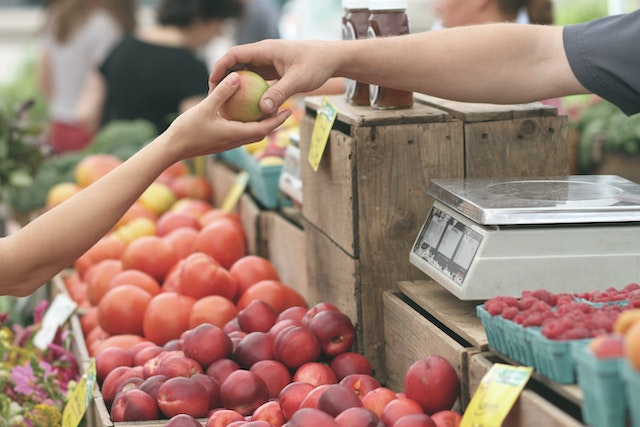
Consumer buying apple

Foundation FSSC Launches 24000 Scheme for Social Management Systems

By Food Safety Tech Staff
No Comments
Consumer buying apple

The Foundation FSSC, the independent nonprofit owner of the FSSC 22000 Scheme, a complete certification scheme for Food Safety Management Systems that is aligned with the ISO Management System and ISO Harmonized Structure, has launched the FSSC 24000 certification scheme for Social Management Systems.

FSSC 24000 is based on the internationally recognized, independent management system standard PAS 24000 developed by BSI. It helps organizations make a greater social impact, improve their overall labor-related social performance and contribute to Sustainable Development Goals (SDGs) beyond those related to food safety only.

In a statement announcing the new Scheme, the Foundation FSSC stated, “The Foundation FSSC, alongside our stakeholders, wants to make a social impact and contribute to the SDGs. Globally, problems related to human rights seem to be increasing rather than decreasing. Through the FSSC 24000 Scheme, we strive to improve labor relationships, health and safety at work, and work and business ethics with a management system approach that drives continuous improvement on key social issues.”

FSSC 24000 is an audit- and certification Scheme for social management systems that aligns with the ISO Management System approach. It helps organizations improve their management system, protect their brands, drive business impact and contribute to the SDGs as determined by the United Nations.

The PAS 24000 standard and the FSSC 24000 documents are free to download through the FSSC website.


FDA logo

FDA Announces Upcoming Webinars on Food Safety Culture and “Healthy” Food Labeling

By Food Safety Tech Staff
No Comments
FDA logo

The FDA has announced two upcoming webinars for food manufacturers and industry stakeholders. On Friday, October 21, 2022, at 1:00 pm ET, the FDA will provide an overview of its proposed rule to update the definition of “healthy” nutrient content claims for food products. The “healthy” claim acts as a quick signal on food package labels to identify foods that will help consumers build healthy eating patterns.

The FDA has proposed changes to the definition of “healthy” to align with current nutrition science, the Dietary Guidelines for Americans, 2020-2025 and the updated Nutrition Facts label. The guidance also includes the agency’s intent to exercise enforcement discretion with respect to the implied nutrient content claim “healthy” for foods that have a fat profile of predominantly monounsaturated and polyunsaturated fats, but do not meet the regulatory definition of “low fat,” and on foods that contain at least 10% of the daily value (DV) per reference amount customarily consumed of potassium or vitamin D.

Speakers include:

  • Janesia Robbs, Communications and Public Engagement Staff, FDA CFSAN
  • Dr. Claudine Kavanaugh, Director, Office of Nutrition and Food Labeling (ONFL), FDA CFSAN
  • Dr. Sarah Gebauer, Nutritionist, Nutrition Science Review Branch, ONFL, FDA CFSAN
  • Vincent DeJesus, Nutritionist, Nutrition Assessment & Evaluation Branch, ONFL, FDA CFSAN

Registration is required. Register here.

On Wednesday, October 26, from 12:00 pm to 1:00 pm ET, the FDA and Stop Foodborne Illness, a nonprofit public health organization, will be host their fifth collaborative webinar, titled “Rewards and Recognition Programs.” Guest speakers will share their experiences in establishing rewards programs that drive positive food safety culture. Speakers include:

  • Shawn Fear, Director of Quality, Conagra Brands
  • Danielle Richardson, Director of Food Safety, Conagra Brands
  • Lone Jespersen, Principal and Founder, Cultivate, SA
  • Donald Prater, Associate Commissioner for Imported Food Safety, FDA
  • Conrad Choiniere, PhD, Director of the Office of Analytics and Outreach, FDA Center for Food Safety and Applied Nutrition (CFSAN)
  • Vanessa Coffman, Director, Alliance to Stop Foodborne Illness, Stop Foodborne Illness

Those who would like to attend the webinar can register here.


FDA logo

FDA and CDC Sign MOU for Enhanced Collaboration To Reduce Foodborne Illness

By Food Safety Tech Staff
No Comments
FDA logo

The FDA and CDC have entered into a Memorandum of Understanding (MOU) to strengthen food safety in retail environments. The goal of the renewed partnership is to help reduce the occurrence of foodborne illness in retail and foodservice establishments.

This MOU, which was signed on September 21, was developed to help increase the consistency and capacity of retail food protection programs across the country, promote a general culture of food safety and facilitate continued communication between the FDA and CDC to assist state, tribal, local, territorial (SLTL) and industry partners.

The three primary goals of the MOU include:

  1. Increase uniformity, consistency and capacity of STLT retail food protection programs
  2. Promote industry’s active managerial control (AMC) of foodborne illness risk factors and promote a culture of food safety
  3. Maintain a strong FDA National Retail Food Team (NRFT) and CDC National Center for Environmental Health (NCEH) workforce to assist STLT partners.

The agencies are seeking to: improve STLT’s effectiveness in conducting risk-based inspections and foodborne illness investigations; promote a culture of food safety and food safety management systems within retail and foodservice establishments; and improve research in support of foodborne illness risk factor reduction.

To accomplish these objectives, the FDA and CDC are both tasked with establishing metrics to measure the success of collaborations as well as establishing direct and consistent relationships at multiple organizational levels, sharing best practices, and identifying opportunities for leveraging the resources of both agencies to more efficiently and effectively support STLT retail regulatory programs as well as both FDA and CDC retail food protection initiatives.

In its announcement of the MOU, the FDA notes that it has historically worked with CDC to help control the risk factors for foodborne illness outbreaks in retail settings. “This MOU will ensure enhanced continued collaboration on this important work,” the agency wrote.

Brie Cheese

FDA Links Listeria monocytogenes Outbreak to Old Europe Cheese Brie and Camembert Soft Cheese Products

By Food Safety Tech Staff
No Comments
Brie Cheese

A multistate outbreak of Listeria monocytogenes infections has been linked to Brie and Camembert soft cheese products manufactured by Old Europe Cheese, Inc. of Benton Harbor, Michigan. The products are sold at various retailers under multiple labels and brands. Six cases of illness have been reported in patients in California, Georgia, Massachusetts, Michigan, New Jersey and Texas.

The FDA reports that epidemiologic information provided by CDC found that, of the five patients with information available, four reported eating Brie or Camembert cheese prior to their illnesses. An FDA inspection of the Old Europe Cheese, Inc. facility in Michigan, performed with assistance from the Michigan Department of Agriculture and Rural Development, showed the presence of Listeria monocytogenes. Whole Genome Sequencing (WGS) analysis determined that the Listeria strain found in the facility matches the Listeria strain causing illness in this outbreak.

The company has voluntarily recalled multiple brands of its Brie and Camembert cheeses produced at the facility in response to the investigation findings. The firm has also halted production and distribution of its Brie and Camembert products from the Michigan facility and is working with FDA on corrective actions.

Consumers, restaurants and retailers should not eat, sell or serve recalled products and should throw them away; this includes Best By Dates ranging from September 28, 2022 to December 14, 2022—all flavors and quantities. A full list of recalled products and stores that potentially sold these products is available on the firm’s recall.

enokie mushrooms

Bulb Onions and Imported Mushrooms Focus of New FDA Food Safety Prevention Strategies

By Food Safety Tech Staff
No Comments
enokie mushrooms

The FDA has announced two new food safety prevention strategies. The first is for imported enoki and wood ear mushrooms. The second is focused on bulb onions. Both food groups were identified in foodborne illness outbreaks in 2020.

In 2020, a multistate outbreak of Listeria monocytogenes (L. monocytogenes) infections that sicked 26 people was linked to the consumption of imported enoki mushrooms. Testing conducted by the California Department of Public Health (CDPH) identified a matching strain of L. monocytogenes in enoki mushrooms from the Republic of Korea.

Also in 2020, CORE, in collaboration with the CDC and state and local partners, investigated a multistate outbreak of Salmonella Stanley infections linked to the consumption of imported wood ear mushrooms. A total of 55 salmonellosis illnesses were reported in 12 states. Testing conducted by CDPH identified a matching strain in a sample of imported wood ear mushrooms from China. These were the first outbreaks reported to FDA in 20 years related to these products.

As a result of the outbreak findings, the FDA will conduct research to better understand how L. monocytogenes contaminates enoki mushrooms and to better understand the survival of L. monocytogenes and Salmonella on enoki mushrooms and wood ear mushrooms.

The agency will also increase strategic and targeted FDA sampling of imported specialty mushrooms at U.S. ports of entry and at U.S.-based retail sites on the state level. When specific producers are linked to the contaminated shipment, FDA may also detain future shipments until the producer can assure the FDA that the conditions that gave rise to the appearance of the violation have been resolved.

The FDA will also be working with industry to ensure international specialty mushroom producers have access to training intended to help them meet requirements for ensuring the safe production of mushrooms for import into the U.S.

Bulb Onions

In 2020 and 2021, Salmonella outbreaks associated with the consumption of bulb onions produced in the U.S. and Mexico caused more than 2,100 confirmed cases of foodborne illness in the United States.

As a result of the outbreak investigation, the FDA will engage domestic and foreign industry and government partners to promote a broad understanding of the outbreak investigation findings, applicable Produce Safety Rule requirements and the importance of root cause analysis after outbreaks.

Additional actions under the new safety prevention strategy include:

  • Prioritizing inspections of bulb onion farms in the U.S. and Mexico that are covered by the FDA’s Produce Safety Rule.
  • Identifying and assessing practices and conditions associated with onion curing.
  • Supporting research efforts to better understand bulb onion production practices, including the impact of different soil conditions and curing practices on the safety of bulb onions.
  • Supporting industry-led efforts to develop and implement best practices for bulb onion production.
  • Prioritizing Foreign Supplier Verification Program inspections of bulb onion importers to ensure that onion importers are verifying that foreign suppliers follow processes and procedures that provide the same level of public health protection as U.S. food safety requirements.
  • Increasing strategic and targeted sample collection and testing of imported bulb onions from the State of Chihuahua, Mexico.
  • Continuing to collaborate with Mexican competent authorities through the established Food Safety Partnership to help ensure the safe production of bulb onions in the State of Chihuahua, Mexico.