

Romaine Lettuce

Wendy’s Pulls Romaine Lettuce Over E. Coli Concerns

By Food Safety Tech Staff
No Comments
Romaine Lettuce

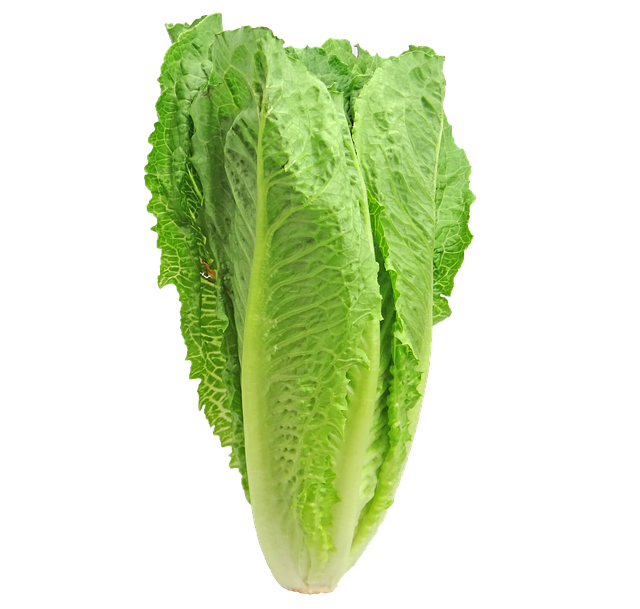
A multi-state outbreak of E. coli led Wendy’s to take the precautionary measure of removing romaine lettuce being used in sandwiches from restaurants in the region of the outbreak.

The CDC reports that as of August 18, 2022, a total of 37 people infected with the outbreak strain of E. coli O157:H7 have been reported from Michigan, Indiana, Ohio and Pennsylvania. The illnesses started on dates ranging from July 26, 2022, to August 8, 2022.

A specific food has not yet been confirmed as the source of this outbreak, but among 26 people who have been interviewed, 22 (86%) reported eating sandwiches with romaine lettuce at Wendy’s restaurants in Michigan, Ohio or Pennsylvania in the week before their illness started. Based on this information, Wendy’s removed the romaine lettuce being used in sandwiches from restaurants in those regions.

A spokesperson for Wendy’s released the following statement: “We are fully cooperating with public health authorities on their ongoing investigation of the regional E. coli outbreak reported in certain midwestern states. While the CDC has not yet confirmed a specific food as the source of that outbreak, we have taken the precaution of discarding and replacing the sandwich lettuce at some restaurants in that region. The lettuce that we use in our salads is different, and is not affected by this action. As a company, we are committed to upholding our high standards of food safety and quality.”

The CDC emphasized that it is not advising that people avoid eating at Wendy’s restaurants or that people stop eating romaine lettuce.

The CDC, public health and regulatory officials in several states, the FDA and the USDA-FSIS are collecting and analyzing data at the ingredient level to identify the food source of the outbreak, confirm whether romaine lettuce is the source and determine if there are any other possible foods that could be the source of the outbreak.


Cooked shrimp

FDA Launches Phase Three of AI Imported Seafood Pilot Program

By Food Safety Tech Staff
No Comments
Cooked shrimp

The FDA has launched the third phase of its Artificial Intelligence (AI) Imported Seafood Pilot program, which uses AI and machine learning (ML) to strengthen import screening to ensure that foods entering the U.S are safe.

The FDA chose to focus on seafood for the pilot program as more than 90% of the U.S. seafood supply comes from other countries, and the agency has seen food safety concerns for various imported seafood products along different points in the supply chain.

The program was implemented under the New Era of Smarter Food Safety Blueprint, a program that was developed to reduce the number of foodborne illnesses by leveraging technology to create a safer, more digital, traceable food system.

The third phase is designed to improve the agency’s ability to quickly identify imported seafood products that may be contaminated by illness-causing pathogens, decomposition, the presence of unapproved antibiotic residues or other hazards.

The first phase of the pilot, launched in 2019, was an analytical proof of concept. The analysis demonstrated potential for an ML-driven approach to expedite the review of lower-risk seafood shipments, while identifying those of higher risk for violations or refusals. The second phase, conducted in the field, was designed to integrate ML into existing import data systems to inform decisions about sampling by entry reviewers while gaining more experience with training of the ML model. It was launched at all 328 U.S. ports of entry from February 2021 through July 2021. The real-time model was able to analyze an import entry and return a sample recommendation within seconds.

The third phase will help determine the feasibility of deploying in-house AI/ML models using the intelligence that FDA extracts from the data collected while reviewing millions of import entries per year.

The agency notes that ML has the ability to analyze data from various sources to help inform FDA decisions and target resources at the borders. In a related shrimp pilot, the FDA was able to focus on areas of increased risk, such as shrimp contaminated by aquaculture drugs, for foreign inspections. “This includes increased importer inspections, higher rates of sampling and examination, and use of non-traditional tools, such as third-party audits, specific to this commodity. We incorporated the data from this project into the Third Phase of AI Imported Seafood Pilot Program, allowing for a more robust and larger targeted sampling,” said the FDA in a statement to constituents.


Listeria

Thermo Scientific SureTect Listeria PCR Assays Granted AOAC Official Methods First Action

Listeria

A poster by Thermo Scientific presented ay the 2022 IAFP Conference in August showed validation methods of the company’s SureTect Listeria monocytogenes and Listeria species PCR Assays, which led to AOAC recognition for official method of first action.

For the unpaired collaborative study, Evangelos J Vandoros, et al, compared the SureTect Listeria PCR Assays Method to the method outlined in the FDA-Bam Chapter 10. The matrix used for the study was full-fat cottage cheese with a test portion of 25g.

The researchers validated both SureTect Listeria PCR Assays (Listeria species and Listeria monocytogenes) in this study, as they follow the same method protocol and are validated for the same matrices.

Outcomes showed consolidated dLPOD data from 12 collaborators for the SureTect Listeria PCR methods and the FDA-BAM Chapter 10 reference method. The data was within confidence intervals showing that there was no significant difference between the SureTect methods and the reference method. The time to result was less than 24 hours.

Based on these findings, the SureTect Listeria monocytogenes and Listeria species PCR Assays were both granted AOAC Official Methods First Action

The validated categories for the assays include milk and dairy, fresh produce, seafood, raw meat, ready to eat/reheat and environmental,

Recall

Frozen Pizza Recalled Due to Possible Foreign Object Contamination

By Food Safety Tech Staff
No Comments
Recall

Home Run Inn Frozen Foods is recalling approximately 13,099 pounds of frozen meat pizza product that may be contaminated with metal materials. The USDA FSIS announced the recall on August 14.

The problem was discovered when the Woodbridge, Illinois-based company notified FSIS that it had received consumer complaints reporting that metal was found in the pizza.

The pizzas were produced on June 6, 2022, and include the 33.5 oz. “Home Run Inn CHICAGO’S PREMIUM PIZZERIA DELUXE SAUSAGE CLASSIC PIZZA” with “best by” date of 12/03/22 (view labels). The products subject to recall have the establishment number “EST. 18498-A” inside the USDA mark of inspection. These items were shipped to a distributor in Illinois and then further distributed to retailers.

There have been no confirmed reports of injuries or adverse reactions due to consumption of these products.

Distributors and retailers are urged not to sell these products. Consumers who have purchased these products are urged not to consume them and either throw them away or return them to the place of purchase.

Salmonella

USDA Declares Salmonella an Adulterant in Breaded Stuffed Raw Chicken Products

By Food Safety Tech Staff
No Comments
Salmonella

On August 1, the U.S. Department of Agriculture’s (USDA) Food Safety and Inspection Service (FSIS) announced that it will be declaring Salmonella an adulterant in breaded and stuffed raw chicken products.

The FSIS noted that since 1998, breaded and stuffed raw chicken products have been associated with up to 14 outbreaks and approximately 200 illnesses. Products in this category are found in the freezer section and include some chicken cordon bleu or chicken Kiev products. The challenge is that these products appear cooked to consumers, but they are heat-treated only to set the batter or breading. The products contain raw poultry, and continual efforts to improve the product labeling have not been effective at reducing consumer illnesses, said the FSIS.

By declaring Salmonella an adulterant in these products, breaded and stuffed raw chicken products will be considered adulterated when they exceed a very low level of Salmonella contamination and would be subject to regulatory action. FSIS is proposing to set the limit at 1 colony forming unit (CFU) of Salmonella per gram for these products, a level that the agency believes will significantly reduce the risk of illness from consuming these products. The agency will also seek comment on whether a different standard for adulteration, such as zero tolerance or one based on specific serotypes, would be more appropriate.

“Today’s announcement is an important moment in U.S. food safety because we are declaring Salmonella an adulterant in a raw poultry product,” said Sandra Eskin, USDA Deputy Under Secretary for Food Safety. “This is just the beginning of our efforts to improve public health.”

The notice is expected to publish in the Federal Register in the fall. FSIS will be seeking public comments that address what the standard should be as well as to inform its final implementation plan, including a verification testing program. Once published, the notice will be posted in FSIS’ Federal Register & Rulemaking page for review and comment. When the proposal is finalized, FSIS will announce its final implementation plans and the date it will begin routine testing for Salmonella in these products.

In October 2021, USDA announced it was reevaluating its strategy for controlling Salmonella in poultry, including whether Salmonella should be considered an adulterant in specific raw poultry products. Since launching this effort, USDA has been focusing on gathering information by meeting with stakeholders to hear their ideas, asking for recommendations from food safety experts and soliciting ideas for pilot projects from industry to test drive different control strategies in poultry establishments. USDA plans to present a proposed framework for a new comprehensive strategy to reduce Salmonella illnesses attributable to poultry in October and convene a public meeting to discuss it in November.

Food Safety Survey
Food Safety Culture Club

Global Food Safety Survey Reveals Challenges and Opportunities in Employee Training Practices

By Food Safety Tech Staff
No Comments
Food Safety Survey

Intertek Alchemy, which offers training for manufacturing and food processing industries, has released the findings of its seventh annual Global Food Safety Training Survey, developed to assess food safety training practices

More than 2,000 industry professionals representing more than 3,000 food production facilities worldwide responded to the survey. Their responses highlighted some of the significant challenges and contradictions of current food safety training practices, and provided insight into strategies to help overcome these challenges.

For example, 88% of respondents believe that their companies provide adequate levels of food safety training to drive consistent and appropriate food safety behaviors. Yet only 40% of their employees follow food safety programs on the manufacturing floor.

Additional key findings from the survey include:

  • 81% of respondents agreed that their companies understand what it takes to build and sustain a strong food safety culture, and 40% of companies use a food safety culture audit/assessment to measure sustained food safety behaviors. But, only 22% of respondents strongly agree that their employees have the authority to take action when food safety is compromised.
  • 80% of respondents believe they would be more productive if their employees consistently adhered to their training programs. However, only 19% of companies are increasing their budget for food safety training and only 18% plan to add new training technologies next year.

When looking at practices that improve food safety outcomes, responses revealed that:

  • Tailoring training to specific job roles increases the likelihood from 22% to 82% that a frontline employee will halt production when necessary to prevent a food safety incident
  • Highly motivated employees are over two times more likely to consistently adhere to food safety protocols on the floor.
  • 78% of companies with a mature upskilling programs reported having highly motivated employees, compared to 43% for companies without an upskilling program.

When asked to share, “What are you organization’s biggest food safety training challenges?” nearly 50% cited scheduling time for training, followed by staff turnover and bad practices or misinformation passed from one employee to another.

One of the most significant changes in this year’s survey was how food safety training is delivered. The use of e-learning tools nearly doubled in the past two years (37% in 2020 to 63% in 2022).

“This year’s Global Food Safety Training Report presents some eye-catching findings, providing a comprehensive look into what food manufacturers can do to improve food safety training outcomes,” said Intertek Alchemy President Darrin Harkness. “We’re proud to sponsor the research that provides clear, data-driven answers on how they can make their food safety programs even stronger. Together we can work to ensure a safe and sustainable global food supply with a shared goal of reducing foodborne illnesses and eliminating costly recalls.”

The Global Food Safety Training Survey is sponsored by Intertek Alchemy and Campden BRI, in partnership with BRCGS, BSI, Cultivate, SGS, Safe Quality Food Institute and TSI.

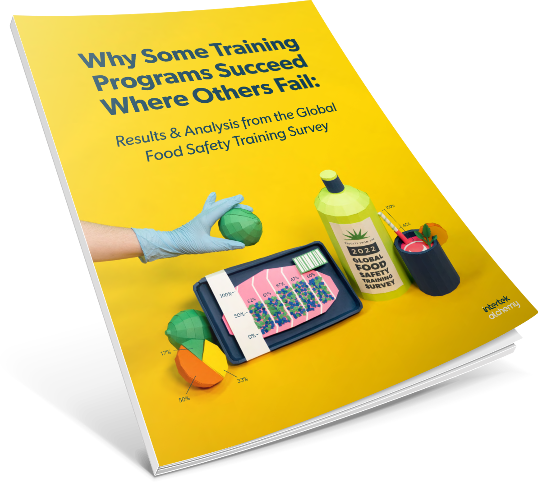
A complimentary copy of the research paper, “Why Some Training Programs Succeed Where Others Fail,” is available for download here.


FDA logo

FDA Announces Two Virtual Events for Food Safety Professionals

By Food Safety Tech Staff
No Comments
FDA logo

Registration is now open for the 2022 FDA Retail Food Protection Seminar. Registration for the September 19-22, 2022, event is free and open to all professionals interested in retail food safety, including all state, local, territorial and tribal regulators, standardized officers, industry and academia.

The event provides an opportunity for the FDA and state, local, tribal and territorial regulators to discuss current and emerging issues related to retail food safety. This year’s seminar will have a focus on norovirus, including assessing employee health, investigating norovirus related foodborne illnesses and implementing successful employee health intervention strategies.

A Risk Factor Study Workshop, planned for Thursday, September 22, 2022, will focus on how to design and conduct a Risk Factor Study and cover requirements for Standard 9 of the Voluntary National Retail Food Regulatory Program Standards. The aim of the workshop is to help participants understand different study designs as well as the FDA’s data collection approach, and get an overview on how to conduct a data collection. There will also be a demonstration on the use of FDA’s Risk Factor Study Database.

Attendees can register here.

On August 11 at 1:00 pm ET, the FDA is hosting a webinar to discuss the biennial food facility registration renewal period, the requirement for facilities to have a unique facility identifier (UFI) and general information and guidance on how to register with the FDA.

U.S. and foreign human and animal food facilities that are required to register with FDA must renew their registration this year between October 1 and December 31, 2022.

Nicole Shokatz and Robert Spear from the FDA’s Center for Food Safety and Applied Nutrition, Office of Compliance, will lead the webinar and answer questions submitted during registration.

The agenda includes:

  1. Who needs to register or renew
  2. How to obtain a UFI
  3. How and where to register
  4. The benefits of registering
  5. Questions and Answers

Registration is open until August 10.

Strawberries

FDA Is Focusing on Safety of Frozen Berries

By Food Safety Tech Staff
No Comments
Strawberries

On July 22, the FDA announced that it is developing a food safety prevention strategy to enhance the safety of fresh and frozen berries. The move comes in response to multiple hepatitis A (HAV) and norovirus (NoV) outbreaks linked to the consumption of both fresh and frozen berries.

The FDA reports that there have been four HAV outbreaks and three NoV outbreaks linked to frozen berries from 1990 to 2016 in the U.S., and since 2011, there have been three HAV outbreaks linked to fresh berries, including a current outbreak linked to fresh organic strawberries.

In addition, from 1983 to 2018, there were 50 outbreaks globally that were attributed to frozen berries: 36 caused by NoV and 14 by HAV. The FDA noted that although freezing preserves berries it generally does not inactivate viruses that may be introduced at various points in the supply chain, such as by infected workers, contaminated water or contaminated food contact surfaces. In addition, fresh berries are generally eaten raw without a kill-step that could eliminate pathogens.

In August, the FDA plans to resume an assignment to collect and test frozen berries that it paused at the start of the COVID-19 pandemic. The assignment seeks to estimate the prevalence of HAV and NoV in frozen strawberries, raspberries and blackberries and help the FDA identify sites where practices or conditions may exist that constitute safety vulnerabilities.

The FDA also plans to work collaboratively with industry, academia and regulatory partners in the development of a food safety prevention strategy to identify measures that can be taken to limit or prevent contamination from occurring throughout the berry supply chain, approaches to re-enforce control measures and their application as well as areas where additional research is needed.


Joe Pezzini

Taylor Farms Exec Named Chair of CPS Board

By Food Safety Tech Staff
No Comments
Joe Pezzini

Joe Pezzini, senior director of agricultural operations for Taylor Farms, has been elected chair of the Center for Produce Safety (CPS) Board of Directors. The CPS is a charitable organization focused on providing the produce industry and government with access to information needed to enhance the safety of fresh produce.

Pezzini said that his first priority as CPS board chair will be to guide the board’s update of the center’s strategic plan. “In 15 short years, the CPS has grown into an extraordinary melting pot of industry, research, regulatory and public health leaders who are doing much more together to advance fresh produce food safety than we ever could alone,” he said. “Our goal for the next five years will be to continue that positive trajectory. That means making sure that CPS can continue to innovate in how we fund science, find solutions and fuel change in produce safety. The food we grow and sell to consumers is the same food we take home to our families. Our work doesn’t get more personal than that.”

The CPS reported that, in addition to electing Pezzini, six board members agreed to serve additional three-year terms. They include:

  • Jim Brennan, president, SmartWash Solutions;
  • Mike Joyner, president, Florida Fruit and Vegetable Association;
  • Dave Murray, partner, Andrew & Williamson/Good Farms;
  • Mark Mignogna, vice president, quality assurance, Sysco;
  • Victor Smith, CEO, J.V. Smith Farms; and
  • Craig Wilson, vice president, QA and food safety, Costco Wholesale.

Amy Gates, vice president of Seald Sweet/Greenyard USA, joined the board as a first-time member.

STOP Foodborne Illness
Food Safety Think Tank

Food Safety Culture Webinar To Broadcast Live from IAFP

STOP Foodborne Illness

The FDA and the Alliance to STOP Foodborne Illness have announced that the fourth installment of the “Collaborating on Culture in the New Era of Smarter Food Safety” webinar series will take place on August 3 from 12:15pm – 1:15pm ET.

The webinar, entitled “What More Do You Want to Know About Food Safety Culture?” will be broadcast live from the International Association for Food Protection 2022 Annual Meeting. Speakers and attendees will have the opportunity to engage in a question-and-answer session. Registration is available for both in-person and virtual attendance.

The webinar series was designed to bring together experts from the public and private sectors for a collaborative exchange of ideas and experiences related to the importance of food safety culture in ensuring safe food production.