Woman shopping

FDA Seeks Information on Fluorinated Polyethylene Food Contact Packaging

Woman shopping

The FDA is seeking scientific data and input from industry on current food contact uses of fluorinated polyethylene, as well as consumer dietary exposure that may result from those uses. On July 19, the agency issued a request for information due to concerns that fluorination of polyethylene may result in the formation of per- and polyfluoroalkyl substances (PFAS).

The FDA authorized fluorinated polyethylene for general use in contact with food in 1983 (21 CFR 177.1615). However, the regulation requires specific manufacturing conditions that must be in place during the fluorination process. In 2021, testing by the Environmental Protection Agency (EPA) noted the migration of perfluorooctanoic acid (PFOA), a type of PFAS, from fluorinated polyethylene containers used to hold pesticides. In response, the FDA issued a letter to food manufacturers, reminding industry that only certain fluorinated polyethylene containers are authorized for food contact use.

The July 19 call for input and data is part of the FDA’s efforts to monitor new scientific information on food contact surfaces (FCS) as it becomes available. “This includes reviewing scientific literature and studies from other regulatory and health agencies in the U. S. and in other countries. Considering recent developments, the FDA is seeking additional information on current practices to ensure the safe use of fluorinated polyethylene in contact with food,” said the FDA in its letter to industry.

Those interested in providing information can submit comments electronically on Regulations.gov to docket number FDA-2022-N-1526.

Submit written/paper submissions with Docket No. FDA-2022-N-1526 for “Fluorinated Polyethylene Containers for Food Contact Use; Request for Information” to:
Dockets Management Staff (HFA-305)
Food and Drug Administration
5630 Fishers Lane, Rm 1061
Rockville, MD 20852


Pork

USDA FSIS Eyes New Salmonella Standards for Raw Pork Products

By Food Safety Tech Staff
No Comments
Pork

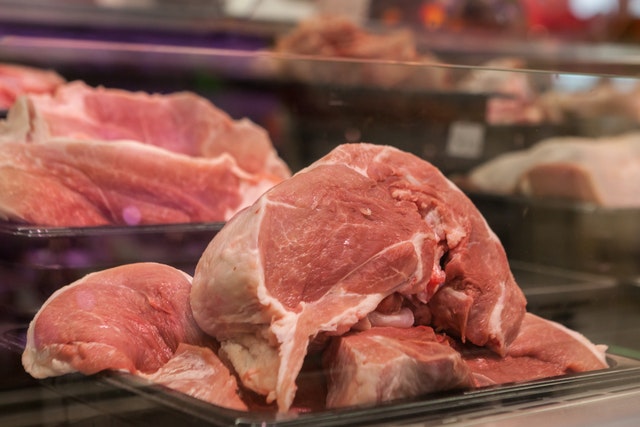
The USDA Food Safety and Inspection Service (FSIS) is considering new Salmonella performance standards focused on raw pork products, due to concerns about recent Salmonella outbreaks linked to these products. The concerns were raised in a study, “Temporal Changes in the Proportion of Salmonella Outbreaks Associated with Twelve Broad Commodity Classes in the United States,” published by the FSIS in Epidemiology & Infection.

The study examined changes in the proportion of foodborne Salmonella outbreaks attributed to 12 commodity groups between 1998 and 2017. Amongst the 12 commodity groups, only pork demonstrated a significant increasing trend—between 1998 and 2017, the estimated proportion of Salmonella outbreaks attributable to pork increased from 4% to 18%—while the proportion of outbreaks for other commodity groups remained essentially unchanged or constant during the 20-year study period.

“Amongst meat and poultry commodities, the consistent and significant increase in the proportion of pork-associated outbreaks is of concern,” noted authors Michael S. Williams and Eric D. Ebel. “Pork ranks as the third most frequently consumed meat commodity in the United States, yet only the chicken and the fruits–nuts commodities are responsible for a larger average proportion of outbreaks in the later years of the dataset. This suggests that the risk of illness per serving from pork may have increased and is high relative to the other meat and poultry commodities.”

The USDA FSIS will be using the results of this study, in addition to public comments on the proposed performance standards for Salmonella on pork products, to inform the development of new policies targeted to reduce Salmonella illnesses attributable to pork.

Pet Food

FDA Issues Animal Food Hazard Analysis and Preventive Controls Guidance for Industry

Pet Food

The FDA has finalized its Guidance for Industry (GFI) #245: Hazard Analysis and Risk-Based Preventive Controls for Food for Animals. The purpose of this guidance, per the FDA, is to help animal food facilities develop a food safety plan that complies with FDA’s Hazard Analysis and Risk-Based Preventive Controls requirements.

The guidance document covers facilities that manufacture, process, pack or hold food intended for all animal species including food-producing animals (e.g., cattle, swine, poultry and aquaculture species), companion animals (e.g., dogs, cats, horses and guinea pigs), laboratory animals and animals maintained in zoological parks.

Specifically, the document provides guidance on:

  • The biological, chemical (including radiological) and physical agents that are known or reasonably foreseeable hazards in manufacturing, processing, packing and holding of animal food
  • The components of a food safety plan and the importance of each component
  • How to conduct a hazard analysis and develop a food safety plan for the animal food that you produce
  • Identifying preventive controls for biological, chemical and physical hazards associated with animal food and how to apply those preventive controls
  • Preventive control management components (i.e., monitoring, corrective actions and corrections, and verification (including validation))
  • Recordkeeping requirements associated with the food safety plan and implementation of the food safety plan.


Farmer in Madagascar

FAO Director: Immediate Efforts Needed to Reduce Global Threats to Agrifood Systems

Farmer in Madagascar

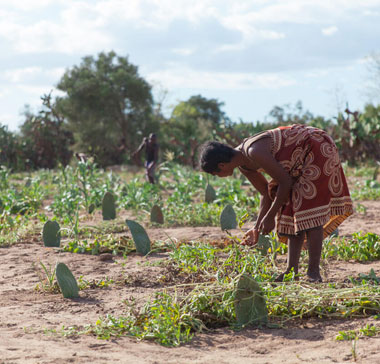
The challenges undermining global food security call for a complex approach embracing investment, policy reforms and better use of resources, Qu Dongyu, Director-General of the Food and Agriculture Organization of the United Nations (FAO) told a key meeting of the G20 on July 10.

“Recent global events, from the COVID-19 pandemic to the climate crisis, multiple conflicts around the world and the war in Ukraine, have all heavily affected agrifood systems in multiple ways,” Qu told the G20 Sherpa meeting of senior government representatives.

Qu cited the recently launched 2022 edition of the State of Food Security and Nutrition in the World (SOFI) Report, which confirms that world hunger increased again in 2021, reflecting growing inequalities across and within countries. It says 828 million people suffered from hunger in 2021, an increase of 46 million from 2020 and 150 million from 2019 before the pandemic.

The war in Ukraine has added to an already challenging situation and could lead to an increase of 13 million more chronically undernourished people this year, and 17 million more in 2023, according to FAO estimates.

Another global challenge is rising inflation, with world food prices increasing since mid-2020 due to many factors. FAO calculates that the increase in the food import bill for the 62 most vulnerable countries amounts to $24.6 billion in 2022, and it affects 1.79 billion people.

In response to this growing challenge, FAO has developed a proposal for a global Food Import Financing Facility, which aims to assist countries in financing their food purchases to minimize any risk of social unrest. “This proposal should be implemented by the IMF (International Monetary Fund) under their balance of payments financial mechanism,” the FAO Director-General urged.

Among the other challenges, average fertilizer prices have increased significantly, almost tripling since mid-2021, together with rising energy prices. Changes in trade routes and current constraints will further increase the global fertilizer price. If countries producing major food staples, such as rice, are not able to get enough fertilizers in the upcoming planting season, this could affect the global supply of food, said Qu.

Trade reduction and interruption of the supply chain are of major concern, the Director-General added. At the end of May, 22 countries had implemented export restrictions through 39 measures ranging from bans to export taxes affecting almost 16% of agricultural exports, on a kilocalorie basis.

Package of Measures Needed

To address these challenges, Qu said the international community needs to implement a package of measures that include:

  • Invest in countries most in need that are most affected by the increase in food prices. In addition to providing timely food aid, focus on boosting productivity by paying more attention to producing nutritious food locally. Currently only 8% of all food security funding in emergencies goes to assist agricultural production. Investing in agriculture and rural livelihoods is strategic, and 7 to 10 times more cost-effective than traditional assistance.
  • Put policies in place that both increase productivity and protect natural resources, and that are specific to regional needs. Transforming agrifood systems to deliver healthy, nutritious diets, and with more equitable outcomes, will require significant financial investment, estimated at 8% of the size of the agrifood market. Accelerate the African Continental Free Trade Area by speeding up the normative work on food safety standards, and by reducing tariffs and non-tariff barriers. Intraregional trade as well as investment should be accelerated in all regions of the world.
  • Ensure better and more efficient use of available outputs and inputs to produce more with less. This must include water, as water stress remains a priority, with 1 billion hectares of agricultural land facing severe water constraints; 800 million hectares of rainfed cropland and pastureland severely affected by recurring drought. Use the best available technologies and regulations for efficient gains in the way we use water in agriculture. Reducing food loss and waste is key, as the current high amounts of loss and waste could feed around 1.26 billion people per year. Fertilizers also need to be used more efficiently, with the aid of technology and science based re-distribution of applications across the production process, supported by fast implementation of detailed soil maps to assist the most vulnerable countries to use their fertilizers efficiently.

“It is critical to facilitate the smooth functioning of global food markets and to secure food supply for all,” Qu said.

Restaurant Food

National Assessment Aims to Identify Food Safety Training Needs

By Food Safety Tech Staff
No Comments
Restaurant Food

The National Environmental Health Association (NEHA), a professional society of governmental, private, academic and uniformed services sector environmental health professionals, has launched a new national assessment aimed at identifying the knowledge and training needs of retail food regulators. The NEHA is asking individuals working in retail regulatory food safety to complete a needs assessment survey, which was developed by NEHA as part of the NEHA-FDA Retail Flexible Funding Model (RFFM) Grant Program. The findings will be used by NEHA to bolster educational resources, reduce knowledge gaps and improve workforce capabilities to help ensure safe retail food for the public.

“This assessment is essentially a national census of the retail food regulatory community. It is significant for both what it includes and who it surveys,” said Rance Baker, director of the Entrepreneurial Zone department at NEHA. “With so many competing interests pursuing the same financial resources, it is important that we determine where the training dollars are needed most. This survey will look at the intersection between curricula and needs in the retail food regulatory community to identify the gaps in the integrated food safety system.”

Complete the survey here.


Accreditation

FDA Recognizes JANAAC as an Accreditation Body Under FSMA

By Food Safety Tech Staff
No Comments
Accreditation

The U.S. Food and Drug Administration (FDA) has recognized Jamaica National Agency for Accreditation (JANAAC), as an accreditation body under the Accredited Third-Party Certification Program for a period of five years.

Accreditation bodies recognized by FDA have the authority to accredit third-party certification bodies. These certification bodies, once accredited, can conduct food safety audits and issue certifications of foreign food facilities (including farms) and the foods—both human and animal—that they produce. Those certifications are required to be used by importers to establish eligibility for participation in the Voluntary Qualified Importer Program. In addition, those certifications may be used in certain circumstances where the FDA can require that imported products be certified before entering the United States.

JANAAC is being recognized as having the authority to accredit certification bodies with the ability to conduct food safety audits under the following scopes of accreditation:

  • Acidified Foods (AF)
  • Dietary Supplements
  • Juice Hazard Analysis and Critical Control Points (Juice HACCP)
  • Low-Acid Canned Foods (LACF)
  • Medicated Feed Current Good Manufacturing Practices (Medicated Feed CGMPs)
  • Preventive Controls for Animal Food (PCAF)
  • Preventive Controls for Human Food (PCHF)
  • Produce Safety
  • Seafood Hazard Analysis and Critical Control Points (Seafood HACCP)
  • Shell Eggs

For more information on the eligibility criteria for recognition, see Key Facts about the Accredited Third-Party Certification Program.

Wheat

USDA Accepting Applications for Bioproduct Pilot Program 

By Food Safety Tech Staff
No Comments
Wheat

On June 28, Agriculture Secretary Tom Vilsack announced the U.S. Department of Agriculture is accepting applications for a new pilot program created under President Biden’s Bipartisan Infrastructure Law to support the development of biobased products that have lower carbon footprints and increase the use of renewable agricultural materials, creating new revenue streams for farmers.

Under this program, the USDA National Institute of Food and Agriculture (NIFA) can award up to $10 million, divided among the highest rated applications that include eligible universities and private-sector partners.

“This pilot program is a critical part of USDA’s commitment to enhancing the circular economy and providing additional revenue streams for farmers. This program will help farmers take field residues and waste products and turn them into value-added products that create wealth and drive economic development in rural areas,” said Vilsack.

The Bipartisan Infrastructure Law provided funds for sustainable bioproduct manufacturing for construction and consumer products. The statute directs USDA to partner with “not less than one institution” to study the benefits of using materials derived from a very broad definition of “covered agricultural commodities.”

More information on this funding opportunity can be found on the NIFA website. The USDA NIFA is also hosting an informational webinar for those interested in applying for funds on July 14 from 2:00 – 3:30 p.m. Central Time. To register, visit the Bioproduct Pilot Program Informational Webinar page.


Ice Cream Cone

Listeria Outbreak Linked to Ice Cream

By Food Safety Tech Staff
No Comments
Ice Cream Cone

On July 2, the CDC announced that a multi-state listeria outbreak has been linked to Big Olaf ice cream. So far, there are 23 reported illnesses, 22 hospitalizations and one death associated with the outbreak. The reports span 10 states, although the brand is only sold in Florida.

The CDC is advising consumers who have Big Olaf Creamery brand ice cream at home to throw away any remaining product and to clean any areas, containers and serving utensils that may have touched Big Olaf ice cream products.

If you are a business that carries the brand, do not serve or sell any Big Olaf ice cream products and clean and disinfect any areas and equipment that may have touched Big Olaf ice cream products, including ice cream scoops and other serving utensils.

Big Olaf Creamery, located in Sarasota, Florida, is voluntarily contacting retail locations to recommend against selling their ice cream products until further notice.

Listeria is most likely to sicken pregnant people and their newborns, adults aged 65 or older and people with weakened immune systems. Per the CDC announcement, consumers with the following symptoms should call their healthcare providers right away:

  • Pregnant people typically experience only fever, fatigue and muscle aches. However, Listeria infections during pregnancy can lead to miscarriage, stillbirth, premature delivery or life-threatening infection of the newborn.
  • People who are not pregnant may experience headache, stiff neck, confusion, loss of balance and convulsions, in addition to fever and muscle aches.
Raw chicken breast
Food Genomics

FSIS Rethinking its Approach to Salmonella in Poultry

By Food Safety Tech Staff
No Comments
Raw chicken breast

The USDA Food Safety and Inspection Service (FSIS) announced that it is rethinking its approach to how it addresses Salmonella in poultry based on the findings of a recent study, ”Assessing the Effectiveness of Revised Performance Standards for Salmonella Contamination of Chicken Parts,” published in the International Journal of Food Microbiology.

Michael S. Williams, et al, examined changes in Salmonella occurrence within the chicken parts industry following implementation of a new set of FSIS standards, announced in 2015 and implemented in 2016.

The standards were chosen based on the assumption that the program would lead to a 30% reduction in the occurrence of Salmonella-contaminated chicken parts samples. While the new analysis showed a much higher than anticipated reduction in Salmonella-contaminated chicken parts (more than 75%), the FSIS notes that this has not translated to a reduction in Salmonella-related illnesses attributable to poultry products.

A Shift in Seasonal Patterns and Salmonella Serotypes

In examining data collected between April 1, 2015 through December 31, 2020, the authors found a significant change in Salmonella serotypes in sampled products, an increase in antimicrobial resistant strains and a shift in seasonal occurrence of Salmonella.

Occurrence of Salmonella in poultry products has traditionally peaked in the summer months. However, in what the authors called one of the most surprising findings of the study, review of data from 2015-2020 showed a mid-winter peak with lower rates of occurrence in the summer.

The study also found that while Salmonella Enteritidis and Kentucky—two of the most common serotypes—decreased significantly, Salmonella Infantis demonstrated a rapid increase from less than 4% of positive samples in 2015 to 25% in 2020. This signals a growing area of concern as a larger portion of Infantis isolates are classified as multi-drug resistant. The authors noted that with no new interventions, “Infantis will likely become the dominant Salmonella serotype in chicken parts.”

The increase of the Infantis serotype as well as the apparent failure of the 2015 standards to reduce the occurrence of Salmonella-related illnesses attributable to poultry products is why FSIS is rethinking its approach to how it addresses Salmonella in poultry. This will include taking a closer look at the agency’s reliance on performance standards, and whether they need to be revised.

FSIS is collaborating with stakeholders and gathering information to develop a multi-step approach to reducing Salmonella illnesses associated with poultry products. The agency plans to present a draft framework for a revised strategy and convene a public meeting to discuss it in the Fall.


Suárez and Mendoza

Equitable Food Initiative Elects Two New Board Members

Suárez and Mendoza

Fernanda Suárez of NatureSweet Tomatoes and Natalie Camacho Mendoza of Farmworker Justice have been elected to the board of directors of Equitable Food Initiative, a multi-stakeholder workforce development and certification organization that partners with growers, farmworkers, retailers and consumer groups.

In a press release issued by EFI, the organization highlighted its commitment to electing board members who reflect the diversity of perspectives across the fresh produce industry.

“We believe in representative decision-making and our board composition assures that all players in the produce supply chain are at the table, including retailers, grower-shippers, farmworkers and consumers,” said Peter O’Driscoll, executive director of EFI. “I am thrilled to welcome these talented and compassionate women to our board to join EFI in promoting better agricultural workplaces, and a more equitable food system.”

Suárez, based in Guadalajara, Mexico, is the sustainability and social impact director for NatureSweet Tomatoes. She brings more than a decade of experience focused on human resources and social compliance. “As an HR professional, I understand the power of individuals to contribute to the greater good, and I’ve seen firsthand how powerful diversity, equity, leadership training and inclusion initiatives can be in transforming cultures,” said Suárez. “EFI provides opportunities for organizations to be a champion for farmworkers and ultimately be the change we want to create in building safer, more equitable food supply chains.”

Camacho Mendoza joins EFI as an extension of her role with Farmworker Justice. She is an attorney and owner of Camacho Mendoza Law. Her family roots are in the agriculture and railroad industries, and she has worked in Idaho with and on behalf of unions and employers and as a farmworker advocate. “My goal is to encourage more comprehensive views of farm labor and help all stakeholders understand the business side of agriculture,” said Camacho Mendoza. “On the heels of the pandemic, more people are aware of the ‘always essential’ workers who contribute to our food supply, and I’m eager to leverage that for improving working conditions and supporting everyone who plays a role in agriculture.”