Stephen Ostroff, FDA

Pathogens, Partnerships and FSMA: Where FDA Is Headed

By Maria Fontanazza
No Comments
Stephen Ostroff, FDA

This year is a big year for food safety at FDA. All seven of the FSMA rules have been finalized, and the first compliance date is right around the corner (compliance with the Preventive Controls for Human Food rule starts in September for large companies). Stephen Ostroff, M.D., just took the helm from Michael Taylor as the agency’s deputy commissioner for foods and veterinary medicine. And finally, FDA is taking a hard line in both improving the tools and methods used to detect outbreaks as well as working with the Department of Justice to prioritize enforcement actions against companies that introduce adulterated foods into the supply chain.

Yesterday Ostroff provided an update on FDA’s recent initiatives and its plan of action to achieve success in FSMA implementation and pathogen detection at the IAFP annual meeting in St. Louis. Ostroff highlighted several tenets of FSMA:

  • Keys to FSMA success will be dependent upon achieving high rates of compliance
  • Domestic and import parity
  • Education before and while regulating (establishment of training and education networks)
  • Taking a risk-based approach to inspection and planning
  • Partnerships are critical
Stephen Ostroff, FDA
FDA’s Stephen Ostroff will be the opening keynote at the 2016 Food Safety Consortium, December 7 in Schaumburg, IL. LEARN MORE

Industry can expect three more rulemakings as required by FSMA in the areas of lab accreditation, a reportable food registry and product tracing. In addition, FDA is working on guidances related to the preventive controls, produce, and foreign supplier verification program rules. “We’re tantalizingly close so stay tuned,” Ostroff said.

Expect to see more program alignment with the Office of Regulatory Affairs as well. The inspection and compliance staff will be trained as specialists and there will be horizontal integration of programs between field activity and agency headquarters. Although the next fiscal year will be a transition year, Ostroff is hopeful that changes that need to be made at the agency, along with program alignment, will be in place by fiscal year 2018.

Other notable actions at FDA over the past year include:

  • In response to the OIG’s conclusion that FDA’s food recall program is not efficient or effective, the agency is ramping up its use of the strategic CORE (Coordinated Outbreak Response and Evaluation) network in order to examine recalls that might not be moving as smoothly or quickly as the agency prefers. FDA is also leveraging greater application of whole genome sequencing (WGS).
  • GenomeTrakr network and WGS. More than 50,000 genome sequences have been added to the database (largely Salmonella). Ostroff called WGS a game changer that holds the opportunity to more quickly identify problems and detect outbreaks while they’re still quite small. In partnership with the CDC, FDA set up a successful module for WGS of Listeria and the agency hopes to expand the model for use with other pathogens.
  • Nutrition (Not just what consumers are eating, but how much of it): The move that declared partially hydrogenated oils as no longer GRAS with compliance required by 2018.  The agency also issued a final guidance on menu and vending labeling in May, issued levels for arsenic in infant rice cereal, made determination for folic acid fortification in corn/masa, made revisions to nutrition facts labels that takes effect in 2018, issued a draft guidance on voluntary sodium reduction, and will continue to exam the terms “natural” and “healthy”.
  • Genetic engineering. FDA approval of GE salmon following one of the longest reviews in the history of FDA (20-year review), along with issuing voluntary labeling guidance.
  • Monitoring antimicrobial resistance through NARMS  (National Antimicrobial Resistance Monitoring System). FDA will be collecting antimicrobial sales by species and, in cooperation with USDA, hopes to release farm-based data about antimicrobial use at the farm level.

Ostroff emphasized FDA’s strategic 10-year plan, released this year, pointing to public health as a first priority, maintaining partnerships as a key to success (including re-establishing overseas offices), continuing research as a foundation, and maintaining transparently.

Recall

Massive Flour Recall Expanded, Again

By Food Safety Tech Staff
No Comments
Recall

As a result of four additional confirmed illnesses, General Mills has added four more production dates to its flour recall (production dates through February 10, 2016). The initial recall was announced May 31, with an expanded recall taking place earlier this month.

“At this time, it is unknown if we are experiencing a higher prevalence of E.coli in flour than normal, if this is an issue isolated to General Mills’ flour, or if this is an issue across the flour industry. The newer detection and genome sequencing tools are also possibly making a connection to flour that may have always existed at these levels,” according to a company release on FDA’s website.

Thus far, illnesses have only been linked to consumers who said they ate or handled uncooked dough or ate uncooked batter made with raw flour, not with flour that was baked, cooked or handled.

New Workers Means New Strategies

By Maria Fontanazza
No Comments

Today’s workforce includes several different generations of employees and learning preferences. In part II of a Q&A series with Food Safety Tech, Laura Nelson, vice president of business development at Alchemy Systems, explains how food companies need to adjust to this new environment.

Read Part I of the Q&A: Go Beyond the Classroom to Improve Training PerformanceFood Safety Tech: Should there be different training strategies based on employee demographics?

Nelson: Yes. Our employee demographics are continuously changing and, as a result, those changes impact the effectiveness of our training program. We have five different generations, and each has a learning preference—and some are directly opposed to each other. We have employees who like to learn by reading—baby boomers like things clearly spelled out like detailed sanitation SOPs. And then we have employees who would absolutely not want to read detailed protocols but prefer learning from their fellow colleagues and their supervisor – millennials who prefer micro-burst training and learning through interactions. [Based on] our research conducted in partnership with The Center for Research and Public Policy, when we asked employees their learning preference and what works best for them, the majority (57%) said on the job with a supervisor, and (56%) said on the job with a coworker. Clearly, learning beyond the formal classroom training is taking place every day.  We have to ask ourselves how consistent is the food safety program learning experience on the plant floor?  Are bad habits, incorrect behaviors and short cuts being reinforced by fellow employees?  In a follow-up research question, we asked how much coaching employees receive from their manager and more than 43% of the responding employees said they rarely or never receive coaching.

Our challenge as an industry is to make sure employees are learning in a consistent way through their supervisors and colleagues. It speaks to the all-important role of the frontline supervisor and the fact that we have to arm them with the knowledge and skill to effectively mentor and coach their employees and give them time and the responsibility to do it. It’s important to include soft skills training for supervisors: How do you communicate and motivate employees? How do you encourage them in a way that [facilitates] improvement and reinforces appropriate food safety behaviors?

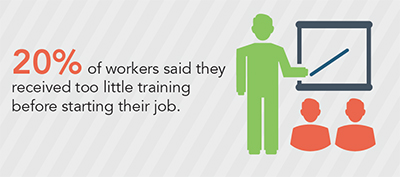
We also have data that says the quality of onboarding training is an area for improvement—over 20% of respondents rated the quality of their onboard training not good.  Some companies are still executing the ‘one-and-done’ training where you spend a full day or two trying to do all the training that the employee needs prior to starting their new job. If an employee is bombarded with food safety training—all the different sanitation information, GMPs, operational controls, SOPs, industry regulations, etc.— by the time the employee leaves for the day, the reality is that they forget more than 80% of it within 30 days.  So, our challenges extend beyond the employee learning preferences and where training takes place. We have to improve our training content to really meet [employee] education level, language, and learning preferences and provide in smaller chunks to improve knowledge retention.  Our critical food safety messages need to be part of a continuous rolling thunder of communication, meaning you’re not trying to train all at once but rather are building a food safety awareness program, maybe through posters, shift huddle talks or digital signage. It’s the different things you can do that don’t require additional training time but impacts employees with multiple touch points to reinforce these key food safety messages.

Next-Generation Sequencing Targets GMOs

By Maria Fontanazza
1 Comment

As the movement among consumers for more information about the products they’re purchasing and consuming continues to grow, the food industry will experience persistent pressure from both advocacy groups and the government on disclosure of product safety information and ingredients. Top of mind as of late has been the debate over GMOs. “Given all of the attention on GMOs on the legislative side, there is huge demand from consumers to have visibility and transparency into whether products have been genetically modified or not,” says Mahni Ghorashi, co-founder of Clear Labs.

Mahni Ghorashi, Clear Labs
Mahni Ghorashi, co-founder of Clear Labs

Today Clear Labs announced the availability of its comprehensive next-generation sequencing (NGS)-based GMO test. The release comes at an opportune time, as the GMO labeling bill, which was passed by the U.S. House of Representatives last week, heads to the desk of President Obama.

Clear Labs touts the technology as the first scalable, accurate and affordable GMO test. NGS enables the ability to simultaneously screen for multiple genes at one time, which could companies save time and money. “The advantage and novelty of this new test or assay is the ability to screen for all possible GMO genes in a single universal test, which is a huge change from the way GMO testing is conducted today,” says Ghorashi.

The PCR test method is currently the industry standard for GMO screening, according to the Non-GMO Project. “PCR tests narrowly target an individual gene, and they’re extremely costly—between $150–$275 per gene, per sample,” says Ghorashi. “Next-generation sequencing is leaps and bounds above PCR testing.” Although he won’t specify the cost of the Clear Labs assay (the company uses a tiered pricing structure based on sample volume), Ghorashi says it’s a fraction of the cost of traditional PCR tests.

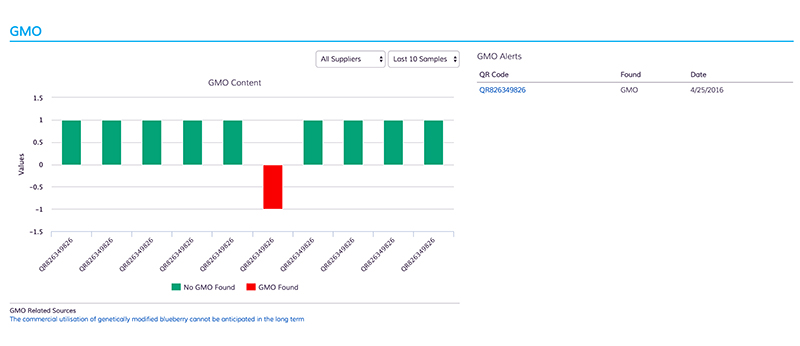
The new assay screens for 85% of approved GMOs worldwide and targets four major genes used in manufacturing GMOs (detection based on methods of trait introduction and selection, and detection based on common plant traits), allowing companies to determine the presence and amount of GMOs within products or ingredient samples. “We see this test as a definitive scientific validation,” says Ghorashi. The company’s tests integrate software analytics to enable customers to verify GMO-free claims, screen suppliers, and rank suppliers based on risk.

Clear Labs, GMO, testing
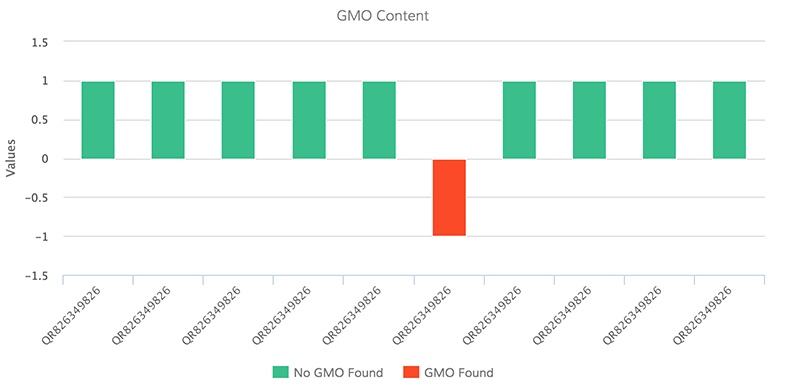
Screenshot of the Clear Labs GMO test, which is based on next-generation sequencing technology.

Clear Labs isn’t targeting food manufacturers of a specific size or sector within the food industry but anticipates that a growing number of leading brands will be investing in GMO testing technology. “We expect to see adoption across the board in terms of company size, related more to what their stance is on food transparency and making that information readily available to their end consumers,” says Ghorashi.

PCR Test, weighing milk powder

Spoil No More: Rapid Test for Dairy Products Goes Beyond Detecting Microbes

By Maria Fontanazza
No Comments
PCR Test, weighing milk powder

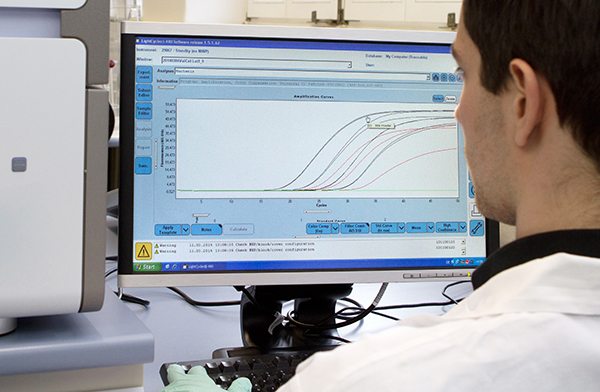
Detecting yeast and mold is one of the most time consuming parts of the testing process for dairy products. With more pressure to move products that have a short shelf life out the door as quickly as possible, time really is money. Having a rapid, real-time test that enables companies to make immediate production decisions can provide a significant advantage. “[This technology] brings test time within the same timeframe as other microbiology tests, so a test for yeast and mold is no longer the outlier. That’s a huge savings right there,” says Phil Coombs, product specialist at Weber Scientific.

biotecon_diagnostics_starprep
Weber Scientific was one of three recipients of the Food Expo Innovation Award on July 17, 2016 at the IFT Annual Meeting in Chicago.

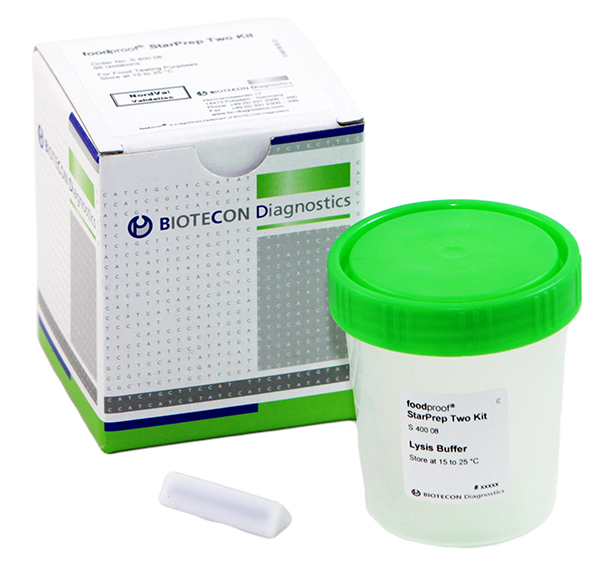
Coombs is referring to Weber Scientific’s recently released PCR Yeast and Mold Quantitative Test, which has been validated for finished dairy products. The company was asked by Germany-based Biotecon Diagnostics, the creator of the newly developed PCR method, to be its partner in introducing the test to the U.S. market. The technology reduces testing time for yeasts and molds from five days to four hours or less—from sample prep to the time-to-result, with no pre-enrichment required. “We make a big deal out of this, because sometimes [companies] with a pathogen test will say they have a four-hour test but it’s not truly, from start-to-finish, a four-hour test—you have to do some form of pre-enrichment, and so it’s a 24–48 hour test,” says Coombs. “When looking at fermented milk product like yogurt, it might have a shelf life of about 50 days. There’s much more time for the yeast and mold (because they’re typically slower growing organisms) to get busy and spoil the product. Yeast and mold can tolerate the lower pH, so that’s been the biggest sector of interest so far.”

One of the features of the technology is its ability to protect against false-negative results from non-viable DNA and false-positives from previous PCR test runs, which greatly reduces the chances of cross-contamination as well.

PCR Test for dairy products
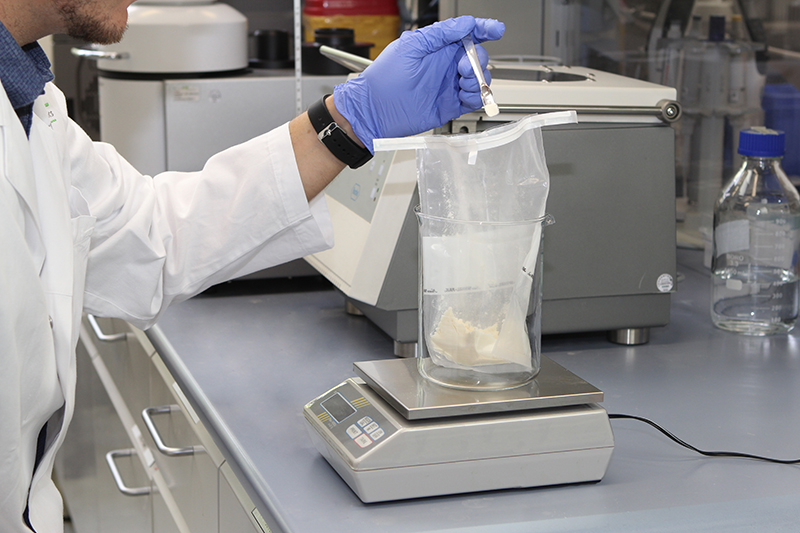
The PCR Yeast and Mold Quantitative Test conducts analysis on milk powder. Image courtesy of Weber Scientific.

Achieving a shorter time-to-result means that if a company uncovers an issue, it can take immediate remedial action rather than waiting several days. This can have a big economic impact on production and warehousing, along with releasing product into commerce and distribution, especially when dealing with products that require refrigeration. In addition, the PCR test goes beyond detecting microbes that will spoil fermented milk products and offers advantages in the broader context of reducing food waste and spoilage. “It will be attractive to many companies that are developing a broad range of sustainability measures,” says Fred Weber, president of Weber Scientific. “And to cut down on food waste at the consumer level is a big deal.”

The company expects AOAC approval next year.

FDA

FDA Finalizes Rule on Food Facility Registration

By Food Safety Tech Staff
1 Comment
FDA

As part of FSMA implementation, FDA has announced a final rule, effective today, that will better protect public health by improving accuracy of the food facility registration database. The Amendments to Registration of Food Facilities will also help the agency more efficiently use its resources to conduct inspections and aid in a faster response to food-related emergencies.

The final rule adds provisions to the current regulations to codify certain provisions of FSMA that were self-implementing and effective upon enactment of the regulation, according to an FDA update. Provisions require:

  • Email address for registration
  • Registration renewal every two years
  • Registrations must have assurance that FDA will be allowed to inspect the facility at any time

Important dates:

  • Final rule effective July 14, 2016. Registrations must contain type of activity conducted at the facility for each food product category.
  • Requirement of electronic submission of facility registrations takes effect January 4, 2020.
  • As part of registration proves, food facilities must provide unique facility identifier (UFI) beginning October 1, 2020.
3M Luminometer software

New Technology Rapidly Detects Contamination in Food Processing Facilities

By Food Safety Tech Staff
No Comments
3M Luminometer software

Managers in food processing facilities are under more pressure than ever to get their product out the door quickly, but they cannot sacrifice safety. A new technology developed by 3M can help them quickly identify potential contamination in their facility, which can help them determine whether to stop production. The Clean-Trace Hygiene Monitoring and Management System is a handheld luminometer that was developed with the help of food manufacturing professionals in positions from plant floor operators to company executives.

“We involved customers throughout the development and design of the entire system to automate and streamline what is in many cases a tedious, manual process of selecting test points, assigning them daily, conducting tests, documenting results, managing sample plans, and developing quality improvement measures,” said Tom Dewey, 3M Food Safety global marketing manager in a press release.

3M Clean-Trace Hygiene Monitoring and Management System (Photo courtesy of 3M)

The company made improvements to the device’s industrial design to make it more durable and user friendly. Other features include reengineered optical technology with photomultiplier detectors; upgraded software with a streamlined dashboard; and the capability to transfer data between the luminometer and the software via Wi-Fi and Bluetooth connections.

Go Beyond the Classroom to Improve Employee Performance

By Maria Fontanazza
No Comments

Employee training continues to be a hot topic as companies in the food industry gear up for FSMA compliance. Many are working with a much leaner staff and have several different generations of employees, many of whom absorb information in very different ways.

In a Q&A series with Food Safety Tech, Laura Nelson, vice president of business development at Alchemy Systems, discusses how training programs that may have historically been successful are no longer an effective means to educate today’s employees. “A vast majority of employees are doing what we ask and are doing it consistently. But the reality is that we have a subset of folks [who] aren’t doing that,” says Nelson. “I don’t think you can classroom train them to the point that they get it—I think some need that coaching and demonstration; they’re the kinesthetic learners that need to see you do it and then you watch them do it.”

Food Safety Tech: Where are the gaps in how food companies conduct employee education and training today?

Laura Nelson: It can be summarized in three areas.

1. Recognizing that the legacy training programs that food companies have is not effective. Companies are acknowledging that their historical training programs are not entirely effective in driving consistent behaviors. In [a recent] global food safety training [survey], we asked: “Despite our efforts in food safety classroom training, we still have employees not following our food safety program on the plant floor”. Over 60% said they agreed—yes, we still have employees not following our food safety programs. The survey involved 1200+ food safety professionals, so that’s a large number of folks acknowledging that their food safety training programs—largely classroom training—is not delivering the desired results and reducing inherent food safety risks.

There are so many things challenging the food industry and everyone is trying to manage these expanding expectations with their lean teams. The industry is changing dramatically—[from the perspective of] employee demographics, the business itself, pervasiveness of social media and exposure that it brings, and the different regulations—so a static food safety program established two, five or ten plus years ago is not going to address these changes.  But who has the time and resources to continually update content, embrace technology and apply the latest behavioral science to the instructional design of new training content?  Because of the lack of resources and time challenges, many in the industry are still trying to operate on their legacy training program. It might be old DVDs, PowerPoints, etc. —trainers are covering food safety, workplace safety and operational topics via PowerPoints in all-day sessions, sending around a sign-up sheet and ticking off their training compliance checkbox.  Training has to be improved and enhanced for many key reasons—whether it’s considering different cultures, updating languages, engaging millennials or focusing on those critical employee behaviors that present a risk to an individual operation.

2. Understanding that training expands beyond the classroom. The industry as a whole continues to think that classroom training is their training program and that once the classroom training is complete and [the employee is] on the operations floor, that the training and education job is done. The reality is, it’s not. There’s lots more training happening beyond the classroom. Understanding that we need to formalize the extension of the classroom training and manage the ‘plant floor’ training aspect is really important. The industry is starting to embrace this [concept]. Anywhere from formal coaching and mentoring by frontline supervisors to posters and digital signage and short reminders to monthly campaigns on key critical items around food safety. Companies are starting to embrace the power of this holistic approach to training, leveraging new and emerging technology and tools to optimize employee behaviors.

3. Most people are not making the connection between training effectiveness and the ROI, the return on the investment. They think they don’t have the time to make improvements—yet, if they carved out time routinely to assess and evaluate best training practices to make training more effective and implemented these new and proven strategies, then all of a sudden the time and resource question becomes less of an issue because now you’re delivering on things like a decrease in food quality issues or reducing [employees] turnover, decreased downtime, reduced GMP non compliances, etc. It takes some time to establish those related training metrics, but once you’ve done that and have ensured that your holistic training program is current and behaviors are being exhibited consistently, you start to have fewer operational issues, enhanced customer satisfaction and motivated, engaged employees.

In part II of this Q&A series, Nelson shares her insights on training strategies based on employee demographics.

USDA Logo

FSIS to Share Food Safety Data from Slaughter and Processing Facilities

By Food Safety Tech Staff
No Comments
USDA Logo

USDA’s Food Safety and Inspection Services (FSIS) has announced a plan to share more information about food safety at domestic slaughter and processing facilities. The Establishment-Specific Data Release Strategic Plan will serve to help consumers make more informed food choices, encourage facilities to improve performance, and provide more insights into the strengths and weaknesses of practices at the facilities.

“FSIS’ food safety inspectors collect vast amounts of data at food producing facilities every day, which we analyze on an ongoing basis to detect emerging public health risks and create better policies to prevent foodborne illness,” said USDA Deputy Under Secretary for Food Safety Al Almanza in an agency release. “Consumers want more information about the foods they are purchasing, and sharing these details can give them better insight into food production and inspection, and help them make informed purchasing decisions.”

The datasets will be published quarterly on data.gov, beginning 90 days after they are published in the Federal Register. FSIS will provide information about processes used at each facility, along with facility codes to allow for the combination of future datasets by facility. The agency will also release results for Listeria monocytogenes and Salmonella in ready-to-eat and processed egg products; Shiga Toxin-producing Escherichia coli and Salmonella in raw, non-intact beef products; Salmonella and Campylobacter in young chickens and turkeys, comminuted poultry and chicken parts; testing data of routine chemical residue in meat and poultry; and advanced meat recovery test data.

FDA

Experts in Produce Safety: FDA Wants You

By Food Safety Tech Staff
No Comments
FDA

Do you have a background in science and policy? Are you interested in produce safety? Do you want to work for the FDA? If you answered ‘yes’ to these three questions, then FDA might have a job for you.

The agency is looking for eight experts to help build the Produce Safety Network, which will support implementation of the FSMA produce safety rule. These folks will be part of the first phase of new FDA hires to support compliance with the rule and will work with state public health and agricultural agencies throughout the United States.

If you’re interested in the consumer safety officer position, you’ll need to move quickly. According to the agency’s listing on usajobs.gov, the position listing closes on Friday, July 15.

Later this year FDA will hire 40 more consumer safety officers to work domestically and internationally on inspection, investigations and technical assistance.