Find records of fraud such as those discussed in this column and more in the Food Fraud Database, owned and operated by Decernis, a Food Safety Tech advertiser. Image credit: Susanne Kuehne
In all of human history, adulteration and fraud followed closely in the footsteps of new products, and herbs, spices and drugs are no exception. Even 2000 years ago, Pliny the Elder described adulteration. In ancient Athens, inspectors monitored the authenticity of wine. Scientific methods were first applied by Archimedes, and started to be utilized more by the end of the 17th century. In the 1850s, heightened public awareness and the demand for higher product quality raised anti-adulteration movements and increased enforcement.
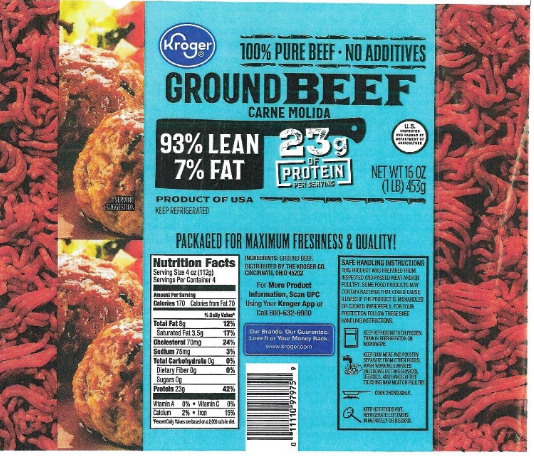
Following third-party lab testing that revealed a positive E. coli O157:H7 sample, Oregon-based Interstate Meat Dist, Inc. is recalling 28,356 pounds of ground beef products. The products were shipped to retail locations in Arizona, California, Nevada, Oregon, Utah, Washington and Wyoming, according to a USDA FSIS announcement, and have bear establishment number “EST. 965” inside the USDA mark of inspection.
“The issue was reported to FSIS after a retail package of ground beef was purchased and submitted to a third-party laboratory for microbiological analysis and the sample tested positive for E. coli O157:H7. FSIS conducted an assessment of the third-party laboratory’s accreditation and methodologies and determined the results were actionable.” – FSIS, USDA
The USDA posted images of labels and product details related to the Class I recall, which have been distributed to Wal-Mart, WinCo, Kroger and Albertsons.
Beer is one of the world’s oldest beverages, with evidence suggesting production as far back as the Bronze age. While beer is no longer used as renumeration for work as it was in the Mesopotamian Fertile Crescent, it is nevertheless a common pleasure for many people. Craft brewing is a relatively new phenomenon, and quite different from the brewing processes of antiquity. In the United States, immigrants from Germany and Czechia began to experiment with new recipes for craft beer in the 1960s. These recipes, often based on the Bavarian 16th century Reinheitsgebot, or purity laws, ensured that only the purest, highest quality ingredients went in to make beer: Water, barley, hops and yeast.
Since then, there has been a rapid growth in the number of microbreweries that experiment with “new-world” hops and grains to create huge ranges of flavorful beers that go far beyond traditional recipes. This variety in brewing ingredients and approaches has, in part, supported the explosion of a mass market for craft beer. In 2020, the global market value of craft beer was estimated at nearly $165 billion, and is expected to grow to nearly $554 Billion by 2027, with the largest growing markets in countries like China, Japan and the United States. There has also been a shift in which types of beers are consumed, with more premium or specialized craft beers increasing in market share with respect to low-cost mass-production beers.
In such a crowded and dynamic market, beer producers are faced with competitive challenges like never before. Ensuring a consistently high-quality product with a distinctive flavor profile that can be enjoyed time and time again is critical for market success. One of the key challenges standing in the way of achieving this is turbidity, or “haze”, in the end product. Such haze can give an unsightly first impression to consumers, compromise flavor, and negatively impacts shelf stability. In this article we discuss how new, advanced turbidity testing technologies are enabling brewers to quickly and efficiently eliminate haze from their beers, supporting breweries in their goals of delivering great consumer experiences again and again.
Quality over Quantity
With the growing “premiumization” of beers, ever-greater attention and importance is being placed on interesting and consistent flavor profiles. Often, this includes beers made from ingredients far outside the relatively strict Reinheitsgebot recipe, including additions such as coffee, fruit and spices. The emphasis on more complex flavor profiles is pushing beer tasting to be taken as seriously as wine tasting, with perfectly balanced beers often being designed to match certain foods.
However, the addition of these newer ingredients can introduce challenges into the brewing process, especially as they can be sources of turbidity-causing impurities that may affect the quality, flavor and shelf stability of the final product. This is particularly challenging when beer brewing is scaled up to larger manufacturing quotas, where careful control of variables like ingredient choices, recipes and manufacturing methods are critical for ensuring the consistency and quality of the beer from batch to batch.
To meet these needs, modern breweries are increasingly using new and advanced technologies throughout the brewing process to maintain high quality products. Technologies like water purification systems, titrators and portable instruments such as hand-held pH meters and spectrophotometers are all being utilized to improve and refine the manufacturing process. A major focus of this technological drive is in turbidity detection and removal.
What Is Haze, and Where Does It Come From?
Haze is a broad term referring to evenly distributed turbidity—suspended, insoluble material which can appear in the final product. Haze can be divided into several types, most commonly: Chill haze, a temporary haze that disappears when a chilled beer warms to room temperature; and permanent haze, which is present at all temperatures. Haze can also be divided into biological haze (caused by microbiological growth in the beer) and non-biological haze (caused by a wide variety of non-living material, such as peptides, polyphenols and starches).
With the rising popularity of craft beer, many companies and customers are embracing intentionally ‘cloudy’ beers, which can make detecting offending turbidity even more challenging. All images courtesy of Thermo Fisher Scientific.
Since turbidity can be the result of unwanted microbes, wild yeast or protein particles, these deposits, although not unsafe to consume, can significantly alter the flavor profile of the beer, adding unpleasant acidity, sourness, or even “off” flavors. Bacteria are one of the major sources of turbidity in beers, particularly lactic acid-producing bacteria (LAB), such as Lactobacillus. While small amounts of lactic acid can add pleasant, desirable sour flavors in sour beers, the over-presence of these bacteria can be a major cause of contamination, so their levels must be closely monitored in the brewing process. Other bacteria like Pectinatus species can also “infect” beers, causing turbidity as well as “off” aromas and flavors due to the creation of hydrogen sulfide and fatty acids.
Importantly, turbidity-causing compounds can collect in the product from all stages of the brewing process:
This starts with the source of water, and how it is filtered and treated. For example, a high presence of calcium in brewing water can cause precipitation of calcium oxalate.
Mashing, the first stage of the brewing process, produces a malt extract from mixing grains and water. The malt extract is a liquid containing sugar extracted during mashes and has high viscosity and high protein content. At this stage fungi (like Penecillium), wild yeasts (Candida) and bacteria can all enter the mix to cause turbidity later on.
From there, the process of lautering separates the wort from the grain. The wort is then boiled with hops, clarified, then fermented with yeast. The fermentation process is a common step when turbidity-causing bacteria like Lactobacillus and Pediococcus can contaminate the mixture.
The fermented beer product is then stored for anything from three weeks to three months in a storage tank where a second fermentation takes place. Then it is filtered and packaged into barrels, bottles, or cans; all of which are also potential sources of turbidity-causing bacteria like Pectinatus.
The filtration and pasteurization processes are key for removing sources of turbidity. However, these processes do not necessarily remove all sources of turbidity, especially if aspects of the brewing process are altered by external factors (e.g., subtle shifts in the mashing temperatures) and cause a buildup of contaminants that is too great to filter out. Therefore, effectively monitoring and minimizing turbidity throughout the brewing process is critical, allowing brewers to make timely corrective adjustments, reducing a buildup of contaminants in the final product.
Advanced Methods for Turbidity Testing
To support effective haze removal and ensure beer consistency, turbidity measurements must be taken throughout the entire brewing process. Measurements should therefore be quick and efficient, and able to measure large quantities of beer in a short space of time, especially in high-production breweries. As such, advanced on-site turbidity testing technologies that are efficient and easy to use are ideal, and can rapidly streamline quality control in the brewing process. For example, with turbidity meters, breweries can swiftly check that their fining or filtration process is yielding a desired end product, and if an issue arises during the clarification process, an onsite turbidity measurement can pick this up right away for speedy corrective action. Such speedy rectification minimizes the chances of ruined batches and resultant profit loss to the brewery.
Advanced portable turbidity meters enable efficient and reliable measurements on-site to streamline quality control in the brewery.
Modern turbidity meters work by using an infrared LED light source to measure light scattering in a solution. These handy devices allow brewers to perform rapid testing of beer with simple grab samples, meaning samples can be analyzed without having to disturb the brewing process. The LED light sources used in more advanced meters also have several benefits. For example, the LED does not require a warm-up period like older tungsten lamps, meaning it is ready to use at all times. Secondly, infrared LED light sources prevent color interference, which is especially useful for testing darker beers. Finally, the LED will last the life of the meter and give stable signals, meaning that calibration does not drift. Turbidity meters can also test for chill haze, allowing brewers to check for problems that can cause the beer to turn cloudy during prolonged chilling.
Quality Kings
Quality control of the brewing process is crucial for maintaining the quality and consistency of beer products that keep customers returning time and time again to their beers of choice. In a hyper-competitive market, brewers must use all the advantages they can to stay ahead of the game. Hazy beers can be particularly off-putting to customers if they are expecting bright, clear products, and critical qualities like taste and aroma can be very unpleasant if contamination isn’t carefully controlled. Moreover, unwanted turbidity in beers can negatively impact shelf stability, with resultant impact on profitability and brand reputation.
Owing to the complexity of beer making, the sources of turbidity are multiple, meaning that careful testing of turbidity is critical. In helping to overcome these challenges, advanced turbidity meters are enabling brewers to perform efficient and simple measurements on-site throughout the brewing process. This is helping to drive more timely tweaks to the brewing, filtration and storage steps to ensure consistent, high-quality beers with carefully crafted flavor profiles reach the market.
Find records of fraud such as those discussed in this column and more in the Food Fraud Database, owned and operated by Decernis, a Food Safety Tech advertiser. Image credit: Susanne Kuehne
Spices and herbs are sourced at a rate of 300,000 tons into the EU from places around the world, and fraudulent activity can happen in any steps along the supply chain. The European Commission’s control plan investigated nearly 2,000 samples of herbs and spices commonly targeted for fraud, such as oregano, cumin, turmeric, paprika, pepper and saffron, and found oregano to be the most manipulated, usually by the addition of olive leaves. Overall, the rate of 17% fraudulent products was down compared to other studies.
Find records of fraud such as those discussed in this column and more in the Food Fraud Database, owned and operated by Decernis, a Food Safety Tech advertiser. Image credit: Susanne Kuehne
The production methods for high quality olive oil are well defined, but fraudsters use a multitude of ways to produce fake premium olive oils and charge steep prices for mediocre or even dangerous products. From false declaration of origin, blending with lower quality olive oils or other vegetable oils, second centrifugation of olive paste, deodorizing, to false labeling claims, this study lists several common fraudulent practices. Olive oil keeps making the top of the list of frequently adulterated foods, but meanwhile is also one of the most highly tested commodities.
On February 4, 2021, the U.S. House of Representatives made public a report concerning the existence of heavy metals in baby food. The heavy metals of concern were cadmium, arsenic, lead and mercury, which pose a tremendous hazard to developing children’s health. After reviewing internal documents and test results from seven of the largest baby food manufacturers in the country, the Subcommittee on Economic and Consumer Policy found each company’s products to contain dangerously high concentrations of heavy metals.
Four of the companies, Nurture, Beech-Nut, Hain and Gerber, responded to the request. They provided internal testing policies, test results for ingredients and finished products, and documentation about how they handled finished products and ingredients that exceeded their internal testing limits.
On the other hand, Walmart, Campbell and Sprout Organic Foods refused to partake in the investigation. The Subcommittee on Economic and Consumer Policy members are very concerned that the lack of cooperation of these manufacturers could obstruct the presence of even higher levels of heavy metals in their products than their competitors.
Practical Measures Baby Food Companies Can Take to Ensure Products Are Safe for Children
Baby food manufacturers may not intentionally add heavy metals to their products, but their lack of testing and a lack of regulation in this sense is a cause for great concern. The main ingredients in baby foods such as rice, sweet potatoes, wheat, and carrots absorb heavy metals from the soil and water and metal-containing pesticides and industrial pollution.
Therefore, the companies that manufacture baby food should tackle the issue of heavy metals at the root of the problem and abide by strict safety measures and protocols to ensure low concentrations of heavy metals, particularly arsenic. Some of the steps that they could take to minimize this issue are the following:
Sourcing cereals, fruits, and vegetables from fields with lower arsenic concentrations in the earth
Growing crops with natural soil additives that reduce heavy metal uptake
Using strains of food that are less prone to absorb heavy metals
Altering irrigation practices
Preparing the food with excess water that is afterward poured off
Blending it with lower arsenic grains in multi-grain products
Subsequently, when the end product is finished, manufacturers should collect a sample from the finite product and test it for cadmium, arsenic, lead and mercury. Fortunately, nowadays, testing baby food for heavy metals is easier than ever and cost-efficient. Every food facility that must comply with FSMA must implement HACCP and establish preventive controls. HACCP, which is recognized internationally, ensures the health and safety of consumers by avoiding hazardous toxins in food. When it comes to baby food companies, they should focus on chemistry testing, as it addresses chemical and physical hazards, including heavy metals.
Alternatively, baby food companies can test their products by using the guidelines of the Environmental Defense Fund. The non-profit advocacy group advises manufacturers to prohibit arsenic, cadmium explicitly, and lead in any packaging or food handling equipment and strictly avoid brass and bronze unless they are confident that no heavy metal was added. Manufacturers of baby food should test the products per se, the ingredients, and the packaging for arsenic, cadmium, and lead. More specifically, companies should:
Consistently test baby food and their main ingredients that may be contaminated with arsenic, cadmium, or lead by using the method approved by the FDA and examine potential sources of heavy metals where measurable concentrations are found
Periodically test the packaging that comes in contact with food anywhere along the supply chain for arsenic, cadmium, or lead through a CPSC-accepted, third-party certified lab that evaluates baby food for heavy metals
In December of 2019, the cost of heavy metal testing was between $50 and $100 per sample. Nevertheless, companies that produce baby food should invest in heavy metal testing, no matter how small or large. This is the only way of making sure they put exclusively clean and safe products of high quality on the market.
To make sure baby food companies keep following the guidelines concerning heavy metals and do not fail to test their products for these neurotoxins regularly, the authority of the FDA should be expanded. Accordingly, the agency should be able to request a recall of adulterated or misbranded baby food whose concentration of heavy metals exceeds the safe limit. Moreover, the FDA should establish health-protective standards for each heavy metal and implement a testing program for neurotoxins in foods eaten by infants and toddlers that could be similar to the agenda of the Consumer Product Safety Commission for children’s toys.
The Ethical Measures Baby Food Companies Should Take to Avoid Selling Tainted Products
Baby food companies should exercise their social and moral capacity at all times. Nonetheless, while few people achieve the extent of influence necessary to change society itself, the food industry can drastically change societies. Moreover, it can also act in morally beneficial or detrimental ways, which inevitably affects people, the environment, and, ultimately, the planet itself.
To prevent your baby food company from developing unethical conducts, such as allowing dangerous concentrations of heavy metals in the products that end up on the market, there are a series of measures you and the other people who are in charge of the business can take, the paramount being the following:
Hiring accredited, trustworthy and competent people is perhaps the most important, as well as the first, step you can take to ensure no foul play will occur, as they will be unlikely to cover up essential information from you and the other higher-ups
Sourcing your ingredients from ethical suppliers, that are, preferably, local farmers, as they usually employ transparent business practices
Make sure that your facilities are maintained clean 24/7 by hiring the right people to take care of this not-so-easy job as if you neglect the condition of your facilities. Other contaminants may end up in the food you sell
Systematically testing your baby food for cadmium, arsenic, lead and mercury to ensure the products you allow to go on the market do not contain dangerous levels of heavy metals
Partnering with experienced laboratories to have your baby food regularly tested for heavy metals, which may help you save money if it is going to be a win-win situation
Having clear labels, even if you add ingredients that are not so healthy in your products, which will result in the consumers you target trusting you as a company
Voluntarily recalling a line of baby food products as soon as you receive the positive test results for one or multiple heavy metals, which will spare you some liability if you willingly take your food off the market
The Changes the Baby Food Safety Act May Bring About if the Bill Becomes Effective
On March 26, 2021, Representative Raja Krishnamoorthi introduced the Baby Food Safety Act, a bill to set maximum limits for each heavy metal in infant and toddler food, which is defined as food manufactured for children younger than 36 months. The initiative was taken because the concentration of neurotoxins in baby food is poorly regulated in our country. There is only a maximum limit for arsenic set by the FDA, which is considered dangerous by multiple other health agencies. It applies solely to infant rice cereals. The other three harmful heavy metals are not regulated at all.
If the Baby Food Act of 2021 becomes effective, companies that manufacture, process, pack or hold baby food need to ensure that their food complies with the limits on heavy metals set by the bill. Furthermore, baby food companies would also have to provide public information, such as test results for neurotoxins in their infant and toddler.
Find records of fraud such as those discussed in this column and more in the Food Fraud Database, owned and operated by Decernis, a Food Safety Tech advertiser. Image credit: Susanne Kuehne
Consumers are increasingly requesting food and beverages to be authentic, especially when it comes to wine and its concept of terroir. Lambrusco wine has a Protected Denomination of Origin (PDO) status—only wine that is grown in these specific regions in Italy can be labeled Lambrusco. In this study, chemical and isotopic compositions were used to determine geographic origin. Specific boron, strontium and lead isotopes can be used to determine climate conditions and plant localities, translating into geographic locations of origins of food and beverages.
Today 3M and Neogen announced a definitive agreement that will combine 3M’s food safety business with Neogen to create a company worth $9.3 billion. “This combination will enhance Neogen’s position in this new era of food security, equipping us with an expanded product line that enables us to capitalize on our growing footprint, reaching more customers, more often, while continuing our track record of strong and consistent growth,” said John Adent, president and CEO of Neogen in a press release. “The heightened global focus on food security, sustainability and supply chain solutions around the world presents exciting opportunities for Neogen to be positioned as an innovative leader at the forefront of the growth and digitization of the industry. We’re excited to welcome 3M’s Food Safety employees to the Neogen team, and we’re looking forward to demonstrating the immense benefits of this combination to our customers, employees and shareholders.” Its financial strength will also give the company the ability to further invest in R&D capabilities, innovation and data-driven analytics.
The combined company will be led by Adent and Neogen’s current management team. The company’s board will increase by two independent members as designated by 3M at closing. Subject to approval by Neogen shareholders and regulatory approvals, the transaction is anticipated to close by the end of Q3 2022.
Find records of fraud such as those discussed in this column and more in the Food Fraud Database, owned and operated by Decernis, a Food Safety Tech advertiser. Image credit: Susanne Kuehne
Almost one third of imported foods in China were rejected due to fraud, according to a 10-year detailed study published in Food Control. The report states that processed foods accounted for over 87% of the fraudulent products. Drinks, candy, cookies and meat are the most frequently adulterated items. Artificial enhancement is the leading reason for adulteration—for example, undeclared food additives, prohibited veterinary drugs, ingredient substitutes and inedible adulterants. The study will assist in the prevention of food fraud for imports into China.
Today FDA released a plan to help the agency and its partners improve the “speed, effectiveness, coordination and communication” of investigations surrounding foodborne illness outbreaks.
“We know that the 21st century has brought new challenges in identifying, investigating and controlling outbreaks of foodborne disease, but it has also brought new tools to meet those challenges,” stated Frank Yiannas, FDA Deputy Commissioner for Food Policy and Response, and Stic Harris, D.V.M. director of the FDA’s Coordinated Outbreak Response and Evaluation Network in an agency news release. “We also recognize that today’s U.S. food system is large and decentralized, with a broad array of widely distributed products, which we must adapt to in order to help ensure the safety of these products. That is why we are taking steps through this improvement plan to evolve our outbreak investigations to meet modern-day needs using the most modern-day tools available. Our investigations must be faster, more streamlined and more effective to identify, pinpoint and remove contaminated food from the market and identify root-cause factors in the food system to prevent similar outbreaks in the future.”
Tech-enabled product traceback: Being smarter about using digital technology, regularly, to streamline traceback investigations
Root-cause investigations: Adapting and strengthening procedures for conducting root-cause investigations
Working with the CDC, USDA’s FSIS and other partners to improve the analysis and distribution of outbreak data (including identifying recurring, emerging and persistent strains of pathogens)
Enhancing performance measures across the agency’s food programs to enable better evaluation of the timeless and effectiveness of outbreak and regulatory investigation activities
In addition to this improvement plan, the agency also released “An Independent Review of FDA’s Foodborne Outbreak Response Processes”, which was contracted with the University of Minnesota’s School of Public Health. The independent report played an important role in the development of FDA’s improvement plan.
This website uses cookies so that we can provide you with the best user experience possible. Cookie information is stored in your browser and performs functions such as recognising you when you return to our website and helping our team to understand which sections of the website you find most interesting and useful.
Strictly Necessary Cookies
Strictly Necessary Cookies should be enabled at all times so that we can save your preferences for these cookie settings.
We use tracking pixels that set your arrival time at our website, this is used as part of our anti-spam and security measures. Disabling this tracking pixel would disable some of our security measures, and is therefore considered necessary for the safe operation of the website. This tracking pixel is cleared from your system when you delete files in your history.
We also use cookies to store your preferences regarding the setting of 3rd Party Cookies.
If you visit and/or use the FST Training Calendar, cookies are used to store your search terms, and keep track of which records you have seen already. Without these cookies, the Training Calendar would not work.
If you disable this cookie, we will not be able to save your preferences. This means that every time you visit this website you will need to enable or disable cookies again.
Cookie Policy
A browser cookie is a small piece of data that is stored on your device to help websites and mobile apps remember things about you. Other technologies, including Web storage and identifiers associated with your device, may be used for similar purposes. In this policy, we say “cookies” to discuss all of these technologies.
Our Privacy Policy explains how we collect and use information from and about you when you use This website and certain other Innovative Publishing Co LLC services. This policy explains more about how we use cookies and your related choices.
How We Use Cookies
Data generated from cookies and other behavioral tracking technology is not made available to any outside parties, and is only used in the aggregate to make editorial decisions for the websites. Most browsers are initially set up to accept cookies, but you can reset your browser to refuse all cookies or to indicate when a cookie is being sent by visiting this Cookies Policy page. If your cookies are disabled in the browser, neither the tracking cookie nor the preference cookie is set, and you are in effect opted-out.
In other cases, our advertisers request to use third-party tracking to verify our ad delivery, or to remarket their products and/or services to you on other websites. You may opt-out of these tracking pixels by adjusting the Do Not Track settings in your browser, or by visiting the Network Advertising Initiative Opt Out page.
You have control over whether, how, and when cookies and other tracking technologies are installed on your devices. Although each browser is different, most browsers enable their users to access and edit their cookie preferences in their browser settings. The rejection or disabling of some cookies may impact certain features of the site or to cause some of the website’s services not to function properly.
Individuals may opt-out of 3rd Party Cookies used on IPC websites by adjusting your cookie preferences through this Cookie Preferences tool, or by setting web browser settings to refuse cookies and similar tracking mechanisms. Please note that web browsers operate using different identifiers. As such, you must adjust your settings in each web browser and for each computer or device on which you would like to opt-out on. Further, if you simply delete your cookies, you will need to remove cookies from your device after every visit to the websites. You may download a browser plugin that will help you maintain your opt-out choices by visiting www.aboutads.info/pmc. You may block cookies entirely by disabling cookie use in your browser or by setting your browser to ask for your permission before setting a cookie. Blocking cookies entirely may cause some websites to work incorrectly or less effectively.
The use of online tracking mechanisms by third parties is subject to those third parties’ own privacy policies, and not this Policy. If you prefer to prevent third parties from setting and accessing cookies on your computer, you may set your browser to block all cookies. Additionally, you may remove yourself from the targeted advertising of companies within the Network Advertising Initiative by opting out here, or of companies participating in the Digital Advertising Alliance program by opting out here.