

Tag Archives: Focus Article

Waylon Sharp, Bureau Veritas
FST Soapbox

You Are What You Eat: Meeting the Demand For Sustainable Practices and Transparency

By Waylon Sharp
No Comments
Waylon Sharp, Bureau Veritas

A very volatile sector, there are always new trends, opportunities and challenges in the food space, as a multitude of factors—including global climate and geopolitical challenges—can cause supply chain disruptions. Sustainable audits are heightening in demand, in order to validate company claims and provide consumers with peace of mind, as the industry continues to evolve with new ingredients, processes and technologies in play.

Consumers Today Demand Sustainable Practices and Transparency

The shift towards sustainability has further been accelerated by COVID-19, as the pandemic has made for more ethical and conscious consumers. According to research from Forrester, 68% of highly empowered consumers plan to ramp up their efforts to identify brands that reduce environmental impact. While there are numerous audits to measure sustainability and social responsibility, trending focus areas in the food space today are around sustainable packaging, water usage and food waste.

Three Ways Food Processors and Manufacturers Can Reduce Their Footprint

Key players across the food industry are stepping up to the challenge and finding innovative ways to minimize their environmental impact. The following are three ways food processors and manufacturers can reduce their footprint.

  • Use Environmentally Friendly Packaging: Food packaging is a major source of waste and pollution. In fact, containers and packaging make up a major portion of municipal solid waste (MSW), amounting to 82.2 million tons of generation in 2018, according to the EPA. Unfortunately, most packaging is designed as single-use, and is typically thrown away rather than reused or recycled. Given the impacts of packaging on the environment, more manufacturers are looking into packaging options that reduce waste and boost sustainability, including wood- and paper-based alternatives. Other manufacturers are developing innovative alternative packaging from biodegradable materials. The same rings true for takeout and grocery delivery, as the demand for home consumption grows, retail and foodservice companies are considering utilizing more sustainable packaging or reduce the use of virgin plastics to offset their impact.
  • Increase Energy and Water Efficiency: Food processing and manufacturing are energy- and water-intensive. In fact, according to the World Resources Institute, the 1.3 billion tons of wasted food annually also includes 45 trillion gallons of water. Water conservation methods can be implemented throughout the entire food chain—from selecting more efficient crops, to using less water within processing facilities and ultimately reducing food waste on the backend of the chain.
  • Reduce Food Waste: According to the Food and Agriculture Organization of the United Nations (FAO), nearly one-third of food produced for human consumption gets wasted each year. In fact, the carbon footprint of food waste is greater than that of the airline industry. This also includes the waste of resources used to produce the food including water, soil, transportation and labor. By improving processing and manufacturing efficiencies, we can reduce waste and better manage resources. Implementing systems to categorize and assess food waste can help identify areas for improvement and enable your team to develop a plan to correct.

Value-Add of Sustainability

Sustainability provides benefits to the consumer, the manufacturer and society-at-large. The consumer feels better about making a purchase that is not only better for the planet, but that may also provide health benefits to themselves and their families. The Organic Trade Association’s 2021 U.S. Organic Industry Survey highlights this trend, as organic food has the reputation of being better for your health and more sustainable for the planet. Organic food sales were up 12% in 2020, the highest growth rate in this category in over a decade.

Intrinsically, manufacturers with sustainable programs in place feel better about the work they are doing, knowing that they are supporting a better world. Companies that publicize their green programs and back them up with the applicable certifications can also attract top employees, despite today’s talent wars. Employees are zeroed in on corporate social responsibility and desire to work for a company that aligns with their purpose.

As it relates to the bottom line, the common misconception is that the sustainable choice will cost more. However, as sustainable supply increases due to consumer demand, companies are able to source sustainable inputs more affordably. Furthermore, they can communicate their commitments via certification bodies, through public forums and by labeling products based on their certifications. These approaches help reach and educate consumers at different levels—from their initial research of products to purchases from the store shelves.

Key Certifications and Auditing Technology

To reduce their environmental footprint throughout the value chain and implement more sustainable business practices, food companies can move toward a circular economy business model. By renewing, reusing and recycling materials at every stage of the food supply chain, companies can preserve the critical resources that allow their business to flourish.

There are a wide range of services help food producers make the transition to a more sustainable business model. This includes the GHG emissions verification, and management system auditing and certification or training to standards like ISO 14001 (Environmental Management System), ISO 24526 (Water Efficiency Management System), AWS (Alliance for Water Stewardship), ISO 50001 (Energy Management System) and SA8000 (Social Accountability standard), as well as SMETA (Sedex Members Ethical Trade Audit) audits. There are also a range of food sustainability-related product certifications including Organic, MSC, ASC and RSPO.

Auditing technology supports a range of requirements and helps teams set achievable targets. It can be used to analyze packaging materials, categorize and assess food waste, and monitor water usage. Newer auditing technology is now blockchain enabled to assess raw materials and packaging, and to ensure third party partners are also socially responsible. This information is packaged into a blockchain solution so that food companies can be confident that the auditing information is correct and secure. Furthermore, this technology provides the added visibility into their network should they have a recall.

How To Initiate or Ramp Up Your Sustainable Programs

For companies interested in kicking off a sustainability program, or branching into new levels of sustainability, a great place to start is training, in order to understand the audit standard. Early on in this process, ensure all parties are onboard and aware of the certification process and related costs—from managers who will be implementing the program daily to board level executives providing the final sign off. Doing this helps allocate sufficient time and resources and avoids surprises down the road.

It’s helpful to work with a third-party consultant through this process, as they are able take a birds-eye-view look to identify gaps in the program and help you achieve specific certification requirements that meet your unique food product needs. If your team works with a consultant to put together a plan that includes auditing, testing, inspection and certification, the right partner can verify that the program meets all the requirements necessary for the certification.

To keep your program running efficiently, arrange regular trainings for employees to stay up to date on the latest requirements and fill any gaps. For more specialized programs, it’s also a good idea to set aside standalone training sessions to avoid information overload.

As the industry continues to innovate, there will be more ways to reduce waste throughout the entire supply chain and build more efficient business models that are better for the company, consumers and the planet. Looking ahead to next year and beyond, the trend towards sustainability and transparency will press on. Ultimately, companies that take the extra steps to be more sustainable are setting a higher standard for industry and supply chain partners and building a pathway for long-term success.


How Advancements in Analytical Testing Are Supporting the Development of Novel Plant-Based Dairy Alternatives

By David Honigs, Ph.D.
No Comments

Dairy processors and new plant-based milk processors need access to instruments that rapidly and efficiently produce accurate compositional analysis.

Globally, milk and dairy products rank among the top eight allergens that affect consumers across the world. In America in particular, 32 million people suffer from some form of allergy, of which a staggering 4.7 million are allergic to milk. Additionally, it is estimated that around 70% of adults worldwide have expressed some form of lactose intolerance. As such, it is important for key stakeholders in the dairy industry to create novel products that meet the wants and needs of consumers.

Low-lactose products have been available since the 1980s. But in recent years, the demand for plant-based alternatives to dairy products has been on the rise. Some of this demand has come from individuals who cannot digest lactose or those that have an allergy to dairy. However, as all consumers continue to scrutinize their food labels and assess the environmental and ethical impact of their dietary choices, plant-based milk has become an appealing alternative to traditional dairy products.

To adapt to this changing landscape, traditional dairy processors have started to create these alternatives alongside their regular product lines. As such, they need access to instruments that are flexible enough to help them overcome the challenges of testing novel plant-based milk, while maintaining effective analysis and testing of conventional product lines.

 David Honigs, Ph.D. will share his expertise during the complimentary webinar, “Supporting the Plant-Based Boom: Applying Intuitive Analytical Methods to Enhance Plant-based Dairy Product Development” | Friday, December 17 at 12 pm ETLow in Lactose, High in Quality

Some consumers—although not allergic to dairy—lack the lactase enzyme that is responsible for breaking down the disaccharide, lactose, into the more easily digestible glucose and galactose.

Low-lactose products first started to emerge in 1985 when the USDA developed technology that allowed milk processors to produce lactose-free milk, ice cream and yogurt. This meant consumers that previously had to avoid dairy products could still reap their nutritional benefits without any adverse side effects.

Similar to conventional dairy products, routine in-process analysis in lactose-free dairy production is often carried out using infrared spectroscopy, due to its rapid reporting. Additionally, the wavelengths that are used to identify dairy components are well documented, allowing for easier determination of fats, proteins and sugars.

Fourier transform infrared (FTIR) technologies are the most popular of the infrared spectroscopy instruments used in dairy analysis. As cream is still very liquid, even at high solid levels, FTIR can still effectively be used for the determination and analysis of its components. For products with a higher percentage of solids—usually above 20%—near-infrared (NIR) spectroscopy can provide much better results. Due to its ability to penetrate pathlengths up to 20 mm, this method is more suitable for the analysis of cheeses and yogurts. For low-lactose products in particular, FTIR technology is integral to production, as it can also be used to monitor the breakdown of lactose.

Finger on the Pulse

For some consumers, dairy products must be avoided altogether. Contrary to intolerances that only affect the digestive system, allergies affect the immune system of the body. This means that allergenic ingredients, such as milk or dairy, are treated as foreign invaders and can result in severe adverse reactions, such as anaphylactic shock, when ingested.

From 2012 to 2017, U.S. sales of plant-based milk steadily rose by 61%. With this increasing demand and the need to provide alternatives for those with allergies, it has never been a more important time to get plant-based milk processing right the first time. Although the quantification of fat, protein and sugar content is still important in these products, they pose different challenges to processors.

In order to mimic traditional dairy products, plant-based milk is often formulated with additional ingredients or as a blend of two plant milks. Sunflower or safflower oil can be added to increase viscosity and cane syrup or salt may be added to enhance flavor. All of these can affect the stability of the milk, so stabilizers or acidity regulators may also be present. Additionally, no plant milk is the same. Coconut milk is very high in fat content but very low in protein and sugar; on the other hand, oat milk is naturally very high in carbohydrates. This not only makes them suitable for different uses, but also means they require different analytical procedures to quantify their components.

Although many FTIR and NIR instruments can be applied to plant-based milk in the same way as dairy milk, the constantly evolving formulation differences pose issues to processors. For example, the way that protein is determined in dairy milk will vary from the way protein is determined in almond milk. Both will follow a method of quantifying the nitrogen content but must be multiplied by a different factor. To help overcome these challenges, many companies have started to develop plant-based milk calibrations that can be used in conjunction with existing infrared instruments. Currently, universal calibrations exist to determine the protein, fat, solids, and sugar content of novel products. With more research and data, it’s likely in the future these will be expanded to generate calibrations that are specific to soy, almond and oat milk.

Even with exciting advancements in analytical testing for plant-based milk, the downtime for analysis is still a lot higher than traditional dairy. This is due to the increased solid content of plant-based milk. Many are often a suspension of solid particles in an aqueous solution, as opposed to dairy milk, which is a suspension of fat globules in aqueous solution. This means processors need to factor in additional centrifuge and cleaning steps to ensure results are as accurate and repeatable as possible.

In addition to the FTIR and NIR instruments used for traditional dairy testing, plant-based milk can also benefit from the implementation of diode array (DA) NIR instruments into existing workflows. With the ability to be placed at- and on-line, DA instruments can provide continual reporting for the constituent elements of plant-based milk as they move through the processing facility. These instruments can also produce results in about six seconds, compared to the 30 seconds of regular IR instruments, so are of great importance for rapid reporting of multiple tests across a day.

Keeping It Simple

Although the consumption of dairy-free products is on the rise, lots of plant-based milk are also made from other allergenic foods, such as soy, almonds and peanuts. Therefore, having low-lactose alternatives on the market is still valuable to provide consumers with a range of suitable options.

To do this, dairy processors and new plant-based milk processors need access to instruments that rapidly and efficiently produce accurate compositional analysis. For dairy processors who have recently started creating low-lactose or dairy-free milk alternatives, it is important that their instrumentation is flexible and used for the analysis of all their product outputs.

Looking towards the future, it’s likely both dairy products and their plant-based counterparts will have a place in consumers’ diets. Although there is some divide on which of these products is better—both for the environment and in terms of health—one thing that will become increasingly more important is the attitude towards the labeling of these products. Clean labels and transparency on where products are coming from, and the relative fat, protein and sugar content of foods, are important to many consumers. Yet another reason why effective testing and analytical solutions need to be available to food processors.

Susanne Kuehne, Decernis
Food Fraud Quick Bites

It’s Official: FDA Designates New Webpage to Food Fraud

By Susanne Kuehne
2 Comments
Susanne Kuehne, Decernis
FDA, Food fraud
Find records of fraud such as those discussed in this column and more in the Food Fraud Database, owned and operated by Decernis, a Food Safety Tech advertiser. Image Credit: Susanne Kuehne

Food fraud has become such an important issue that many governments are monitoring it much more closely. To keep producers and consumers informed on the latest developments, the FDA has generated a new web page on economically motivated adulteration (EMA). The page includes links on how to report food fraud (including a list of consumer complaint coordinators), important examples of adulteration (i.e., honey, olive oil and seafood), how food fraud is detected and monitored, enforcement and legal consequences such as recalls, seizures and import refusals, guidance documents to assist manufacturers and importers, and a list of import alerts.

Resource

  1. FDA. (November 4, 2021). “Economically Motivated Adulteration (Food Fraud)”.
Melanie Neumann, Neumann Risk Services
Women in Food Safety

Being an Ambassador for Science and Food Safety: Seek Out, Don’t Sit Back

By Melanie Neumann, JD, MS
No Comments
Melanie Neumann, Neumann Risk Services

A key focus of Women in Food Safety is to highlight female leaders in various food safety career paths. This month we have the privilege to speak with Jennifer McEntire, Ph.D., SVP of Food Safety & Technology at the United Fresh Produce Association, who has a storied career combining hard-core science with policy development that is risk-based, science-based and pragmatic to implement.

As many know, I am a lawyer. With that, I feel compelled to disclose the following disclaimer: I have worked alongside Jennifer as a business and industry colleague, and I consider her one of the most impressive, influential yet humble people I have ever met. Given my first-hand knowledge of her professional and personal contributions and unquestionable character, our conversation quickly dove deep into candid discussions about her career path, focusing on her passion for policy and seeing trade associations as a vehicle and a collective voice to influence and shape policy. Jennifer’s insights on being female in our industry are truly enlightening. See for yourself.

Melanie Neumann: Can you please summarize your career path to your position today, or what I like to consider your “path to produce?”

SVP, Food Safety, United Fresh Product Association
Jennifer McEntire, Senior Vice President, Food Safety and Technology, United Fresh Produce Association

Jennifer McEntire: I grew up in Long Island, which is not exactly the epi-center of agriculture. I liked science but didn’t want to be a doctor. At the time the University of Delaware looked through all the postcards (yes, I’m dating myself!) of kids interested in science and sent packets of information about the food science program. It was the best thing that could have happened to me! It was a small program; there were only four people in my graduating class; so I really couldn’t fly under the radar. I am the first person in my family to go to a university and I had no idea what graduate school was. Tons of people took me under their wing. I was able to do food safety research as an undergrad, which allowed me to jumpstart my graduate education. I truly had no plan to get a Ph.D. I wanted to work! But during my freshman year of college my biology professor nonchalantly mentioned that graduate students in sciences get paid to go to graduate school. I was like, WHAT?!? It was a no brainer. The more I got involved with the food science clubs at UD and at Rutgers (where I got my Ph.D.) and the more I networked with professionals at regional meetings of the Institute of Food Technologists (IFT), the more I learned about the breadth of career options. I knew I didn’t want to be an academic so I didn’t do a post doc. (That said, I love mentoring, training and professional development, and have been lucky to weave it into every job I’ve had). I liked the product development side but thought I might get bored in one company. Although I am an introvert, I like hearing different perspectives and meeting very different kinds of people. Once I saw the nexus of disciplines and perspectives in Washington D.C., I was hooked. Although I’ve always worked in the general food safety arena, at IFT, The Acheson Group, GMA, and now at United Fresh, each role has been vastly different and I keep realizing how much there is to learn.

Neumann: Much of your career centers around trade associations. Why did you choose this sector over others in the food industry?

McEntire: Trade associations provide me with a vehicle to fulfill my goal of being an “Ambassador for Science.” I was fortunate to have a rare opportunity as USDA National Needs Fellowship at Rutgers, which allowed me to work for both FDA and a trade association, the National Food Processors Association (NFPA), towards the end of my Ph.D. program. I quickly fell in love with the buzz of D.C. and realized this is where the action is—the intersection of science, law, policy and the power of networking. I accepted a permanent position with IFT in their D.C. office after graduation to continue my quest to learn more about the inner workings of D.C. as well as provide IFT with an even greater voice based on science. I’ve now been in D.C. over 20 years. I understand why it turns some people off, but I love it. I’m constantly meeting new people and really love being a conduit between the industry, the regulators, policy makers and others.

Neumann: From the start it seems like you were fortunate that you were able to start your career at the strategic level, or “forest”. What advice would you give someone who perhaps had a more typical start in a technical role, or “trees”, and wants to gain strategic roles in the industry?

McEntire: From the get-go at IFT I was pulling together expert panels, meaning I was constantly around experts, which was exhilarating for someone in her 20s. But I realize that’s atypical. Part of what I love about working in associations is the ability to connect people. Those are opportunities exist at every level. “Seek out, don’t sit back.” This advice applies equally personally and professionally. If you want to understand how your current technical role supports your food safety strategic plan or corporate strategy, seek out who you believe can answer your question and ask. If you have a suggestion to improve your role or an aspect of your food safety program, speak up. If you would really like a mentor but no one has assigned you one, seek them out. What worked for me early in my career and what still does today is that I study people. I may be at a conference listening to a presenter, and I will ask myself “what do I like about their style of communication?” or “What about them is capturing my attention enough to listen to them?” Adopting certain aspects you like, (or dislike and want to be sure you avoid doing!), and adapting your style to incorporate them is a great way to professionally evolve. This said, don’t lose yourself or your own style by impersonating or assimilating too much of others’ ways. What sets you up for success is designing an approach that leverages your personal strengths and is unique to “you”.

A key message from my perspective is not to sit back and wait for the career you want. Rather, my advice is to proactively seek out opportunities, answers to questions and relationships with others in your company and/or in the food industry that you believe you would benefit from interacting.

Neumann: Have you experienced challenges in being a female in this space?

McEntire: Subtle challenges, sure. In my case I feel it was more my age than my gender that I needed to overcome. But specific to gender, my biggest perceived challenge was the pressure I placed on myself. These self-imposed challenges were expectations I put on myself in part due to societal expectations or roles I thought I needed to play as a mother, partner, community member and as a professional. I expected to perform at 100% at all times in every role, and over time realized that isn’t sustainable, or even sane, to expect of yourself!

As a younger professional I knew that I had hurdles to overcome when I walked into a room (sometimes I still feel that way). What I learned over time is how the power of data helps in situations where, real or perceived, I felt that my audience wasn’t tuning in to me as much as others in the room. That is when I became even closer friends with data and gave thought about how to construct and communicate my key points. I learned that with sound facts based on sound science to support my position, I was the most informed person on that topic in the room, and my ability to successfully negotiate and convince the other stakeholders increased considerably. This was especially true when I tied the data to tell a compelling story. The most effective, influential professionals I have encountered, some I consider my mentors, are master storytellers—relying on facts when presenting their case in a way that tells a story.

Neumann: Do you have any additional insights or advice to share with women in food safety regardless of where they are at in their career journey?

McEntire: If you love what you do, and you do it well, be bold and be brave. So many people, male and female, saw a potential in me I wasn’t even aware of, and they made serious investments in me. I find that in the field of food safety, that’s pretty common. We are a friendly bunch! So reach out and start talking to people. You’ll be amazed how many people will chat with you at a meeting or return your email.

One thing that concerns me, and I don’t yet have enough anecdotal data to tell if younger women are more prone to this than their male counterparts, is this expectation that they have to know their full career path from the time they are 18 years old. They seem to put a lot of pressure on themselves to “have it all figured out”. As someone who is “Type A” and very much a planner, I can confidently say that no part of my career has been planned. I never ever could have predicted that I would wind up where I am today. I maintained an openness to new opportunities, listened a lot, and considered new information that became available. I did my best to not burn bridges, while at the same time sticking up for myself and for others. Food safety is hard. It takes a thick skin and at this point in my life I have to say that having a network of women food safety colleagues as a support system makes some of the more stressful days much easier.

Check out the Women in Food Safety column to learn about more female leaders like Jennifer. Join the conversation on For Women in Food Safety on LinkedIn.

Food Safety Consortium Virtual Conference Series

2021 FSC Episode 9 Preview: Professional Development, Training and Mentorship

By Food Safety Tech Staff
No Comments
Food Safety Consortium Virtual Conference Series

This week the final episode of the 2021 Food Safety Consortium Virtual Conference Series takes place, and appropriately closes out with an afternoon of insights about navigating a career in food safety. The following is the agenda for Thursday’s episode, which begins at 12 pm ET.

  • A Modern, Multi-Layered Approach to Professional Development in Food Safety, with Darin Detwiler, Northeastern University
  • What I Wish I Had Known Early in My FSQ Career, with Jill Stuber, The Food Safety Coach and Tia Glave, Tia Glave Consulting
  • Mentorship Minute and Career Development Journey: From QA Technician to SVP, a conversation between Deborah Coviello, Illumination Partners and Brian Perry, TreeHouse Foods
Susanne Kuehne, Decernis
Food Fraud Quick Bites

The (Automated) Nose Knows

By Susanne Kuehne
No Comments
Susanne Kuehne, Decernis
Whisky fraud detection
Find records of fraud such as those discussed in this column and more in the Food Fraud Database, owned and operated by Decernis, a Food Safety Tech advertiser. Image credit: Susanne Kuehne

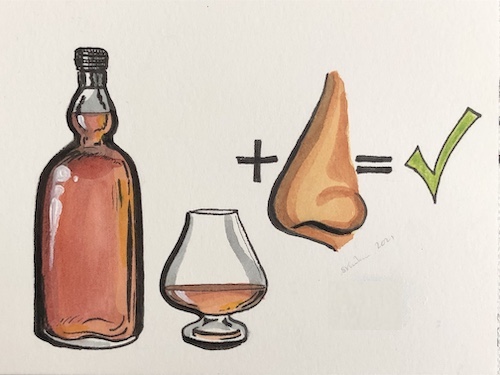
Rare and old whisky can be a significant investment, except for when they are fraudulent. One report found that about one-third of rare whisky (and wine) may be fake, leading to $1.5 billion in losses in Europe alone. A handheld device is now able to detect fraudulent products rapidly. The analysis method involves electrodes that analyze characteristic groups of molecules that can be found in the real product. The device then checks the results against real whisky samples from a database.

Resource
Miller, K. (September 16, 2021). “This Handheld Device Can Detect Fake Whisky In Minutes”. InsideHook. Yahoo.com

Jill Stuber, Tia Glave
FST Soapbox

The Crossroads of Strategic, Tactical, and Operational Planning in Food Safety Culture

By Jill Stuber, Tia Glave
No Comments
Jill Stuber, Tia Glave

With the release of new food safety and quality regulations or requirements—such as food safety culture—there can be a flurry of action to understand how a food company’s systems and processes should change to meet the new regulations or requirements. The typical response begins with the phrase “we need a plan.” For many, “we need a plan” translates directly into action. It’s the phrase that drives people forward to start “doing” in the hopes of reaching the desired outcome.

A quick-to-action organization that skips the planning represents the classic mistake in understanding strategy, tactics and operations. These organizations will find that they are constantly spending time and money re-doing action steps or correcting errors they have made. This leads to a culture of confusion, frustration, anxiety and resistance, the opposite of what we want in any culture.

As food companies are trying to understand and implement a “food safety culture” into their organizations, it is the perfect opportunity to take a step back and review the differences between strategic, tactical and operational work. All three are essential for food safety and quality programs and building a strong culture of food safety.

Consider this. Only 22% of people believe their organization has a clear direction.1

Join Jill Stuber and Tia Glave as they discuss “What I Wish I had Known Early in my FSQ Career” during the 2021 Food Safety Consortium Virtual Conference Series on Thursday, November 4Many reasons contributing to the 22% are reported; however, most companies generally do not spend enough time in the planning phase to build a strategy and develop the team to implement that strategy. Most people are rewarded for being busy with metrics such as % efficiency, % yield, and sales, not necessarily for successful change management, which can signal trouble ahead. Building clear plans around food safety culture will energize your team to participate in the planning and come along on the adventure.

Building clear plans start with understanding how strategic, tactical and operational plans support organizational direction. Let’s begin with having clarity around each term as they are often used interchangeably and often outside standard definitions. Consider these practical definitions:

Strategic (The HOW and the WHY): Designed with the entire organization in mind, typically at the highest levels of the organization, often with external support. Focused on three, five, 10 years out.

Tactical (The WHAT): Translates strategic ideas into a framework for the operational implementation. Focused on the next 12 months.

Operational (The DO): Specific actions and steps taken by front-line managers and team members to realize the tactical plans. Focused on today and this week.

To demonstrate a misuse of the terms, consider the following: A company is implementing new food safety and quality management software. Before implementation, top senior leaders choose an aggressive launch date and start working with a consulting firm and their leadership team to identify the software that works best for their organization. A software is chosen, and then it’s a race to implement the software before the launch date. Once the company realizes that they are not going to meet the launch date due to the implementation schedule taking longer than expected, the launch date is pushed back a month. The month passes, and even though implementation is underway, the company is not ready to launch. The top senior leaders decide to stick with the modified launch date. Months later, the company is still not using the software the way they had planned.

What went wrong? Critical parts of the strategic and tactical work were not done upfront, which led to poor operational work during the implementation phase. The company did a great job working through options with other leaders and choosing the best program; however, they failed to use that vision to evaluate the resources needed for implementation and then translate that vision into tactical steps to get a realistic timeline for launch. Unfortunately, this lack of planning leads to resources feeling overworked and frustrated.

When thinking about food safety culture (or any culture), having your team members feeling overworked and frustrated will only hurt. We have found that following these macro steps to navigate each phase ensures that organizations successfully develop and implement new strategies that will lead to energized and supportive team members.

1. Create a Vision (Strategy)

How and where does food safety culture align with the organization’s purpose and mission? The food safety culture strategy requires a story around what it is, why it is important, and how it supports the organization. We like to call it the Blue-Sky Vision encouraging people to think big—the sky’s the limit! The vision will evolve into a strategy around food safety culture that stems from activities like honoring what is working well in the organization, listening sessions that gather the voice of your team members, to engaging with external stakeholders to broaden perspectives. The vision should align with purpose and values. After all, “When the WHY is clear, the HOW is easy”— Unknown.

2. Evaluate Skills and Resources (Strategic and Tactical)

What in the organization, such as people, systems, and processes, will serve the Blue-Sky vision in the future? What additional skills and resources are needed? To build an organization to this point, many factors are likely working well and may serve as the foundation for moving forward. Yet, things must be released to get to the next level to make way for the new. For example, will the Food Safety Manager be the champion of food safety culture? If yes, what current tasks must they pass along to others or stop to fulfill the champion role? The practical side of allocating money and time is also critical at this step. The evolution of skills and resources to reach Blue-Sky won’t happen without intentional support.

3. Understand Incentives (Strategic and Tactical)

What’s motivating and encouraging team members in every function at every level to work toward the Blue-Sky vision? What incentives may pull team members off track and conflict with the Blue-Sky vision? Be careful here! There have been many discussions about incentivizing food safety behaviors where it is detrimental. An example is reducing the number of holds. A key metric around reducing holds may simply reduce communication that holds are needed, thus letting defective products out the door. Focus on “the why” and incentives team members that exemplify behaviors that support it.

4. Build Your Action Plan (Tactical)

Unless you like herding cats, you need a clear plan that outlines actions for each function and role. Without a detailed plan, everyone will work with their best intentions instead of the vision’s best intentions to move forward. This could be your individual or team’s 4-Quarter Plan or 30-60-90 Action Plan.

5. Implement Your Plan (Operational):

Hellen Keller says it best with “Ideas without action are useless.” If you’ve done all the work in the phases above, the fruits of that labor will be observed in the day-to-day work of each team member. What changes are related to procedures? How is time allocated to have a real-time discussion around food safety behaviors? How will relationships be fostered each day to build transparency and engagement?

By understanding the phases related to change management, evaluating and improving your organization’s food safety culture will be a joyous adventure. Engaging team members using catch-ball, a lean concept, at every single phase will align and energize the entire organization on your way to the Blue-Sky Vision of food safety culture that honors your organization, team members and clients.2

References

  1. 2019. Clifton, Jim, and Jim Harter. It’s the Manager: Moving from Boss to Coach. Gallup Press. P.20.
  2. Millard, M. (2016). The Role of Catchball in Strategic Planning.

Tia Glave and Jill Stuber collaborate to support clients through Catalyst LLC., an organization that sparks transformation in food safety and quality, weaving together individual growth, teamwork and organizational strategies.

Food Safety Consortium Virtual Conference Series

2021 FSC Episode 8 Preview: Food Defense: Yesterday, Today and Tomorrow

By Food Safety Tech Staff
No Comments
Food Safety Consortium Virtual Conference Series

You don’t want to miss this week’s episode of the 2021 Food Safety Consortium Virtual Conference Series. The session, Food Defense: Yesterday, Today and Tomorrow, will discuss pre-FSMA IA Rule voluntary food defense programs, compliance timelines, and regulatory compliance vs. enterprise risk based approaches to food defense. Presenters will address the status of Food Defense plan quick checks and share insights on Food Defense Plan reanalysis. Participants will gain insights on threat intelligence sources and food defense-based research updates. Other topics to be covered include a brief overview of recently released insider risk mitigation reference material, cyber/IT “vulnerabilities”, critical infrastructure protection and how an all-hazards mindset to “all of the above” can help to contribute to a Food Protection Culture.

The following is the line up of speakers for Thursday’s episode, which begins at 12 pm ET.

  • Jason Bashura, PepsiCo (moderator)
  • Food Defense Yesterday with Raquel Maymir, General Mills
  • FBI HQ Perspectives of Food Defense with Helen S. Lawrence and Scott Mahloch, FBI
  • Food Defense Tomorrow with Frank Pisciotta, ASIS Food Defense & Ag Security Community and Cathy Baillie, Mars, Inc.
  • Risk-based Food Defense with Jessica Cox, Department of Homeland Security, Chemical Security Analysis Center
  • Food Defense & Supply Chain Perspectives: Regional Resilience Action Plan with Jose Dossantos, Department of Homeland Security/CISA

The Fall program runs every Thursday from October 7 through November 4. Haven’t registered? Follow this link to the 2021 Food Safety Consortium Virtual Conference Series, which provides access to all the episodes featuring critical industry insights from leading subject matter experts!

Recall

Onions Named as Source of Salmonella Outbreak, Distributors Agree to Recall

By Food Safety Tech Staff
No Comments
Recall

— UPDATE October 22, 2021 — Keeler Family Farms, based in Deming, New Mexico, also issued a voluntary recall for red, yellow and white onions imported from Chihuahua, Mexico and shipped from July 1 through August 25. Thus far no onions from Keeler Family Farms have tested positive for Salmonella.

— END UPDATE —

The source of the fast-growing Salmonella outbreak reported late last month has been identified: Fresh whole red, white and yellow onions imported from Chihuahua, Mexico and distributed by Illinois-based ProSource Inc.

Since late last month, the outbreak has grown from 29 to 37 states (However, the products were distributed nationwide), and from 280 to 652 reported illnesses. According to the CDC, the last of the onions were imported into the United States on August 27 (note, the import date ran from July 1 until August 27). However, businesses and consumers keep onions in storage for up to three months.

Illness subclusters have been linked to restaurants and food service locations. FDA is currently working to determine if these onions have also been distributed to customers via grocery stores. The agency is also continuing to traceback investigations to determine whether more products or suppliers have been affected by the contamination.

“ProSource Inc. has agreed to voluntarily recall red, yellow, and white onions imported from the State of Chihuahua, MX, with import dates from July 1, 2021 through August 27, 2021. Descriptions of these onion types include, but are not limited to, jumbo, colossal, medium, and sweet onions. Additional recall information will be made public as soon as it is available from ProSource Inc.,” according to recall information posted on FDA’s website.

Currently no deaths have been reported, but 129 people have been hospitalized. The last illness onset recorded was September 30.

Food Safety Consortium Virtual Conference Series

2021 FSC Episode 7 Preview: Food Safety Supply Chain Management

By Food Safety Tech Staff
No Comments
Food Safety Consortium Virtual Conference Series

This week’s episode of the 2021 Food Safety Consortium Virtual Conference Series will dive into the challenges of effectively managing your food supply chain. The following is the agenda for Thursday’s episode, which begins at 12 pm ET.

  • Enterprise Risk Management with Melanie Neumann, Matrix Sciences
  • The Role of Food Safety Certification in Supply Chain Management, a presentation by food safety experts Roy Kirby and Alec Kyriakides, followed by a panel discussion led by Erica Sheward, GFSI
  • Supplier Certification Management—Untangle the Chaos without Breaking the Bank, a panel discussion with David Black, RizePoint; Kari Neubauer, Ceres Certifications, Intl; and Karl Kolb, Ph.D, The High Sierra Group; moderated by Kari Hension, RizePoint
  • Accredited Third Party Certification Program, An FDA Update with Doriliz De Leon, FDA
  • Closing Remarks and Industry Commentary with Trish Wester, AFSAP
  • Tech Talk presented by David Black, Rizepoint

The Fall program runs every Thursday from October 7 through November 4. Haven’t registered? Follow this link to the 2021 Food Safety Consortium Virtual Conference Series, which provides access to all the episodes featuring critical industry insights from leading subject matter experts!