Tag Archives: Focus Article

Susanne Kuehne, Decernis
Food Fraud Quick Bites

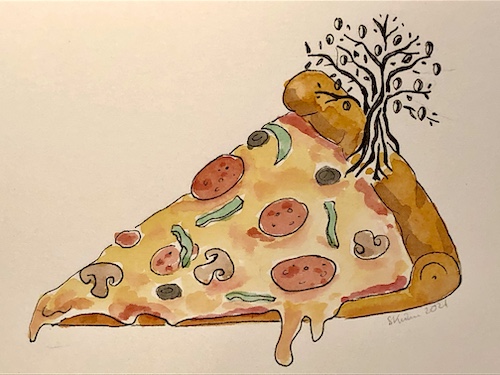
Spice Up Your Pizza…with Olive Leaves

By Susanne Kuehne
No Comments
Susanne Kuehne, Decernis
Food fraud, herbs spices
Find records of fraud such as those discussed in this column and more in the Food Fraud Database, owned and operated by Decernis, a Food Safety Tech advertiser. Image credit: Susanne Kuehne

Who wants shredded olive leaves on their pizza instead of oregano? Herbs and spices keep being a target for food fraud, a European Commission study that analyzed nearly 1,900 samples revealed. The study showed that about 20% of herbs and spices are manipulated, with oregano leading the top of the list, followed by spices that include pepper, cumin, curcuma, saffron and paprika. Europe is a leading importer of herbs and spices at 300,000 tons a year. The entire supply chain from country of origin, processing, packaging, importing to distribution, is potentially vulnerable to fraud. In most cases, undeclared plant material was added, and sometimes toxic dyes were found—and these are detrimental to human health.

Resource

  1. Food Processing. (December 1, 2021). “EU study reveals herb and spice food fraud.”
FDA

FDA Wants to Change Agricultural Water Requirements in Produce Safety Rule

By Food Safety Tech Staff
No Comments
FDA

After years of foodborne illness outbreaks that have been suspected to originate in pre-harvest agricultural water, FDA is proposing changes to the FSMA Produce Safety Rule. The proposed rule would revise subpart E, changing certain pre-harvest agricultural water requirements for covered produce other than sprouts.

“There have been far too many foodborne illness outbreaks possibly linked to pre-harvest agricultural water in recent years, including water coming from lands nearby produce farms. As a federal government agency charged with protecting public health, the FDA is committed to implementing effective modern, science-based measures designed to prevent these outbreaks from occurring in the future,” said Frank Yiannas, FDA Deputy Commissioner for Food Policy and Response in an agency update. “The proposed rule is the latest action taken by the FDA to continue working towards implementation of key provisions of FSMA. If finalized, we’re confident this proposal would result in fewer outbreaks in the U.S. related to produce, protecting public health and saving lives. This proposed rule is a monumental step towards further improving the safety of the fruits and vegetables Americans serve their families every day, and the FDA looks forward to engaging with stakeholders on the proposed changes.”

Under the proposed rule, farms would be required to conduct yearly systems-based agricultural water assessments to assess and guide measures that would reduce risks related to pre-harvest agricultural water. According to the FDA, the assessment would consist of evaluating the water system, agricultural water use practices, crop characteristics, environmental conditions, potential impacts on source water by activities conducted on adjacent and nearby land.

With the current agricultural water compliance dates for covered produce other than sprouts set to begin in January 2022, the FDA plans to exercise enforcement discretion for those requirements while also proposing another rule that extends the compliance dates for all agricultural water requirements under the Produce Safety Rule.

The full details of the FSMA Proposed Rule on Agricultural Water are available on FDA’s website.

FDA

FDA Publishes Long-Awaited Final Rule on Lab Accreditation

By Food Safety Tech Staff
No Comments
FDA

At long last FDA has issued its final rule for Laboratory Accreditation for Analyses of Foods (LAAF). The FSMA rule establishes a lab accreditation program for testing food in certain situations and applies only to accredited bodies and food testing labs that opt to participate in the program; these ABs and labs must fulfill certain eligibility requirements.

“The establishment of the LAAF program will improve the FDA’s capacity to protect U.S. consumers from unsafe food by improving the accuracy and reliability of certain food testing through the uniformity of standards and enhanced oversight of participating laboratories,” CFSAN states in a news release.

According to CFSAN, the LAAF will apply to testing that is:

  • “to support removal of a food from an import alert through successful consecutive testing requirements;
  • to support admission of an imported food detained at the border because it is or appears to be in violation of the Federal Food, Drug, and Cosmetic Act;
  • required by existing FDA food safety regulations, when applied to address an identified or suspected food safety problem (i.e., certain tests of shell eggs, sprouts, and bottled drinking water);
  • required by a directed food laboratory order, a new procedure being implemented in this final rule that will allow the FDA to require use of a LAAF-accredited laboratory to address an identified or suspected food safety problem in certain, rare circumstances; and
  • conducted in connection with certain administrative processes such as testing submitted in connection with an appeal of an administrative detention order.”

The final rule will be published on the Federal Register on December 3.

Recall

Q3 Food Recalls Drop More than 10%, 2021 Could See Lowest Recall Levels in a Decade

By Maria Fontanazza
No Comments
Recall

FDA food recalls fell more than 11% and USDA recalls increased by just one recall in Q3. If this decreased activity continues, 2021 food recalls could fall to their lowest levels in more than a decade.

The drop in recalls is good news, but food companies remain challenged in maintaining and implementing effective employee training. “Health and safety risks related to the coronavirus, combined with labor shortages, mean that companies must double down on training, communication, and accountability, particularly in cases where employees have never worked in food manufacturing,” according to Sedgwick’s Q3 update on U.S. recalls. “All the right protocols and procedures can be in place, but without a skilled workforce and commitment to continuous improvement, no number of written policies and procedures will prove effective. Companies and their quality and safety teams must be ready, willing, and able to embrace new technologies and evolve with new regulatory guidance as the industry innovates.”

FDA Recalls: Notable Numbers (Q3 2021)

  • Recall activity dropped from 106 recalls in Q2 to 94 recalls (11.3% decline)
  • Prepared foods and produce were top categories for recalls, with 13 events each
  • Recalls affected 2.4 million units, a nearly 70% drop from Q2 (7.9 million units)
  • 33% of recalls were Class I
  • Undeclared allergens was leading cause of recall, with milk being the main cause
  • Bacterial contamination came in second for amount of recalls at 25, followed by quality concerns at 11 recalls

USDA Recalls: Notable Numbers (Q3 2021)

  • Recalls increased from 12 to 13 events (quarter-over-quarter)
  • Number of pounds increased from 207,000 pounds to 10.7 million pounds (due to a single recall of ready-to-eat poultry products that affected almost 9 million pounds)
  • Bacterial contamination was the top cause of recalls—Listeria, Salmonella, and E.coli were the named pathogens of concern
  • Eight recalls were due to undeclared allergens
  • Poultry products the most impacted product category

In November alone, there were nine recalls as a result of foreign matter contamination. Learn more about the strategies companies should implement to prevent and detect foreign materials during Food Safety Tech’s upcoming virtual event, “Food Safety Hazards: Physical Hazards”. | Thursday, December 16 at 12 pm ET.

Susanne Kuehne, Decernis
Food Fraud Quick Bites

In Not-So-Good Spirits

By Susanne Kuehne
No Comments
Susanne Kuehne, Decernis
Food fraud, vodka
Find records of fraud such as those discussed in this column and more in the Food Fraud Database, owned and operated by Decernis, a Food Safety Tech advertiser. Image credit: Susanne Kuehne

Fraudulent alcoholic beverages often carry health risks for consumers, since counterfeit products may contain contaminants such as methanol, chloroform, isopropanol and more, leading to kidney and liver problems, blindness and sometimes death. A store owner in the UK was fined for selling counterfeit vodka under the label of a famous Scottish distillery. The Foods Standards Agency is taking these (rare) cases of counterfeit alcohol in the UK extremely seriously due to the potentially serious health impact on consumers.

Resource

  1. Taylor , P. (November 10, 2021). “Liverpool store sold fake Glen’s vodka unfit for consumption”. Securing Industry.
lightbulb, innovation

Upcoming Webinar Highlights How Standards Support the Food Supply Chain

By Food Safety Tech Staff
No Comments
lightbulb, innovation

Join Food Safety Tech and food safety leaders from BSI for a 60-minute webinar on “Food Safety & Quality: How Standards Support the Food Supply Chain” on Monday, December 13. Sponsored by Intelex, the complimentary event will educate attendees about key standards in ensuring food safety and quality in the supply chain—including ISO 22000, ISO 9001 and the new cold chain logistics standard, ISO 23412:2020, which addresses indirect, temperature-controlled refrigerated delivery services. Featured speakers are Sara Walton, sector lead (food) – standards at BSI, and Amanda McCarthy, chair of AW/90, quality systems for food industry at BSI. The event begins at 12 pm ET. Register now!

Susanne Kuehne, Decernis
Food Fraud Quick Bites

Coffee That’s Not Just Full of Beans

By Susanne Kuehne
No Comments
Susanne Kuehne, Decernis
Coffee fraud
Find records of fraud such as those discussed in this column and more in the Food Fraud Database, owned and operated by Decernis, a Food Safety Tech advertiser. Image credit: Susanne Kuehne

Fraudulent food and beverage products can sometimes have serious health implications. A fake soluble coffee product made its way to some small retailers in Germany and contains dangerous glass and plastic shards. The public is requested to report the counterfeit product. The investigation of this very serious, hazardous fraud is ongoing.

Resource

  1. Von Redaktion, B. (October 22, 2021). “Warnung: Erhebliche Gesundheitsgefahr durch gefährliche Produktfälschung von löslichem Kaffee”. ProductWarnung D-A-CH.

Learn more about foreign matter contamination in food during the upcoming Food Safety Tech complimentary virtual event, “Food Safety Hazards Series: Physical Hazards“, on Thursday, December 16 at 12 pm ET.

Emily Newton, Revolutionized Magazine
FST Soapbox

Using Artificial Intelligence May Add More Transparency to the Food Supply Chain

By Emily Newton
No Comments
Emily Newton, Revolutionized Magazine

Food industry professionals know how supply chain transparency plays a major role in keeping everything running smoothly. Brand representatives want confirmation that their agricultural partners can fill upcoming orders. If things go wrong and people get sick from what they eat, better visibility is vital in addressing and curbing such issues.

Artificial intelligence (AI) is a critical part of better food supply chain awareness among all applicable parties. This article briefly discusses some interesting examples.

Applying AI to Crop Management

Even the most experienced agricultural professionals know farming is far from an exact science. Everything from pests to droughts can negatively impact a growing season, even if a farmer does anything they can to influence production in their favor.

However, AI can help predict yields, enabling farmers to maintain transparency and set accurate expectations for parties further down the supply chain. That’s especially important in the increasingly popular farm-to-table movement, which shortens how far produce travels and may entail using it on the same day someone picks it.

One newly developed machine-learning tool relies on computer vision and ultra-scale images taken from the air to categorize lettuce crops. More specifically, it captures details about the size, quality, and quantity of the heads. Combining that with GPS allows more efficient harvesting.

Tracing Foodborne Illness

CDC Statistics indicate foodborne illnesses sicken one in six people every year in the United States. FSMA contains rules and actions for food processing facilities to prevent such instances, but outbreaks still happen. AI could be yet another useful mitigation measure.

Researchers at the University of Georgia determined that, since the 1960s, approximately a quarter of Salmonella outbreaks have been from the Typhimurium variation. They trained a machine-learning algorithm on more than 1,300 Typhimurium genomes with known origins. The model eventually achieved 83% accuracy in predicting certain animal sources that would have the Typhimurium genome. It showed the most accuracy with poultry and swine.

Reducing Food Waste

Waste is a tremendous problem for the food supply chain. In the United States, data shows that upwards of 40% of packaged consumables get discarded once they reach the use-by date. That happens whether or not the products are actually unsafe to eat.

However, better visibility into this issue has a positive impact on food distribution. For example, some restaurants give people discounted meals rather than throwing them away. In other cases, grocery stores partner with charities, helping people in need have enough to eat.

Scientists in Singapore have also created an electronic “nose” that uses AI to sniff out meat freshness. More specifically, it reacts to the gases produced during decay. When the team tested the system on chicken, fish and beef, it showed 98.5% accuracy in its task. Using AI in this manner could bring transparency that cuts food waste while assuring someone that a food product is still safe to eat despite the appearance of it being expired based on Best Before’ labeling.

Removing Guesswork From Dynamic Processes

People are particularly interested in how AI often detects signs that humans miss. Thus, it can often solve problems that previously proved challenging. For example, even the most conscientious farmers can’t watch all their animals every moment of the day and night, but AI could provide greater visibility. That’s valuable since animal health can directly impact the success of entire farming operations.

One European Union-funded AI project took into account how animal health is a primary factor in milk production. The tool compared cows’ behaviors to baseline levels and characteristics of the animals at the most successful farms. It then provided users with practical insights for improvement. Europe has at least 274 million dairy cows, and their milk makes up 11%-14% of Europeans’ dietary fat requirements. Those statistics show why keeping herds producing as expected is critical.

AI is also increasingly used in aquaculture. Until recently, fish farming professionals largely used intuition and experience to determine feeding amounts. However, that can lead to waste. One company uses artificial intelligence to sense fish and shrimp hunger levels and sends that information to smart dispensers that release food. The manufacturers say this approach causes up to a 21% reduction in feed costs. Other solutions track how much fish eat over time, helping farmers adjust their care protocols.

Fascinating Advancements in Supply Chain Transparency

These instances are only a sampling of what AI can do to support the food supply chain. Although most of them are most relevant to producers, consumers will likely reap the benefits, too. For example, some food labels already show the precise field associated with the potatoes used for a bag of chips. Once technology reaches a point where most consumers could have advanced AI apps on their phones, it could be a matter of aiming a smartphone’s camera at any food product and instantly seeing the path it took before reaching the consumer. It’s too early to know when that might happen. Nevertheless, what’s already possible with innovative technology is compelling in its own right and makes people rightfully eager to see what’s on the horizon.


Food Safety Tech Survey: Are You Ready to Return to Corporate Travel?

By Food Safety Tech Staff
No Comments

Business travel took a significant hit last year and 2021 has yet to see a rebound. Over the past two years, Food Safety Tech has strived to continue to educate the food safety community without missing a beat—in both 2020 and 2021 we converted our annual Food Safety Consortium into a virtual event series, and we ramped up our other web seminars.

As we look ahead to 2022, we are planning a great lineup of virtual events. However, we also want to get a feel for our audience’s comfort level in getting back to traveling for business—and even if you’re comfortable traveling, is there money in the budget for it?

As a valued member of the food safety community, we invite you to participate in the following brief survey. As a show of appreciation, you will be entered into a drawing for a chance to win a free registration for the 2022 Food Safety Consortium.

Create your own user feedback survey

Susanne Kuehne, Decernis
Food Fraud Quick Bites

The Family Business Of Food Fraud

By Susanne Kuehne
No Comments
Susanne Kuehne, Decernis
Organized Crime, food fraud
Find records of fraud such as those discussed in this column and more in the Food Fraud Database, owned and operated by Decernis, a Food Safety Tech advertiser. Image Credit: Susanne Kuehne

Organized crime is heavily involved in farming and agriculture, while generating a yearly revenue of $28 billion in Italy alone. Besides the exploitation of farm workers, protection rackets and subsidy fraud, significant profits are made from fraudulent products, such as mislabeled or tampered olive oil, buffalo mozzarella and parma ham. Consumer and worker organizations are calling for more transparent supply chains and traceability of agricultural products, because these are growing and ongoing problems.

Resource

  1. Hanschke, K. (October 18, 2021). “Wie sich die Mafia im Lebensmittelhandel bereichert”. Frankfurter Allgemeine Zeitung.