Tag Archives: Focus Article

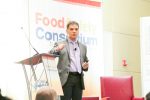
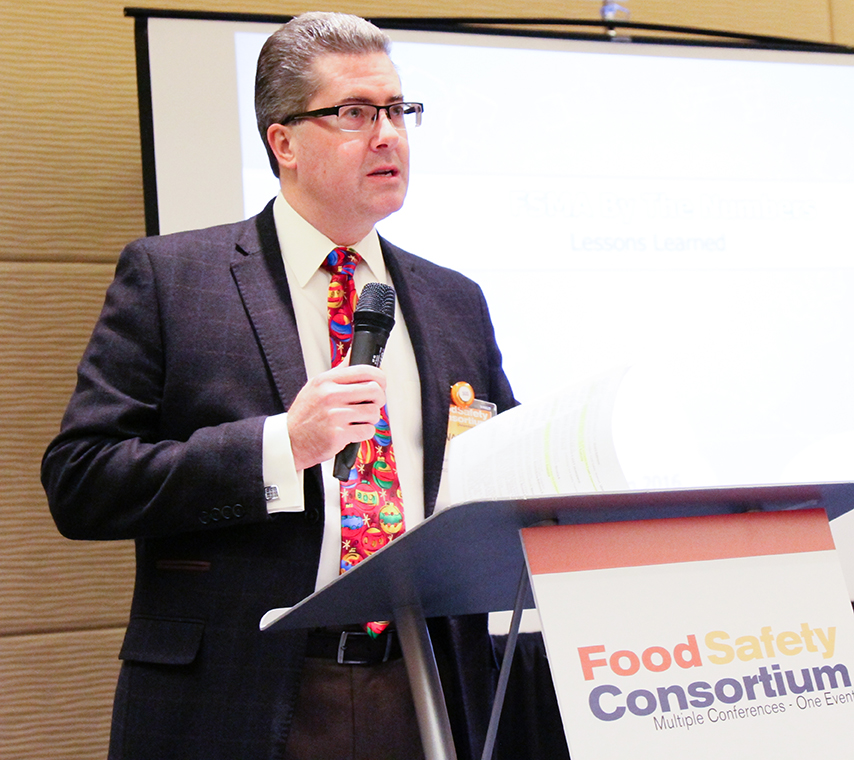
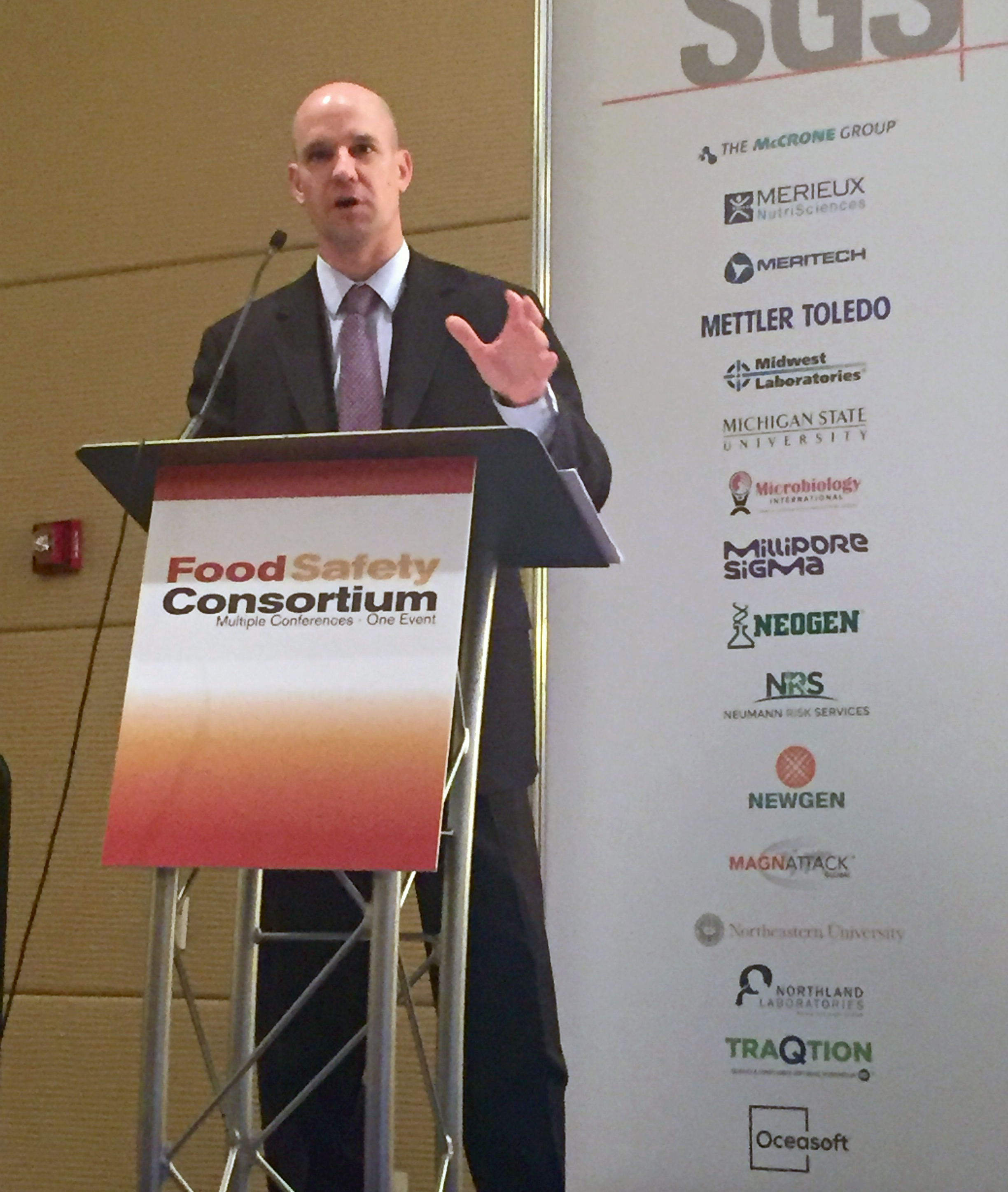
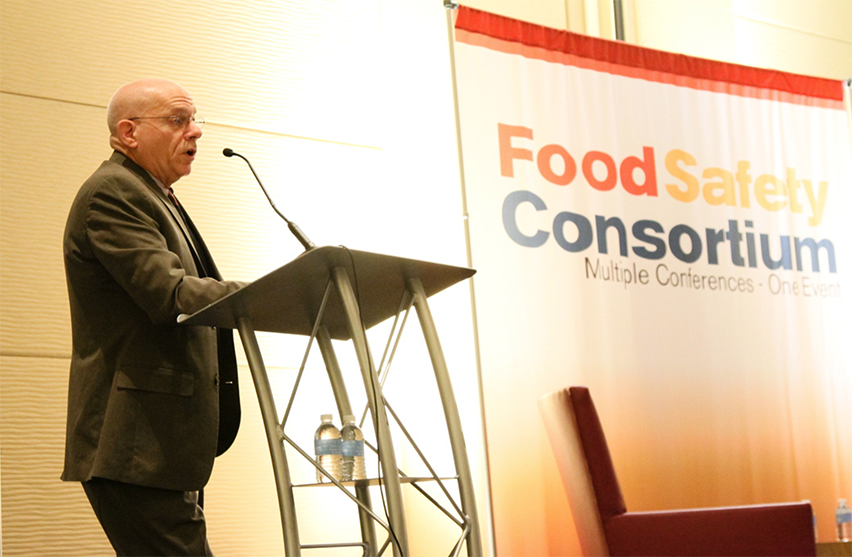
Frank Yiannas, Walmart, 2016 Food Safety Consortium

Moving Food Safety Culture Beyond Slogans

By Food Safety Tech Staff
1 Comment
Frank Yiannas, Walmart, 2016 Food Safety Consortium

“If you think about evolution and continuous improvement in food safety, it’s nothing new,” said Frank Yiannas, vice president of food safety at Walmart at the 2016 Food Safety Consortium. In the following video, Yiannas introduces his perspective on how food safety culture has evolved and moved beyond a slogan or buzzword.

Stay tuned for more video clips from Yiannas’ presentation at the Food Safety Consortium.

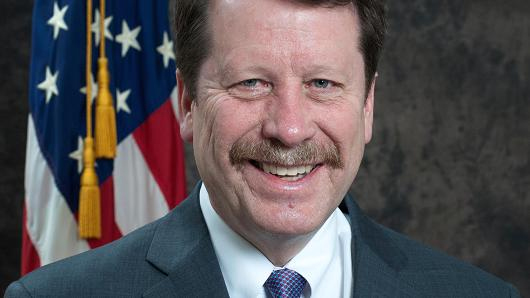
Robert Califf, FDA

Will FDA Commissioner Califf Leave Under Trump Administration?

By Food Safety Tech Staff
No Comments
Robert Califf, FDA

In a recent interview with The Washington Post, FDA Commissioner Robert Califf, M.D. said that President-elect Donald Trump’s transition team has not contacted him. Califf hasn’t even been head of the agency for a full year. It is rumored that if Califf leaves, Stephen Ostroff, M.D., deputy commissioner for foods and veterinary medicine, will step in (Ostroff has previously served as acting deputy commissioner of FDA). Ostroff stepped into his current role when Mike Taylor left FDA last June.

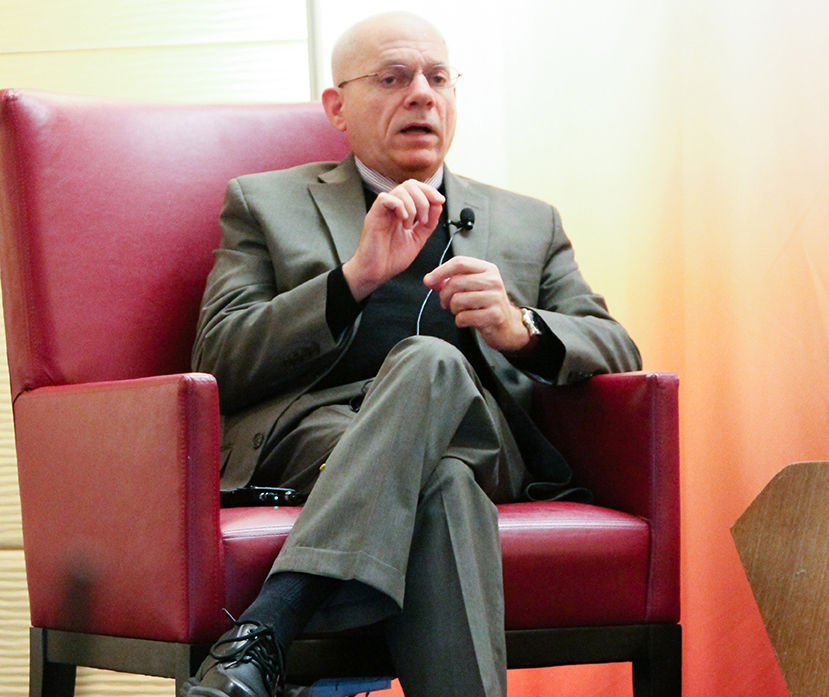
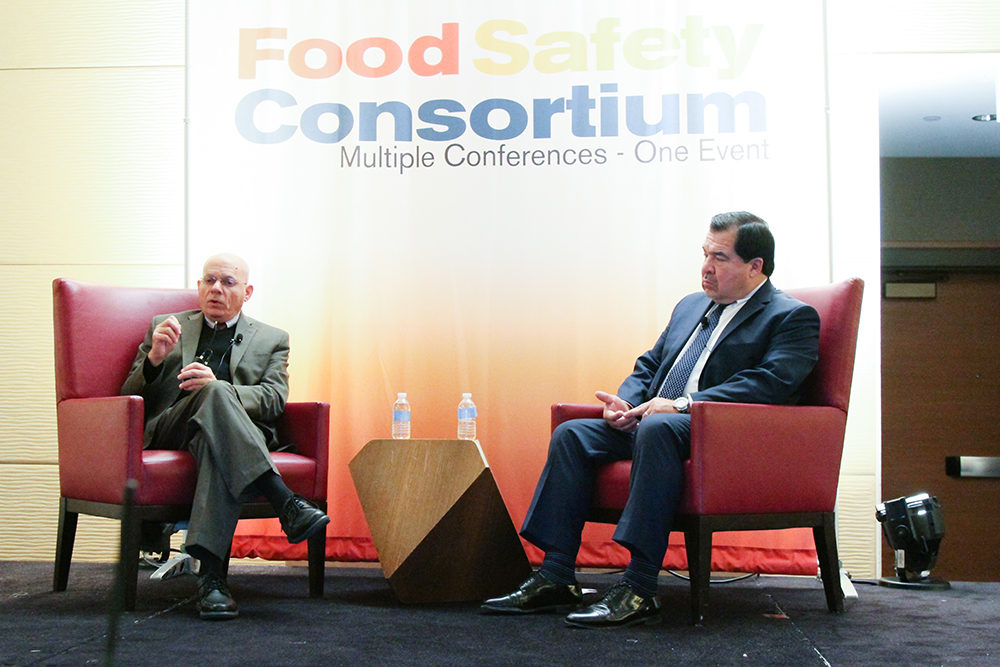
Stephen Ostroff, FDA, Food Safety Consortium In the following video, Stephen Ostroff, M.D. discusses: Are Final FSMA Rules Cast in Stone?


FBI, food safety, terrorism

FBI to Food Companies: Insider Threat Should Be Big Concern

By Maria Fontanazza
No Comments
FBI, food safety, terrorism

SA Scott Mahloch will present FBI’s Role in Food Defense on November 29 at the 2017 Food Safety Consortium | Learn moreIn most cases, contamination that occurs within a food facility is unintentional. However, it’s been documented that terrorists are interested in targeting the food sector, and as lone wolf attacks gain popularity, companies need to be able to identify and protect themselves against the insider threat, said Special Agent Scott Mahloch, weapons of mass destruction coordinator for the Chicago division of the FBI, at the 2016 Food Safety Consortium.

In the following video, Mahloch talks about FBI’s role in the food industry, explains how food companies can protect themselves against terrorism by identifying the insider threat, and discusses some of the FBI’s initiatives surrounding food defense. “One of the biggest concerns that we have is the disgruntled employee and the FBI really isn’t in the position to identify these people,” says Mahloch. “That’s going to be the frontline supervisors, the coworkers that can see somebody’s behavior that maybe deviates outside anything that they would recognize as being baseline behavior.”

Read the article: FBI Says Terrorists May Target Food Sector

FSC 2016

FSMA, Listeria, Fraud and Food Safety Culture Among Top Topics at Food Safety Consortium

By Maria Fontanazza
No Comments
FSC 2016

The 2016 Food Safety Consortium was a big success, from the preconference events that included the STOP Foodborne Illness fundraiser honoring heroes in food safety and the education workshops (SQF Information Day and preventive controls courses) to the record-breaking attendance we saw during the main program (with keynotes from FDA Deputy Commissioner for Foods and Veterinary Medicine Stephen Ostroff, M.D., Walmart’s Vice President of Food Safety Frank Yiannas, and FBI’s Special Agent Scott Mahloch).

As the event winded down, the leaders of each session track shared their insights on lessons learned during the Consortium.

Understanding biofilm and how it forms.  If you’re seeing peaks and valleys in the positives and negatives in your environmental swabbing program, you may have resident Listeria that has formed a biofilm, which requires a deep clean. Focus on biofilm, not just mitigation of the Listeria bacteria itself. – Gina Kramer, Savour Food Safety International. Read Gina’s column, Food Safety Think Tank, where she talks about the latest technology and innovations.

This is the first conference I’ve been to you where food fraud is being more widely acknowledged as a serious, important concern that is distinctly separate from food safety. One of the more significant takeaways is the number of tools that are now available for people to mitigate their risk to food fraud in the supply chain. – Steve Sklare, USP

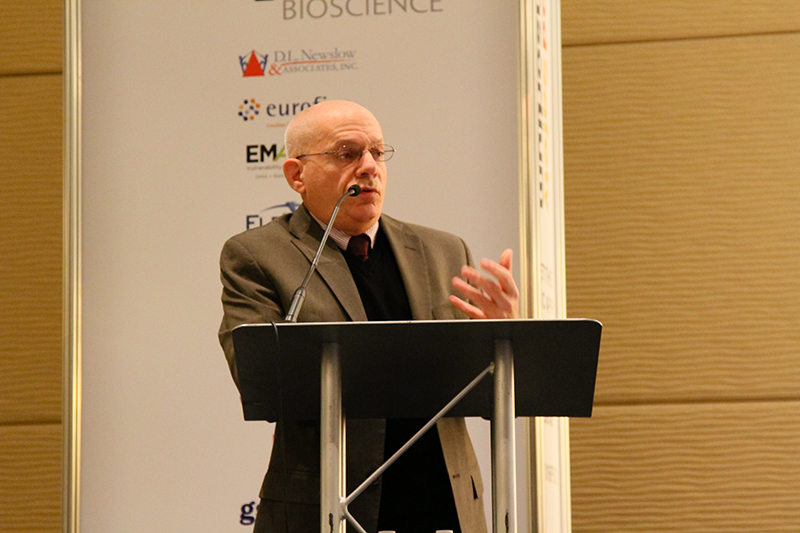
Warren Hojnacki, SGS

A while back food safety was a nice-to-have but not a need-to-have. It’s certainly an absolute need-to-have now. There are three groups of individuals out there: The third that has picked up the baton and is proactive, the other third that are in the middle of it right now, and the other third have their heads in the sand. I come across a sizable portion that is in the bottom third, and it’s slightly scary… It’s the documentation that a lot of companies are having the biggest challenge in dealing with—the death by paper. The resources out there are immense. It’s a necessity to have right now in order to be effective and compliant.  – Warren Hojnacki, SGS

FSMA regulations require us to be risk based, scientifically based and systematic in our approach to our concerns and issues. – Barb Hunt, Savour Food Safety International

There’s potential for greater data and actions: i.e., the microbiome study or particulate contamination analysis, PLM, IR spectroscopy, SEM EDS, [and] raman spectroscopy…Lab customers may need to depend more greatly on contract labs as FSMA develops and in return, labs need to work more closely with the customers to get dependable, defensive data results. – Eric Putnam, Wixon, Inc.

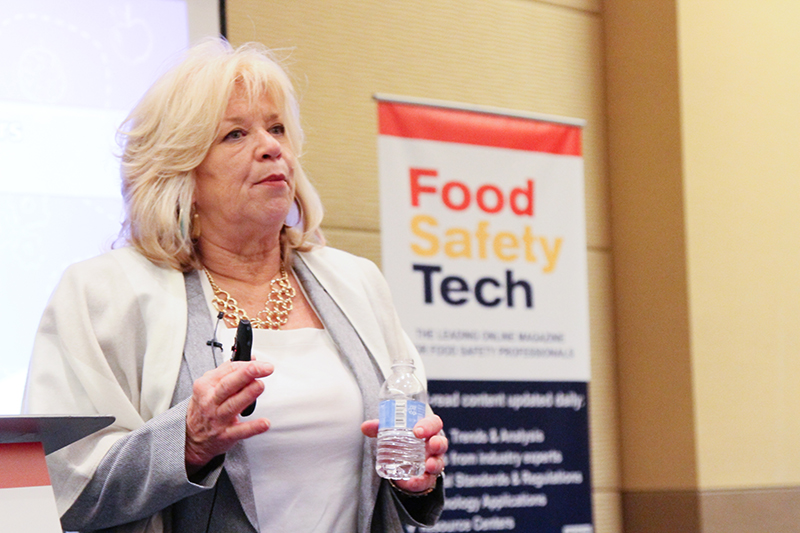
Trish Wester, PA Wester Consulting

We need to do a better job of messaging upstream to our corporate senior officials so we get the money and resources we need—there’s still a gap there. We need to find ways to communicate to them.  – Trish Wester, PA Wester Consulting

Stephen Ostroff, FDA, Food Safety Consortium

How Will FDA Gauge FSMA Success?

By Food Safety Tech Staff
No Comments
Stephen Ostroff, FDA, Food Safety Consortium

Stephen Ostroff, M.D. will keynote at the 2017 Food Safety Consortium on November 29 | Learn moreHow will the FDA gauge how well the food industry understands FSMA? This question was posed to agency Deputy Commissioner for Foods and Veterinary Medicine Stephen Ostroff, M.D. at the 2016 Food Safety Consortium.

While it will be important for FDA to have measures that it can use in assessing compliance, the process will take time. Watch Ostroff’s response in the following video.

Read the article: FDA on Enforcement: Our Goal Is to Help, Not Punish

FSC 2016, Ostroff and Almanza

Are Final FSMA Rules Cast in Stone?

By Food Safety Tech Staff
No Comments
FSC 2016, Ostroff and Almanza

Stephen Ostroff, M.D. will keynote at the 2017 Food Safety Consortium on November 29 | Learn moreEarlier this month Stephen Ostroff, M.D., deputy commissioner for foods and veterinary medicine at FDA, told attendees at the 2016 Food Safety Consortium about the agency’s commitment to a proactive food safety system. He also discussed FDA’s stance on criminal liability and took questions from the audience, one of which was:  Now that the FSMA rules are final, are they cast in stone? Does FDA have any flexibility in making changes. Listen to Ostroff’s answer in the following video.


ConAgra Subsidiary Slapped with Largest Criminal Fine Ever in Food Safety Case

By Food Safety Tech Staff
No Comments

Earlier this week ConAgra Grocery Products, LLC, a subsidiary of ConAgra Foods, Inc., was sentenced to pay $11.2 million after pleading guilty to a criminal misdemeanor charge related to shipping peanut butter contaminated with Salmonella. The $8 million criminal fine and forfeiture of $3.2 million in assets is the largest fine ever paid in a food safety case, according to the Department of Justice.

“This case demonstrates companies – both large and small – must be vigilant about food safety,” said Principal Deputy Assistant Attorney General Benjamin C. Mizer, head of the Justice Department’s Civil Division in a release.  “We rely every day on food processors and handlers to meet the high standards required to keep our food free of harmful contamination.”

Stephen Ostroff, 2016 Food Safety Consortium
WATCH THE VIDEO: Stephen Ostroff, M.D., FDA deputy commissioner for foods and veterinary medicine discussed the agency’s take on criminal liability at the 2016 Food Safety Consortium

ConAgra admitted that it introduced contaminated Peter Pan and private label peanut butter into interstate commerce (produced and shipped from the company’s facility in Sylvester, Georgia) during an outbreak of Salmonellosis in 2006. The company also admitted that it had been previously aware of the risk of Salmonella contamination in peanut butter dating back to 2004. Among the culprits of the contamination (as identified by company employees) were an old peanut roaster that did not uniformly heat the raw peanuts, a sugar silo damaged by a storm, and a leaky roof that permitted moisture to enter the facility, followed by airflow that may have pushed the contamination throughout the plant.

The company tried to address some of the issues, but the DOJ stated that ConAgra did not fully correct the situation until after the 2006–2007 outbreak.  “While ConAgra did take corrective action eventually, by failing to timely recognize and rectify the problem of salmonella contamination, this company damaged the health of both public consumers and of the agricultural industry overall.  I commend my staff, that of the Consumer Protection Branch of the Civil Division of the U.S. Department of Justice, and the investigators of the FDA, for the excellent work by all in bringing this incident to this conclusion and I hope that it will serve as a reminder to others in the industry of the high cost of failing to protect the public that relies on them to properly meet this responsibility.”

Watch Out, DOJ and FDA Prioritizing Prosecution

Scott Mahloch, FBI, Food Safety Consortium

FBI Says Terrorists May Target Food Sector

By Maria Fontanazza
2 Comments
Scott Mahloch, FBI, Food Safety Consortium

Many people associate terrorism with spectacular attacks such as those that occurred on September 11. However, lone wolf attacks are far more likely to happen in what has unfortunately become the new normal. “The last thing on your mind is a terrorist being interested in food. It does exist, and bad guys do have an interest in this area,” said Special Agent Scott Mahloch, weapons of mass destruction coordinator for the Chicago division of the FBI during the Food Safety Consortium last week. What does this mean for the food industry?

SA Scott Mahloch will present FBI’s Role in Food Defense on November 29 at the 2017 Food Safety Consortium | Learn moreAccording to the Department of Homeland Security, with 2.2 million farms and 900,000 restaurants in the United States, the food and agricultural sector accounts for 1/5 of the national economic activity. There are several industry targets for terrorism: Food processing facilities; food storage and distribution; restaurants, grocery stores and markets; commercial facilities; and cruise lines.

While Mahloch emphasized that there is no imminent threat to the food sector, one of the biggest areas of concern for this particular industry is the insider threat. “The insider threat is that person [who] knows the facilities, processes, distribution network and can cause the greatest impact,” said Mahloch. This can be in the form of a disgruntled employee who has or can gain access to equipment or other areas of a facility that would otherwise be secure and then introduce contaminants into food products. Mahloch stressed the important role that a food company plays in monitoring employees and reporting any deviation from normal behavior. This is not an easy task—in fact, it is the most difficult threat to detect, and the most difficult threat to protect against, Mahloch pointed out.

Insider Threat: The threat posed by an individual who exploits his/her position, credentials or employment to achieve trusted access to the means, processes, equipment, material, location, facility and/or target necessary to carry out a terrorist action.

The likelihood of an employee becoming an insider threat increases with a variety of personal factors, including financial need, feelings of anger or revenge, being a sympathizer with terrorist ideology, having problems at work, compulsive and destructive behavior, ego and family issues. Food organizations also open themselves up to vulnerabilities via the following:

  • Allowing easy access to restricted or sensitive areas within a facility (i.e., not limiting personnel access to certain areas or clearly labeling access controls)
  • Failure to have physical security controls over personal items that are either brought into or taken from the workplace
  • Vague security policies/Lax security perception
  • High employee turnover
  • Lack of proper employee vetting
  • Failure to train employees in proper security protocols
  • Failure to have consequences for violating security policy

Surveillance

When assessing the insider threat, what should food companies look for in an effort to protect their facility and products? “You’re the first line of defense,” said Mahloch. “We get a lot of phone calls where people run things by us. If something doesn’t seem right, say something.” He provided several key behaviors that may be characterized as suspicious in some instances:

  • Someone taking a photograph or video, or notes/sketches, of food processing operations or sensitive areas
  • Someone attempting to gain information about company operations, especially related to security and personnel, in person, or by phone or email
  • Someone conducting surveillance of self services areas such as salad bars, condiment stands or open bulk containers
  • Shipping area: Unscheduled deliveries, driver who is unfamiliar with facility delivery protocols, items left on dock at unusual hours, illegally parked or unattended vehicles, or shipping documents that don’t match

Be Proactive

Companies can take several preventive steps to protect their facilities, products and personnel. Proactive measures include:

  • Monitoring products for evidence of tampering, resealing or damage
  • Securing open containers of food or ingredients in storage areas
  • Controlling access to specific areas of facility by delivery personnel, employees, vendors and contractors, and general visitors
  • Securing loading dock area, and standardize delivery and pickup protocol
  • Developing a written food defense plan
  • Training employees, contractors and vendors to recognize suspicious activity and report it accordingly

Take Action

It’s important to stay alert and be aware—employee observations are critical, said Mahloch. Once suspicious activity is observed, the facility security officer or manager should be notified, and from there a decision can be made on whether external parties need to be involved. In general, state and local partners investigate an incident before the FBI gets involved.

“When it comes to intentional contamination [or a] terrorist incident—that’s an area that we investigate and ultimately prosecute,” said Mahloch. He emphasized the FBI is not a regulatory agency, so it would not show up at a facility due to a company’s lack of compliance to FSMA, for example. The agency is interested in food defense and intentional contamination that has the purpose of causing harm.

For more information about the FBI’s role in food defense, the agency has a document on its website that summarizes food defense for the industry, including some of the above-mentioned factors to look for when trying to identifying suspicious behavior. If a company wants to report suspicious activity that is not an emergency, it can call 1-855-TELL-FBI (1-855-835-5324).

FDA on Enforcement: Our Goal is To Help, Not Punish

By Maria Fontanazza
1 Comment

Over the past year and a half, much attention has been given the federal government’s commitment to prioritizing prosecution of food companies that engage in criminal behavior. In some instances, this has been used as a scare tactic, shining a spotlight on the executive responsibility of company executives.  Although focusing on executive liability isn’t necessarily a bad thing, Stephen Ostroff, M.D., deputy commissioner for foods and veterinary medicine at FDA, wants food manufacturers to know that FDA isn’t out to get them.

During yesterday’s opening keynote presentation at the 2016 Food Safety Consortium, Ostroff commented on FDA’s approach to enforcement. “I often have to scratch my head as why this has been such a tremendous concern in a regulated industry…sitting at FDA, we have not had any change in our thinking and approach about liability,” said Ostroff. “FDA pursues legal action against companies that are clearly negligent and clearly violating the law.” He emphasized that FDA’s goal moving into the FSMA compliance phase hasn’t changed; it’s about implementing a food safety system focused on preventive controls.

Ostroff encouraged attendees to look at the areas in which their food safety system is vulnerable, take proactive action and build redundancies into their system. “The best defense is to comply with the new requirements, and document how you are creating a food safety culture where everyone understands the expectations,” he added. “If you’re making a good faith attempt—our goal is to help you accomplish that goal, not to punish you for the attempts that you’ve made in good faith.”

The deputy commissioner also commented on the agency’s progress since FSMA’s seven rules were finalized in May, pointing out that these rules are foundational, and additional rules are to come. These rules will address lab accreditation, traceability related to imported products and a reportable food registry tool.

“If when we visit we identify very significant food safety hazards that we think pose an imminent risk of foodborne illness, we will have to take action.” – Stephen Ostroff, M.D.

Other key areas Ostroff discussed regarding agency progress and initiatives included:

  • Initial compliance date for FSMA Preventive Controls Rule (for large companies). FDA wants to be a partner in assisting companies with the preventive controls requirements. “That for us will require a lot of work on the part of those who are going to be conducting these inspections, but our goal is to help you and tell you in which areas you’re doing quite well and in which areas you can do better,” said Ostroff, adding that many of the aspects of the preventive controls rule are very similar to what many companies have already done.
  • Foodborne outbreaks. With several outbreaks in the 2015–2016 timeframe (ice cream–Listeriosis; cilantro–cyclospora; cucumbers­–Salmonellosis; Mexican-style fast food–E.coli O26; flour–E.coli O121), the Inspector General expressed concern over the FDA recall process and criticized the agency for not having  better defined timeframes. In response to that report, FDA implemented the SCORE (Strategic Coordinated Outbreak Response and Evaluation) team, which guides concrete action plans for measures that the agency must take in the areas of recalls, for example. The team consists of decision makers from key operations and enforcement offices with a goal of expediting the evaluation of compliance and enforcement options. Since April, SCORE has addressed flour contaminated with peanut protein, facilities contaminated with Listeria, Salmonella in pistachios, and baby food that was not manufactured in compliance with infant formula regulations.
  • Antimicrobial resistance. The issue is “getting attention at the highest levels of government,” said Ostroff, adding that the best way to address antimicrobial resistance is to not have to treat it in the first place—and to do this is through reducing the incidence foodborne illness. The agency is moving forward in several areas here, including addressing non-judicial use of food animals and veterinary settings; enhancing NARMS data and isolate collection; and collecting data on antimicrobial sales by species.
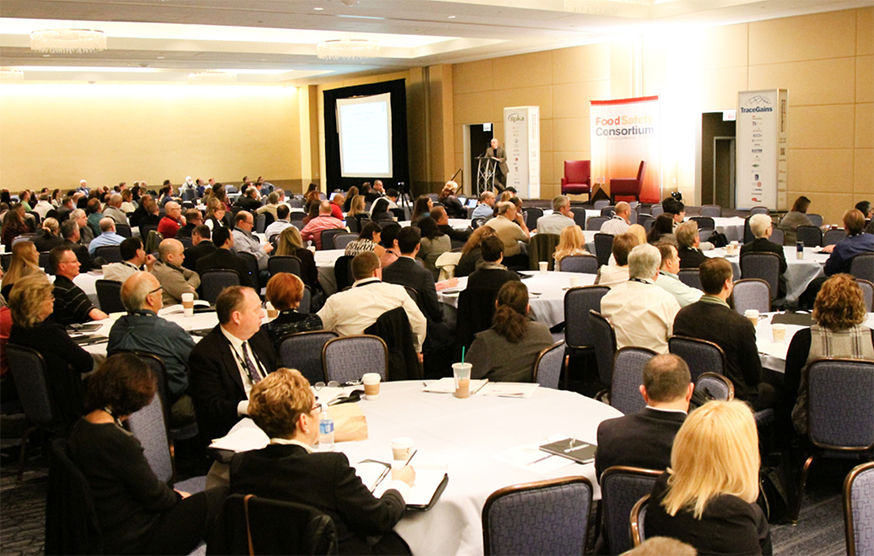
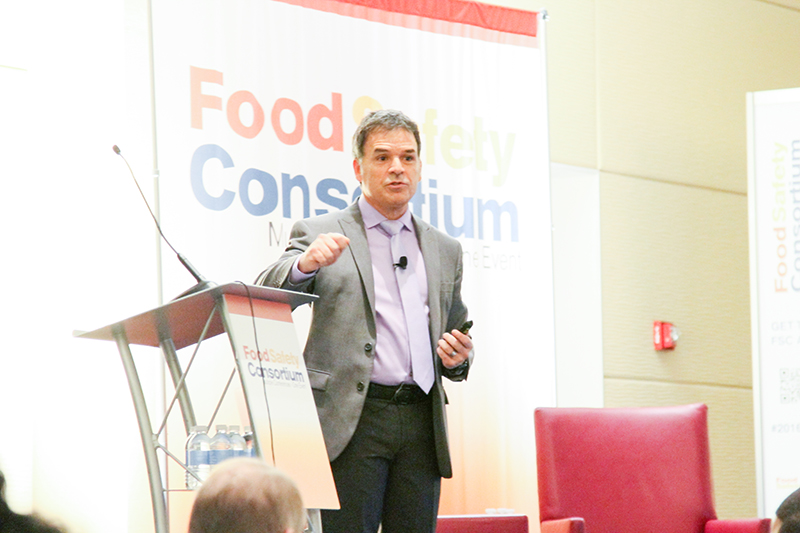
Attendees listen to Stephen Ostroff, M.D., deputy commissioner for foods and veterinary medicine at FDA, give the keynote presentation at the 2016 Food Safety Consortium.

During the Town Hall part of the presentation, Ostroff was asked, with the finalization of the FSMA rules, are they cast in stone? His answer: Not necessarily. “It took five years to get in place…because we did it in a very systematic way with a lot of stakeholder input. When you put together rules that are this complicated, there’s no guarantee that you got everything right,” he said. “[We] have to recognize that sometimes some of the flaws don’t become apparent into you implement them. You always have to be of the mindset that if everything didn’t work out exactly the way things were anticipated…we always have to be open to the fact that as we move forward and implement the rules, we might have to make course corrections.”

STOP Foodborne Illness

STOP Shines Spotlight on Commitment to Fight for Safe Food

By Food Safety Tech Staff
No Comments
STOP Foodborne Illness

Last night STOP Foodborne Illness recognized food safety heroes for their dedication to food safety. The fundraiser was held during the 2016 Food Safety Consortium.

Jeff Almer, STOP Foodborne Illness
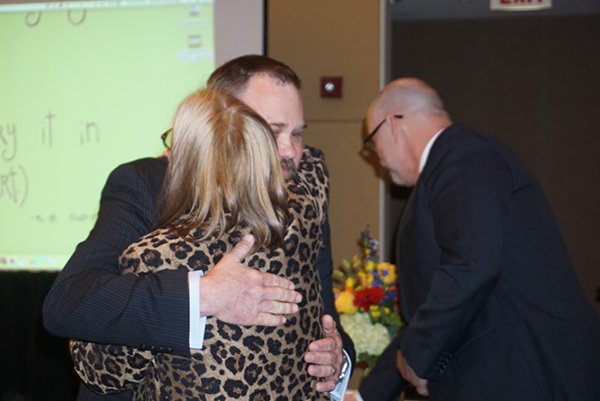
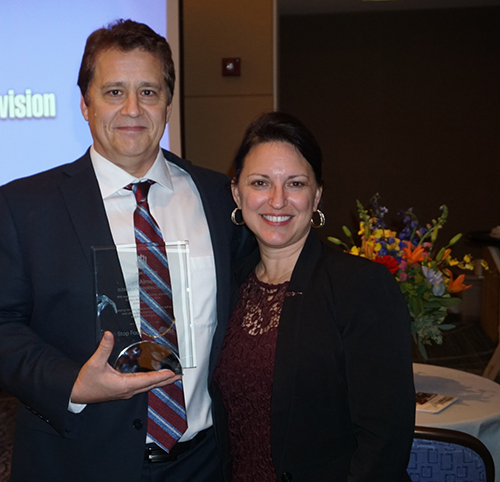
Jeff Almer received the Food Safety Hero award for his work in bringing attention to the Salmonella outbreak involving Peanut Corporation of America. The illness took the life of Almer’s mother. Almer received the award from Gina Kramer, executive director of Savour Food Safety International.
LGMA, STOP Foodborne Illness
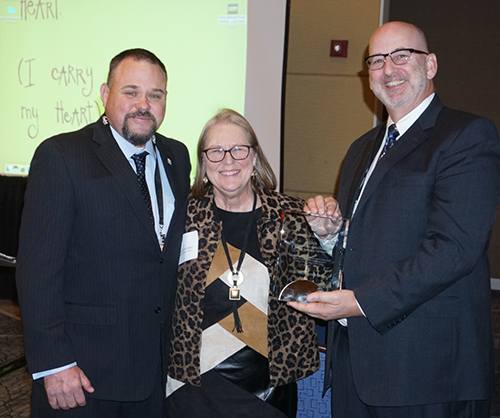
Dan Sutton (left) and Scott Horsfall (right) accepted the Food Safety Training Award on behalf of California Leafy Green Marketing Association from Deirdre Schlunegger (middle), CEO of STOP Foodborne Illness.
Tauxe, STOP Foodborne Illness
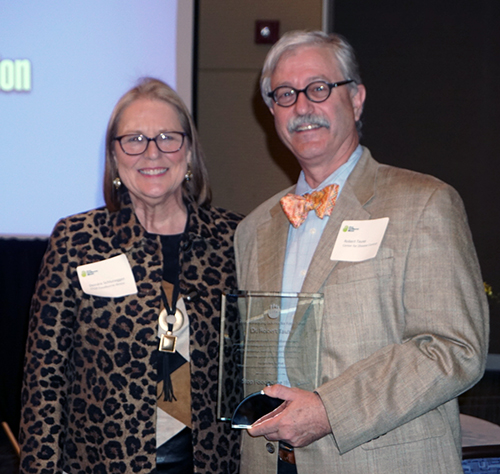
Robert Tauxe, M.D., MPH, deputy director of the CDC’s Division of Foodborne, Waterborne and Environmental Diseases at the National Center for Emerging and Zoonotic Infectious Diseases received the Advancing Science for Food Safety Award.