Tag Archives: Focus Article

Hank Lambert, Pure Bioscience

Antimicrobial Technology Mitigates Pathogen Risk Throughout Supply Chain

By Food Safety Tech Staff
No Comments
Hank Lambert, Pure Bioscience

Learn more about mitigate risks in the supply chain by attending the Food Safety Supply Chain Conference, June 5–6, 2017 in Rockville, MD | LEARN MOREEver heard of silver dihydrogen citrate (SDC)? The patented molecule is a new antimicrobial being used to kill potentially deadly pathogens in places from food processing facilities to restaurants. SDC is non-toxic and has an EPA toxicity rating of IV (the lowest category).

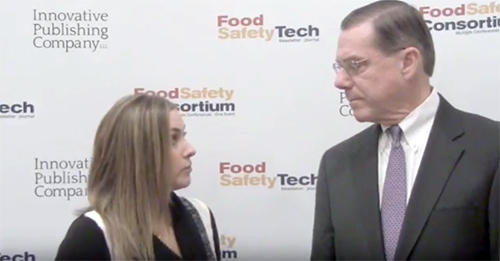
At the Food Safety Consortium last month, Hank Lambert, CEO of Pure Bioscience, talked about how the technology his company developed can help the food industry control pathogens (including Listeria mitigation), along with its differentiating characteristics versus other disinfectants. He also gave a preview of the applications in which the company will pursue FDA and USDA approval this year.


Trump Administration Puts Gag Order on Federal Agencies

By Food Safety Tech Staff
4 Comments

After only a few days in office, President Trump and his administration have placed a gag order on federal agencies, including the USDA and EPA. Workers are barred from communicating with the press, the public or members of Congress, according to several outlets. A memo was reportedly sent to the EPA, instructing the agency not to publish any press releases, social media posts or blogs until told otherwise.

The Washington Post  reports that the chief of the USDA’s Agricultural Research Service (ARS) Sharon Drumm sent an email to staff stating, “Starting immediately and until further notice, ARS will not release any public-facing documents. This includes, but is not limited to, news releases, photos, fact sheets, news feeds, and social media content.” However, another memo sent out today by USDA Acting Deputy Administrator Michael Young said that he did not review the ARS guidance and would not have sent out such a draft. According to the Post, “his guidance does not place a gag order on publication to scientific journals, does not place a blanket freeze on press releases, or prohibit food safety announcements.”

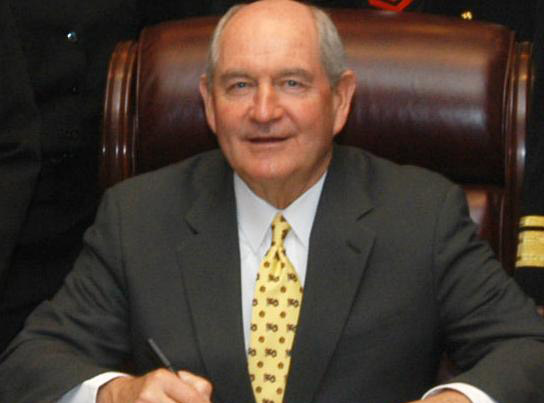
Earlier this week, President Trump nominated Sonny Perdue, former governor of Georgia, to lead the USDA.

Jeff Rieger, Digi International
Retail Food Safety Forum

IoT a Key Ingredient for Food Safety

By Jeff Rieger
2 Comments
Jeff Rieger, Digi International

The Internet of Things (IoT) is the concept that everything will one day be connected, similar to when computers became networked and connected with the internet. A sensor in a walk-in freezer is now smart enough to communicate directly with the smartphone in your pocket and a computer at the office, all in real-time. This is what IoT is all about, bringing more information to our fingertips in order to make faster, more informed decisions.

These new technologies are beginning to intersect and create new solutions to old problems, such as periodically monitoring the temperature of equipment in a restaurant or the trailer of a refrigerated truck. Savvy operators who understand changing food safety regulatory demands are driving the adoption of these technologies that ease the transition towards ongoing compliance. Food safety technology is changing, and what follows are a few of the driving forces.

Smartphones, Tablets and Cloud Computing Create Ready-made Environment

Apple launched the first iPhone in 2007 and within six years, 50% of the U.S. population was using a smartphone and/or tablet. Another market event that helped create the foundation for IoT was the growth of the “cloud” model where organizations could “rent” hardware, software and data storage. When coupled with new affordable wireless networking capabilities (WiFi, Bluetooth) and expanded cellular coverage at decreased cost rates for data, it became economically viable for nearly any size company operating in the foodservice industry to collect, store and access data.

Over the course of the last decade, we’ve become more comfortable living in a connected world and, as the technology has matured, businesses started to look at how smart devices could be used to improve operational efficiency and outdated food safety protocols. Instead of manually checking equipment temperatures, wireless sensors are now connecting refrigerators and other temperature controlled environments to the cloud. Any operator with a smartphone is now able to view these temperatures (or receive alerts) in real-time to ensure equipment and product temperatures meet company standards and local regulatory requirements.

Heightened Diligence by Oversight Agencies, Increased Consumer Activism and Brand Protection Concern

The responsibility for food safety spans both national (FDA/USDA/CDC) and local (state and county health department) organizations. FSMA has widened these responsibilities across the cold chain. With limited resources, operators are being asked to adopt new regulations and do their part to ensure the integrity of the product that is being stored and/or transported.

In addition, consumers have become increasingly self-aware regarding various food-related issues, including oversight and traceability (i.e.  labeling, processing, etc.). This same general trend can be seen where consumers are now expecting ongoing food safety inspections and access to inspection results online. This puts more pressure on operators to ensure guidelines are met and inspections are passed.

Finally, restaurants are becoming more proactive in protecting their brand. The idea of keeping any incidents limited to the awareness of only the few that were involved is a thing of the past. Forward-thinking restaurants realize that social media has changed the landscape, and what was once a single-store minor infraction can now cause franchise-wide problems. Additionally, food safety is just good business. Restaurants have moved beyond following procedures as a necessary hurdle to now actively following and implementing best practices and policies in order to achieve operational efficiency and elevate their brand reputation.

IoT the Enabler of a Data-driven Business

Simply put, the internet has reshaped all businesses, so why not restaurants and the cold chain? With the availability of “ready-made tech”, sensors can connect to front-of-house and back-of-house environments to monitor temperature (frozen, refrigerated, ambient, hot-holding) in all types of equipment (walk-in refrigerators and freezers, under-counter coolers, showcase units and sandwich lines)  to continuously and wirelessly monitor temperature and send alerts if the proper temperature is not maintained.

Data gathering can also be extended to incorporate digital task management capabilities to replace traditional Hazard Analysis and Critical Control Points (HACCP) manual logbooks and simplify daily restaurant tasks. Organizations can streamline manual operational checklists and provide insight to managers on how well their teams are adhering to restaurant guidelines.

Restaurants now have an important tool to address the two sides of food safety—prevention and traceability. Additionally, through capturing larger data sets, restaurants can move from anecdotal guesswork to implementing data-based best practices. The ingredients are now in place for restaurants to offer the highest levels of food safety and quality that the industry has ever enjoyed.

Sonny Perdue, USDA

Trump Names Sonny Perdue to Head USDA

By Food Safety Tech Staff
No Comments
Sonny Perdue, USDA

This morning President-elect Donald Trump named Sonny Perdue, former governor of Georgia, to lead the USDA. The new agriculture secretary grew up on a farm in Georgia, has a doctorate in veterinary medicine, and owns the firm Perdue Partners, LLC, a global trading firm specializing in exporting U.S. goods.

His farming experience will be seen as a plus by many folks in the agriculture industry. However, the selection of Perdue also means there will be no Latinos in Trump’s Cabinet (this hasn’t happened since the Reagan administration).

Key issues in the agriculture sector that Trump’s administration will need to address include the 2018 farm bill, immigrant labor, the decline of farm income, and the Trans-Pacific Partnership.

FSMA, One Year Later: Top 5 Things We’ve Learned

By Erika Miller
No Comments

Now that the first of the FSMA compliance dates have passed, let’s look back at the past year of training new PCQIs, their questions and concerns from classes as well as the perspective from our FDA friends (yes, really!) who attended our workshops. We have learned so much, it is hard to narrow it down to only five things—but if we look at the issues that arose, the following five proved to be recurring themes throughout 2016.

5. Don’t Scrap Your Current Plan

Many clients have approached us and said they were planning to throw their current food safety and/or HACCP plan in the trash and start from scratch. Please don’t do this! Companies that care about quality and food safety already have effective quality management systems in place. It would be a disservice to the company and the general public for all these time-tested plans to go straight into the bin. It is more realistic to take a look at the current system in light of the new regulation and ask yourself if there are any gaps that can be addressed. This brings us to the next point.

4. Education Is Key

A compliant system cannot be developed without an understanding of the requirements. Although FSMA is derived from the basic principles of HACCP, there are key differences, and not all of them in the direction of less regulation. It is important to understand not only the updated Good Manufacturing Practices and Preventive Controls for both Human and Animal food, but also the Foreign Supplier Verification Program, Sanitary Transportation and the Produce Rule (if they apply). Although the FDA-recognized curriculum for some of these companion regulations have not yet been released, some independent training providers are offering workshops to help fill the gap while the FDA and FSPCA are working on the official curriculum. (Comment on this article for more information via email).

3. “You Must Evaluate If You Need It” Is Not the Same as “You Don’t Need It”

Some training providers have told their attendees that they can scrap many of their current systems because FSMA is less stringent than GFSI-approved schemes. Your certification body for FSSC 22000, SQF or BRC does not care one whit how stringent FSMA is (as long as you are compliant with its requirements, as local regulatory compliance is a key factor in GFSI approval). FSMA will not change expectations related to the GFSI-approved food safety schemes. It is also misleading to think that because FSMA is flexible, FDA regulators will not have expectations of excellence when they arrive at food processing facilities. This law gives regulators the power to take legal actions to address many infractions they have seen over the years but have been powerless to stop; the flexibility may well be a double-edged sword in that regard. Ensure that all decisions are based on data and records exist to validate any claims.

Food lab testing

Infographic: Who Outsources Pathogen Testing?

By Maria Fontanazza
No Comments
Food lab testing

Pathogen testing of food samples, whether in-plant or outsourced, is a critical task. Although some companies find it more cost-effective (and they have the capabilities) to conduct testing in-house, other companies don’t want to touch it due to cost and potential risk.

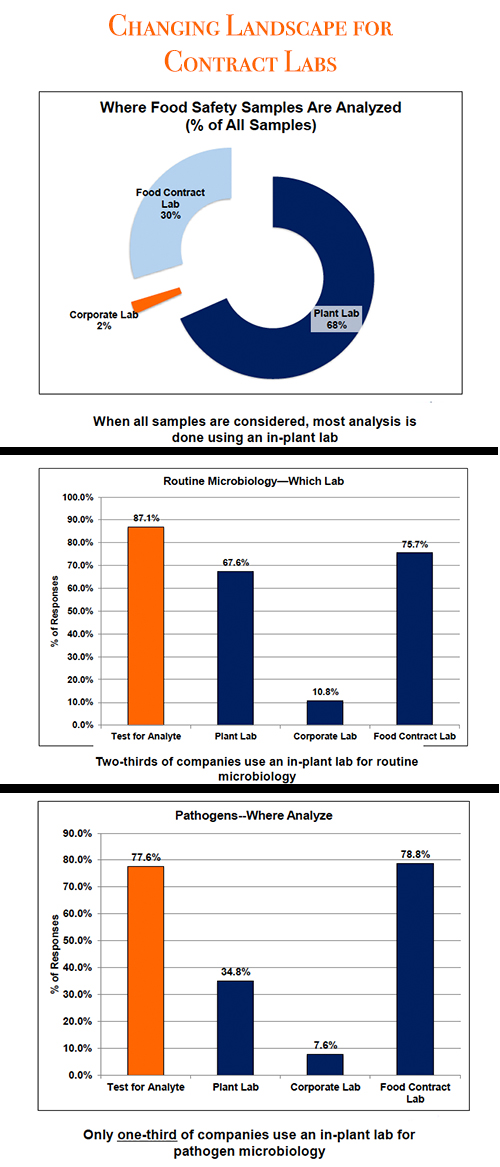
“Food processors are far more comfortable analyzing samples for nutritional parameters, contaminants and routine microbiology in an in-plant lab, but fewer are comfortable running pathogen tests in-plant,” stated Bob Ferguson of Strategic Consulting in the Food Safety Tech article, Changing Landscape for Selecting a Food Safety Contract Laboratory.

According to Ferguson, some of the factors that lead food processors to outsource pathogen testing include:

  • Need for skilled analysts (including recruiting and maintaining accreditations
  • Lab accreditation (just 20% of food company labs are accredited)
  • Analytical methods require complex equipment, which can be expensive to maintain
  • Risk of in-house pathogen contamination
  • Company size

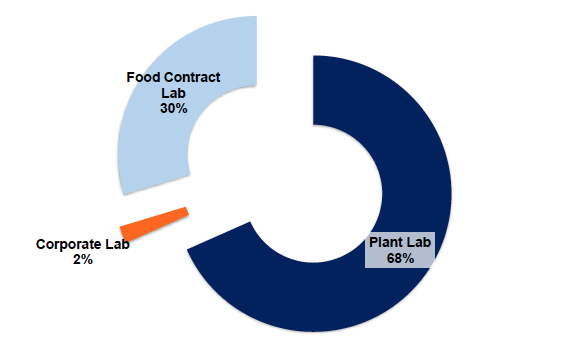
The below infographic reveals some of the findings, discussed at the 2016 Food Safety Consortium, of a survey conducted of more than 100 food processing customers of food contract laboratories.


Food contract labs
Information gathered as part of Strategic Consulting’s survey of food processing customers of food contract labs. Graphics courtesy of Strategic Consulting.
FDA

FDA Revises Draft Guidance for Listeria Control in RTE Foods

By Food Safety Tech Staff
No Comments
FDA

Any food facility that manufactures, processes, packs or holds ready-to-eat (RTE) foods should view FDA’s update on its draft guidance, Control of Listeria monocytogenes in Ready-To-Eat Foods. Consistent with FSMA, the draft focuses on prevention, and includes best practices and FSIS’s seek-and-destroy approach. Other recommendations include controls involving personnel, cleaning and maintenance of equipment, sanitation, treatments that kill Lm, and formulations that prevent Lm from growing during food storage (occurring between production and consumption).

“This guidance is not directed to processors of RTE foods that receive a listericidal control measure applied to the food in the final package, or applied to the food just prior to packaging in a system that adequately shields the product and food contact surfaces of the packaging from contamination from the food processing environment.” – FDA

The agency will begin accepting comments on January 17.

Stephen Ostroff, 2016 Food Safety Consortium

Ask the FDA: Recognizing Third Party Accreditation Bodies

By Food Safety Tech Staff
1 Comment
Stephen Ostroff, 2016 Food Safety Consortium

READ: The Multi-Step Process of Third-Party Accreditation Stephen Ostroff, M.D. will keynote at the 2017 Food Safety Consortium on November 29 | Learn moreDuring a Town Hall at the 2016 Food Safety Consortium, FDA Deputy Commissioner for Foods and Veterinary Medicine Stephen Ostroff, M.D. answers an attendee’s question about the agency’s guidance, Third-Party Certification Body Accreditation for Food Safety Audits: Model Accreditation Standards and what progress FDA has made in recognizing accreditation bodies.

Recall

Persistent Strain of Salmonella Triggering Dozens of Recalls

By Food Safety Tech Staff
No Comments
Recall

The recalls involving powdered milk continue to pile up.

Since December, more than a dozen products containing powdered milk have been recalled due to the risk of Salmonella, including mini eclairs and cream puffs, mac & cheese products, chocolate-covered pretzels, potato chips, seasonings and white peppermint Hostess Twinkies.

Back in November, FDA seized more than 4 million pounds of dry nonfat milk powder and buttermilk powder produced by Valley Milk Products, LLC. The agency used whole genome sequencing to make the connection between the samples that were collected in the facility—Salmonella strains were found from samples taken in 2016 and back to 2010. FDA identified it as a persistent strain of the pathogen.

“FDA investigators observed residues on internal parts of the processing equipment after it had been cleaned by the company and water dripping from the ceiling onto food manufacturing equipment. In addition, environmental swabs collected during the inspection confirmed the presence of Salmonella meleagridis on surfaces food came into contact with after being pasteurized.” – FDA news release

To date, no illnesses have been reported.

Lance Roberie, D.L. Newslow
FST Soapbox

Is Food-Grade always Food-Safe?

By Lance Roberie
No Comments
Lance Roberie, D.L. Newslow

What? Why would food-grade not be food-safe?  What is the difference between food-grade and food-safe? Doesn’t it mean the same thing? These may be some of your initial thoughts. So, what is the difference between food-grade and food-safe? Food-grade means that the material is fit for human consumption or permitted to come in contact with food. 21 CFR 174-178 for example, can be used to verify if a component is an appropriately regulated indirect additive and considered GRAS (Generally Recognized as Safe) for its intended use. But are food contact materials sometimes utilized for something other than its intended use? You bet your 483 they are. This is an important component that is often overlooked. Just because that material is permitted to come in contact with food, it doesn’t necessarily mean it is food-safe. Food-safe means that the food-grade material is also fit for purpose for its intended use and will not create a food-safety hazard. For example, it may be fit for purpose to use a food-grade container to hold a dry ingredient but that same container may not be fit for purpose to be used to hold a hot liquid. Section 117.40 in Subpart B of FSMA states: “Food-contact surfaces must be made of nontoxic materials and designed to withstand the environment of their intended use and the action of food, and, if applicable, cleaning compounds, sanitizing agents, and cleaning procedures”. Processors will be called upon more than ever to prove that food contact materials are indeed safe and “fit for purpose” or safe for its intended use. The practice of simply having a certificate of conformance stating that your food contact materials are food-grade will likely no longer be good enough. If you are familiar with GFSI and its standards, you already know that simply having a certificate of conformance for food contact materials is unacceptable if the manufacturer/supplier doesn’t acknowledge that the material is safe to use under the conditions in which you will use them (i.e., for its intended use). So, asking your supplier a few more questions about your food contact materials can go a long way when conducting an in-depth hazard analysis and a food-safety risk assessment. Some common questions are:

  • What is the recommended safe temperature range for this material?
  • Is this material safe for the type of food that it is contacting (i.e., fat percentage, pH, moisture percentage, etc.)?
  • Will the material physically hold up to the manufacturing environment for which it is being used?

You also need to think about how the material is constructed. Does it have pieces/parts that can be accidently removed during use, such as a pail with an attached handle that often falls apart and can potentially make its way into the product stream? Or maybe a cleaning brush that often loses its bristles. Does the material/equipment have seams, and are those seams smooth and cleanable?  When evaluating equipment, always make sure it is designed for the intended use. If equipment is not designed for its intended use, it can often render it ineffective and depending on how critical the process, significantly increase a food-safety risk. Choosing materials that are “food-safe” can be just as important as choosing materials that are “food-grade”.

Have you ever heard someone say “it’s only a trash can if you put trash in it”?  What does that mean exactly? It usually means that containers designed for trash may be used to hold food ingredients or products intended for human consumption. What is the potential risk in that situation? Is that container safe for food contact? It is obviously not the intended use and adulterated product may be the end result. So how does someone determine if the food contact material is “food-safe”?  There are several third-party certification companies that verify food equipment and/or food contact materials are indeed “food-safe”, including HACCP International, NSF and 3A. If the material or product that you are evaluating does not have one of these certifications, then the burden is on you to properly risk assess the potential hazards of your operation and to prove to your customers and regulatory bodies that your process is food-safe. So, during your next food-safety team meeting, challenge your team members to take a good, hard look at everything that comes in contact with the food stream and ask, “is this truly ‘food-safe’?”