

Tag Archives: Focus Article

Katy Jones, Foodlogiq
FST Soapbox

Mitigating Supply Chain Risk with Transparency and Traceability

By Katy Jones
No Comments
Katy Jones, Foodlogiq

Attend the Food Safety Supply Chain Conference, June 5–6, 2017 in Rockville, MD | LEARN MOREA recent study from The Hartman Group on the topic of transparency found that consumers are becoming more concerned about imports and the safety standards behind companies producing food and beverage products beyond U.S. borders.

So with the drastic rise in consumer expectations for food quality and safety in the past few years, how can companies ensure they’re mitigating risks in the supply chain while fostering transparency to meet consumer expectations?

To our benefit, the focus of the broader food industry and the government, as well as innovations in technology, are making it easier than ever to comprehensively track the supply chain.

Another Day, Another Food Recall, Another Listeria Scare

In today’s reality, whether we like it or not, food recalls are an inevitable part of the food industry, and adulteration in the supply chain is a key safety issue. With the wellbeing of consumers at stake, if a contamination finds its way into a brand’s supply chain, the best possible course of action is to take action on a recall using impeccable supply chain records and monitor the affected product moving throughout the chain.

With recalls being here to stay in the food industry, companies need to be prepared to handle these issues quickly and effectively. By implementing supplier management and whole-chain traceability software, allergens and impurities can be pinpointed to a specific lot of product as opposed to being limited to processing/issue date, and not knowing the source or country of origin of every ingredient (as many suppliers can contribute to one product) within the supply chain.

Additionally, with these technologies, brands can keep their supply chain transparent and compliant with growing industry regulations. With consumer standards on the line, proactive transparency can ensure that a company has a plan of attack when the inevitable hits.

A Targeted and Precise Plan

Companies and brands need to broaden their definition of food safety in order to manage and satisfy an expanded set of consumer expectations. The traditional, linear “one-up and one-back” (OUOB) approach to supply chain is no longer acceptable when it comes to comprehensive supply chain transparency.

Consumers need a targeted and precise plan when dealing with the safety of their food—it’s no longer just about whether the food safe to eat. The definition has expanded to include safety around ingredients and country of origin. Awareness of where a product came from and where it is going next is not an acceptable method if a company wishes to foster transparency with customers and effectively manage recalls. In addition, these standards are emphasized by federal regulations like the FSMA and FSVP—the industry is now shifting towards preventative approaches to safety matters, as opposed to reactive. FSMA requires food manufacturers to increase focus on prevention rather than response to contamination incidents, which will require a comprehensive view of the entire supply chain.

Brands will need to develop strong food safety plans with streamlined audits and compliance records, verifying supply chain partners and executing corrective actions for suppliers that are not in compliance with the process and food safety plan set in place. In establishing this process, having the technology to support it is paramount in ensuring that suppliers are sticking to the food safety practices necessary to follow industry regulation and exceed consumer expectation.

Transparency in Today’s Complex Food Paradigm

As the global food supply continues to grow in volume and complexity, brands have an opportunity and an obligation to adapt to the food paradigm. According to a Label Insight study, 94% of consumers say transparency from food brands is the #1 factor that impacts purchase. Brands are no longer able to blame a supplier’s lack of transparency or unreliable records for exposing consumers to unsafe products but instead, the brand is solely held accountable.

Transparency and proactivity were optional in the past, but are now established as fundamental components of a brand’s safety plan if they are to adapt to the changing industry landscape as well as consumer demand. As recalls are bound to happen, proactivity and transparency can ensure that a company is one step ahead of an outbreak at all times.

The fact is, adapting to this shifting environment and aligning with these best practices and the technologies that enable them is critical to the success of the supplier, distributor and across the whole supply chain. Food companies must look to utilize big data analytics and intelligent supply chain mapping technologies in order to improve transparency and increase traceability. With the ability to track ingredients back and forth across the supply chain, these technologies enable a safer consumer experience as well as provide tremendous business value in eliminating inefficiencies, managing supply chain issues, and effectively protecting the brand with the insights offered.


Gregory Siragusa, Eurofins
Food Genomics

Introducing a New Column: Food Genomics

By Gregory Siragusa, Douglas Marshall, Ph.D.
No Comments
Gregory Siragusa, Eurofins

DNA sequencing can be used to determine the names, types, and proportions of microorganisms, the component species in a food sample, and track foodborne disease agents.  Here we introduce a column exploring aspects and applications of these new techniques, known collectively as food genomics. Each month we will provide take-home knowledge in which every food safety scientist should be familiar.

Gregory Siragusa, Eurofins
Gregory Siragusa will be presenting Microbiome Applications in Controlling Food Spoilage and Safety  during the 2016 Food Safety Consortium

We live in an exciting time of great change in all of biological and food sciences. In fact, it is not an overstatement to claim that a large portion of the fields of food science, biology, agriculture and medicine will be reformed in what has been called the post-genomics era or simply the genomics era. Food science and food microbiology are major players in this pack and moving in the fast track of these changes. This game-changing technology is fueled by the convergence of two rapidly evolving fields: DNA sequencing and the analysis of that sequencing data (i.e., bioinformatics).

The common jargon uses the acronym NGS for Next Generation Sequencing. NGS refers to the most updated automated DNA sequencing technology available. In several ways, sequencing can be considered a commodity service; hence its price has dropped and its availability is now widespread. What does this mean? A useful analogy is the following: Think of trying to publish a book you wrote. Would you go out, buy a printing press, paper, ink, binding machinery, and produce thousands of copies of your book, or, would you go to a professional printer and get them to print and manufacture copies?  For most, the simplicity and experience of the professional print master trumps the do-it-yourself route.  Once sequence data is obtained, what is next in the process of using that data? Analysis of sequence data is a specialized field called bioinformatics and has its own  expert practitioners. It is a field of study that is a hybrid combination of mathematics, statistics, computer science, and biology. Bioinformatics analyzes the very large datasets produced by NGS and will be increasingly dependent on the internet cloud for its utility to be fully realized.

How will food genomics impact food safety and quality? How will it help in identifying the sources of outbreaks in a fraction of the time it once took? What will this mean for zero-tolerance, for pathogen control, and for responsibilities and liabilities of food producers and processors?  There is a growing body of examples and literature that begins to apply genomics and microbiomics to the quality of food and sources of its microbial populations.5-7

Over the course of this column, we will be exploring several examples to alert the reader to the myriad of uses of genomics for solving food production issues.

Genomics (NGS and Bioinformatics) are the basis of the US-FDA GenomeTrakr program.1  Genomics offers an alternative means to serotype Salmonella isolates using DNA sequencing.2 There are several examples of using sequencing of solving the epidemiological source of foodborne microbial outbreaks by comparing the entire bacterial genomes of clinical and food isolates.3,4

One powerful application of genomics is to conduct the census of microbial communities to identify the microbial members and their relative proportions, an outcome called a microbiome, all from a single tube! The technique itself is termed microbiomics. Just think, we can now identify all bacteria in a complex mixture without isolating what will grow, as well as the many microorganisms we have not yet learned to culture or require unusual temperatures, nutrients, and atmospheres! Can you feel the excitement? Hopefully with knowledge of the power of food genomics you will begin to see the true utility of this technology and begin to appreciate its awesome power. Most importantly, you will begin to see how food genomics is a useful tool for the food science professional.

The microbiome field is changing as of this writing and moving toward using a technique known as whole shotgun metagenome (WSM) analysis in which all of the DNA in a sample is sequenced and not just bacterial, fungal, or specific genes; i.e., a metagenome approach vs. a targeted approach to determining the microbiome of a sample.8,9  The whole genome shotgun approach is also a powerful tool not only for creating food microbiomes, but can help in the identification of the plant and animal species used as ingredients in foods. WSM requires relatively advanced and sophisticated bioinformatics tools and at the same time sequencing chemistry is advancing, so is bioinformatics. For example, there is an online tool suite known as NEPHELE, which offers publically available online programs, software, and data handling capacity for sequence analysis.10,11

So here we are with some brand new shiny tools in the kit. Now the question is, how can the food safety professional begin to use these tools? More to the point is to understand when food genomic data is called for. The first step is to grasp some of the terminology and basic processes. Table 1 lists a few starter terms to become familiar with as well as some web resources that might be helpful to you in understanding these immensely powerful tools.12,13

Table 1. Starter Terms in Food Genomics
Annotated Whole
Bacterial Genome
High-quality, low-error, gap-free DNA sequence of an entire genome of an organism, in this case, an isolated bacterium, indicating genes and their locations. This can be considered a complete road map of an organism’s genetic makeup as expressed in the nucleotides Adenine, Thymine, Cytosine, and Guanine (ATCG’s). Can be referred to as WGS or Whole Genome Sequencing.
Bioinformatics The science of managing and analyzing biological data using advanced computing techniques. Especially important in analyzing genomic research data.
Metagenomes or Whole Shotgun Sequencing Sequences of Genetic material recovered directly from food, animal, plant, or environmental samples with no foreknowledge of the source of living materials therein. For instance, the metagenome of a yogurt sample will harbor DNA sequences characteristic of starter culture bacteria and bovine DNA (assuming it is bovine milk yogurt).  This is another approach to obtaining a microbiome.6
Microbiome A community of microorganisms that inhabit a particular environment or sample. For example, a plant microbiome includes all the microorganisms that colonize a plant’s surfaces and internal passages. This can be a Targeted (Amplicon Sequencing Based) or a Metagenome (Whole Shotgun Metagenome based) microbiome.6
Microbiomics The process of determining a microbiome.
Microbiota The ecological community of commensal, symbiotic, and pathogenic microorganisms that literally share a space or are within a sample. Formerly the term ‘microflora’ was used, but this term is waning in usage.14
NGS (Next Generation Sequencing) High throughput automated sequencing of nucleic acids DNA or RNA.

Finally, in the reference section we have tried to provide you with some useful online reference sources. The U.S. Department of Energy has perhaps the most intuitive, user-friendly and informative sites we have encountered as of late (“Genome Glossary,” 2016). The same source also published a talking glossary (“Talking Glossary of Genetic Terms,” 2016).  The reader should be advised that genomic terminology and nomenclature is still not fully mature. In fact, the number of vague meanings, cross references, and acronyms can sometimes be frustrating; but fear not, as one reads and discusses the terms, they will become clearer. As a start we recommend downloading a helpful reference that follows.15 There are many other sites you will locate by performing a single web-search. If you would like to share your favorite genomics sites, please drop a line to either author and we will try to compile them into a single electronic document.

We hope this first column will find you coming back for more as we explore this burgeoning field and learn how it is being linked to food safety. Look for future articles on specific food applications, methods, and hot topics in food genomics.  Goodbye for now.

References

  1. Allard, M. W., Strain, E., Melka, D., Bunning, K., Musser, S. M., Brown, E. W., & Timme, R. (2016). Practical Value of Food Pathogen Traceability through Building a Whole-Genome Sequencing Network and Database. Journal of Clinical Microbiology, 54(8), 1975–1983. https://doi.org/10.1128/JCM.00081-16
  2. Zhang, S., Yin, Y., Jones, M. B., Zhang, Z., Deatherage Kaiser, B. L., Dinsmore, B. A., … Deng, X. (2015). Salmonella serotype determination utilizing high-throughput genome sequencing data. Journal of Clinical Microbiology, 53(5), 1685–1692. https://doi.org/10.1128/JCM.00323-15
  3. Burall, L. S., Grim, C. J., Mammel, M. K., & Datta, A. R. (2016). Whole Genome Sequence Analysis Using JSpecies Tool Establishes Clonal Relationships between Listeria monocytogenes Strains from Epidemiologically Unrelated Listeriosis Outbreaks. PloS One, 11(3), e0150797. https://doi.org/10.1371/journal.pone.0150797
  4. Chen, Y., Burall, L. S., Luo, Y., Timme, R., Melka, D., Muruvanda, T., Brown, E. W. (2016). Isolation, enumeration and whole genome sequencing of Listeria monocytogenes in stone fruits linked to a multistate outbreak. Applied and Environmental Microbiology. https://doi.org/10.1128/AEM.01486-16
  5. Bokulich, N. A., Lewis, Z. T., Boundy-Mills, K., & Mills, D. A. (2016). A new perspective on microbial landscapes within food production. Current Opinion in Biotechnology, 37, 182–189. https://doi.org/10.1016/j.copbio.2015.12.008
  6. Bokulich, N. A., & Mills, D. A. (2012). Next-generation approaches to the microbial ecology of food fermentations. BMB Reports, 45(7), 377–389.
  7. Zarraonaindia, I., Owens, S. M., Weisenhorn, P., West, K., Hampton-Marcell, J., Lax, S., … Gilbert, J. A. (2015). The soil microbiome influences grapevine-associated microbiota. mBio, 6(2). https://doi.org/10.1128/mBio.02527-14
  8. Microbial Foods – The Science Of Fermented Foods. (n.d.). Retrieved November 21, 2016, from http://microbialfoods.org/
  9. Ranjan, R., Rani, A., Metwally, A., McGee, H. S., & Perkins, D. L. (2016). Analysis of the microbiome: Advantages of whole genome shotgun versus 16S amplicon sequencing. Biochemical and Biophysical Research Communications, 469(4), 967–977. https://doi.org/10.1016/j.bbrc.2015.12.083
  10. Colosimo, M. E., Peterson, M. W., Mardis, S., & Hirschman, L. (2011). Nephele: genotyping via complete composition vectors and MapReduce. Source Code for Biology and Medicine, 6, 13. https://doi.org/10.1186/1751-0473-6-13
  11. Weber, N. (n.d.). Cloud Computing for Scientific Research The NIH Nephele Project for Microbiome Analysis. Accessed November 21, 2016. Retrieved from https://www.google.com/url?q=http://casc.org/meetings/14sep/CASC-NIH-Microbiome-Cloud-Project-20140917.pdf&sa=U&ved=0ahUKEwj2mvTt1LrQAhXMC8AKHUiCBLsQFggHMAE&client=internal-uds-cse&usg=AFQjCNGt_lx2zw4qLNcHuYwZvSg10ivp5Aabout:blank
  12. Genome Glossary. (n.d.). Accessed November 21, 2016. Retrieved from http://doegenomestolife.org/glossary/index.shtml
  13. Talking Glossary of Genetic Terms. (n.d.). Accessed November 21, 2016. Retrieved from https://www.genome.gov/glossary/
  14. Microbiota. (2016, November 14). In Wikipedia. Retrieved from https://en.wikipedia.org/w/index.php?title=Microbiota&oldid=749454552
  15. Marchesi, J. R., & Ravel, J. (2015). The vocabulary of microbiome research: a proposal. Microbiome, 3, 31. https://doi.org/10.1186/s40168-015-0094-5

Resource

Nutrition, C. for F. S. and A. (n.d.). Whole Genome Sequencing (WGS) Program – GenomeTrakr Network [WebContent]. Accessed November 21, 2016. Retrieved from http://www.fda.gov/Food/FoodScienceResearch/WholeGenomeSequencingProgramWGS/ucm363134.htm


Question mark

FSMA IQ Test: Part VI

By Food Safety Tech Staff
No Comments
Question mark

The final part of the Food Safety Tech series FSMA IQ Test is here. But first, take a look at the results of Part V. If you haven’t yet taken Part V, click here. Result of Part VI will be posted next week.

  1. CCPs previously established under HACCP or previous hazard analysis may be a preventive control under FSMA. TRUE
    • 95% answered correctly
  2. You must document all records to be included in records review under FSMA. TRUE
    • 89% answered correctly
  3. Product testing for pathogen or indicator organism is not addressed under FSMA verification and reevaluation. FALSE
    • 79% answered correctly
  4. Environmental monitoring for an environmental pathogen or indicator is always required under FSMA verification and reevaluation. FALSE
    • Responses here were nearly split: 51% answered correctly
  5. Under FSMA, you must conduct reanalysis of cGMPs at least every three years. FALSE
    • Only 21% answered correctly
  6. You must document justification of records not required by a food safety plan in a food operation under FSMA. TRUE
    • 61% answered correctly


Create your own user feedback survey

Sabra hummus recall

Sabra Recalls Hummus Due to Possible Listeria Contamination

By Food Safety Tech Staff
No Comments
Sabra hummus recall

Don’t miss the Listeria Detection & Control Workshop at the 2016 Food Safety Consortium | December 7–8 | Schaumburg, IL | Learn MoreFDA has issued a consumer alert following the recall of Sabra Dipping Company’s hummus products. The agency began an inspection of Sabra’s manufacturing facility in Virginia on October 31, collecting nine environmental samples that test positive for Listeria monocytogenes; FDA collected 18 additional environmental samples near food handling equipment on November 18, which tested positive for Lm. It’s also possible that the strain of Lm found in the facility is persistent in the company’s production environment, according to FDA.

“One of the strains of Listeria monocytogenes found during the recent inspection matches a strain found in a retail product sample collected in 2015, indicating this strain of Listeria monocytogenes may be persistent in the production environment.” – FDA

Sabra initiated a voluntary recall of certain hummus products distributed in the United States and Canada with “Best Before” dates on or before January 23, 2017. “Subsequent to the inspection conducted with the FDA, we implemented a thorough and extensive factory-wide cleaning and sanitation procedure, and beyond that, we continue to work very closely with internal and external food safety experts to identify any additional steps we can take to even further enhance our efforts,” according to a Sabra press release.

Hand

How Much Do Consumers Really Know about Food Safety?

By Food Safety Tech Staff
No Comments
Hand

Consumers think they’re more likely to get a foodborne illness from food they consume at a restaurant versus food they prepare at home, and they’re also more worried about contamination of raw chicken or beef than contaminated raw vegetables.  These and other findings were part of an annual survey, conducted by FDA in partnership with FSIS and USDA, to assess and track consumers’ understanding of food safety handling techniques, along with their feelings and behaviors surrounding food safety. The findings can help the FDA determine its education efforts to help improve consumer food safety behaviors.

Nearly 4200 Americans participated in the survey between October 6, 2015 and January 17, 2016. The questions measured food safety behaviors such as handwashing and washing cutting boards; preparing and consuming risk foods; and food thermometer use. Highlighted findings among respondents include:

  • Rates of consumers owning food thermometers remains constant, but usage has increased for roasts, chicken parts and hamburgers over the past 10 years.
  • Handwashing rates remain constant or decreased between 2010 and 2016.
  • New finding: Only 35% of consumers wash their hands after touching handheld phones or tablets while preparing food.
  • 67% wash raw chicken parts before cooking; 68% wash whole chicken or turkeys before cooking. “This practice is not recommended by food safety experts since washing will not destroy pathogens and may increase the risk of contaminating other foods and surfaces,” according to FDA.
  • 65% of respondents had not heard of mechanically tenderized beef (Labeling required as of May 2016).

A full copy of the 49-page 2016 FDA Food Safety Survey is available on the agency’s website.

No recall

Top 3 Reasons For Food Recalls

By Chris Bekermeier
4 Comments
No recall

Recalls are an inevitable reality of working in the food industry. Indeed, hardly a day goes by without one food company or another announcing a recall. According to the USDA, 150 food products were recalled in 2015. From large national brands like Tyson Foods and McCormick to smaller local manufacturers, no food company is immune from recalls.

Recovering from the sometimes devastatingly expensive recall process can be difficult, so it’s obviously best to avoid problems whenever possible. Understanding the top three reasons for food recalls is the first step toward greatly reducing how frequently they affect your food company.

1. Cross Contamination

Many food manufacturers process multiple products in a single factory. This can lead to cross-contamination issues involving foods to which people are commonly allergic, namely milk, wheat, soy and peanuts. Because cross contamination is sometimes unavoidable, manufacturers are permitted to sell cross-contaminated food, provided the potential contaminants are declared as allergens on the label. According to the USDA’s report, undeclared allergens accounted for 58 of the 150 food recalls in 2015, and milk has been identified as the number one offender.

How to Prevent Cross Contamination. Food is often contaminated because machinery isn’t properly cleaned between uses. Therefore, the most effective way to prevent it is to thoroughly clean equipment after processing food that contains common allergens. Visually inspecting the equipment following cleaning is important, but unseen residue can linger.

To overcome this, in-plant allergen testing of equipment, post cleaning, is recommended. Some tests utilize quick, non-allergen-specific colorimetric tests to identify sugars, proteins and other indicators that an allergen is present. More expensive enzyme-linked immunosorbent assay (ELISA) kits are more sophisticated and may be a better choice if cross contamination plagues your food manufacturing plant.

  • Other tips to prevent a recall caused by allergen contamination include:
  • Establishing spill-cleanup protocols
  • Training personnel on allergen management
  • Designing equipment with sanitary principles in mind, including self-draining equipment, smooth edges and rounded corners
  • Carefully inspecting product labels for accuracy

2. Pathogens

Recalls from pathogen-contaminated products are highly damaging because they affect all consumers, not just those with specific allergies. ListeriaE. coli and Salmonella are the most common—resulting in a combined 17 food recalls in 2015, according to the USDA’s report. Several foods have been identified as being most at risk for carrying these pathogens:

  • Deli meats, soft cheeses and other foods that usually aren’t cooked
  • Poultry, eggs, undercooked beef, and unpasteurized milk or juice
  • Raw fruits and vegetables
  • Raw or undercooked shellfish
  • Home-canned foods with low-acid content — including asparagus, corn, green beans and beets

How to Prevent Pathogens. As with avoiding cross contamination, the best way to prevent a pathogen outbreak is to implement hygienic manufacturing practices. Four specific techniques apply here:

  • Separate raw products from cooked/ready-to-eat products. Your efforts should even go as far as separating employees who work in each area. They should use divided washing facilities, locker rooms and cafeterias.
  • Control the temperature and moisture level to reduce bacteria and mold growth. Anywhere condensation forms or moisture is left to pool, micro-organisms can potentially grow and create a contamination issue. Ventilation and air conditioning can help tremendously with this, as can air dryers used to sap moisture from steamy air.
  • Implement pest-control techniques. Rats, flies and cockroaches are significant carriers of ListeriaSalmonella, Vibrio cholera and other bacteria. Effective pest-control techniques include disposing of garbage properly, sealing pest entry points, and using air curtains and screens to keep flies out.
  • Choose durable, easily cleanable equipment for your manufacturing plant and wash all surfaces regularly. Mold and bacteria can start growing within a matter of hours, so keeping surfaces clean is essential. Proper hygiene among plant personnel is critical as well.

3. Physical Contamination

When non-food items are found in food products, a recall is inevitable. Metal, plastic, wood and even insect body parts are examples of physical contaminants. Food is also considered physically contaminated if it’s chemically or biologically tainted. According to a Food Standards Agency report, of the 107 physical contamination incidents in 2012, the most common malefactors were metal (37), pests (23) and plastic/glass (10 each).

How to Prevent Physical Contamination. Foreign objects often enter food products when malfunctioning equipment or human error breaks down the production process. Safeguards such as X-ray scanning, metal detection and filtration/sieving processes help catch foreign objects before they’re shipped, but these aren’t foolproof methods. You should also only work with trustworthy suppliers and take the time to examine raw materials before using them.

The general public expects food manufacturers to produce safe, untainted food. By following these tips, you help uphold your brand and avoid the expensive, reputation-damaging effects of food recalls.

Phil Coombs, Ph.D., Weber Scientific
In the Food Lab

Rapid Detection of Spoilage Organisms: The Forgotten Bad Guys?

By Phil Coombs, Ph.D.
No Comments
Phil Coombs, Ph.D., Weber Scientific

As rapid microbiology methods have been increasingly adopted by the food industry during the past 30 years, much emphasis has been placed on the detection of foodborne pathogens and  reducing test times as much as possible. Novel methods such as PCR, along with other molecular approaches, have done much to find these organisms more quickly and identify the source of an outbreak. Quite rightly so: We all have to eat, and we all prefer to eat safe food.

What is often forgotten, however, and what has been less fashionable in the development of novel methods, is the impact of spoilage organisms on the economics of food production and the lack of more sophisticated methods to detect them.  While media headlines may scream “Salmonella outbreak affects hundreds!”, the same outlets are less likely to report how much food is thrown away on any given day because of mold growth. “Penicillium spoils bread” is hardly an attention grabber on the 6 o’clock news.

A closely–related issue is that of food wastage, which together with spoilage accounts for billions of dollars of food that is thrown away. Estimates are in the region of $29–35 billion per year, and that doesn’t take into account the billions of dollars of wasted produce because of cosmetic imperfections—the so-called “ugly” fruit and vegetables that are still safe and nutritious to eat. In other estimates, it is suggested that in U.S. landfills, 21% of the contents are comprised of wasted food.

Another source of the problem is the confusion created by date labels–“best by”, “use by”, “sell by”.  What do they really mean? This has become such an issue that Walmart is leading an effort, spearheaded by Walmart’s VP of Food Safety, Frank Yiannas, to rationalize date labels so that consumers are far less likely to throw away perfectly wholesome food. In this aspect, he has worked closely with the Institute of Food Technologists, the Grocery Manufacturers Association and the Food Marketing Institute to address the problem.

The amount of waste and spoilage has reached almost scandalous proportions and the issue must be addressed, as the planet’s human population is estimated to grow to 9–10 billion by the year 2050. Improved agricultural practices and biotechnology will help to improve yields and increase the food supply, but greater efforts must be made to reduce wasting the food that is produced.

Weber Scientific
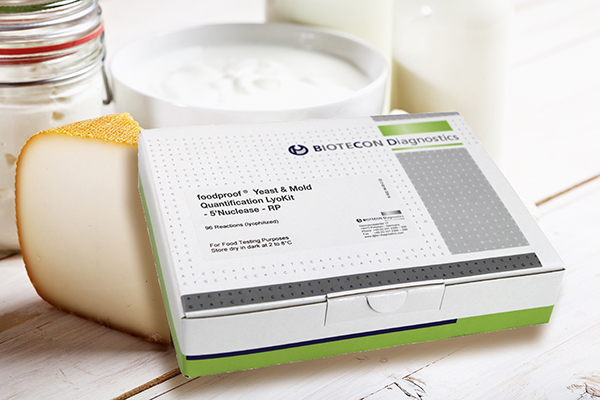
The PCR Yeast and Mold Qualitative test is distributed by Weber Scientific in North America.

In the overall context of facing these challenges, new technologies are being developed. One such technology is a four-hour PCR Yeast and Mold Qualitative test, manufactured by Germany-based Biotecon, for use in dairy products. Genetic methods are typically associated with identifying bacterial and viral pathogens. But the same approach may be taken with groups of microbes responsible for spoilage, if there is a unique gene sequence common to the target organisms.

Typical test times for yeast/molds are historically five days, although more recently incubation times have been reduced to three days with some new “rapid” plating media. Still, this is a relatively long time compared to four hours. And it is worth noting that the PCR Yeast and Mold test is a “true” four-hour test, as it does not require any pre-enrichment.

The protocol follows a standard PCR protocol for DNA extraction and amplification with an important inclusion—a treatment step that allows discrimination between viable and non-viable organisms. Another important aspect is the inclusion of UNG (Uracil-N-Glycosylase), which greatly reduces the chance of cross-contamination between one sample and the next.

The method is remarkably robust. 100% specificity has been demonstrated with more than 300 strains of yeasts and molds representing 260 species covering all the phylogenetic groups. Conversely, 100% exclusivity has been shown against 60 strains of non-targets—comprised of microbes typically found in similar ecological niches; plant DNA; and animal DNA from human, mouse and canine sources. Sensitivity of the method for yeasts/molds is 101 – 102 cfu/g.

The method is also quantitative, and PCR cycle threshold times can be very closely correlated with plate counts on agar media. Thus, once a standard curve is generated, subsequent samples need only be tested by this new PCR method. Equivalent counts are then determined from the standard curve.

The rapid detection of yeast and molds is a much-needed analytical technique for the dairy industry. For producers of yogurt and similar fermented milk product with a typical shelf-life of 60 days, having the ability to release product to market four days earlier will help with operational efficiency. More importantly, knowing early on of any possibility of product spoilage will help deliver superior product to consumers. The method won the Institute for Food Technologists’ Innovation Award, with one of the judges commenting, “a four-test versus five days for spoilage organisms is a major breakthrough.”

In view of the level of wastage and spoilage that currently occurs, this new PCR method is a step along the way to using more sophisticated methods for the detection of the organisms responsible. Guardians of the food supply should see this as an important development.

Food safety superstar panel discuss controlling pathogens. Photo: amyBcreative

FSMA Implementation, GFSI Alignment and other Hot Topics to be Addressed at the 2016 Food Safety Consortium

By Food Safety Tech Staff
No Comments
Food safety superstar panel discuss controlling pathogens. Photo: amyBcreative
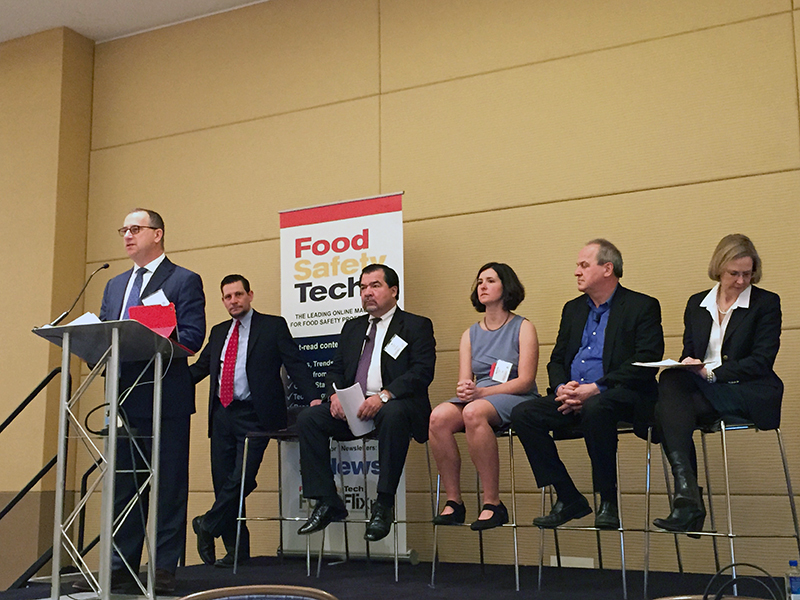
Panel on controlling pathogens at last year’s Food Safety Consortium

Food Safety Leaders will meet to assess the status of FSMA implementation, the impact of GFSI alignment and important industry developments at the fourth annual Food Safety Consortium, December 5–9, 2016, in Schaumburg, IL. The Consortium brings together hundreds of Food Safety and Quality Assurance (FSQA) professionals, and scores of speakers over several days attending concurrent conference tracks, workshops, training programs, plenary sessions and exhibits.

“Engagement at this year’s Food Safety Consortium will be more powerful and valuable to the industry, as we have the convergence of key federal officials and top industry experts sharing expertise and guidance on the future of the global food safety industry,” says Rick Biros, president and publisher of Innovative Publishing. “With FSMA compliance dates now in motion, attendees will hear directly from FDA and other regulatory agencies on how implementation is going, the status of enforcement actions, how GFSI fits in and more.”

The Consortium conference begins on Wednesday, December 7, kicking off with a keynote presentation from Stephen Ostroff, M.D., deputy commissioner for foods and veterinary medicine at FDA, followed by an “Ask the FDA” Q&A Town Hall. Frank Yiannas, vice president of food safety at Walmart, will deliver the lunch keynote presentation on December 7.

Audience response during Food Safety Culture debate. Photo: amyBcreativeConference tracks will address FSMA and GFSI compliance, food manufacturing and operations, supply chain management, laboratories, and ask the experts discussion groups.

Pre-conference (December 5) and post-conference (December 9) workshop topics include Preventive Controls in Human Foods training, supplier verification, HACCP to HARPC, SQF Information Day and recall strategies.

To register for the Food Safety Consortium, visit http://foodsafetyconsortium.org/. For more information about Food Safety Tech, the event media sponsor, visit https://foodsafetytech.com/food-safety-consortium/.

Food Safety Consortium Team
The Innovative Publishing staff

About Innovative Publishing: Innovative Publishing Company LLC (IPC) delivers industry-specific opportunities for business growth and professional development through an integrated B2B platform that includes online publishing, conferences, webinars and hybrid events. IPC launched MedTech Intelligence @MTI_Editor (https://www.medtechintelligence.com/) in 2010; Food Safety Tech @FoodSafetyTech (http://www.FoodSafetyTech.com) in 2012; and Cannabis Industry Journal @CannabisEditor (https://www.cannabisindustryjournal.com/ ) in 2016. Our focus is to provide game-changing knowledge and expert opinions about breaking news, innovative technology, emerging trends and ever-changing international regulations. Our mission is to aid in the advancement and progress of global industries that contribute to a healthier world.

Compliance, food safety

Preventive Controls for Animal Food: What Does this Mean to Pet Food and Feed Manufacturers?

By Debby L. Newslow, Erika Miller
2 Comments
Compliance, food safety

The Final Rule on Preventive Controls for Animal Food (21 CFR 507) was released in September 2015. The first compliance dates for CGMPs arrived in September 2016. All facilities that manufacture, process, pack or hold animal food for consumption in the United States are required to comply (see Figure 1 information on compliance dates.) Non-compliance is considered a prohibited act, but nonetheless this rule has not received the same amount of press as its human food counterpart. We must begin to spread awareness, because this rule has the potential to fundamentally change the pet food and animal feed industries over the next four years. Unlike human foods, animal food is typically intended to be fed as a sole source of nutrients. Thus, the regulation is fairly comprehensive and strict.

Business Size CGMP Compliance Date PC Compliance Date
Business other than small and very small One year Two years
Small business (fewer than 500 full-time employees) Two years Three years
Very small business (averages less than $2.5 million per year, during the three-year period preceding the applicable calendar year in sales of animal food + market value of animal food manufactured, processed, packed or held without sale Three years Four years except for records to support its status as a very small business
(January 1, 2017)
Figure 1. Compliance dates for CGMPs and PCs for Animal Food (from fda.gov).

During the 2016 Food Safety Consortium, Debby Newslow and Erika Miller will instruct: FSPCA Preventive Controls for Animal Food (21CFR507) Training | REGISTER FOR THE WORKSHOPSimilar to the Preventive Controls for Human Food regulation (21 CFR 117), there are two parts to the Animal Food rule: Current Good Manufacturing Practices (CGMPs) and Preventive Controls. Figure 2 provides more detail on the Subparts of the Regulation. Also, animal food covered by specific CGMP regulations must still comply with those regulations (specifically low-acid canned food and medicated feed).

Those who have taken a Preventive Controls Qualified Individual (PCQI) course will notice the remarkable similarity to the structure of the Human Food Rule. This is by design, for our animals are often a part of the family for whom we want to provide the highest level of quality and safety possible. That said, there is some overlap between the two regulations. For instance, when human food byproducts are diverted to use in pet food or animal feed, the human food CGMP rules apply to that food intended for use as animal food.

Subpart Topic
A General Provisions
B Current Good Manufacturing Practice
C Hazard Analysis and Risk-Based Preventive Controls
D Withdrawal of Qualified Facility Redemption
E Supply Chain Program
F Requirements Applying to Records that Must Be Established and Maintained
Figure 2. Subparts of 21 CFR 507, Current Good Manufacturing Practice, Hazard Analysis, and Risk-based Preventive Controls for Food for Animals.

What Does this Regulation Mean for the Pet Food Industry?

Large companies that produce commercially available pet foods available in grocery stores and big box retailers (such as Pedigree, Iams, Nutro, Purina, etc.) are typically already compliant to a voluntary GFSI-approved food safety scheme (FSSC 22000, SQF, etc.). These companies already have most necessary processes in place to be compliant. There may be adjustments related to terminology, documentation, records and hazard analysis expansions to include mention of Preventive Controls.  However, most of the work has been completed already and only clarifications, in most instances, should be required.

However, there are many small “mom-and-pop” type establishments making niche pet food with high-quality, organic ingredients that may not have much knowledge about this regulation. These types of manufacturers want to make the best, safest, highest quality product they possibly can, but without knowledge and education, they may not know the questions to ask to point them in the right direction. When an inspector arrives and asks to see the written hazard analysis, even a high-quality niche processor may end up with the deer-in-the-headlights stare if they do not understand the question. This regulation has the potential to significantly impact their business, but in a small business most folks wear many hats, and it is not always possible to just jet away for a few days to attend a specialized training class.

It was indicated during our Lead Trainer course that FDA is developing a clear proactive approach to their inspections related to this rule. Our Lead Trainer courses also emphasized that the inspectors’ focus will be on the reasonably foreseeable hazards and potential hazards to ensure that each is in control. Control can be achieved through a Preventive Control or some other process, such as a GMP based pre-requisite program.

In order to be as effective and efficient as possible, it is critical that an organization understands the requirements of this regulation. For example, the Food Allergen Labeling and Consumer Protection Act (FALCPA) does not apply to food for animals, nor are there allergen provisions included in 21 CFR 507. Certainly there are specialty manufacturers that make special recipes for those pets that may have an allergy or sensitivity (i.e., wheat, rice, etc.); however, this is completely different than the required approach to allergens for the production of human food. The pet food or feed manufacturer is not bound by these restrictions. However, an uninformed processor may take it upon itself to redesign a label to include an allergen declaration assuming that requirements for human food also apply to them. This could result in a great expense for graphic design, reprinting, disposal and wasting of previously printed labels, and of course the time spent on the project.

Measuring effectiveness is one oft-overlooked part of a mature and robust food safety program. Even experienced managers sometimes overlook this crucial step, so it is unlikely that most people would be able to come up with the concept on their own without assistance. If a facility has a rule in place that people must wear gloves, but do not have the experience to train on proper glove use and the reasons gloves are worn, confusion and improper glove use will result. This results in the company wasting money on providing the gloves in the first place. No matter how conscientious a program is, it still requires effective programs for identifying and maintaining records. These provide evidence of compliance with the regulation. There must also be documents in place that define the operational requirements and explain how to demonstrate effectiveness.

Industry representatives also must fully understand how to distinguish between Current Good Manufacturing Practices (CGMPs), other prerequisite programs and preventive controls, and to determine where they fit into their operation and the regulatory framework. The logic used to determine whether a specified hazard is reasonably foreseeable is based on science, experience and education. There are different record-keeping requirements for different types of controls.

It is critical to the process to ensure that reliable resources are used to develop the foundation of the program. This is considered so important that the PCQI Preventive Control for Animal Food material references examples of credible resources in each chapter. Examples of these include trade associations, universities, industry-focused events, relevant informational emails and webinars. We have experienced first-hand that expanding a professional network using these types of resources increases the rate of attrition for knowledge when a sink-or-swim situation is presented.

Keep in mind that an operation must take an active role in defining, implementing and maintaining its food safety program. It is usually recommended that a consultant knowledgeable in your food sector be engaged to assist. However, the word of the day is “assist”.  If the consultant writes a turnkey program, then whose program is it? And better yet, where are they going to be when you are in an audit and can’t explain (justify) what is stated in the program?

Katy Jones, Foodlogiq
FST Soapbox

Supplier Management: Grow Strategic Partnerships and Drive Value Across the Supply Chain

By Katy Jones
No Comments
Katy Jones, Foodlogiq

According to a report by Kroll and The Economist Intelligence Unit, 17% of companies experienced some type of vendor, supplier or procurement fraud in 2015. While fraud is one of the more extreme examples of supplier management complications, the manufacturer-supplier relationship is notoriously fickle and can result in serious issues if attention and care is not reciprocal from the beginning.

With great communication and even better processes in place, your suppliers have the potential to become strategic partners for your brand, helping drive your values across the supply chain while also helping you achieve overarching business goals.

Do Your Homework

In order to foster positive supplier relations, it is important to consider all available options and carefully assess them before engaging. In the research phase, it is critical to get as many references as possible to ensure you align with a potential supplier when it comes to safety practices and brand values. Looking at a supplier’s history is an effective way to gauge how your partnership will pan out and catch any red flags before they become a bigger problem for the brand, whether that be poor communication habits, dishonesty about products or inconsistent record keeping.

FSMA deadlines for compliance with the Foreign Supplier Verification Program (FSVP) are right around the corner. With the changing regulatory landscape, thoroughly investigating potential suppliers is crucial, especially if they are outside of the United States, as the stakes are much higher. Under the FSVP, importers are essentially “guilty” until proven “innocent”—a sharp contrast from how foreign suppliers were previously handled by the FDA. The standards for imported food are stricter than ever, as are the consequences for companies that are found working with foreign suppliers without verification. With the FSVP, the FDA can halt all importations completely as long as they have reason to believe the supplier is not compliant with the program.

Communication Is Key

At the cornerstone of any good relationship is communication; the same goes for relationships within the food industry.

Once a supplier has been thoroughly vetted and is officially on the team, the key to maintaining a successful relationship is transparency. Without full transparency with suppliers, you can’t offer consumers reliable information about their food. At the same time, manufacturers need to be straightforward with their needs to ensure suppliers are able to uphold their expectations. By thoroughly communicating plans and expectations, you and your suppliers can effectively work together to achieve future goals.

At the start of a working relationship with a supplier, it is important to comprehensively onboard and train them in your plans and processes to avoid a lack of understanding down the line. By setting up an all-encompassing onboarding system, inclusive of checklists and background documents on procedures and standards, you can help ease growing pains and empower your new food supplier to become a trusted partner. For instance, if you use a specific supply chain technology, your suppliers should know ahead of time so they can receive adequate training on the solution. This will help streamline communication and minimize any bumps in the road.

Regular Check-Ups

While safety and contamination issues are undesirable, they are inevitable. When faced with an outbreak or contaminant in your supply chain, suppliers become your most crucial resource. A poorly handled recall can wreak havoc on a food manufacturer, with the potential to ruin a trusted brand. Having the correct protocols in place with suppliers to ensure proper procedures are followed quickly and efficiently is critical. In order to make sure suppliers are complying with standards, keeping complete records and maintaining proper safety practices, it is essential to perform regular supplier audits.

With the addition of new technologies in the last few years, monitoring supplier performance and implementing corrective actions has never been easier. There are companies that offer supplier management and food safety management software to enable manufacturers 24/7 end-to-end visibility into their food supply chain and suppliers’ practices, while simplifying communication. Supplier management software offers a single platform that allows a brand to safeguard important supplier documentation, submit proper records to regulators when audited, streamline supplier audits and compliance records, and communicate corrective actions.

Overall, supplier management software with end-to-end supply chain visibility is a great way to keep up with suppliers and rest assured that your company’s food safety guidelines are being followed at all times.

Keeping Consumers Safe and Happy

With the current state of food safety, keeping suppliers in check is absolutely crucial for brands. As the FDA is increasing regulations with the adoption of FSMA, manufacturers must be able to trust their suppliers to uphold these new standards. If there are any slip-ups, your brand is held accountable. At the same time, with the increasing number of high-profile recalls and foodborne illness reports, consumers are on high alert, and winning their trust is harder than ever; today’s conscious consumer expects total transparency from their food brands, something only achieved through a strong supplier management program.

Fortunately, given advancements in technology, manufacturers can now foster more proactive relationships, assess supplier performance and achieve mutual goals across the chain smoothly.

While good supplier management requires time and resources, it is worth the investment. Putting in the effort to foster strategic partnerships with suppliers is key to mitigating safety and contamination issues, meeting the FDA’s regulations, as well as keeping consumers safe and happy.