Tag Archives: Focus Article

Susanne Kuehne, Decernis
Food Fraud Quick Bites

It’s in Their DNA

By Susanne Kuehne
No Comments
Susanne Kuehne, Decernis
Pepper, food fraud, DNA
Find records of fraud such as those discussed in this column and more in the Food Fraud Database, owned and operated by Decernis, a Food Safety Tech advertiser. Image credit: Susanne Kuehne.

Spices have been an ongoing hot target for fraudulent activity, whether it is the addition of inedible substances like dyes, or bulking agents, such as brick powder, other plant material, sawdust and many other, potentially hazardous substances. A relatively new technology, next-generation sequencing (NGS), enables to analyze the DNA of complex samples such as spices and herbs. The DNA findings are compared to a database and allow to detect many thousands of species in one test. Currently, working groups are developing standardized methods for such authenticity tests.

Resource

  1. Woolfe, M. (July 13, 2021). “NGS (Next Generation Sequencing) is Helping to Prevent Fraud in the Herb and Spice Trade”. Food Authenticity Network.
Allergens

Key Trends Reinforce Food Allergen Testing Market Across North America

By Saloni Walimbe
No Comments
Allergens

The food allergen testing industry has garnered considerable traction across North America, especially due to the high volume of processed food and beverages consumed daily. Allergens are becoming a significant cause for concern in the present food processing industry worldwide. Food allergies, which refer to abnormal reactions or hypersensitivity produced by the body’s immune system, are considered a major food safety challenge in recent years and are placing an immense burden on both personal and public health.

In 2019, the most common reason behind recalls issued by the USDA FSIS and the FDA was undeclared allergens. In light of this growing pressure, food producers are taking various steps to ensure complete transparency regarding the presence of allergenic ingredients, as well as to mitigate risk from, or possibly even prevent contact with, unintended allergens. One of these steps is food allergen testing.

Allergen detection tests are a key aspect of allergen management systems in food processing plants and are executed at nearly every step of the process. These tests can be carried out on work surfaces, as well as the products, to detect any cross contamination or allergen presence, and to test the effectiveness of a food processing unit’s cleaning measures.
There has been a surge in awareness among consumers about food allergies and tackling the risk of illnesses that may arise from consuming any ingredient. One of the key reasons for a higher awareness is efforts to educate the public. In Canada, for example, May has been designated “Food Allergy Awareness Month”. It is estimated that more than 3 million people in Canada are affected by food allergies.

The size of the global food allergen testing market is anticipated to gain significant momentum over the coming years, with consistent expansion of the dairy, processed food and confectionary segments.

Understanding the Prevailing Trends in Food Allergen Testing Industry

Food allergies risen nearly 50% in the last 10 years, with a staggering 700% increase observed in hospitalizations due to anaphylaxis. Studies also suggest that food allergies are a growing health concern, with more than 250 million people worldwide estimated to be affected.

Although more than 170 foods have been identified as causing food allergies in sensitive consumers, the USDA and the FDA have identified eight major allergenic foods, based on the 2004 FALCPA (the Food Allergen Labeling and Consumer Protection Act). These include eggs, milk, shellfish, fish, peanuts, tree nuts, soybean, and wheat, which are responsible for 90% of allergic reactions caused due to food consumption. In April 2021, the FASTER (Food Allergy Safety, Treatment, Education, and Research) Act was signed into law, which categorized sesame as the ninth major food allergen.

This ever-increasing prevalence of allergy-inducing foods has presented lucrative opportunities for the food allergen testing industry in recent years since food processing business operators are placing a strong emphasis on ensuring transparency in their products’ ingredient lists. By testing for allergens in food products, organizations can accurately mention each ingredient, and thereby allow people with specific food allergies to avoid consuming them.

Several allergen detection methods are used in the food processing industry, including mass spectrometry, DNA-based polymerase chain reaction (PCR) as well as ELISA (enzyme-linked immunosorbent assay), to name a few. The FDA, for instance, created a food allergen detection assay, called xMAP, designed to simultaneously identify 16 allergens, including sesame, within a single analysis, along with the ability to expand for the targeting of additional food allergens. Such industry advancements are improving the monitoring process for undeclared allergen presence in the food supply chain and enabling timely intervention upon detection.

Furthermore, initiatives, such as the Voluntary Incidental Trace Allergen Labelling (VITAL), created and managed by the Allergen Bureau, are also shedding light on the importance of allergen testing in food production. The VITAL program is designed to support allergen management with the help of a scientific process for risk assessment, in order to comply with food safety systems like the HACCP (Hazard Analysis and Critical Control Point), with allergen analysis playing a key role in its application.

ELISA Gains Prominence as Ideal Tool for Food Allergen Testing

In life sciences, the detection and quantification of various antibodies or antigens in a cost-effective and timely manner is of utmost importance. Detection of select protein expression on a cell surface, identification of immune responses in individuals, or execution of quality control testing—all these assessments require a dedicated tool.

ELISA is one such tool proving to be instrumental for both diagnostics as well as research). Described as an immunological assay, ELISA is used commonly for the measurement of antibodies or antigens in biological samples, including glycoproteins or proteins.

While its utility continues to grow, ELISA-based testing has historically demonstrated excellent sensitivity in food allergen testing applications, in some cases down to ppm (parts per million). It has a distinct advantage over other allergen detection methods like PCR, owing to the ability to adapt to certain foods like milk and oils, where its counterparts tend to struggle. The FDA is one of the major promoters of ELISA for allergen testing in food production, involving the testing of food samples using two different ELISA kits, prior to confirming results.

Many major entities are also taking heed of the growing interest in the use of ELISA for food allergen diagnostics. A notable example of this is laboratory analyses test kits and systems supplier, Eurofins, which introduced its SENSISpec Soy Total protein ELISA kit in September 2020. The enzyme immunoassay, designed for quantitative identification of soy protein in swab and food samples, has been developed by Eurofins Immunolab to measure residues of processed protein in various food products, including instant meals, chocolate, baby food, ice cream, cereals, sausage, and cookies, among others.

In essence, food allergens continue to prevail as high-risk factors for the food production industry. Unlike other pathogens like bacteria, allergenic proteins are heat resistant and stable, and cannot easily be removed once present in the food supply chain. In this situation, diagnostic allergen testing, complete segregation of allergenic substances, and accurate food allergen labeling are emerging as the ideal courses of action for allergen management in the modern food production ecosystem, with advanced technologies like molecular-based food allergy diagnostics expected to take up a prominent role over the years ahead.

Susanne Kuehne, Decernis
Food Fraud Quick Bites

An X-tra Trophy for OPSON X

By Susanne Kuehne
No Comments
Susanne Kuehne, Decernis

The usual culprits are leading the list of seized feed and food counterfeits in the latest OPSON X Operation: Alcoholic beverages, dietary supplements and grain-based products, followed by produce. In the Operation OPSON activities, Europol and Interpol join forces to combat counterfeit and fake animal feeds, foods and beverages. This year’s operation unearthed 15,000 tons of potentially dangerous products, worth $60 million, an increase in 3,000 tons over the previous year.

Opson X Trophy
Find records of fraud such as those discussed in this column and more in the Food Fraud Database, owned and operated by Decernis, a Food Safety Tech advertiser.
Image credit: Susanne Kuehne

Resource

  1. Whitworth, J. (July 22, 2021). “Crackdown results in seizure of 15,000 tons of illegal foodstuffs”. Food Safety News.
Food Safety Testing Market

Processed Meat and Poultry Applications Drive Food Safety Testing Industry

By Hrishikesh Kadam
No Comments
Food Safety Testing Market

The food safety testing industry is constantly experiencing new developments, technological advances and regulatory pressures as the burden of foodborne illness remains a prevalent concern. Growing consumer preference for convenience and processed foods is a pivotal trend augmenting the industry outlook.

The World Health Organization (WHO) reports that every year nearly $110 billion is lost across middle- and low-income countries due to unsafe food. From the health risk perspective, pathogens, pesticides or toxins cause more than 200 diseases, ranging from diarrhea to cancers. Since most foodborne illnesses are preventable, WHO and other public health organizations worldwide are taking necessary action to establish strong and resilient food safety systems and enhance consumer awareness.

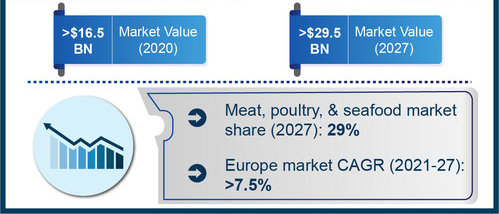
Food products may become contaminated at any stage of production, supply or distribution. Testing food and beverage products for safety is a critical component of the food and beverages sector. In terms of annual valuation, the global food safety testing market size is anticipated to hit $29.5 billion by 2027.

Food Safety Testing Market
Food Safety Testing Market. Figure courtesy of Global Market Insights, Inc.

Pathogen Testing Demand Rises as E. coli, Salmonella Infections Persist

Pathogen testing is of utmost importance to the food & beverage industry, as there remains a large number of virus and bacteria causing pathogens and microbial agents responsible for foodborne illnesses. Numerous instances of pathogen contamination have come to light recently, augmenting the need for food pathogen testing, especially during a time when COVID-19 poses a significant threat.

For instance, in July, the CDC and the FDA announced that they are working with other public health agencies to investigate an outbreak of E. coli O121 infections across 11 states. Meanwhile in the European Union, several countries have started investigating Salmonella illnesses linked to imported tahini and halva. Since 2019, about 80 people are estimated to be affected in Germany, Denmark, Norway, Sweden and the Netherlands.

Pathogen testing demand will likely increase across North America and Europe with further spread of infections. These regions are among the major consumers of processed meat, seafood and poultry products, augmenting the need for reliable food safety testing solutions.

Meat, Poultry and Seafood Consumption Drive Foodborne Infection Risks

Globally more individuals are consuming processed poultry and meat products at home, in restaurants, fast food restaurants, and other locations. The worldwide meat consumption is estimated to reach 460 to 570 million tons by the year 2050, as per data from The World Counts.

It is essential to ensure optimum product quality during meat processing to minimize the perils of foodborne microorganisms. Meat quality testing standards are continuously evolving to ensure that food manufacturers bring the best-quality products to the market. In July this year Tyson Foods recalled more than 8.9 million pounds of ready-to-eat chicken products due to potential Listeria monocytogenes contamination. The significant recall quantity itself represents the scope of pathogen testing requirements in processed meat sector.

E. coli O157 is considered to increase the risk of toxins that lead to intestinal problems and can cause significant illness among geriatric people, pregnant women and other high-risk populations. Earlier this year, PerkinElmer introduced an E. coli O157 pathogen detection assay to be used for testing raw ground beef and beef trim. The solution is greatly suited for food and beverage sector customers that need to test high volumes of food samples regularly. The development indicates an incessant fight to offer effective food safety testing products to tackle the threat of pathogen-related illnesses.

USDA’s FSIS also recently revised guidelines for controlling Salmonella and Campylobacter infections in raw poultry. The updated guidelines provide poultry establishments with best practices that they may follow to reduce the risk of such infections in raw products.

Food Safety Testing Trends amid COVID-19 Pandemic

Food safety testing demand has experienced a notable uptick since the outbreak of the coronavirus pandemic, as food security and sustainability have been recognized as key areas of focus.

Globally, a rise in online orders of groceries and restaurant meals has been observed. Major food regulators such as the FDA have released food safety protocols and guidelines for food companies, hotels and restaurants. These practices help ensure optimum food quality as well as the safety of employees, staff and consumers.

The FDA has been working with the USDA and FSIS as well as state authorities to investigate foodborne illnesses and outbreaks amid the pandemic. Many regions are also updating food safety policies to help overcome the challenges of the pandemic. While pathogen and toxin testing demand are growing in most regions, the inadequacy of food control infrastructure may limit food safety testing industry expansion in emerging economies.

Drawbacks of existing technologies and the need to reduce sample utilization, lead time and testing cost are driving new innovations in food safety testing. Ongoing developments are focused on providing accurate results in limited timespan.
The food safety testing market landscape will continue to evolve as new regulations are introduced, public awareness rises, and food consumption patterns change. The rapid testing technology segment, which includes PCR, immunoassay and convenience testing, is estimated to hold a major share of the overall industry owing to faster results provided, which benefits the organizations in terms of productivity and processing costs. In addition to previously discussed PerkinElmer, Eurofins Central Analytical Laboratories Inc, Bio-Rad Laboratories, Intertek Group PLC, Bureau Veritas SA, and SGS AG are some of the other notable names in the industry.

Emily Newton, Revolutionized Magazine
FST Soapbox

As Demand for Frozen Food Surges, Cold Storage Facilities Must Continue to Prioritize Safety

By Emily Newton
No Comments
Emily Newton, Revolutionized Magazine

Frozen food demand has skyrocketed. Although COVID-19 was a catalyst, there are many reasons why the trend will likely continue going forward. The pandemic forced people to eat at home more, which was largely responsible for the hike in food sales, especially frozen goods. Higher availability and food quality enhancements have also contributed to the spike, prompting suppliers to upgrade and expand cold storage warehouse solutions—whether that means creating extra space or utilizing existing space more effectively.

One of the more important changes, prioritized across the industry, is food preservation and safety. It has always been crucial that frozen food reaches its destination clean, healthy and still frozen — just as it went in. However, preliminary data from the CDC’s Foodborne Diseases Active Surveillance Network reveals that foodborne illnesses are up 15%. The primary or most common form is Salmonella, but COVID-19 has consumers and food safety professionals thinking more closely about cleanliness and proper sanitation.

It has pushed a tight focus on safety overall, with new innovations looking to enhance sector controls.

Necessity Breeds Creativity

Recent events have played a role in the industry’s continued focus on safety, but so have consumer demands, as more and more people look to frozen meals, foods and items as part of their normal routines.

People love convenience. But as the pandemic hit, and people were forced to isolate and remain home more, and restaurants and stores closed as a safety precaution. What was once about convenience became even more about safety. People still wanted freedom and ease of use, but it wasn’t a necessity nor was it a priority. Safety became even more important, which is why curbside pickup, deliveries and online transactions became so popular.

What does this have to do with frozen foods? Everything. Because of the pandemic, we’ve all had to eat at home more often, which means preparing meals, snacks and other items, with minimal exposure to the outside world or even local grocery stores. Naturally, consumers turned to easily cooked and pre-prepared frozen foods and meals.

Safety is the Priority

It makes sense that more frozen foods being purchased and consumed would shift priorities in the market. In a 2021 report released by Acosta, 14% of respondents say they consume frozen food nearly all the time. About 46% say they consume frozen foods often.

During the pandemic, the share of U.S. core frozen food consumers rose to 39% in 2020, up from 35% in 2018. “Core” consumers are defined as those who either eat frozen food daily or every few days.

What’s more, 42% of households that buy frozen foods did so online, up from 23% in 2018. And online frozen food sales jumped 75% last year, with the top purchases including frozen dinners and entrees, meat, poultry and even seafood.

Instead of restricting eating habits, consumers have turned to frozen foods to spruce up their meals, create new at-home dishes, and so on. It has boosted the demand for all kinds of frozen foods. It also necessitates the need for improved quality and safety. Implementing and maintaining strict controls as to how the food is transported, handled and preserved, can prevent contamination on all fronts.

With that rise in dependence, on frozen foods specifically, it is imperative that supply chain operators are delivering goods in a safe, healthy condition. Allowing foods to thaw during the transport process can introduce more problems than just contamination, especially with COVID remaining a major influence.

Imagine how bad it would be if the world experienced a major foodborne outbreak, right now. Most scenarios can be prevented through smarter food handling and better, data-driven controls.

New methods are being implemented to chill and prepare foods earlier on in the supply process. Many cold chain providers are adopting low-temperature chillers, like a food processing chiller, for example. They can freeze prepared foods quickly to ensure they are safe, disinfected and stored appropriately. From there, it’s just a matter of keeping them cold-locked during transport, storage, delivery, and beyond. That’s precisely where some of the latest innovations come into the picture.

Cold Storage Warehouse Innovations

To keep up with the demand and ensure frozen foods and other goods stay fresh in the cold chain, the industry is seeing rampant innovation, thanks to modern technologies. Think IoT-equipped fleets and storage systems to facilitate faster time to market and better transparency. Or, machine learning and AI-driven tools that help discern bottlenecks, locate faster and more effective solutions, and so on.

At the heart of it all is data, or rather digital content and information. The smarter and more contextually driven operations are, the better efficiency is all around. The following are some of the technologies making this happen:

  • IioT. The Industrial Internet of Things (IIoT) involves connected devices that continually collect, transmit and sometimes process performance and contextual data. In the cold chain, it can be used to track goods, prevent theft or fraud, monitor processes, discover bottlenecks and more.
  • Machine Learning. An offset of artificial intelligence, machine learning and neural networks can be used to ingest and analyze massive swarms of data in ways, and at speeds, that humans never could. What’s more, the technology can empower highly advanced automation systems to take action, respond, or act based on algorithmic rulesets.
  • Electric and autonomous vehicles. Revolutionizing logistics and conventional transport, electric and fully autonomous vehicles will significantly improve fleets with better safety, stop-free trips and more.
  • Smart shelving. Imagine Amazon’s Kivo bots, or something similar, implemented within cold storage warehouses. The entire system is designed to improve inventory management, order picking, and general logistics.
  • Co-bots. Beyond delivery, ground-based drones or advanced robots can be used to transport and move heavy goods, large or bulk orders, and organize the warehouse. When outfitted with the appropriate hardware, they can reach high shelves and storage areas or move through hazardous locations, improving safety for manual workers.

Innovation Brings New Challenges

Of course, there are the general challenges facing the cold storage industry, such as how to keep foods fresh throughout the journey, proper packaging solutions, and maintaining more sanitary conditions, but there are new challenges presented by the adopted technologies.

For example, IIoT devices aren’t typically designed to be exposed to extremely frigid temperatures, which may sometimes affect the measurements and data collected. A malfunctioning device can lead to serious problems, especially when it’s the sole method for maintaining temperatures and ensuring food is properly stored.

Bringing these devices up to a sufficiently resistant level is a challenge, as is keeping them running optimally. Failing to do so could increase food contamination, the spread of foodborne illness, or worse.

Another challenge involves the expansion or development of new cold storage facilities. As warehouses and locations grow to accommodate larger inventories, the cold storage systems must become more sophisticated and powerful. What’s more, even the slightest temperature drop because of a system failure can have sweeping repercussions in such a large facility. A single refrigeration unit going down can drop temperatures across the entire warehouse.

Designing smarter spaces to keep the cold temperatures contained is one solution. Installing the supporting systems is another, which keeps things operational even when a negative scenario plays out. Automation and smart, data-driven technologies can be incredibly helpful in this area.

Finally, the bigger the cold storage solution, the higher the power draw and the more resources needed to keep things running. In turn, it’s necessary to install and implement smart technologies to reduce the carbon footprint. Cutting energy usage wherever possible becomes vital to sustainability. It can call for solutions like smart or timed lighting, smart thermostats for the refrigeration units, or upgraded systems that reduce emissions — think electric fleets and renewable energy platforms.

Backup solutions are even a part of the mix, when power outages can bring an entire operation down in seconds, and expose food to long-term risk.

Frozen Food Demand: A Steady Climb

Things may change, and there are never any guarantees, but right now it looks as though high demand for frozen food will continue, and may even grow steadily. Market conditions are partly responsible, but consumers are now more focused on quality and healthy foods, above eating out or ordering in. As the economy continues to open, people will want to get back out there and explore. But that doesn’t necessarily mean frozen food demand will decline.

Cold chain and cold storage warehouse providers must be prepared for the continued growth, which includes finding new and innovative ways to preserve, package and safely store frozen foods.


Derek Stangle, Squadle
Retail Food Safety Forum

How the Pandemic Raised the Stakes for Food Safety

By Derek Stangle
No Comments
Derek Stangle, Squadle

Food safety concerns are constant across the food industry. From grocery stores to restaurants to meatpacking plants, the industry has doubled down on creating greater transparency into how food is stored, handled, cooked and delivered to the end customer. At the same time, new technology is helping food executives execute everything from contactless transactions to track, record, and promote their safety policies as never before.

Both independent restaurants and large chains see food safety as an issue that grew in importance during the pandemic. Diners have come to rely on restaurant policies for staff hygiene, such as washing hands, wearing gloves, and tracking personnel temperatures at the beginning of every shift. Their patrons expect that each restaurant will demonstrate how they are adhering to safety protocols. Restaurants are publishing their policies via signage, flyers added to take-out orders, social media posts, updated website language, or even safety protocols published to Yelp.

What’s more, their customers can easily access guidelines published by the CDC such as “Avoid Food Poisoning: Tips for Eating at Restaurants”, which explain how to check a restaurant’s safety score at the local health department website or find information, such as certificates that show kitchen managers have completed food safety training and posted it in the physical restaurant.

For restaurants, a transparent safety policy can become a competitive advantage, used to win new customers and attract the very best job candidates.

Grocery stores face similar challenges. From the checkout line to deli employees and the inventory clerks stocking the shelves, grocery employees are essential workers who also experience an unusually high level of public contact. According to the United Food and Commercial Workers Union (UFCW), which represents 1.3 million workers in food and retail, since the pandemic began, there have been more than 100,000 frontline and grocery union workers infected or exposed to COVID-19.

The UFCW has called for better safety precautions for grocery workers, including free PPE, paid sick leave, and vaccination prioritization that reflects their role as essential workers. As the national vaccination program picks up steam, more states are recognizing the need to vaccinate these essential workers, and they’ve been moved up in the prioritization line.

Until vaccines become more prevalent, however, grocery stores have adopted measures, much like those in restaurants, that are designed to protect both workers and shoppers. Mask mandates, one-way aisles, six-foot distancing, and Plexiglas shields at checkout are now commonplace.

Expanding Takeout and Delivery

Both restaurants and grocery stores have seen a huge shift to delivery ordering or curbside takeout over the course of the pandemic. Customers expect their favorite brands to give them the option of a frictionless, contactless experience where they have minimal contact with employees.

In order to offer a contactless takeout experience, both grocery stores and restaurants have invested heavily in technology. Curbside pickup and home delivery require an up-to-date website synched to inventory and menus. In addition, mobile apps enable guests to order remotely regardless of their location. The ability to pay via the app or a mobile wallet is the next step in a seamless contactless experience. Guests can pick up groceries or restaurant orders curbside, or pay a little more to have them delivered to their doorsteps.

The big advantage for shoppers is that they never come into contact with store employees, thus reducing the possibility of virus transmission. However, shoppers are finding that they also like the speed and convenience of the contactless experience. For this reason, many restaurants, such as McDonald’s and Chipotle, are expanding their drive-through capabilities.

Big brands like Amazon are doing the same with grocery. The Amazon Go concept store provides a “Just Walk Out Shopping” experience. There are no lines and no checkout. Customers download an Amazon Go app, and their items are automatically scanned and billed to their account. Other innovators include Wegman’s, which has partnered with Instacart to facilitate free delivery for its online shoppers, and brands like Safeway and Albertson’s, which also have curbside pickup facilitated via their mobile apps.

Back-of-House Technology

Back-of-house technology completes the food safety paradigm for restaurants and grocery stores. New systems that combine wireless networks with temperature monitors and data analysis make it simple and compulsory to track food temperatures throughout a facility. Remote sensors automatically record temperatures in coolers, the kitchen, and as orders move on to the customer.

Workflow automation in the back-of-house has become equally indispensable as food compliance has become increasingly more complex. Whether it’s a multi-unit restaurant or grocery brand, operators crave the data and visibility that only a digital solution can provide. Automation reduces the amount of time spent on tasks otherwise done manually, cuts down on the chance of errors, increases customer satisfaction and improves overall efficiency.

Technology helps the foodservice industry to stay on track, ensure compliance and encourages employees to stick with these practices. With a digital solution that keeps an electronic record of all the protocols that need to be completed, restaurants and groceries can record each inspection, such as taking photos of clean equipment and walk-in coolers at proper temperatures, as well as reminding them of their most important tasks and cleaning schedules.

Alert

National Counterintelligence and Security Center (NCSC) and DoD’s Center for Development of Security Excellence Publish Risk Mitigation Guide for Food and Agriculture Sector

By Food Safety Tech Staff
No Comments
Alert

Today the National Counterintelligence and Security Center (NCSC) and the Department of Defense’s Center for Development of Security Excellence (CDSE) published a risk mitigation guide to help organizations in the food industry understand insider risks, establish insider risk programs, and develop mitigation strategies. The “Insider Risk Mitigation Programs: Food and Agriculture Sector Implementation Guide” was developed in collaboration with federal partners and stakeholders, including the FDA.

The Fall edition of the 2021 Food Safety Consortium Virtual Conference Series will feature an episode on Food Defense Strategies | Register Now“Organizations in the food and agriculture sector play a critical role in protecting public health and safety, as well as U.S. economic and national security,” said NCSC Acting Director Michael Orlando in an NCSC press release. “This guidance is designed to help these entities create effective programs to deter, detect, and mitigate potential insider threats before they can cause harm.”

The guide includes links to federal resources in food and agriculture, and case studies concerning food adulteration, IP theft and active shooter incidents that were carried about by insiders. Any organization can be exposed by an insider threat, which is a person who has authorized access and uses it to commit harm to the organization. “Those with authorized access to facilities, personnel, or information can include employees, vendors, partners, suppliers, or others,” according to NCSC. “Most insider threats exhibit risky behavior prior to committing negative workplace events. If identified early, many insider threats can be mitigated before harm to the organization occurs.”

Insider threats can target food organizations through food adulteration, food fraud, theft and workplace violence.

Susanne Kuehne, Decernis
Food Fraud Quick Bites

The Sun Does Not Shine on This Food Staple

By Susanne Kuehne
No Comments
Susanne Kuehne, Decernis
Rice fraud, Australia
Find records of fraud such as those discussed in this column and more in the Food Fraud Database, owned and operated by Decernis, a Food Safety Tech advertiser. Image credit: Susanne Kuehne

Organized crime in Eastern Europe has targeted a well-known top-level brand in Australia, shipping counterfeit rice to countries around the world under their brand. Rice grown and processed under uncontrolled conditions can bode a risk to human health due to unsanitary processing conditions and contamination from heavy metals. The affected company has initiated thorough investigations into this matter and indeed seized some counterfeit product in Saudi Arabia.

Resource

  1. Taylor, P. (July 7, 2021). “Criminal gang counterfeits Aussie rice brand SunRice”. Securing Industry.
Melody Ge
Women in Food Safety

The Breadcrumbs that Lead to Success

By Melody Ge
No Comments
Melody Ge

It was a great pleasure to sit down with Jennifer Crandall, CEO, founder and owner of the Safe Food En Route, LLC. She has more than 20 years’ experience in food safety, and tremendous experience as a business entrepreneur.

Jennifer Crandall
Jennifer Crandall, CEO, founder and owner of the Safe Food En Route, LLC, has more than 20 years’ experience in food safety, and tremendous experience as a business entrepreneur.

Jennifer started her career in production for a variety of products after she graduated from Purdue University as a Food Science major. When she looks back at her career path, Jennifer says all the dots are connected together in getting her to where she is now—as though she was leaving her own “breadcrumbs” in each stage, and now everything has come back together. For example, after she spent eight years on the production line, she took a position at Kroger Manufacturing for the next 12 years, where she had opportunities to work at positions in corporate food technology, regulatory compliance and global sourcing roles. Jennifer said, “it was a detour at the time when I took the sourcing position, however, it was these last two positions that set the foundation and knowledge when starting Safe Food En Route“…“I went the path of least resistance, what felt right at that time, and that natural interest just linked to the next opportunity. Each time I moved around, I either learned something new or developed another skill—that’s what motivated me. I left myself breadcrumbs along the way, so when I looked back, I knew where I had been,” she said. “I don’t regret any of the decisions that I made in getting me into the position where I am today.” Jennifer shared one quote she learned from Kathy Beechem, a retired EVP of US Bank: “When you are facing two choices, always take the path with the most opportunities!” “Her words still have an impact on me. Every time I make a choice, I choose the one that gave me more opportunities to grow,” Jennifer said.

We ended our conversation with some tips Jennifer would have given to her younger self, back 20 years ago. First: Use your network more, and do not be afraid to ask more questions. Second: Do not be afraid. You have unlimited potential and are destined for great things. Decide what you want with all your heart and focus on it.

“All in all, it is crucial to understand what you want, and understand who you are!” Jennifer said.

Melody Ge: Every time I speak with you, you are very confident and comfortable in the conversation. What tips can you share on being confident?

Jennifer Crandall: Thank you, and I think it still comes with practice. There are three things I think I would like to share.

  1. Be prepared. The more prepared you are, the more confident you will be.
  2. Be on time and enforce your own boundaries. Be realistic with the time you need for preparation; you can’t prepare for everything, especially if it’s a discussion. But give yourself the space and grace to have that preparation time within the boundaries.
  3. Recognize and understand your own needs, simply as knowing yourself. It’s probably a good tip to reemphasize and work in a lot of other situations. It’s surprising how many people that do not self-reflect. I see many people living their life like a pinball machine, not knowing where they are going. That will show that they lack confidence, because they are waiting for someone to tell them where to go. Women especially will wait on other people to tell them what they are good at. If you are waiting on someone to tell you your strengths, then you are going to be waiting your whole life, because you are never going to believe what other people tell you. So know yourself, your strengths and your weaknesses.

Ge: Why and what persuaded you to start your own business? Do you have any advice for females out there who are interested in starting their own business?

Crandall: I wrote down several version of answers for this [question] and they all kind of fall into four buckets: Professional, Inspiration, Timing, and Trusting myself.

To start from personal experience in my professional life, I was feeling really burned out at one stage with corporate, and I knew I needed to change my career. I also recognized a pattern in corporate life; and in reality, people need to live their life beyond their career. At the same time, my family member was having a heart problem, and a colleague passed away from an illness soon after he retired. In addition, I had a friend’s husband pass away from cancer. All these combined circumstances caused me to reflect, as I already had some thoughts about the meaning of life. Life isn’t about just moving up in the corporate ladder.

Moving on to Inspiration: An inspiring moment happened around that time, as one of my female colleagues who was a counterpart left the company. She left a couple years before I did, and had no plan—she just wanted to take a pause in her career. I was like, “How is that even happening, what are you talking about?” She told me she did this after reading the book, The Escape Manifesto Book: Quit Your Corporate Job. Do Something Different! The book is about how people use the skills they learned from corporate careers and implement them outside the corporate environment. That day, I downloaded the audio book, and started listening to it. I listened to it 13 times during the year of 2017 (it’s a short book), and it really gave me some things to think about. I was inspired, and I am still using some of the tools the book recommended today to run my own business.

Timing: FSMA was perfectly timed with the opportunity for me to launch a business around FSVP consultation because implementation of the regulation was beginning, and Kroger had just trained me on it; I was having so many conversations with suppliers in my final Kroger position as a supplier verification program manager. In addition, I picked up about 2500 connections from my global sourcing role, and everything was really coming together. Again, like the breadcrumbs, the dots are finally connected.

On Trusting Myself: I was inspired by an interview between Oprah and Maya Angelou to write down all the people that influenced me to the point I was at in my career. I ended up with a list of hundreds of people that supported me to the point I was in life. I realized I did not fully believe in myself, but all these people on the list did. And I thought, “If they believe in me, why can’t I believe in myself?” So trusting myself is like the last kick to give me the courage to take the leap. Once I knew what I was going to do, those four factors kicked in at the same time to push me forward with my own business with confidence.

Ge: Based on what you have learned from your own career, what advice would you give to female professionals?

Crandall: Three things come to mind:

  1. Believe in yourself that you are worthy and deserving of anything you want in your personal and professional life. It is allowed, you are allowed, and as long as they do not negatively impact people, you are allowed to have them. As women, I think we always put ourselves last and never believe we are allowed to have those things. We are.
  2. Nothing beats a good friend, mentor or a coach. They will take you far. We need friends that can help give us unbiased judgment and coaching to help lead our lives. I was an athlete growing up; 25 years after being on the diving board, I still learn things from diving and from my coach. I am fascinated how the physics side of sports and the coaching can continue to help me in my real life. Coaching has guided me to where I am today. Right now, I hired a coach to guide me on how to be a better CEO and entrepreneur; how to streamline my business. And in thinking about mentors, they can be anyone, for example, listening to audio books, watching an interview, who is influencing you… those all can be mentors.
  3. Don’t limit yourself. It happens either through allowing others to limit you, or you may do it through limiting your own beliefs around other people. There are no limits on you or what you can do except how you allow other people to put them on you; or you may allow systems or structures to limit yourself. I learned that I am limitless—and there was a time when I didn’t know I was. It can still be scary now to say that I am limitless. But I do believe it. I went through a lot of what coaches call “limiting beliefs” before I got to this point.

Ge: Do you have any final tips for female students and those professionals who are working towards being on an executive team?

Crandall: For students I would say, be patient and spend time in the field. For example, spend five to 10 years to master your skills on the production floor, take time learning quality assurance and food safety systems. Learn the basics and master it. I know it is hard, but it is worth it.

For those who are working towards being in an executive position, I would say think in a business manner. In some form or fashion, add business to your knowledge and thoughts. It doesn’t have to be earning an MBA degree, but at least learn some skills to know what it is involved in being a business person—i.e., things like sales, networks, marketing, finances, and accounting. You don’t want to start an executive position without having some basic knowledge of how a business runs. Make risky choices as often as possible and make the uncomfortable comfortable. My coaches often repeat this, and I want to share it with the group. Take those risks and learn to speak the language that professionals at the executive table often speak.

Greg Staley, SynergySuite
Retail Food Safety Forum

Pathway to Progress: How to Invest in Food Safety Technology when Future Is Uncertain

By Greg Staley
No Comments
Greg Staley, SynergySuite

The last 18 months have been tremendously difficult for the restaurant industry. Six years of growth were undone by a global pandemic, and industry sales were $240 billion dollars lower than pre-COVID-19 projections, according to the National Restaurant Association.

While the pandemic accelerated the adoption of trends like online ordering, off-premise dining and delivery, it also brought others to a halt. Revenue loss from the pandemic meant many restaurants had to put other technology upgrades on hold.

Now, despite diners eagerly returning to dine in, other costs have not returned to pre-pandemic levels. Supply chain and labor disruptions, rent, and other operational costs are still making margins razor thin. This likely means the technology teams at many brands will be looking to do more with less for several years as the industry normalizes again. And oftentimes that means food safety will take a back seat.

Traditional ways of trimming budgets are no longer feasible, so operators looking to restore profitability will need to find new ways to boost operational efficiencies. These challenges do not mean you can’t make strategic investments, but they do mean you will have to be thoughtful about how and where you put those tech budgets.

Operators are facing a number of challenges while trying to regain their footing as COVID restrictions wind down. However, there are ways you can still invest in food safety technology, even while profits are recovering. Let’s look at what roadblocks are potentially introducing risk into your food safety program and how you can still create an effective food safety culture to protect employees and guests.

The Challenges

The following are just a few of the issues introducing risk into your food safety processes.

Challenge 1: Staffing shortages have employees spread thin.
Many people left the restaurant industry during the pandemic, exacerbating an already tight labor market. This has led to closing for some days or specific times, slower service, drive thru or take out only, and routine tasks falling behind.

While safe food handling should be routine, time crunches put pressure on even the best staff. Your employees may be fudging line checks, not throwing out food that reached unsafe temperatures, or forgetting specific tasks at the busiest times.

Challenge 2: Supply chain and transportation disruptions threaten safe food supplies.
Global supply chains are still fluctuating, and transportation has been disrupted as well. This means many restaurants are not getting the entire inventory they need when they need it. Trucks may take longer to transport food and high temperatures across North America could mean food is going out of temp when it normally wouldn’t. This is particularly troubling if employees aren’t checking deliveries, as you won’t know if food has been delivered outside safe temperatures.

Challenge 3: Dropping revenue leads to more manual processes and temp checks.
According to the National Restaurant Association’s annual report, 86% of restaurants say profitability is lower than it was prior to the pandemic. This is not an unexpected statistic in a year that saw unprecedented challenges to the industry, but it has had a number of domino effects.
One of those effects is restaurants that may previously have been using operational software to monitor and report on safe food practices returned to spreadsheets or clipboards to save on tech costs. Or those that had smart devices such as Bluetooth temperature probes or fridge and freezer monitors replaced them with non-smart devices if they broke or became out of date.

Challenge 4: Employee turnover threatens food safety culture and institutional knowledge.
It’s no secret that a food handler’s permit is not the end-all-be-all of food safety in a restaurant. The longer employees work in foodservice, the more experience they have with safe food handling practices, and they are able to pass this down to new employees to reinforce best practices.

However, the loss of many longtime foodservice employees leaving the industry has left huge gaps in institutional knowledge that affect everything from how smoothly a restaurant runs to how well employees follow safe food handling.

The Solutions

There is no one-size-fits-all solution for every restaurant. However, here are a few things operators can focus on to help bolster food safety practices and bring in modern food safety technology even while profitability is lower than it was prior to the pandemic.

Solution 1: Look for improvements in existing processes or technology.
You don’t have to immediately look to new technology. There is a lot to be gained from optimizing what you already have that’s working well. This can mean looking for new ways to take advantage of technology you already have in place or making small adjustments to processes that work well but could be tweaked to be more efficient.

For example, if you are using some sort of digital checklist tool, think about ways you can integrate a previously manual food safety process into it. You may not think it’s a big change, but even skipping the step of having to transcribe data from checklists or spreadsheets means you will get faster, more accurate reporting. Or you can use existing temperature probes and add the step of checking deliveries as they arrive to ensure they are within a safe temperature range.

Then talk to the customer success manager at any company you already use. There may be features you are paying for and don’t even realize you aren’t using. One example is that many inventory systems also carry food safety capabilities as a side offering, and their customers aren’t using it because they originally signed up for inventory help.

You can begin with seemingly small changes that will ultimately add up to a big reduction in risk as you snowball strategies and build safer processes.

Solution 2: Look for places where you can consolidate technology.
In today’s restaurant technology ecosystem, you can find virtually anything you want. If you’ve been building a piecemeal tech stack, it’s time to take another look at what’s out there. Many restaurants are paying for separate software for things like operations checklists, inventory, food safety, scheduling and training.

If you’re using separate systems because you feel like that’s giving you the best technology, then carry on. But if it’s just because that’s how you added them, and you never took a look at where you could consolidate multiple systems into one platform, then get acquainted with your options. Many back-of-house platforms can help you cover multiple areas of your operations more efficiently and you’ll be able to bundle pricing rather than paying for disparate systems.

Solution 3: Focus on systems that pay for themselves.
The idea that software is only a cost center has been around for a long time. Some systems may not tie back directly to revenue, but there are more places than you realize that cover their own subscription costs with the money saved.

First, look for any areas you can consolidate technology and piggyback food safety tools into that. If you are gaining a new restaurant management system, odds are you will find food safety technology as part of that package, and you can justify the overall upgrade on food and labor savings.

Second, food safety is so reliant on employee buy-in and consistency that technology that improves retention and training will also have a positive effect on your food safety risk reduction. Labor management and scheduling systems will bring down one of the two major costs of running a restaurant, with a secondary benefit of making food safety practices stronger.

The longer you retain employees, the better they are at teaching correct practices to others as well as adhering to brand food safety practices. Plus, training systems that come with labor tools allow you to provide micro learning moments that reinforce proper practices for even the most experienced employees.

Life during the pandemic has taken a toll on all areas of restaurant operations, including food safety. Now that guests are dining out more, you don’t want to take a chance that a foodborne illness will destroy business just as it is being rebuilt. Times are tight to pay for new technology, but there are things operators can do to make food safety programs stronger without breaking the bank.