Tag Archives: Focus Article

STOP Foodborne Illness

STOP Foodborne Illness Kicks Off National Food Safety Education Month with STOP3000 Campaign

By Maria Fontanazza
No Comments
STOP Foodborne Illness
Mitzi Baum, Stop Foodborne Illness
Mitzi Baum, CEO, STOP Foodborne Illness, will moderate a panel about STOP’s Recall Modernization Working Group during an episode of the 2021 Food Safety Consortium Virtual Conference Series. Join us on Thursday, October 14.

Each year the CDC estimates that more than 3000 people die as a result of contracting a foodborne illness. This month—National Food Safety Education Month—STOP Foodborne Illness is launching a fundraising campaign to educate the broader community about the issue, by encouraging participants to take 3000 steps per day.

STOP3000 begins today and runs through the entire month of September. This fundraiser will help STOP Foodborne Illness in its continued efforts to push food safety initiatives forward while engaging with key industry stakeholders, including federal regulatory agencies, food manufacturers, food retailers and the food service community.

“This is a way for everyone to participate in raising awareness about food safety,” Mitzi Baum, CEO of STOP told Food Safety Tech. “It’s about how you can make small changes in your daily habits to reduce the incidence of foodborne illness. People can sign up to walk, ask friends and family to post on their social media, or you can make a donation. Each day we’ll push out food safety facts and information, so you’re getting a little bit of knowledge every day during National Food Safety Education Month.”

If you’re interested in participating in the campaign, you can sign up on the JustGiving website. You can also search for and donate to current participants by typing “STOP3000” into the Search box on the JustGiving site.

Katie Banaszewski, NOW Foods
In the Food Lab

Making Supplements Safer: Tackling the Pesticide Problem

By Katie Banaszewski
No Comments
Katie Banaszewski, NOW Foods

Precise, accurate contaminant analysis is crucial to ensure that dietary supplements are of high quality and free from potentially harmful chemicals, such as heavy metals or pesticide residues. As supplements become an increasingly prevalent part of global health culture, with their global market forecast to reach a value of more than $230 billion by 2027, there is an urgent need to ensure their safety for consumers—but manufacturers face many challenges in this area.

Assuring that dietary supplements are free of pesticide contamination is especially difficult given their botanical ingredients, which can be more complex than other analytes. A prominent obstacle is matrix interference. As most botanical ingredients exist in the form of concentrated extracts, smaller sample sizes are needed to overcome heavy matrix interference, in turn requiring highly sensitive instrumentation to detect minute amounts of pesticide residues.

With this in mind, we adopted an analytical workflow comprising both gas and liquid chromatography (GC and LC) systems for orthogonal residue analysis. GC-MS/MS can achieve fast, robust separation of ~300 pesticide residues, while LC-MS/MS enables analysis of ~280 residues. The GC and LC instruments are sufficiently sensitive to allow dilution of samples to mitigate matrix interference— essential to determine potentially low residue levels in complex matrices, and ensure dietary supplements can confidently be certified safe.

Clearing Analytical Hurdles

Matrix complexity is only increased by the fact that botanical ingredients are sourced from across the world and, therefore, exposed to many different agricultural practices. As a wide range and great many of these botanical ingredients are used to produce supplements, it is challenging to develop sample preparation procedures that are suitable for all products.

To prevent frequent iterations of analytical procedures, we developed one sample preparation workflow for GC-MS/MS and another for LC-MS/MS. In both, samples are hydrated and extracted (using acetonitrile:water and the salts anhydrous magnesium sulfate and sodium chloride) before cleanup by solid-phase extraction (SPE). For LC, various defined combinations of dispersive SPE analysis are used to accommodate different matrices (pigmented, high-fat or high-protein, for example) before samples are diluted prior to analysis. Doing so allows us to optimize sample preparation for particular groups of botanical matrices and target specific matrix mitigation without needing to change the entire workflow.

In addition to the aforementioned analytical hurdles, some lesser-defined commodities lack maximum residue limits, complicating the interpretation of results and specification of acceptable criteria. To mitigate these difficulties, we opted to streamline our data processing and reporting by implementing integrated chromatography data system software for both LC-MS/MS and GC-MS/MS. This enables on-the-spot evaluation of QC criteria and rapid assessment of component presence (or absence) in data review and facilitates swifter and easier cGMP compliance.

Keeping Supplements Safe

Our chosen analytical approach has created robust, sensitive processes for optimized multi-residue analysis of dietary supplement samples in a regulated QC environment.

With uptake of supplements fast increasing, guaranteeing product safety is more important than ever. Improved pesticide screening, and quality control of food ingredients, holds great value for both individual organizations and the industry as a whole, while—crucially—enabling consumers to rest assured about the safety of the products available to them.

Susanne Kuehne, Decernis
Food Fraud Quick Bites

Sergeant Pepper On Duty

By Susanne Kuehne
No Comments
Susanne Kuehne, Decernis
Pepper, food fraud
Find records of fraud such as those discussed in this column and more in the Food Fraud Database, owned and operated by Decernis, a Food Safety Tech advertiser. Image credit: Susanne Kuehne

A Northern Ireland-based analytical lab added white pepper to its portfolio of food authenticity tests based on spectroscopy with chemometric analysis. White pepper, the ripe berries of the piper nigrum plant, is undergoing an additional production step, fetches a higher price than black pepper and therefore is a target for fraudsters. Often, bulking substances like skins, flour, husks and spent materials are used, but in some cases of pepper fraud, the substances used were hazardous to human health.

Resource

  1. Taylor, P. (August 24, 2021). “With white pepper fraud on the up, Bia unveils authenticity test”. Securing Industry.
Beretta Fratelli

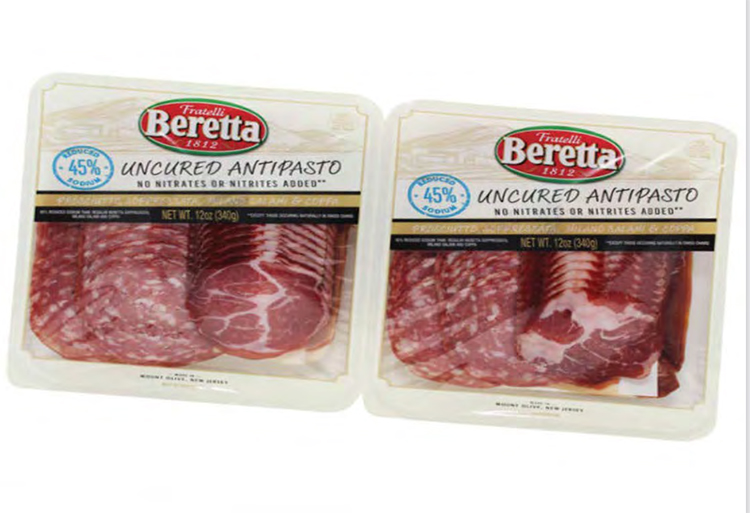
Salmonella Outbreak Linked to Uncured Italian Meat, Fratelli Beretta Recalls 862,000 Pounds of Antipasto Products

By Food Safety Tech Staff
No Comments
Beretta Fratelli
Beretta Fratelli
Recalled product produced by Beretta Fratelli. More information available from the USDA website.

New Jersey-based Fratelli Beretta USA has recalled about 862,000 pounds of uncured antipasto products over concern of contamination with Salmonella Infantis and/or Salmonella Typhimurium. Sold nationwide, the Fratelli Beretta prepackaged Uncured Antipasto trays have a best by date of August 27, 2021 through February 11, 2022 and UPC code 073541305316. Thus far, 36 illnesses and 12 hospitalizations have been reported in connection with this outbreak, spanning 17 states. No deaths have been reported.

The Class I recall does not include Italian-style meats sliced at a deli.

The CDC continues its investigation into determining whether more products are linked to the outbreak.

Recall

Q2 Food Recalls Increase 20%, Undeclared Allergens and Quality Top Cause

By Food Safety Tech Staff
No Comments
Recall

For the 23rd quarter in a row, undeclared allergens were the top cause of food recalls and accounted for 45% of them in Q3 2021, according to Sedgwick’s latest Recall Index report. Within allergens, undeclared milk was the leading cause and prepared foods remained the leading category.

“Companies need to concentrate on the basics through the second half of 2021 and final emergence from the COVID-19 pandemic,” the report states. “Amid supply chain pressures, high consumer demand and worker health and safety concerns arising from the coronavirus, food businesses are rightfully focused on their ability to maintain and conduct their core operations in safe manner while delivering quality, safe products to customers.”

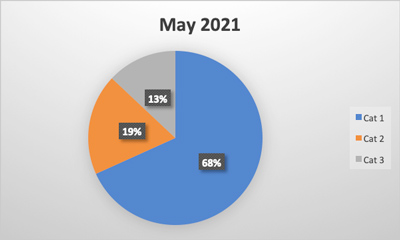
FDA Recalls: Notable Numbers (Q2 2021)

  • 106 recalls affecting 7.9 million units
  • 5.8 million units (nearly 69%) impacted by recalls were due to one nut recall
  • 19 recalls were a result of quality issues
  • 18 recalls were a result of foreign material contamination
  • 11 recalls were a result of bacterial contamination—6 from Listeria; 4 Salmonella; and 1 E. coli

USDA Recalls: Notable Numbers (Q2 2021)

  • Recalls increased from 10 (Q1) to 12, but numbers still low compared to 2019 quarterly averages
  • Units impacted dramatically dropped nearly 83% to 207,322 units
  • Undeclared allergens were top cause of recalls, accounting for nearly 42%
    • Soy milk and eggs were main allergens, but first recall of food products due to sesame also occurred
  • Other recall reasons were quality (2), lack of inspection (2), bacterial contamination (2) and foreign material contamination (1)
  • Beef products (93,551 pounds) most impacted category, followed by fish (46,804 pounds)

The report also pointed out that heavy metal regulation will have increased emphasis, as FDA has made it a priority as a result of a report released by Congress earlier this year indicating the presence of dangerous toxic heavy metals found in baby foods.

Susanne Kuehne, Decernis
Food Fraud Quick Bites

If Fish Could Talk

By Susanne Kuehne
No Comments
Susanne Kuehne, Decernis
Seafood fraud
Find records of fraud such as those discussed in this column and more in the Food Fraud Database, owned and operated by Decernis, a Food Safety Tech advertiser. Image credit: Susanne Kuehne.

Seafood fraud is still on an almost unchanged high level in Canada. Based on a 2021 investigation by Oceana Canada, 46% of 94 DNA tested seafood samples were not what the label claimed them to be. The Oceana report describes seafood traceability in Canada, the 2021 seafood fraud investigation and results, what consumers can do, and suggestions for the federal government on how to mitigate seafood fraud. These recommendations include setting up a traceability system, labeling standards, improving testing standards and better documentation in the supply chain.

Resource

  1. Oceana. (August 2021). “Seafood Fraud in Canada: 2021 Testing Results Report”.
Scott Deakins, Deacom
FST Soapbox

Billions of Dollars Lost to Food Waste, Tech Exists to Reduce It

By Scott Deakins
No Comments
Scott Deakins, Deacom

Food waste is a massive global problem led by the United States. According to the USDA, an estimated 30–40% of the country’s food supply ends up in landfills—most of it at the retail and consumer levels. This amounted to approximately 133 billion pounds and $161 billion worth of food wasted in 2010 alone, which prompted the USDA and the Environmental Protection Agency to launch the U.S. Food Loss and Waste 2030 Champions initiative in 2016. Businesses and other organizations can join the ranks as champions by committing to a 50% reduction of food loss and waste by 2030.

That’s a noble goal, but those businesses will only be able to achieve their objective with technologies that reduce food waste in production and the supply chain. Food lost in this medium is hardly insignificant. At least 10%—or billions of pounds of food—is wasted in acts as small as over-ordering or in transport. This is, in short, the result of errors in resource planning.

After an extremely difficult year, food process manufacturers can no longer afford to generate that level of waste. Fortunately, technologies already exist to help the industry regain control of its production, storage and forecasting, and can facilitate leaner businesses and less waste.

Eliminate Human Error and System Inconsistencies

There have been a lot of changes in the way food is grown, harvested, delivered and sold over the last few decades, yet little progress has been made when it comes to unnecessary waste. The Commission for Environmental Cooperation reports that food loss and waste can occur post-harvest due to inaccurate supply and demand forecasting, grade standards for size and quality, and deficiencies in refrigeration. Even the packaging can cause problems if it is inefficient or ineffective.

These and other problems lead to waste—some up front before the product is ever sold to consumers, others down the line after an item has been purchased, leading to a recall. If inventory records are anything less than 100% accurate from formulation through shipment, additional challenges will follow. Though it is not heavily considered in an FDA audit, manufacturers still need the ability to instantaneously report on any aspect of their inventory history, regardless of the ERP software from which data is pulled. ERP systems with bolt-on modules often fail in this regard. If functionalities of the sub-systems are not designed for strict lot tracking, or if those sub-systems are not designed exactly the same, errors are inevitable.

Workarounds can be implemented, but they cannot account for processes that still need to be performed manually, which increases the likelihood that lot tracking accuracy will fall short. Inefficiencies are further exacerbated by sub-systems that handle actions differently, but the challenges don’t end there.

Problems can also develop when data has to be shared across more than one module, database or even system, which may inspire the use of outside solutions, such as an Excel spreadsheet, compounding the issues at hand. Makeshift solutions increase the risk that an incorrect lot number will be entered or that someone will forget to delete a number after a lot was de-issued and re-issued. Any of these cracks in the operational foundation will inevitably deduct from the 100% inventory accuracy that’s necessary for a smooth recall process—anything less will lead to a greater impact on the business.

The only real solution is to eliminate the potential for human error and system inconsistencies altogether—and that can only be accomplished with a configurable ERP solution that handles all business processes from one system and one database and can easily adapt to changing regulation and recipes. Without it, true strict lot control—meaning 100% inventory accuracy with perfect record keeping and the ability to instantly report on any aspect of the inventory history—cannot be achieved.

Reduce Inventory Variance and Grow without Unnecessary Expansions

There are aspects of food waste that can be controlled, including inventory variance, which occurs when items are lost, misplaced or miscounted. This is particularly problematic for packaging and ingredients, causing issues at the production level—finished products cannot be made if there aren’t enough items to complete the process, which is also bad for the bottom line. Inventory variance may occur if deliveries are not verified to confirm that ordered ingredients were actually received or may happen if items are entered incorrectly or simply misidentified.

Variance is more than a nuisance—it can be quite costly. For example, Silver Spring Foods encountered this firsthand when it discovered that its inventory variance commonly reached between $250,000 and $300,000. The company, which debuted in 1929 when founder Ellis Huntsinger started growing horseradish and other vegetable crops, now produces the number-one horseradish retail brand in the United States. With more than 9,000 acres of prime Wisconsin and Minnesota farmland, Silver Spring realized that it had outgrown its outdated ERP solution.

The company initially thought that it had reached capacity and could only grow further by physically expanding its building with an additional manufacturing line that would require new hires to come aboard. In reality, the company needed an ERP solution that could keep up with its impressive level of growth.

More specifically, Silver Spring Foods wanted an ERP system that could tie together several elements, including customer service, accounting, manufacturing, purchasing and shipping within a single tool. The company needed a solution that offered strong data mining and reporting functionality, as well as strong sales reporting, sustainable tech support capabilities and would not exceed ERP budget allocations. It was equally important to have an ERP solution that was configurable without customization, prioritizing speed and efficiency while offering predictable quality and cost of ongoing IT support and maintenance.

After upgrading to a solution that met all of its requirements, Silver Spring Foods was able to gather all data in one system that brought together multiple software integrations, including CRM. This allowed the firm to fine-tune its material purchases to match current production needs, sales forecasts and production schedules. More importantly, inventory variance was reduced to $90,000 during the first year and now falls within a range of just $1,800 to $2,500. By improving inventory management, unearthing new efficiencies and proving that Silver Spring had not yet reached capacity, the company was now able to grow without adding additional square footage.

Don’t Let Waste Cut into Productivity

Food growers, processors and supply chains cannot afford to let waste cut into their productivity or their bottom line. They need to be able to keep track of everything, achieving true strict lot control to limit the damage caused by a recall. They also need to be able to improve food management and reduce inventory variance. These and other advantages can only be attained with the right ERP technology, however, so businesses must choose wisely before making an investment.


Susanne Kuehne, Decernis
Food Fraud Quick Bites

A Tea Party For Fakes

By Susanne Kuehne
No Comments
Susanne Kuehne, Decernis
Fake tea
Find records of fraud such as those discussed in this column and more in the Food Fraud Database, owned and operated by Decernis, a Food Safety Tech advertiser. Image credit: Susanne Kuehne.

Tea is becoming a more and more popular target for fraudsters due to growing demand, complex supply chains, supply issues due to crop failure, sustainability problems, and underdeveloped analytical methods. Professor Chris Elliott (Director of the Institute for Global Food Security, Queen’s University Belfast) and his team are developing an analytical method based on chemical fingerprinting to determine fraud. Tea fraud can show as mislabeling of the geographical origins or type of a tea, or the addition of sometimes hazardous bulking agents like pigments or gypsum.

Resource

  1. Elliott, C. (August 10, 2021) “The challenges and necessity of tea authenticity”. New Food Magazine.
Salmonella Surveillance

Mid-Year Pathogen Surveillance and Inspection Update

By Nathan Libbey
No Comments
Salmonella Surveillance

Food Recalls

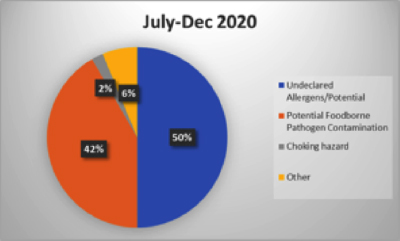
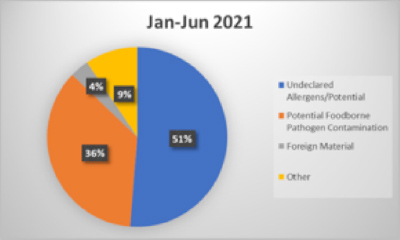
The first half of 2021 saw almost a 20% increase in recalls vs. the last 6 months of 2020 (117 vs. 96). According to a recent report by Lathrop GPM, LLC, food producers have seen an increase in food safety incidents since the pandemic began, and expect an ongoing increase over the next year.1 A majority of recalls were due to undeclared allergens or potential for allergen cross contamination. Second to allergens were potential for microbiological contaminants, including Salmonella, Listeria, E. coli, and Cyclospora.

FDA Recalls Recalls
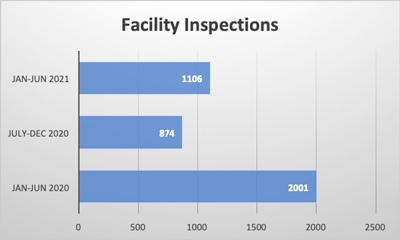
Figure 1 and 2. The first half of 2021 saw a 26% increase of facility inspections by the FDA. Despite this jump, inspections in the first half of 2020 were 80% higher than this year’s first six months. Source: FDA Recalls, Market Withdrawals, & Safety Alerts.

Inspection Results

The first half of 2021 saw a 26% increase of facility inspections by the FDA. Despite this jump, inspections in the first half of 2020 were 80% higher than this year’s first six months. Inspections generally lead to three outcomes; No Action Indicated (continue as you were,) Voluntary Action Indicated (voluntary to make some changes), or Official Action Indicated (OAI) (Regulatory Actions will be recommended by the FDA). A majority of inspections (56%) resulted in NAI this year, compared to 59% and 50% in the first and second halves of 2020, respectively.

Facility Inspections
Figure 3. Facility Inspections. Data from FDA.

Salmonella Surveillance

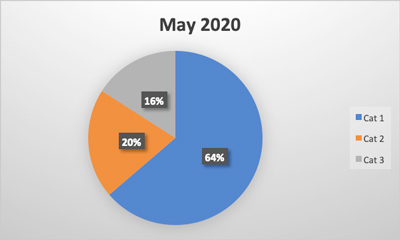
The FSIS provides ongoing surveillance of Salmonella and Campylobacter presence in poultry, both domestic and imported. Salmonella is reported by facility and each is given a category rating of 1–3. One is exceeding the standard (based on a 52-week moving average), two is meeting the standard, and three is below standard. For the 52-week reporting period ending May 30, 2021, 60% achieved category one, compared to 56% the previous 52 weeks.

Salmonella Surveillance Salmonella Surveillance
Figures 4 & 5. Salmonella surveillance data from FDA.

Listeria and Salmonella Surveillance in RTE Meat and Poultry

USDA FSIS conducts periodic sampling of Ready to Eat (RTE) meat and poultry products and reports quarterly results. Sampling is conducted both in a random fashion as well as based on risk-based sampling. In Q2 2021, 4769 samples were tested for Listeria, compared to 4632 in Q1.

Percent positive rates were .36% for Q2 and .43% for Q1. Neither quarter reported any positives for Listeria in imported RTE Meat and Poultry Products.

Salmonella samples for RTE totaled 3676 in Q2 2021, compared with 3566 in Q1. In both quarters, only 1 positive was found in the samples collected.

Routine Beef Sampling for E. coli 0157:H7 and STEC

The FSIS also conducts ongoing routine sampling of beef products for E. coli. E. coli is further classified into 0157:H7 and non-0157:H7 Shiga toxin-producing E. coli (STEC). In Q2 of 2021, 4467 samples were collected and tested for 0157:H7 versus 4268 in Q1. Of these, three were positive, compared to seven positives the preceding quarter. For STEC, a total of 8 positives were found, compared to 1 positive in Q1. No positives were found in imported goods in Q2, although in Q1 2021, 4 positives for STEC were found.

Conclusion

The first half of 2021 showed an increase in activity, which is on par with food industry survey data. Food recalls have increased, with food allergens remaining the most prevalent reason for recall or withdrawal. While inspections also increased, they have not returned to pre-pandemic levels. The impact of the spread of the Delta variant and increased restrictions is yet to be seen, but inspection activity will likely not rebound entirely by the end of the year. Pathogen tests by FSIS increased quarter over quarter for Salmonella, E. coli, and STEC, with mixed results in prevalence.

Reference

1. Lathrop GPM, LLC. (2021). Food Processing Trends, Outlook and Guidance Report. Retrieved from https://www.lathropgpm.com/report-agribusiness.html

Coronavirus, COVID-19

Tyson Foods to Mandate COVID Vaccines, Will Other Food Companies Follow?

By Maria Fontanazza
No Comments
Coronavirus, COVID-19

In a controversial move, Tyson Foods is mandating that all of its U.S. employees receive the COVID-19 vaccine. The company is requiring that the leadership team be vaccinated by September 24, office workers by October 1, and frontline employees by November 1. However, the mandate is “subject to ongoing discussions with locations represented by unions”, according to the company website.

Tyson Foods, along with other meat processors, has been plagued with COVID-19 outbreaks during the course of the pandemic. In December the company went as far as naming its first chief medical officer, a new role to help promote health, safety and wellness.

“We did not take this decision lightly. We have spent months encouraging our team members to get vaccinated – today, under half of our team members are,” stated Donnie King, president & CEO of Tyson Foods, in a company memo titled, “Our Next Step in the Fight Against the Pandemic”. Half of U.S. employees equates to 56,000 workers. Frontline employees who are fully vaccinated will receive $200.

A union representing Tyson employees, the United Food and Commercial Workers (UFCW), is concerned over the fact that the company is requiring vaccination before FDA has provided full approval of any COVID-19 vaccine. “We believe the FDA must provide full approval of the vaccines and help address some of the questions and concerns that workers have,” said UFCW International President Marc Perrone in a statement. “Additionally, employers should provide paid time off so that their essential workers can receive the vaccine without having to sacrifice their pay, and can rest as needed while their body adjusts to the vaccine and strengthens their immune system to fight off the virus.”

UFCW also released the following figures on COVID-19 infections, exposures and deaths nationwide among its union members:

  • 482 frontline worker deaths and at least 96,600 frontline workers infected or exposed
  • 197 grocery worker deaths and at least 43,300 grocery workers infected or exposed
  • 132 meatpacking worker deaths and 22,400 meatpacking workers infected or exposed
  • 67 food processing worker deaths and 13,100 food processing workers infected or exposed

Will other companies in the industry follow suit?