

Tag Archives: Focus Article

Bob Pudlock, Gulf Stream Search
FST Soapbox

Architect the Perfect Food Safety Team: Does Your Next Food Safety or Quality Team Member Even Exist?

By Bob Pudlock
1 Comment
Bob Pudlock, Gulf Stream Search

As a food safety leader, you’re accountable for keeping the company in line with regulations and ensuring consumer trust, yet you’re constantly asked to “do more with less”.

In an environment with such a thin margin for error, it’s imperative to have a seamless, friction free, fast but effective recruitment process.

As a food safety leader, you want to move the needle towards more proactive measures to optimize systems, develop more robust risk management systems and above all else get everyone in the company singing the same song when it comes to a food safety “culture”.

Bob Pudlock will be moderating the panel discussion, “Food Safety Leadership: Earning Respect”, at the 2019 Food Safety Consortium | October 1–3 | Schaumburg, ILOur three-part series on architecting the perfect food safety team will show you the components of a hiring and recruitment methodology that you can champion to your internal recruitment team, a third-party recruiter you trust, or you yourself.

Our first of three articles will focus on the IDENTIFICATION step, where, based on your job description, your compensation plan and your skill set requirements, you’ll be able to quantify the size of your candidate pool locally, regionally and nationally fast. This is really important.

Most companies don’t do this.

Internal recruitment teams aren’t optimized to do a deep dive on each job profile, whether it’s a Food Safety Specialist or a VP of Food Safety. The gap is exacerbated in food safety and quality due to the significant uptick in expertise required to execute on all the requirements that today’s food safety climate requires. Many roles that historically required only “attention to detail” and “Microsoft Excel skills” now require a microbiology or chemistry degree as well as subject matter expertise with quality management and ERP systems.

Unfortunately, your internal talent acquisition team will find it next to impossible to tell you how many SQF-certified QA managers with experience in a manufacturing setting with a Bachelors degree that reside within 30 miles of each plant in your network, much less be in a position to effectively contact and recruit them quickly.

You have to know where your future team members are today—either through internal means (your talent acquisition team) or externally(a recruitment firm)….and you can’t wait until you’ve had an unexpected resignation.

It’s like burying a fire extinguisher in your closet and not remembering where it is–if everyone in the house doesn’t know where it is, it hasn’t been tested, and it’s not located in the optimal place, it will serve no purpose when it’s an emergency.

At a recruitment firm approaching the food safety talent ecosystem and executing a search is done in much the same manner as how you develop your company’s HACCP plan.

Your HACCP plan addresses:

  1. What threats and hazards are we trying to avoid?
  2. What are we trying to achieve with our plan?
  3. What does a fully executed plan entail? Safe food and…..

Similarly, we start a search with a role’s “intent” fully defined.

The “intent” of the role rarely exists in a job description—this is fleshed out when having a conversation with a client. It starts with a series of questions such as:

  1. What is the first area of focus this person will tackle?
  2. What problem(s) will they be tasked with solving?
  3. What will this person’s area of focus look like after a year(best case)?

It’s an oft-overlooked step because most of our hiring managers are so busy they end up using the same cut-and-paste job description that’s been used for the last 10 years.

An example our clients have used for searches we’ve completed for them include:

  1. “In 12 months, the new hire will have fulfilled our company’s initiative to attain SQF Certification Level III for Plant X.”
  2. “Within 12 months, the new hire will have participated in the installation and led internal training of plant personnel; each plant team member will have been trained and passed internal testing requirements of the new system.”
  3. “The new hire will lead improvement initiatives that dramatically improve our KPI indicators around hazardous materials and foreign objects within 6 months of hire.”

With the end result in mind, you now have a clearer picture of what you’re looking for in your new hire rather than a stale, generic job description which, oh by the way, every other company is looking for.

With a clear picture of who you’re looking for and the end results you’re looking for, the next crucial step in the IDENTIFY stage is determining to what degree that candidate exists and is available in the market.

If you create a “wish list” in a vacuum without determining how many people actually have those criteria, it’s equivalent to developing a HACCP plan without validating it.

How do you validate a HACCP plan? You test it. You challenge the thresholds. That takes time, sure, but at the end of the testing, you know where the Critical Control Points are( room for improvement), you know better what absolutely needs to be changed (Corrective Action).

How you validate your HACCP plan is similar to how we provide our clients with data that reflects the feasibility their expectations – from there, we chip around the edges of the requirements until we have a large enough candidate pool from which we can effectively execute a recruitment strategy.

For example, we’re often asked to help clients with a search that has the following particulars:

  1. Plant QA Manager with three years of management experience
  2. QA Manager with management experience in a food, beverage, ingredient or flavor manufacturing/processing environment
  3. Bachelor degree in Chemistry and/or Biology
  4. Local candidates only

Each of the four-above criteria is a “limiter” of some sort—as you work through the list and add a requirement or a “must have”, the candidate pool decreases.

In the example above, the limiter that impacts the candidate pool the most will be the last one: “Local candidates only.”

That limiter might be forced on food safety or the quality department because of budget restrictions or it may be your choice altogether. Regardless, you’ve set the parameter and now it needs to be tested. Weeks and months can be lost if the search is executed without first knowing how many candidates actually have these skills locally.

You know how it feels when Marketing calls you in to test a new innovation for a product launch, three months into the gig? How within minutes of showing up at the trial you realize that production and quality will be compromised? How you wish they would have involved you from the start so you could have saved them, the company and your team all the headaches, time and money by offering an alternative? If only they would have asked you sooner?!?!

It’s the same with a search for a candidate with a particular set of skills and/or experience that doesn’t actually exist.

So, what’s the answer?

Well, the optimal strategy is to know every single food safety / quality candidate in the local market and/or nationally (especially if your category has more stringent needs like Dairy, Brewing, etc.) and to nurture them on an ongoing basis. You’ve done the work up front to assess and determine the caliber of the local candidate pool – since you’re already in rapport with the target candidate base, the turn-around time when you’re in a pinch is significantly shorter.

When a client asks us for the requirement we outlined above, we deliver an audit of that expectation within 48 hours, letting them know if that person actually exists and how many of them.

No time is lost. We have countless examples in the last year of alerting our client that two, yes two QA director candidates have the “must have” skills locally they are requesting, and neither is interested. We get clients to that point of discovery within hours, with tangible real-live data(not opinions), where they can then reassess their requirements and expand their candidate pool.

It’s a healthy conversation when it’s done early and up front— it results in less spinning of wheels and more productive dialogue around working within capabilities and restraints.

So do that—get your talent acquisition partner and talk to them specifically about your wish list, and have them come back to you with tangible numbers that validate whether or not what you’re asking for is reasonable.

Once you’ve done that and have a large enough pool of candidates to whom you can market the opportunity, you’ll be operating from a position of strength when it comes time to ASSESS the candidates who are brought forward. We’ll dive into more about the ASSESS step in Part two of our three-part series.


Megan Nichols
Retail Food Safety Forum

How Can We Make Food Labeling More Consistent?

By Megan Ray Nichols
2 Comments
Megan Nichols

Consistent Inconsistencies

Current food labels may seem to possess a wealth of information, but they’re often challenging to read even if you know what you’re looking for. Additionally, studies have shown that even accurate food labels don’t work —they lead to no significant dietary changes. Even posting the calorie counts on fast food menus did little to change people’s eating habits.

It might sound as simple as telling consumers to read the ingredients labels on the items that they’re purchasing. The problem with this—aside from the fact that ingredients are often printed in a painfully small font—is that you almost need a degree in chemistry to understand the components. This confusion is a big issue with processed foods that contain a variety of chemicals to protect the flavor of the food and preserve it during storage.

When it comes down to it, choosing healthy foods isn’t the problem—or at least, not the only problem. Picking a healthy option isn’t as complicated as doing your taxes or choosing a mortgage when you purchase a home. We as consumers have plenty of information available to us when it comes to eating healthy. The problem is the fact that it’s easier and usually cheaper to choose the unhealthy option. You can buy a can of soda for $0.50, while a bottle of water often costs more than $1 at a soda machine or convenience store.

No One Reads Them Anymore

Another big issue with nutrition labels is that no one bothers to read them anymore. One survey found that two-thirds of young adults in the Minneapolis-St. Paul area don’t bother reading nutrition labels or worry about the nutrition content of what they’re eating.

While the survey didn’t explore why adults were no longer utilizing nutrition labeling, it’s likely due to a combination of consumer distrust and confusion. People either don’t trust that the labels contain accurate information, or they’re merely confused by the information presented in that format.

The Healthwashing Dilemma

How many times have you walked into the grocery store and chosen a brand based on whether or not it had “All-Natural” or “Organic” labels? Even if these phrases are written on the label, that doesn’t necessarily mean that the food contained within falls under either of those categories. That’s where the problem of healthwashing occurs.

Food packages will slap these labels on their product even if it doesn’t apply—a company can claim that their product is “all natural” and still use pesticides on it. Some businesses use products like pyrethrins, which are potentially dangerous pesticides derived from natural sources—specifically, the chrysanthemum flower.

Food companies don’t typically like to advertise this information because it might discourage potential consumers from choosing their brand, especially if the user is concerned about their health and is trying to remove all chemicals and pesticides from their food chain.

Fixing the Labeling Problem

What can we do to encourage consumers to pay attention to nutrition labels? The biggest challenge lies in making these labels more consistent and transparent. That task is more complicated than it sounds since there is no regulation or standardization in nutrition labeling. Clean labeling could be the solution.

Five key facets define clean labels — Simple ingredients lists, transparency in ingredients and packaging, no flowery language, accurate images and fresh food—are top priorities for consumers, with transparency being in the highest demand. However, these labels face the same problems as current nutrition labels—a lack of standardization. When asking more than 27,000 people in 31 countries what they thought clean labeling meant, more than a third had no idea, according to a report from Packaged Facts.

Many companies have started to transition to clean labels, but no law currently requires businesses to do so.

The Need for Change in Food Labeling Consistency

Food labeling could potentially help consumers make healthier choices if they were more accurate and easier to understand. Eliminating the flowery language that currently defines food labeling is one step in the right direction. The federal government— or, more specifically, the FDA— may need to step in as well to create standards that each company can be held to so that consumers know what exactly is in their food, no matter the brand.

Food labels are on nearly everything that we buy, except for fresh meat and produce. It’s time to create a standard and transparent label that everyone can understand.

Hand

Food Safety Tech, Food Safety Consortium Conference & Expo Announce Partnership with Alliance for Advanced Sanitation

By Food Safety Tech Staff
No Comments
Hand

EDGARTOWN, MA, Jan. 18, 2019 – Innovative Publishing Co., the publisher of Food Safety Tech and organizer of the Food Safety Consortium Conference & Expo, has announced a partnership with the Alliance for Advanced Sanitation. Angela Anandappa, Ph.D., director of the organization, will also be joining the Food Safety Tech and Food Safety Consortium Advisory Board. As part of this role, Anandappa will be a key resource on topics related to sanitation and will serve as chairperson for the Sanitation track at the Food Safety Consortium Conference & Expo, ensuring the presentations are relevant, accurate and balanced.

Angela Anandappa, Alliance for Advanced Sanitation
Angela Anandappa, director, Alliance for Advanced Sanitation

“The collaboration with Angela Anandappa and the Alliance for Advanced Sanitation is a significant enhancement to the Food Safety Consortium Conference & Expo,” said Rick Biros, president of Innovative Publishing Co., Inc. and director of the Food Safety Consortium Conference and Expo. “Angela brings a wealth of experience in food safety and molecular diagnostics, especially in her role developing programs that tackle hygienic design and sanitation issues.”

As a partner organization, members of the Alliance for Advanced Sanitation will also receive a discount to attend the Food Safety Consortium Conference & Expo in October.

“I look forward to working with Rick and his team at Food Safety Tech and the Consortium event to help industry further understand the issues we face in sanitation, the advances necessary for success and how we can share best practices,” said Anandappa, who is also a research assistant professor with the Department of Food Science and Technology at the University of Nebraska-Lincoln.

About Food Safety Tech

Food Safety Tech publishes news, technology, trends, regulations, and expert opinions on food safety, food quality, food business and food sustainability. We also offer educational, career advancement and networking opportunities to the global food industry. This information exchange is facilitated through ePublishing, digital and live events.

About the Food Safety Consortium Conference and Expo

The Food Safety Consortium Conference and Expo is a premier educational and networking event for food safety solutions. Attracting the most influential minds in food safety, the Consortium enables attendees to engage conversations that are critical for advancing careers and organizations alike. Visit with exhibitors to learn about cutting edge solutions, explore diverse educational tracks for learning valuable industry trends, and network with industry executives to find solutions to improve quality, efficiency and cost effectiveness in an ever-changing, global food safety market. This year’s event takes place October 1–3 in Schaumburg, IL.

About the Alliance for Advanced Sanitation

The Alliance for Advance Sanitation’s research, extension and teaching activities engage university of Nebraska–Lincoln faculty and address the needs and interests of the private sector partners. The overall goal of these activities is to develop improved sanitation practices that can be implemented by the food processing and affiliated industries. The Alliance’s mission is to create a safer food supply through advanced sanitation approaches and practices.

Erika Miller
FST Soapbox

Does the Sanitary Transportation Regulation Require Seals for LTL Shipments?

By Erika Miller
No Comments
Erika Miller

This question has come up frequently in our FSMA Sanitary Transportation workshop. Just as with all the parts of FSMA, the focus of the Sanitary Transportation of Human and Animal Food regulation is on addressing hazards that may be present throughout the food chain and assigning responsibility (liability) for preventing those hazards. There are very few specific requirements—most of it is couched in very general language, for flexibility on both sides (FDA’s and industry’s).

While the regulation does not specifically address locks or seals on trailers, the FDA has stated publicly that they intend to enforce the adherence of industry to generally accepted best practices. Sometimes, as in the case of certain animal food applications, the FDA has stated they will accept mild steel transports instead of stainless (as would typically be required for hauling food) because it’s all about the risk, and mild steel is not a risk in those applications. What is the risk of an unlocked load to the food being hauled, and to the business being conducted? Maybe a seal or lock on an LTL can protect a significant investment from an identified hazard.

Generally, in most food hauling operations, seals or locks are required on trailers by businesses in order to protect their investments. They are also expected under GFSI-approved food safety management systems, used by most food manufacturers (which are private, voluntary standards, not regulatory). They are definitely required if you want to haul 100% juice under Juice HACCP and the JPA guidelines.

There are so few straightforward answers with FSMA. You must always look at your operation, your risks, and decide if controls are necessary. Document the basis for your decision, ensuring it is based on facts. If the FDA inquires, you must make your case for your decision. Do you feel comfortable defending it, all the way to a court of law if need be? If so, then stand by it.

If there are potential risks to food that is being hauled (don’t forget about defense-type risks as well, like the truck being stolen or misrepresented) then you must take reasonable, industry-standard precautions to prevent those hazards from occurring.

Of course, you want to do this anyway because it is smart business.

Karen Everstine, Decernis
Food Fraud Quick Bites

Media Sources for Food Fraud Intelligence

By Karen Everstine, Ph.D.
No Comments
Karen Everstine, Decernis

A recently published paper advocates the inclusion of media reports as a source of information for assessing food fraud vulnerability.1 Those of us who maintain the Food Fraud Database could not agree more. We have been monitoring media reports for years and they are an important source of information in the database (accounting for 45% of all primary source references).

As I mentioned in last month’s post, there are challenges with using media reports to inform food fraud vulnerability. Many media reports are general discussions of the issue of food fraud and are not necessarily reporting new information. It may be difficult to filter out these types of reports without manual review. There may also be concerns about the validity of media reports on food fraud. This is the reason we implemented a classification for “weight of evidence” for incident records in the database. Overall, approximately 30% of the incident records in our database are classified as a “low” weight of evidence due to unverifiable data or a lack of corroborating reports. Some of our users choose to filter these out of their searches.

We have received requests for information about how the data in the Food Fraud Database compares with numbers reported in the paper. Table 11 in the paper described the top product categories, countries and type of fraud as reported in four food safety tracking systems.1 We have adapted that table below to data from the Food Fraud Database.

Product Category % Country of Origin % Type %
Meat/Poultry 18 India 26 Dilution/substitution (misrepresentation of animal origin) 26
Seafood 16 China 9 Dilution/substitution (“other”) 19
Dairy Products 14 United States 9 Dilution/substitution with a non-food substance 14
Alcoholic Beverages 6 Columbia 6 Dilution/substitution (misrepresentation of botanical origin) 12
The most common food fraud records (“cases”) in the Food Fraud Database (2014-2015)

As shown in Table 11 in the paper, the top four products by number of articles in the media monitoring system (in 2014-2015) were meat, seafood, milk and alcohol. As shown above, when looking at data in the Food Fraud Database from 2014 and 2015, the top ingredient categories are very similar: Meat/Poultry, Seafood, Dairy Products, and Alcoholic Beverages. However, there was little agreement in the country of origin of the reported cases among any of the systems. For the Food Fraud Database (shown above), the top countries of origin in 2014–2015 were India, China, the United States and Colombia. According to the paper, the top countries of origin reported by the food fraud media monitoring system were Egypt, the United States, the U.K. and Saudi Arabia. The top country of origin reported by RASFF was China and by HorizonScan was the Czech Republic.

Table 4 reported the “types” of food fraud (which correspond to what we call “reasons for adulteration”) and the corresponding number of articles collected, which we have also adapted to the data in the Food Fraud Database below.

Types of Food Fraud in Records in the Food Fraud Database (2014–2015)
Type of Food Fraud Number of Records %
Dilution/substitution – misrepresentation of animal origin 212 26
Dilution/substitution (other) 159 19
Dilution/substitution with a substance not approved for use in foods 118 14
Dilution/substitution – misrepresentation of botanical origin 101 12
Unknown 87 11
Fraudulent labeling 64 8
Artificial enhancement of apparent protein content 58 7
Artificial enhancement with color additives 57 7
Other 41 5
Dilution/substitution – misrepresentation of geographic origin 40 5
Dilution/substitution – misrepresentation of varietal origin 28 3
Use of unapproved biocides (antibiotics, anti-fungal agents, preservatives, etc.) 21 3
Artificial enhancement (other) 7 1
Formulation of an entirely fraudulent product using multiple techniques and adulterants 2 0
TOTAL 828 *
* Greater than 100% because one record can have multiple types of associated fraud

It is not possible to make meaningful comparisons among the reported fraud “types” without harmonized definitions and standardization of data collection processes, as noted in the paper. A glance at Table 1 from the paper illustrates the variety of food fraud categorizations in use among the various systems.1 Generally, it is a challenge to directly compare any of the information coming from various sources such as RASFF, HorizonScan, the Food Fraud Database and others, due to the differences in the way data is collected, standardized and reported.

In contrast with foodborne illnesses, which are generally required to be reported to public health agencies, food fraud typically does not result in acute illness and is difficult to track. The nature of food fraud combined with differences in data tracking systems make it almost impossible to reconcile the data among the various systems. Regardless of which system is reporting, the reports are likely just a fraction of the true occurrence of food fraud; however, each can provide valuable perspective on risks to food safety (including those from food fraud). A holistic assessment of food fraud vulnerability should take into account a wide variety of information sources, including media reports.

Reference

  1. Bouzembrak, Y., et al. (November 2018). Development of food fraud media monitoring system based on text mining. Food Control. Vol. 93. Retrieved from https://doi.org/10.1016/j.foodcont.2018.06.003
Food Safety Tech

Call for Abstracts for the 2019 Food Safety Consortium & Expo

By Food Safety Tech Staff
No Comments
Food Safety Tech

It’s that time of year again! As we prepare to put together another informative and insightful Food Safety Consortium, we are requesting abstracts for presentation content. This year’s event takes place October 1–3 in Schaumburg, IL.

Before submitting an abstract, here are some things to keep in mind:

  • This year’s breakouts will feature
    • 1) Cleaning & Sanitation
    • 2) Food Safety Testing
    • 3) Food Safety Management
  • The abstract should be about 300 words
  • Presentations will be judged on educational value
  • Don’t submit a sales pitch!
  • Presentation time is about 45 minutes—this includes a 10-15 Q&A session

The abstract submission deadline is May 15. For more information on submitting an abstract to the 2019 Food Safety Consortium click here.

Good luck!

Steve Ardagh, Eagle Protect
FST Soapbox

Glove Polymers: The Unregulated Food Safety Threat

By Steve Ardagh
No Comments
Steve Ardagh, Eagle Protect

Various polymers are used in food contact applications that include food packaging and disposable gloves. More than 30 different types are used in packaging and up to six in disposables gloves. In terms of safeguards for the U.S. food supply as well as user safety, it is worth noting that 87% of the production of packaging polymers is based in the United States and subject to FDA regulation and monitoring. On the other hand, all (100%) of the 100 or more glove factories supplying the United States are based in Southeast Asia, according to a report by the British Medical Association and are not subjected to the same FDA monitoring or scrutiny.1

Packaging production is carefully overseen by the FDA, is included in FSMA, and covered in the HACCP process. Toxicology of food packaging is carefully prescribed and subject to strict enforcement action from production to storage.

Glove factories, however, are generally self-regulated, with FDA compliance required for a rough outline of the ingredients of the gloves rather than the final product. Few controls are required for glove manufacturing relating to the reliability of raw materials, manufacturing processes and factory compliance. A clear opportunity exists for accidental contamination within the glove-making process. More significantly, because of the geographic and economic implications in workforce and workplace conditions, intentional contamination potential is greatly increased. Polymer gloves utilized in food processing and service have been implicated in 15–18% of foodborne illness outbreaks in the United States.2

There is a striking difference in the requirements for these two different types of food contact polymers. Food packaging is extensively regulated, gets tested within the context of completed food product and has production primarily in the United States under close supervision. Disposable gloves, on the other hand, rely on self certification, often with testing results only on glove constituents, and little or no oversight of factory process and conditions. It seems as though this is a glaringly obvious but little accounted for risk to the U.S. food sector.

As a result, based on the root cause analysis of food cross contamination, a selection of tests and certifications, some of which are unique to the glove industry, are being implemented by one particular glove supplier. These tests ensure that their gloves coming into the United States are made in clean, well-run factories, free of any type of contamination and are consistent in material makeup to original food safe specifications. This glove fingerprint testing program consists of a number of proprietary risk reduction steps and targeted third-party testing methods, includes gas chromatography combined with mass spectroscopy (GC/MS, surface free energy determination, in vitro cytotoxicity analysis, and microbial viability-linked metagenomic analysis.

With a great deal of faith placed on a glove supplier’s ability to deliver disposable gloves sight unseen, I believe these tests are essential to further reduce the food safety risks associated with them. Objective…Zero surprises!

References

  1. Bhutta, M. and Santhakumar, A. (March 2016). In Good Hands. Tackling labor rights concerns in the manufacture of medical gloves. British Medical Association. Retrieved from https://www.bma.org.uk/collective-voice/influence/international/global-justice/fair-medical-trade/medical-gloves-report.
  2. Michaels, B. (2018). Determination of the % of Foodborne Illness Outbreaks Attributed to Glove-Related Cross-Contamination. Unpublished report

The author would like to acknowledge Barry Michaels, an international scientific consultant on food safety, infectious disease transmission and glove use, who has assisted in the fingerprint testing program discussed in this column.

Lettuce

CDC Reports Romaine Lettuce Outbreak Over

By Food Safety Tech Staff
No Comments
Lettuce

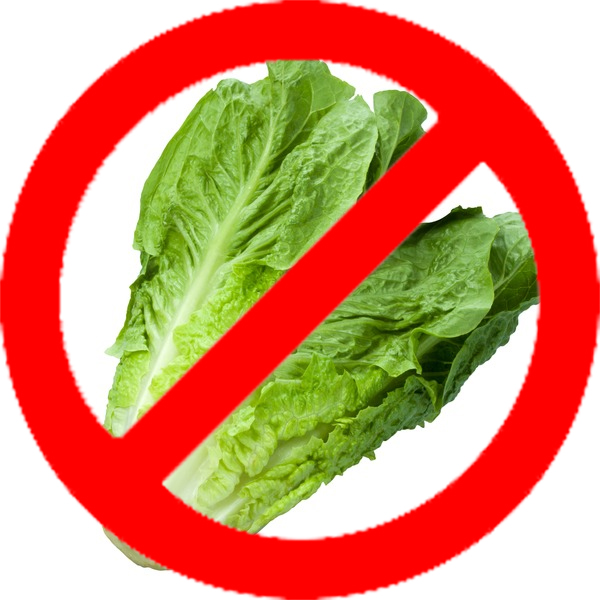
Although FDA is continuing its investigation into the source of the E.coli outbreak involving romaine lettuce grown in California, the CDC has declared the outbreak over. Contaminated romaine that caused illnesses should no longer be available, FDA stated in an outbreak update. Consumers will not need to avoid romaine lettuce, and retailers and restaurants do not need to avoid selling or serving the product, according to the agency. Suppliers and distributors need not avoid shipping or selling any romaine that is on the market either.

FDA has recommended that romaine lettuce is labeled with the harvest location and date, as well as whether it has been grown hydroponically or in a greenhouse. “ In case of future product withdrawals or recalls of romaine lettuce, this will help to limit the amount of product to be removed from the market and it will help consumers, restaurants and retailers determine that the romaine lettuce they are buying is from an unaffected growing region,” stated FDA. In addition, the detailed labeling should be available in stores, the agency states.

Food Safety Vs. Blockchain: Who Wins?

By Maria Fontanazza
No Comments

The jury is still out on how (and if) blockchain can contribute to a safer food supply. Whether or not there is a clear understanding of the technology, and its potential and pitfalls, is up for debate as well. “What is blockchain? This is the number one question that people have,” said Darin Detwiler, director, regulatory affairs of food and food industry at Northeastern University, who led a panel of experts as they deliberated over this hot topic during the 2018 Food Safety Consortium.

“Blockchain levels the playing field where we can connect people, resources and organizations in ways we’ve never done before to harness new ways of extracting value,” said Nigel Gopie, global marketing leader, IBM Food Trust at IBM.

What Is Blockchain?

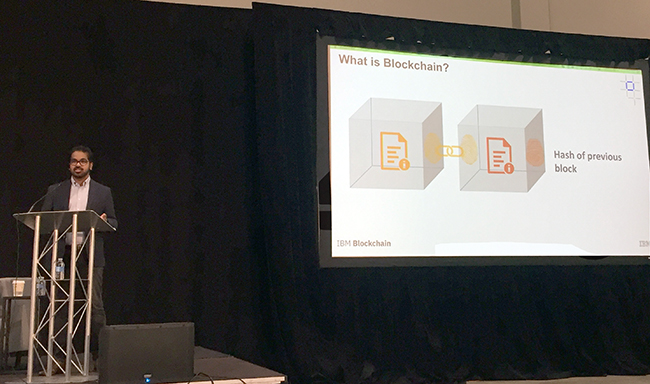
Gopie provided an introductory definition of blockchain: Simply put, it is a series of blocks of information attached together. Each block is a box of information that stores data elements, and this data could be almost anything. Each block has a digital fingerprint associated with it; this fingerprint allows you to know that the block is unique and can attach to other blocks. When new blocks come into the chain, each block has a new fingerprint—one that is unique to that block and of the block before it. This allows the connection to happen, and enables visibility into the origin of each block.

Blockchain enables one book of business and provides three important benefits, said Gopie:

  1. Digital transactions
  2. Distributed ledger with one version of truth throughout the network
  3. Data is immutable
Blockchain, IBM, Food Safety Consortium
IBM’s Nigel Gopie breaks down the basic meaning of blockchain for attendees at the 2018 Food Safety Consortium.

Although blockchain can help to start the process of solving food issues surrounding safety, freshness, reduced waste and sustainability, the technology is only the foundation. A series of other components are important as well, said Gopie, and the following are some insights that the expert panel shared during their discussion.

2018 Food Safety Supply Chain Conference, Blockchain
Is the Food Industry Ready for Blockchain? Check out a dynamic panel about the technology from the 2018 Food Safety Supply Chain Conference.

Can Blockchain Actually Impact Food Safety?

Jorge Hernandez, chief food safety officer at Wholesome International: “To me, it’s a fantastic new technology that would allow the food industry to do a much better job of finding, from seed to fork, all of the processes and things that happen to that product. And in the future, [it] allows us to identify problems first and solve [them]. My problem is it being sold to companies…and not able to deliver on the promise… It bothers me that we are looking at a future that may or may not be there.”

Angela Fernandez, vice president, retail grocery & foodservice at GS1 US: “We’ve been working on traceability and transparency for over a decade—you have to be capturing the data needed, [and] we’re still working on getting it right. We’re just not there yet. I think it’s a great place for us to strive to go towards, but we’re still early in the stages of accepting it as a community.”

David Howard, vice president of corporate strategy at Pavocoin: “Blockchain itself is simply a technology. We’re all here because we’re just trying figure out what application we can use in business. Blockchain is a technology that can help all of you improve operational efficiencies for your bottom line.”

Is Blockchain a Barrier or a Fast Lane to Heightened Liability Concerns?

Shawn Stevens, food industry lawyer and founder of Food Industry Counsel, LLC: “I think the starting point is to ask ourselves what makes food unsafe. It’s a lack of transparency…What blockchain can do is illuminate entire segments of the industry…From a reactive standpoint, blockchain can help us identify a problem [and] solve it. From a preventive standpoint, if I have access to all this information regarding attributes and quality of supplier, I can make better decisions that protect my company.”

“We want to know more and be better informed. Once you know more, you better react and do something. If you’re getting this line of sight and you don’t react to it, that’s what exposes you to liability.”

Darin Detwiler, director, regulatory affairs of food and food industry at Northeastern University: “We need to look at the balance between the reactive use of blockchain and the proactive use.”

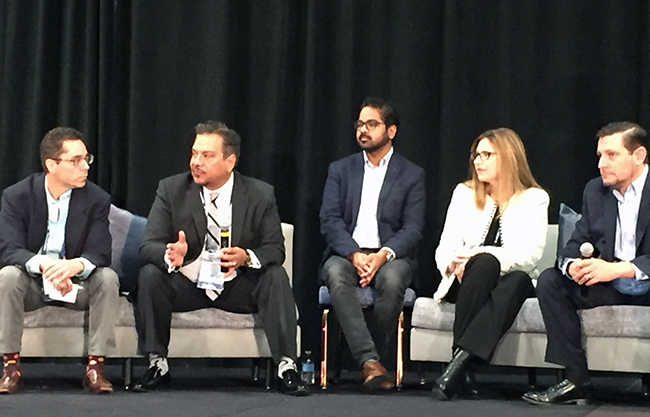
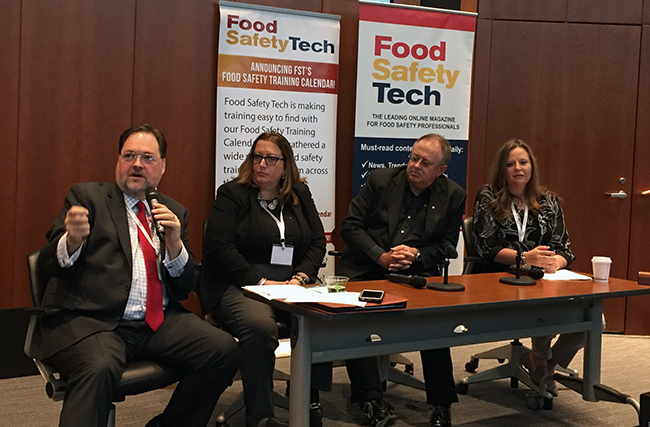
2018 Food Safety Consortium on Blockchain. (left to right) David Howard, Pavocoin; Jorge Hernandez, Wholesome International; Nigel Gopie, IBM; Angela Fernandez GS1 US; and Shawn Stevens, Food Industry Counsel, LLC. Not pictured: Darin Detwiler, Northeastern University.

What Barriers Does Industry Need to Anticipate?

Fernandez: “The barrier of the standards and interoperability piece—that’s a big question our community is asking us. Scalability… standards are vital…I think that opens up a different discussion when talking about private versus public blockchain.”

Hernandez: “What is my ROI? The issue I have with blockchain is not only the investment in my organization, but I have to bring my entire supply chain with me if I want to get any benefit. There’s a good value proposition, but it requires you to get everyone on board. When you’re a large organization, it’s probably not that hard to do. But a small organization like mine where my suppliers are an Amish community that sells us cheese, that’s a huge mountain to climb. They don’t have the background [or] the technology, and even if they wanted to do it, it’s a big change for them. You’re asking me to make a change in my relationship with my suppliers.”

“Take a look at it from the business continuity [perspective]. What are the changes you’re going to have to make? And that changes that have to be made by everyone who works with you? We should not stay static. We should continue to look for things. If this is the technology that is going to move us forward, let’s start getting prepared.”

Alert

How the Government Shutdown Affects Food Safety

By Food Safety Tech Staff
No Comments
Alert

–UPDATE —January 9, 2019 – Today FDA Commissioner Scott Gottlieb, M.D. gave an update about food inspections in the context of the government shutdown. He chose Twitter to deliver his statement. He said FDA is expanding the scope of food safety surveillance inspections that are occurring during the shutdown to ensure that high-risk food facilities are address (31% of domestic inspections are high risk). He added that the agency continues to conduct all foreign food inspections.

“We assess risk based on an overall, cross-cutting risk profile. The primary factors contributing to a facility’s risk profile include: the type of food, the manufacturing process, and the compliance history of the facility. Commodities deemed high risk include, but aren’t limited to: modified atmosphere packaged products; acidified and low acid canned foods; seafood; custard filled bakery products; dairy products including soft, semi-soft, soft ripened cheese and cheese products, unpasteurized juices; sprouts ready-to-eat; fresh fruits and vegetables and processed fruits and vegetables; spices; shell eggs; sandwiches; prepared salads; infant formula; and medical foods.” – Scott Gottlieb, M.D., FDA

–END UPDATE–

As the third-longest government shutdown in U.S. history continues, businesses across industries are concerned about what resources are available.

At FDA, “All our work is important, but only some of our work is permitted to continue during a lapse in funding,” according to an agency statement. This work includes any activities that are considered “mission critical”:

  • Maintaining core functions that handle and respond to foodborne illness outbreaks
  • High-risk food recalls
  • Screening foods imported into the United States
  • The pursuit of civil and/or criminal investigations when the agency believes that the public health is at risk

At USDA, FSIS will continue much of its food safety activities Field inspection of meat, poultry and egg products will continue, as well as regulatory enforcement and product testing in labs. The agency will also continue its enforcement and food safety surveillance and investigations, which includes recall initiation, traceback/traceforward investigations.

“The agency must ensure adequate senior level management and coordination of the agency’s public health responsibilities during a shutdown. Excepted activities include responding to intentional and unintentional food safety events. A small number of individuals will support these activities for the duration of the shutdown, while others will be available on call if such an event occurs, including recall staff, scientists; recall communication specialists, significant incident specialists.” – USDA

In addition USDA/FSIS personnel at the agency’s three field labs are considered “excepted” during the shutdown. A full breakdown of FSIS activities that will continue are available on the USDA’s website.